

Choosing the right packaging material
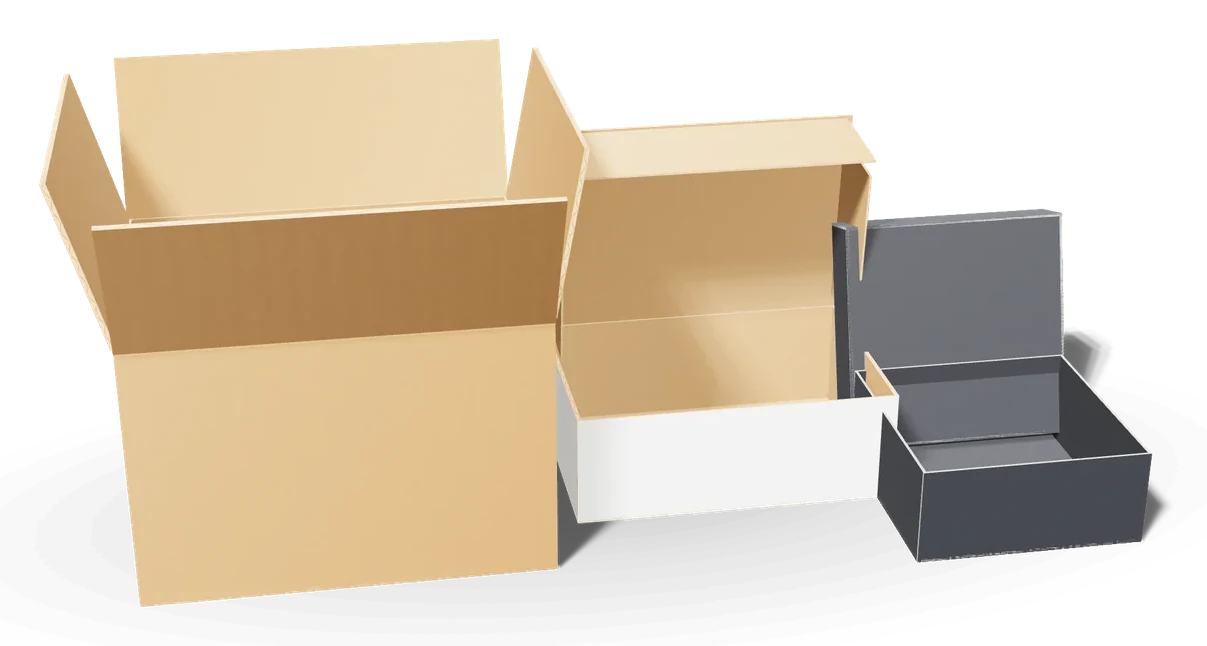
Material is the foundation of every box. It decides how much weight the box carries, how well it survives shipping, how sharp the printing looks, how it feels in the hand, what it costs and how your customer disposes of it. Most custom packaging is made from one of four families: corrugated board for shipping and mailer boxes, paperboard (folding carton board) for retail cartons, rigid chipboard for luxury and gift boxes, and flexible films for pouches. Inside those families there are grades, coatings and recycled-content options that matter as much as the family itself.
Quick comparison
| Material | Thickness | Strength | Print quality | Feel | Typical use |
|---|---|---|---|---|---|
| Corrugated | About 1/16–1/4 in | Highest for its weight | Good to very good | Sturdy, practical | Mailers, shipping boxes, displays |
| SBS paperboard | 14–24 pt | Medium | Excellent | Smooth, bright white | Cosmetics, premium retail cartons |
| Kraft paperboard | 14–24 pt | Medium to high | Good (darker inks) | Natural, earthy | Natural and artisan brands |
| Recycled paperboard | 16–24 pt | Medium | Very good | Smooth, slightly grey core | Food, everyday retail |
| Rigid chipboard | About 1–3 mm | High (walls do not flex) | Excellent (printed wrap) | Solid, premium | Gift, jewelry, luxury boxes |
| Flexible films | Microns | Barrier, not structure | Very good | Light, flexible | Coffee, snacks, supplements |
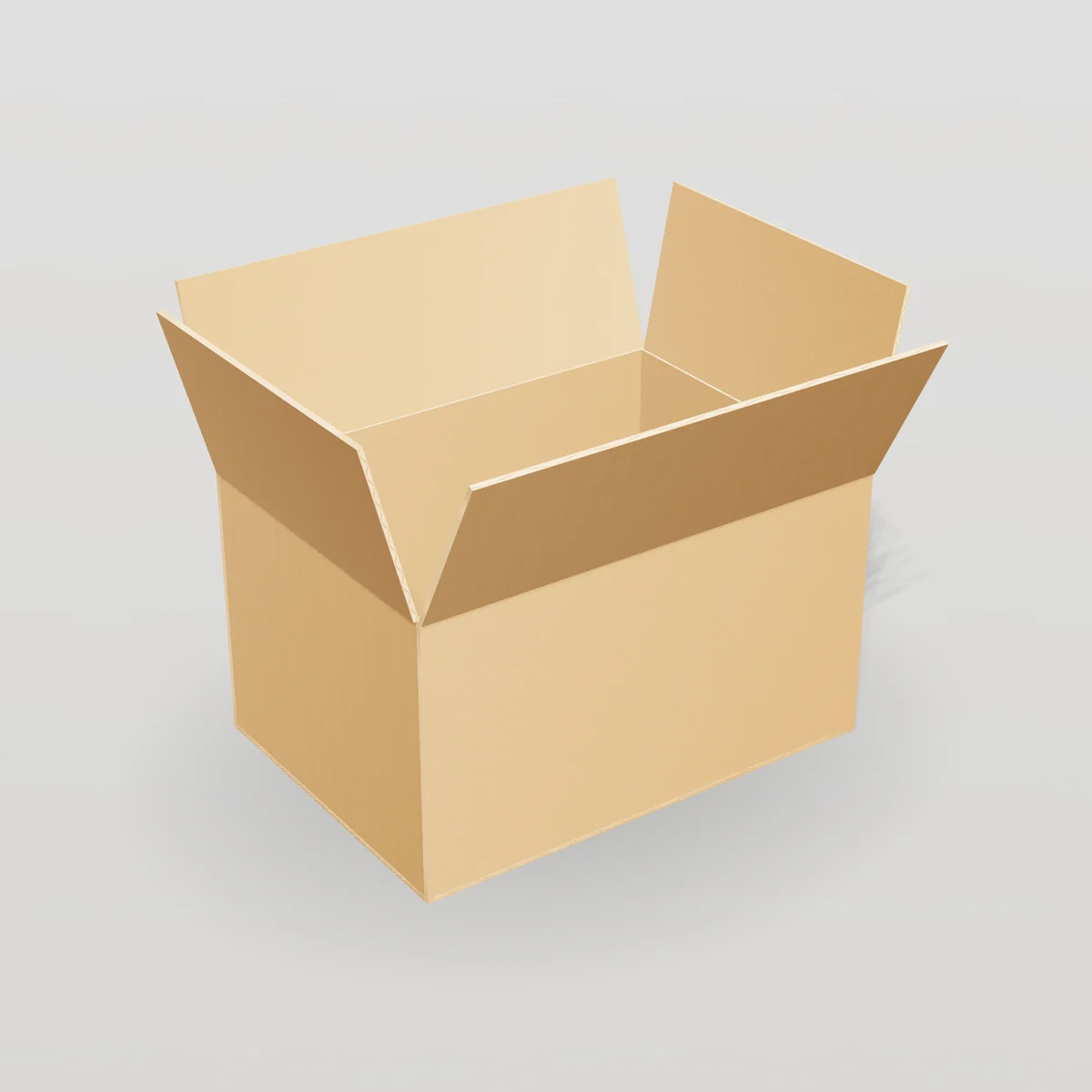
Corrugated board
Corrugated board is two flat liners glued to a wavy middle layer called the flute or medium. The arch structure makes it very strong and stiff for its weight, which is why almost every shipping box is corrugated.
Flute sizes
| Flute | Approximate thickness | Strengths | Common uses |
|---|---|---|---|
| F (micro) | About 1/32 in | Very thin, crisp folds, great print | Small premium mailers, retail boxes |
| E | About 1/16 in | Thin, prints well, folds neatly | Mailer boxes, retail-ready boxes |
| B | About 1/8 in | Good crush resistance | Shipping boxes, displays |
| C | About 5/32 in | Better stacking strength | Standard shipping cartons |
| BC double wall | About 1/4 in | Heavy-duty | Heavy or fragile items, export, pallets |
E-flute is the go-to for printed mailer boxes; B and C for shipping boxes; double wall for heavy products and long supply chains.
Strength ratings: ECT and Mullen
In the US, corrugated strength is usually stated in one of two ways, often printed on a box maker's certificate on the bottom flap:
- ECT (Edge Crush Test) measures how much force the board withstands on its edge, which relates to stacking strength. 32 ECT is a common single-wall grade; 44 ECT and above are stronger; double-wall grades are higher again.
- Mullen (burst test) measures resistance to bursting, which relates to rough handling. Values such as 200 lb test are common for single wall.
ECT is the more useful measure for boxes that are stacked in warehouses and on pallets; Mullen matters for heavy items that might punch through. The Box Strength Calculator estimates stacking strength from ECT and box size.
Liners: kraft or white
- Kraft liner is brown, strong and natural looking; it darkens printed colors.
- White (bleached or mottled white) liner gives brighter colors and a cleaner look, at a slightly higher cost.
- Litho-laminated corrugated has an offset-printed paper sheet glued to the outside for photographic print quality.
When to choose corrugated
Choose corrugated whenever the box ships by parcel carrier, carries more than a few pounds, needs to stack, or must protect fragile contents. Printed E-flute mailers give you both a shipping box and a branded unboxing in one.
Paperboard (folding carton board)
Paperboard is a single, dense sheet of board, measured in points (1 pt = 0.001 in). An 18 pt board is about 0.018 in thick. It folds into the cartons you see on store shelves: cosmetics, supplements, food, candles and electronics accessories.
Main grades
| Grade | What it is | Look | Best for |
|---|---|---|---|
| SBS (solid bleached sulfate) | Bleached virgin fiber throughout | Bright white inside and out | Cosmetics, pharma-style cartons, premium retail |
| CUK / CNK (coated unbleached kraft) | Strong unbleached kraft fiber with a white coated top | White print side, brown inside | Beverage carriers, heavier products, natural looks |
| Uncoated kraft | Unbleached kraft fiber | Brown both sides | Artisan, natural and minimalist brands |
| CRB (coated recycled board) | Recycled fiber with a coated white top | White print side, grey inside | Food, cereal-style cartons, everyday retail |
Choosing thickness
| Product weight | Typical board |
|---|---|
| Under about 4 oz (lip balm, small jewelry) | 14–16 pt |
| About 4–16 oz (creams, candles, supplements) | 18 pt |
| About 1–2 lb (heavier jars, gift sets) | 20–24 pt, or add an insert |
| Over about 2 lb | Corrugated (E or F flute) or rigid |
Heavier board feels more premium but costs more and needs deeper creases. For heavy products, a lighter carton with a fitted insert often performs better than a very thick board.
Coatings on paperboard
Coatings protect print and change the feel: aqueous (water-based, standard), UV gloss or matte varnish, matte or gloss lamination (a thin film), and soft-touch lamination for a velvety feel. Laminations look and feel premium but add a plastic layer; aqueous coatings keep the carton simpler to recycle. See coatings and laminations.
Rigid chipboard
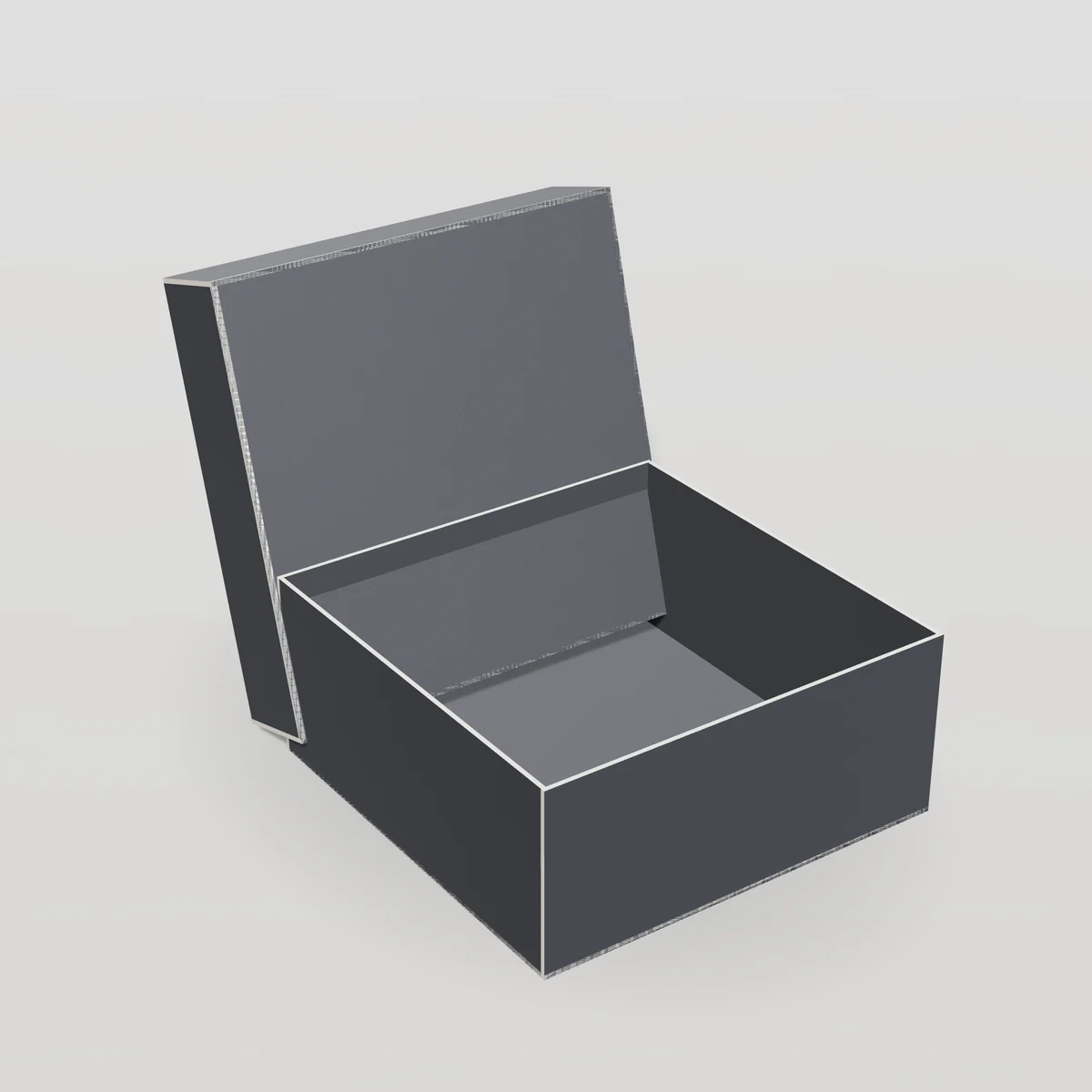
Rigid boxes are made from thick, dense greyboard (often 1.5–3 mm) that is cut, formed into a box and wrapped in printed or specialty paper. Unlike folding cartons, rigid boxes are not shipped flat in most styles (some collapsible designs exist), and their walls do not flex. That solidity is why they feel luxurious.
| Element | Options |
|---|---|
| Board | Around 1.5 mm for small boxes, 2 mm standard, 2.5–3 mm for large or heavy sets |
| Wrap | Printed coated paper, uncoated or textured paper, specialty paper, faux leather |
| Lining | Plain, printed or colored paper inside |
| Closure | Two-piece lid, magnetic flap, hinged, drawer, book style |
| Inserts | Paperboard, EVA foam, molded pulp, fabric-covered |
Rigid boxes cost more per unit and take more space to ship and store, so they suit higher-value products, gift sets and influencer kits. Browse rigid boxes, magnetic closure boxes and two-piece boxes.
Flexible packaging
Flexible packaging such as stand-up pouches is made from thin layers of film, paper or foil laminated together. Each layer adds a property: printability, strength, a barrier against moisture or oxygen, or heat-sealability.
| Structure | Feel | Barrier | Notes |
|---|---|---|---|
| Kraft paper / PE | Natural | Low to medium | Popular for dry foods and tea |
| PET / PE | Glossy, clear options | Medium | Snacks, supplements |
| PET / metallized / PE | Shiny or matte metallic | High | Coffee, light-sensitive products |
| Mono-material PE | Plastic look | Medium | Designed for film recycling where accepted |
Multi-layer laminates protect products very well but are generally hard to recycle. Mono-material structures are designed for film recycling streams, which are not available everywhere; keep claims specific.
Recycled content and sustainability
Paper-based packaging is made from a renewable resource and is widely recycled in the US. A few choices make the biggest difference:
- Right-size the box: less board, less void fill and often lower shipping costs.
- Choose recycled content where performance allows; ask for documented percentages.
- Keep it mono-material: avoid plastic windows, laminations and mixed materials where you can.
- Use paper accessories: paper tape, paper void fill, molded pulp inserts.
- Make disposal clear: print simple, accurate recycling instructions.
Be specific and honest in claims: "box made from 90% recycled paperboard" is clearer and easier to support than "eco-friendly". The Honest Sustainability Claims Kit and our sustainable packaging page explain how.
Certified fiber
Some boards are available with forest certification and chain-of-custody documentation. If you want to print a certification logo, the packaging must be produced under a valid chain-of-custody certificate and the scheme's labeling rules. Ask us before adding any certification mark.
Matching material to your product
| Product | Recommended material | Why |
|---|---|---|
| Apparel shipped to customers | E-flute corrugated mailer, or poly / paper mailer | Light, protective, branded |
| Candles | SBS or kraft carton with insert; corrugated mailer to ship | Retail look plus shipping protection |
| Cosmetics and skincare | SBS carton, rigid box for gift sets | Premium print and feel |
| Coffee | Pouch with valve; kraft carton or mailer for gift sets | Freshness and brand look |
| Bakery and food | Food-appropriate paperboard, window boxes | Presentation and hygiene |
| Electronics | Rigid or SBS with fitted insert; corrugated to ship | Protection and premium unboxing |
| Glass, ceramics | Corrugated with molded pulp or die-cut insert | Shock protection |
| Subscription boxes | Printed E-flute mailer | Ships well, strong unboxing |
| Heavy or bulk items | B, C or double-wall corrugated | Stacking and puncture strength |
Not sure? The 3D Box Builder lets you compare materials and see a live estimate, and our samples let you feel the boards.
How material affects price
Material is often the largest single cost in a box. Price rises with board weight, thickness, recycled or certified specifications, white liners and specialty papers. Rigid boxes cost more because of thicker board, wrapping and hand assembly. To control cost:
- Use the lightest board that protects the product, and test it.
- Choose E-flute over heavier flutes for small mailers.
- Pair a lighter carton with a fitted insert instead of very thick board.
- Reserve rigid boxes for products where the unboxing justifies the cost.
- Standardize on fewer sizes and materials to buy in bigger runs.
See the custom packaging cost guide and the packaging cost calculator.
How material affects printing
| Material | Best print methods | Color notes |
|---|---|---|
| SBS | Offset, digital | Brightest, most accurate colors |
| Coated recycled board | Offset, digital | Very good; slight variation from recycled fiber |
| Kraft paperboard | Offset, digital, flexo | Colors darken and warm; white ink helps |
| Corrugated, white liner | Flexo, digital, litho-lam | Good; litho-lam for photo quality |
| Corrugated, kraft liner | Flexo, digital | Bold, dark colors work best |
| Rigid wrap paper | Offset, digital | Excellent, with specialty paper options |
Read more on printing methods.
Material testing and quality
We check board grade, caliper (thickness) and print surface on incoming materials, and recommend testing your packed product before a full run:
- Fit test with the real product and insert.
- Drop and shake test for fragile items.
- Compression check for stacked shipments.
- Ship test to near and far destinations through your carrier.
- Humidity awareness: corrugated loses strength in damp conditions, so store it dry.
The Pallet & Case Planner and Box Size & Shipping Cost Optimizer help with shipping and stacking decisions.
Food contact and regulated products
Packaging that touches food directly must use materials, inks and coatings suitable for food contact. Many cartons do not touch food directly because the product is wrapped or bagged. Tell us whether your packaging has direct, indirect or no food contact, and we will specify suitable board, inks and coatings. Regulated categories such as supplements and cosmetics also have labeling requirements; see the packaging compliance and labeling guide.
Common material mistakes
| Mistake | Result | Better choice |
|---|---|---|
| Using a retail carton as a shipping box | Crushed corners, damage | Ship the carton inside a corrugated shipper, or use a corrugated mailer |
| Board too thin for a heavy product | Bulging, tearing at tuck flaps | Heavier board, auto-lock bottom or insert |
| Double wall for light items | Higher cost and weight | E or B flute, right-sized |
| Bright brand color on kraft | Muddy color | White board, white ink or a design suited to kraft |
| Plastic window "for visibility" on an eco brand | Harder to recycle | Die-cut window without film, or show the product on the print |
| Rigid box for a low-price item | Packaging costs more than margin allows | Printed folding carton or mailer with inside print |
Material glossary
| Term | Meaning |
|---|---|
| Caliper | Board thickness |
| Point (pt) | 0.001 inch; used for paperboard thickness |
| Flute | The wavy middle layer of corrugated board |
| Liner | The flat outer layers of corrugated board |
| ECT | Edge Crush Test, a measure of corrugated stacking strength |
| Mullen | Burst strength test for corrugated |
| BCT | Box Compression Test: the load a finished box withstands |
| SBS | Solid bleached sulfate paperboard |
| CUK / CNK | Coated unbleached kraft paperboard |
| CRB | Coated recycled paperboard |
| Greyboard / chipboard | Dense recycled board used for rigid boxes |
| Litho-lam | Printed sheet laminated onto corrugated |
| Molded pulp | Inserts formed from recycled paper fiber |
| Mono-material | Packaging made from a single material type |
| Post-consumer content | Recycled fiber recovered after consumer use |
More terms in the packaging glossary.
How to specify material in a quote request
- What the box must protect: product weight, fragility, how it ships.
- The look you want: white, kraft, colored, premium.
- Any requirements: recycled content, certification, food contact.
- Box style and inside dimensions.
- Quantity and target date.
If you are unsure, describe the product and how it ships, and we will recommend a material and grade with a 3D proof. Start a quote or order samples.
Five product examples, start to finish
Lip balm in a small retail carton
Product: 0.15 oz tube, very light. Material: 16 pt SBS, reverse tuck end, aqueous coating. Why: bright white surface for small regulatory text, light enough to keep cost low, sturdy enough for shelf handling.
Soy candle, 8 oz, sold online and in stores
Product: glass jar, about 1 lb packed. Material: 18 pt kraft or SBS carton with a paperboard insert for retail, shipped in an E-flute corrugated mailer. Why: the carton presents the candle; the mailer protects the glass in parcel shipping.
Apparel subscription box
Product: folded garments, 1–3 lb per box. Material: printed E-flute corrugated mailer with inside print and tissue. Why: light, strong enough for parcel networks and ideal for a branded unboxing.
Coffee gift set
Product: two 12 oz bags and a mug. Material: rigid chipboard box with paperboard insert for gifting, or E-flute mailer with corrugated insert for shipping-first brands. Why: rigid for the premium gift moment; corrugated if parcel shipping and cost matter most.
Wholesale case of jars
Product: 12 jars, about 15 lb. Material: C-flute or BC double-wall RSC with dividers. Why: stacking strength on pallets and protection between jars.
Moisture, temperature and storage
Paper-based packaging is sensitive to its environment:
- Humidity weakens corrugated. Boxes stored in damp warehouses or shipped through humid climates lose compression strength. Store flat stock off the floor in a dry area.
- Cold and condensation can affect adhesives and coatings, especially for frozen or refrigerated products; specify packaging for those conditions.
- Sunlight fades some printed colors over long periods on display.
- Store boxes flat and assemble close to use to keep creases crisp.
- Rotate stock: use older packaging first, particularly for seasonal designs.
Materials for inserts and protection
| Insert material | Strengths | Considerations |
|---|---|---|
| Paperboard | Printable, recyclable with the box, low cost | Moderate protection |
| Corrugated | Strong, protective, recyclable | Less refined look |
| Molded pulp | Protective, made from recycled fiber, natural look | Tooling for custom shapes |
| EVA foam | Precise fit, premium, very protective | Plastic; harder to recycle |
| Paper void fill | Flexible, recyclable | Less presentation value |
Read more on custom inserts.
E-commerce, retail and wholesale needs
| Channel | What matters most | Typical materials |
|---|---|---|
| E-commerce (direct to consumer) | Survives parcel networks, light weight, branded unboxing | E-flute mailers, corrugated shippers, poly or paper mailers |
| Retail shelf | Print quality, shelf presence, compact size | SBS, kraft or recycled paperboard cartons, rigid gift boxes |
| Wholesale and distribution | Stacking strength, pallet efficiency, labeling | B, C and double-wall corrugated cases |
| Marketplaces | Meets receiving requirements, protects in multi-carrier networks | Corrugated cases and mailers sized to rules |
Many products need two layers: a retail carton for presentation and a corrugated shipper for transit. Plan both together so the carton fits the shipper efficiently.
Material documentation
For some products and customers you may need documents about the material:
- Board specifications: grade, caliper and, for corrugated, ECT or Mullen ratings.
- Recycled-content statements for claims on pack or for retailers.
- Food-contact suitability statements for packaging that touches food.
- Certification documents for certified fiber claims.
Tell us which documents you need when you request a quote; we confirm what is available for the specified material.
Material decision checklist
- How heavy and fragile is the product?
- Will it ship by parcel, sit on a shelf, or both?
- Will boxes be stacked, and how high?
- Does the brand look call for white, kraft or premium rigid?
- Which print method and finishes are planned?
- Are there recycled-content, certification or food-contact requirements?
- What is the target cost per box?
Answering these seven questions usually narrows the choice to one or two materials.
Going deeper on each family
Corrugated details that matter
- Box maker's certificate: a printed stamp, usually on a bottom flap, stating the board's ECT or burst rating and other limits. It helps you confirm the grade you ordered.
- Single, double and triple wall: single wall has one flute; double wall has two flutes and three liners for heavier loads; triple wall is used for very heavy industrial and export packaging.
- Flute direction: flutes running vertically in the box walls give the best stacking strength, which is why shipping boxes are made that way.
- Crush and edge damage: corners and edges take the most abuse in parcel networks; right-sizing and inserts that keep products away from walls reduce damage.
Paperboard details that matter
- Grain direction: paperboard is stiffer in one direction. Cartons are laid out so the grain supports the panels that need stiffness, and folds across the grain are crisper.
- Brightness and shade: SBS is the brightest white; recycled boards are slightly greyer inside; this affects how colors and white areas look.
- Fold cracking: dark, heavy ink or coatings across folds can crack. Good scoring and keeping heavy coverage off creases prevents it.
- Stiffness vs. thickness: two boards of the same thickness can feel different because of fiber type and density. Ask for samples when feel matters.
Rigid box details that matter
- Wrap papers: printed coated paper for full-color designs; uncoated or textured papers for natural or tactile looks; specialty papers with linen, leather-like or pearlescent effects.
- Corners and edges: the wrap is folded around edges and corners. Artwork needs generous extensions so no board shows at the corners.
- Lid fit: two-piece boxes are designed with a slight clearance so lids slide on smoothly without falling off.
- Magnets and ribbons: magnetic closures and ribbon pulls are built in during assembly; plan them at the design stage.
Flexible packaging details that matter
- Zippers and seals: resealable zippers, tear notches and heat seals affect usability and shelf life.
- Valves: one-way degassing valves let freshly roasted coffee release gas without letting air in.
- Windows: clear windows show the product but reduce barrier performance in that area.
- Finishes: matte, gloss and soft-touch effects are available on many films.
Material myths
| Myth | Reality |
|---|---|
| Thicker is always better | The right grade protects the product at the lowest weight; over-specifying adds cost and shipping weight |
| Kraft is always the greener choice | Recycled content, right-sizing and avoiding plastic components usually matter more than board color |
| Rigid boxes are only for luxury brands | Small rigid boxes can be cost-effective for high-value or gift products |
| Corrugated cannot look premium | Printed E- and F-flute mailers with inside print and good finishes look very premium |
| Recycled board prints poorly | Coated recycled board prints very well for most designs |
How to evaluate material samples
When you have samples in hand, compare them the same way:
- Feel and stiffness: flex the panel; heavier products need stiffer board.
- Surface: smooth and coated for detailed print; uncoated or kraft for a natural look.
- Color: view white and kraft boards next to your brand colors in daylight.
- Folding: fold a sample along a crease; check for cracking.
- Fit: place your product in a sample box of similar size.
- Ship test: ship a packed sample to yourself and inspect it on arrival.
Request board, finish and box samples before large orders.
Materials and finishes compatibility
| Material | Coatings | Foil | Embossing | Soft-touch | Windows |
|---|---|---|---|---|---|
| SBS paperboard | Yes | Excellent | Excellent | Yes | Yes |
| Coated recycled board | Yes | Good | Good | Yes | Yes |
| Kraft paperboard | Limited | Good | Good | Limited | Yes |
| Corrugated (direct print) | Water-based | Possible | Light | Via laminated sheet | Yes |
| Rigid wrap paper | Yes | Excellent | Excellent | Yes | Possible |
See finishes for details.
Choosing a corrugated grade
Corrugated grade depends on product weight, box size, stacking and the shipping network. As a starting point:
- Light items in small mailers: E-flute single wall.
- Typical e-commerce shipping boxes: B or C flute single wall, often 32 ECT.
- Heavier products or tall stacks: higher ECT single wall or double wall.
- Very heavy, export or long storage: double or triple wall.
Confirm the grade with a strength estimate in the Box Strength Calculator and a ship test, and ask us for a recommendation based on your product.
Materials by industry
Cosmetics and skincare
SBS paperboard for crisp, bright cartons with fine regulatory text; rigid boxes for gift sets; E-flute mailers for shipping. Recycled paperboard works well for brands emphasizing lower impact. See cosmetic boxes.
Candles
Paperboard cartons with inserts for retail, rigid boxes for gifts and corrugated mailers or shippers to protect glass in transit. See candle boxes.
Food and bakery
Food-appropriate paperboard and coatings, window boxes for visibility and corrugated cases for distribution. Specify the level of food contact when you request a quote. See food boxes.
Coffee and tea
Barrier pouches protect freshness; kraft cartons and mailers suit gift sets and subscriptions. See coffee and tea boxes.
Apparel and footwear
Corrugated mailers, poly or paper mailers for apparel; sturdy paperboard or corrugated for shoe boxes, which often double as shipping boxes.
Electronics
Rigid or SBS cartons with molded pulp or foam inserts for retail; corrugated shippers for transit. See electronics boxes.
Subscription and e-commerce
Printed E-flute mailers are the default; corrugated RSCs for heavier or multi-item orders. See subscription boxes and e-commerce boxes.
Supplements and CBD
Paperboard cartons that print small text clearly, often with tamper-evident features and child-resistant considerations depending on the product. See supplement boxes.
Material and box style compatibility
| Box style | Common materials |
|---|---|
| Mailer boxes | E- or F-flute corrugated, kraft or white |
| Shipping boxes | B, C or double-wall corrugated |
| Product boxes and folding cartons | SBS, kraft or recycled paperboard |
| Rigid boxes | Chipboard with printed or specialty wrap |
| Magnetic closure boxes | Chipboard with wrap and built-in magnets |
| Two-piece boxes | Rigid chipboard or heavy paperboard |
| Pillow boxes | Paperboard or kraft |
| Gable boxes | Paperboard, kraft or light corrugated |
| Display boxes | Paperboard or E-flute corrugated |
| Tube packaging | Spiral-wound paperboard tubes |
| Stand-up pouches | Laminated films, kraft paper laminates |
Questions to ask about materials
- What board grade, caliper and (for corrugated) ECT will be used?
- Is the material suitable for my product's weight and how it ships?
- What recycled content is available, and is it documented?
- Is the material suitable for any food contact?
- How will my colors look on this board?
- Can I get a sample of this exact material?
Material cost-saving checklist
- Use the lightest grade that passes a real ship test.
- Choose E-flute rather than heavier flutes for small mailers.
- Combine a lighter carton with a fitted insert instead of very thick board.
- Standardize on fewer materials and sizes to buy in larger runs.
- Use kraft or one-color designs where the look suits the brand.
- Reserve rigid boxes for products where the unboxing justifies the cost.
- Store flat stock properly so less is damaged before use.
How materials behave in the parcel network
Parcel networks are tough on packaging. A typical package is handled many times, travels on conveyors, slides down chutes and sits under other parcels in trucks. Different materials respond differently:
- Corrugated absorbs knocks and distributes loads. Corners and edges take the most damage, so right-sized boxes with products held away from the walls survive best.
- Folding cartons are not designed for parcel shipping on their own. Ship them inside a corrugated outer box or mailer.
- Rigid boxes resist crushing but their wrapped surfaces scuff and dent; protect them with an outer shipper.
- Poly and paper mailers suit soft goods that cannot break; they offer little protection from crushing.
- Inserts stop products moving inside the box, which prevents most internal damage.
Damage often comes from movement rather than impact. A product that cannot move inside its box, in a box that fits snugly, usually arrives intact. Test with the Packaging Launch Checklist ship-test steps and adjust before a full run.
Matching material to brand personality
Material sends a message before anyone reads the print:
| Brand personality | Material direction |
|---|---|
| Clean, clinical, precise | Bright white SBS, smooth coatings |
| Natural, artisan, honest | Uncoated kraft, recycled board, one-color print |
| Luxurious, giftable | Rigid chipboard with specialty wrap papers |
| Playful, bold | White corrugated or SBS with full-color print |
| Rugged, practical | Kraft corrugated, stencil-style one-color print |
| Modern, minimal | Matte coated board, restrained color |
Choose the material that fits the brand first, then confirm it protects the product and fits the budget.
Key takeaways
- Corrugated ships; paperboard presents; rigid impresses; films protect freshness.
- E-flute mailers are the most popular choice for direct-to-consumer brands.
- 18 pt paperboard suits most retail cartons; heavier products need more support.
- ECT ratings and box size determine stacking strength.
- Kraft darkens colors; white board or white ink keeps them bright.
- Recycled content, right-sizing and mono-material design have the biggest sustainability impact.
Learn more
- Corrugated cardboard
- SBS paperboard
- Kraft paperboard
- Recycled paperboard
- Rigid chipboard
- Sustainable packaging
- Packaging materials guide
Frequently asked questions
What is the strongest packaging material?
For shipping, corrugated board offers the best strength for its weight; double-wall corrugated is the strongest common option for heavy items. Rigid chipboard boxes have very stiff walls but are designed for presentation rather than parcel shipping, and usually ship inside a corrugated outer box.
What does 18 pt mean?
Paperboard thickness is measured in points, where 1 point equals 0.001 inch. An 18 pt board is about 0.018 inch thick, the most common weight for retail cartons.
What is the difference between ECT and Mullen?
ECT measures edge crush resistance, which relates to how well boxes stack. Mullen measures burst resistance, which relates to how well the board resists punctures and rough handling. ECT is more common for modern shipping boxes.
Is kraft better for the environment than white board?
Not automatically. Kraft avoids bleaching and has a natural look, while white boards can also contain recycled fiber. Recycled content, right-sizing, avoiding plastic components and clear disposal instructions usually matter more than color.
Can I get recycled-content packaging?
Yes. Corrugated and many paperboards are available with recycled content. Ask for the documented percentage before you print a recycled-content claim.
Do rigid boxes ship flat?
Most rigid boxes are assembled at the factory and ship ready to use, which takes more space. Some collapsible rigid styles ship flat and fold into shape.
Which material is best for a subscription box?
A printed E-flute corrugated mailer is the most popular choice: strong enough to ship by parcel carrier, light, and great for inside and outside printing.
Can I see samples of the materials?
Yes. Our samples page lets you request board and finish samples so you can feel the difference before you order.
What board should I choose for a heavy product?
Heavier products need stiffer board: thicker paperboard with an auto-lock bottom or insert for retail cartons, and higher-ECT or double-wall corrugated for shipping. Test with the real product.
Is corrugated always brown?
No. Corrugated can have white liners for bright printing, or a printed sheet laminated to the outside for photo-quality graphics.
Does recycled board look different from virgin board?
Coated recycled board looks very similar on the printed side; the reverse side is usually greyer. Uncoated recycled board can show small fiber flecks, which many natural brands like. Ask for samples to compare.
Can I mix materials in one package?
Yes, for example a paperboard carton with a molded pulp insert inside a corrugated shipper. Keeping every component paper-based makes disposal simpler for customers.
Which material is best for shipping fragile items?
Corrugated board with a fitted insert, such as molded pulp or die-cut corrugated, gives the best protection for glass, ceramics and electronics. Always run a ship test with the packed product before ordering a full run.