Key takeaways
- Box sizes are quoted as inside dimensions: Length × Width × Height.
- Carriers bill the greater of actual weight and dimensional weight.
- UPS and FedEx divide L×W×H by 139 for daily rates; USPS uses 166 over 1 cubic foot.
- Trimming one inch from each side can cut billable weight by 20–35%.
Why box size quietly controls your costs
Box size seems like a simple decision, but it influences almost every cost in shipping: the price of the box, the amount of void fill, the risk of damage and, most of all, the shipping bill through dimensional weight. A box that is one inch too big on each side can raise billable weight by a third or more. Multiply that by thousands of orders and box size becomes one of the biggest levers in an e-commerce business.
This guide explains how to measure boxes correctly, how much clearance to leave, how dimensional weight is calculated by major US carriers, and how to right-size your packaging.
Inside vs. outside dimensions
Boxes have two sets of dimensions:
- Inside dimensions: the usable space inside the box. This is what box makers use when you order a custom box.
- Outside dimensions: the external size, which is what carriers measure for shipping.
The difference depends on board thickness. For E-flute (about 1/16 in), outside dimensions are roughly 1/8 in larger than inside; for C-flute, about 1/4 in larger; for double-wall, about 1/2 in larger.
The order of dimensions
Box dimensions are written as Length × Width × Height (L × W × H):
- Length: the longer side of the opening
- Width: the shorter side of the opening
- Height (depth): the distance from the opening to the bottom
For a mailer box, the opening is the lid; for a shipping box (RSC), it is the flaps. For a tuck end carton, the opening is the tuck end.
How to measure your product
- Measure at the widest points, including caps, handles, pumps and packaging.
- Measure the packed kit, not just the product: tissue, inserts, cards and accessories take space.
- Use a rigid ruler or calipers for small items.
- Measure several units if products vary (handmade goods, apparel).
How much clearance to add
| Packing approach | Clearance per dimension |
|---|---|
| Snug retail carton | 1/16–1/8 in |
| Product with tissue wrap | 1/4–1/2 in |
| Light void fill | 1/2–1 in |
| Fragile with cushioning | 1–2 in on every side (2–4 in total) |
| Box-in-box | 2 in between inner and outer box |
Dimensional weight explained
Carriers charge by space as well as weight, because a truck can fill up with light, bulky boxes. Dimensional weight (DIM weight) converts a package's volume into a weight. Carriers bill the greater of actual weight and DIM weight. This is called billable weight.
Formula
DIM weight (lb) = Length × Width × Height (in) ÷ divisor
Carriers round each dimension to the nearest whole inch first, and round the result up to the next pound.
| Carrier (US domestic, published daily rates) | Divisor | When it applies |
|---|---|---|
| UPS | 139 | All packages |
| FedEx | 139 | All packages |
| USPS (Ground Advantage, Priority Mail) | 166 | Packages larger than 1 cubic foot (1,728 cubic inches) |
Divisors and rules are set by carriers and can change; negotiated contracts may use different divisors. Always check your current carrier rates.
Example
A 12 × 10 × 6 in box weighing 3 lb:
- Volume = 720 cubic inches
- UPS / FedEx DIM weight = 720 ÷ 139 = 5.18 → 6 lb
- Billable weight = max(3, 6) = 6 lb
The same product in an 11 × 9 × 5 in box:
- Volume = 495 cubic inches
- DIM weight = 495 ÷ 139 = 3.56 → 4 lb
- Billable weight = 4 lb
That is two billable pounds saved on every shipment. At 500 shipments a month, the saving can be substantial. Calculate yours with the DIM Weight Calculator.
Right-sizing strategies
1. Analyze your orders
Export recent orders and group them by item combination. Most businesses find that a small number of combinations make up most orders.
2. Choose a small set of sizes
Three to five box sizes usually cover the majority of orders efficiently. More sizes reduce empty space but increase complexity, storage and minimum order quantities.
3. Use custom sizes, not "close enough" stock sizes
Custom boxes are made to your dimensions. If a stock size is an inch too big on every side, a custom size can pay for itself through shipping savings.
4. Reduce height first on mailers
Mailer boxes use double side walls, so height drives both board usage and volume. Shallow, wide boxes are efficient.
5. Consider the pack-out
Can products be laid flat? Can two items nest? Small changes in packing orientation can reduce box size.
6. Watch carrier size thresholds
Large packages may incur additional handling or oversize surcharges. Check your carrier's size limits and surcharge thresholds when designing large boxes.
Popular box sizes and typical contents
| Size (in) | Typical contents |
|---|---|
| 6 × 4 × 2 | Jewelry, cosmetics, small accessories |
| 8 × 6 × 2 | Skincare sets, socks, phone accessories |
| 9 × 6 × 3 | Candles, small apparel, beauty kits |
| 10 × 8 × 4 | T-shirts, books, subscription kits |
| 12 × 9 × 4 | Hoodies, bundles |
| 12 × 10 × 6 | Multi-item orders, small appliances |
| 14 × 10 × 8 | Home goods, larger kits |
| 16 × 12 × 10 | Wholesale case packs |
Pallets and freight
For wholesale and B2B, box size also determines how many cartons fit on a pallet. The standard US GMA pallet is 48 × 40 in. Cartons that tile the pallet cleanly reduce freight cost per unit. Try the Pallet Calculator.
Common sizing mistakes
- Measuring the product, not the packed kit.
- Mixing up inside and outside dimensions.
- Ignoring board thickness when changing materials.
- Too many box sizes.
- Oversizing "to be safe", which increases damage and shipping costs.
- Ignoring DIM weight in packaging decisions.
A step-by-step right-sizing project
Right-sizing sounds simple, but most brands never do it systematically. Here is a practical project you can complete in a week, even without a packaging engineer.
Day 1: Gather order data
Export the last three to six months of orders from your store or order management system. For each order you need the items shipped and the box or mailer used. If you do not track the box used, sample a few days of packing and record it by hand. You want to see which item combinations are common, not every unusual order.
Day 2: Group orders into packing profiles
Group orders by what physically ships together. A skincare brand might find that 60% of orders are a single product, 25% are a two-product set and the rest are larger bundles. An apparel brand might group by number and type of garments. These groups are your packing profiles. Most stores find that three to five profiles cover the large majority of orders.
Day 3: Measure the packed kit for each profile
Pack a typical order for each profile exactly as customers receive it, including tissue, inserts, cards and samples. Measure the packed kit at its widest points. Add the clearance your protection approach needs (see the clearance table above). The result is the inside dimension you need for each profile.
Day 4: Compare with your current boxes
Calculate the volume of the packed kit and the inside volume of the box you use today. Divide one by the other to get the fill rate. Fill rates below about 50% usually mean significant savings are available. Then calculate dimensional weight for the current outside dimensions and the proposed ones using the DIM Weight Calculator. Multiply the difference in billable pounds by your shipments per month and your cost per billable pound to estimate monthly savings.
Day 5: Prototype and test
Order plain structural samples in the proposed sizes, pack real orders, and run simple drop tests. Check that products do not move and that packing is not slower. Adjust where needed.
Day 6–7: Decide and order
Choose the final set of sizes, keeping the number manageable. Request quotes at two or three quantities for each size. Plan inventory so you do not run out of the new boxes while old stock is used up.
How much can right-sizing save?
Savings depend on how oversized your current boxes are, your shipping volume and your carrier rates. As an illustration of the mechanics only:
| Scenario | Current box | Right-sized box | Billable weight change per shipment |
|---|---|---|---|
| Two skincare products, 1.5 lb packed | 12 × 10 × 6 in (6 lb DIM) | 9 × 6 × 4 in (2 lb DIM) | 6 lb → 2 lb |
| One hoodie, 1.8 lb | 14 × 10 × 6 in (7 lb DIM) | 12 × 10 × 3 in (3 lb DIM) | 7 lb → 3 lb |
| One candle, 1.6 lb | 10 × 8 × 6 in (4 lb DIM) | 5 × 5 × 5 in (1 lb DIM; actual 2 lb bills) | 4 lb → 2 lb |
DIM figures use the 139 divisor for UPS and FedEx daily rates. Your actual savings depend on your rates, zones and contracts. The point is that box size often has more effect on shipping cost than the price of the box itself.
Sizing for different packaging styles
Mailer boxes
Mailers are measured by inside length (left to right as you face the opening), width (front to back) and height. Because mailers have double side walls and a tuck lid, they use more board than an RSC of the same inside size, and the outside dimensions are larger by more than the board thickness alone. Keep mailers shallow where possible: height drives both board use and volume. See mailer boxes.
Regular slotted cartons (RSC)
RSCs are measured length × width × depth, with length and width forming the opening. Flaps on an RSC meet in the middle, so the flap length equals half the width. RSCs use board efficiently and are easy to right-size. See shipping boxes.
Tuck end cartons
Tuck end cartons are measured with length and width forming the tuck opening and height being the tallest dimension. A 2 × 2 × 6 in carton is a tall, slim carton opened from the top. Allow tuck clearance so products slide in without scuffing. See tuck end boxes.
Rigid boxes
Rigid boxes are thick, so inside and outside dimensions differ more: greyboard of about 2 mm plus wrap paper on each wall adds several millimeters to every dimension. Always specify inside dimensions and let the manufacturer calculate the outside. See rigid boxes.
Pouches
Pouches are specified by width, height and bottom gusset. Their usable volume is best found by filling samples. See stand-up pouches.
International shipping and metric dimensions
If you ship internationally, carriers usually calculate volumetric weight in metric: length × width × height in centimeters ÷ 5,000 (some services use 6,000), giving kilograms. Convert inches to centimeters by multiplying by 2.54. A 12 × 10 × 6 in box is about 30.5 × 25.4 × 15.2 cm, or about 11,800 cm³, which is about 2.4 kg volumetric weight at ÷5,000.
Sizing and sustainability
Right-sized packaging uses less material, needs less void fill and fits more parcels in each truck, which reduces emissions per shipment. It also reduces damage, because products cannot build momentum in a snug box. That is why right-sizing is often the first recommendation in any sustainable packaging program. See our sustainable packaging guide.
Sizing glossary
- Inside dimensions: the usable space inside a box; used to order custom boxes.
- Outside dimensions: the external size; used by carriers.
- Clearance: the space added around a product for protection or packing material.
- Fill rate: product volume divided by box volume.
- DIM divisor: the number carriers divide volume by to get dimensional weight.
- Billable weight: the greater of actual and dimensional weight.
- Packing profile: a group of orders that ship together in the same way.
- Oversize surcharge: an extra fee for packages exceeding carrier size limits.
Sizing mistakes by product type
| Product | Common mistake | Better approach |
|---|---|---|
| Apparel | Boxes much deeper than folded garments | Shallow mailers or poly mailers |
| Candles | Extra space instead of inserts | Snug box with a cradle insert |
| Cosmetics | One large box for all orders | Two or three sizes by order profile |
| Electronics | Too little clearance for cushioning | Suspension inserts or box-in-box |
| Books | Boxes too large, books slide | Book wraps or snug mailers |
| Gift sets | Oversized boxes for impact | Snug box with a premium insert |
Tools for measuring products and boxes
- Rigid steel ruler or tape measure for most products.
- Digital calipers for small items, closures and board thickness.
- A flat surface and a square (or two books) to measure the true height of irregular items.
- A kitchen or shipping scale for weights.
- A notebook or spreadsheet to record dimensions, weights and packing profiles.
Measure each product two or three times and use the largest value. For irregular products, measure the smallest rectangular block that would contain the product.
Sizing for multi-item orders
When orders combine products, there are two approaches:
- One box per common combination, sized exactly. Best when a few combinations dominate.
- A few flexible sizes with fill or adjustable inserts. Best when combinations vary widely.
Many stores use both: exact sizes for best-sellers and sets, flexible sizes for the rest.
Worked example: one store, three sizes
An online store selling candles and home fragrance reviewed three months of orders and found:
- 55% of orders: one 8 oz candle
- 30% of orders: two candles or a candle plus a diffuser
- 15% of orders: larger bundles and gift sets
They previously shipped everything in a 12 × 10 × 6 in box with air pillows. After measuring packed kits with inserts, they chose:
- 5 × 5 × 5 in mailer with a cradle insert for single candles
- 10 × 5 × 5 in mailer with a two-cavity insert for pairs
- 12 × 10 × 6 in box kept for bundles, with paper fill
For single-candle orders, the DIM weight at the 139 divisor dropped from 6 lb to 1 lb (actual weight of about 2 lb now determines the bill). Pairs dropped from 6 lb to 2 lb DIM. Bundles stayed the same. Breakage fell because candles no longer moved inside the box, and packing became faster because each insert had a clear place for each product.
These figures illustrate the method; your results depend on your products, rates and orders.
Revisiting sizes over time
Product lines change, and so do order patterns. Review box sizes when you launch new products, add bundles, change carriers or contracts, or notice rising damage or shipping costs. A quarterly look at fill rates and DIM weight keeps packaging efficient as you grow.
Sizing checklist
- [ ] Packed kits measured for each packing profile
- [ ] Clearance chosen for protection level
- [ ] Inside dimensions written L × W × H
- [ ] Outside dimensions estimated for the board
- [ ] DIM weight compared for current and new sizes
- [ ] Carrier size thresholds checked for large boxes
- [ ] Samples ordered and tested
- [ ] Number of sizes kept manageable
Box sizing for wholesale and freight
Wholesale shipments move in cases on pallets, and sizing priorities change:
- Case dimensions should fit standard pallets efficiently, ideally with no overhang. On a 48 × 40 in pallet, case footprints that divide evenly into the deck waste less space.
- Case height affects how many layers fit under the load height limit (often 60–72 in including the pallet).
- Case weight should be manageable for warehouse staff and within retailer limits.
- Case count (units per case) should match retailer ordering patterns.
Freight is often priced by space and weight, so efficient case and pallet patterns reduce costs. Use the Pallet Calculator to compare case sizes.
Sizing and the unboxing experience
Right-sized boxes also feel better to open. A product that fits its box snugly, with an insert or tissue, looks deliberate and premium. A small product rattling in a large box with crumpled paper feels careless, and customers often comment on oversized packaging in reviews. Good sizing is part of good branding.
Comparing carriers for the same box
The same box can bill differently by carrier and service because of different divisors and rules. Using published divisors as an illustration:
| Outside size | Volume | UPS/FedEx DIM (÷139) | USPS DIM (÷166, over 1 cu ft) |
|---|---|---|---|
| 10 × 8 × 4 in | 320 in³ | 3 lb | Not applied (under 1,728 in³) |
| 12 × 10 × 6 in | 720 in³ | 6 lb | Not applied |
| 14 × 12 × 12 in | 2,016 in³ | 15 lb | 13 lb |
| 18 × 14 × 12 in | 3,024 in³ | 22 lb | 19 lb |
For small, light parcels, USPS services may not apply dimensional weight at all, which can make them economical. For larger parcels, divisors and zone pricing both matter. Compare actual rates for your typical packages, and remember that negotiated contracts can change divisors.
Packaging for oversized products
Some products are simply large: furniture parts, rugs, sports equipment, framed art. For these:
- Minimize outer dimensions with tight-fitting packaging and corner protectors rather than large boxes.
- Check length and girth limits to avoid oversize charges.
- Consider freight services for very large or heavy items.
- Use double-wall corrugated and edge protection.
- Design for handling, with handholds where appropriate.
Why carriers use dimensional weight
Trucks, planes and sorting facilities have limited space. Before dimensional pricing, a carrier could fill a truck with large, light boxes and earn little because it charged by weight alone. Dimensional weight aligns prices with the space a parcel uses. For shippers, the lesson is clear: space costs money. Every cubic inch of empty box is paid for in shipping, in board and in void fill.
The rise of e-commerce made this more important. As more light, bulky parcels moved through networks, carriers tightened dimensional rules, applying them to more packages and adjusting divisors. Brands that right-size packaging protect themselves from these changes.
A note on rounding
Carriers typically round each dimension to the nearest whole inch before calculating volume, then round the dimensional weight up to the next whole pound. That means a box measuring 12.4 × 9.6 × 6.5 in may be treated as 12 × 10 × 7 in. When you design boxes, check outside dimensions against these rounding rules; trimming a fraction of an inch to stay below a whole number can sometimes lower billable weight.
When actual weight wins
For dense products (books, liquids, tools, glassware), actual weight often exceeds dimensional weight, so shrinking the box saves less on shipping. Right-sizing still reduces material, void fill and damage, but the shipping savings are smaller. Calculate both weights to know which one drives your costs.
Inch and millimeter conversions for common sizes
| Inches | Millimeters (approx.) |
|---|---|
| 6 × 4 × 2 | 152 × 102 × 51 |
| 8 × 6 × 2 | 203 × 152 × 51 |
| 9 × 6 × 3 | 229 × 152 × 76 |
| 10 × 8 × 4 | 254 × 203 × 102 |
| 12 × 9 × 4 | 305 × 229 × 102 |
| 12 × 10 × 6 | 305 × 254 × 152 |
| 14 × 10 × 8 | 356 × 254 × 203 |
| 16 × 12 × 10 | 406 × 305 × 254 |
Multiply inches by 25.4 to convert to millimeters.
Sizing questions to ask your fulfillment partner
- Which box sizes do you stock, and can you store our custom sizes?
- How do you choose the box for each order?
- Do you use automated packaging equipment with size limits?
- How do you report shipping costs and damage?
- Can you share data on fill rates or billable weights?
Fulfillment partners see thousands of orders and can often suggest sizing improvements.
Sizing FAQ, extended
Should I size boxes to the largest product in a range? Size to your most common product or order profile; use a second size for larger items rather than oversizing every box.
Can inserts let one box fit several products? Yes. Adjustable or product-specific inserts can make one outer size work for several products.
Does board thickness change outside dimensions much? For E-flute, outside is about 1/8 in larger than inside; for double-wall, about 1/2 in. It matters for DIM weight rounding.
Sizing for gift and premium packaging
Premium packaging sometimes uses a larger box for presentation. That can be appropriate, but be deliberate: use a fitted insert so the product sits beautifully rather than floating, ship the premium box inside a right-sized outer mailer, and check the dimensional weight of the outer box. A generous presentation box inside an efficient shipper gives the best of both.
Summary: what to remember
- Order custom boxes by inside dimensions; carriers measure outside.
- Measure the packed kit, including inserts and tissue.
- Add clearance by protection level.
- Calculate DIM weight for every common box.
- Use a small set of right-sized boxes for your top orders.
- Revisit sizes when products, carriers or rates change.
- Watch carrier size thresholds for large boxes.
- Remember that right-sizing also reduces damage and waste.
Common mistakes to avoid
Measuring the bare product. Inserts, tissue, cards and protective sleeves all take space. Measure the fully packed kit, not the product alone.
Confusing inside and outside dimensions. Custom boxes are specified by inside dimensions, but carriers bill by outside dimensions. Board thickness adds to every side, and corrugated adds more than paperboard.
Adding clearance everywhere. Generous clearance invites movement and void fill. Add only what your protection method needs, and use inserts to hold products still.
Ignoring rounding. Carriers round each dimension up to the next whole inch before calculating dimensional weight. A box that is 12.1 inches is billed as 13.
Using one box for everything. A single size forces small orders into big boxes. A small set of sizes covering your most common orders usually pays for itself quickly.
Never revisiting sizes. Products, bundles and carrier rules change. Review box sizes when any of them change and at least once a year.
For quick reference, see our standard box sizes chart and the step-by-step guide on how to measure a box, which explains the length × width × height order for every box style.
Sources and further reading
Official and standards-body pages we used for this guide. Rules and standards are updated from time to time, so check the current version before you rely on them.
- USPS Flat Rate quick reference: current Flat Rate box and envelope options.
- UPS packaging guidelines (PDF): carrier guidance on boxes, cushioning and sealing.
- ISTA test procedures: standard drop, vibration and compression tests for packaged products.
Key terms on this page
- Void fill
- Material that fills empty space in a shipping box to stop products moving, such as crinkle paper or air pillows.
- Dimensional weight (DIM weight)
- A billing method used by carriers that charges by package volume when it is higher than actual weight. Calculated as L × W × H divided by a divisor.
- Outside dimensions
- The external size of a box, larger than inside dimensions by the board thickness.
- Inside dimensions
- The usable space inside a box, the standard way to specify custom box sizes (L × W × H).
- Board
- A general term for thick paper materials used in packaging, including paperboard, corrugated board and greyboard.
- E-flute
- A thin corrugated flute about 1/16 inch thick. It prints sharply and folds crisply, making it the standard for mailer boxes.
- C-flute
- A corrugated flute about 5/32 inch thick and the most common flute for standard shipping cartons, balancing cushioning, stacking strength and cost.
- Double-wall
- Corrugated board with two fluted layers, stronger than single-wall board.
- Mailer box
- A self-locking corrugated box with a hinged lid and tuck front, widely used for e-commerce and subscriptions.
- Lid
- The top part of a box, hinged or separate.
- Regular slotted container (RSC)
- The standard corrugated shipping box with four top and four bottom flaps of equal depth (FEFCO 0201).
- Carton
- A box made from paperboard, usually a folding carton. In shipping, "carton" can also mean a corrugated case.
- Wrap
- The printed or specialty paper glued around the board of a rigid box or tube.
- Cushioning
- Materials that absorb shock and vibration to protect products, such as paper void fill, molded pulp, foam or air pillows.
- Right-sizing
- Designing packaging to fit products closely, reducing material, void fill and shipping costs.
- Pallet
- A flat platform used to ship stacked goods. The standard US GMA pallet is 48 by 40 inches.
- Point (pt)
- The unit of paperboard thickness: 1 point equals 0.001 inch. 18pt board is 0.018 inch thick.
- Greyboard
- Thick, dense recycled board used as the structural core of rigid boxes, usually 1.2 to 3 mm thick.
- Gusset
- A folded expansion panel in a bag or pouch that lets it stand up or hold more volume.
- DIM divisor
- The number carriers divide package volume by to calculate dimensional weight, such as 139 for UPS and FedEx daily rates in the US.
- Insert
- A component inside a box that holds products in place, such as die-cut paperboard, corrugated, foam or molded pulp.
- Unboxing experience
- The sequence of moments a customer goes through when opening a package.
- Shipper
- A box used to ship products, often corrugated.
- Paperboard
- Thick paper (usually 0.010 inch or more) used for folding cartons, such as SBS, kraft and recycled board.
More definitions in our packaging glossary.
Discussed on Quora & X
Frequently asked questions
Are box dimensions inside or outside?
Custom boxes are specified by inside dimensions. Carriers measure outside dimensions.
What order are box dimensions written in?
Length × Width × Height, where length and width form the opening.
What is dimensional weight?
A billing method that converts package volume into weight. Carriers charge the higher of actual and dimensional weight.
What is the DIM divisor for UPS and FedEx?
139 for published daily rates in the US. USPS uses 166 for packages over one cubic foot. Check current carrier rules.
How much space should I leave around my product?
About 1/8 in for snug retail packaging, 1/4–1/2 in with tissue, and 1–2 in on every side for fragile items with cushioning.
How do I measure the inside of an existing box?
Measure from inside wall to inside wall at the bottom of the box, and from the floor to the top of the side walls (not the flaps). Write it as length × width × height.
Can I order a box in an exact custom size?
Yes. Custom boxes are made to your inside dimensions, usually to the nearest 1/16 or 1/8 in.
How many box sizes should a small business have?
Most small e-commerce businesses do well with three to five sizes covering their common orders, plus mailers for soft goods.
Does a smaller box always cost less to ship?
Smaller boxes reduce dimensional weight, but if the package is heavy, actual weight may still determine the bill. Compare both with the DIM Weight Calculator.
How do I calculate dimensional weight myself?
Measure the outside length, width and height in inches, round each to the nearest whole inch, multiply them, divide by your carrier’s divisor (for example 139 for UPS and FedEx daily rates) and round up to the next pound.
Does dimensional weight apply to poly mailers?
Carriers may measure soft packages too, but poly mailers are usually small and light, so dimensional weight rarely exceeds actual weight.
What is girth?
Twice the width plus twice the height. Carriers use length plus girth to set size limits and surcharges for large packages.
Can a bigger box ever be cheaper to ship?
Rarely. Occasionally a carrier’s pricing tiers or flat-rate options make a particular size advantageous; compare actual rates.
How precise should custom box sizes be?
Specify inside dimensions to the nearest 1/16 or 1/8 in. Small differences matter for fit and for dimensional weight rounding.
Should I size boxes before or after choosing inserts?
Design them together. The insert determines how much space products need, and the box must fit the insert.
Related products & pages
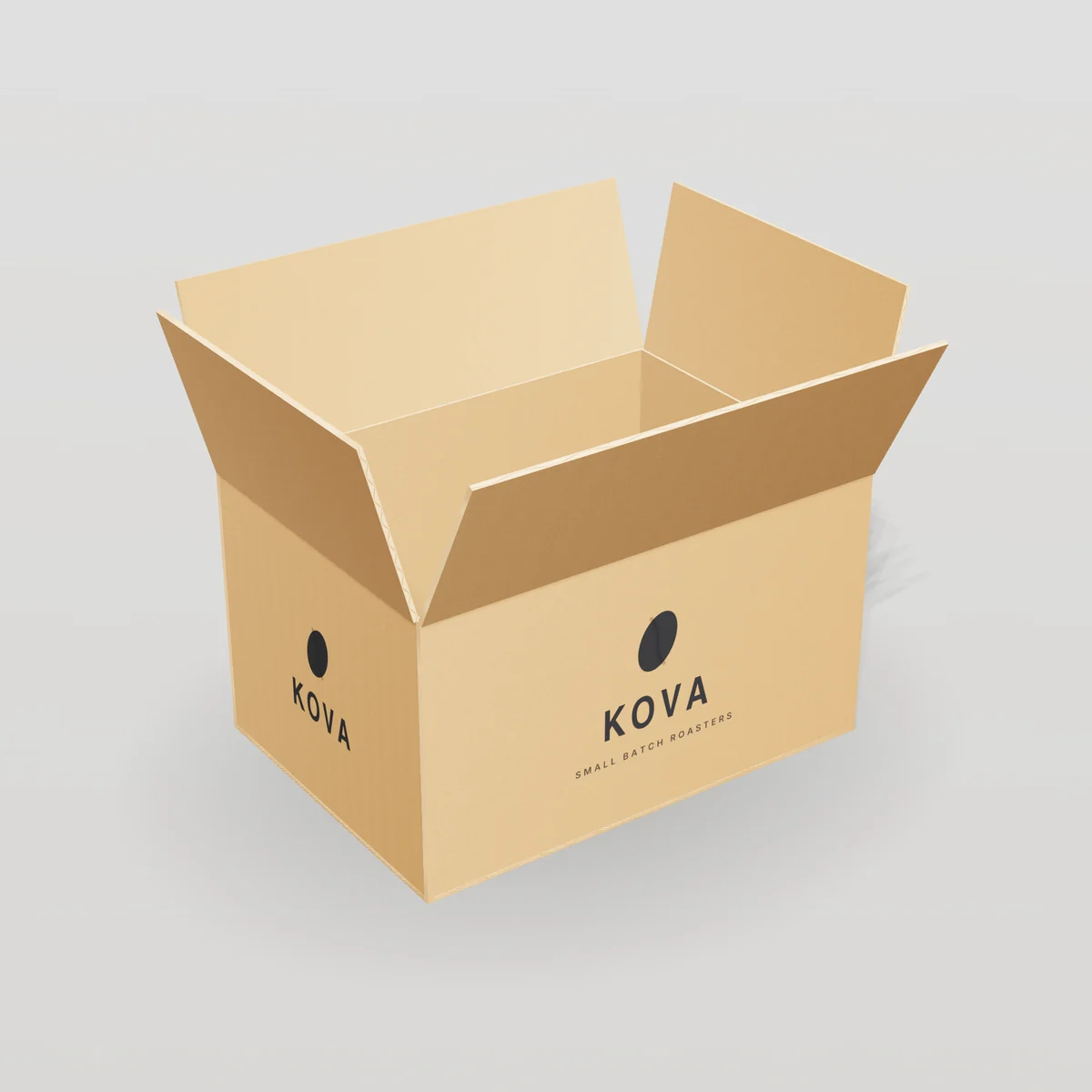 Box StylesShipping BoxesPrinted corrugated regular slotted cartons (RSC) for e-commerce, wholesale and freight.
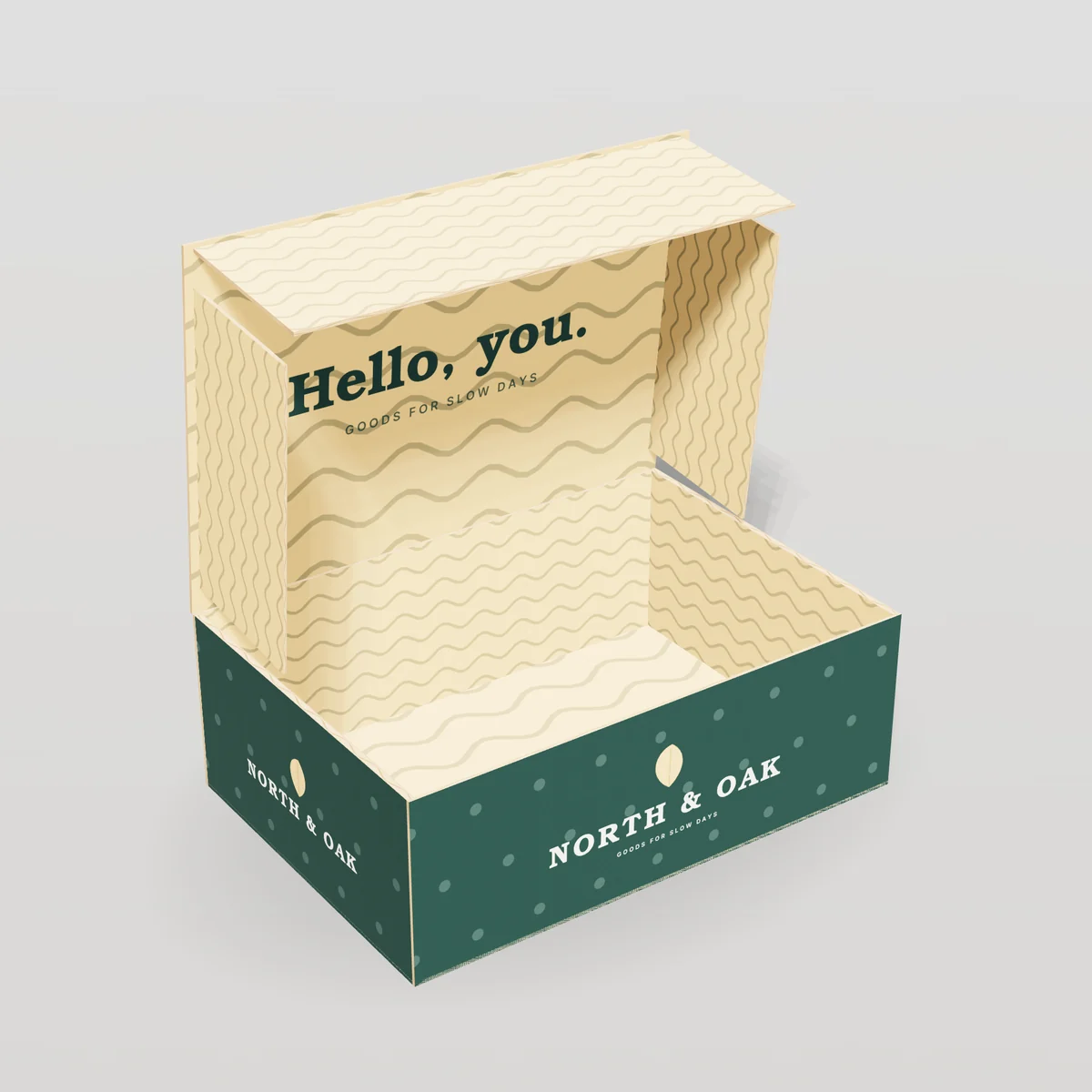 Box StylesMailer BoxesSelf-locking corrugated mailers printed inside and out. The go-to box for DTC brands and subscriptions.
 IndustriesE-commerce BoxesRight-sized mailers and shippers that cut dimensional weight and damage rates.
 AccessoriesCustom Poly MailersPrinted, tear-resistant mailer bags with self-seal strips, in recycled options.