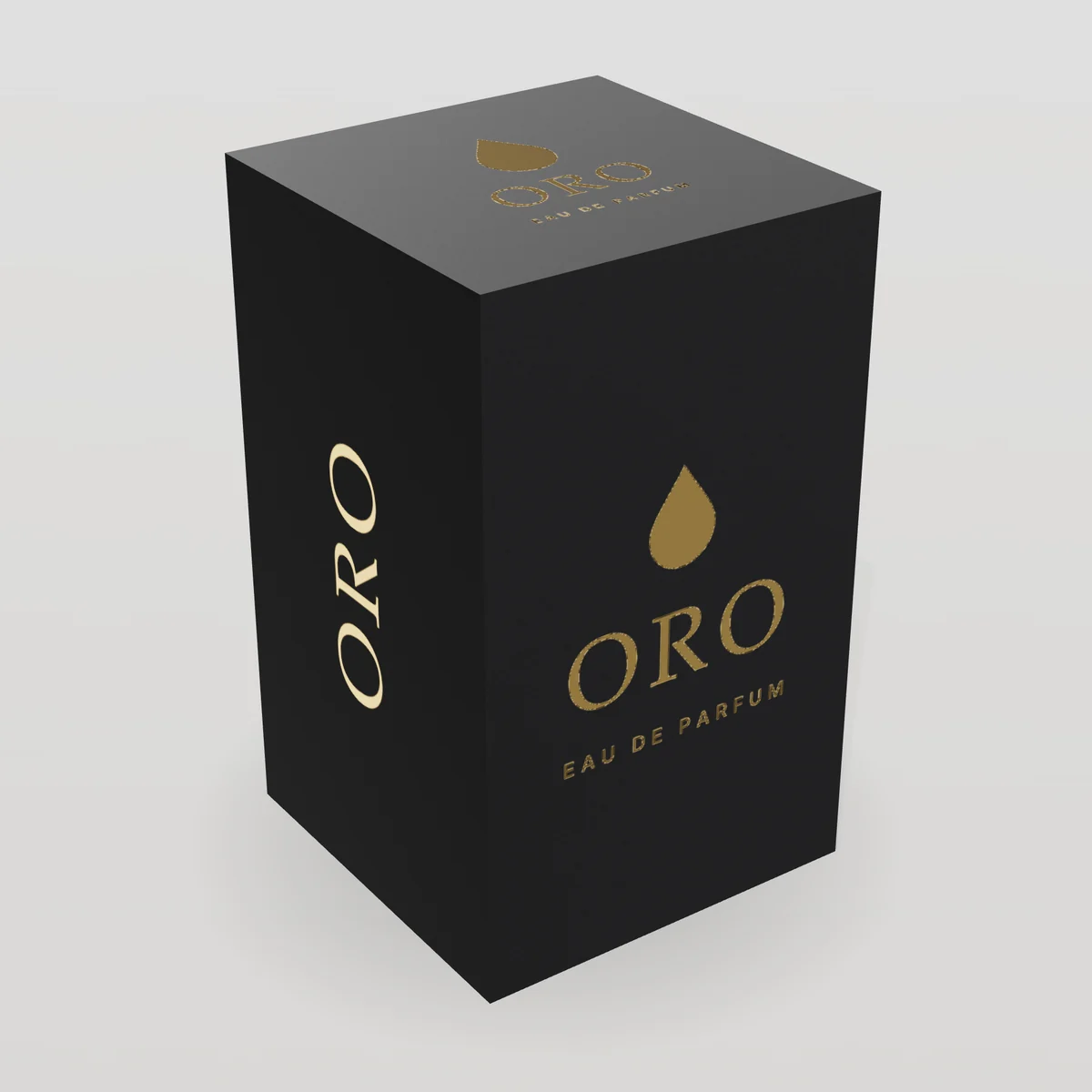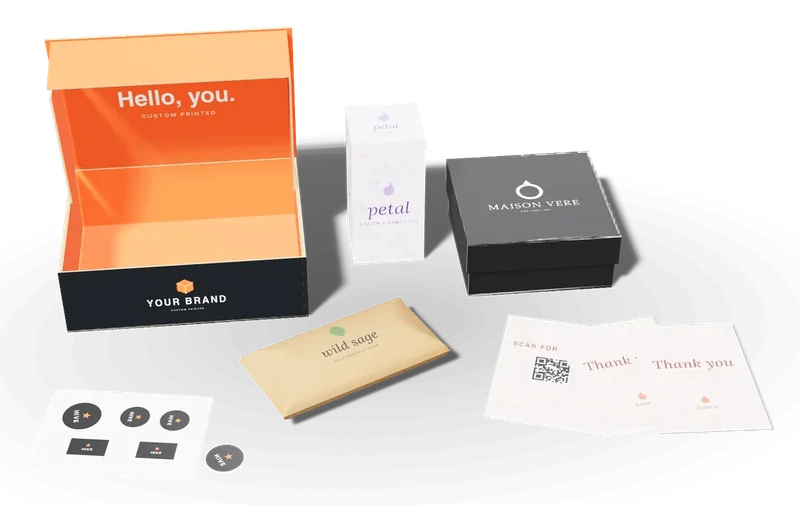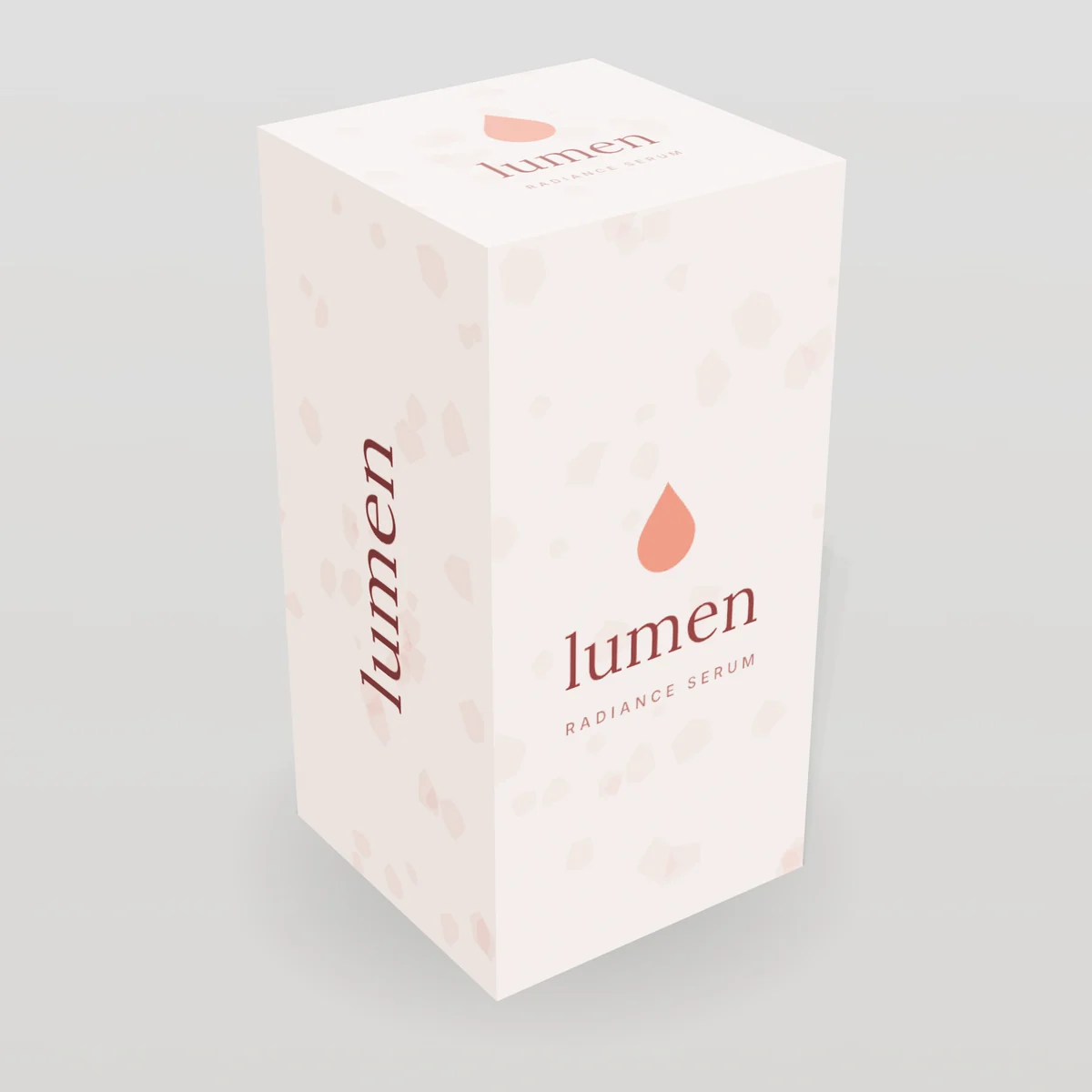
Quick answer
Straight and reverse tuck end cartons that open and reclose cleanly. Ideal for lightweight retail products. Estimated prices start around $0.20 per unit at 10,000 units and $0.99 at 250 units for a 4×2×6" box. Typical turnaround is 10–14 business days after proof approval.
Tuck End Boxes: specifications
| Styles | Reverse Tuck End (RTE), Straight Tuck End (STE), tuck top auto-bottom |
|---|---|
| Board | 14–24pt SBS, kraft CUK |
| Locks | Friction lock, slit lock, dust flaps |
| CMYK + PMS, inside print available | |
| Minimum order | 250 units |
| Turnaround | 10–14 business days after proof |
Tuck End Boxes: price breaks
How the estimated unit price of a 4×2×6" tuck end box in SBS white paperboard (18pt) changes with quantity. Setup costs are spread over more boxes as the run gets longer, so the per-box price drops sharply in the first few tiers.
| Quantity | Est. unit price | Est. total | Saving vs. first tier |
|---|---|---|---|
| 250 | $0.99 | $247 | — |
| 500 | $0.60 | $302 | −39% |
| 1,000 | $0.40 | $405 | −60% |
| 2,500 | $0.28 | $694 | −72% |
| 5,000 | $0.23 | $1,150 | −77% |
| 10,000 | $0.20 | $2,026 | −80% |
Estimates from our published pricing model, full-color print, no finishes, delivered to the contiguous US. Your written quote confirms the exact price. Get an exact quote →
Popular sizes for tuck end boxes
Sizes are inside dimensions (length × width × height) in inches. Any custom size is available at no extra cost; these are simply the sizes brands order most.
| Size (L×W×H) | Typical use | Est. @ 500 | Est. @ 1,000 | Quote |
|---|---|---|---|---|
| 2 × 2 × 4" | Lip care, jewelry, single sachets, small accessories | $0.53 | $0.34 | Quote |
| 2 × 2 × 6" | Serums, candles, soaps, single small products | $0.55 | $0.36 | Quote |
| 3 × 3 × 5" | Serums, candles, soaps, single small products | $0.62 | $0.42 | Quote |
| 4 × 2 × 6" | Serums, candles, soaps, single small products | $0.60 | $0.40 | Quote |
| 4 × 4 × 8" | Gift sets, apparel accessories, small electronics | $0.78 | $0.57 | Quote |
Material options and how they affect price
Estimated unit price at 1,000 units for a 4×2×6" tuck end box with full-color printing, by material. Material choice changes look, strength and recyclability as well as cost.
| Material | What it’s like | Est. unit price |
|---|---|---|
| SBS white paperboard (18pt) | Bright white, smooth solid bleached sulfate board. Sharpest print and the best base for foil, spot UV and embossing. | $0.40 |
| Kraft paperboard (18pt CUK) | Natural brown unbleached kraft board with long, tough fibers. Looks handmade and eco-minded; best with one or two dark inks. | $0.40 |
| Recycled paperboard (CRB) | Coated recycled board with a white printing face and grey back. The economical, high-recycled-content choice for everyday retail. | $0.38 |
Printing options compared
How the print specification changes the estimated unit price of a 4×2×6" tuck end box in SBS white paperboard (18pt). One- and two-color printing carries a small plate charge that matters less as quantities grow; full-color digital and offset printing have no plate charge in our model.
| Printing | 500 units | 1,000 units | 5,000 units |
|---|---|---|---|
| Plain (no print) | $0.53 | $0.33 | $0.17 |
| 1 color | $0.67 | $0.42 | $0.20 |
| 2 colors | $0.75 | $0.46 | $0.22 |
| Full color outside | $0.60 | $0.40 | $0.23 |
| Full color outside + inside | $0.67 | $0.47 | $0.28 |
What is a tuck end box?
A tuck end box is a paperboard carton that closes with tuck flaps: a flap attached to one panel folds over the opening and its tongue tucks into the box, held by friction and small slits. Two small dust flaps fold in first to keep the contents secure. Tuck end boxes ship flat, glued along one side seam, and pop open in a second at packing.
They are the most widely used retail carton because they are simple, efficient and easy to open and reclose. Lipsticks, serums, supplements, candles, cards, small electronics, tea and countless other products are sold in tuck end boxes.
There are two main versions:
- Reverse tuck end (RTE): the top tuck closes from front to back and the bottom tuck closes from back to front. This is the most economical layout because cartons nest closely on the press sheet.
- Straight tuck end (STE): both tucks close from the same side (the back). The front panel stays uninterrupted, which looks cleaner when the box sits on a shelf and is preferred for window cartons and premium packs.
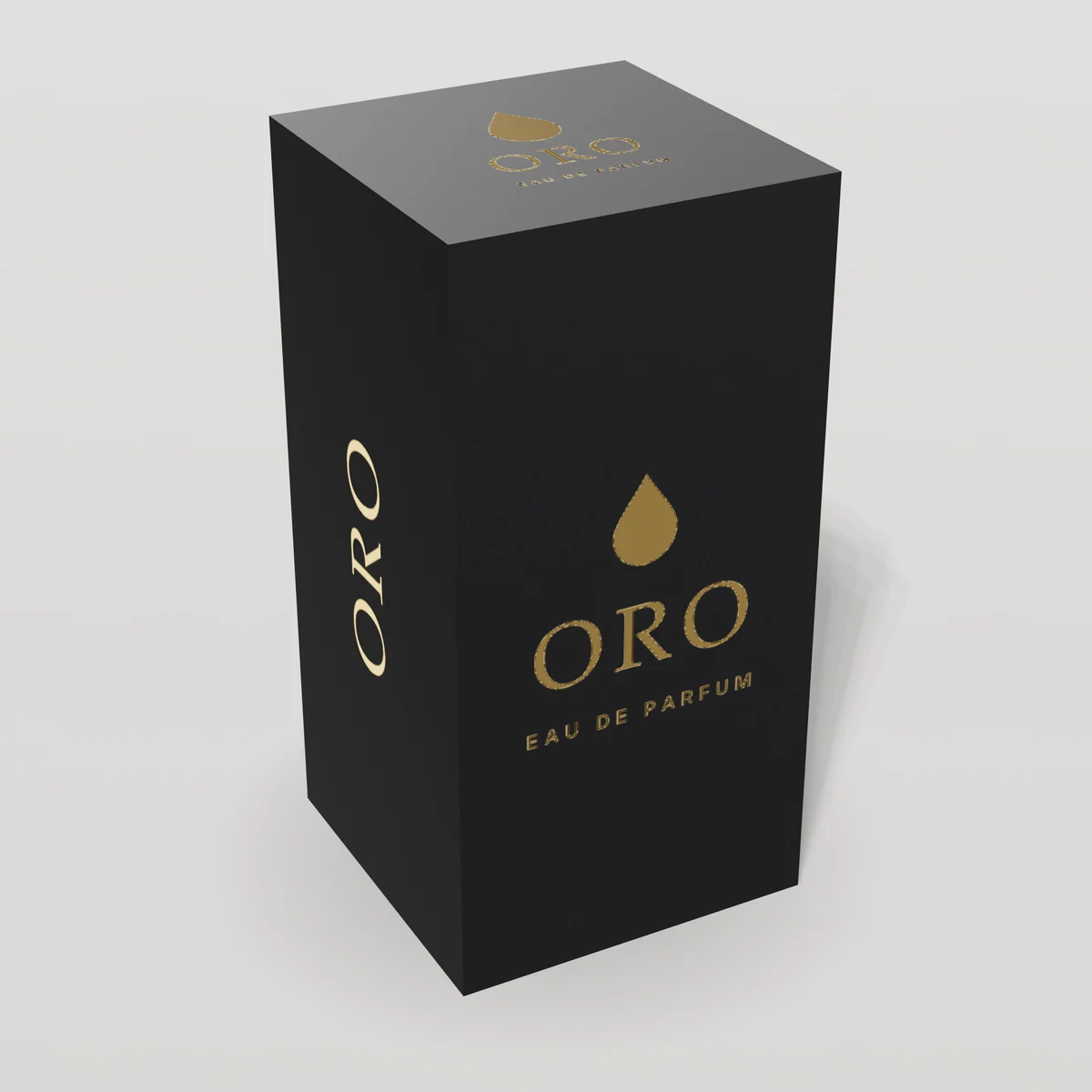
Anatomy of a tuck end box
| Part | Purpose |
|---|---|
| Front, back and two side panels | Form the body of the box |
| Glue flap | Bonds the side seam during manufacturing |
| Top tuck flap | Closes the top; its tongue tucks inside the front |
| Bottom tuck flap | Closes the bottom (RTE and STE) |
| Dust flaps | Fold in under the tuck to keep the box square and dust-free |
| Friction locks / slit locks | Small cuts at the tuck shoulders that grip the dust flaps so the lid stays shut |
| Thumb notch (optional) | A half-moon cut that makes the tuck easy to open |
Slit locks are worth asking for if your product is opened and closed often (for example skincare or cards), because they make the tuck click shut and stay closed. Making a deck of cards? Our playing card dimensions guide gives tuck box sizes for poker, bridge and tarot decks.
When to choose a tuck end box
Tuck end boxes are ideal when:
- The product weighs less than about a pound (for heavier items see auto-lock bottom boxes).
- You want the lowest unit cost for a printed retail carton.
- Products are packed by hand in small to medium volumes.
- Customers will open and close the box several times.
- You need a box that slides into a mailer or shipping carton for e-commerce.
They are less suitable for very heavy products, products that must be tamper-evident (add a seal or tear strip), or ultra-luxury experiences where a rigid box is expected.
Materials
Most tuck end boxes are made from paperboard in 14–24pt caliper:
- SBS (solid bleached sulfate): bright white, the best print and finish quality. The default for cosmetics, fragrance and premium goods.
- Kraft / CUK: natural brown, tough, ideal for natural and handmade brands.
- CRB (coated recycled board): economical and widely recyclable, with a white printed face and grey back.
- Micro-flute (E or F flute): corrugated with a printed liner for heavier or e-commerce-ready tuck boxes.
18pt SBS is our default recommendation. Step up to 20–24pt for larger boxes or a heavier feel, or down to 14–16pt for tiny, light products.
Printing and finishes
Tuck end boxes print beautifully with offset for larger runs and digital for short runs and multiple SKUs. Popular finish combinations:
- Matte lamination + spot UV logo: subtle and modern; the logo catches the light.
- Soft-touch + gold foil: the classic premium beauty look.
- Uncoated kraft + one black ink: natural, honest and economical.
- Gloss coating + full-color photography: for food and lifestyle products.
- Embossed logo (blind or with foil): a tactile detail customers notice when they pick the box up.
- Inside print: a pattern or message revealed when the tuck opens.
See foil stamping, spot UV, embossing & debossing and soft-touch lamination for details and costs.

Sizing a tuck end box
Dimensions are inside measurements: Length × Width × Height. For a tuck end box:
- Length and width form the opening (the end you tuck), with length the longer side.
- Height is the distance between the top and bottom tucks.
Example: a serum bottle 1.6 in wide and 4.8 in tall (including the dropper) fits a 1.75 × 1.75 × 5 in box. Add an insert, and the box grows to fit the insert.
Clearance: allow about 1/16 to 1/8 in per dimension. Glass bottles with pumps or droppers benefit from a paperboard insert or a slightly snug fit so they do not rattle.
Tuck depth: the tuck flap tongue should be at least about 1/2 in deep, or about 60% of the box width on small boxes, so it holds securely. Very shallow boxes (less than about 1 in wide) need careful tuck design; our structural team adjusts this on your dieline.
Tuck end box pricing
The price table at the top of this page shows estimates for a 4 × 2 × 6 in box. Prices depend on:
- Quantity: setup is spread across the run, so prices fall quickly to 1,000–2,500 units.
- Size and sheet layout: how many boxes fit on a printed sheet. RTE nests more efficiently than STE.
- Board grade and caliper.
- Colors, finishes and inserts.
- Number of SKUs printed together.
A small cosmetic box in SBS, 2 × 2 × 6 in, is a common format:
| Quantity | Est. unit price | Est. total | Saving vs. first tier |
|---|---|---|---|
| 250 | $0.93 | $232 | — |
| 500 | $0.55 | $275 | −41% |
| 1,000 | $0.36 | $355 | −61% |
| 2,500 | $0.23 | $581 | −75% |
| 5,000 | $0.19 | $937 | −80% |
| 10,000 | $0.16 | $1,620 | −83% |
Estimates from our published pricing model, full-color print, no finishes, delivered to the contiguous US. Your written quote confirms the exact price. Get an exact quote →
Five ways to save
- Choose RTE unless you need an uninterrupted front panel.
- Use 18pt board unless the product really needs heavier.
- Gang several SKUs of the same size on one run.
- Keep foil small, on the logo only.
- Order larger runs of fewer sizes.
Designing a tuck end box
The front panel does most of the selling. A strong layout:
- Front: brand, product name, key benefit, net quantity.
- Sides: variant name, icons, short story or claims.
- Back: directions, ingredients, warnings, barcode, company details.
- Top tuck: a logo or pattern; on shelves and in drawers, the top is often what people see.
Respect the folds: keep text at least 1/8 in from all cut and crease lines and extend backgrounds 1/8 in into bleed. Check which way the tuck closes so text on the top flap reads correctly when closed. Our artwork & dieline guide covers every step.
Tip: On STE boxes the back panel carries both tuck hinges. Place barcodes and fine print away from those hinges so they are not distorted.
Inserts for tuck end boxes
Inserts keep products centered, stop glass from rattling and make multi-item kits look organized:
- Paperboard insert with die-cut holes: the most common for bottles and jars.
- Folded paperboard cradle: holds a tube or bottle at an angle for display.
- Corrugated insert: for heavier or fragile products.
- Molded pulp: plastic-free and protective for irregular shapes.
See custom inserts for options.
Tuck end boxes by industry
- Cosmetics: lipstick, mascara, foundation and palettes. See cosmetic boxes.
- Skincare: serums, creams and kits. See skincare boxes.
- Perfume: STE cartons with inserts and foil. See perfume boxes.
- Candles: tuck boxes with inserts around glass jars. See candle boxes.
- CBD: cartons for tinctures and topicals. See CBD boxes.
- Electronics: cables, chargers and accessories. See electronics boxes.
- Food and tea: tea bags, confectionery and snacks. See food boxes.
Tuck end vs. other carton styles
| Style | Strength | Best for | Relative cost |
|---|---|---|---|
| Reverse tuck end | Light to medium | Most retail products | Lowest |
| Straight tuck end | Light to medium | Premium fronts, window cartons | Low |
| Auto-lock bottom | Medium to heavy | Jars, bottles, heavier items | Medium |
| Sleeve & tray | Medium | Gift sets, chocolate | Medium–high |
| Rigid box | High | Luxury and gifting | Highest |
Sustainability
Tuck end boxes use one piece of paperboard, ship flat and are widely recyclable. Keep them easy to recycle by limiting plastic laminations and windows, choosing paper inserts and right-sizing. If you want a natural message, uncoated kraft with one ink is a strong, honest choice.
Ordering checklist
- Product size including closures; inside box size
- RTE or STE (and slit locks or thumb notch if needed)
- Board and caliper
- Print colors and Pantone references
- Finishes and inserts
- SKUs and quantity per SKU
- Barcode and labeling copy
- Delivery ZIP and target date
Common tuck end box mistakes
- Using a tuck bottom for heavy products. Switch to auto-lock.
- Text that reads upside down on the closed tuck. Always check the dieline orientation.
- Too-shallow tucks on narrow boxes that pop open.
- No insert for glass, causing rattling and breakage.
- Dark colors across folds without lamination, which can crack.
Reverse tuck vs. straight tuck vs. tuck top auto-bottom
| Style | Closure | Front panel | Strength | Use |
|---|---|---|---|---|
| Reverse tuck end (RTE) | Top tuck closes from back to front; bottom tuck from front to back | Small seam visible at one end | Light | The most economical carton; cosmetics, supplements, candles |
| Straight tuck end (STE) | Both tucks close from the same side | Cleanest front panel | Light | Window cartons, premium presentation |
| Tuck top auto-bottom | Tuck top, crash-lock base | Clean | Medium–high | Heavier products, faster packing |
| Tuck top snap-lock bottom | Tuck top, interlocking 1-2-3 bottom | Clean | Medium | Medium-weight products without pre-gluing |
The best choice depends on product weight, how fast you pack, and how the carton is displayed. Reverse tuck end is the default for light products because it uses board efficiently and nests well on press sheets.
Dust flaps and tuck locks
Tuck end boxes include dust flaps on each end that fold in before the tuck closes, keeping dust out and adding stiffness. The tuck flap often has slit locks or friction locks (small cuts at the tuck's base) that hold it closed without glue. For products that might push the tuck open, ask about stronger lock designs or a tamper-evident seal sticker.
Tuck end boxes on cartoning lines
If your products will be packed by a machine (a cartoner), tell us early:
- Carton style must suit the machine (some prefer straight tuck or seal-end).
- Board caliper and grain affect how cartons erect at speed.
- Glue seam position and pre-break of folds help cartons open reliably.
- Tolerances must match the machine's specifications.
Machine-packed cartons are often supplied with folds pre-broken and in counted bundles.
Pharmacy-style and regulated cartons
Tuck end cartons are standard for supplements, over-the-counter products and cosmetics. These categories need careful planning:
- Facts panels and warnings need enough panel area at legible type sizes.
- Tamper evidence, such as a seal label across the tuck, may be required or expected.
- Lot numbers and dates often go on a flap or a blank area for printing or stamping.
- Barcodes must scan reliably.
See supplement boxes and the labeling guide.
Worked example: a candle in a tin
A candle brand sells 4 oz tins (2.9 in diameter × 2 in tall).
- Style: reverse tuck end, 3 × 3 × 2.25 in inside.
- Board: 18pt kraft paperboard.
- Print: one black ink; scent name on all four sides so it reads however the carton faces.
- Finish: copper foil logo.
- Safety: candle safety information on the back panel.
At 1,000 units, a carton like this is among the most affordable branded packages available. See candle boxes.
Tuck end boxes in one paragraph
A tuck end box is a paperboard carton that closes with tuck flaps at each end, the most economical and versatile retail box. Use reverse tuck end for light products, straight tuck end when the front panel must be seamless, and a tuck top with auto-lock bottom for heavier items. Choose 16–18pt board for most products, plan required information early, add one finish that suits your brand, and ship cartons inside corrugated outers.
Why the tuck end box became the retail standard
Walk down any pharmacy, beauty or grocery aisle and most of the cartons you see are tuck end boxes. The reasons are practical. A tuck end blank uses board efficiently, so many cartons fit on a press sheet. It ships flat and folds in seconds, by hand or by machine. It needs only one glue seam, so it is quick to produce. And it closes securely without tape or extra parts, while opening easily for customers.
Within that simple structure there is room for real refinement. The shape of the tuck flap, the size of the dust flaps, the type of friction lock and the depth of the creases all affect how a carton feels when it is opened. A well-engineered tuck closes with a gentle click and stays shut in transit; a poor one pops open or tears. We tune these details to your board and product so cartons look and feel premium even at modest prices.
Reverse tuck or straight tuck: a quick way to decide
Choose reverse tuck end when you want the most economical carton and the product is light. Choose straight tuck end when the front panel must be completely seamless (for example, with a large window or a full-bleed image) or when your cartoning machine requires it. If the product is heavy, move to a tuck top with an auto-lock bottom.
Designing around the tuck
The top tuck is often the first thing customers touch. A small printed message on the inside of the tuck ("Hello", "Enjoy", a care tip) is an inexpensive detail that makes a standard carton feel considered. Keep the outside of the tuck clean so it slides in smoothly, and keep text away from the friction-lock slits.
Tuck end checklist
- [ ] Inside dimensions measured with 1/16 in clearance
- [ ] Reverse or straight tuck chosen (or auto-lock for heavier items)
- [ ] Board and caliper chosen
- [ ] Insert needed for bottles or jars?
- [ ] Required information and barcode placed
- [ ] Finish chosen (coating, lamination, foil, spot UV)
- [ ] Inside tuck message considered
- [ ] Outer case or mailer planned
Photographing your tuck end boxes
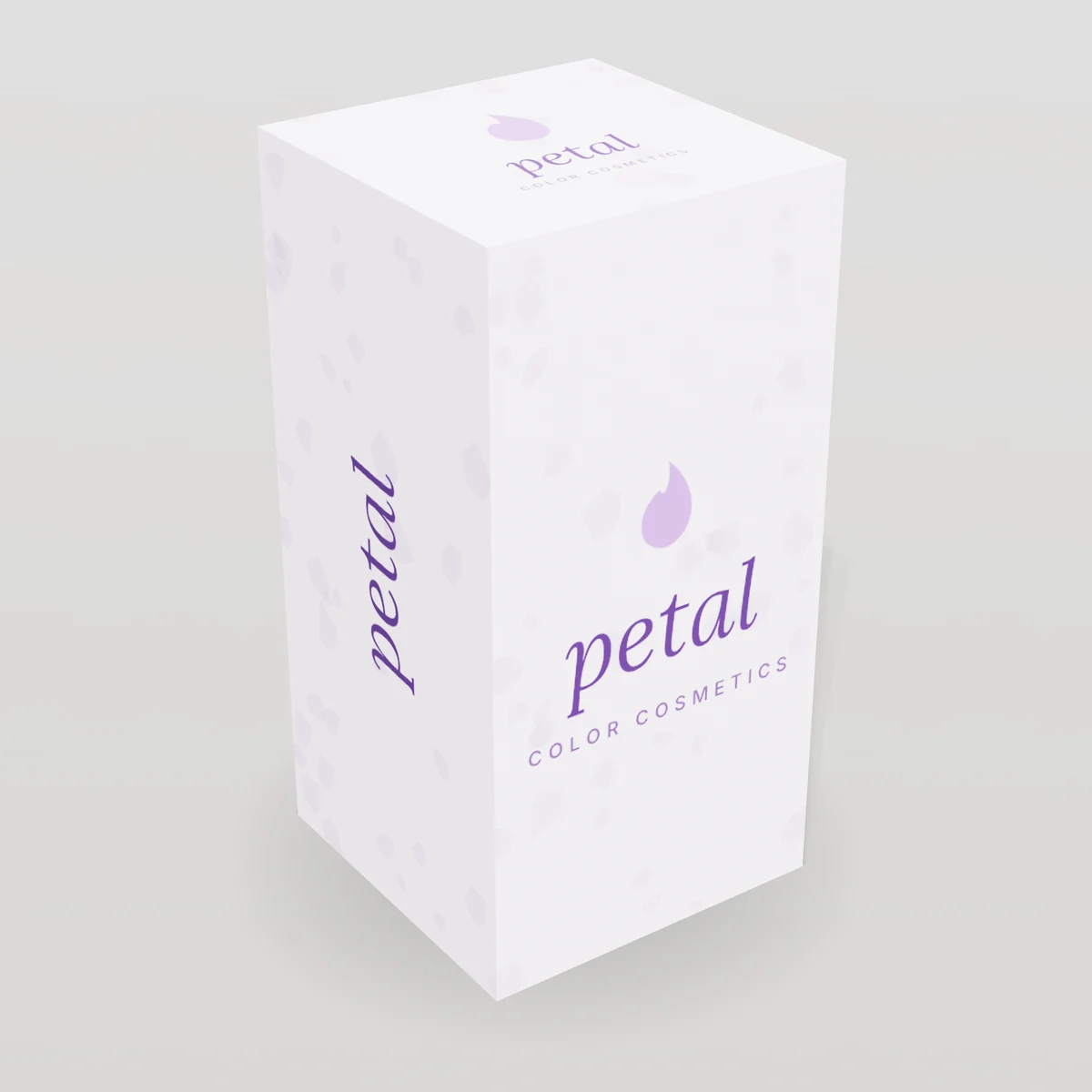
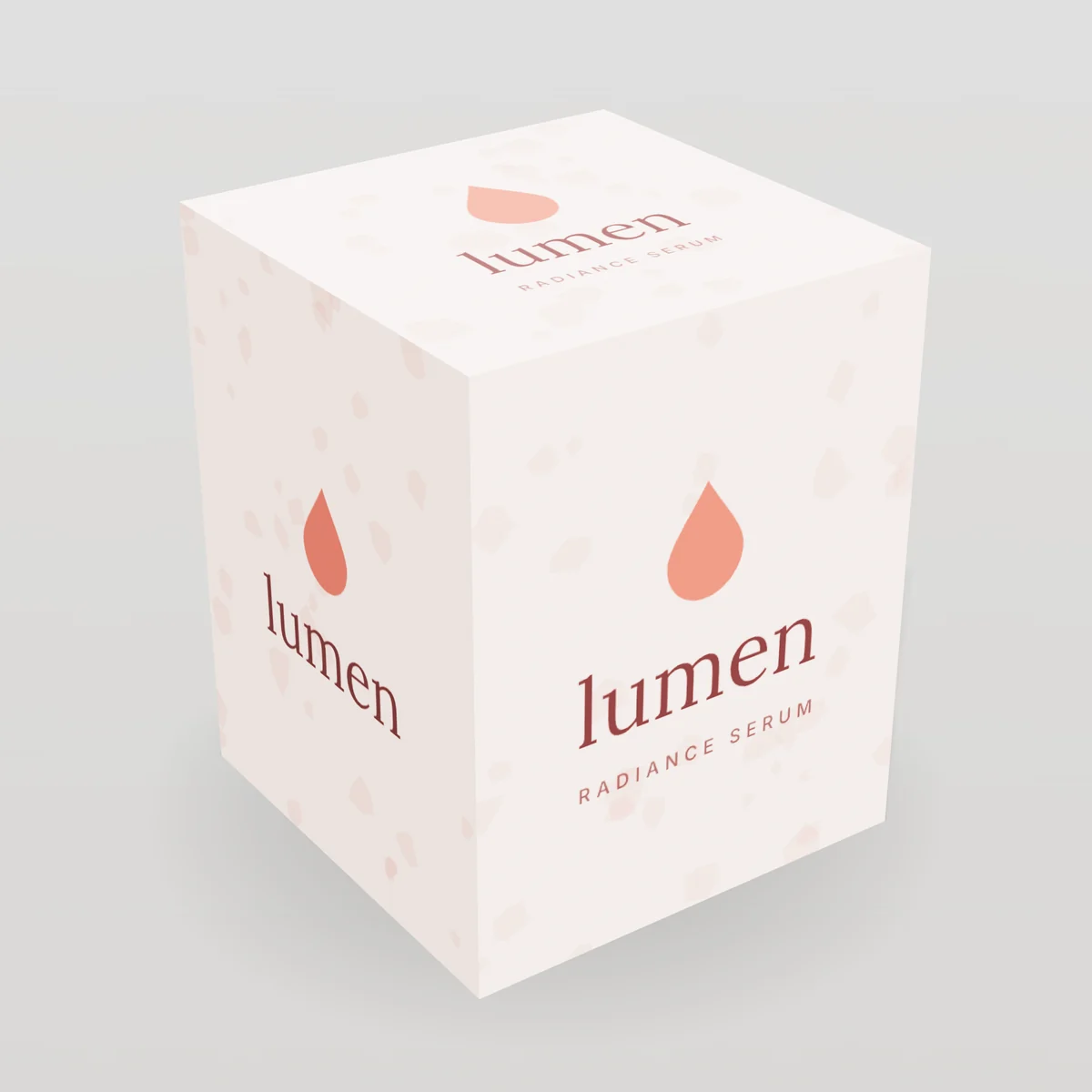
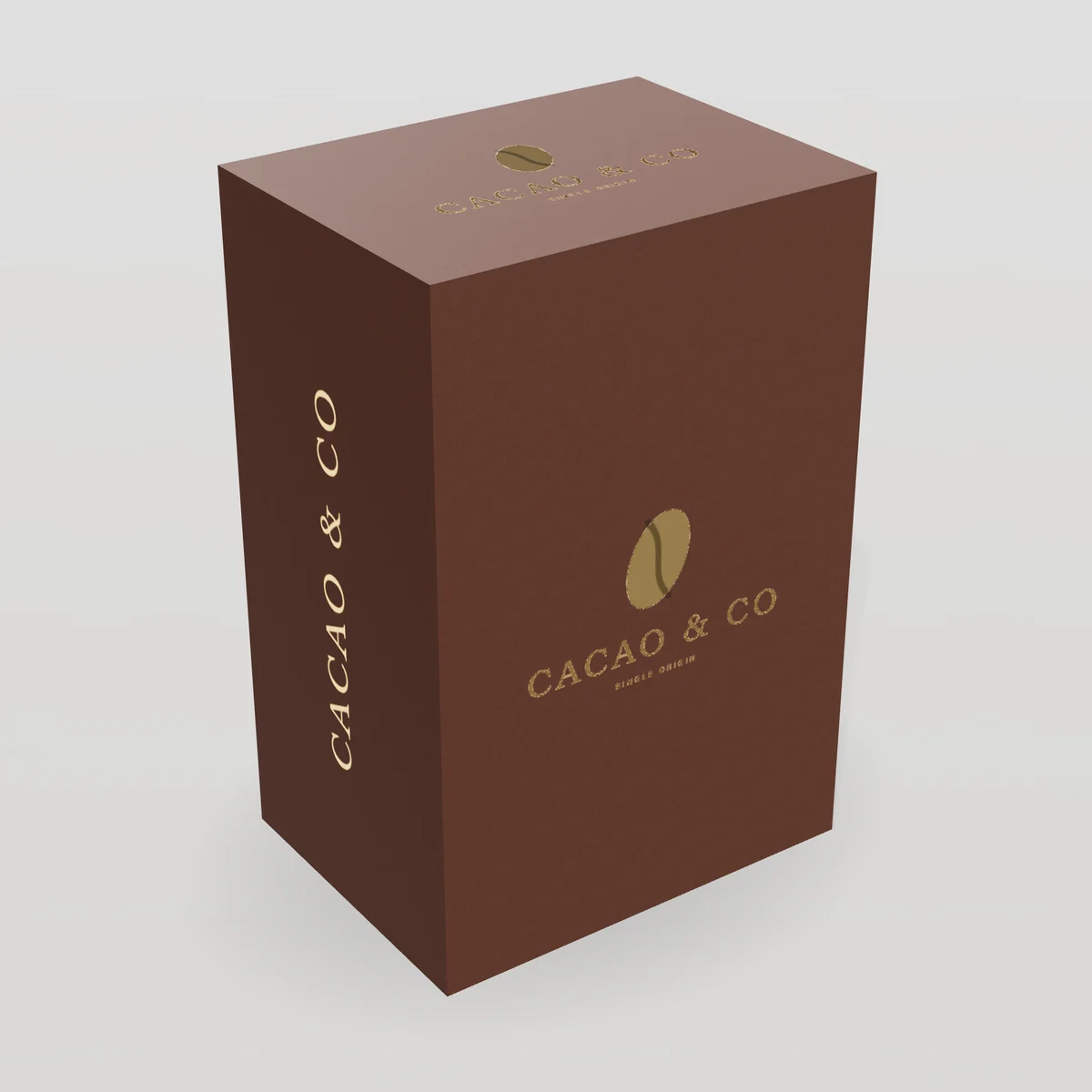
Show the carton at a three-quarter angle so two panels are visible, with the product standing beside it. A second image with the tuck open and the product half out shows the fit. Keep backgrounds simple so small type stays legible in listings.
Quality checks when your boxes arrive
- Fold several cartons and check tucks close and stay closed.
- Confirm the product fits with the intended clearance.
- Scan barcodes and compare print with the approved proof.
Report anything that does not match your approved proof within 7 days of delivery under our reprint guarantee, with photos and your order number.
Related guides
 GuideBox styles explainedA practical comparison of every common box style: mailer, RSC shipper, tuck end, auto-lock, rigid, magnetic, sleeve, pillow, gable, display, window and tube.
 GuideArtwork & dielinesStep-by-step guide to dielines, bleed, safe zones, CMYK, resolution, fonts, barcodes and finishing layers, so your packaging files print exactly as designed.
 GuideFinishes & embellishmentsHow foil stamping, embossing, debossing, spot UV, soft-touch, windows and inserts work, what they cost, and how to combine them without overspending.
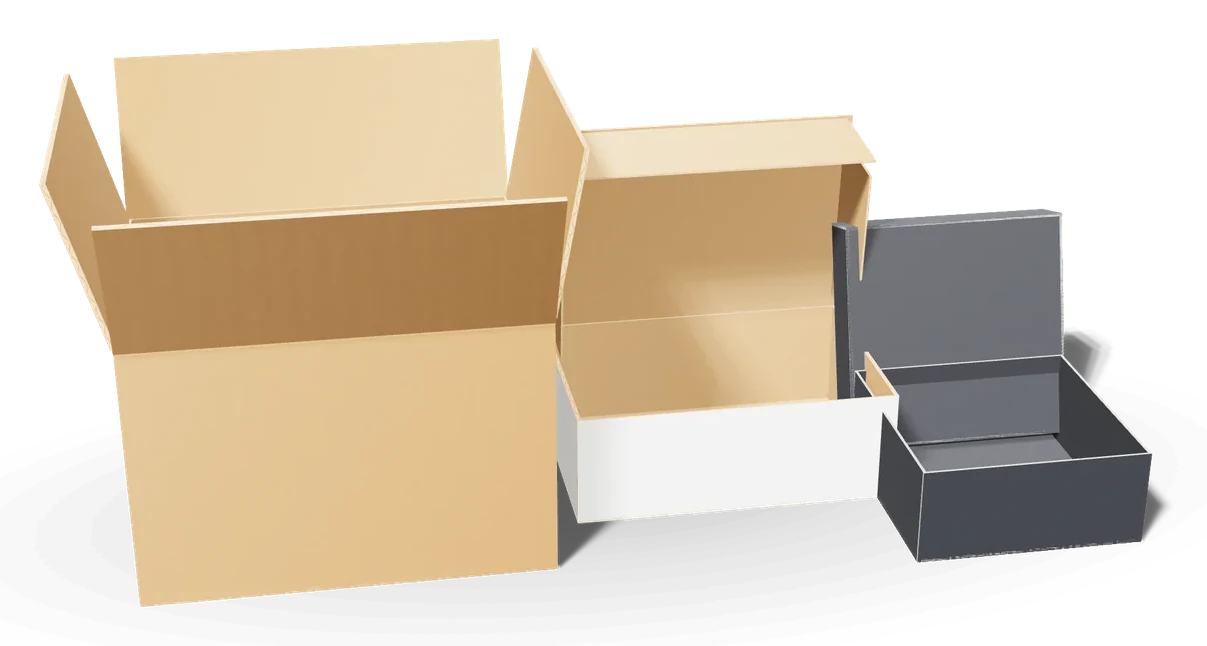 GuidePackaging materials & board gradesUnderstand corrugated flutes and ECT, paperboard caliper (pt), SBS vs kraft vs recycled board, and rigid greyboard, so you can specify packaging like a pro.
What finishes and add-ons cost
Estimated extra cost per unit at 1,000 units when you add one finish to a 4×2×6" tuck end box (base estimate $0.40). One-time tooling such as foil and embossing dies is already spread across the run in the per-unit figure and listed separately for reference.
| Finish | What it does | Adds per unit | One-time setup |
|---|---|---|---|
| Matte lamination | A thin film with a smooth, low-glare finish that protects print from scuffs. | +$0.02 | — |
| Soft-touch | A velvety, premium coating that invites customers to hold the box. | +$0.04 | — |
| Spot UV | Clear glossy varnish on selected areas for a sleek contrast against matte. | +$0.13 | $80.00 |
| Foil stamping | Gold, silver, rose gold or holographic foil for logos and accents. | +$0.20 | $120 |
| Embossing / debossing | Raised or recessed logo detail you can feel with your fingertips. | +$0.19 | $120 |
| Window | A die-cut window with clear film so the product sells itself. | +$0.14 | $60.00 |
| Custom insert | Paperboard, corrugated or foam inserts that hold products in place. | +$0.22 | $80.00 |
How tuck end boxes compare with similar styles
Estimated unit prices at 1,000 units for each style at its most popular size, full-color print, delivered within the contiguous US, so you can weigh tuck end boxes against the alternatives customers often consider.
| Style | Typical board | Minimum | 1,000 units | Ships | Best for |
|---|---|---|---|---|---|
| Tuck End Boxes4 × 2 × 6" | SBS white paperboard (18pt) | 250 units | $0.40 | Flat | Straight and reverse tuck end cartons that open and reclose cleanly. Ideal for lightweight retail products. |
| Auto-Lock Bottom Boxes5 × 3 × 7" | SBS white paperboard (18pt) | 250 units | $0.55 | Flat | Crash-lock bottom cartons that pop open in one motion and carry heavier products safely. |
| Window Boxes5 × 3 × 5" | SBS white paperboard (18pt) | 250 units | $0.63 | Flat | Paperboard boxes with a die-cut window and clear film so shoppers see the product. |
| Sleeve Boxes6 × 4 × 2" | SBS white paperboard (18pt) | 250 units | $0.67 | Flat | A printed sleeve over a sliding tray. Interactive, premium and easy to brand on two surfaces. |
| Hanger Boxes4 × 1.5 × 6" | SBS white paperboard (18pt) | 250 units | $0.41 | Flat | Cartons with a built-in hang tab for pegboard and slat-wall retail displays. |
| Pillow Boxes6 × 3 × 1.5" | SBS white paperboard (18pt) | 250 units | $0.32 | Flat | Curved, self-closing boxes for small gifts, favors, accessories and samples. |
Learn about these materials
How to order tuck end boxes
- 1Request a quote
Tell us the style, size, quantity and artwork you have. Use the form or the live estimator.
- 2Free design & dieline
We send a dieline for your exact size, check your artwork and help with layout at no charge.
- 3Approve your proof
Review a digital 3D proof (and an optional physical sample) before anything is printed.
- 4Production & QC
Your boxes are printed, finished, die-cut and inspected against the approved proof.
- 5Delivered to your door
Shipped flat-packed with tracking to any address in the contiguous US.
Key terms on this page
- Tuck end box
- A paperboard carton that closes with tuck flaps at its ends.
- Paperboard
- Thick paper (usually 0.010 inch or more) used for folding cartons, such as SBS, kraft and recycled board.
- Carton
- A box made from paperboard, usually a folding carton. In shipping, "carton" can also mean a corrugated case.
- Panel
- A face of a box, such as the front, back, side, top or bottom panel.
- Reverse tuck end (RTE)
- A carton whose top and bottom tucks close from opposite sides. The most economical tuck style.
- Straight tuck end (STE)
- A carton whose top and bottom tucks close from the same side, leaving the front panel uninterrupted.
- Glue flap
- The narrow strip glued to another panel to form the side seam of a box.
- Tuck flap
- A flap that folds over the opening of a box and tucks inside to close it.
- Lid
- The top part of a box, hinged or separate.
- Thumb notch
- A semicircle cut that makes it easier to open a tuck flap or push a tray out of a sleeve.
- Auto-lock bottom
- A pre-glued carton base, also called a crash-lock bottom, that locks into place automatically when the flattened box is opened. Stronger and faster to pack than a tuck bottom.
- Tear strip
- A perforated or reinforced strip that opens a box by pulling a tab.
- Rigid box
- A premium box made from thick greyboard wrapped in printed or specialty paper, delivered assembled. Also called a setup box.
- Caliper
- The thickness of paper or board. Paperboard caliper is usually given in points, where 1 point equals 0.001 inch.
- SBS (solid bleached sulfate)
- Premium paperboard made from bleached virgin fiber, bright white throughout, with the best print and finish quality.
- Finish
- Any treatment applied after printing to change appearance or protect the surface, such as coatings, laminations, foil, embossing or spot UV.
- Kraft
- Paper or board made from unbleached wood pulp, naturally brown and strong.
- CUK
- Coated unbleached kraft paperboard: a strong brown board with a white clay-coated printing surface.
- Coated recycled board (CRB)
- Paperboard made from recycled fiber with a white clay-coated printing face and a grey back. Economical and widely used for food and household cartons.
- Board
- A general term for thick paper materials used in packaging, including paperboard, corrugated board and greyboard.
- Micro-flute
- Very thin corrugated board (E, F or N flute) that combines paperboard-like print quality with extra strength.
- Flute
- The wavy middle layer of corrugated board. Flute size (A, B, C, E, F) determines thickness, cushioning and strength.
- Liner
- The flat paper faces of corrugated board. Can be kraft (brown) or bleached (white).
- Lamination
- Bonding a thin film (matte, gloss or soft-touch) or paper to board for protection and finish.
- Spot UV
- A clear, glossy UV-cured varnish applied to selected areas to create contrast with a matte background.
- Foil stamping
- Applying metallic or pigmented foil to packaging with heat and pressure using a metal die.
- Embossing
- Raising part of the board surface into a relief using matched dies, often combined with foil or ink.
- Debossing
- Pressing a design into the board so it sits below the surface. The opposite of embossing.
More definitions in our packaging glossary.
Customer reviews
Reviews come only from verified customers. Ordered tuck end boxes from us? Share your experience.
Discussed on Quora & X
Tuck End Boxes FAQ
What is the difference between reverse tuck end and straight tuck end?
In a reverse tuck end (RTE) box, the top and bottom tucks close from opposite sides. In a straight tuck end (STE) box, both close from the same side, leaving the front panel uninterrupted. RTE is usually cheaper; STE looks cleaner on the shelf.
What is the minimum order for tuck end boxes?
Our minimum is 250 units, with digital printing keeping short runs affordable.
How much weight can a tuck end box hold?
Typically up to about 1 lb, depending on size and board. For heavier products, choose an auto-lock bottom box.
Can tuck end boxes have windows?
Yes. Windows work especially well on straight tuck end boxes because the front panel is uninterrupted.
What board thickness is best?
18pt SBS is the most common. Use 14–16pt for very small items and 20–24pt for larger boxes or a premium feel.
Can you add inserts?
Yes. Paperboard, corrugated and molded pulp inserts are available to hold bottles, jars and multi-item kits.
Do tuck end boxes ship flat?
Yes. They arrive flat and glued at the side seam, and pop open in seconds.
Are tuck end boxes recyclable?
Yes, paperboard tuck end boxes are widely recyclable in US curbside programs.
What is the difference between reverse and straight tuck?
On a reverse tuck end box, the top and bottom tucks close in opposite directions; on a straight tuck end box, both close the same way, leaving the front panel seamless.
Can tuck end boxes hold heavy products?
They suit light products. For heavier items, choose a tuck top auto-bottom or snap-lock bottom carton.
Can tuck end boxes be machine-packed?
Yes, with the right style, board and tolerances. Tell us about your cartoning machine.
What is the cheapest tuck end box?
A reverse tuck end carton in recycled or SBS paperboard with CMYK print and an aqueous coating, ordered at 1,000 units or more.
What size tuck end box do I need?
Measure your product with caps and inserts and add about 1/16 in clearance on each dimension. Tuck end boxes are ordered by inside dimensions, length × width × height, where length × width is the opening.
What board thickness should I choose?
16pt for very small light products, 18pt for most cartons, 20–24pt for larger, heavier or premium cartons.
Can tuck end boxes be printed inside?
Yes. Printing inside the tuck or panels adds a small reveal.
Will tuck flaps stay closed?
Friction locks hold them closed in normal handling. For extra security or tamper evidence, add a seal sticker.
What finishes work on tuck end boxes?
Aqueous coating, matte, gloss and soft-touch lamination, foil, embossing, spot UV and windows.
How long does production take?
Typically 10–14 business days after proof approval, plus shipping.
Can I get a sample before ordering?
Yes: a plain structural sample to check fit, or a printed sample to check color and finishes.
Where do you deliver tuck end boxes?
We deliver to business and residential addresses across the contiguous United States with tracking, usually within 3–7 business days after production. Alaska, Hawaii and expedited freight are quoted separately.
What if my tuck end boxes arrive with a defect?
Report it within 7 days of delivery with photos and your order number. If there is a production defect or the boxes do not match your approved proof, we reprint or refund the affected items under our reprint guarantee.