Quick answer
Thick 1.2–3 mm greyboard wrapped in paper for luxury setup boxes. Typical turnaround is 10–14 business days after proof approval.
What is rigid chipboard (greyboard)?
Rigid boxes are built on greyboard, also called chipboard, binder's board or rigid board: a dense, thick board made largely from recycled paper fiber. Unlike paperboard used for folding cartons, greyboard is not designed to fold along creases; it is cut, its corners are grooved or stayed, and it is wrapped in paper to form a box that holds its shape permanently.
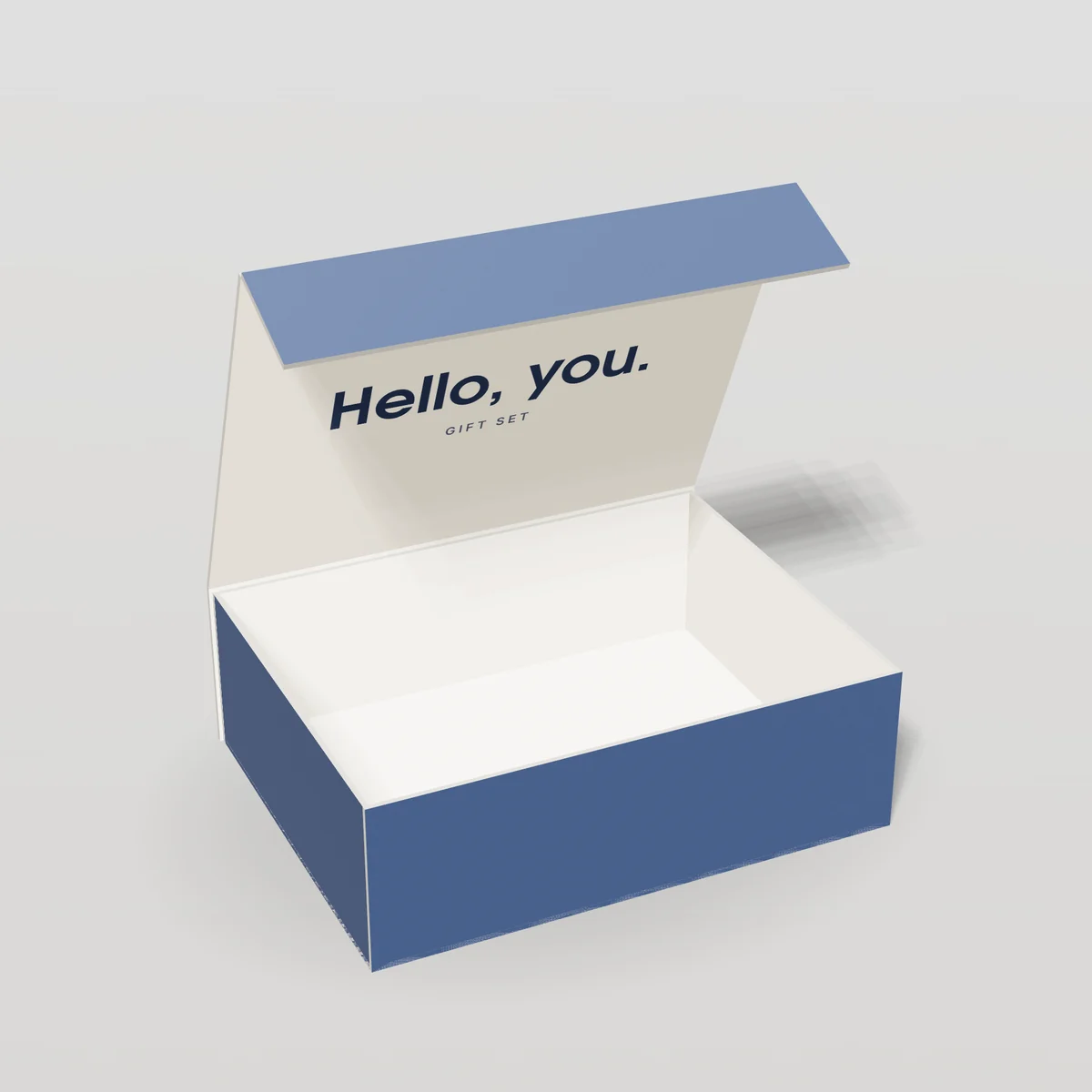
Greyboard is typically 1.0 to 3.0 mm thick (about 40 to 120 points), several times thicker than carton board. That thickness gives rigid boxes their weight, crisp edges and premium feel.
Thickness guide
| Thickness | Approx. points | Feel | Use |
|---|---|---|---|
| 1.0–1.2 mm | 40–48pt | Light rigid | Small boxes, cards, drawer sleeves |
| 1.5 mm | 60pt | Firm | Jewelry, small gifts |
| 2.0 mm | 80pt | Standard premium | Most gift, cosmetic and apparel boxes |
| 2.5 mm | 100pt | Heavy | Large boxes, electronics, heavy sets |
| 3.0 mm | 120pt | Very heavy | Large premium presentation boxes |
Wrap papers
Greyboard is grey or brown and not attractive on its own, so it is wrapped in paper:
- Printed art paper: coated paper printed in CMYK and Pantone, then laminated or coated
- Kraft paper: natural brown for artisan brands
- Specialty papers: linen, felt-marked, embossed textures, metallic, pearlescent, colored-through stocks
- Soft-touch laminated paper: velvety and premium
- Fabric and faux leather: for jewelry and watch boxes
A liner paper covers the inside of the box, hiding the board and wrap turn-ins. It can be printed for an interior reveal.
How rigid boxes are made with greyboard
- Greyboard is cut to size for the base and lid.
- Corners are V-grooved and folded, then secured with tape or stays.
- Wrap paper is printed and finished.
- Glue is applied and the board is wrapped, with paper turned in over the edges.
- The inside is lined and inserts are added.
See rigid boxes for the full process.

Rigid board vs. paperboard
| Rigid greyboard | Paperboard (folding carton) | |
|---|---|---|
| Thickness | 1–3 mm | 0.3–0.6 mm |
| Assembly | Factory-assembled | Ships flat, folded at packing |
| Feel | Heavy, premium | Light, efficient |
| Cost | Higher | Lower |
| Storage | Bulky (unless collapsible) | Flat |
| Typical use | Gifts, luxury, keepsakes | Retail cartons |
Sustainability
Greyboard is typically made from a high share of recycled fiber, and rigid boxes are frequently kept and reused. At end of life, paper-wrapped rigid boxes are generally recyclable once foam inserts, magnets and ribbons are removed. Choose paper inserts and modest laminations to help.
Why rigid boxes feel premium
Customers judge quality in the first second of touching a package. Rigid boxes communicate value through several physical cues at once:
- Weight: dense greyboard makes the box feel substantial before it is opened.
- Crisp edges: wrapped corners and straight walls look precise.
- Slow reveal: a well-fitted lid lifts with a gentle resistance as air escapes, a small moment of theatre.
- Permanence: rigid boxes do not fold flat, so they feel like an object to keep, not packaging to throw away.
- Surface: specialty wrap papers, soft-touch laminations, foil and embossing add texture and light.
Those cues are why rigid boxes are used for jewelry, fragrance, premium cosmetics, electronics, spirits, corporate gifts and influencer kits.
Rigid box structures built on greyboard
| Structure | How it works | Best for |
|---|---|---|
| Lid and base (telescope) | Separate lid fits over a base | Gift boxes, apparel, cosmetics sets |
| Shoulder (neck) box | An inner collar raises a neck between lid and base | Fragrance, luxury cosmetics, spirits |
| Magnetic closure | Hinged lid with hidden magnets | Premium gifts, electronics, PR kits |
| Collapsible (foldable) rigid | Folds flat for shipping, snaps into shape | Brands that need to save freight and storage |
| Drawer / slide | Tray slides out of a rigid sleeve | Jewelry, chocolate, accessories |
| Book-style | Opens like a book, often magnetic | Presentation and media kits |
| Two-piece | Lid and base, rigid or paperboard | Retail and gift packaging |
| Hinged with ribbon stay | Lid held open by a ribbon | Display and presentation boxes |
Greyboard grades and density
Greyboard is specified mainly by thickness and density (often expressed as grams per square meter, gsm, for a given thickness). Denser board is stiffer, holds sharper corners and resists warping better. Typical ranges:
| Thickness | Typical grammage | Notes |
|---|---|---|
| 1.0 mm | about 600–700 gsm | Light rigid components |
| 1.5 mm | about 900–1,050 gsm | Small premium boxes |
| 2.0 mm | about 1,200–1,400 gsm | The workhorse of rigid boxes |
| 2.5 mm | about 1,500–1,750 gsm | Large or heavy boxes |
| 3.0 mm | about 1,800–2,100 gsm | Very large presentation boxes |
Values vary by mill and grade. We match thickness and density to your box size, product weight and the feel you want.
Choosing wrap paper
The wrap is what customers see and touch, so it defines the box's character.
| Wrap | Look and feel | Printing | Notes |
|---|---|---|---|
| Coated art paper (about 120–157 gsm) | Smooth, bright | CMYK and Pantone, excellent | Usually laminated for protection |
| Art paper + matte lamination | Smooth, low glare | Excellent | Most popular combination |
| Art paper + soft-touch lamination | Velvety | Excellent | Premium; pairs with spot UV and foil |
| Kraft paper | Natural, warm | Dark inks, foil | Artisan and natural brands |
| Textured specialty paper | Linen, felt, laid | Limited; foil and emboss shine | Luxury without heavy print |
| Colored-through paper | Deep color without ink | Foil and emboss | Clean edges with no white core |
| Metallic or pearlescent paper | Shimmer | Selected inks and foil | Festive and beauty |
| Fabric or faux leather | Tactile, luxurious | Foil, deboss | Jewelry and watch boxes |
Paper weight and turn-ins
The wrap folds over the top edge of the board (the turn-in) and into the inside. Heavier papers are tougher but harder to turn neatly around corners; the producer chooses the weight for clean corners. Design artwork so the turn-in area continues the outside pattern or color.
Designing artwork for rigid boxes
Rigid box dielines look different from folding cartons. The wrap is a flat sheet with:
- Panels for the top, sides and turn-ins
- Corner cut-outs and tabs that fold around the board
- Bleed extending well past the turn-in
- A separate liner artwork for the inside
Follow these rules:
- Keep logos and text away from edges by at least 1/4 in, because wrap position varies slightly in hand assembly.
- Avoid thin borders along edges; small shifts make them look uneven.
- Use continuous patterns or solid colors across turn-ins.
- Put finishes on separate layers (foil, spot UV, emboss).
- Design the liner for the reveal moment: a printed message or pattern inside the lid is very effective.
We supply the production wrap and liner dielines for your exact size. See our artwork guidelines.
Inserts for rigid boxes
The insert holds the product and finishes the presentation.
| Insert | Feel | Notes |
|---|---|---|
| Paperboard or greyboard platform, wrapped | Clean, premium, all-paper | Recyclable with the box |
| Molded pulp | Natural, protective | Plastic-free |
| EVA foam with flocked or fabric cover | Luxurious, snug | Not curbside recyclable |
| Velvet or satin-covered board | Jewelry-style | Mixed materials |
| Corrugated insert | Protective | Economical for heavy items |
Our default recommendation is a wrapped paperboard or greyboard insert, which looks premium and keeps the whole box paper-based. See custom inserts.
Rigid boxes and shipping
Rigid boxes are strong but not designed to travel alone through parcel networks: printed wraps scuff, corners dent and lids can be crushed under heavy stacks. For e-commerce:
- Ship each rigid box inside a right-sized corrugated mailer or shipping box.
- Add corner protection or a snug insert for heavier boxes.
- Consider collapsible rigid boxes if storage and inbound freight are major costs.
Assembled rigid boxes take far more space than flat cartons. A pallet holds relatively few, which is reflected in freight costs and storage needs. Plan warehouse space before ordering large quantities.
Lead times for rigid boxes
Rigid boxes take longer than folding cartons because wrapping and assembly involve more steps and more handwork. Typical production is 12–16 business days after proof approval, plus shipping. Complex specialty papers, ribbons, magnets or multiple inserts can add time. Plan early for seasonal launches.
Inside a rigid box factory: the process in detail
Understanding how rigid boxes are produced explains their price, lead time and design rules.
Board cutting. Large sheets of greyboard are cut into blanks for each part of the box: the base, the lid and any inner components. Accuracy matters because every later step depends on square, precisely sized blanks.
Corner forming. Each blank is grooved along the fold lines with a V-shaped cut that removes a sliver of board so the walls fold up cleanly to 90 degrees. The corners are then held together with corner stays (paper or cloth tape) or glued. Some machines form corners automatically; other boxes are formed by hand.
Wrap printing and finishing. Meanwhile, the wrap paper is printed by offset or digital press and finished: laminated, coated, foil stamped, embossed or spot UV coated. Because finishes are applied to the flat wrap before it is glued, very precise registration is possible.
Gluing and wrapping. The wrap is coated with glue and positioned on the formed board, either by a semi-automatic wrapping machine or by skilled hands. The paper is pressed onto the bottom, pulled up the walls and turned in over the top edge. Corners are tucked and folded so the paper covers every edge neatly.
Lining. A liner sheet is glued inside to cover the turn-ins and board, producing a clean, finished interior.
Fitting extras. Magnets are embedded under the wrap for magnetic boxes; ribbons, hinges and inserts are added; neck collars are fitted in shoulder boxes.
Drying and inspection. Boxes are left to dry so glues set without warping, then inspected for corners, wrap alignment, glue marks, finish quality and fit between lid and base.
Packing. Finished boxes are nested or packed in protective cartons and palletized.
Each of these steps adds labor, which is why rigid boxes cost several times more than folding cartons of the same size, and why quantity price breaks are less steep: much of the cost is per box, not per order.
What drives rigid box prices
| Factor | Effect on price |
|---|---|
| Box size | Larger boxes use more board, paper and labor |
| Structure | Magnetic, shoulder and book-style boxes cost more than a simple lid and base |
| Board thickness | Thicker board costs more and takes more effort to wrap |
| Wrap paper | Specialty, textured and metallic papers cost more than printed art paper |
| Print coverage | Full-color wraps plus a printed liner cost more than a one-color logo |
| Finishes | Each foil, emboss or spot UV area adds tooling and a step |
| Inserts | Wrapped inserts, multiple cavities and foam add material and labor |
| Extras | Ribbons, magnets, handles and windows add parts and assembly |
| Quantity | Setup spreads across units, but labor remains per box |
For a realistic budget, compare the prices for rigid styles in the table on this page and use the 3D Box Builder to try options.
Rigid boxes by industry
| Industry | How rigid boxes are used |
|---|---|
| Jewelry | Small lid-and-base or drawer boxes with velvet or foam inserts |
| Perfume and fragrance | Shoulder boxes and magnetic boxes with bottle cavities |
| Cosmetics and skincare | PR kits, gift sets and limited editions |
| Electronics | Device boxes with fitted trays and accessory compartments |
| Gift boxes | Corporate gifts, holiday sets, wedding favors |
| Apparel | Premium garment boxes, shoe and accessory boxes |
| Chocolate | Luxury assortments with cavity inserts |
| Wine and spirits | Presentation boxes for bottles |
Collapsible rigid boxes: the space saver
Traditional rigid boxes ship assembled, which makes freight and storage expensive. Collapsible (foldable) rigid boxes solve this: the greyboard panels are wrapped individually and joined with hinges of paper, so the box ships flat and is assembled in seconds, often held by magnets or adhesive strips.
| Traditional rigid | Collapsible rigid | |
|---|---|---|
| Shipping and storage | Assembled, bulky | Flat |
| Look when assembled | Seamless | Very close; slight seams on close inspection |
| Assembly | None | A few seconds per box |
| Cost per box | Lower labor at the factory | Slightly different; freight savings often offset |
| Best for | Retail display, maximum polish | E-commerce, large runs, limited storage |
Greyboard and sustainability
Greyboard is one of packaging's most recycled materials: it is typically made from a high share of recovered fiber. Rigid boxes also have a strong reuse story, since customers keep them for storage and keepsakes, extending their useful life well beyond the unboxing.
To keep rigid boxes recyclable at the end of their life:
- Prefer paper and greyboard inserts over foam.
- Use modest laminations; matte or soft-touch on small boxes is generally fine, but heavy plastic films over large areas complicate recycling.
- Make magnets and ribbons easy to remove, and tell customers to remove them.
- Print simple disposal instructions on the liner or base.
Specification checklist for rigid boxes
- [ ] Structure: lid and base, shoulder, magnetic, drawer, book-style or collapsible
- [ ] Inside dimensions and product weight
- [ ] Board thickness (usually 1.5–2.5 mm)
- [ ] Wrap paper and lamination
- [ ] Liner paper (plain or printed)
- [ ] Print: CMYK, Pantone, one-color
- [ ] Finishes: foil, emboss, deboss, spot UV
- [ ] Insert: material and cavities
- [ ] Extras: ribbon, magnet, window, handle
- [ ] Quantity and delivery date
Worked example: a fragrance launch box
A fragrance brand launches a 50 ml bottle and wants a premium unboxing for 500 influencer kits plus retail.
- Structure: magnetic closure box, 6 × 5 × 3 in, for a satisfying snap.
- Board: 2.0 mm greyboard.
- Wrap: art paper with soft-touch lamination in a deep brand color.
- Finishes: gold foil logo on the lid and a debossed pattern.
- Liner: printed with a message from the founder.
- Insert: wrapped greyboard cavity for the bottle and a card slot.
- Shipping: each box ships inside a printed E-flute mailer.
Unit prices for a project like this are much higher than cartons, but the box often becomes part of the product's value. For retail, a shoulder box or a 24pt SBS carton may be a cost-effective alternative.
Common mistakes with rigid boxes
- Undersizing the insert cavity, so products are hard to remove.
- Placing text too close to edges, where wrap tolerances show.
- Choosing white wraps for e-commerce without an outer box, leading to scuffs.
- Underestimating storage space for assembled boxes.
- Too many finishes competing on one lid.
- Late ordering: rigid boxes need more production time than cartons.
Hand-made vs. machine-made rigid boxes
Rigid boxes can be made almost entirely by hand, by semi-automatic machines, or by fully automatic lines. Hand assembly offers the most flexibility for unusual sizes, complex inserts, magnets, ribbons and special papers, and suits smaller quantities. Automatic lines cut, corner-stay and wrap boards at high speed with very consistent results, and suit large, repeat quantities in standard structures. Many premium boxes combine both: machines wrap the main box, while inserts, magnets and ribbons are added by hand. Knowing which method suits your quantity and design helps explain price and lead time differences between quotes.
How magnetic closures work
Magnetic rigid boxes hide thin magnets under the wrap paper, one in the front flap of the lid and one in the matching spot on the box front. When the flap closes, the magnets pull together and hold it shut with a satisfying click. The strength of the magnets is chosen to keep the lid closed during handling without making it hard to open. Magnets add a small cost and must be placed accurately during assembly. For products shipped by air, magnet strength in standard gift boxes is typically far below levels that cause concern, but very large magnetic assemblies should be checked with your supplier.
Ribbons, handles and finishing touches
Rigid boxes often include small details that make the opening experience special:
- Ribbon pulls under a tray or insert help lift the product out.
- Ribbon closures tie a lid or flap shut, adding a gift-like feel.
- Rope or ribbon handles turn a rigid box into a carry box for shopping bags or gifts.
- Thumb notches cut into the base make lifting a shoulder-neck or two-piece lid easier.
- Lining papers in contrasting colors or textures create a dramatic interior.
Each detail adds handwork, so choose the ones that support the product and brand story.
Sizing rigid boxes accurately
Rigid boxes are rigid, so there is no flex to accommodate a product that is slightly too large. Measure products carefully, including any inner packaging, and allow for the insert. Lids on two-piece boxes need a small clearance over the base so they slide on smoothly without being loose. Your supplier will calculate board and wrap allowances; your job is to provide accurate product dimensions and the look you want when the box opens. A plain white sample is strongly recommended before full production.
Shipping rigid boxes safely
Rigid boxes protect products well, but their wrapped surfaces can scuff and corners can dent in parcel networks. For e-commerce, ship rigid boxes inside a corrugated outer box with light cushioning around the corners. For retail delivery, pack rigid boxes in cartons with dividers or sheets between layers so surfaces do not rub. Collapsible rigid boxes ship flat to you, saving freight and storage, and are assembled before packing.
Designing rigid boxes for a second life
Customers often keep rigid boxes for storage, gifts or display. Designing for reuse extends the life of the packaging and keeps your brand in the home. A box that is sturdy, attractive and useful is more likely to be kept. Consider timeless designs, interior colors that suit storage, and lids that open and close smoothly many times. Some brands add a small line inviting customers to reuse the box. Reuse is one of the strongest sustainability arguments for rigid packaging.
Rigid boxes for PR and influencer kits
Rigid boxes are popular for press and influencer kits, product launches and corporate gifts, where first impressions matter and quantities are moderate. These boxes are often personalized, packed with several items and photographed heavily. Plan inserts around the exact items in the kit, consider a printed card or booklet in the lid, and test that the box photographs well from above. Because PR kits often have tight deadlines, plan early: rigid boxes take longer than folding cartons.
Ways to save on rigid boxes
- Choose standard structures such as two-piece or magnetic flap boxes rather than custom shapes.
- Use one wrap paper for box and lid rather than different papers.
- Limit finishes to one hero effect, such as a foil logo.
- Simplify inserts, using paperboard rather than wrapped inserts where appropriate.
- Consider collapsible rigid boxes to save on freight and storage.
- Order realistic quantities, since rigid boxes are bulky to store.
Rigid box glossary
- Greyboard (chipboard): the thick, dense board that forms the structure.
- Wrap: the printed or decorative paper glued around the board.
- Corner stay: a tape or paper strip that holds board corners together before wrapping.
- Turn-in: the part of the wrap folded over the edge to the inside.
- Shoulder: an inner wall that raises a lid above the base in shoulder-neck boxes.
- Liner: paper covering the inside of the box.
More rigid box FAQ
How long do rigid boxes take to make?
Rigid boxes usually take longer than folding cartons because wrapping, inserts and details are partly done by hand. Allow extra time, especially for magnetic closures, ribbons and wrapped inserts.
Can rigid boxes be printed inside?
The inside is usually covered with a lining paper, which can be printed with a color, pattern or message.
Are rigid boxes recyclable?
Greyboard and paper wraps are paper-based. Boxes with magnets, ribbons or plastic laminations should have those parts removed where possible before recycling. Many customers keep rigid boxes, which extends their useful life.
Quick decision guide for rigid boxes
| If you need… | Choose… | Because… |
|---|---|---|
| Classic lift-off lid | Two-piece rigid box | Simple, elegant and versatile |
| Book-style reveal | Magnetic flap box | Satisfying open and close |
| Lower freight and storage | Collapsible rigid box | Ships flat |
| Drawer reveal | Sliding drawer box | Playful, premium opening |
| Jewelry or small items | Shoulder-neck box | Elegant raised base |
| Lower cost premium feel | Folding carton with soft-touch and foil | Premium look at carton cost |
How to brief us on rigid boxes
Rigid boxes involve several choices. Send:
- Product dimensions and weight. And photos.
- Box style. Two-piece, magnetic, drawer, shoulder-neck or collapsible.
- Wrap paper and finishes. Printed, textured, soft-touch, foil or emboss.
- Insert. Paperboard, molded pulp, foam or wrapped.
- Quantity and deadline. Rigid boxes need more lead time.
Send what you have, even if some answers are rough. Our specialists reply within one business day with recommendations, a price estimate and next steps, and every order includes free design help and a 3D proof before anything goes to production.
Products made with rigid board
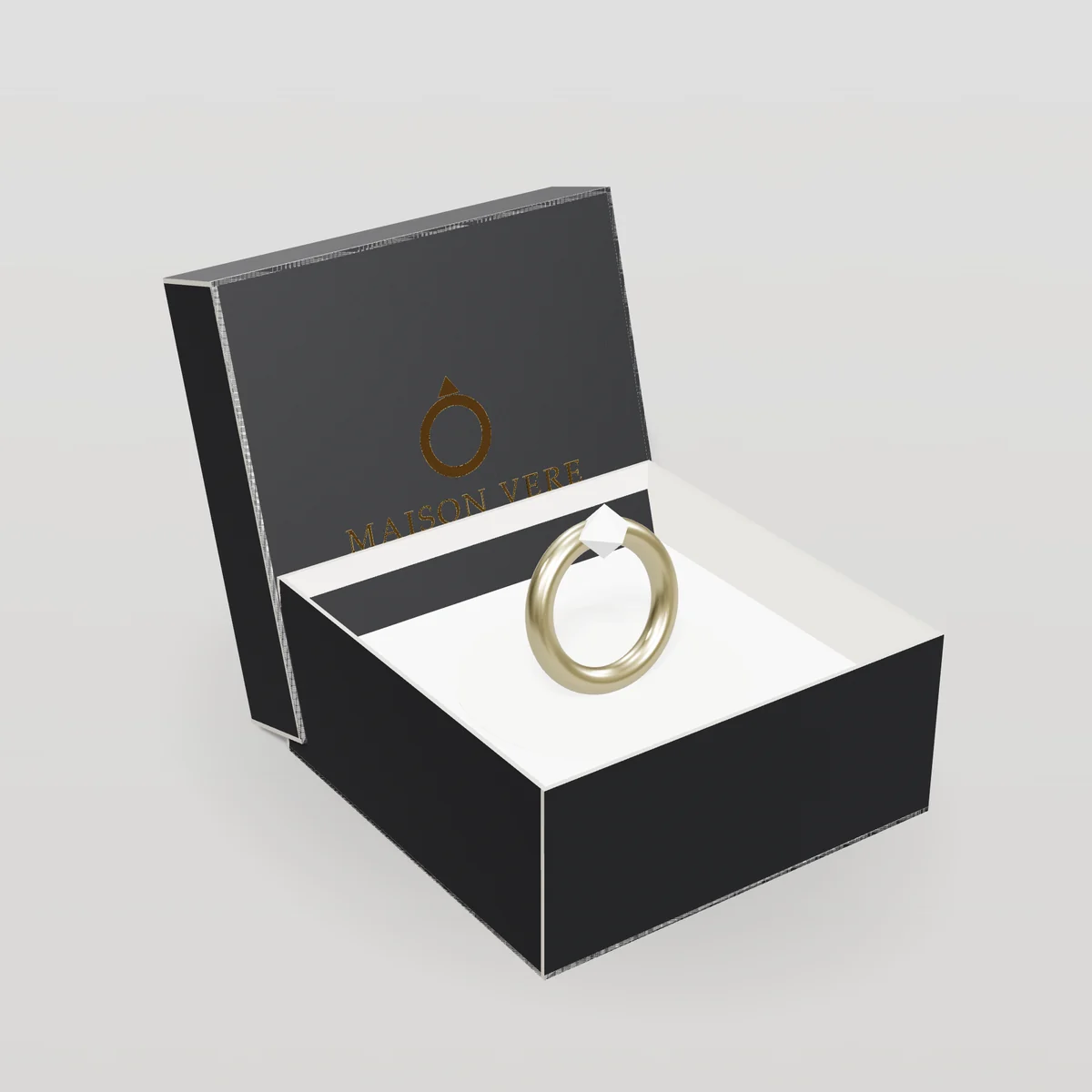 Box StylesRigid BoxesLuxury setup boxes made from thick greyboard wrapped in printed or specialty paper.
 Box StylesMagnetic Closure BoxesBook-style rigid boxes with hidden magnets for a satisfying, reclosable unboxing.
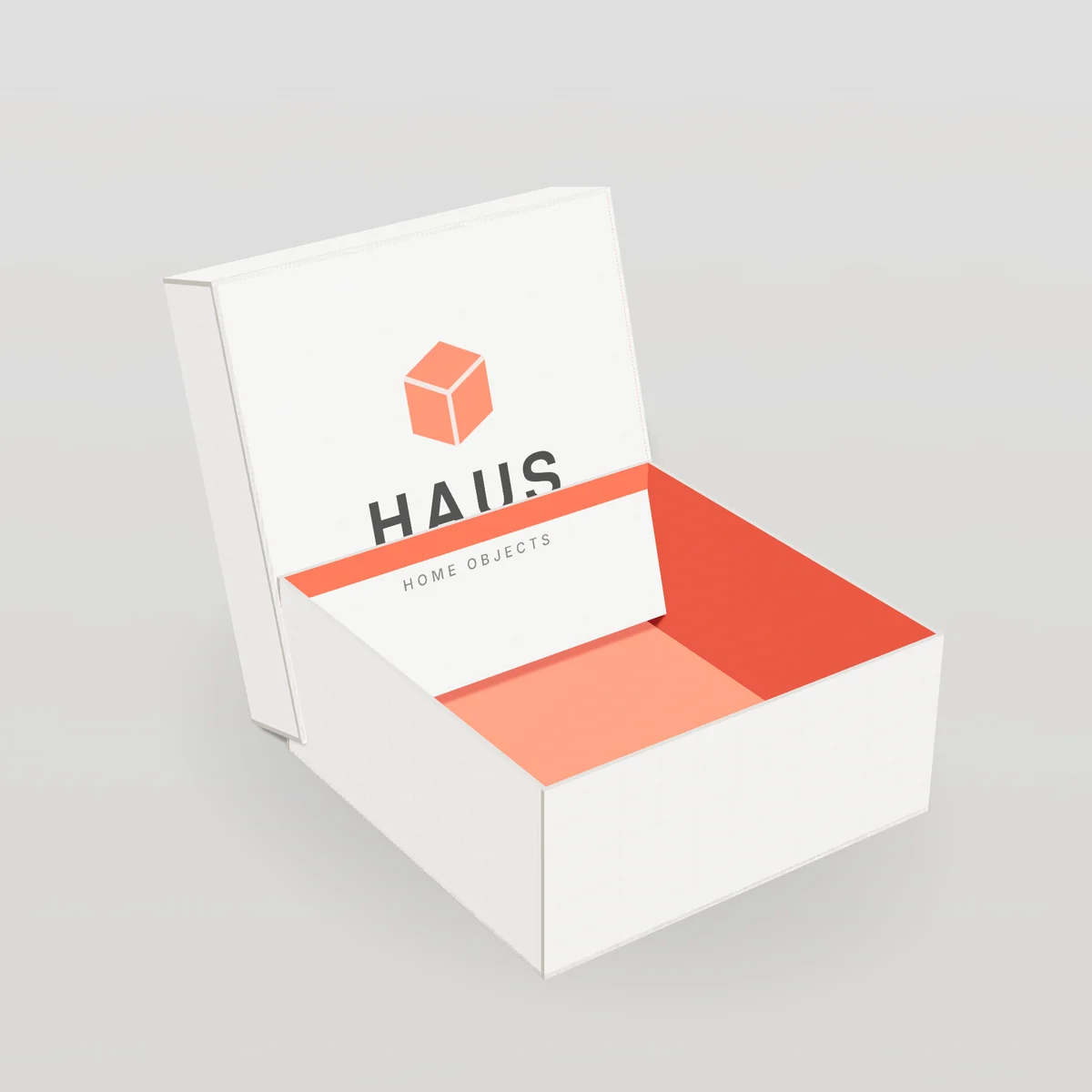 Box StylesTwo-Piece BoxesLid-and-base boxes in rigid board or paperboard. A timeless gift and apparel format.
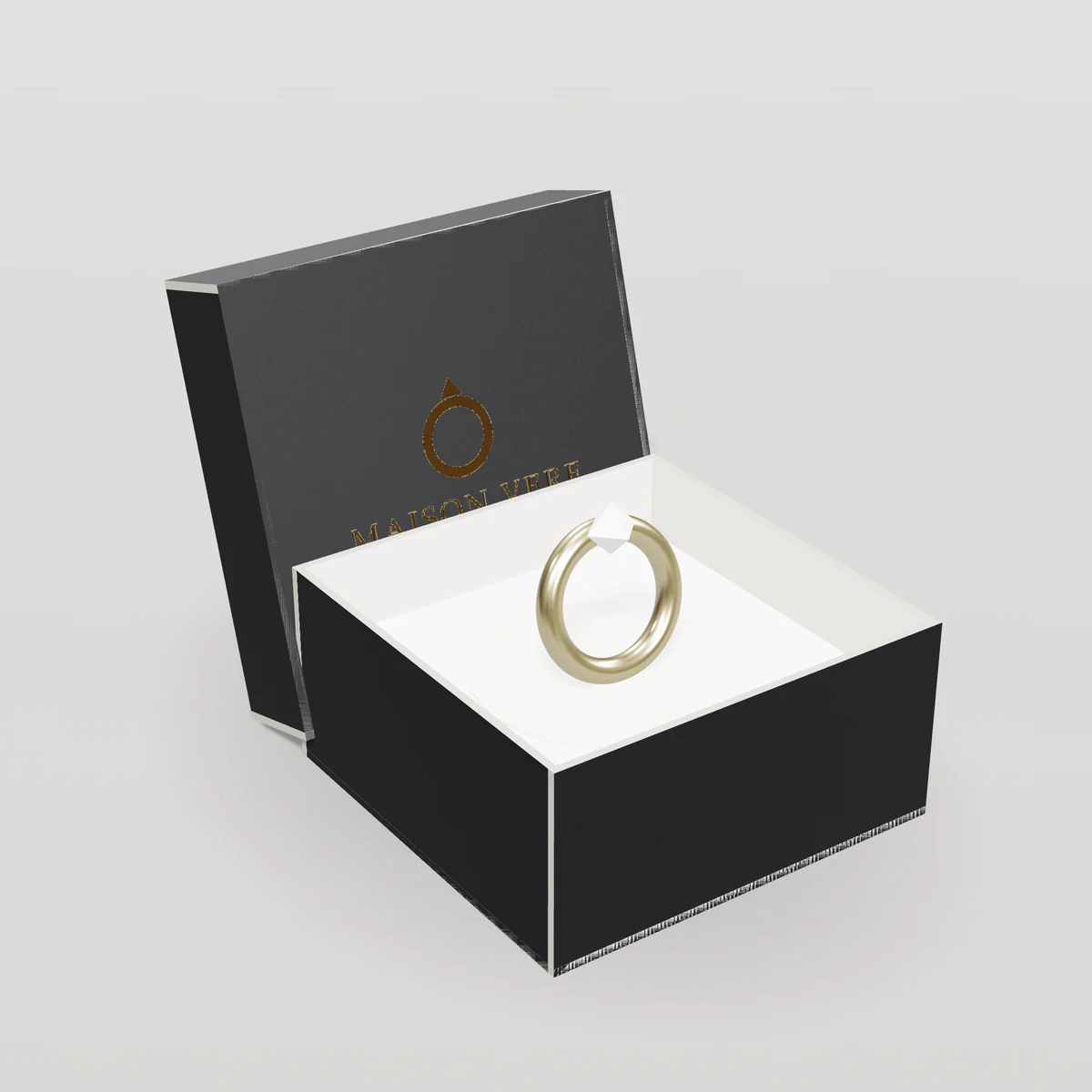 IndustriesJewelry BoxesRigid lid-and-base, drawer and magnetic boxes with velvet or foam inserts.
Rigid Chipboard prices by box style
Estimated unit prices for each box style we make in this material, at its most popular size with full-color print, delivered within the contiguous US. Use them to compare structures before you request a quote.
| Box style | Material grade | 500 units | 1,000 units | 5,000 units |
|---|---|---|---|---|
| Rigid Boxes8 × 6 × 3" | Rigid greyboard + printed wrap | $3.36 | $2.89 | $2.32 |
| Rigid Boxes8 × 6 × 3" | Rigid greyboard + kraft wrap | $3.28 | $2.81 | $2.26 |
| Magnetic Closure Boxes9 × 7 × 3" | Rigid greyboard + printed wrap | $4.07 | $3.51 | $2.82 |
| Magnetic Closure Boxes9 × 7 × 3" | Rigid greyboard + kraft wrap | $3.95 | $3.39 | $2.72 |
| Two-Piece Boxes8 × 8 × 3" | Rigid greyboard + printed wrap | $3.59 | $3.10 | $2.51 |
| Two-Piece Boxes8 × 8 × 3" | Rigid greyboard + kraft wrap | $3.49 | $3.01 | $2.43 |
| Sleeve Boxes6 × 4 × 2" | Rigid greyboard + printed wrap | $3.05 | $2.65 | $2.15 |
| Tube Packaging3 × 3 × 7" | Rigid greyboard + kraft wrap | $2.01 | $1.64 | $1.24 |
| Tube Packaging3 × 3 × 7" | Rigid greyboard + printed wrap | $2.05 | $1.67 | $1.27 |
A dash means 500 units is below that style’s minimum order. Your quote confirms exact prices.
How to order rigid chipboard
- 1Request a quote
Tell us the style, size, quantity and artwork you have. Use the form or the live estimator.
- 2Free design & dieline
We send a dieline for your exact size, check your artwork and help with layout at no charge.
- 3Approve your proof
Review a digital 3D proof (and an optional physical sample) before anything is printed.
- 4Production & QC
Your boxes are printed, finished, die-cut and inspected against the approved proof.
- 5Delivered to your door
Shipped flat-packed with tracking to any address in the contiguous US.
Key terms on this page
- Chipboard
- A dense, usually recycled board. Thin chipboard is used for backing cards; thick chipboard (greyboard) forms the core of rigid boxes.
- Greyboard
- Thick, dense recycled board used as the structural core of rigid boxes, usually 1.2 to 3 mm thick.
- Board
- A general term for thick paper materials used in packaging, including paperboard, corrugated board and greyboard.
- Paperboard
- Thick paper (usually 0.010 inch or more) used for folding cartons, such as SBS, kraft and recycled board.
- Carton
- A box made from paperboard, usually a folding carton. In shipping, "carton" can also mean a corrugated case.
- Rigid box
- A premium box made from thick greyboard wrapped in printed or specialty paper, delivered assembled. Also called a setup box.
- Wrap
- The printed or specialty paper glued around the board of a rigid box or tube.
- CMYK
- The four process ink colors (cyan, magenta, yellow and key/black) combined in small dots to reproduce full-color images in print.
- Pantone (PMS)
- The Pantone Matching System, a standardized color reference used to specify exact spot colors.
- Kraft
- Paper or board made from unbleached wood pulp, naturally brown and strong.
- Liner
- The flat paper faces of corrugated board. Can be kraft (brown) or bleached (white).
- Lid
- The top part of a box, hinged or separate.
- Finish
- Any treatment applied after printing to change appearance or protect the surface, such as coatings, laminations, foil, embossing or spot UV.
- Folding carton
- A paperboard box printed, die-cut, creased and glued, shipped flat and folded into shape at packing.
- Embossing
- Raising part of the board surface into a relief using matched dies, often combined with foil or ink.
- Tray
- An open-topped box base, often used with a sleeve or lid.
- Sleeve
- An open-ended band or tube that slides over a tray or box, often printed to brand plain packaging.
- Lamination
- Bonding a thin film (matte, gloss or soft-touch) or paper to board for protection and finish.
- Soft-touch lamination
- A film with a velvety, matte texture that makes packaging feel premium and resists fingerprints.
- Spot UV
- A clear, glossy UV-cured varnish applied to selected areas to create contrast with a matte background.
- Specialty paper
- Textured, colored, metallic or otherwise distinctive paper used to wrap rigid boxes or print labels.
- Artwork
- The final graphic files (logos, images, text and colors) placed on a dieline and used to make printing plates or digital print files.
- Bleed
- Artwork that extends beyond the cut line, normally 1/8 inch (3 mm), so that no unprinted edge appears if cutting shifts slightly.
- Insert
- A component inside a box that holds products in place, such as die-cut paperboard, corrugated, foam or molded pulp.
- Molded pulp
- Packaging formed from wet paper fiber in molds and dried, used for protective inserts and trays. Plastic-free and recyclable.
- EVA foam
- A dense, smooth foam used for protective inserts with precise cavities, common in premium electronics and jewelry packaging.
- Pallet
- A flat platform used to ship stacked goods. The standard US GMA pallet is 48 by 40 inches.
- Proof
- A preview of the final package (digital PDF, 3D render or physical sample) that the customer approves before production.
More definitions in our packaging glossary.
Customer reviews
Reviews come only from verified customers. Ordered rigid chipboard from us? Share your experience.
Discussed on Quora & X
Rigid Chipboard FAQ
What is greyboard?
A dense, thick recycled board used as the structural core of rigid boxes.
What thickness should my rigid box be?
2 mm is the most common. Use 1.2–1.5 mm for small boxes and 2.5–3 mm for large or heavy contents.
Is chipboard the same as greyboard?
In rigid box manufacturing the terms are used interchangeably for dense, thick recycled board.
Are rigid boxes recyclable?
Paper-wrapped rigid boxes are generally recyclable once non-paper components like foam inserts and magnets are removed.
What thickness of greyboard should I choose?
2.0 mm suits most gift, cosmetic and apparel boxes. Use 1.5 mm for small boxes and 2.5 mm or more for large or heavy ones.
Can rigid boxes ship flat?
Collapsible rigid boxes ship flat and assemble in seconds. Traditional rigid boxes ship assembled.
Why do rigid boxes cost more than cartons?
They use thicker board, wrap paper and liners, and they involve more assembly steps, many by hand.
Can rigid boxes ship by mail on their own?
Rigid boxes are sturdy but their wrapped surfaces can scuff in parcel networks. For e-commerce, ship them inside a corrugated outer box.
What is the thickest greyboard used for rigid boxes?
Greyboard comes in several thicknesses. Thicker boards feel more substantial and are used for larger or heavier boxes; we recommend a thickness based on box size and product weight.