Quick answer
Recyclable, plastic-free and recycled-content options, with honest claims you can print. Typical turnaround is 10–14 business days after proof approval.
What makes packaging sustainable?
"Sustainable packaging" is not a single material. It is a set of choices that together reduce the environmental impact of getting your product safely to a customer. The most effective choices are often the least glamorous: right-sizing, using less material, choosing widely recycled formats and avoiding unnecessary components. A box that is the right size, made from recyclable paper and protects the product well is usually more sustainable than an exotic material that customers cannot recycle.
A useful way to think about it:
- Reduce: use less material and less empty space.
- Recyclable: choose formats that people can actually recycle where they live.
- Recycled content: use recycled fiber where performance allows.
- Responsible sourcing: use certified or responsibly sourced fiber.
- Protect the product: a damaged product wastes far more than its packaging.
- Communicate honestly: make specific, accurate claims.
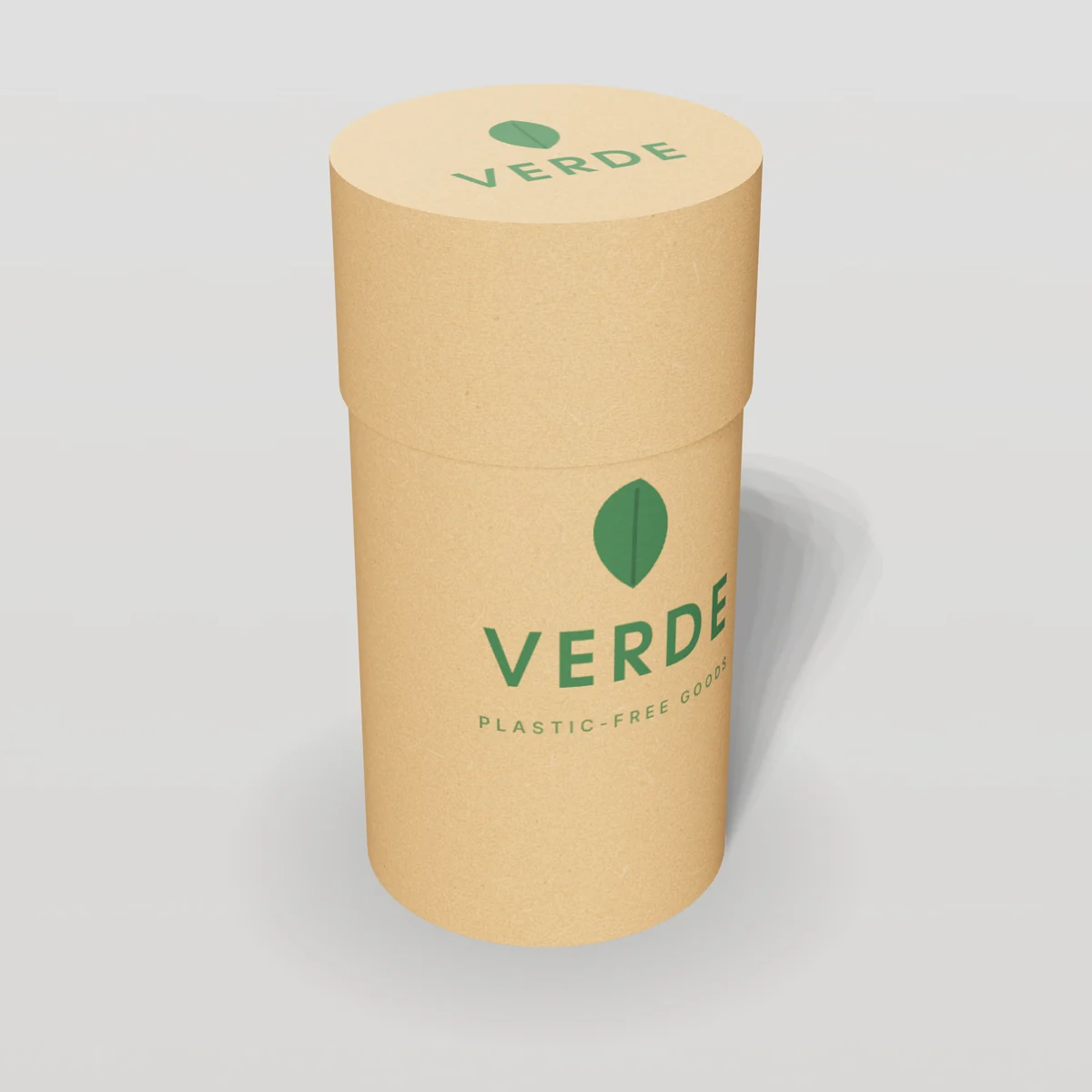
Our sustainable packaging options
| Option | Why it helps |
|---|---|
| Right-sized boxes | Less board, less void fill, lower shipping emissions |
| Corrugated and paperboard | Renewable fiber, widely recycled in the US |
| Recycled-content board | Uses recovered fiber |
| Kraft (unbleached) board | Avoids bleaching, strong fibers |
| Water-based inks and aqueous coatings | Keeps paper easy to recycle |
| Paper inserts and molded pulp | Replace plastic trays and foam |
| Paper tape | Keeps the box mono-material |
| Open windows or no windows | Avoid plastic film |
| Mono-material pouches | Designed for store drop-off recycling where accepted |
| Reusable rigid and magnetic boxes | Kept and reused by customers |
Recyclable vs. recycled vs. compostable
These are different claims with different meanings:
- Recyclable: the package can be collected, sorted and reprocessed through recycling programs available to a substantial majority of consumers where it is sold. Corrugated boxes and most paperboard cartons qualify in the US; many multi-layer pouches do not.
- Recycled content: the package is made using recovered material. State the percentage if it is not 100%.
- Compostable: the material breaks down in a composting environment. Industrial composting access is limited, so qualify claims ("commercially compostable where facilities exist").
- Biodegradable: a claim the FTC treats with caution; it generally should not be used for packaging that ends up in landfills.
The FTC Green Guides explain how to make environmental marketing claims that are not deceptive. Our sustainable packaging guide covers them in plain English.
Certifications
- FSC (Forest Stewardship Council): certifies responsible forestry and chain of custody. Using FSC labels requires certified material and a license code on pack.
- SFI and PEFC: other forest certification systems.
- How2Recycle: a US labeling program that explains how to recycle each packaging component, available to member brands.
We will only describe packaging as certified when the material is certified and you have the right to use the label.
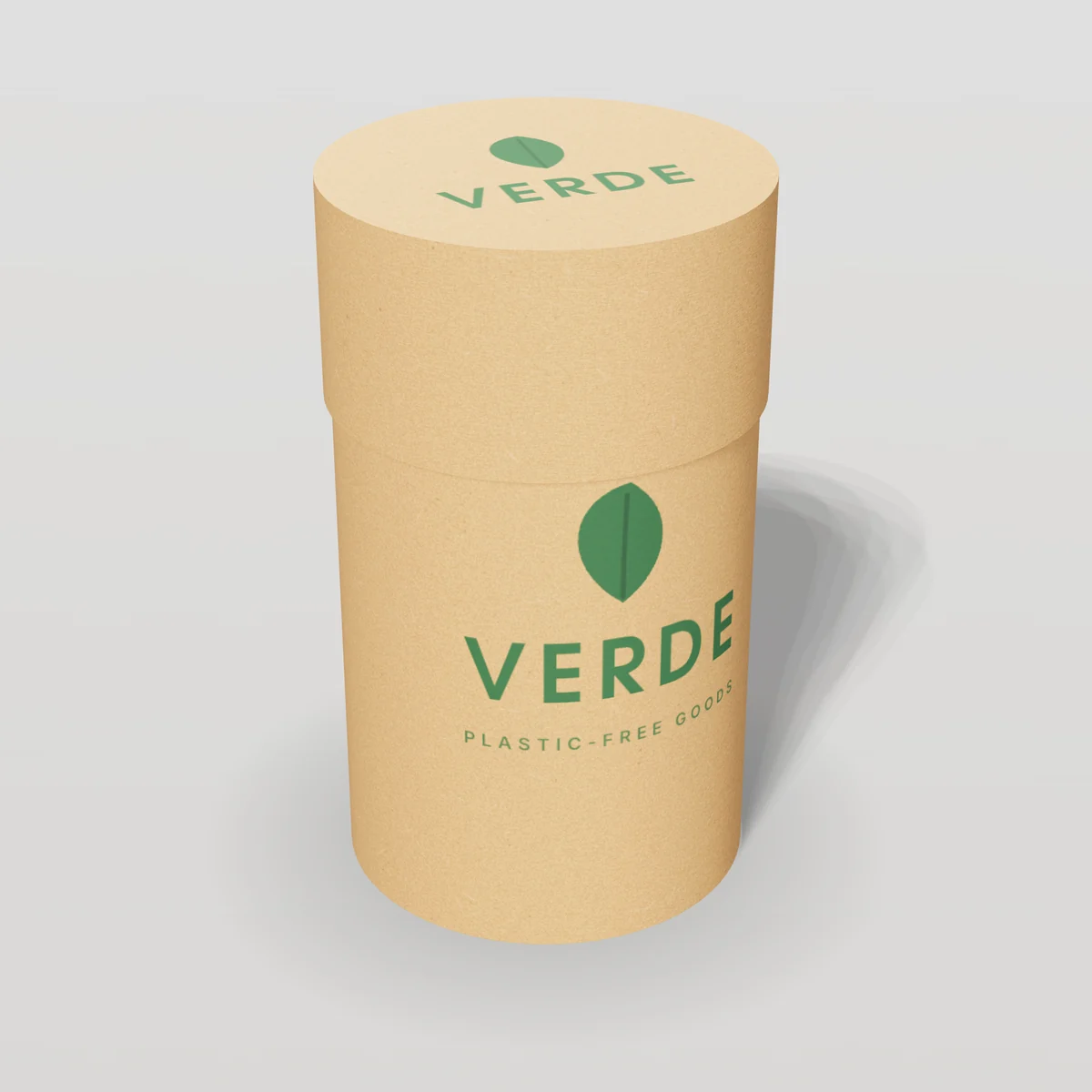
Design tips for lower impact
- Measure products precisely and size boxes closely.
- Choose one material for the whole package where possible.
- Print less coverage or use one or two colors on kraft.
- Skip lamination unless the box needs it for protection.
- Use paper void fill instead of plastic air pillows.
- Add recycling instructions in plain words.
- Design for reuse, especially for gift and subscription boxes.
Common greenwashing pitfalls
- Calling a whole package "eco-friendly" with no specifics.
- Claiming recyclability for multi-layer plastics that most programs do not accept.
- Using certification logos without certification.
- Overstating recycled content.
- Using "biodegradable" for packaging that will end up in landfill.
Where packaging's environmental impact actually comes from
When brands think about sustainable packaging, they often focus on the material of the box. That matters, but it is only one part of a package's footprint. Life-cycle studies of packaged goods consistently show that the product itself usually accounts for far more environmental impact than its packaging. That has two important consequences.
First, protection comes first. If a lighter or "greener" box lets a product break, the replacement product, the second shipment and the returns process cost much more than the packaging saved. Sustainable packaging is packaging that gets the product to the customer intact with as little material as possible.
Second, efficiency beats novelty. Shipping air is wasteful: oversized boxes use more board, need more void fill, take more space in trucks and planes, and raise dimensional weight charges. Right-sizing, lighter grades where they perform, and fewer components usually deliver bigger and more reliable improvements than switching to an unusual material.
The main levers, in rough order of impact for most brands:
- Right-size every package to the product.
- Remove unnecessary components (extra wraps, plastic bags, oversized inserts).
- Choose widely recyclable materials, ideally one material family.
- Use recycled content where it performs.
- Source fiber responsibly, with certification where it matters to your customers.
- Design for reuse where customers will genuinely reuse.
- Communicate clearly so customers dispose of packaging correctly.
Right-sizing in practice
Right-sizing means choosing inside dimensions that fit the packed product with only the clearance it needs. Because custom boxes are made to order, a right-sized box usually costs no more than a stock size, and often less.
| Packing approach | Typical clearance |
|---|---|
| Snug retail carton | 1/16–1/8 in |
| Tissue-wrapped product | 1/4–1/2 in |
| Light void fill | 1/2–1 in |
| Fragile product with cushioning | 1–2 in on each side |
A useful exercise is to look at your top ten order combinations and check how full each box is. If many orders ship in boxes that are less than half full, a small set of better-fitting sizes can cut material, void fill and shipping costs at the same time. Our Box Size Finder and DIM Weight Calculator help you test sizes.
Paper-based packaging in the US recycling system
Paper and board are the backbone of US packaging recycling. Corrugated boxes are collected from homes, stores and warehouses on a huge scale, and paperboard cartons are accepted in most curbside programs. Recovered fiber is used to make new linerboard, medium, recycled paperboard and other paper products.
What helps paper packaging get recycled:
- Mono-material design: box, insert, tape and fill all paper.
- Water-based inks and aqueous coatings.
- Removable or no plastic windows.
- Small foil and spot UV areas rather than full plastic lamination on large boxes.
- Clean packaging: inner bags or liners keep food residue off cartons.
- Clear instructions printed on the pack.
What makes it harder:
- Foam glued into boxes
- Heavy plastic laminations and plastic-coated board (accepted by some mills, not all)
- Wax-coated corrugated
- Large metallic films and glitter
- Mixed materials that customers cannot separate
Plastic-free alternatives
| Plastic component | Paper or fiber alternative | Trade-offs |
|---|---|---|
| Poly mailer | Paper mailer, corrugated mailer | Paper mailers are less water-resistant; boxes are bulkier |
| Bubble wrap | Honeycomb paper, crinkle paper | Slightly more volume for the same protection |
| Air pillows | Paper void fill | Heavier per volume; recyclable |
| Foam inserts | Paperboard, corrugated or molded pulp inserts | Pulp needs a mold; board inserts need a die |
| Plastic window film | Open window | Product exposed to dust and touch |
| Plastic tape | Water-activated paper tape | Needs a dispenser for best results |
| Shrink wrap on retail packs | Paper bands or sleeves | Less tamper evidence |
| Plastic clamshell | Paperboard blister alternative or window carton | Less product visibility |
Not every plastic can or should be removed. For example, food barrier films protect products from spoilage, and some electronics need anti-static bags. The goal is to remove plastic that is not doing an essential job.
Flexible packaging and recyclability
Stand-up pouches are light and efficient, but most traditional pouches combine several materials (PET, aluminum, PE) that cannot be separated, so they are not recyclable in curbside programs. Options:
- Mono-material PE pouches designed for recycling through store drop-off programs where accepted
- Paper-based pouches with thin barrier coatings for dry goods
- Right-sized pouches that use less material than rigid alternatives
- Honest labeling, for example "Recycle at store drop-off where accepted" only when the pouch qualifies
See stand-up pouches for options and prices.
Certifications and what they mean
| Label | What it certifies | Requirements to use it |
|---|---|---|
| FSC (Forest Stewardship Council) | Responsible forest management and chain of custody | Certified material through a certified supply chain, plus a license code on pack |
| SFI (Sustainable Forestry Initiative) | Forest management and fiber sourcing standards | Certified supply chain and label rules |
| PEFC | International forest certification umbrella | Certified supply chain and label rules |
| How2Recycle | Standardized disposal instructions | Membership and assessment of each component |
| Compostability certifications | That a material composts under specific conditions | Certification of the specific material |
Certification labels carry weight with customers only when they are genuine. Never print a certification logo unless your packaging qualifies and you have permission; we will confirm what can be supplied before artwork is final.
Writing honest sustainability claims
The FTC Green Guides set out how environmental claims are interpreted in the US. Some states add their own rules on recyclability claims and symbols. Practical rules for packaging:
- Avoid unqualified general claims like "eco-friendly", "green" or "sustainable".
- Make specific claims that you can prove: "Box made from corrugated cardboard. Please recycle."
- Qualify recyclability when facilities are not widely available: "Recycle at store drop-off where accepted."
- State recycled content accurately: "Made with 70% recycled fiber" only if documented.
- Qualify compostability: "Commercially compostable; facilities may not exist in your area."
- Separate claims for packaging and product.
- Keep evidence on file.
Sustainability and cost: often aligned
Many of the most effective sustainability changes also cut costs:
- Right-sized boxes cost less to make and ship.
- Fewer components cost less and pack faster.
- Paper void fill and tape are price-competitive with plastic in many cases.
- One-color kraft printing can cost less than full-color white boxes.
Some changes cost more, such as certified fiber in short runs, molded pulp tooling or mono-material pouches. We will show the price difference in your quote so you can decide.
A sustainability roadmap for growing brands
Month 1: measure. List every packaging component, its material and its supplier. Check how full your boxes are.
Month 2: remove and right-size. Remove unnecessary components and introduce right-sized boxes for your most common orders.
Month 3: switch materials. Replace plastic fill, tape and inserts with paper alternatives where they perform.
Month 4: communicate. Add clear disposal instructions and specific claims to packaging and your website.
Ongoing: review. Revisit packaging at each reorder; small improvements compound.
Sustainable packaging by format
Every packaging format has its own sustainability profile. Here is how we approach the main ones.
Mailer boxes
Mailer boxes are corrugated, widely recyclable and usually contain recycled fiber. The main improvements are right-sizing, choosing E-flute instead of heavier board where it performs, printing the inside with one color instead of full coverage, using paper inserts and paper tape (or none, since mailers lock), and printing a simple recycling instruction inside the lid.
Shipping boxes
Shipping boxes (regular slotted containers) use board very efficiently and often need no custom die. A small set of right-sized sizes, kraft board, water-activated paper tape and paper void fill makes a highly recyclable shipping system.
Folding cartons
Folding cartons in SBS, kraft or recycled board are lightweight and recyclable. Choose the lowest caliper that performs, prefer aqueous coatings, keep windows open or omit them, and use recycled board for high-volume SKUs where appropriate.
Rigid and magnetic boxes
Rigid boxes use more material, but they are often kept and reused for years. Choose paper or greyboard inserts over foam, keep laminations modest, consider collapsible rigid boxes to cut freight, and tell customers how to remove magnets before recycling.
Pouches
Stand-up pouches use little material and ship efficiently, but traditional multi-layer films are not curbside recyclable. Consider mono-material PE for store drop-off where accepted, or paper-based pouches for dry goods with modest barrier needs.
Accessories
Tissue paper, stickers, cards, paper tape and paper bags can all be specified in recyclable paper. Avoid plastic-laminated cards and glitter where possible.
Reuse and refill
Reuse can be powerful, but only when customers actually reuse the packaging. Good candidates:
- Rigid and magnetic boxes used for storage
- Tubes used as pen holders or containers
- Mailers with a second adhesive strip for returns
- Tins and jars for refillable products
Design reuse in: a box that looks good on a shelf after the product is gone, a return strip, or a printed suggestion for a second life. Avoid claiming "reusable" unless the packaging is genuinely suited to repeated use.
Inks, adhesives and coatings
Small components affect recyclability:
- Water-based flexo inks on corrugated are standard and compatible with recycling.
- Offset inks on paperboard are removed or dispersed in the recycling process; vegetable- or soy-based offset inks are available.
- Aqueous coatings protect print and keep board easily repulpable.
- UV coatings and laminations add protection; small areas are generally fine, large plastic films can complicate recycling.
- Hot-melt and starch adhesives used in box making are compatible with standard paper recycling.
Measuring progress
You cannot improve what you do not measure. Simple metrics for a growing brand:
| Metric | How to measure |
|---|---|
| Packaging weight per order | Weigh packaging (without product) for your top orders |
| Box fill rate | Product volume ÷ box inside volume |
| Share of paper-based packaging | Paper weight ÷ total packaging weight |
| Recycled content | From supplier documentation |
| Damage rate | Damaged orders ÷ total orders |
| Components per order | Count of separate packaging items |
Track these at each reorder. A falling packaging weight per order and a stable or falling damage rate are strong signs of real progress.
Extended producer responsibility (EPR)
Several US states have passed extended producer responsibility laws for packaging, which shift some of the cost of collecting and recycling packaging to the brands that put it on the market. Programs, timelines and obligations vary by state and are still being implemented. If you sell into states with EPR laws, you may need to register, report packaging volumes by material and pay fees that can be lower for recyclable packaging. Watch the rules in the states where you sell and keep accurate records of your packaging materials and weights; we can provide material specifications for your orders.
Talking to customers about packaging
Customers appreciate brands that are clear and modest about packaging:
- Explain what the packaging is made from and how to dispose of it.
- Share what you changed ("We removed plastic air pillows and switched to paper").
- Avoid absolute claims ("zero waste", "100% sustainable").
- Invite feedback on packaging.
A short packaging page on your website, linked from a QR code inside the box, is an easy way to share this.
The packaging waste hierarchy
A helpful way to think about sustainable packaging is the waste hierarchy, which ranks options from most to least preferred:
- Reduce: use less material, right-size boxes and remove unnecessary components.
- Reuse: design packaging that customers keep, refill or return.
- Recycle: choose materials that are widely accepted and easy to recycle.
- Recover: where recycling is not possible, materials may be recovered for energy in some systems.
- Dispose: landfill is the last resort.
Most brands make the biggest gains in the first step. Right-sizing a box, removing a plastic window or swapping foam for a paper insert often has more impact than switching to a more expensive "green" material.
Transport efficiency
Packaging affects how many products fit in a truck, container or pallet. Smaller, lighter packaging means fewer trips and lower emissions. Designing cartons that stack efficiently on pallets, ship flat until packing and avoid wasted space inside shipping boxes reduces both cost and environmental impact. Our pallet calculator and DIM weight calculator help find more efficient sizes.
Paper or plastic: an honest comparison
Paper-based packaging is renewable, widely recycled in the United States and familiar to customers. Plastic packaging can be lighter, provide barriers to moisture and oxygen and protect some products with less material. Neither is always better. A paper box that is oversized or lets products break may have a larger footprint than a well-designed plastic pack. The best choice depends on the product's needs, how it ships and what customers can do with the packaging at the end. For most dry goods, cosmetics, apparel and gifts, paper-based packaging is an excellent choice.
Questions to ask your packaging supplier
- What recycled content do your boards contain, and can you document it?
- Are your boards certified for responsible sourcing?
- What inks and coatings do you use, and are they compatible with recycling?
- Can you suggest ways to right-size my packaging?
- Can you replace plastic components with paper alternatives?
- How do you minimize waste in production?
Disposal labels customers understand
Customers want to dispose of packaging correctly but often do not know how. Clear, simple labels help: "Recycle the box with cardboard", "Remove the window film before recycling", "Store drop-off for the mailer where accepted". Some brands use recognized on-pack recycling label programs that standardize instructions. Whatever approach you use, keep instructions specific to each component and accurate for most of your customers.
Sustainable packaging on a small budget
Sustainability does not have to cost more. Many steps save money:
- Right-size boxes to reduce board and shipping costs.
- Remove unnecessary components such as excess inserts, plastic bags and leaflets.
- Print inside the box instead of adding separate printed inserts.
- Choose kraft or recycled board where it suits the brand.
- Use paper tape instead of plastic tape.
- Order realistic quantities so packaging is not wasted when designs change.
Worked example: a candle brand goes plastic-free
A small candle brand shipped jars in a printed mailer with a foam insert, plastic tape and a plastic bag around each jar. The brand replaced the foam with a molded pulp cradle, swapped plastic tape for paper tape, removed the plastic bags and added recycling guidance inside the lid. The mailer was right-sized around the new insert. Breakage stayed low in drop tests, the packaging became easier to recycle, and the smaller box reduced shipping charges. The brand updated its website with specific, accurate statements about each component rather than a general "eco-friendly" claim.
Keeping sustainability claims current
Packaging changes over time, and claims must change with it. Review sustainability statements whenever you change materials, suppliers or components. Keep documentation from suppliers on recycled content and certifications. If a component changes, update the website, product pages and packaging at the next reprint. Accurate claims build trust and reduce legal risk.
More sustainable packaging FAQ
Is compostable packaging always better?
Not always. Compostable packaging only helps if it reaches a composting facility or is suitable for home composting. Recyclable paper packaging is often the more practical choice in the United States.
What is the single most effective change?
For many brands, right-sizing boxes is the most effective change, because it reduces material, void fill, shipping emissions and damage at the same time.
Quick decision guide for lower-impact packaging
| If you need… | Choose… | Because… |
|---|---|---|
| Biggest quick win | Right-size boxes | Less material and shipping |
| Replace foam | Molded pulp or paperboard inserts | Recyclable alternatives |
| Replace plastic tape | Paper tape | Mono-material box |
| Fewer leaflets | Print inside the box | No separate inserts |
How to brief us on sustainable packaging
Tell us where you are today and where you want to be:
- Current packaging. Photos and components.
- Goals. Plastic-free, recycled content, right-sizing or cost.
- Claims you want to make. So we can document them.
- Shipping method. Protection needs shape the options.
Send what you have, even if some answers are rough. Our specialists reply within one business day with recommendations, a price estimate and next steps, and every order includes free design help and a 3D proof before anything goes to production.
Sustainable packaging products
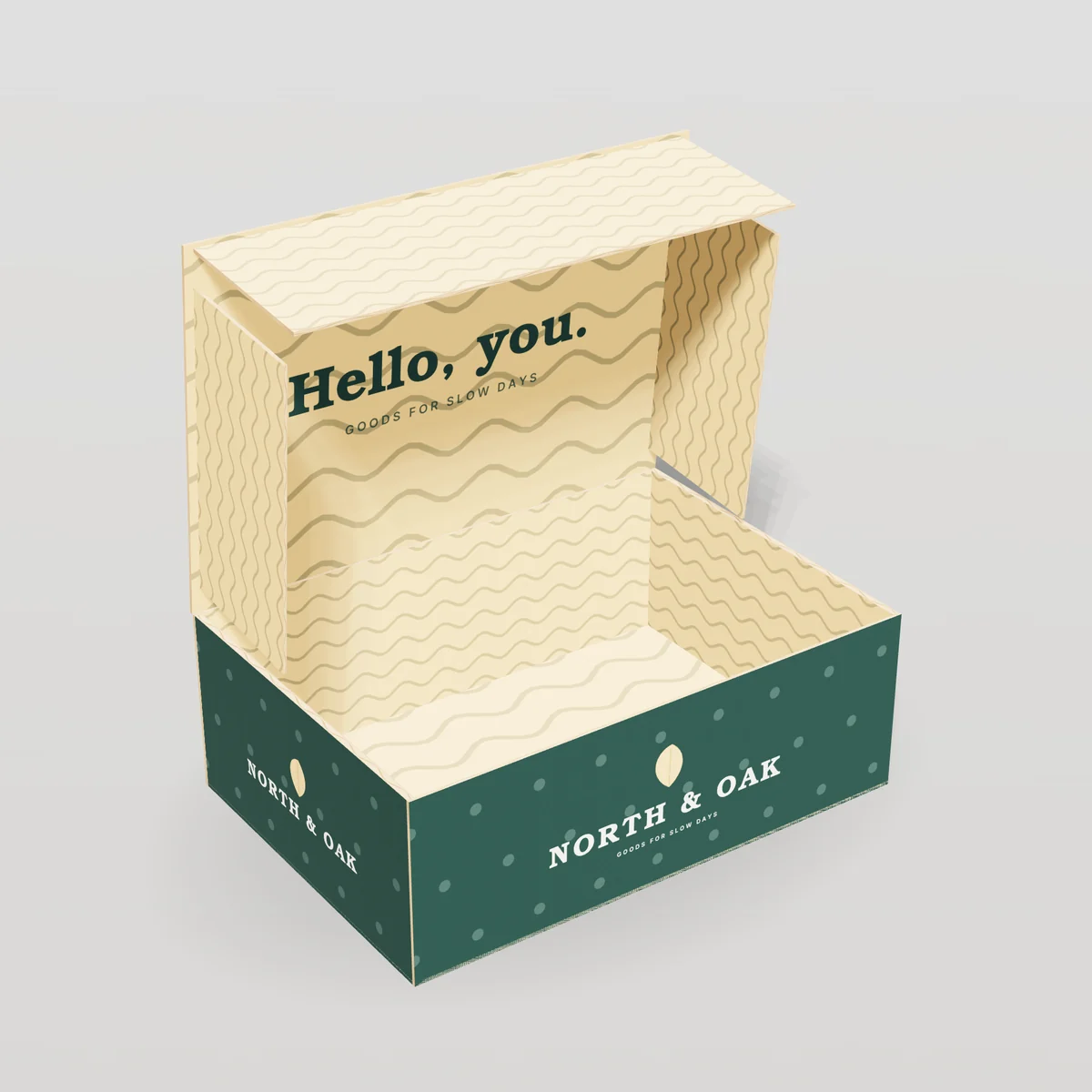 Box StylesMailer BoxesSelf-locking corrugated mailers printed inside and out. The go-to box for DTC brands and subscriptions.
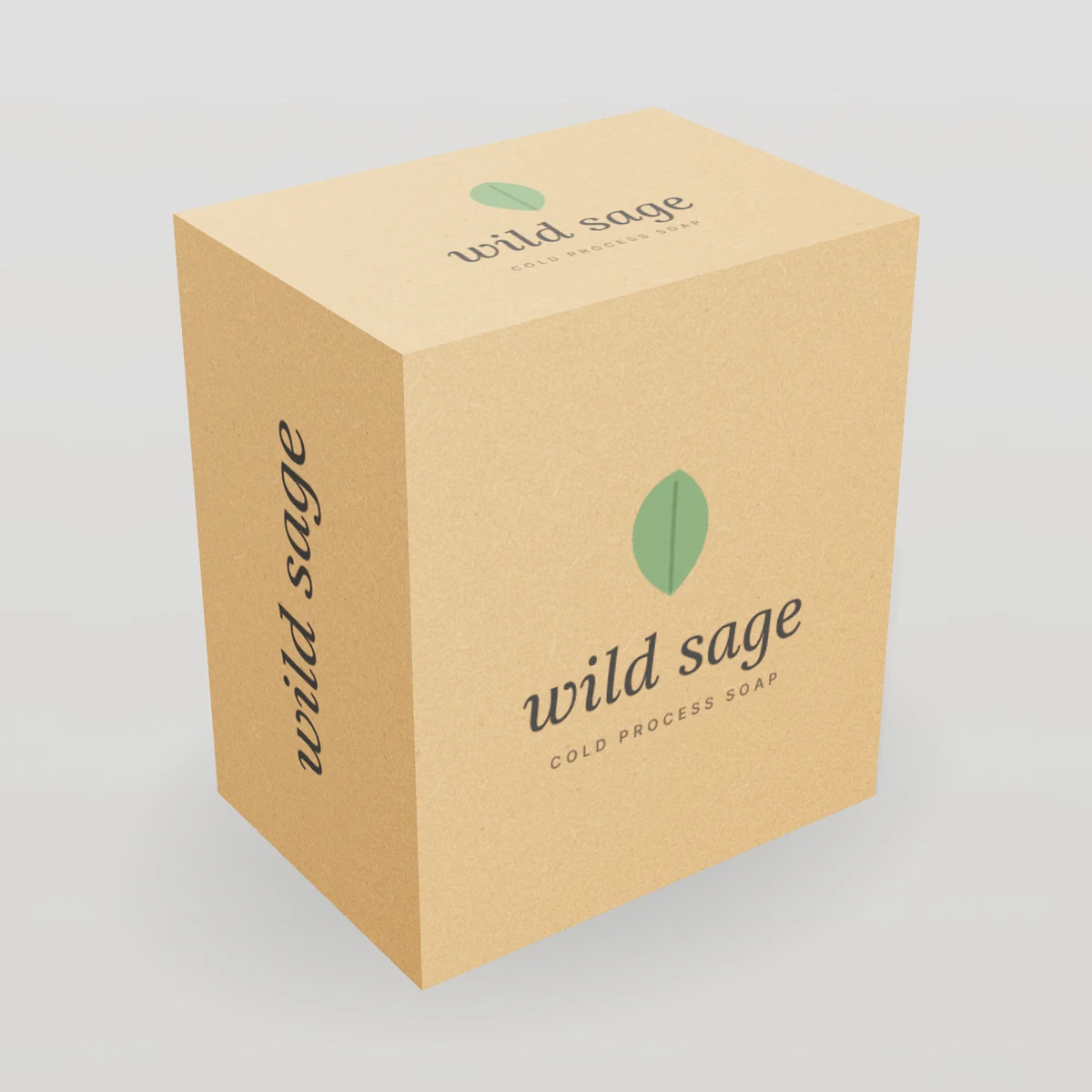 MaterialsKraft PaperboardNatural brown, unbleached board with a handmade, eco-forward look.
 MaterialsRecycled PaperboardCoated recycled board: economical, printable and made from post-consumer fiber.
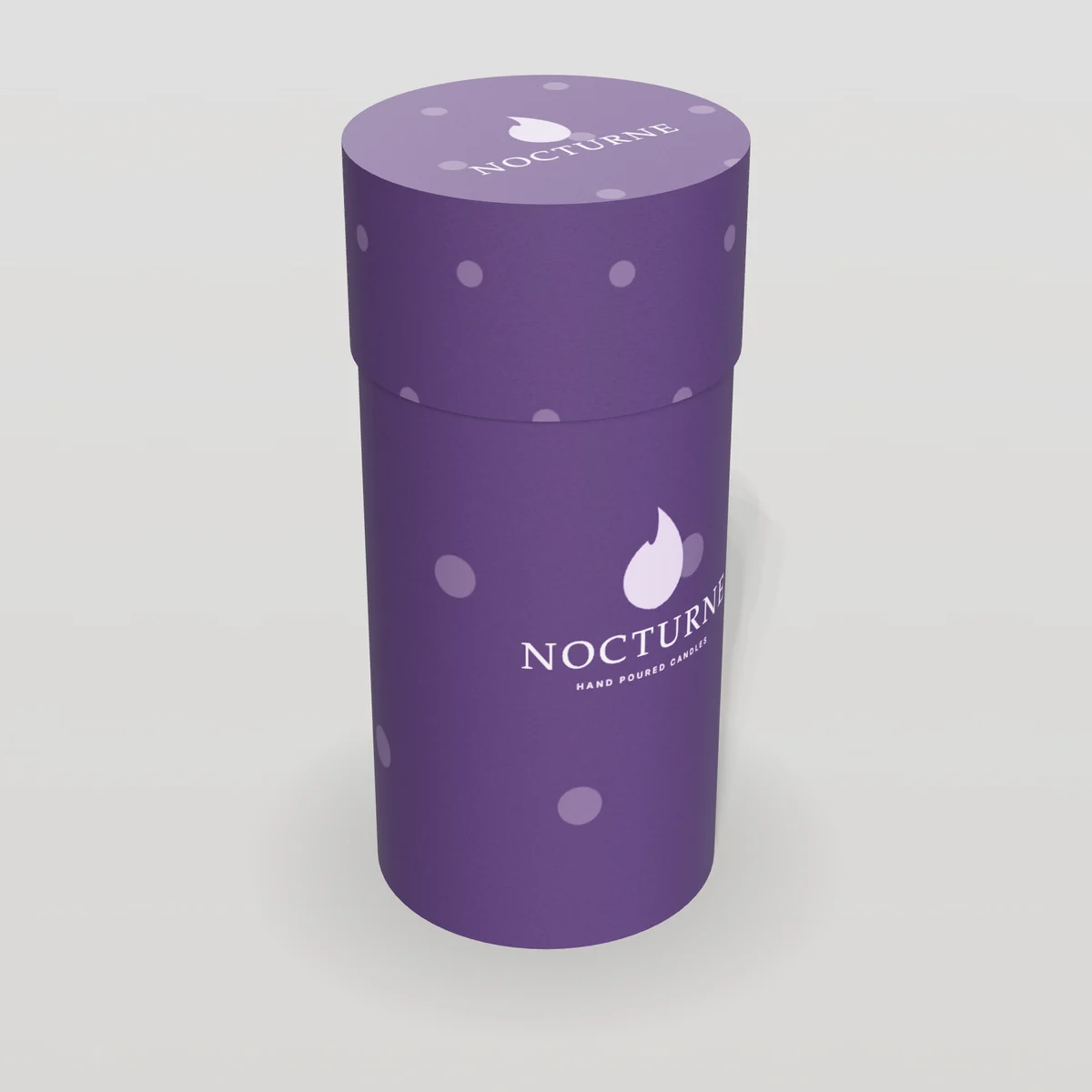 Box StylesTube PackagingCylindrical paperboard tubes with a lid, for candles, tea, cosmetics and apparel.
Before you print an environmental claim, read biodegradable vs compostable vs recyclable packaging.
Sustainable Packaging prices by box style
Estimated unit prices for each box style we make in this material, at its most popular size with full-color print, delivered within the contiguous US. Use them to compare structures before you request a quote.
| Box style | Material grade | 500 units | 1,000 units | 5,000 units |
|---|---|---|---|---|
| Mailer Boxes9 × 6 × 3" | E-flute corrugated, kraft | $1.27 | $1.00 | $0.73 |
| Shipping Boxes12 × 10 × 6" | E-flute corrugated, kraft | $1.54 | $1.27 | $0.97 |
| Product Boxes4 × 4 × 4" | Kraft paperboard (18pt CUK) | $0.68 | $0.48 | $0.29 |
| Product Boxes4 × 4 × 4" | Recycled paperboard (CRB) | $0.66 | $0.46 | $0.28 |
| Folding Cartons3 × 3 × 5" | Kraft paperboard (18pt CUK) | $0.61 | $0.41 | $0.23 |
| Folding Cartons3 × 3 × 5" | Recycled paperboard (CRB) | $0.59 | $0.40 | $0.22 |
| Tuck End Boxes4 × 2 × 6" | Kraft paperboard (18pt CUK) | $0.59 | $0.40 | $0.22 |
| Tuck End Boxes4 × 2 × 6" | Recycled paperboard (CRB) | $0.58 | $0.38 | $0.21 |
| Auto-Lock Bottom Boxes5 × 3 × 7" | Kraft paperboard (18pt CUK) | $0.77 | $0.54 | $0.33 |
| Rigid Boxes8 × 6 × 3" | Rigid greyboard + kraft wrap | $3.28 | $2.81 | $2.26 |
| Magnetic Closure Boxes9 × 7 × 3" | Rigid greyboard + kraft wrap | $3.95 | $3.39 | $2.72 |
| Two-Piece Boxes8 × 8 × 3" | Rigid greyboard + kraft wrap | $3.49 | $3.01 | $2.43 |
| Sleeve Boxes6 × 4 × 2" | Kraft paperboard (18pt CUK) | $0.90 | $0.66 | $0.44 |
| Pillow Boxes6 × 3 × 1.5" | Kraft paperboard (18pt CUK) | $0.47 | $0.31 | $0.17 |
| Gable Boxes6 × 4 × 5" | Kraft paperboard (18pt CUK) | $0.93 | $0.69 | $0.46 |
| Gable Boxes6 × 4 × 5" | E-flute corrugated, kraft | $1.03 | $0.78 | $0.54 |
| Display Boxes10 × 7 × 4" | E-flute corrugated, kraft | $1.37 | $1.08 | $0.79 |
| Window Boxes5 × 3 × 5" | Kraft paperboard (18pt CUK) | $0.89 | $0.62 | $0.38 |
| Hanger Boxes4 × 1.5 × 6" | Kraft paperboard (18pt CUK) | $0.61 | $0.40 | $0.22 |
| Tube Packaging3 × 3 × 7" | Rigid greyboard + kraft wrap | $2.01 | $1.64 | $1.24 |
| Stand-Up Pouches6 × 3.5 × 9" | Recyclable mono-PE film | $0.77 | $0.50 | $0.27 |
A dash means 500 units is below that style’s minimum order. Your quote confirms exact prices.
How to order sustainable packaging
- 1Request a quote
Tell us the style, size, quantity and artwork you have. Use the form or the live estimator.
- 2Free design & dieline
We send a dieline for your exact size, check your artwork and help with layout at no charge.
- 3Approve your proof
Review a digital 3D proof (and an optional physical sample) before anything is printed.
- 4Production & QC
Your boxes are printed, finished, die-cut and inspected against the approved proof.
- 5Delivered to your door
Shipped flat-packed with tracking to any address in the contiguous US.
Key terms on this page
- Right-sizing
- Designing packaging to fit products closely, reducing material, void fill and shipping costs.
- Kraft
- Paper or board made from unbleached wood pulp, naturally brown and strong.
- Board
- A general term for thick paper materials used in packaging, including paperboard, corrugated board and greyboard.
- Void fill
- Material that fills empty space in a shipping box to stop products moving, such as crinkle paper or air pillows.
- Paperboard
- Thick paper (usually 0.010 inch or more) used for folding cartons, such as SBS, kraft and recycled board.
- Molded pulp
- Packaging formed from wet paper fiber in molds and dried, used for protective inserts and trays. Plastic-free and recyclable.
- FSC
- The Forest Stewardship Council, an organization that certifies responsible forest management and chain of custody for paper products. Using its label requires certified supply.
- Coverage
- The proportion of a surface covered by ink. Heavy coverage uses more ink and can affect drying and cracking.
- Lamination
- Bonding a thin film (matte, gloss or soft-touch) or paper to board for protection and finish.
- Dimensional weight (DIM weight)
- A billing method used by carriers that charges by package volume when it is higher than actual weight. Calculated as L × W × H divided by a divisor.
- Inside dimensions
- The usable space inside a box, the standard way to specify custom box sizes (L × W × H).
- Carton
- A box made from paperboard, usually a folding carton. In shipping, "carton" can also mean a corrugated case.
- Cushioning
- Materials that absorb shock and vibration to protect products, such as paper void fill, molded pulp, foam or air pillows.
- Linerboard
- The flat paper used as the inner and outer faces of corrugated board.
- Insert
- A component inside a box that holds products in place, such as die-cut paperboard, corrugated, foam or molded pulp.
- Spot UV
- A clear, glossy UV-cured varnish applied to selected areas to create contrast with a matte background.
- Poly mailer
- A lightweight plastic shipping envelope used mainly for apparel and soft goods.
- Wrap
- The printed or specialty paper glued around the board of a rigid box or tube.
- Die
- A custom tool, usually steel rule mounted in a board, used to cut and crease packaging to shape.
- Shrink wrap
- Plastic film that shrinks tightly around products or cartons when heated.
- Tamper evidence
- Features that show if a package has been opened, such as seals, tear strips or shrink bands.
- Artwork
- The final graphic files (logos, images, text and colors) placed on a dieline and used to make printing plates or digital print files.
- E-flute
- A thin corrugated flute about 1/16 inch thick. It prints sharply and folds crisply, making it the standard for mailer boxes.
- Lid
- The top part of a box, hinged or separate.
- SBS (solid bleached sulfate)
- Premium paperboard made from bleached virgin fiber, bright white throughout, with the best print and finish quality.
- Caliper
- The thickness of paper or board. Paperboard caliper is usually given in points, where 1 point equals 0.001 inch.
- Greyboard
- Thick, dense recycled board used as the structural core of rigid boxes, usually 1.2 to 3 mm thick.
- Tissue paper
- Thin, light paper used to wrap products inside boxes, often printed with a brand pattern.
More definitions in our packaging glossary.
Customer reviews
Reviews come only from verified customers. Ordered sustainable packaging from us? Share your experience.
Discussed on Quora & X
Sustainable Packaging FAQ
What is the most sustainable packaging?
Usually a right-sized box made from widely recycled paper (corrugated or paperboard) with minimal plastic and honest disposal instructions.
Are your boxes recyclable?
Our corrugated and paperboard boxes are recyclable in most US curbside programs. Plastic windows, heavy laminations, foam and magnets may need to be removed.
Can I put "eco-friendly" on my box?
Broad, unqualified claims like "eco-friendly" are risky under the FTC Green Guides. Use specific, supportable claims instead.
Do you offer FSC-certified packaging?
FSC-certified board can be sourced for many specifications. FSC labeling requires certified supply and a license code.
Are compostable mailers better?
Not always. Compostable materials need access to composting facilities, which many customers do not have. Recyclable paper is often the better choice.
What is the single best thing I can do to make my packaging more sustainable?
Right-size it. Smaller, well-fitting packaging reduces material, void fill, shipping emissions and damage at the same time.
Is kraft packaging always more sustainable than white?
Not automatically. Kraft avoids bleaching and is strong, but overall impact depends on weight, recycled content, transport and whether the product arrives intact.
Can I call my packaging plastic-free?
Only if every component is free of plastic, including coatings, laminations, windows, tape and adhesives as relevant. Specific claims such as "plastic-free insert" are often more accurate.
Do you offer certified packaging?
Certified fiber is available for many paperboard and corrugated projects. Ask in your quote and we will confirm availability and labeling requirements.
Are compostable mailers better than recyclable boxes?
Usually not for most US customers, because composting access is limited. A widely recyclable paper format is often the better choice.
What is EPR?
Extended producer responsibility: laws that make brands responsible for part of the cost of recycling the packaging they sell. Several US states have packaging EPR laws with different requirements and timelines.
How do I know if my packaging is recyclable where my customers live?
Paper-based boxes and cartons are accepted in most US curbside programs. Flexible films and mixed materials vary widely; check local guidance and qualify claims.
Can sustainable packaging still look premium?
Yes. Kraft, recycled boards, embossing and thoughtful design create premium packaging with lower impact.