Quick answer
Printed, tear-resistant mailer bags with self-seal strips, in recycled options. Typical turnaround is 10–14 business days after proof approval.
What are custom poly mailers?
Poly mailers are lightweight, flexible plastic shipping bags with a self-seal adhesive strip. Custom poly mailers are printed with your logo, colors or pattern. They are the most economical way to ship soft, unbreakable products such as apparel, textiles and accessories, because they weigh very little and take up minimal space, which keeps shipping costs low.

When to use poly mailers
- Soft goods: apparel, swimwear, scarves, bedding
- Unbreakable items: books (with padding), textiles, soft accessories
- Cost-sensitive shipping: lowest weight and size
- Returns: dual-strip mailers can be resealed
For anything fragile or that needs structure, use a mailer box instead.
Options
| Option | Details |
|---|---|
| Film | Co-extruded polyethylene; opaque to protect privacy |
| Recycled content | Mailers with post-consumer recycled (PCR) content available |
| Thickness | Commonly 2–3 mil |
| Closure | Permanent self-seal strip; optional second strip for returns |
| One or more colors, all-over patterns | |
| Finish | Matte or gloss |
Poly mailers vs. boxes vs. paper mailers
| Poly mailer | Paper mailer | Mailer box | |
|---|---|---|---|
| Weight | Lightest | Light | Heavier |
| Protection | Water- and tear-resistant; no crush protection | Some tear resistance; little water resistance | Crush and impact protection |
| Shipping cost | Lowest (light and flat) | Low | Higher (dimensional weight) |
| Branding | Full-color print outside | 1–2 color print | Inside and outside print, premium feel |
| Unboxing | Practical | Practical, natural | Premium reveal |
| Recyclability | Store drop-off where accepted (PE) | Curbside with paper | Curbside with cardboard |
| Best for | Apparel, soft goods | Apparel, books, flat goods | Fragile, premium, gift orders |
Many apparel brands use poly mailers for everyday orders and boxes for gifts, bundles and VIP customers.
How poly mailers are made
Most poly mailers are made from polyethylene film produced by blowing molten plastic into a thin tube, which is then flattened, printed and converted into bags. Many mailers use co-extruded film with two or more layers: a white or colored outer layer for printing and branding, and a gray or black inner layer that keeps contents private by blocking light. The film is cut and heat-sealed along the sides and bottom, and a flap with a pressure-sensitive adhesive strip is added at the opening. Some mailers include a second adhesive strip for returns. Recycled-content mailers blend post-consumer or post-industrial recycled polyethylene into the film. Because recycled material varies in color and consistency, recycled mailers may look slightly less uniform, which is normal.
- Material: co-extruded polyethylene film, typically 2–3.5 mil thick
- Layers: a white or colored outer layer and a dark inner layer (often black or grey) for opacity, so contents are not visible
- Closure: peel-and-seal adhesive strip; a second strip for returns
- Options: gussets for bulkier items, bubble lining for light protection, handles, document pouches for invoices
- Recycled content: post-consumer or post-industrial recycled PE is available in many grades
Choosing film thickness
Film thickness is usually measured in mils (thousandths of an inch). Thicker film resists punctures and tears better but uses more material and costs more. Thin film suits soft, light, non-sharp items such as t-shirts, socks and scarves. Medium film suits most apparel and soft goods, including multi-item orders. Heavy film suits heavier apparel, items with corners or zippers and longer shipping journeys. Choose the thinnest film that reliably protects your products. Test with your heaviest and most awkward items, such as boots in a bag, folded jeans with metal buttons or items with sharp edges.
| Thickness | Feel | Use |
|---|---|---|
| 2 mil | Light, flexible | Light apparel, small items |
| 2.5 mil | Standard | Most apparel orders |
| 3–3.5 mil | Sturdy | Heavier garments, bundles, sharper items |
Sizing poly mailers correctly
Poly mailers are measured by width and length, with the flap usually excluded from the length. Because mailers are flat, their capacity depends on how thick the contents are. A mailer that fits a folded t-shirt perfectly may be too tight for a hoodie. Measure your folded product, including any tissue or inner bag, and add room on each side and at the top so the mailer closes without strain. A mailer that is too tight puts stress on seams and adhesive; one that is too loose allows products to shift and looks unprofessional. Most brands use two or three sizes to cover their range.
| Contents | Typical size (in) |
|---|---|
| T-shirt | 10 × 13 |
| Hoodie | 12 × 15.5 |
| Jeans or bundle | 14.5 × 19 |
| Large items | 19 × 24 |
Padded and bubble mailers
Padded mailers add a layer of cushioning inside the mailer. Bubble-lined poly mailers use plastic bubble film, while paper padded mailers use paper-based cushioning such as honeycomb or crinkled paper. They protect small items like jewelry, cosmetics, electronics accessories and books from minor impacts. Padded mailers are bulkier than flat poly mailers but lighter and smaller than most boxes. They are a useful middle ground for small, moderately delicate items. Paper padded mailers are easier to recycle in curbside paper collection than mixed plastic and paper designs.
Paper mailers as an alternative
Paper mailers are made from kraft paper, sometimes with a gusset or expandable sides, and close with an adhesive strip. They suit apparel, books and flat products and are widely recyclable with paper. Compared with poly mailers, paper mailers are less moisture resistant and can tear if overfilled or handled roughly, so test them for your products and shipping conditions. Many brands choose paper mailers for a natural look and simpler recycling, accepting slightly higher weight and cost.
| Mailer | Weight | Moisture resistance | Protection | Recycling |
|---|---|---|---|---|
| Poly mailer | Very light | High | Low (no cushioning) | Store drop-off programs for plastic film where available |
| Recycled-content poly mailer | Very light | High | Low | As above |
| Bubble-lined poly mailer | Light | High | Moderate | Mixed materials can be difficult |
| Paper mailer | Light | Low to moderate | Low | Curbside paper recycling |
| Paper padded mailer | Light to moderate | Low to moderate | Moderate | Curbside paper recycling |
| Corrugated mailer box | Moderate | Low to moderate | High | Curbside cardboard recycling |
Printing poly mailers
Poly mailers are usually printed by flexography, which applies spot colors with flexible plates. One to several colors are common, and solid backgrounds can be achieved with colored film or flood coats of ink. Because the film is flexible and printed at high speed, fine detail and photographic images are more limited than on paper. Strong logos, bold shapes and simple patterns reproduce best. Colored films can carry the brand color without heavy ink coverage. A pink, black or green mailer printed with a one-color logo can look striking and stay economical. Inside printing is possible on some mailers, adding a message or pattern revealed on opening.
Poly mailers are usually printed by flexo in one to several colors, or by rotogravure for photographic designs on large runs. Design tips:
- Bold graphics and patterns look great on mailers; they are seen in full while traveling and on doorsteps.
- Leave a clear label area (about 4 × 6 in) for the shipping label.
- Print a message on the seal flap for a small reveal moment.
- Consider the inside: some mailers can be printed inside for a surprise.
- Use dark or patterned designs to hide scuffs in transit.
Branding inside and outside
A poly mailer's outside travels through carrier networks and arrives at the customer's door. It is a moving billboard, but it also faces scuffs, labels and handling. Bold, simple branding survives this journey best. Leave a clear area for the shipping label, which usually lands on the largest flat area of the mailer, so it does not cover your logo. Inside, a message or pattern revealed when the mailer opens adds a moment of delight. Tissue paper, a sticker seal and a thank-you card can elevate a simple mailer into a branded unboxing at low cost.
Privacy and security
Co-extruded mailers with dark inner layers stop contents from being seen through the film, which protects privacy and discourages theft. Strong permanent adhesives make tampering visible: once sealed, the flap cannot be opened without tearing or leaving obvious marks. Some mailers include security features such as tamper-evident adhesives that show a pattern if peeled, or perforated tear strips that make opening easy for customers while signaling whether the mailer has been opened before. For high-value products, combine a secure mailer with discreet outer branding so the parcel does not advertise what is inside.
Returns-ready mailers in practice
Returns are a fact of life in apparel e-commerce. Mailers with a second adhesive strip let customers reuse the same mailer to send items back. The customer opens the mailer along a tear strip, keeps the second adhesive strip intact, and later reseals the mailer with the return label. This saves customers from finding packaging, reduces the need for return mailers and improves the returns experience. Print simple instructions inside the mailer or on the packing slip explaining how to reuse it for returns.
Sustainability: what to know
Poly mailers use less material by weight than boxes and reduce shipping emissions because they are light and compact. Their main drawback is end of life. Plastic film is generally not accepted in curbside recycling bins in the United States, although some stores and programs accept clean polyethylene film for recycling. Practical steps to reduce environmental impact include choosing mailers with recycled content, using the thinnest film that protects your products, right-sizing to avoid excess material, encouraging reuse with returns-ready designs, telling customers clearly how to dispose of the mailer and considering paper mailers for products that do not need moisture resistance.
Compostable mailers are made from bio-based or compostable materials. Their benefit depends on whether customers can compost them, either at home or in industrial facilities, and many customers do not have access to industrial composting. If you choose compostable mailers, explain clearly how to dispose of them, and avoid implying they break down quickly in a landfill or in the environment.
Making honest claims

Environmental claims on mailers should be specific and supported. "Made with 50% recycled plastic" is clearer than "eco-friendly mailer". "Recyclable at participating store drop-off locations" is more accurate than "recyclable" alone if most curbside programs do not accept film. Claims about compostability should state the conditions required. Keep documentation from your supplier to support any claim you make. The FTC Green Guides explain how environmental marketing claims should be qualified, and they are a useful reference for any claim on a mailer. Accurate claims build trust; vague or exaggerated claims can mislead customers and create legal risk.
Packing efficiently with poly mailers
Poly mailers are fast to pack. A typical workflow is: fold the product neatly, wrap in tissue or place in an inner bag if needed, slide into the mailer, peel the adhesive strip, fold the flap and press firmly. To keep things efficient, store mailers by size near the packing station, use a standard fold for each product so it fits the chosen size consistently, keep tissue, stickers and cards within reach, and press the adhesive seal firmly along its full length.
Mailers for different products
T-shirts and tops. Small to medium mailers in thin to medium film.
Hoodies and knitwear. Larger mailers with more room for bulk; medium film.
Jeans and trousers. Medium mailers with heavier film for metal buttons and rivets.
Swimwear and underwear. Small mailers, often with discreet branding and opaque film.
Scarves and soft accessories. Small mailers; consider a paper mailer for a natural look.
Books and flat goods. Paper or padded mailers protect corners better than thin poly.
Small cosmetics and jewelry. Padded mailers or small boxes; avoid unpadded poly for breakable items.
Shipping costs and poly mailers
Because poly mailers are light and flat, they often keep shipping costs low. Carriers price parcels by weight and, for larger packages, by dimensional weight based on size. A soft garment in a poly mailer usually weighs less and takes up less space than the same garment in a box, which can reduce both shipping charges and storage costs. Some carriers have specific rates or rules for soft packages and envelopes, so check how your mailers are classified with your carrier or shipping platform. Mailers that are overstuffed into a rounded shape may be measured differently than flat ones.
Storage and handling
Poly mailers are compact and store easily, often in cartons of hundreds. Store them in a cool, dry place away from direct sunlight and heat, which can affect adhesive strips and film. Keep cartons closed until needed to keep mailers clean. Rotate stock so older mailers are used first, because adhesive performance can decline after long storage in poor conditions.
Testing mailers before a big order
Before committing to thousands of mailers, test a small batch with real products. Pack your bulkiest and heaviest items and check that the mailer closes easily. Ship several test parcels through your normal carrier, ideally to different regions. Check for punctures, tears, adhesive failure and scuffing on arrival. Ask a few customers or colleagues to open the mailers and give feedback on the experience. Adjust size, thickness or design based on what you learn.
Comparing quotes for poly mailers
When comparing suppliers, make sure you are comparing the same specifications: size (width and length, excluding the flap), film thickness, film type (virgin, recycled content or compostable), opacity, number of print colors and sides, adhesive strips (single or double), quantity and delivery terms. A cheaper quote for thinner film or fewer colors is not a like-for-like comparison. Ask for samples to compare feel, strength and print quality.
Designing a poly mailer step by step
- Choose film color. White is versatile; colored film carries brand color economically; black looks premium.
- Decide on print colors. One or two colors keep costs low; more colors add flexibility.
- Place the logo. Large and centered, or a repeating pattern that survives label placement.
- Reserve the label area. Leave a clear space for shipping labels.
- Add secondary messages. Website, social handle, or a short line such as "Something good is inside".
- Consider inside print. A message revealed on opening.
- Approve the proof. Check color references, positioning and the size of the label area.
Working with us on poly mailers
Tell us what you ship, your typical order sizes, how many mailers you use per month and the look you want. We will recommend sizes, film thickness and printing options, and provide a proof on the correct template. For recycled-content or compostable mailers, we will share the material specifications so you can describe them accurately to customers.
Closures, tear strips and opening
The way a mailer opens shapes the first moment with your brand. Standard mailers close with a peel-and-seal adhesive strip that bonds permanently, so customers usually tear or cut the mailer open. A perforated tear strip along one edge gives a clean, controlled opening without scissors, which avoids the risk of a blade nicking the product inside. Pairing a tear strip with a second adhesive strip makes the same mailer ready for a return. If you add a printed message along the tear strip, such as "Open here" or a short brand line, customers know exactly where to start.
Poly mailers in hot and cold weather
Parcels sit in hot delivery vans in summer and on cold doorsteps in winter. Adhesive strips are designed for a range of temperatures, but extreme heat can soften adhesives and extreme cold can make some films stiffer. Store mailers indoors at room temperature, press the seal firmly and avoid packing mailers straight from a freezing warehouse. For heat-sensitive products such as candles, cosmetics or chocolate, the mailer itself does not insulate; use insulated packaging or adjust shipping methods in hot months.
Marketplace and retailer requirements
If you sell through marketplaces or ship to fulfillment centers, check their packaging rules. Some require poly bags used inside cartons to carry suffocation warnings above a certain size, specific film thickness or transparent bags for receiving. Outer mailers for direct-to-customer shipping usually have fewer rules, but labeling and size requirements still apply. Following the requirements avoids receiving delays and extra fees.
Common poly mailer mistakes
Choosing by price alone. The cheapest film can tear in transit and cost far more in replacements.
One size for everything. Bulky items strain small mailers and small items rattle around in big ones. Two or three sizes cover most ranges.
Logos under the label. Shipping labels often land on the center of the largest face. Plan a clear label area.
Overstuffed mailers. A mailer stretched tight is more likely to split and may be measured as a parcel rather than a soft package.
Vague green claims. Describe recycled content and disposal routes precisely.
Branded poly mailers and the doorstep moment
For many online shoppers, the mailer on the doorstep is the first physical contact with a brand. A plain gray mailer says "parcel"; a bright pink, black or patterned mailer says "something from a brand I chose". That moment of recognition builds anticipation before the mailer is even opened. Because poly mailers are inexpensive to brand compared with printed boxes, they are one of the most cost-effective ways for apparel brands to make deliveries feel special.
Mailer sizes for common apparel orders
| Order | Approximate mailer size | Notes |
|---|---|---|
| Single t-shirt or top | About 10 × 13 in | Fold neatly; add tissue if desired |
| Hoodie or sweater | About 12 × 15.5 in to 14.5 × 19 in | Bulky knits need more room |
| Jeans or two to three items | About 14.5 × 19 in | Heavier film for buttons and rivets |
| Jacket or large bundle | About 19 × 24 in | Consider a box for structured items |
| Socks, accessories | About 6 × 9 in to 7.5 × 10.5 in | Small mailers or padded options |
Sizes are a starting point. Measure your folded products and test.
Pairing mailers with inner packaging
Inside a poly mailer, products can be wrapped in tissue, placed in a garment bag or folded with a branded card on top. Tissue adds presentation; a garment bag adds protection from moisture and dust; a card adds a message. Keep the inner packaging light so the mailer stays slim, which helps with shipping costs. For premium apparel, a thin box inside a poly mailer can combine structure with lightweight shipping.
Mailers for subscription apparel and bundles
Subscription apparel brands ship regularly to the same customers, so mailers should feel consistent and recognizable. Some brands use a signature mailer color for subscriptions and a different color for one-off orders. Bundles with several items need larger mailers or gusseted designs with expandable sides. Test the largest bundle you ship to make sure the mailer closes comfortably.
Working with fulfillment partners
If a fulfillment partner packs your orders, share your mailer specifications, sizes and packing instructions. Provide a photo of a correctly packed order and explain when to use each mailer size. Ask the partner to report issues such as mailers splitting or adhesive failing. Clear guidance keeps the experience consistent even when you are not packing orders yourself.
Worked example: a swimwear brand's mailer
A swimwear brand shipped in plain gray mailers with a sticker logo. It moved to a co-extruded mailer with a bright coral outer layer, a black inner layer for privacy, a one-color white logo pattern and a perforated tear strip with a second adhesive strip for returns. A clear area was left for shipping labels. The mailers were made with recycled content, and the brand described them accurately on its website, with disposal guidance pointing customers to store drop-off programs where available. Returns became easier for customers, and the coral mailer became part of the brand's recognizable look.
Specification checklist for poly mailers
- Size (width × length, excluding the flap), tested with your bulkiest items.
- Film thickness, type (virgin, recycled content or compostable) and opacity.
- Film color and print colors, with Pantone references.
- Closure: single strip, double strip for returns, tear strip.
- Print layout with a clear label area; inside print if desired.
- Quantity per size and storage plan.
Quick decision guide for mailers
| If you need… | Choose… | Because… |
|---|---|---|
| Soft apparel at low cost | Poly mailer, standard film | Light, waterproof, economical |
| Easy returns | Mailer with second adhesive strip | Customers reuse the same mailer |
| Plastic-free shipping | Paper mailer | Recyclable at curbside |
| Small fragile items | Padded mailer | Light cushioning |
| Lower virgin plastic use | Recycled-content film | Uses recovered plastic |
| Structured or premium items | Corrugated mailer box | Protection and presentation |
How to brief us on poly mailers
The right mailer depends on what you ship and how often. Tell us:
- Products and order sizes. Folded dimensions of typical and largest orders.
- Monthly volume per size. So we can suggest sizes and quantities.
- Film preferences. Standard, recycled content or compostable, plus color and opacity.
- Closures. Single strip, returns strip or tear strip.
- Artwork. Logo, pattern and any inside print, with space for the label.
- Timing. When stock must arrive.
Send what you have, even if some answers are rough. Our specialists reply within one business day with recommendations, a price estimate and next steps, and every order includes free design help and a 3D proof before anything goes to production.
Poly mailers in one paragraph
Poly mailers are light, waterproof and economical for soft goods such as apparel. Choose the thinnest film that protects your products, size mailers to your common orders, leave space for the shipping label, add a returns strip if customers return often, and describe recycled content and disposal options accurately.
Ordering
Our minimum is 500 pieces. Request pricing above with size, colors and quantity.
 IndustriesApparel BoxesMailers, lid-and-base boxes and poly mailers for clothing, from tees to outerwear.
 IndustriesE-commerce BoxesRight-sized mailers and shippers that cut dimensional weight and damage rates.
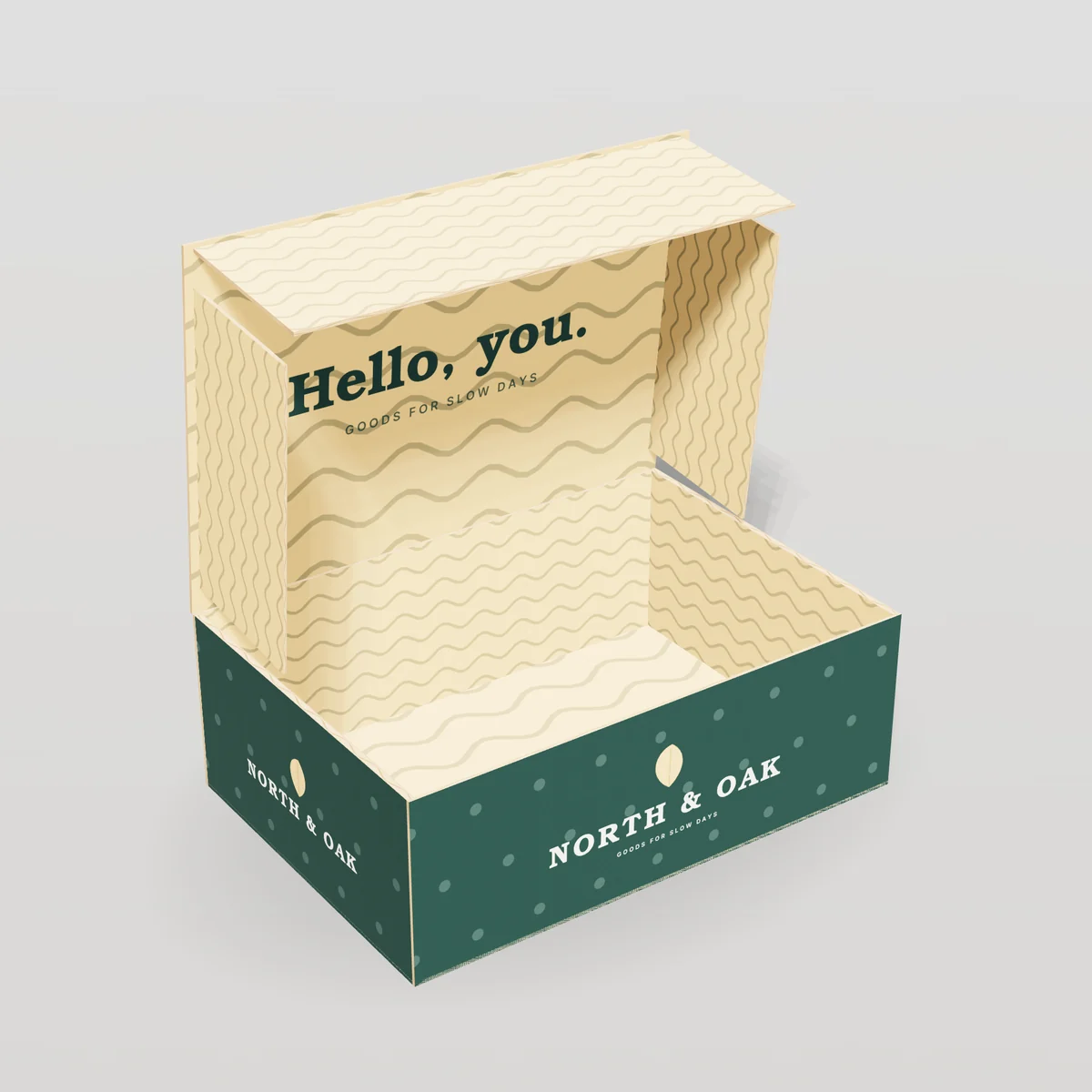 Box StylesMailer BoxesSelf-locking corrugated mailers printed inside and out. The go-to box for DTC brands and subscriptions.
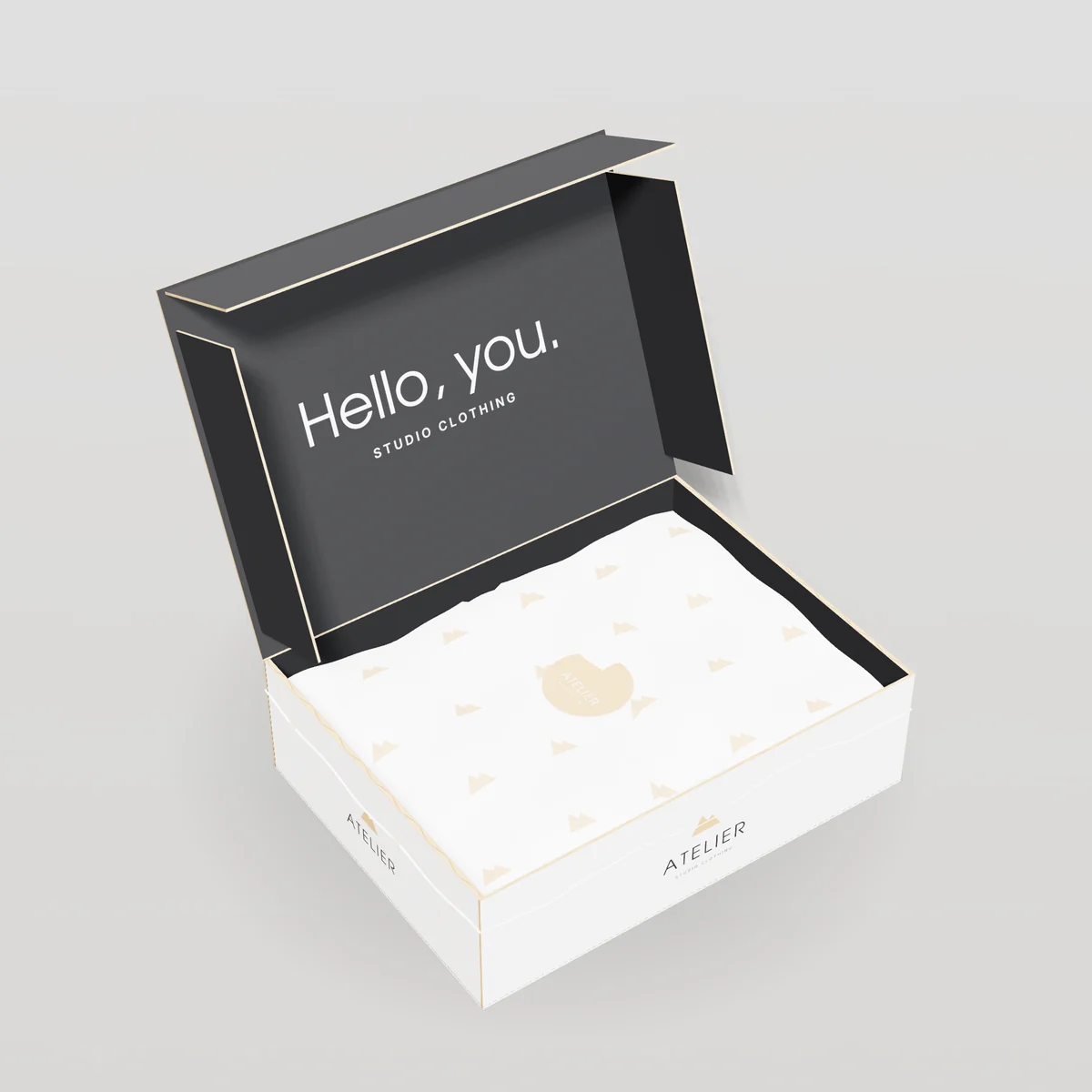 AccessoriesCustom Tissue PaperBranded tissue paper (17gsm) printed with your logo in one or two colors.
How to order custom poly mailers
- 1Request a quote
Tell us the style, size, quantity and artwork you have. Use the form or the live estimator.
- 2Free design & dieline
We send a dieline for your exact size, check your artwork and help with layout at no charge.
- 3Approve your proof
Review a digital 3D proof (and an optional physical sample) before anything is printed.
- 4Production & QC
Your boxes are printed, finished, die-cut and inspected against the approved proof.
- 5Delivered to your door
Shipped flat-packed with tracking to any address in the contiguous US.
Key terms on this page
- Poly mailer
- A lightweight plastic shipping envelope used mainly for apparel and soft goods.
- Mailer box
- A self-locking corrugated box with a hinged lid and tuck front, widely used for e-commerce and subscriptions.
- Post-consumer recycled (PCR) content
- Material made from products that consumers used and recycled, as opposed to manufacturing scrap.
- Finish
- Any treatment applied after printing to change appearance or protect the surface, such as coatings, laminations, foil, embossing or spot UV.
- Dimensional weight (DIM weight)
- A billing method used by carriers that charges by package volume when it is higher than actual weight. Calculated as L × W × H divided by a divisor.
- Bundle
- A group of flat boxes tied or banded together for shipping and storage.
- Cushioning
- Materials that absorb shock and vibration to protect products, such as paper void fill, molded pulp, foam or air pillows.
- Kraft
- Paper or board made from unbleached wood pulp, naturally brown and strong.
- Gusset
- A folded expansion panel in a bag or pouch that lets it stand up or hold more volume.
- Coverage
- The proportion of a surface covered by ink. Heavy coverage uses more ink and can affect drying and cracking.
- Flexographic printing (flexo)
- A printing method using flexible relief plates and fast-drying inks, common on corrugated boxes, labels and flexible packaging.
- Tissue paper
- Thin, light paper used to wrap products inside boxes, often printed with a brand pattern.
- Tear strip
- A perforated or reinforced strip that opens a box by pulling a tab.
- Right-sizing
- Designing packaging to fit products closely, reducing material, void fill and shipping costs.
- Wrap
- The printed or specialty paper glued around the board of a rigid box or tube.
- Proof
- A preview of the final package (digital PDF, 3D render or physical sample) that the customer approves before production.
- Point (pt)
- The unit of paperboard thickness: 1 point equals 0.001 inch. 18pt board is 0.018 inch thick.
- Pantone (PMS)
- The Pantone Matching System, a standardized color reference used to specify exact spot colors.
- Artwork
- The final graphic files (logos, images, text and colors) placed on a dieline and used to make printing plates or digital print files.
More definitions in our packaging glossary.
Customer reviews
Reviews come only from verified customers. Ordered custom poly mailers from us? Share your experience.
Discussed on Quora & X
Custom Poly Mailers FAQ
What is the minimum order for custom poly mailers?
Our minimum is 500 pieces.
Are poly mailers recyclable?
Not usually in curbside bins, but polyethylene film can often be recycled at store drop-off locations where accepted.
Can poly mailers be used for returns?
Yes, with a second adhesive strip.
Are poly mailers waterproof?
They are water-resistant and protect contents from rain in transit.
What thickness of poly mailer should I choose?
2.5 mil suits most apparel orders; choose 3 mil or more for heavier or bulkier items.
Can poly mailers be fully printed?
Yes, with full-coverage designs in several colors, plus inside printing on some productions.
Do poly mailers protect fragile items?
No. They resist water and tearing but not crushing. Use boxes and inserts for fragile items.
Can poly mailers be reused for returns?
Yes. Mailers with a second adhesive strip can be resealed by customers to return items.
What thickness of poly mailer do I need?
Choose based on product weight and shape. Light, soft items suit thin film; heavier items or items with hard parts benefit from thicker film. Test with your products.
Can I get colored poly mailers?
Yes. Colored film carries your brand color economically, and you can add printed logos and messages.
Are compostable mailers better than recycled poly mailers?
It depends on what customers can do with them. Compostable mailers only deliver benefits if customers can compost them. Recycled-content mailers reduce virgin plastic use but rely on film recycling programs. Choose the option that best fits your customers and describe it honestly.
Can poly mailers be printed in full color?
Yes, although most mailers use one to a few spot colors for cost and crispness. Full-color and photographic designs are possible on longer runs.
Do poly mailers need a separate inner bag?
Usually not for apparel, because the mailer protects against moisture and dirt. Some brands add a garment bag or tissue for presentation or extra protection for light-colored items.
Can poly mailers be printed on both sides?
Yes. Both faces can be printed, and some mailers can be printed inside.
What color poly mailers hide scuffs best?
Darker colors and patterned designs hide minor scuffs and marks better than plain white.
Can I get poly mailers with a matte finish?
Yes. Matte films give a soft, modern look and are popular for fashion brands.
Can mailers include a handle?
Some mailer styles include handles or carry holes, which are useful for larger apparel orders and gifts.