Key takeaways
- Ship it by parcel? Use corrugated: mailer or RSC.
- Sell it on a shelf? Use paperboard cartons: tuck end, auto-lock, window or hanger.
- Selling an experience or a gift? Rigid, magnetic or sleeve boxes.
- Style choice changes unit cost more than most people expect, often by 3–10×.
Why box style matters more than most people think
When brands start planning packaging, they usually think about colors and logos first. But the structure of the box (its shape, how it folds, how it opens) has a bigger effect on cost, protection and customer experience than almost any graphic decision. Two boxes of the same size can differ in price by three to ten times depending on style. One may survive a parcel network on its own; the other may need an outer carton. One may take two seconds to pack; the other twenty.
This guide explains every common box style, how it is made, what it costs relative to others, and when it is the right choice. Use it as a reference when you brief a designer or request a quote.
The three families of boxes
Almost every box belongs to one of three material families, and each family has its own structures:
| Family | Material | Ships as | Typical use |
|---|---|---|---|
| Corrugated | Fluted board (E, B, C, double-wall) | Flat | Shipping, mailers, displays |
| Folding cartons | Paperboard (SBS, kraft, recycled) | Flat | Retail product packaging |
| Rigid | Greyboard wrapped in paper | Assembled (or collapsible) | Luxury, gifts, keepsakes |
Flexible packaging (pouches and bags) is a fourth family for loose and pourable products.
Corrugated box styles
Regular slotted container (RSC)
The RSC (FEFCO 0201) is the standard shipping box: four flaps on top and four on the bottom, all the same depth, with the outer flaps meeting in the middle. It wastes almost no board and folds quickly, which makes it the cheapest way to box a given volume.
- Strengths: lowest cost per cubic inch, strong, stackable, universal
- Weaknesses: needs tape; plain unboxing; flaps meet in the middle so the top is not a single printed panel
- Best for: e-commerce shipping, wholesale, storage, heavy items
- See: shipping boxes
Roll end tuck front mailer (RETF)
The mailer box (close to FEFCO 0427) is a one-piece die-cut box with double side walls and an attached lid that tucks into the front. It locks without tape, opens like a gift box and prints inside and out.
- Strengths: premium unboxing, no tape, strong for parcel shipping, inside print
- Weaknesses: uses more board than an RSC of the same size, especially as height increases
- Best for: DTC brands, subscriptions, gift kits
- See: mailer boxes
Full overlap and other slotted variations
- Full overlap (FOL): outer flaps overlap completely; extra strength for rough handling
- Half slotted container (HSC): no top flaps; used as a tray or with a lid
- Center special slotted (CSSC): inner flaps also meet in the center for a flat, full-coverage bottom
Display boxes and PDQs
Counter displays and shipper-displays hold multiple units and present them at retail. They can ship closed and open into a display along perforations.
- See: display boxes
Folding carton styles
Folding cartons are printed, die-cut, creased and glued paperboard boxes that ship flat.
Reverse tuck end (RTE)
Tuck flaps at the top and bottom close from opposite sides. It is the most economical carton because blanks nest tightly on the press sheet.
- Best for: cosmetics, supplements, tea, accessories, most light retail products
- See: tuck end boxes
Straight tuck end (STE)
Both tucks close from the same side, leaving the front panel uninterrupted. Slightly more board than RTE.
- Best for: premium cartons, window cartons, products displayed front-facing
Tuck top auto-lock bottom (crash lock)
A pre-glued base that locks in one motion. Stronger and faster to pack than a tuck bottom.
- Best for: jars, bottles, candles, heavier products, high-volume hand packing
- See: auto-lock bottom boxes
Snap-lock (1-2-3) bottom
Interlocking bottom flaps folded in sequence without glue. A middle ground between tuck and auto-lock.
Seal end
Glued flaps at both ends, designed for automated packing lines (think cereal boxes).
Sleeve and tray
A tray slides out of a sleeve. Two components, theatrical reveal.
- See: sleeve boxes
Pillow, gable, hanger and window variants
- Pillow boxes: curved ends, for small light gifts
- Gable boxes: built-in handle, for bakery and gifts
- Hanger boxes: hang tab for pegs
- Window boxes: die-cut windows to show the product
Rigid box styles
Rigid boxes are built from thick greyboard wrapped in paper. They do not fold flat (except collapsible versions) and feel substantial.
| Style | How it opens | Best for |
|---|---|---|
| Lid and base (telescope) | Lift-off lid | Gifts, apparel, electronics |
| Shoulder (neck) | Lid sits on a raised collar | Fragrance, watches |
| Book / magnetic | Hinged lid with magnetic flap | PR kits, premium sets |
| Drawer | Tray slides from a sleeve | Jewelry, chocolate |
| Hinged lid | Lid attached at back | Collectibles |
| Collapsible | Folds flat, magnets hold shape | Storage and freight savings |
See rigid boxes, magnetic closure boxes and two-piece boxes.
Tubes and flexible packaging
- Paper tubes: round, rigid, 360° print. Popular for candles, tea and cosmetics.
- Stand-up pouches: flexible, barrier protection, resealable. For coffee, snacks and powders.
How styles compare on cost
Relative cost for a similar-sized box at the same quantity, from lowest to highest (exact numbers depend on size and specification):
- RSC shipping box (plain or one color)
- Reverse tuck end carton
- Straight tuck end and pillow boxes
- Auto-lock bottom, gable and hanger boxes
- Mailer boxes (full color)
- Window boxes and sleeves
- Display boxes
- Paper tubes
- Rigid lid-and-base boxes
- Magnetic closure boxes
The live price table on our pricing page shows estimated unit prices for every style.
| Quantity | Est. unit price | Est. total | Saving vs. first tier |
|---|---|---|---|
| 250 | $0.99 | $247 | — |
| 500 | $0.60 | $302 | −39% |
| 1,000 | $0.40 | $405 | −60% |
| 2,500 | $0.28 | $694 | −72% |
| 5,000 | $0.23 | $1,150 | −77% |
| 10,000 | $0.20 | $2,026 | −80% |
Estimates from our published pricing model, full-color print, no finishes, delivered to the contiguous US. Your written quote confirms the exact price. Get an exact quote →
How styles compare on protection
| Style | Crush resistance | Drop protection | Ships alone? |
|---|---|---|---|
| RSC (C-flute) | High | Medium (with void fill) | Yes |
| Mailer (E/B-flute) | Medium–high | Medium | Yes |
| Folding carton | Low | Low | No (needs a shipper) |
| Auto-lock carton | Low–medium | Low | No |
| Rigid box | High (walls) | Medium | Not recommended (scuffs) |
| Tube | High | Medium | With protection |
| Pouch | Low | Low | Usually in a box |
How to choose: a decision guide
1. Does the box ship on its own through parcel networks?
- Yes → mailer box or shipping box
- No → continue
2. Is it sold on a retail shelf or peg?
- Yes → tuck end, auto-lock, window or hanger carton
- No → continue
3. Is the box itself part of the gift or a keepsake?
- Yes → rigid, magnetic, two-piece or tube
- No → continue
4. Is the product loose, pourable or freshness-sensitive?
- Yes → stand-up pouch (possibly inside a carton)
5. Is it sold many-at-a-time at a counter?
- Yes → display box
Many products need two answers: a carton inside a mailer, a rigid box inside a shipper, a pouch inside a gift box.
Style and the unboxing experience
Different styles create different moments:
- Mailer: lift the lid, see the inside print
- Magnetic: the snap, then the hinged reveal
- Two-piece: the slow lift of the lid
- Sleeve: the slide of the tray
- Tube: the soft pull of the lid
- Gable: carrying it like a gift bag
Choose the moment that fits your brand. Our unboxing design guide explains how to design the sequence.
Style and packing efficiency
If you pack thousands of orders, seconds matter:
- Auto-lock bottoms and mailers assemble quickly.
- RSCs are fast but need taping.
- Rigid boxes arrive assembled (fast) but take storage space.
- Sleeves and two-piece boxes have two parts to handle.
Box style decision tree
Answer these questions in order:
- Does the box ship by itself through a carrier? - Yes → corrugated: mailer box for branded DTC orders, shipping box for heavy or varied orders. - No → go to 2.
- Is the product heavy (over about 1 lb) or bulky? - Yes → auto-lock bottom carton or E-flute carton. - No → go to 3.
- Is the product sold on a retail shelf or peg? - Shelf → tuck end box, window box, sleeve box. - Peg → hanger box or pouch with hang hole.
- Is the box part of a premium or gift experience? - Yes → rigid box, magnetic box, two-piece box.
- Is the product flexible, granular or liquid? - Yes → stand-up pouch or tube.
- Does it need to be carried or displayed? - Carried → gable box. - Displayed on a counter → display box.
FEFCO and ECMA style codes
The European FEFCO code numbers corrugated designs (for example 0201 for the regular slotted container, 0427 for the roll end tuck front mailer). ECMA codes do the same for folding cartons (for example reverse tuck end and straight tuck end families). You do not need to know the codes to order, but they are useful when talking to suppliers or comparing quotes, because they remove ambiguity about what "mailer" or "tuck box" means.
Styles by budget
| Budget per unit (indicative) | Styles to consider |
|---|---|
| Lowest | Plain RSC shipping boxes, recycled-board tuck cartons, poly mailers |
| Low | Printed tuck end cartons, one-color mailers, pillow boxes |
| Medium | Full-color mailers, auto-lock cartons, sleeve boxes, display boxes |
| Higher | Two-piece paperboard boxes, tubes, window cartons with inserts |
| Premium | Rigid, magnetic and drawer boxes |
Actual prices depend on size and quantity; see pricing.
Box styles explained by journey
The easiest way to choose a box style is to follow the product's journey and ask what the box must do at each step.
At the factory or packing table, the box must be quick to assemble and fill. Self-locking mailers, auto-lock bottoms and pre-glued trays save time; complex structures with many tucks slow packing.
In storage, the box must not take too much space or warp. Styles that ship flat (corrugated, folding cartons, pouches) store efficiently; rigid boxes take space unless collapsible.
In transit, the box must protect the product. Corrugated styles survive parcel networks; paperboard cartons need an outer box; rigid boxes need protection from scuffs.
On the shelf, the box must be seen and understood. Cartons, window boxes, hanger boxes and displays are designed for shelves and pegs.
In the customer's hands, the box must open well and feel right for the price. Mailers with printed interiors, two-piece boxes, magnetic closures and sleeves each create a different reveal.
After the purchase, the box should be easy to recycle or worth keeping. Paper-based styles recycle easily; rigid boxes are often kept and reused.
Rank which steps matter most for your product, and the right style usually becomes obvious.
Combining styles in a packaging system
Many brands use more than one style:
| System | Example |
|---|---|
| Carton inside mailer | A tuck end carton for retail, shipped inside a printed mailer for e-commerce |
| Tray and sleeve | One tray for every variant, a printed sleeve per flavor |
| Rigid box inside shipper | A magnetic gift box shipped in a corrugated mailer |
| Pouch inside carton | A barrier pouch for freshness inside a printed carton for shelf presence |
| Display with cartons | Retail cartons sized to fit a counter display |
Designing these combinations together ensures sizes fit and branding is consistent.
Style and sustainability
Some styles use material more efficiently than others. RSCs and tuck end cartons are very efficient; mailers use more board for their premium feel; rigid boxes use the most material per unit but are often reused. The most sustainable style is usually the simplest one that protects the product and fits it snugly.
Every custom box style in a paragraph
Mailer boxes. One-piece die-cut corrugated boxes with a tuck-in lid and double side walls. They lock without tape, survive parcel networks and can be printed inside and out, which makes them the default for direct-to-consumer brands and subscriptions.
Shipping boxes. Regular slotted containers with four flaps top and bottom, sealed with tape. The most material-efficient corrugated box, ideal for heavy, bulky or varied orders and wholesale cases.
Product boxes. Printed paperboard retail cartons in many structures. The workhorse of shelf packaging for beauty, wellness, food and accessories.
Folding cartons. The broad family of paperboard boxes folded from a single blank: tuck ends, auto-lock bottoms, sleeves, seal ends and more.
Tuck end boxes. Cartons that close with tuck flaps at both ends. Reverse tuck is the most economical; straight tuck gives a seamless front.
Auto-lock bottom boxes. Cartons with a pre-glued base that pops into place, for heavier products and faster packing.
Rigid boxes. Thick greyboard wrapped in printed or specialty paper, delivered assembled. The classic luxury and gift box, often kept for years.
Magnetic closure boxes. Rigid boxes with a hinged lid held shut by hidden magnets, prized for their satisfying snap.
Two-piece boxes. A separate lid and base, in paperboard or rigid board, with a slow, elegant lid lift.
Sleeve boxes. A tray that slides out of a printed sleeve, ideal for product ranges where one tray serves many variants.
Pillow boxes. Curved, glue-free paperboard boxes for light gifts, favors and accessories.
Gable boxes. Paperboard carry boxes with a built-in handle for bakery, takeaway and gifts.
Display boxes. Shipping cases that convert into counter displays for impulse products.
Window boxes. Cartons with a die-cut opening, open or film-covered, that let products sell themselves.
Hanger boxes. Cartons with a header and hang hole for peg displays, an all-paper alternative to blister packs.
Stand-up pouches. Flexible laminated bags with a bottom gusset, zippers and valves, for coffee, snacks and powders.
Tube packaging. Wound paperboard cylinders with telescoping lids, for tea, cosmetics, apparel accessories and gifts.
Matching styles to price points
A brand's price point often guides style choice. Everyday products under about $20 typically use tuck end cartons, pouches or simple mailers. Mid-priced products ($20–80) often use premium cartons with finishes, sleeve boxes or printed mailers with inserts. Premium products and gifts above that often justify rigid, magnetic or two-piece rigid boxes. These are tendencies, not rules: many premium brands use beautifully finished cartons, and some everyday brands use rigid gift boxes for the holidays.
Style choices that save money
- Choose RSCs over mailers for heavy or varied orders where unboxing is less important.
- Choose reverse tuck end cartons over straight tuck when the front seam does not matter.
- Use sleeves to version a single tray across many products.
- Pick collapsible rigid boxes to save freight and storage on premium packaging.
- Avoid unnecessary windows, inserts and multi-part structures for everyday products.
- Standardize sizes so one die and one setup serve several products.
Style choices that improve the experience
- Mailers with interior print for direct-to-consumer brands.
- Magnetic or two-piece rigid boxes for gifts and hero products.
- Sleeve boxes for a satisfying slide-out reveal.
- Window boxes for products that look as good as their photos.
- Gable boxes for anything customers carry away.
How to test a new box style
- Order a plain structural sample in your size.
- Pack your product with inserts, tissue and cards.
- Time packing and note any awkward steps.
- Drop-test if the box ships by itself.
- Open it like a customer and film the unboxing.
- Store a few for a week in your real storage conditions.
- Adjust size, board or insert before printing.
Style naming across suppliers
Suppliers use different names for the same styles. A "mailer box" may be called a roll end tuck front (RETF), a die-cut mailer or a postal box. A "two-piece box" may be called a telescope box or lid-and-base box. A "magnetic box" may be called a flap box or folding magnetic box. When comparing quotes, describe the structure (or use FEFCO/ECMA codes) and include a photo or dieline so everyone quotes the same thing.
Box styles by industry at a glance
| Industry | Most common styles |
|---|---|
| Cosmetics | Tuck end cartons, mailers, magnetic PR boxes |
| Candles | Tuck end and auto-lock cartons, mailers, rigid gift boxes |
| Food | Folding cartons, pouches, gable boxes, window boxes |
| Apparel | Mailers, two-piece boxes, poly mailers |
| Jewelry | Two-piece rigid, drawer, pillow and magnetic boxes |
| Electronics | Two-piece and sleeve boxes, hanger boxes, mailers |
| Coffee and tea | Pouches, tubes, gift boxes, mailers |
| Subscription boxes | Mailers with inserts |
| Bakery | Window boxes, gable boxes, cake boxes |
| Retail | Cartons, hanger boxes, display boxes |
Box style FAQ, extended
Which box style is best for a startup? Usually a printed mailer box for direct-to-consumer brands, or a tuck end carton for retail products, both available from modest quantities.
Which styles ship flat? Corrugated boxes, folding cartons, sleeve and pillow boxes, gable and display boxes, and pouches ship flat. Rigid, magnetic and tube packaging usually ship assembled, unless collapsible.
Which styles are most recyclable? Paper-based styles without plastic windows, foam or magnets: RSCs, mailers, folding cartons, sleeves, pillow and gable boxes.
Which styles feel most premium? Rigid, magnetic and two-piece rigid boxes, followed by premium cartons with soft-touch and foil.
How boxes hold together: structural basics
Every box style relies on a few structural principles:
- Creases guide folds and determine how crisp edges look. Correct crease depth for the board prevents cracking and makes boxes square.
- Locks (tuck flaps, slots and tabs) hold boxes closed without glue. Friction locks on tuck flaps, interlocking tabs on mailers and auto-lock bottoms all use geometry instead of adhesive.
- Glue seams join panels permanently, such as the side seam of a folding carton.
- Double walls add strength and a finished edge, as in mailer side walls.
- Grain direction affects stiffness: board is stiffer along the grain, so designers orient it for strength.
- Board caliper sets how much allowance panels need so inside dimensions are correct after folding.
Understanding these principles helps explain why a production dieline from your supplier is essential: it encodes all of them for your exact board.
Custom structures
Beyond standard styles, custom structures can solve specific problems: a carton with a built-in dispenser, a mailer with a fold-out display, a box that converts into a product stand, or an insert that doubles as a gift tray. Custom structures need structural design, a sample and sometimes special tooling, so they cost more up front. They make sense when they solve a real problem or create a distinctive brand experience.
Common box style mistakes
- Using a retail carton for shipping without an outer box.
- Choosing a rigid box for an everyday product where a premium carton would do.
- Picking a tuck end for heavy products, so the bottom opens.
- Ignoring packing speed with complex structures for high-volume products.
- Choosing pillow boxes for bulky items, distorting the shape.
- Forgetting display requirements, such as hang holes or shelf-ready trays.
- Not testing a new style with real products before ordering at scale.
Opening experiences compared
| Style | How it opens | Feeling |
|---|---|---|
| Mailer box | Lift the front tuck and raise the lid | Gift-like reveal |
| Shipping box | Cut tape and open flaps | Practical |
| Tuck end carton | Pull the tuck | Quick, familiar |
| Two-piece box | Lift the lid slowly | Elegant anticipation |
| Magnetic box | Pull the flap; magnetic release | Satisfying snap |
| Sleeve box | Slide the tray out | Playful reveal |
| Drawer box | Pull the ribbon or tray | Discovery |
| Tube | Lift the lid as air escapes | Smooth, premium |
| Pouch | Tear notch and zipper | Practical, resealable |
| Gable box | Unlock the handle | Gift you carry |
The future of box styles
Box styles evolve with retail and logistics. Trends that brands are responding to include frustration-free and ship-in-own-container formats for e-commerce, paper-based alternatives to plastic clamshells and blisters, collapsible rigid boxes that save freight, mailers designed for easy returns, and displays that double as shipping cases. Underneath these trends, the classic styles remain: they persist because they solve practical problems efficiently.
How to request a quote for a box style
Include the following in your quote request so suppliers quote the same thing:
- Style name and, ideally, a photo, sketch or FEFCO/ECMA code
- Inside dimensions (L × W × H)
- Material and grade (or ask for a recommendation)
- Print (colors, sides)
- Finishes and inserts
- Quantities to compare
- Delivery ZIP code and date needed
Our quote form asks for exactly these details and lets you upload artwork or a photo of a box you like.
Styles for limited editions and collaborations
Limited editions often justify a special style: a magnetic box for a collector release, a numbered sleeve over a standard tray, a printed tube for a collaboration, or a display box for a pop-up. Using a special structure for a limited run signals that the product is different, while your everyday packaging stays efficient.
Summary: what to remember
- Follow the product’s journey to choose a style.
- Use corrugated for anything that ships alone through carriers.
- Use tuck end cartons for light retail products and auto-lock bottoms for heavier ones.
- Use rigid, magnetic or two-piece boxes for gifts and hero products.
- Use sleeves to version one tray across many products.
- Use hanger and display boxes for retail merchandising.
- Test a plain sample with real products before ordering.
- Describe structures precisely when comparing quotes.
Common mistakes to avoid
Choosing a style from a photo. A box that looks beautiful in a feed might be a rigid set-up box costing many times more than a folding carton. Identify the structure behind the look before you fall in love with it, and ask for the price of that exact style.
Using retail cartons for shipping. Folding cartons are built for shelves, not parcel networks. Shipped alone, they crush and scuff. If the product travels by carrier, use a corrugated mailer or ship the carton inside an outer box.
Ignoring how the box is packed. A style that takes forty seconds to fold and close will slow every order. Count the steps from flat blank to sealed box, and test with the people who will pack it.
Forgetting the insert. Most damage happens because the product moves inside the box. Plan the insert with the style, not after it, because the insert can change the inside dimensions you need.
Mixing too many styles. Each new style adds dielines, setup and storage. A small family of styles that share sizes and print is easier to buy, store and reorder.
Skipping the plain sample. A plain structural sample with the real product reveals fit, closure and opening problems before printing makes them expensive.
For the bigger picture, our guide to types of packaging maps 25 formats beyond boxes, and mailer box vs shipping box compares the two most common e-commerce boxes in detail.
Key terms on this page
- Carton
- A box made from paperboard, usually a folding carton. In shipping, "carton" can also mean a corrugated case.
- Shipper
- A box used to ship products, often corrugated.
- Board
- A general term for thick paper materials used in packaging, including paperboard, corrugated board and greyboard.
- Double-wall
- Corrugated board with two fluted layers, stronger than single-wall board.
- Paperboard
- Thick paper (usually 0.010 inch or more) used for folding cartons, such as SBS, kraft and recycled board.
- SBS (solid bleached sulfate)
- Premium paperboard made from bleached virgin fiber, bright white throughout, with the best print and finish quality.
- Kraft
- Paper or board made from unbleached wood pulp, naturally brown and strong.
- Greyboard
- Thick, dense recycled board used as the structural core of rigid boxes, usually 1.2 to 3 mm thick.
- Regular slotted container (RSC)
- The standard corrugated shipping box with four top and four bottom flaps of equal depth (FEFCO 0201).
- Panel
- A face of a box, such as the front, back, side, top or bottom panel.
- Mailer box
- A self-locking corrugated box with a hinged lid and tuck front, widely used for e-commerce and subscriptions.
- Lid
- The top part of a box, hinged or separate.
- Full overlap container (FOL)
- A corrugated box whose outer flaps overlap fully, adding strength for heavy or rough-handled loads (FEFCO 0203).
- Half slotted container (HSC)
- A corrugated box like an RSC but with no top flaps, used as a tray or with a separate lid (FEFCO 0200).
- Tray
- An open-topped box base, often used with a sleeve or lid.
- Folding carton
- A paperboard box printed, die-cut, creased and glued, shipped flat and folded into shape at packing.
- Reverse tuck end (RTE)
- A carton whose top and bottom tucks close from opposite sides. The most economical tuck style.
- Straight tuck end (STE)
- A carton whose top and bottom tucks close from the same side, leaving the front panel uninterrupted.
- Auto-lock bottom
- A pre-glued carton base, also called a crash-lock bottom, that locks into place automatically when the flattened box is opened. Stronger and faster to pack than a tuck bottom.
- Sleeve
- An open-ended band or tube that slides over a tray or box, often printed to brand plain packaging.
- Hang tab
- An extension of a carton with a hole so it can hang on a retail peg.
- Rigid box
- A premium box made from thick greyboard wrapped in printed or specialty paper, delivered assembled. Also called a setup box.
- Tuck end box
- A paperboard carton that closes with tuck flaps at its ends.
- C-flute
- A corrugated flute about 5/32 inch thick and the most common flute for standard shipping cartons, balancing cushioning, stacking strength and cost.
More definitions in our packaging glossary.
Discussed on Quora & X
Frequently asked questions
What is the most common box style?
The regular slotted container (RSC) for shipping and the reverse tuck end carton for retail.
What is the difference between a mailer box and a shipping box?
A mailer box is a die-cut, self-locking box with an attached lid that opens like a gift box. A shipping box (RSC) has flaps sealed with tape. Mailers create a better unboxing; RSCs are cheaper per cubic inch.
Which box style is cheapest?
Usually a plain or one-color RSC for shipping, and a reverse tuck end carton for retail.
Which box style is most premium?
Rigid boxes, especially magnetic closure and shoulder boxes.
What does FEFCO mean?
FEFCO is a European federation of corrugated board manufacturers that publishes a standard code for box designs, such as 0201 for the RSC.
Can I combine styles?
Yes. Many brands use a retail carton inside a mailer, or a rigid gift box inside a shipping box.
What is the cheapest custom box style?
A plain or one-color regular slotted shipping box, or a recycled-board reverse tuck end carton for retail.
Which box style is easiest to assemble?
Pre-glued styles such as auto-lock bottom cartons, crash-lock trays and pre-glued displays assemble fastest. Mailers fold in seconds once staff learn them.
Which style is best for subscription boxes?
Printed mailer boxes, which lock without tape, protect contents and create a reveal.
Can one box style work for retail and shipping?
A sturdy printed mailer can do both for some products; otherwise use a retail carton inside a shipping box.
What is a telescope box?
A two-piece box where the lid slides over the base, also called a lid-and-base box.
What is a crash-lock bottom?
Another name for an auto-lock bottom: a pre-glued base that locks automatically when the carton is opened.
Are rigid boxes worth it for e-commerce?
For premium products and gifts, often yes, but ship them inside a protective outer box.
Related products & pages
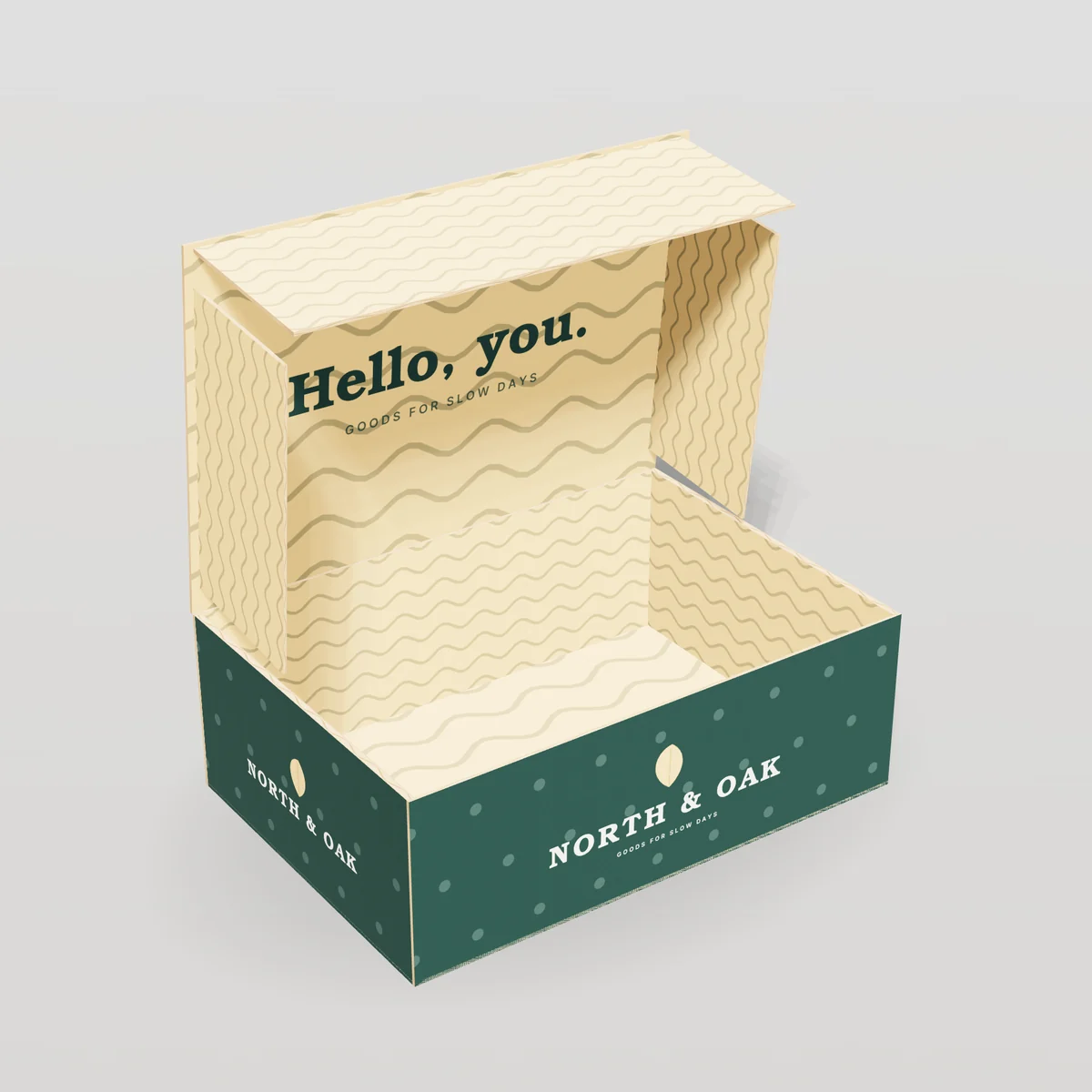 Box StylesMailer BoxesSelf-locking corrugated mailers printed inside and out. The go-to box for DTC brands and subscriptions.
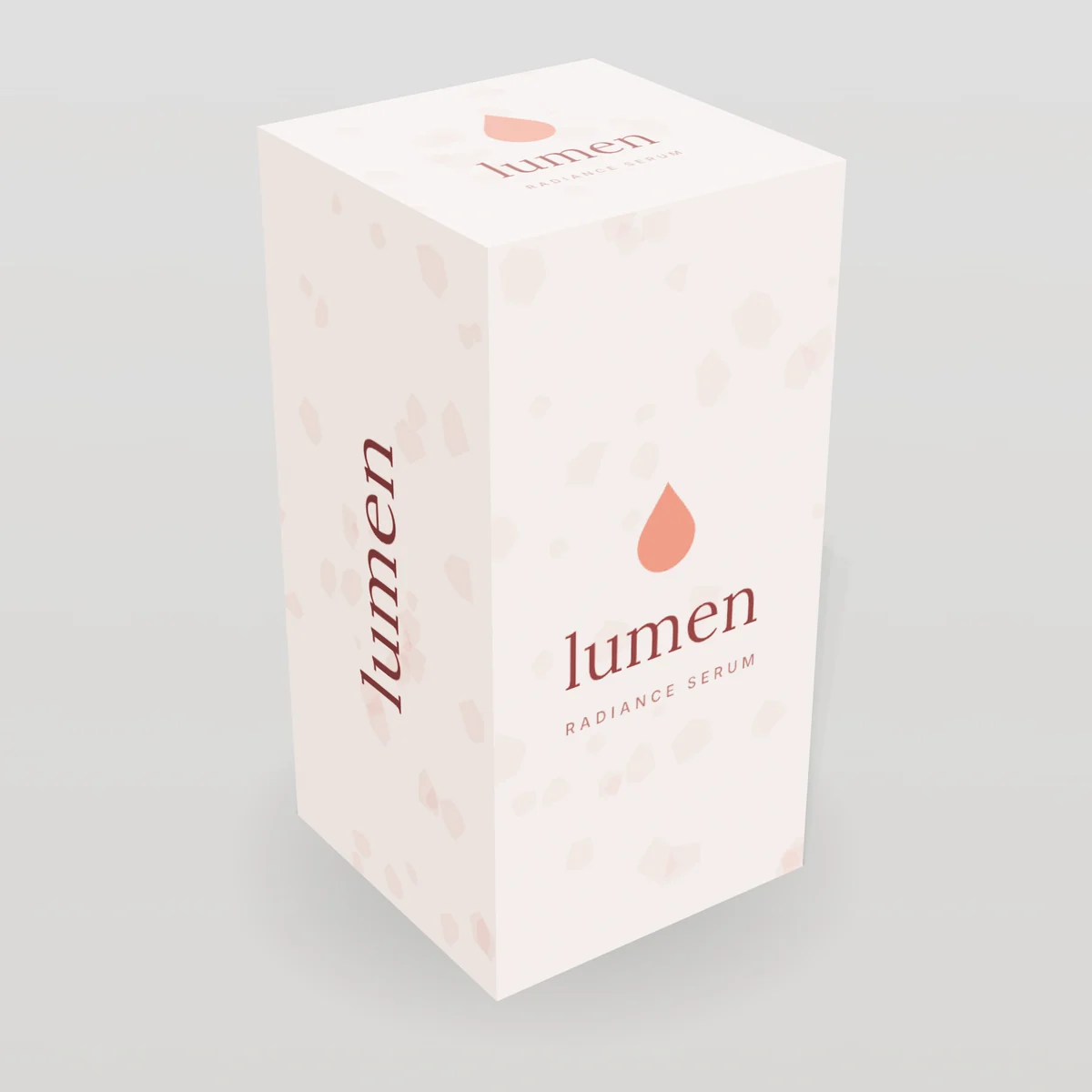 Box StylesTuck End BoxesStraight and reverse tuck end cartons that open and reclose cleanly. Ideal for lightweight retail products.
 Box StylesMagnetic Closure BoxesBook-style rigid boxes with hidden magnets for a satisfying, reclosable unboxing.
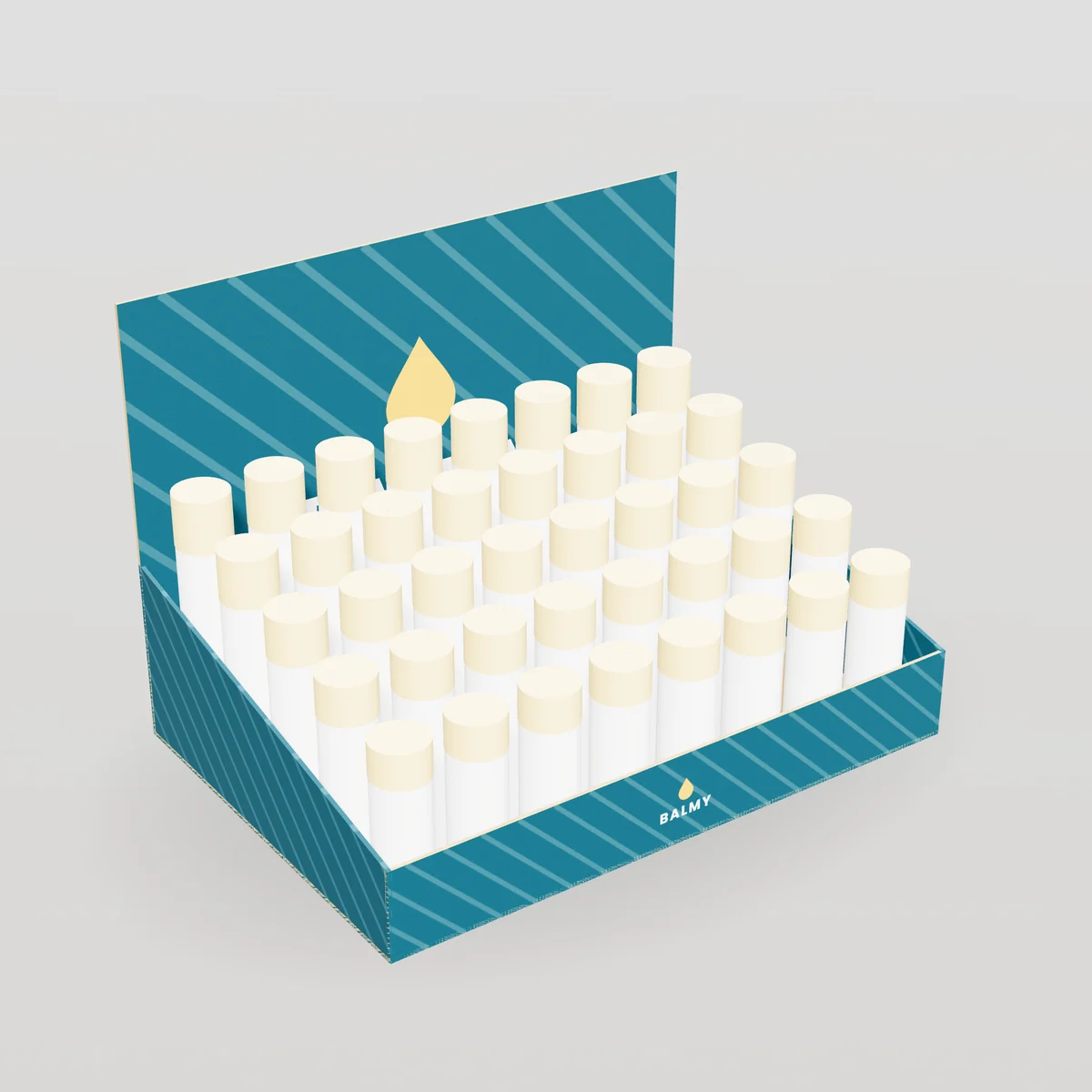 Box StylesDisplay BoxesCounter and shelf-ready displays that ship your product and sell it at the register.