Key takeaways
- Start with what costs cents: a stamp, a sticker, a card and tidy tissue.
- Move to a custom printed mailer when you ship a few hundred orders a month.
- One printed inside message often beats an expensive outer finish.
- Right-size first; savings on shipping can fund the branding.
Why packaging punches above its weight for small brands
When you are a small business, your packaging is often the only physical contact a customer has with your brand. There is no store, no salesperson and no handshake: just a box on a doorstep. That makes packaging one of the most efficient places to spend a limited budget, as long as you spend it where customers notice.
The 35 ideas below are grouped by cost per order, from a few cents to fully custom packaging. They are written for Etsy, Shopify, Amazon and market sellers, makers and early-stage DTC brands. You do not need all of them. Pick two or three that suit your product and margin, do them well, and add more as you grow.
A few principles before the list:
- Consistency beats extravagance. The same color, the same sticker, the same card on every order builds recognition faster than one expensive box.
- Protect first, decorate second. A broken product cancels any branding.
- Right-size before you brand. Saving on shipping can pay for everything else on this page.
- Measure what changes. Watch repeat orders, reviews that mention packaging and social tags before and after a change.
Tier 1: almost free (under about 10 cents per order)
1. A custom rubber stamp
A stamp of your logo turns plain kraft mailers, bags and tissue into branded packaging. A good stamp and ink pad cost little and last for thousands of impressions. Use one color consistently, and stamp the same spot every time.
2. A handwritten thank-you note
Nothing scales worse or works better. A short, personal line, even just the customer's first name and "thank you", is remembered. Many small brands keep doing this long after they could afford printed cards.
3. A brand color, used everywhere
Choose one brand color and use it on tape, tissue, stickers, ribbon or ink. Color is recognized faster than a logo, and a single color is cheaper to source than full branding.
4. Tidy, intentional packing
Fold tissue neatly, place items in the same order every time and make sure the first thing customers see is the product or a message, not crumpled fill. Neatness is free and reads as care.
5. A care or usage tip on a printed slip
A small slip with care instructions, a recipe, a styling tip or "how to get the most from your candle" adds value and reduces support emails. Print at home or locally on recycled paper.
6. A QR code to something useful
Link to a how-to video, a reorder page, a playlist, a review form or the story behind the product. Make sure the destination is mobile-friendly and that the code is large enough to scan (around 0.8 in or more is a safe minimum for most phones).
7. Reuse supplier boxes, branded
Early on, reusing clean boxes and covering old labels with your own sticker is both thrifty and genuinely lower-impact. Tell customers you do it; many appreciate it.
8. String, twine or raffia
A wrap of twine around tissue or a product sleeve adds a handmade feel for very little money. Natural fibers suit artisan and food products.
Tier 2: low cost (about 10–50 cents per order)
9. Custom logo stickers
The most versatile small-business upgrade. Use stickers to seal tissue, close mailers, brand bags and label jars. Round or square stickers in a single design are the cheapest; add a second design later for seasonal orders. See custom stickers and labels.
10. Printed thank-you cards
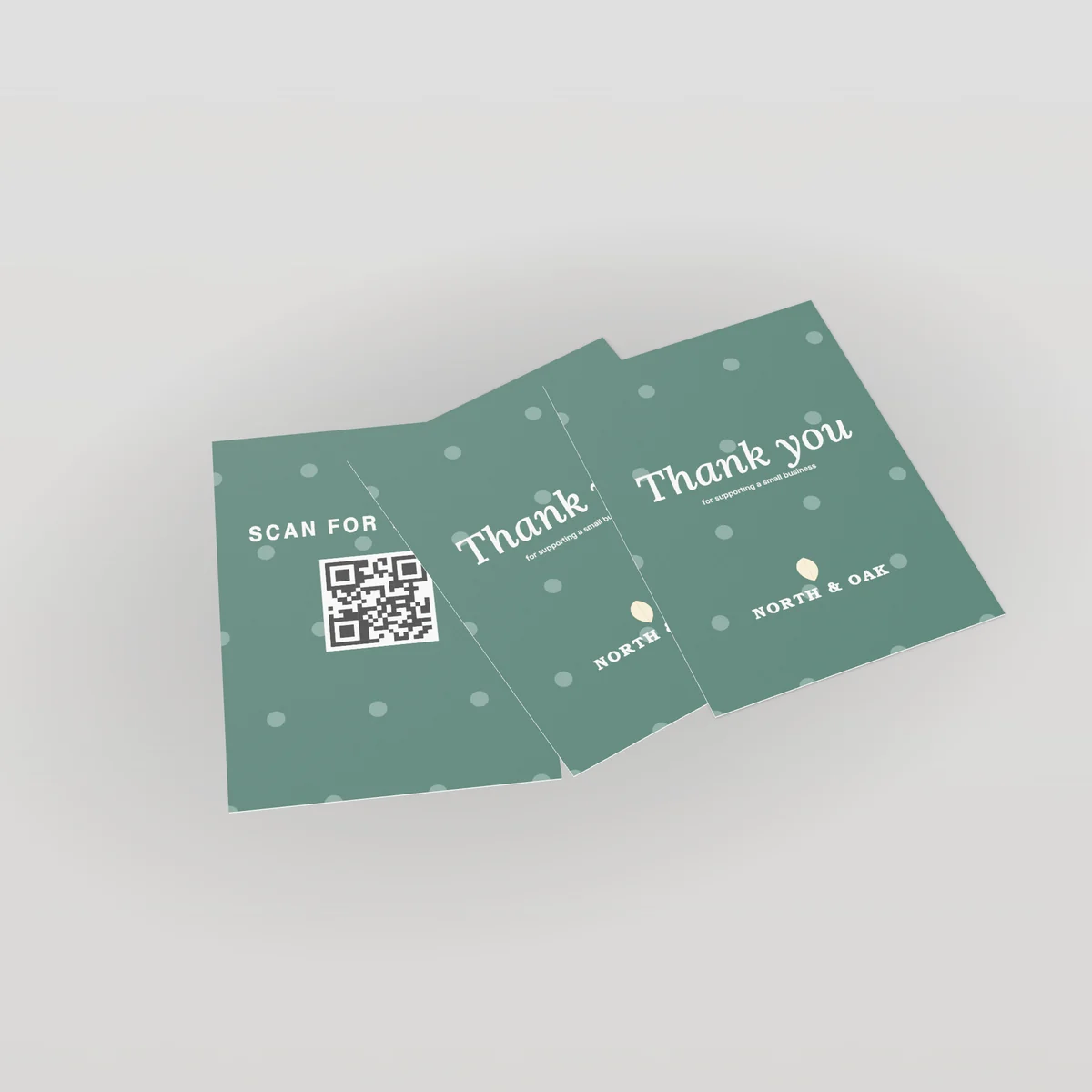
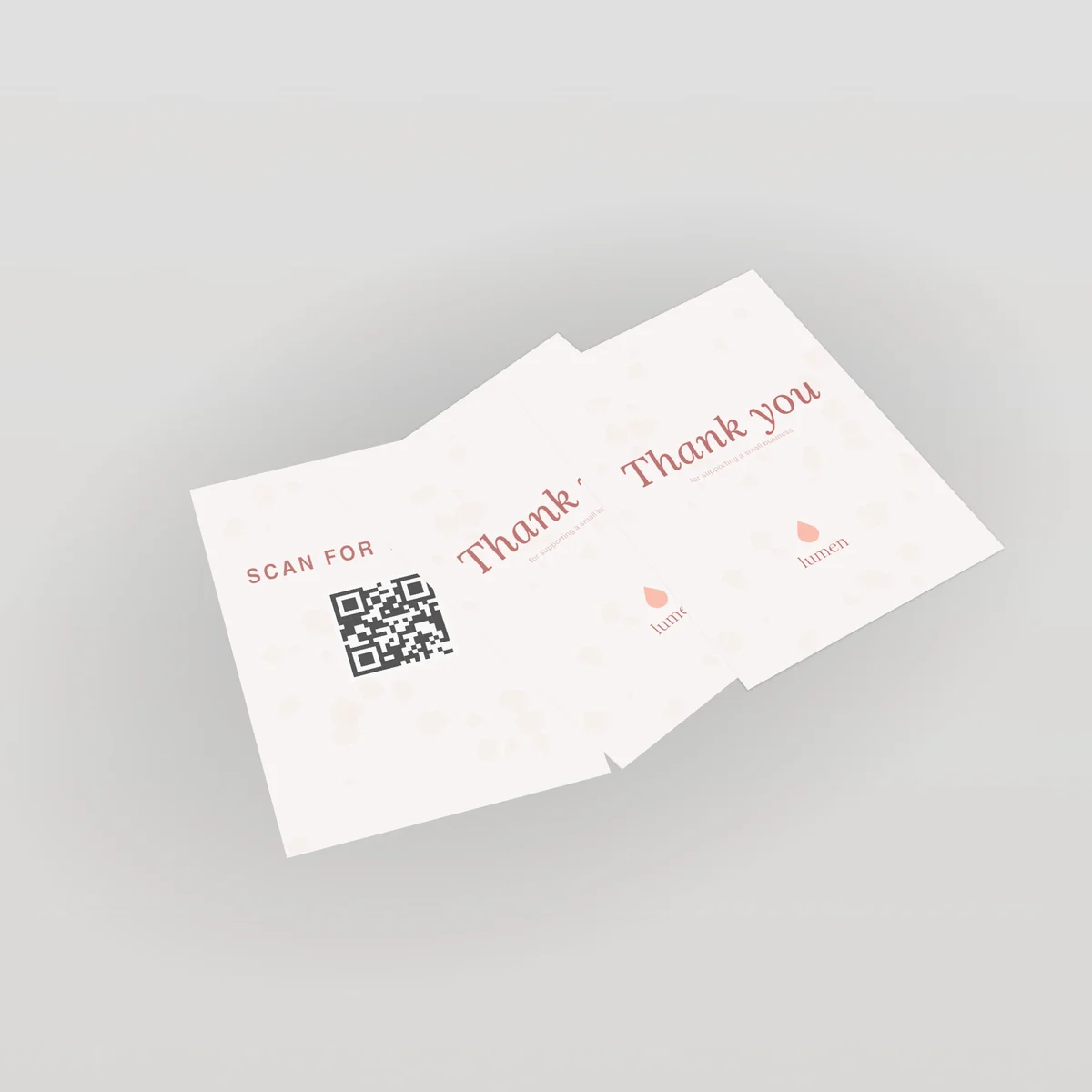
A printed card carries your brand, a thank-you, a discount code, social handles and a review request. Keep it to one clear message per side. See thank-you cards.
11. Branded tissue paper
Printed tissue wraps the product in your pattern and makes the reveal feel deliberate. Minimum orders can be modest, and one design works across all products. See custom tissue paper.
12. Branded packing tape
Printed tape on a plain shipping box is the cheapest way to brand the outside of a parcel. Paper tape with a water-activated adhesive is strong and easy to recycle with the box. See packing tape.
13. A free sample
Add a sample of another product. It is advertising the customer actually uses, and it often drives the second order. Keep sample packaging simple: a small pouch, tin or sachet with a sticker.
14. A discount code for the next order
Put a unique code on the card, valid for a limited time. Track how many are used; it is one of the clearest ways to measure what packaging is worth.
15. Branded hang tags
For apparel, accessories and gifts, a hang tag adds a retail touch and carries care, size or story details. See hang tags.
16. Crinkle paper in your brand color
Paper shred fills space, cushions small items and adds color. Use it instead of plastic fill where it does the job.
17. Seasonal touches
A different sticker or card for holidays, your brand anniversary or a product launch keeps repeat customers surprised without changing your core packaging. Plan ahead: our events calendar shows order-by dates for key retail moments.
18. A belly band or sleeve
A printed paper band wrapped around a plain box or a product gives you a branded surface for a fraction of the cost of a printed box. It also works as a label for multiple products in the same packaging.
Tier 3: mid-range (about 50 cents to $1.50 per order)
19. Custom printed mailer boxes
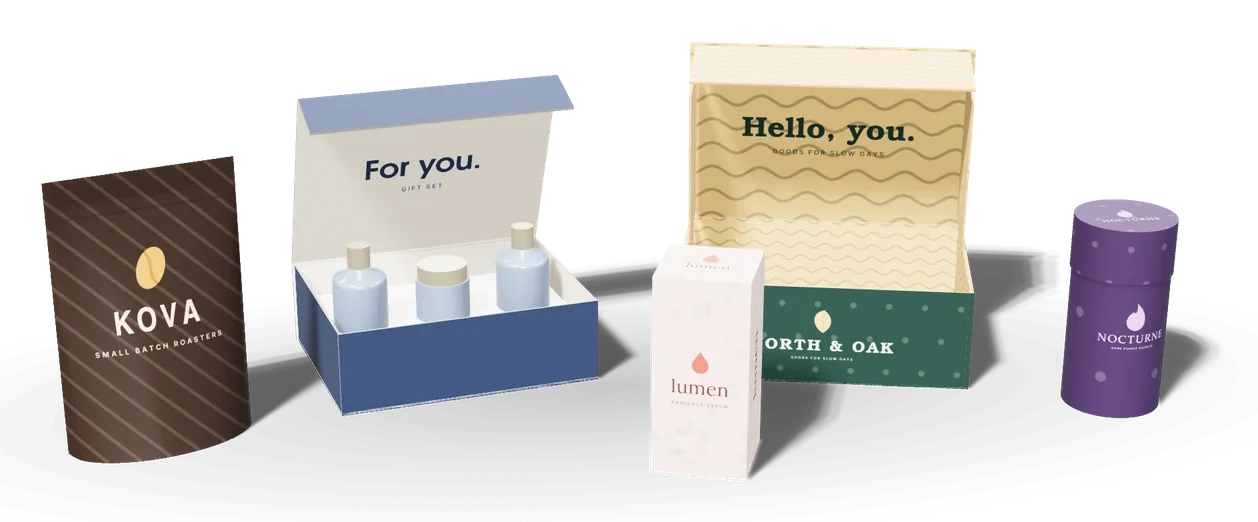
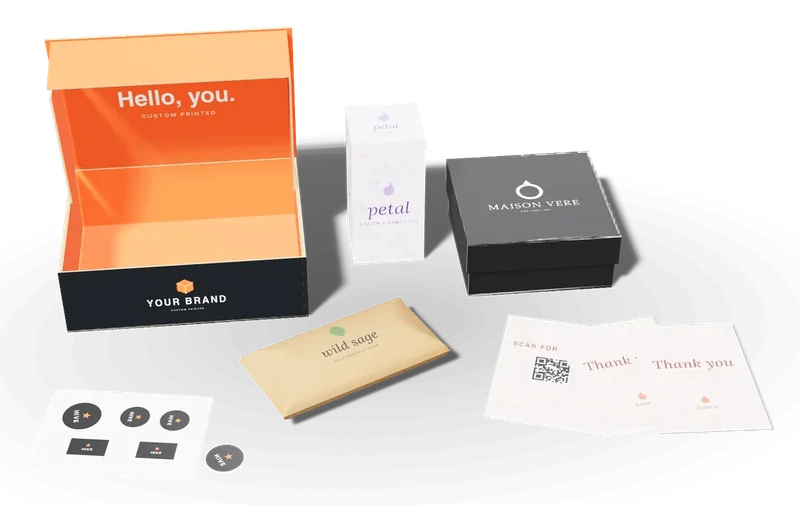
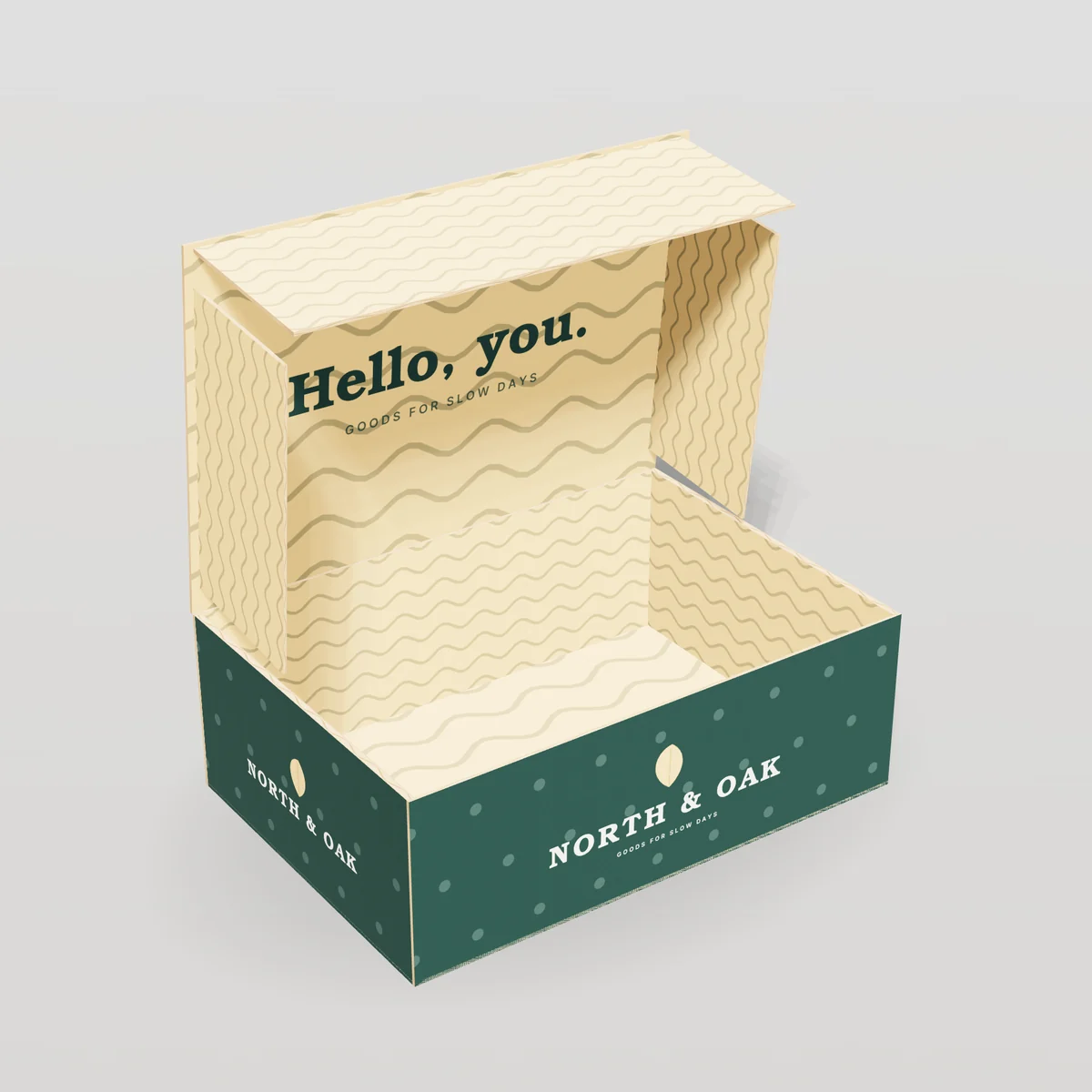
The single biggest upgrade most growing brands make. A custom printed mailer in your size, colors and logo replaces the plain box, the tape and often the tissue. Many small businesses start with one size and a one-color print, then add inside printing later. See mailer boxes.
| Quantity | Est. unit price | Est. total | Saving vs. first tier |
|---|---|---|---|
| 100 | $3.46 | $346 | — |
| 250 | $1.79 | $448 | −48% |
| 500 | $1.21 | $604 | −65% |
| 1,000 | $0.89 | $895 | −74% |
| 2,500 | $0.68 | $1,711 | −80% |
| 5,000 | $0.60 | $2,999 | −83% |
| 10,000 | $0.55 | $5,473 | −84% |
Estimates from our published pricing model, full-color print, no finishes, delivered to the contiguous US. Your written quote confirms the exact price. Get an exact quote →
20. Printing inside the box
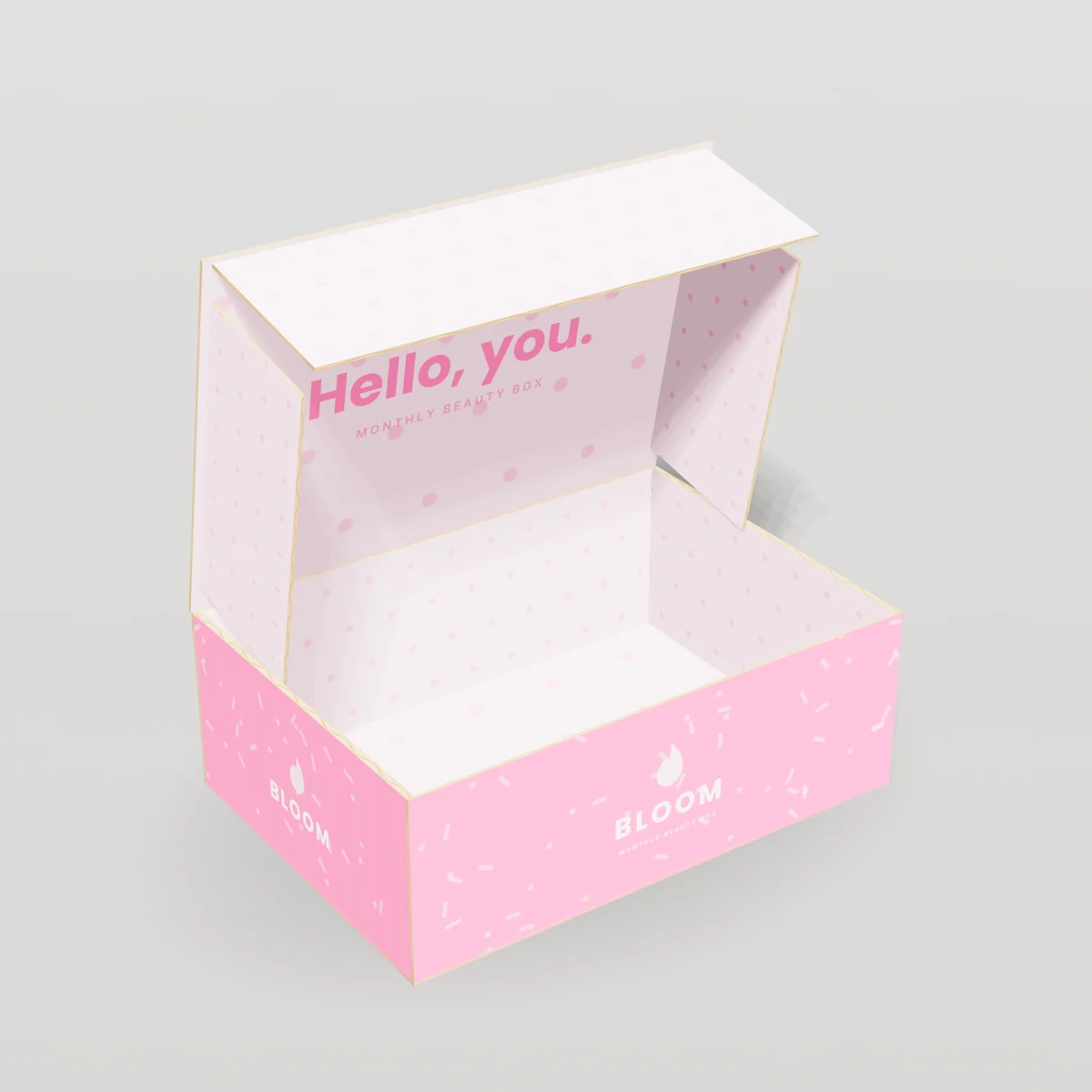
An inside print delivers the "wow" moment exactly when the lid opens. A short message, a pattern or a "you made it" line often costs less than an outer finish and has more impact. See interior printing.
21. A simple die-cut insert
A paperboard or corrugated insert holds the product in place, prevents breakage and makes even a modest box look professionally designed. It also speeds up packing because each item has its place. See custom inserts.
22. Branded paper bags for markets and pop-ups
If you sell in person, a branded bag goes home with the customer and walks your logo around the market. See paper bags.
23. Custom labels for jars, bottles and tins
A professionally printed label on a stock container is how many food, candle and beauty brands start. Choose a material suited to the product: waterproof film for bath products, uncoated paper for an artisan look. Our compliance guide lists what US labels typically need.
24. Recyclable padded mailers
For books, accessories and soft goods, a branded paper-padded mailer is lighter than a box and can often go in curbside recycling. Check local acceptance before claiming it.
25. A product care card or mini-zine
A small folded booklet with your story, product tips and behind-the-scenes photos gives customers a reason to keep reading and sharing. It is also useful for gift orders where the receiver does not know your brand.
26. Gift options at checkout
Offer gift wrapping, a gift note or a gift box as a paid add-on. It can cover its own costs and introduces your brand to a new person.
Tier 4: premium (over $1.50 per order)
27. Rigid or magnetic gift boxes
For jewelry, luxury goods, corporate gifts and high-value products, a rigid or magnetic box signals quality and is often kept. Use them for your best-selling gift item or a limited edition rather than everything. See magnetic closure boxes.
28. Retail cartons for wholesale
If you are moving into stores, a printed folding carton with all required label information turns your product into a retail product. See tuck end boxes and product boxes.
29. A finish on your logo
One finish, such as foil, embossing or spot UV, on the logo only, adds a premium touch that customers feel. Keep it to one well-placed effect. See the packaging finishes guide.
30. Subscription box design
If you run a subscription, a consistent printed mailer with an inside design and a monthly card creates a ritual customers look forward to. Change the card or sticker monthly, not the box. See subscription boxes.
31. Influencer and PR kits
A small run of special boxes for creators and press, with a printed insert and a personal note, can be worth more than any other spend. Digital printing makes runs of 50–100 practical.
Ideas that save money
32. Right-size your boxes
Carriers bill by dimensional weight. A box that is one inch smaller on each side can cut billable weight by a third, and less empty space means less void fill and fewer breakages. Use our box size finder and read our standard box sizes chart.
33. Standardize on two or three sizes
Every additional box size adds stock to buy, store and choose between. Most small catalogs ship well in two or three sizes.
34. Print one color, on kraft
A one-color print on kraft board looks deliberate and costs less than full color on white. Many of the most recognizable small brands use exactly this.
35. Order in sensible quantities
Unit prices fall as quantity rises, but cash tied up in boxes you cannot store or will redesign is expensive too. Many small businesses start with a few hundred units of their main box and reorder more as volume grows. Digital printing makes small runs practical.
How to decide what to do first
A simple plan for most small businesses:
- Fix protection and size. Stop breakages and wasted space.
- Add a consistent brand mark. Stamp, sticker or tape.
- Add a card. Thank-you plus one call to action (review, reorder, follow).
- Upgrade to a custom printed mailer when you ship a few hundred orders a month.
- Add inside printing and an insert when the mailer is working.
- Add premium pieces for gift and wholesale lines only.
Budget examples
| Monthly orders | Sensible packaging setup | Rough added cost per order |
|---|---|---|
| Under 50 | Stock box, stamp, handwritten note, sticker seal | A few cents to about 25 cents |
| 50–200 | Stock box or mailer, printed sticker, printed card, tissue | About 25–75 cents |
| 200–1,000 | Custom printed mailer (1–2 colors), card, sticker | Box cost plus about 25 cents |
| 1,000+ | Custom mailer with inside print and insert, card, seasonal stickers | Varies; often offset by shipping savings |
These figures are illustrative; actual costs depend on product size, materials and suppliers. Our packaging cost guide explains every cost driver, and the packaging cost calculator gives instant estimates.
Common small-business packaging mistakes
- Spending on the outside, ignoring the inside. The reveal happens when the lid lifts.
- Changing designs too often. Recognition needs repetition.
- Overpacking. Too much plastic fill can feel wasteful, especially to sustainability-minded customers.
- Skipping the drop test. Pack a real order and drop it from waist height several times before you commit to a design.
- Making claims you cannot support. Words like "eco-friendly" or "biodegradable" on packaging can mislead. Read biodegradable vs compostable vs recyclable before you print any environmental claim.
- Ordering too many boxes too early. Start small and reorder.
Packaging ideas by product type
- Candles: a cradle insert in a small mailer, a sticker with scent notes, and a care card on trimming the wick. See the candle packaging guide.
- Skincare and cosmetics: a tuck carton for each item, a mailer with inside print, and a routine card. See the cosmetic packaging guide.
- Apparel: tissue with a sticker seal, a hang tag, and a printed mailer or recyclable poly mailer.
- Jewelry: a small rigid or pillow box with a pouch, inside a small mailer.
- Food and baked goods: a window box, a label with ingredients and allergens, and a sticker seal for freshness.
- Prints and stationery: a rigid flat mailer, a cello sleeve and a card.
- Coffee and tea: a kraft pouch with a label, a brew guide card and a mailer for subscriptions.
Summary
- Start with the cheapest high-impact ideas: a consistent mark, a card and neat packing.
- Upgrade to custom printed mailers when your order volume supports it.
- Spend on what customers see when they open the box.
- Right-size boxes to save shipping and reduce damage.
- Keep packaging consistent, honest and easy to recycle.
When you are ready for custom boxes, tell us about your product and order volume. Every quote includes free design help and a 3D proof, and you can start with small quantities.
 Box StylesMailer BoxesSelf-locking corrugated mailers printed inside and out. The go-to box for DTC brands and subscriptions.
 AccessoriesCustom Stickers & LabelsSeal stickers, product labels and roll labels in paper, vinyl, kraft and foil.
GuideUnboxing & brand designHow to design packaging that sells and gets shared: brand hierarchy, color, typography, the unboxing sequence, inserts and low-cost upgrades that matter.
 GuideHow much custom packaging costsRealistic 2026 price ranges for custom mailer, shipping, carton, rigid and pouch packaging, what drives cost, and proven ways to lower your unit price.
Key terms on this page
- Kraft
- Paper or board made from unbleached wood pulp, naturally brown and strong.
- Wrap
- The printed or specialty paper glued around the board of a rigid box or tube.
- Sleeve
- An open-ended band or tube that slides over a tray or box, often printed to brand plain packaging.
- Tissue paper
- Thin, light paper used to wrap products inside boxes, often printed with a brand pattern.
- Belly band
- A printed paper band wrapped around the middle of a box or product to add branding.
- Mailer box
- A self-locking corrugated box with a hinged lid and tuck front, widely used for e-commerce and subscriptions.
- E-flute
- A thin corrugated flute about 1/16 inch thick. It prints sharply and folds crisply, making it the standard for mailer boxes.
- Lid
- The top part of a box, hinged or separate.
- Finish
- Any treatment applied after printing to change appearance or protect the surface, such as coatings, laminations, foil, embossing or spot UV.
- Insert
- A component inside a box that holds products in place, such as die-cut paperboard, corrugated, foam or molded pulp.
- Paperboard
- Thick paper (usually 0.010 inch or more) used for folding cartons, such as SBS, kraft and recycled board.
- Folding carton
- A paperboard box printed, die-cut, creased and glued, shipped flat and folded into shape at packing.
- Carton
- A box made from paperboard, usually a folding carton. In shipping, "carton" can also mean a corrugated case.
- Embossing
- Raising part of the board surface into a relief using matched dies, often combined with foil or ink.
- Spot UV
- A clear, glossy UV-cured varnish applied to selected areas to create contrast with a matte background.
- Digital printing
- Printing directly from a digital file without plates. Ideal for short runs, multiple designs and fast changes.
- Dimensional weight (DIM weight)
- A billing method used by carriers that charges by package volume when it is higher than actual weight. Calculated as L × W × H divided by a divisor.
- Void fill
- Material that fills empty space in a shipping box to stop products moving, such as crinkle paper or air pillows.
- Board
- A general term for thick paper materials used in packaging, including paperboard, corrugated board and greyboard.
- Drop test
- A test where packed boxes are dropped from set heights onto faces, edges and corners to check product protection.
- Poly mailer
- A lightweight plastic shipping envelope used mainly for apparel and soft goods.
- Pillow box
- A small paperboard box with curved ends that fold in to close.
- Proof
- A preview of the final package (digital PDF, 3D render or physical sample) that the customer approves before production.
More definitions in our packaging glossary.
Discussed on Quora & X
Frequently asked questions
What is the cheapest way to brand packaging for a small business?
A custom rubber stamp, logo stickers and a printed thank-you card are among the cheapest options. Together they can brand stock boxes, tissue and bags for a few cents per order.
When should a small business switch to custom printed boxes?
Many brands switch when they ship a few hundred orders a month in a small number of product sizes. At that point, a custom printed mailer often pays for itself through better presentation, faster packing and right-sized shipping.
What should I put in a small business package?
The product, protected and presented neatly, plus a thank-you card with one clear call to action. Optional extras include a sticker seal, tissue, a sample and care instructions.
How can I make my packaging look professional on a budget?
Be consistent: one brand color, one sticker, one card, packed the same way every time. Neat folding and a right-sized box matter more than expensive materials.
Are custom boxes worth it for an Etsy shop?
They can be, especially for repeat buyers and gift orders. Start with stamps, stickers and cards on stock boxes, and move to custom mailers when volume and margins justify it.
How many custom boxes should I order first?
Many small businesses start with a few hundred units of their main size. Digital printing makes small runs practical, and you can reorder in larger quantities once the design is proven.
What is the most eco-friendly packaging for small businesses?
Right-sized paper-based packaging with minimal plastic is usually the most practical choice: kraft mailers, paper tape, paper fill and recyclable labels. Avoid unsupported environmental claims on the packaging.
How do I make an unboxing experience special?
Focus on the moment the box opens: an inside print or message, neat tissue with a sticker seal, the product held in place, and a card. Small, consistent details create the experience.
Related products & pages
Box StylesMailer BoxesSelf-locking corrugated mailers printed inside and out. The go-to box for DTC brands and subscriptions.
AccessoriesCustom Stickers & LabelsSeal stickers, product labels and roll labels in paper, vinyl, kraft and foil.
 AccessoriesThank You Cards & InsertsPrinted thank-you cards, care cards and discount inserts that drive repeat orders.
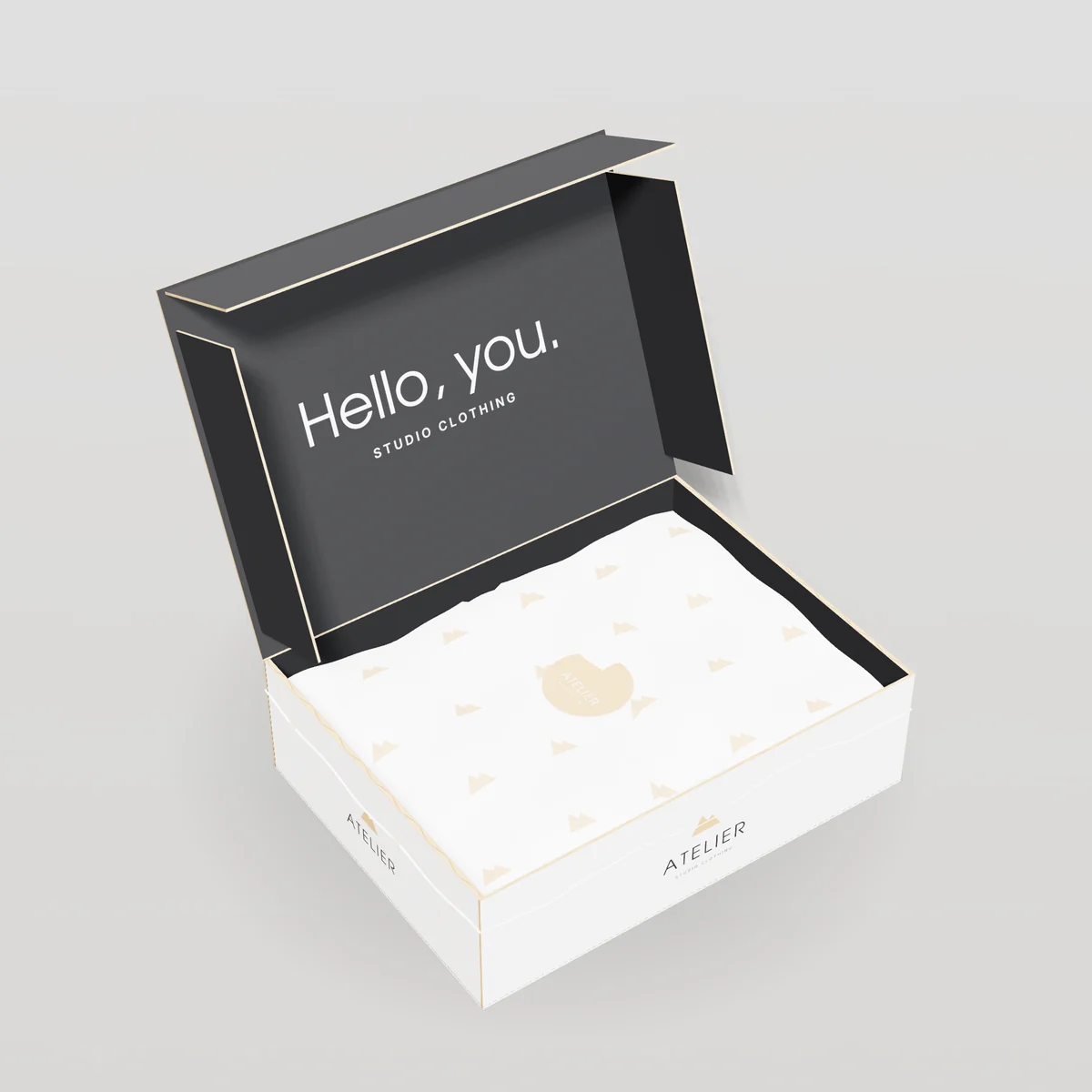 AccessoriesCustom Tissue PaperBranded tissue paper (17gsm) printed with your logo in one or two colors.