Quick answer
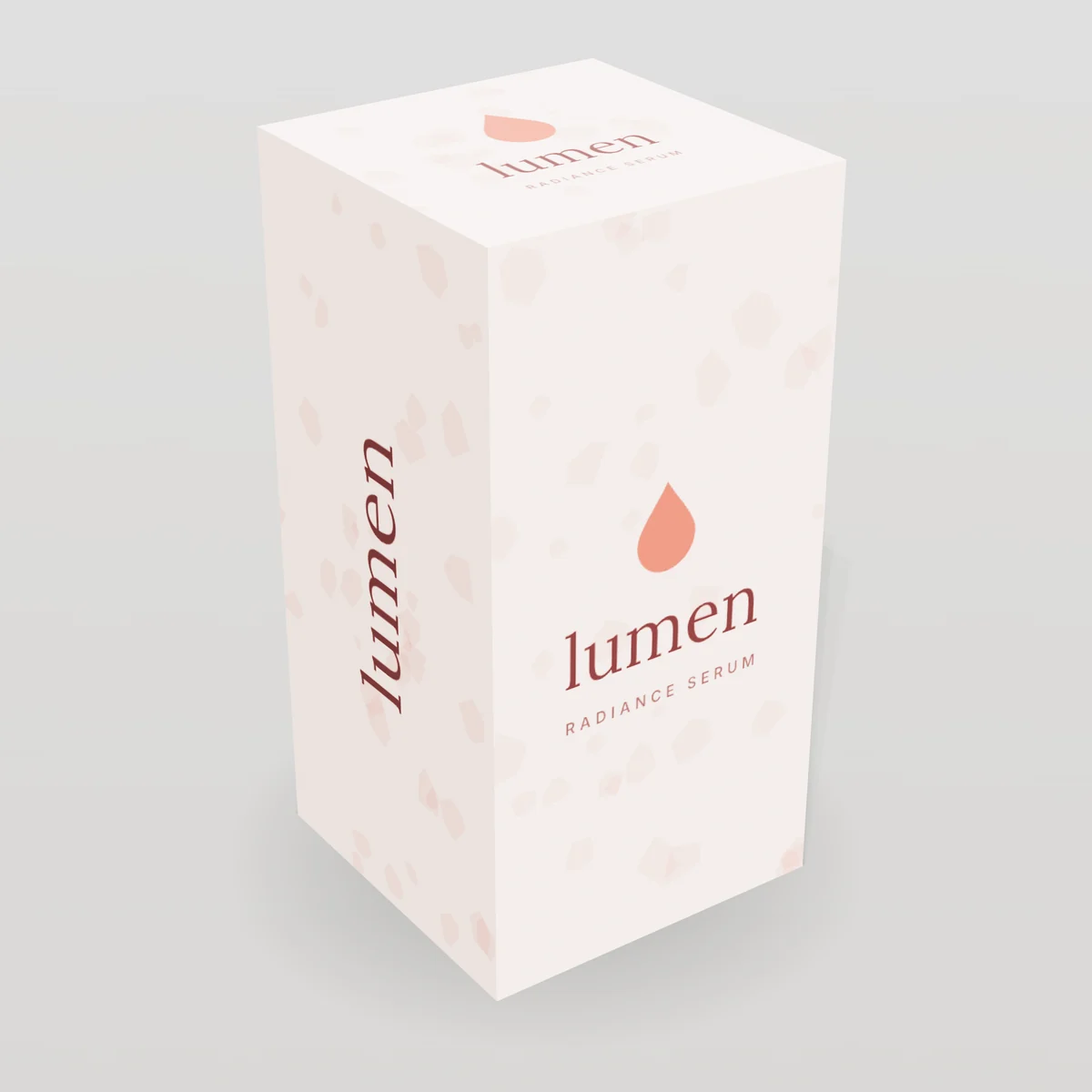
Cartons for serums, creams and sets, sized to bottles and jars with protective inserts. Estimated prices start around $0.23 per unit at 10,000 units and $1.02 at 250 units for a 3×3×6" box. Typical turnaround is 10–14 business days after proof approval.
Skincare Boxes: price breaks
How the estimated unit price of a 3×3×6" tuck end box in SBS white paperboard (18pt) changes with quantity. Setup costs are spread over more boxes as the run gets longer, so the per-box price drops sharply in the first few tiers.
| Quantity | Est. unit price | Est. total | Saving vs. first tier |
|---|---|---|---|
| 250 | $1.02 | $255 | — |
| 500 | $0.63 | $317 | −38% |
| 1,000 | $0.43 | $433 | −58% |
| 2,500 | $0.30 | $759 | −71% |
| 5,000 | $0.25 | $1,273 | −75% |
| 10,000 | $0.23 | $2,261 | −77% |
Estimates from our published pricing model, full-color print, no finishes, delivered to the contiguous US. Your written quote confirms the exact price. Get an exact quote →
Material options and how they affect price
Estimated unit price at 1,000 units for a 3×3×6" tuck end box with full-color printing, by material. Material choice changes look, strength and recyclability as well as cost.
| Material | What it’s like | Est. unit price |
|---|---|---|
| SBS white paperboard (18pt) | Bright white, smooth solid bleached sulfate board. Sharpest print and the best base for foil, spot UV and embossing. | $0.43 |
| Kraft paperboard (18pt CUK) | Natural brown unbleached kraft board with long, tough fibers. Looks handmade and eco-minded; best with one or two dark inks. | $0.42 |
| Recycled paperboard (CRB) | Coated recycled board with a white printing face and grey back. The economical, high-recycled-content choice for everyday retail. | $0.41 |
Printing options compared
How the print specification changes the estimated unit price of a 3×3×6" tuck end box in SBS white paperboard (18pt). One- and two-color printing carries a small plate charge that matters less as quantities grow; full-color digital and offset printing have no plate charge in our model.
| Printing | 500 units | 1,000 units | 5,000 units |
|---|---|---|---|
| Plain (no print) | $0.54 | $0.35 | $0.18 |
| 1 color | $0.69 | $0.44 | $0.22 |
| 2 colors | $0.77 | $0.49 | $0.24 |
| Full color outside | $0.63 | $0.43 | $0.25 |
| Full color outside + inside | $0.72 | $0.51 | $0.32 |
What makes skincare packaging different
Skincare sits at the meeting point of science and self-care. Customers want to trust what goes on their skin, so packaging has to signal efficacy, safety and care at the same time. Clinical brands lean on clean white space, precise typography and ingredient call-outs; botanical brands use natural textures and earthy palettes; luxury lines use weight, soft-touch finishes and metallic details. In every case, the box frames how the customer feels about the formula inside before they ever try it.
Skincare packaging also has practical demands:
- Glass and airless containers. Serums in dropper bottles, creams in heavy glass jars and pumps in airless bottles all need snug, protective cartons.
- Ingredient storytelling. Active ingredients, concentrations and routines need clear explanation, often on small panels.
- Routines and sets. Cleansers, toners, serums and moisturizers are sold as steps, so packaging often needs to work as a family and as gift sets.
- Compliance. Skincare is regulated as cosmetics, and some products (sunscreens, acne treatments) are regulated as over-the-counter drugs with stricter labeling.
- Sustainability expectations. Skincare buyers are among the most attentive to packaging waste and recyclability claims.
Packaging formats for skincare
| Product | Recommended packaging | Notes |
|---|---|---|
| Dropper serums (15–50 ml) | Tuck end box with an insert collar | Snug fit stops the dropper rattling |
| Creams in glass jars | Auto-lock bottom box or tuck box with insert | Jars are heavy; auto-lock bases are safer |
| Pump bottles and airless | Tuck end with top insert | Prevents accidental pumping in transit |
| Cleansers and toners (tubes, bottles) | Tuck end or folding carton | Economical everyday formats |
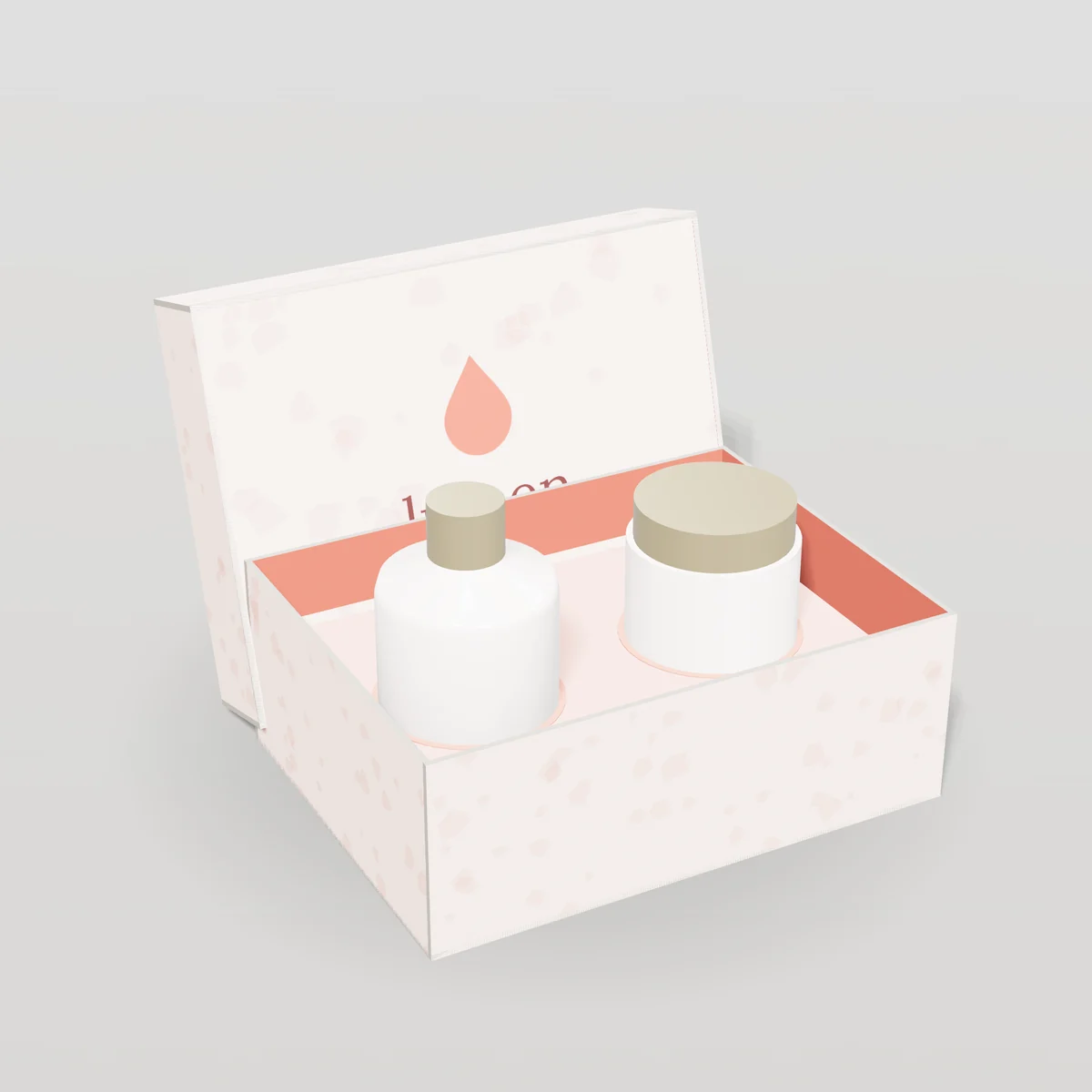
| Routines and kits | Rigid or magnetic boxes with cavities | Present products as steps |
| Sample and travel sizes | Pillow boxes or mini cartons | Low cost, giftable |
| Online orders | Mailer boxes printed inside | Protects and delights |
| Retail with visible product | Window boxes | Show texture or color where relevant |
Materials
SBS paperboard (16–24pt) is the default for skincare cartons because of its bright white surface, sharp print and compatibility with every finish. It suits clinical and luxury aesthetics alike.
Kraft paperboard works for natural and botanical brands, especially with one dark ink and a blind emboss. Recycled board (CRB) is a lower-impact choice for everyday products and refills. For sets and premium lines, rigid greyboard wrapped in specialty paper gives a substantial feel. For e-commerce shippers, E-flute corrugated protects glass in transit.
Choose caliper by weight and size: 16–18pt for serums and tubes, 20–24pt for heavy jars and larger cartons.
Designing skincare boxes
Information hierarchy for skincare
- Brand
- Product type ("Hydrating serum", "Night cream")
- Hero ingredient and concentration ("10% niacinamide")
- Benefit ("for visibly smoother skin")
- Net quantity in ml and fl oz
- Step number or routine position (for routines)
Keep claims factual and supportable. Avoid drug-like claims ("treats acne", "heals") on cosmetic products unless the product is regulated as a drug and labeled accordingly.
Visual languages that work
- Clinical: white or pale grey SBS, a single accent color, precise sans-serif type, matte lamination, silver foil or spot UV.
- Botanical: kraft or textured paper, illustrated leaves, earthy greens, blind emboss.
- Luxury: soft-touch black or deep tones, gold foil, embossed monogram, rigid set boxes.
- Playful: saturated colors, bold type, gloss finish, patterned interiors.
Routines as a family
When products are used in steps, number them consistently and use a color code per step or per skin concern. A shared layout grid across cartons makes the range look intentional on a shelf and in a flat-lay.
Tip: Print the step number and key ingredient on the top tuck too. Customers often store skincare in drawers where only the top is visible.
Protecting glass, droppers and pumps
- Inserts: a paperboard collar under the shoulder of a dropper bottle keeps it centered; a die-cut base platform holds jars; a top insert stops pumps being pressed.
- Close fit: keep clearance at about 1/16–1/8 in; glass needs a snug carton.
- Shipping: pack cartons tightly in a mailer with paper void fill or a corrugated insert. Our e-commerce packaging guide explains how to test packages.
- Temperature: some formulas are sensitive to heat; packaging cannot solve that alone, but paper-based insulation and fast shipping help in summer.
See custom inserts for insert options.
Labeling and compliance
Skincare products sold in the US are generally regulated as cosmetics by the FDA. Some products, such as sunscreens and acne or anti-dandruff treatments, are also over-the-counter drugs and need a Drug Facts panel. Typical cosmetic labeling for the outer carton includes:
- An identity statement on the principal display panel
- Net contents in metric and US customary units in the bottom 30% of the principal display panel
- An ingredient list using standard names, in descending order of predominance
- The name and place of business of the manufacturer, packer or distributor
- Required warnings and directions
- MoCRA contact information for adverse event reporting and, as implemented, fragrance allergen disclosure
Consult a regulatory professional to confirm requirements for your formulas. Our labeling guide summarizes common rules.
Sizing skincare boxes
| Product | Typical component (in) | Typical inside box (in) |
|---|---|---|
| 15 ml dropper | 1.1 × 1.1 × 3.7 | 1.25 × 1.25 × 4 |
| 30 ml dropper | 1.4 × 1.4 × 4.5 | 1.6 × 1.6 × 4.75 |
| 50 ml cream jar | 2.4 × 2.4 × 1.8 | 2.6 × 2.6 × 2 |
| 100 ml pump bottle | 1.7 × 1.7 × 6.2 | 1.9 × 1.9 × 6.5 |
| 150 ml cleanser tube | 1.9 × 1.2 × 6.8 | 2.1 × 1.4 × 7 |
| 3-step routine set | Layout-dependent | 9 × 6 × 2.5 rigid box |
Confirm sizes with your exact components. The Box Size Finder helps, and we create dielines for your bottles with every quote.
Pricing skincare packaging
Estimated prices at the top of this page are for a 3 × 3 × 6 in tuck end box. Skincare cartons usually fall into three budget tiers:
- Everyday: recycled or SBS board, aqueous coating, one finish. Lowest unit cost.
- Premium: SBS with soft-touch and foil or spot UV.
- Luxury sets: rigid or magnetic boxes with fitted inserts.
A rigid routine set box compares like this:
| Quantity | Est. unit price | Est. total | Saving vs. first tier |
|---|---|---|---|
| 100 | $6.12 | $612 | — |
| 250 | $4.16 | $1,040 | −32% |
| 500 | $3.39 | $1,695 | −45% |
| 1,000 | $2.92 | $2,918 | −52% |
| 2,500 | $2.54 | $6,345 | −58% |
| 5,000 | $2.35 | $11,758 | −62% |
| 10,000 | $2.22 | $22,156 | −64% |
Estimates from our published pricing model, full-color print, no finishes, delivered to the contiguous US. Your written quote confirms the exact price. Get an exact quote →
Budget tips
- Keep one carton size per bottle size and vary artwork by product.
- Use foil only on the brand mark.
- Choose paperboard inserts over foam unless glass protection demands foam.
- Print several SKUs together digitally for short runs.
Skincare unboxing for DTC brands
Skincare customers often film routines and "shelfies". Support that with:
- A mailer in your brand color with a calm interior message
- Tissue wrapped around cartons and sealed with a sticker
- A routine card explaining the order of use and how long to wait for results
- Sample pillows of complementary products to encourage the next purchase
See subscription boxes if you sell routines on a recurring basis.
Sustainability for skincare brands
- Right-size cartons and remove unnecessary outer boxes where retail allows.
- Paper inserts instead of plastic trays.
- Recycled-content board for everyday products and refills.
- Refill programs shipped in simple kraft cartons or pouches.
- Clear disposal instructions on pack (for example, "Carton: recycle. Bottle: rinse and recycle where accepted").
- Honest claims that follow the FTC Green Guides.
Read our sustainable packaging guide for wording that stays compliant.
Testing before launch
- Fit test each bottle in a plain sample carton.
- Pump test: press the top of the packed carton; the pump should not dispense.
- Drop test packed mailers from about 30 inches.
- Leak check: ship a few test orders to yourself in warm weather.
- Read test: can a customer find the product type, key ingredient and size in five seconds?
Worked example: a three-step routine
An illustrative example. A clinical skincare brand launches a cleanser, serum and moisturizer.
- Cartons: 18pt SBS, matte lamination, silver foil logo, a colored stripe per step, step number on the top tuck
- Serum carton: 1.6 × 1.6 × 4.75 in with a paperboard collar insert
- Moisturizer carton: 2.6 × 2.6 × 2 in auto-lock bottom for a heavy glass jar
- Routine set: magnetic box 9 × 6 × 2.5 in with a three-cavity insert and a routine card slot
- Online orders: E-flute mailer printed white outside with a pale grey interior and "Your routine starts here"
Launch checklist
- Component samples or drawings for each bottle and jar
- Carton style per product, plus set box and mailer
- Board grade, caliper and finishes
- Labeling copy reviewed by a regulatory professional
- UPCs per SKU
- Inserts and fit samples
- Quantities per SKU and launch date
Common skincare packaging mistakes
- Pumps that dispense in transit because there is no top insert.
- Glass jars in tuck-bottom cartons that open under weight.
- Drug-like claims on cosmetic products.
- Ingredient text too small to read.
- Soft-touch cartons shipped unprotected, arriving scuffed.
Packaging by budget: starter, growing, premium
| Tier | Typical spec | Best for |
|---|---|---|
| Starter | 18pt SBS tuck cartons with CMYK and aqueous coating; neck inserts | Indie skincare launches |
| Growing | Matte or soft-touch laminated cartons with spot UV or foil; routine sets in sleeve boxes | DTC brands with retail accounts |
| Premium | Magnetic PR boxes, rigid gift sets, sculpted foil-emboss | Prestige skincare and influencer seeding |
Packaging for skincare routines
Skincare brands often sell routines (cleanser, serum, moisturizer). Packaging that teaches the routine helps customers use products correctly:
- Number the steps on cartons or inserts (1, 2, 3).
- Color-code product types.
- Include a routine card with morning and evening use.
- Design sets where products sit in order in a fitted insert.
Clinical vs. natural aesthetics
Skincare packaging tends to fall into two broad visual families:
| Clinical | Natural | |
|---|---|---|
| Colors | White, pale greys, single accent color | Earth tones, greens, kraft |
| Typography | Clean sans-serif, ingredient-led | Serif or hand-drawn accents |
| Materials | White SBS, matte lamination | Kraft, textured papers, uncoated stocks |
| Finishes | Spot UV, silver foil | Copper or gold foil, blind emboss |
| Message | Actives, percentages, results | Ingredients, origin, ritual |
Choose deliberately; mixing both can confuse shoppers.
A buyer's guide to skincare packaging
Let the formula lead. Skincare customers buy results and ingredients. Packaging that communicates key actives, skin types and routine steps clearly helps customers choose, while finishes and structure communicate quality.
Protect delicate components. Droppers, pumps and glass jars need inserts that hold them upright and keep pressure off pumps. Test packed cartons in shipping.
Build a routine system. Number steps, color-code categories and design sets that hold products in order.
Plan required information early. Ingredient lists, net contents, warnings and company information need space; MoCRA added requirements for cosmetics in the US.
Choose finishes deliberately. Clinical brands lean to white matte with silver or spot UV; natural brands to kraft, textured papers and copper or gold foil.
Terms to know
- INCI: the international naming system for cosmetic ingredients.
- Airless pump: a pump that dispenses without letting air into the container.
- Neck insert: a carton insert holding a bottle by its neck.
Skincare packaging in one paragraph
Skincare packaging must protect delicate components, explain formulas and routines, and meet cosmetics labeling rules. Use SBS cartons with neck or cradle inserts, number and color-code routine steps, choose clinical or natural finishes deliberately, plan ingredient lists early, and ship sets in printed mailers with fitted inserts.
Packaging ideas by product
| Product | Packaging idea |
|---|---|
| Serum with dropper | Tuck end carton with neck insert |
| Moisturizer jar | Square carton with cradle |
| Cleanser tube | Slim carton or label-only tube |
| Sheet masks | Printed sachet with outer carton for multipacks |
| Routine set | Sleeve box or mailer with numbered insert |
| Samples | Pillow box or small mailer |
| PR kit | Magnetic box with tiered insert |
Questions to answer before ordering
- What containers do you use, and what are their dimensions with caps and pumps?
- What information must appear on each carton?
- Do you sell individual products, sets or both?
- Is your brand positioned clinical or natural?
- Will products ship to customers directly?
Second example: a sunscreen launch
- Carton: SBS tuck carton with Drug Facts panel, as sunscreens are regulated as drugs in the US.
- Finish: matte aqueous coating with spot UV on the product name.
- Retail: shelf-ready trays of 12.
- Online: printed mailers with inserts.
Photographing skincare packaging
Use bright, clean light and minimal props; show textures on fingertips or swatches beside the carton.
Ordering timeline for skincare packaging
| Step | Typical time |
|---|---|
| Quote with structure and material recommendation | Within 1 business day |
| Dieline and insert design | 1–3 business days |
| Artwork check, proof and 3D preview | 1–3 business days |
| Optional sample | About 5–12 business days |
| Production after approval | 10–14 business days for cartons; 12–16 for rigid PR boxes |
| Delivery within the contiguous US | 3–7 business days |
Plan PR kits early so they arrive before your launch date.
Sustainability checklist for skincare
- [ ] Paperboard inserts instead of foam
- [ ] Cartons only where they add value
- [ ] Recycled or certified board
- [ ] Modest laminations
- [ ] Clear disposal guidance by component
How skincare packaging grows with your brand
First 100–500 units. SBS cartons with neck inserts for each product, digitally printed in short runs.
500–2,500 units. Routine sets, matte or soft-touch finishes and printed mailers.
2,500 units and up. Offset cartons for volume, PR kits for launches and retail-ready cases.
Recommended finishes for skincare packaging
Clinical skincare brands favor white matte cartons with silver foil or crisp spot UV text; natural brands favor kraft or textured stocks with copper or gold foil and blind embossing. Soft-touch suits premium lines. Keep ingredient panels legible and avoid finishes that reduce contrast on small type.
Three things to get right with skincare boxes
- Protection. Inserts for droppers, pumps and jars.
- Clarity. Ingredients, routine steps and skin types easy to find.
- Positioning. Clinical or natural, chosen deliberately.
Related guides
 GuideLabeling & compliance (US)What US packaging typically must show for food, cosmetics, dietary supplements and hemp/CBD products: net quantity, ingredients, food contact, Prop 65 and more.
 GuideFinishes & embellishmentsHow foil stamping, embossing, debossing, spot UV, soft-touch, windows and inserts work, what they cost, and how to combine them without overspending.
 GuideSustainable packagingHow to make packaging lower-impact without greenwashing: recyclable paper formats, recycled content, FSC, inks, plastic-free inserts and honest claims.
 GuideUnboxing & brand designHow to design packaging that sells and gets shared: brand hierarchy, color, typography, the unboxing sequence, inserts and low-cost upgrades that matter.
For carton sizes, finishes and US labeling basics, see our cosmetic packaging guide.
What finishes and add-ons cost
Estimated extra cost per unit at 1,000 units when you add one finish to a 3×3×6" tuck end box (base estimate $0.43). One-time tooling such as foil and embossing dies is already spread across the run in the per-unit figure and listed separately for reference.
| Finish | What it does | Adds per unit | One-time setup |
|---|---|---|---|
| Matte lamination | A thin film with a smooth, low-glare finish that protects print from scuffs. | +$0.03 | — |
| Soft-touch | A velvety, premium coating that invites customers to hold the box. | +$0.04 | — |
| Spot UV | Clear glossy varnish on selected areas for a sleek contrast against matte. | +$0.13 | $80.00 |
| Foil stamping | Gold, silver, rose gold or holographic foil for logos and accents. | +$0.20 | $120 |
| Embossing / debossing | Raised or recessed logo detail you can feel with your fingertips. | +$0.19 | $120 |
| Window | A die-cut window with clear film so the product sells itself. | +$0.14 | $60.00 |
| Custom insert | Paperboard, corrugated or foam inserts that hold products in place. | +$0.22 | $80.00 |
Estimated prices for recommended skincare boxes styles
Unit price estimates from our published pricing model for each recommended style at its most popular size with full-color print, delivered within the contiguous US. Use them as a budget starting point; your quote confirms exact prices for your size and options.
| Style | Typical board | 500 units | 1,000 units | 5,000 units |
|---|---|---|---|---|
| Tuck End Boxes4 × 2 × 6" | SBS white paperboard (18pt) | $0.60 | $0.40 | $0.23 |
| Folding Cartons3 × 3 × 5" | SBS white paperboard (18pt) | $0.62 | $0.42 | $0.24 |
| Rigid Boxes8 × 6 × 3" | Rigid greyboard + printed wrap | $3.36 | $2.89 | $2.32 |
| Mailer Boxes9 × 6 × 3" | E-flute corrugated, white | $1.33 | $1.06 | $0.78 |
| Window Boxes5 × 3 × 5" | SBS white paperboard (18pt) | $0.91 | $0.63 | $0.39 |
A dash means the quantity is below that style’s minimum order.
Popular tuck end boxes sizes for skincare boxes
Tuck End Boxes are the most common starting point for skincare boxes. Estimated unit prices for popular sizes with full-color print on sbs white paperboard (18pt), delivered within the contiguous US:
| Inside size | Typical use | 500 units | 1,000 units | Quote |
|---|---|---|---|---|
| 2 × 2 × 4" | Lip care, jewelry, single sachets, small accessories | $0.53 | $0.34 | Quote |
| 2 × 2 × 6" | Serums, candles, soaps, single small products | $0.55 | $0.36 | Quote |
| 3 × 3 × 5" | Serums, candles, soaps, single small products | $0.62 | $0.42 | Quote |
| 4 × 2 × 6" | Serums, candles, soaps, single small products | $0.60 | $0.40 | Quote |
| 4 × 4 × 8" | Gift sets, apparel accessories, small electronics | $0.78 | $0.57 | Quote |
What finishes add to skincare boxes
Estimated extra cost per unit at 1,000 units when you add one finish to a 4×2×6" tuck end box (base estimate $0.40). Choose one hero finish rather than several.
| Finish | What it does | Adds per unit |
|---|---|---|
| Matte lamination | A thin film with a smooth, low-glare finish that protects print from scuffs. | +$0.02 |
| Soft-touch | A velvety, premium coating that invites customers to hold the box. | +$0.04 |
| Spot UV | Clear glossy varnish on selected areas for a sleek contrast against matte. | +$0.13 |
| Foil stamping | Gold, silver, rose gold or holographic foil for logos and accents. | +$0.20 |
| Embossing / debossing | Raised or recessed logo detail you can feel with your fingertips. | +$0.19 |
| Window | A die-cut window with clear film so the product sells itself. | +$0.14 |
| Custom insert | Paperboard, corrugated or foam inserts that hold products in place. | +$0.22 |
Learn about these materials
Best box styles for skincare boxes
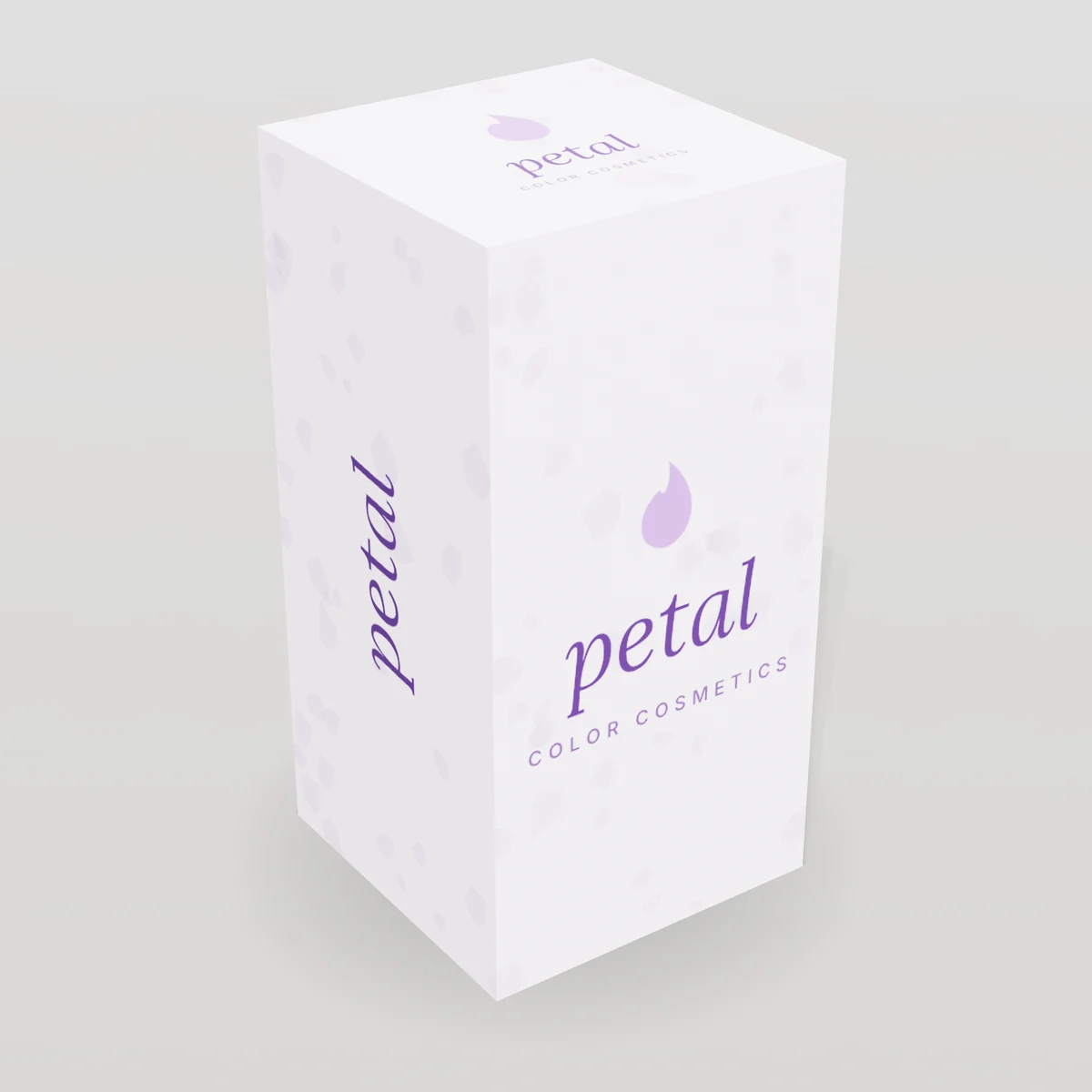
 Box StylesTuck End BoxesStraight and reverse tuck end cartons that open and reclose cleanly. Ideal for lightweight retail products.
 Box StylesFolding CartonsLightweight printed paperboard cartons that ship flat and fold up fast on your packing line.
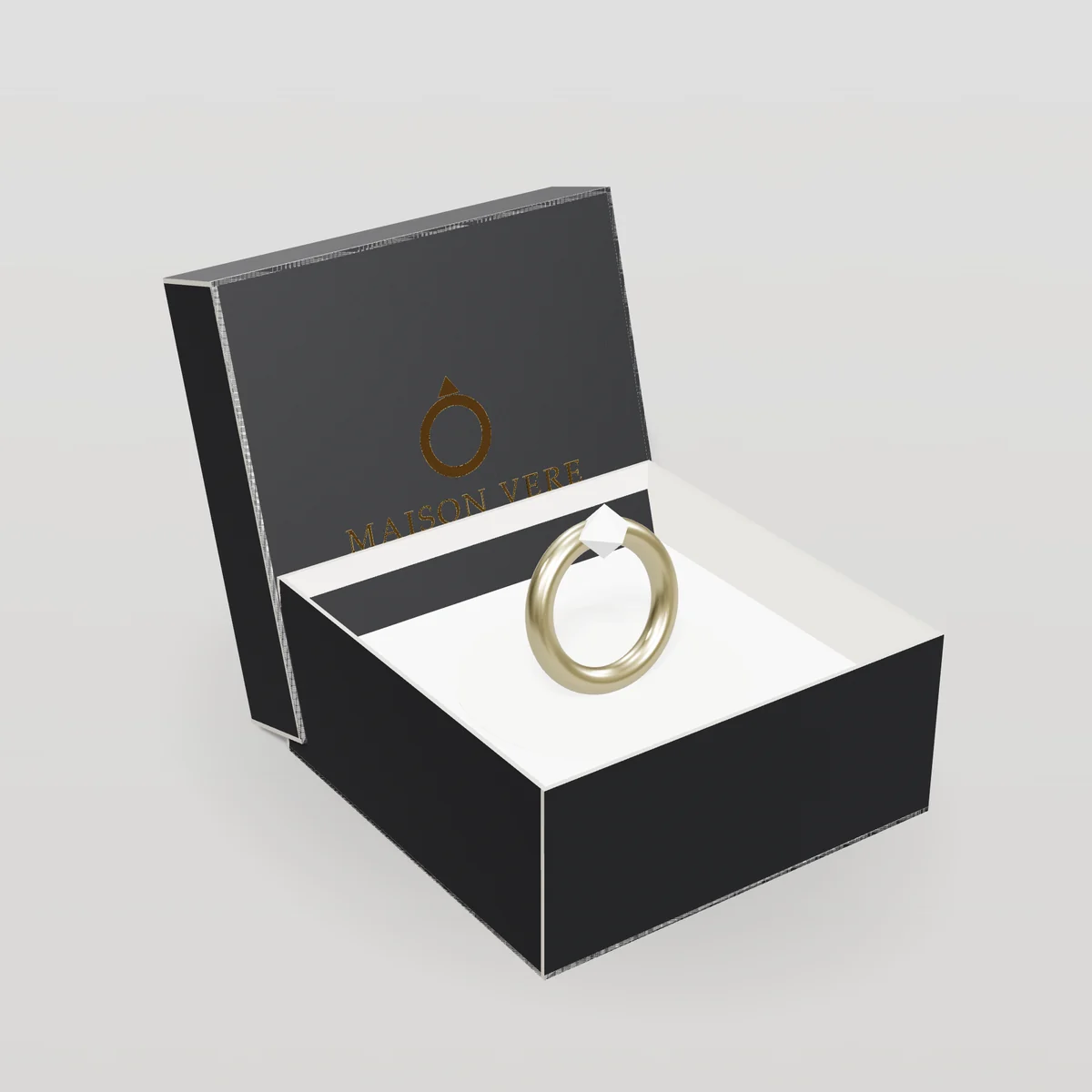 Box StylesRigid BoxesLuxury setup boxes made from thick greyboard wrapped in printed or specialty paper.
Box StylesMailer BoxesSelf-locking corrugated mailers printed inside and out. The go-to box for DTC brands and subscriptions.
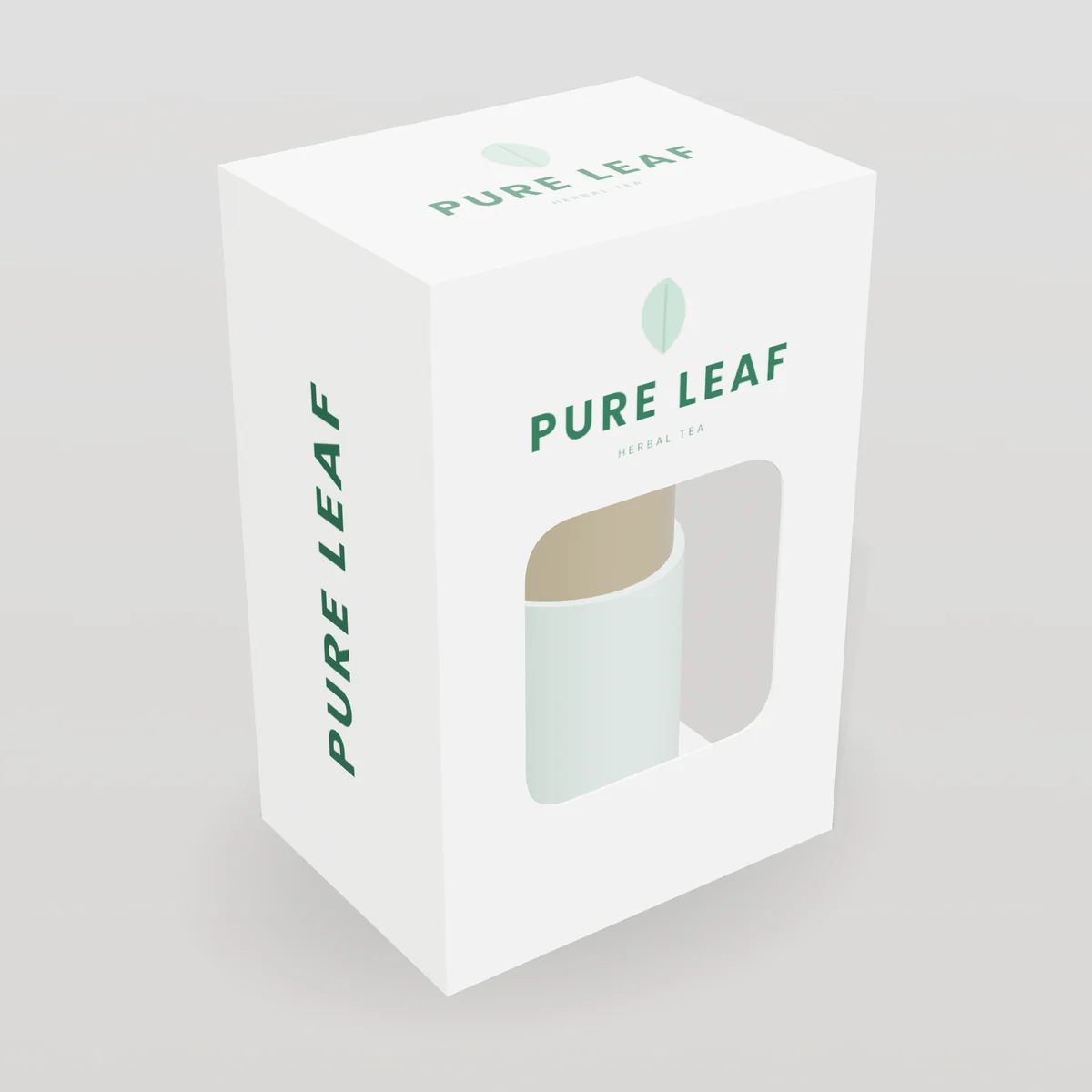 Box StylesWindow BoxesPaperboard boxes with a die-cut window and clear film so shoppers see the product.
How to order skincare boxes
- 1Request a quote
Tell us the style, size, quantity and artwork you have. Use the form or the live estimator.
- 2Free design & dieline
We send a dieline for your exact size, check your artwork and help with layout at no charge.
- 3Approve your proof
Review a digital 3D proof (and an optional physical sample) before anything is printed.
- 4Production & QC
Your boxes are printed, finished, die-cut and inspected against the approved proof.
- 5Delivered to your door
Shipped flat-packed with tracking to any address in the contiguous US.
Key terms on this page
- Point (pt)
- The unit of paperboard thickness: 1 point equals 0.001 inch. 18pt board is 0.018 inch thick.
- Insert
- A component inside a box that holds products in place, such as die-cut paperboard, corrugated, foam or molded pulp.
- Tuck end box
- A paperboard carton that closes with tuck flaps at its ends.
- Auto-lock bottom
- A pre-glued carton base, also called a crash-lock bottom, that locks into place automatically when the flattened box is opened. Stronger and faster to pack than a tuck bottom.
- Folding carton
- A paperboard box printed, die-cut, creased and glued, shipped flat and folded into shape at packing.
- Carton
- A box made from paperboard, usually a folding carton. In shipping, "carton" can also mean a corrugated case.
- SBS (solid bleached sulfate)
- Premium paperboard made from bleached virgin fiber, bright white throughout, with the best print and finish quality.
- Paperboard
- Thick paper (usually 0.010 inch or more) used for folding cartons, such as SBS, kraft and recycled board.
- Finish
- Any treatment applied after printing to change appearance or protect the surface, such as coatings, laminations, foil, embossing or spot UV.
- Kraft
- Paper or board made from unbleached wood pulp, naturally brown and strong.
- Kraft paperboard
- Unbleached paperboard with a natural brown surface, used for eco-minded and artisan packaging.
- Blind emboss
- An embossed design with no ink or foil, relying only on raised texture and shadow.
- Board
- A general term for thick paper materials used in packaging, including paperboard, corrugated board and greyboard.
- Coated recycled board (CRB)
- Paperboard made from recycled fiber with a white clay-coated printing face and a grey back. Economical and widely used for food and household cartons.
- Greyboard
- Thick, dense recycled board used as the structural core of rigid boxes, usually 1.2 to 3 mm thick.
- Specialty paper
- Textured, colored, metallic or otherwise distinctive paper used to wrap rigid boxes or print labels.
- E-flute
- A thin corrugated flute about 1/16 inch thick. It prints sharply and folds crisply, making it the standard for mailer boxes.
- Caliper
- The thickness of paper or board. Paperboard caliper is usually given in points, where 1 point equals 0.001 inch.
- Net quantity
- The amount of product in a package (weight, volume or count), which many US consumer products must state on the main display panel.
- Lamination
- Bonding a thin film (matte, gloss or soft-touch) or paper to board for protection and finish.
- Spot UV
- A clear, glossy UV-cured varnish applied to selected areas to create contrast with a matte background.
- Void fill
- Material that fills empty space in a shipping box to stop products moving, such as crinkle paper or air pillows.
- Panel
- A face of a box, such as the front, back, side, top or bottom panel.
- Rigid box
- A premium box made from thick greyboard wrapped in printed or specialty paper, delivered assembled. Also called a setup box.
- Aqueous coating
- A clear, water-based coating applied over printed board to protect it from scuffs and fingerprints. It is fast drying, low odor and keeps paper packaging easy to recycle.
- Lid
- The top part of a box, hinged or separate.
- Wrap
- The printed or specialty paper glued around the board of a rigid box or tube.
- Artwork
- The final graphic files (logos, images, text and colors) placed on a dieline and used to make printing plates or digital print files.
More definitions in our packaging glossary.
Customer reviews
Reviews come only from verified customers. Ordered skincare boxes from us? Share your experience.
Discussed on Quora & X
Skincare Boxes FAQ
What is the best box for a skincare serum?
A snug tuck end box in 16–18pt SBS with a paperboard collar insert is the most common and economical choice for dropper serums.
Do skincare boxes need inserts?
Glass bottles and jars benefit greatly from inserts that keep them centered and stop rattling. Pump bottles need a top insert so they are not pressed in transit.
What is the minimum order for custom skincare boxes?
Our minimum is 250 units for paperboard cartons and 100 units for rigid and magnetic set boxes.
What labeling is required on skincare boxes?
Typically an identity statement, net contents in metric and US units, ingredients, the responsible company's name and address, warnings, and MoCRA contact details. Sunscreens and other drug products need a Drug Facts panel.
Can you make sustainable skincare packaging?
Yes. We offer recycled-content and kraft boards, paper inserts, right-sized cartons and finishes that keep boxes easy to recycle.
Can I order a sample with my bottle?
Yes. Send us your bottle or its dimensions and we will make a plain fit sample or a printed pre-production sample.
How long does production take?
Typically 10–14 business days after proof approval for cartons and 12–16 business days for rigid set boxes, plus shipping.
Can you print several products in one run?
Yes. Products sharing a carton size can be printed together digitally to keep short runs affordable.
What carton thickness is best for skincare?
18pt SBS suits most single-product cartons; 20–24pt for larger or glass products.
How do I package a skincare set?
A sleeve box or mailer with a fitted paperboard insert that holds each product in routine order works well.
What is the best box for a serum bottle?
An 18pt SBS tuck carton with a neck insert, often finished with matte or soft-touch lamination.
Can skincare boxes be recyclable?
Yes, with paperboard inserts and modest finishes; avoid foam and large plastic laminations.
Can skincare boxes be kraft?
Yes. Kraft suits natural and organic brands, often with one dark ink and copper or gold foil.
What size box for a 50 ml jar?
Often around 2.5 × 2.5 × 2.5 in, depending on the jar.
Do you make skincare PR boxes?
Yes: magnetic and rigid boxes with tiered inserts.
How much do custom skincare boxes cost?
SBS tuck cartons are economical at volume; finishes and inserts add modest costs. See the price table on this page.
How long do skincare boxes take?
About 10–14 business days for cartons and 12–16 for rigid PR boxes after proof approval.
Can you design inserts for droppers and pumps?
Yes. Send your containers or exact dimensions.
Can I get a printed sample?
Yes, recommended for color-critical lines.
Do you offer free design help for skincare boxes?
Yes. Every quote includes a free dieline for your exact size, an artwork check, and a digital proof with a 3D preview. Our designers can also lay out artwork from your logo, brand colors and ideas, so you do not need a packaging designer to get started.
Can I see a 3D preview of my skincare boxes before ordering?
Yes. You can try styles and colors yourself in the free 3D Box Builder, and every quote includes a 3D preview made from your real artwork before anything is printed.
Where do you deliver skincare boxes?
We deliver to business and residential addresses across the contiguous United States with tracking, usually within 3–7 business days after production. Alaska, Hawaii and expedited freight are quoted separately.
What if my skincare boxes arrive with a defect?
Report it within 7 days of delivery with photos and your order number. If there is a production defect or the boxes do not match your approved proof, we reprint or refund the affected items under our reprint guarantee.