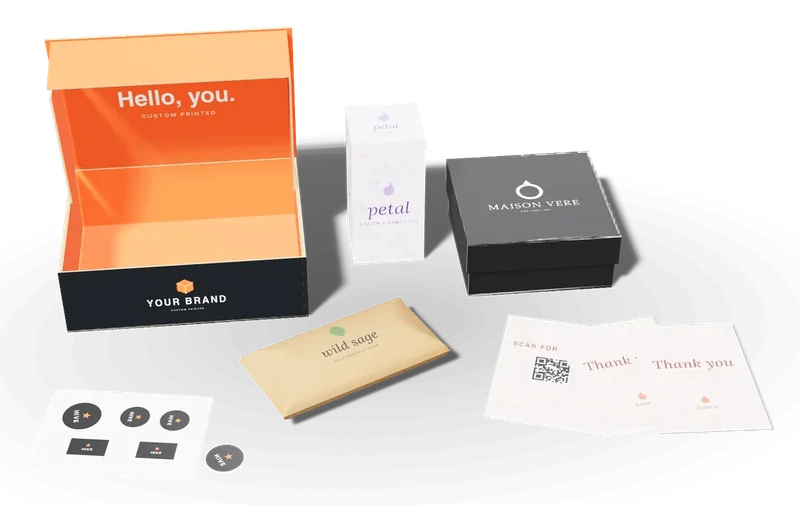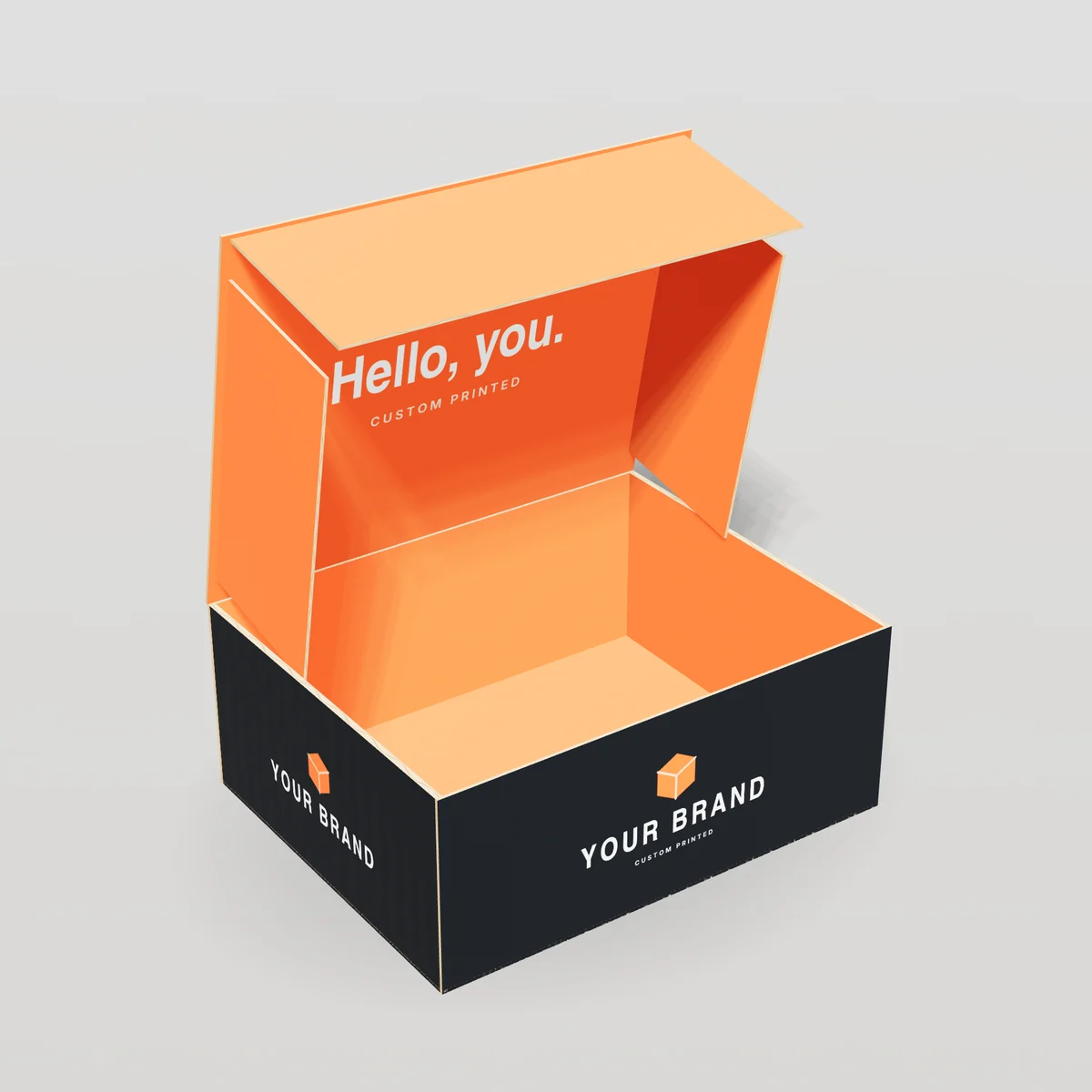
Quick answer
Right-sized mailers and shippers that cut dimensional weight and damage rates. Estimated prices start around $1.09 per unit at 10,000 units and $3.76 at 100 units for a 10×8×4" box. Typical turnaround is 10–14 business days after proof approval.
E-commerce Boxes: price breaks
How the estimated unit price of a 10×8×4" mailer box in E-flute corrugated, white changes with quantity. Setup costs are spread over more boxes as the run gets longer, so the per-box price drops sharply in the first few tiers.
| Quantity | Est. unit price | Est. total | Saving vs. first tier |
|---|---|---|---|
| 100 | $3.76 | $376 | — |
| 250 | $2.34 | $584 | −38% |
| 500 | $1.80 | $902 | −52% |
| 1,000 | $1.50 | $1,497 | −60% |
| 2,500 | $1.27 | $3,164 | −66% |
| 5,000 | $1.16 | $5,796 | −69% |
| 10,000 | $1.09 | $10,852 | −71% |
Estimates from our published pricing model, full-color print, no finishes, delivered to the contiguous US. Your written quote confirms the exact price. Get an exact quote →
Material options and how they affect price
Estimated unit price at 1,000 units for a 10×8×4" mailer box with full-color printing, by material. Material choice changes look, strength and recyclability as well as cost.
| Material | What it’s like | Est. unit price |
|---|---|---|
| E-flute corrugated, white | E-flute corrugated (about 1/16 in) with a white liner: crisp print with real cushioning and parcel strength. | $1.50 |
| E-flute corrugated, kraft | E-flute corrugated with a natural kraft liner: thin, strong and economical, with a natural look. | $1.41 |
Printing options compared
How the print specification changes the estimated unit price of a 10×8×4" mailer box in E-flute corrugated, white. One- and two-color printing carries a small plate charge that matters less as quantities grow; full-color digital and offset printing have no plate charge in our model.
| Printing | 500 units | 1,000 units | 5,000 units |
|---|---|---|---|
| Plain (no print) | $1.37 | $1.09 | $0.81 |
| 1 color | $1.63 | $1.29 | $0.94 |
| 2 colors | $1.79 | $1.41 | $1.02 |
| Full color outside | $1.80 | $1.50 | $1.16 |
| Full color outside + inside | $2.19 | $1.86 | $1.47 |
What e-commerce packaging has to do
In a store, packaging sells from the shelf. In e-commerce, the customer has already bought before they see the box. That changes the job: e-commerce packaging must arrive intact, cost as little as possible to ship, create a memorable first touch with the brand and make returns easy. It also has to be fast to pack, because fulfillment labor is one of the biggest costs in online retail.
The parcel journey is rough. A package may be handled many times, dropped, stacked, tossed onto conveyors and left in rain or sun. Carriers also charge by size, so oversized boxes cost money on every order through dimensional weight.
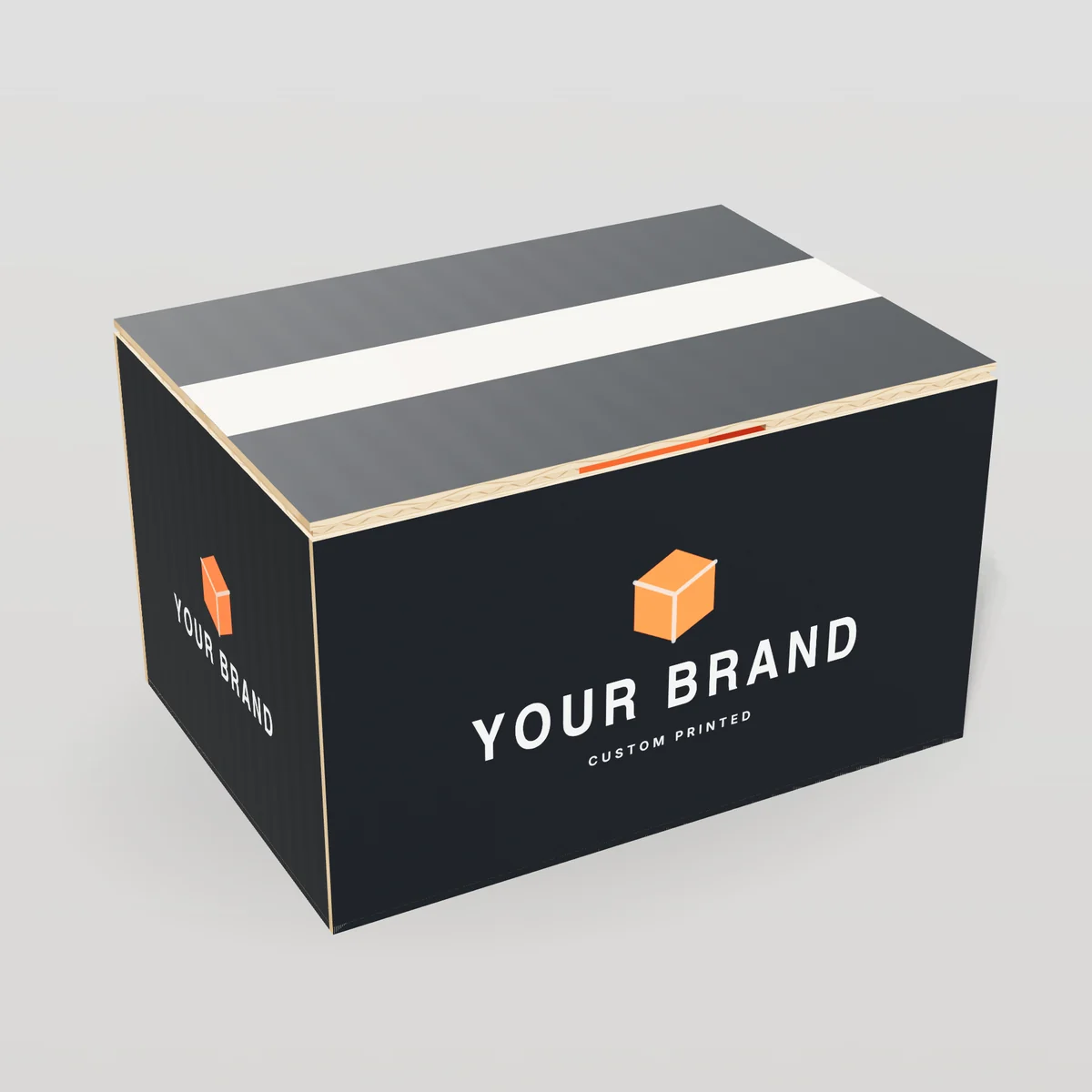
E-commerce packaging options
| Option | Best for | Strengths | Trade-offs |
|---|---|---|---|
| Printed mailer box | DTC brands, gifts, premium products | Brand experience, protection, no tape | Higher cost than plain boxes |
| Shipping box (RSC) | Heavy items, multi-item orders | Strong, economical | Plainer unboxing |
| Poly mailer | Apparel, soft goods | Lightest, cheapest to ship | Little protection |
| Padded mailer | Small items, books | Light, some cushioning | Limited branding |
| Box-in-box | Fragile or high-value goods | Maximum protection | More material |
Most brands use two or three formats to cover their order profile.
Protection: getting products there safely
Right-size first
The biggest cause of damage is empty space. Products that can move build momentum and break. A right-sized box reduces damage, void fill and dimensional weight at the same time.
Board and structure
- E-flute mailers for most consumer goods under about 10 lb
- B-flute or C-flute for heavier items
- Double-wall for heavy or fragile goods
- Inserts to immobilize products
Cushioning
Paper void fill, molded pulp, corrugated inserts and air pillows each have a place. Paper-based options keep the package recyclable in one stream.
Testing
Run a simple drop test inspired by ISTA procedures before a launch: pack a real order and drop it from about 30 inches onto faces, edges and corners. Our e-commerce packaging guide walks through it.
Shipping costs and dimensional weight
UPS and FedEx bill the greater of actual weight and dimensional weight (length × width × height ÷ 139 for daily rates in inches and pounds). USPS applies dimensional weight to larger packages. For light products, box size often matters more than weight. Use the DIM Weight Calculator and Box Size Finder to find your best sizes.
Tip: Analyze your last few hundred orders by item combination. Three or four well-chosen box sizes usually cover most orders efficiently.
Branding the unboxing on a budget
You do not need luxury finishes to impress. In order of cost-effectiveness:
- Inside print on the mailer
- Branded tissue and a sticker seal
- A thank-you card with a QR code or offer
- One- or two-color outside print on kraft
- Full-color outside print on white board
See our unboxing design guide.
Marketplaces and 3PLs
- Amazon: sellers must meet Amazon's packaging and prep requirements, which cover box strength, size limits, labeling and product-specific prep. Check the current requirements in Seller Central.
- 3PLs: many warehouses have size and labeling preferences; share them with us when you request a quote.
- Ship-in-own-container (SIOC): some marketplaces encourage products that ship in their own packaging without an overbox; mailers designed for this can save material.
Returns
Easy returns build trust. Options:
- Mailers with a second adhesive strip for resealing
- Poly mailers with two peel strips
- A returns card with clear steps and a QR code
Costs
The table at the top of this page shows estimates for a 10 × 8 × 4 in mailer. A plain kraft RSC of a similar size compares like this:
| Quantity | Est. unit price | Est. total | Saving vs. first tier |
|---|---|---|---|
| 100 | $3.20 | $320 | — |
| 250 | $1.66 | $415 | −48% |
| 500 | $1.12 | $559 | −65% |
| 1,000 | $0.83 | $829 | −74% |
| 2,500 | $0.63 | $1,586 | −80% |
| 5,000 | $0.56 | $2,781 | −82% |
| 10,000 | $0.51 | $5,077 | −84% |
Estimates from our published pricing model, full-color print, no finishes, delivered to the contiguous US. Your written quote confirms the exact price. Get an exact quote →
Sustainability
E-commerce packaging is visible waste to customers. Reduce it with right-sizing, recyclable corrugated and paper tape, paper void fill, and clear disposal instructions. Follow the FTC Green Guides for claims; see our sustainable packaging guide.
Launch checklist
- Order profile (items, weights, combinations)
- Two to four box sizes
- Board grades and inserts
- Branding level (inside print, tissue, cards)
- Marketplace and 3PL requirements
- Returns approach
- Quantities and target date
Packaging by budget: starter, growing, premium
| Tier | Typical spec | Best for |
|---|---|---|
| Starter | Plain kraft RSC shipping boxes + branded tape + paper fill | New stores, mixed product catalogs |
| Growing | Printed E-flute mailers (one or two colors), right-sized sizes, paper inserts | Brands with repeat order profiles |
| Premium | Full-color mailers printed inside and out, tissue, cards and fitted inserts | DTC brands where unboxing drives loyalty |
Matching packaging to your order profile
Not all e-commerce stores are alike. Look at your orders:
| Order profile | Packaging approach |
|---|---|
| One product, consistent size | One custom mailer size with a fitted insert |
| A few product combinations | Three to five right-sized mailers or RSCs |
| Highly variable orders | A small set of RSC sizes plus paper fill |
| Soft goods (apparel) | Poly or paper mailers for most orders; boxes for gifts |
| Fragile goods | Box-in-box or suspension inserts with drop testing |
| Heavy goods | C-flute 44 ECT or double-wall RSCs |
The cost of damage
Damaged orders are expensive: the replacement product, a second shipment, customer service time and, often, a lost customer. Packaging that costs slightly more but halves damage usually pays for itself. Track your damage rate (damaged orders ÷ total orders) by product and packaging, and test changes with real shipments.
Packing station efficiency
Packaging affects how fast orders go out:
- Self-locking mailers need no tape.
- Fitted inserts remove the need to measure void fill.
- Fewer box sizes simplify picking the right box.
- Pre-folded or auto-bottom formats save seconds per order.
- Water-activated tape dispensers with preset lengths speed taping.
Time a few orders at your packing station before and after changes.
Branding outside vs. inside
Some brands prefer discreet exteriors (plain or one-color outside) to reduce porch theft and keep costs down, and put the brand experience inside the box. Others want the box to be recognized on the doorstep. Both work; choose based on your product value, customers and brand style.
Worked example: a home fragrance store
An online store sells candles, diffusers and room sprays.
- Sizes: three printed mailers covering single items, pairs and bundles.
- Board: E-flute 32 ECT, white outside and kraft inside.
- Inserts: corrugated inserts for each size holding glass upright.
- Branding: one-color logo outside, full-color pattern inside.
- Result: fewer breakages, faster packing and a consistent unboxing.
Common e-commerce packaging mistakes
- One huge box size for everything, raising DIM weight and damage.
- No drop testing.
- Plastic void fill in a box that claims to be eco-friendly.
- Too many box sizes, complicating packing and inventory.
- Ignoring returns.
A buyer's guide to e-commerce packaging
Start with your order data. Export a few months of orders and group them by what ships together. Most stores discover that a handful of combinations make up most orders. Design packaging for those first: a right-sized box or mailer for each common combination, plus a general-purpose size for the rest.
Protect before you decorate. The parcel network drops, stacks, vibrates and sometimes soaks packages. The cheapest packaging is the one that prevents damage, because every broken product costs a replacement, a second shipment and a customer's trust. Choose board by weight, immobilize products with inserts or paper fill, and drop-test packed orders.
Watch dimensional weight. Carriers bill by size as well as weight. A box an inch too large on each side can add billable pounds to every order. Right-sizing is often the single biggest packaging saving in e-commerce, and it reduces material and void fill at the same time.
Brand where it counts. The most cost-effective branding is often inside: one-color interior print, tissue sealed with a sticker and a thank-you card. Outside branding can be simple, especially if porch theft or discretion is a concern.
Make packing fast. Self-locking mailers, fitted inserts and fewer box sizes reduce packing time per order, which matters as volume grows.
Plan returns. Packaging that customers can reuse for returns, with clear instructions, reduces friction and cost.
Check marketplace and 3PL rules. Amazon and fulfillment partners have packaging requirements that change over time. Confirm the current rules before ordering.
Ordering timeline for a new packaging system
| Step | Typical time |
|---|---|
| Order data analysis and size plan | 1–3 days |
| Quotes for each size | Within 1 business day |
| Plain structural samples for testing | About 5–7 business days |
| Drop tests and adjustments | 1 week |
| Production | 10–14 business days |
| Delivery to you or your 3PL | 3–7 business days |
Terms to know
- DIM weight: a billable weight calculated from package volume.
- Void fill: material that fills empty space in a box.
- 3PL: a third-party logistics provider that stores and ships your products.
- SIOC: ships in own container; packaging strong enough to ship without an overbox.
- Box-in-box: a product box inside a shipping box, for fragile or high-value items.
E-commerce packaging in one paragraph
Good e-commerce packaging gets products to customers intact at the lowest total cost, while making the unboxing feel like your brand. Analyze your orders, choose a small set of right-sized boxes and mailers, protect products with inserts or paper fill, test with drops, brand inside where it counts, make packing fast and plan for returns.
Packaging ideas by product type
| Product type | Packaging idea |
|---|---|
| Apparel | Poly or paper mailer; mailer box for premium |
| Cosmetics and skincare | Printed mailer with paperboard insert |
| Candles and glass | Mailer with corrugated insert; drop-tested |
| Books and prints | Book wrap or rigid mailer; tube for posters |
| Electronics | Box-in-box or suspension insert |
| Home goods | RSC with paper void fill or molded pulp |
| Food | Insulated shipper for perishables; mailer for shelf-stable goods |
| Subscriptions | Consistent printed mailer, changing inserts |
Packaging and the customer experience
E-commerce packaging is the only physical moment in an otherwise digital relationship. Customers judge the brand by how the box arrives: is it the right size, intact, easy to open, and does it feel like the brand they bought from? A box that arrives crushed or oversized, filled with plastic air pillows, can undermine a premium product. A right-sized, well-protected, branded box makes the purchase feel considered and increases the chance customers share it.
That does not require expensive packaging. Many of the most loved DTC unboxings use simple kraft mailers with a printed interior, tissue and a card. The key is consistency and care.
Questions to answer before ordering
- What are your most common order combinations?
- What is the heaviest and most fragile order?
- Who packs orders: your team or a 3PL?
- What do you want customers to feel when they open the box?
- How do customers return items?
Second example: a ceramics studio shipping fragile goods
- Inner: each mug wrapped in honeycomb paper and placed in a corrugated cradle.
- Outer: a C-flute RSC with 2 in clearance on all sides.
- Testing: packed orders drop-tested; cradle redesigned once.
- Branding: kraft box with a one-color logo and printed "Fragile" icons.
- Inside: a care card and a thank-you note.
Photographing e-commerce packaging
Show what customers receive: the box on a doorstep, the opened box with tissue and card, and the product in use. Honest images set expectations and reduce returns.
Mailer, poly or RSC: a quick decision guide
- Soft, unbreakable item? Poly or paper mailer.
- Branded product under about 10 lb? Printed mailer box.
- Heavy, bulky or mixed orders? RSC shipping box.
- Fragile or high value? Box-in-box or suspension insert.
- Retail carton already? Ship it inside a mailer or RSC.
How to brief a designer for e-commerce packaging
Give your designer, or our team, these details before work starts:
- Top order combinations and their packed dimensions
- Heaviest and most fragile products
- Brand assets: logo, colors, interior message
- Packing method: in-house or 3PL, by hand or machine
- Return process and how packaging supports it
- Budget per order for packaging and shipping
A clear brief usually saves at least one round of revisions and avoids surprises at the proof stage.
Sustainability checklist for e-commerce
- [ ] Right-sized boxes for top orders
- [ ] Paper void fill instead of plastic air pillows
- [ ] Paper tape or self-locking mailers
- [ ] Returns-ready closures where useful
- [ ] Recycling instructions printed inside
How e-commerce packaging grows with your brand
First 100–500 units. Start with plain kraft shipping boxes, branded tape and a printed card, or a small run of printed mailers in your most common size.
500–2,500 units. Introduce right-sized printed mailers for your top order combinations, interior print and fitted inserts.
2,500 units and up. Optimize sizes with order data, consider a 3PL, move to larger runs at lower unit prices and track damage and packing time.
Recommended finishes for e-commerce packaging
Shipping packaging takes abuse, so practical finishes matter most: aqueous coatings protect printed mailers, and dark designs benefit from matte lamination to resist scuffs. Inside print is usually a better investment than outside finishes for e-commerce, because customers see the inside at the moment of opening. Save foil and embossing for premium, gift or VIP orders.
Three things to get right with e-commerce boxes
- Size. Right-size boxes to reduce damage, void fill and dimensional weight.
- Protection. Immobilize products and test with drops.
- The inside. Put the brand experience where customers look when they open the box.
Related guides
 GuideE-commerce shipping packagingHow to package e-commerce orders so they arrive intact: board strength, void fill, inserts, drop testing, Amazon FBA prep and branded unboxing on a budget.
 GuideBox sizing & DIM weightHow to measure inside vs outside box size, choose clearances, calculate UPS, FedEx and USPS dimensional weight, and right-size boxes to cut shipping costs.
 GuideUnboxing & brand designHow to design packaging that sells and gets shared: brand hierarchy, color, typography, the unboxing sequence, inserts and low-cost upgrades that matter.
 GuideHow much custom packaging costsRealistic 2026 price ranges for custom mailer, shipping, carton, rigid and pouch packaging, what drives cost, and proven ways to lower your unit price.
What finishes and add-ons cost
Estimated extra cost per unit at 1,000 units when you add one finish to a 10×8×4" mailer box (base estimate $1.50). One-time tooling such as foil and embossing dies is already spread across the run in the per-unit figure and listed separately for reference.
| Finish | What it does | Adds per unit | One-time setup |
|---|---|---|---|
| Matte lamination | A thin film with a smooth, low-glare finish that protects print from scuffs. | +$0.10 | — |
| Soft-touch | A velvety, premium coating that invites customers to hold the box. | +$0.19 | — |
| Spot UV | Clear glossy varnish on selected areas for a sleek contrast against matte. | +$0.21 | $80.00 |
| Foil stamping | Gold, silver, rose gold or holographic foil for logos and accents. | +$0.27 | $120 |
| Embossing / debossing | Raised or recessed logo detail you can feel with your fingertips. | +$0.25 | $120 |
| Window | A die-cut window with clear film so the product sells itself. | +$0.14 | $60.00 |
| Custom insert | Paperboard, corrugated or foam inserts that hold products in place. | +$0.27 | $80.00 |
Estimated prices for recommended e-commerce boxes styles
Unit price estimates from our published pricing model for each recommended style at its most popular size with full-color print, delivered within the contiguous US. Use them as a budget starting point; your quote confirms exact prices for your size and options.
| Style | Typical board | 500 units | 1,000 units | 5,000 units |
|---|---|---|---|---|
| Mailer Boxes9 × 6 × 3" | E-flute corrugated, white | $1.33 | $1.06 | $0.78 |
| Shipping Boxes12 × 10 × 6" | C-flute corrugated, kraft (32 ECT) | $1.58 | $1.31 | $1.01 |
A dash means the quantity is below that style’s minimum order.
Popular mailer boxes sizes for e-commerce boxes
Mailer Boxes are the most common starting point for e-commerce boxes. Estimated unit prices for popular sizes with full-color print on e-flute corrugated, white, delivered within the contiguous US:
| Inside size | Typical use | 500 units | 1,000 units | Quote |
|---|---|---|---|---|
| 6 × 4 × 2" | Serums, candles, soaps, single small products | $0.91 | $0.67 | Quote |
| 8 × 6 × 2" | Gift sets, apparel accessories, small electronics | $1.07 | $0.82 | Quote |
| 9 × 6 × 3" | T-shirts, subscription kits, books, multi-item orders | $1.33 | $1.06 | Quote |
| 10 × 8 × 4" | T-shirts, subscription kits, books, multi-item orders | $1.80 | $1.50 | Quote |
| 12 × 9 × 4" | Shoes, hoodies, bundles, home goods | $1.99 | $1.67 | Quote |
| 14 × 10 × 4" | Shoes, hoodies, bundles, home goods | $2.19 | $1.85 | Quote |
| 16 × 12 × 6" | Bulk orders, small appliances, wholesale packs | $3.37 | $2.94 | Quote |
What finishes add to e-commerce boxes
Estimated extra cost per unit at 1,000 units when you add one finish to a 9×6×3" mailer box (base estimate $1.06). Choose one hero finish rather than several.
| Finish | What it does | Adds per unit |
|---|---|---|
| Matte lamination | A thin film with a smooth, low-glare finish that protects print from scuffs. | +$0.06 |
| Soft-touch | A velvety, premium coating that invites customers to hold the box. | +$0.12 |
| Spot UV | Clear glossy varnish on selected areas for a sleek contrast against matte. | +$0.17 |
| Foil stamping | Gold, silver, rose gold or holographic foil for logos and accents. | +$0.24 |
| Embossing / debossing | Raised or recessed logo detail you can feel with your fingertips. | +$0.23 |
| Window | A die-cut window with clear film so the product sells itself. | +$0.14 |
| Custom insert | Paperboard, corrugated or foam inserts that hold products in place. | +$0.25 |
Learn about these materials
Best box styles for e-commerce boxes
Box StylesMailer BoxesSelf-locking corrugated mailers printed inside and out. The go-to box for DTC brands and subscriptions.
Box StylesShipping BoxesPrinted corrugated regular slotted cartons (RSC) for e-commerce, wholesale and freight.
 AccessoriesCustom Poly MailersPrinted, tear-resistant mailer bags with self-seal strips, in recycled options.
 Finishes & Add-onsCustom InsertsDie-cut paperboard, corrugated, EVA foam and molded pulp inserts that lock products in place.
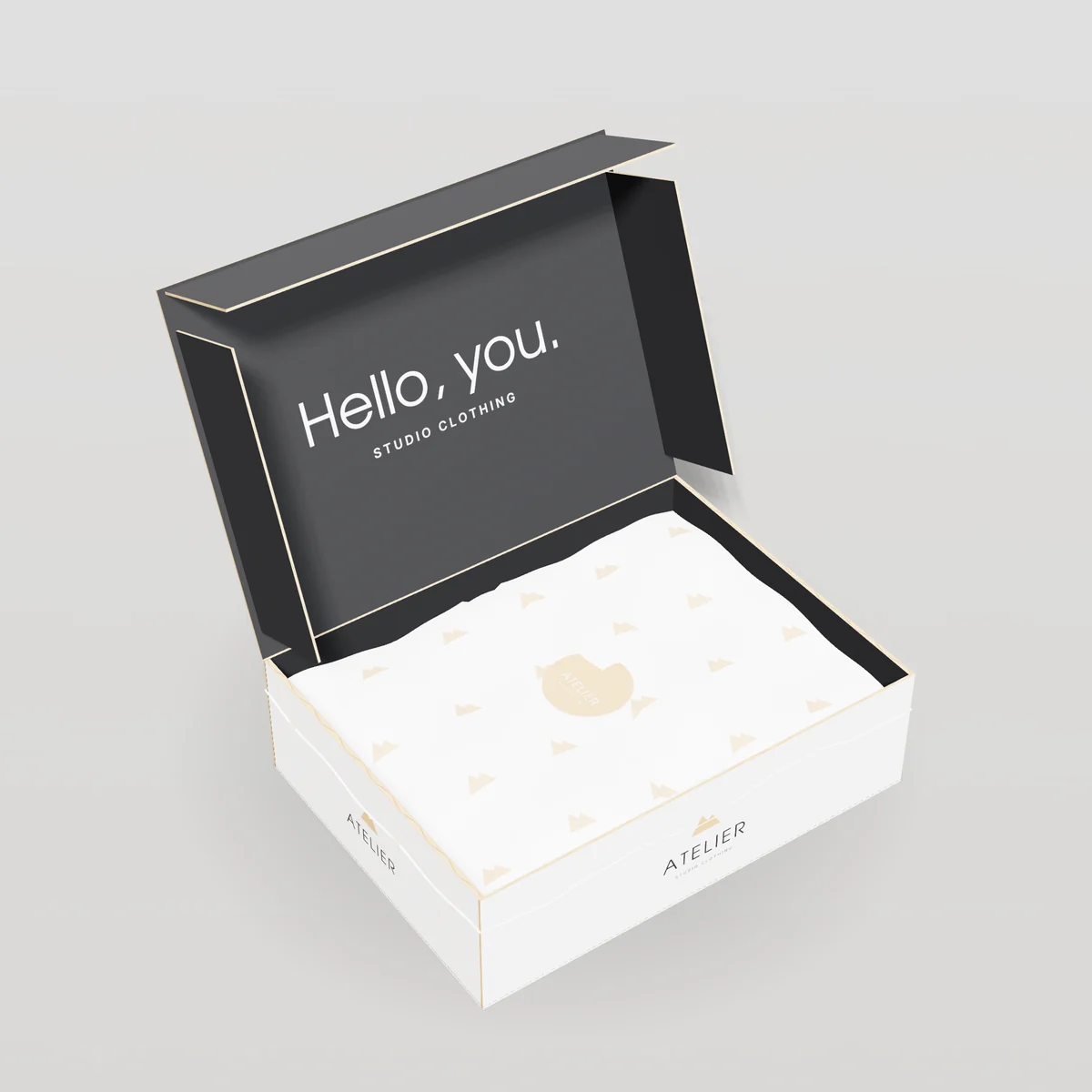 AccessoriesCustom Tissue PaperBranded tissue paper (17gsm) printed with your logo in one or two colors.
How to order e-commerce boxes
- 1Request a quote
Tell us the style, size, quantity and artwork you have. Use the form or the live estimator.
- 2Free design & dieline
We send a dieline for your exact size, check your artwork and help with layout at no charge.
- 3Approve your proof
Review a digital 3D proof (and an optional physical sample) before anything is printed.
- 4Production & QC
Your boxes are printed, finished, die-cut and inspected against the approved proof.
- 5Delivered to your door
Shipped flat-packed with tracking to any address in the contiguous US.
Key terms on this page
- Dimensional weight (DIM weight)
- A billing method used by carriers that charges by package volume when it is higher than actual weight. Calculated as L × W × H divided by a divisor.
- Mailer box
- A self-locking corrugated box with a hinged lid and tuck front, widely used for e-commerce and subscriptions.
- Regular slotted container (RSC)
- The standard corrugated shipping box with four top and four bottom flaps of equal depth (FEFCO 0201).
- Poly mailer
- A lightweight plastic shipping envelope used mainly for apparel and soft goods.
- Cushioning
- Materials that absorb shock and vibration to protect products, such as paper void fill, molded pulp, foam or air pillows.
- Void fill
- Material that fills empty space in a shipping box to stop products moving, such as crinkle paper or air pillows.
- Board
- A general term for thick paper materials used in packaging, including paperboard, corrugated board and greyboard.
- E-flute
- A thin corrugated flute about 1/16 inch thick. It prints sharply and folds crisply, making it the standard for mailer boxes.
- B-flute
- A corrugated flute about 1/8 inch thick. It offers good crush resistance and printability and is used for shipping boxes, heavier mailers and die-cut shippers.
- C-flute
- A corrugated flute about 5/32 inch thick and the most common flute for standard shipping cartons, balancing cushioning, stacking strength and cost.
- Double-wall
- Corrugated board with two fluted layers, stronger than single-wall board.
- Molded pulp
- Packaging formed from wet paper fiber in molds and dried, used for protective inserts and trays. Plastic-free and recyclable.
- Drop test
- A test where packed boxes are dropped from set heights onto faces, edges and corners to check product protection.
- ISTA
- The International Safe Transit Association, which publishes standard test procedures for package performance during shipping.
- Kraft
- Paper or board made from unbleached wood pulp, naturally brown and strong.
- ECT (edge crush test)
- A test measuring how much force corrugated board can take on its edge before crushing, in pounds per inch. It predicts stacking strength.
- Right-sizing
- Designing packaging to fit products closely, reducing material, void fill and shipping costs.
- Proof
- A preview of the final package (digital PDF, 3D render or physical sample) that the customer approves before production.
- Insert
- A component inside a box that holds products in place, such as die-cut paperboard, corrugated, foam or molded pulp.
- Water-activated tape
- Paper tape with an adhesive activated by water that bonds into box fibers, secure and recyclable with the box.
- Paperboard
- Thick paper (usually 0.010 inch or more) used for folding cartons, such as SBS, kraft and recycled board.
- Wrap
- The printed or specialty paper glued around the board of a rigid box or tube.
- Shipper
- A box used to ship products, often corrugated.
- Carton
- A box made from paperboard, usually a folding carton. In shipping, "carton" can also mean a corrugated case.
- Lamination
- Bonding a thin film (matte, gloss or soft-touch) or paper to board for protection and finish.
- Embossing
- Raising part of the board surface into a relief using matched dies, often combined with foil or ink.
More definitions in our packaging glossary.
Customer reviews
Reviews come only from verified customers. Ordered e-commerce boxes from us? Share your experience.
Discussed on Quora & X
E-commerce Boxes FAQ
What is the best packaging for e-commerce?
Printed E-flute mailer boxes give the best mix of protection and branding for most DTC products. Use shipping boxes for heavy items and poly mailers for soft goods.
How can I reduce shipping costs?
Right-size your boxes to reduce dimensional weight, standardize a few sizes and avoid excess void fill.
What is the minimum order for e-commerce boxes?
Our minimum is 100 units for mailers and shipping boxes.
How do I stop products breaking in transit?
Use a snug box, inserts or paper cushioning, the right board grade, and test with drop tests before launch.
Do you make Amazon-ready boxes?
We can size and specify boxes to meet the requirements you share from Amazon or your 3PL.
What is the best box for e-commerce?
For most direct-to-consumer brands, a right-sized printed E-flute mailer box. For heavy or varied orders, RSC shipping boxes.
How do I reduce shipping costs with packaging?
Right-size boxes to reduce dimensional weight, use lighter board where it performs and use poly or paper mailers for soft goods.
How many box sizes does an online store need?
Most stores do well with three to five sizes based on their most common order combinations.
Are mailer boxes or shipping boxes better for e-commerce?
Mailer boxes for branded DTC orders under about 10 lb; shipping boxes (RSCs) for heavy, bulky or varied orders.
How do I reduce damaged deliveries?
Right-size boxes, immobilize products, choose the right board grade and drop-test packed orders before launch.
Does custom packaging increase repeat purchases?
Packaging alone does not guarantee loyalty, but a well-presented unboxing, clear information and easy returns contribute to a better customer experience.
Can I get custom boxes in small quantities?
Yes. Most mailer and shipping box styles start at 100 units.
What is the cheapest branded shipping option?
Plain kraft boxes with custom printed tape and a sticker.
Do you supply poly mailers?
Yes. Custom printed poly mailers are available.
How do I choose a box size?
Measure your packed products, add clearance and check dimensional weight; try our Box Size Finder.
Can you deliver to my 3PL?
Yes. Provide the receiving address and requirements.
How much do custom shipping boxes cost?
Plain or one-color RSC shipping boxes are the most economical; printed mailers cost more but create a branded unboxing. The price table on this page shows estimates for recommended styles at 500, 1,000 and 5,000 units.
How long does it take to get custom e-commerce boxes?
Typically 10–14 business days after proof approval, plus 3–7 business days shipping within the contiguous US.
Should I use custom sizes or stock sizes?
Custom sizes cost no more than popular sizes with us and can cut shipping costs by reducing dimensional weight.
Can I test packaging before a big order?
Yes. Order plain structural samples, pack real orders and run drop tests.
Do you offer free design help for shipping boxes?
Yes. Every quote includes a free dieline for your exact size, an artwork check, and a digital proof with a 3D preview. Our designers can also lay out artwork from your logo, brand colors and ideas, so you do not need a packaging designer to get started.
Can I see a 3D preview of my shipping boxes before ordering?
Yes. You can try styles and colors yourself in the free 3D Box Builder, and every quote includes a 3D preview made from your real artwork before anything is printed.
Where do you deliver shipping boxes?
We deliver to business and residential addresses across the contiguous United States with tracking, usually within 3–7 business days after production. Alaska, Hawaii and expedited freight are quoted separately.
What if my shipping boxes arrive with a defect?
Report it within 7 days of delivery with photos and your order number. If there is a production defect or the boxes do not match your approved proof, we reprint or refund the affected items under our reprint guarantee.