Quick answer
Fluted board for mailers and shippers: E, B, C and double-wall grades from 32 to 48 ECT. Typical turnaround is 10–14 business days after proof approval.
What is corrugated cardboard?
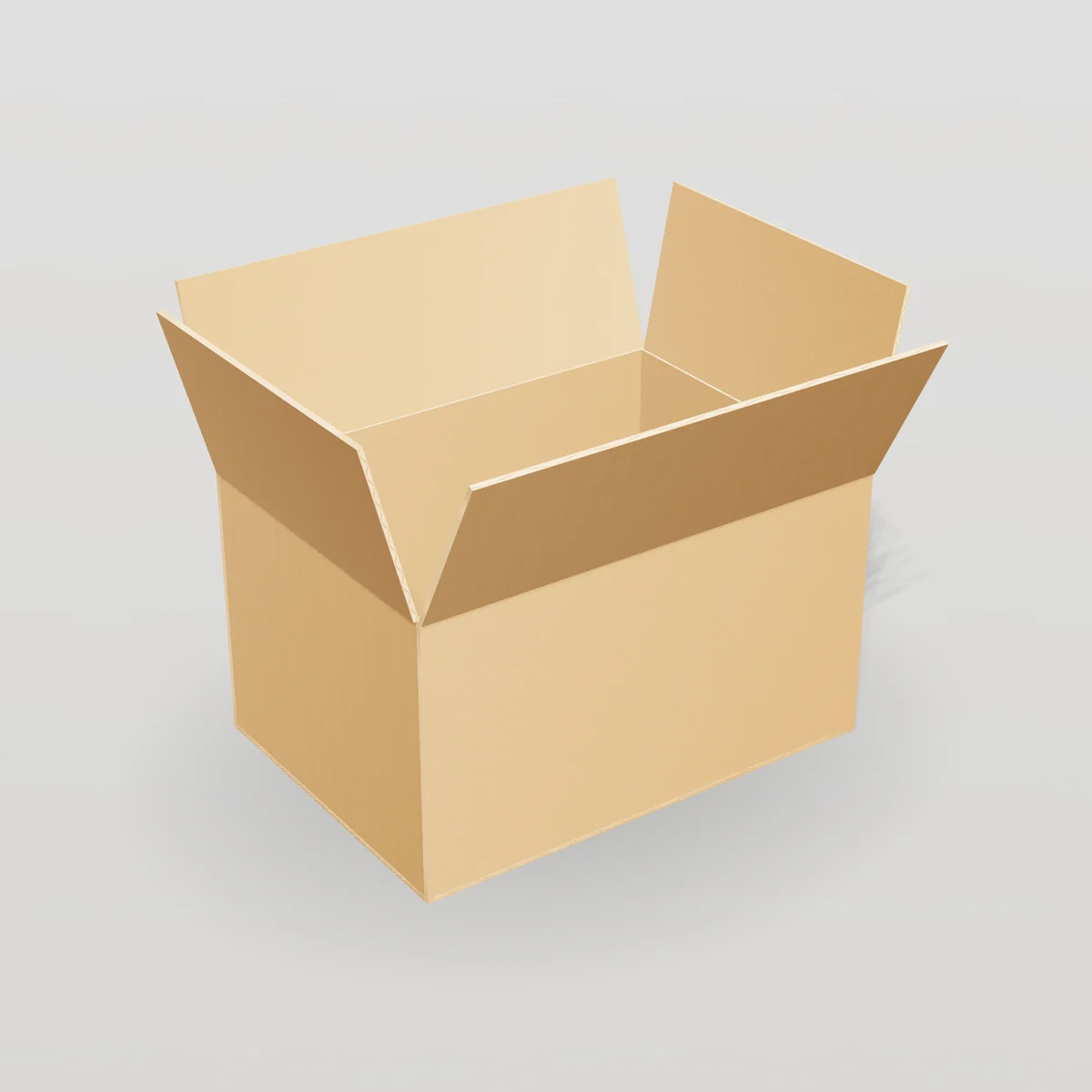
Corrugated board, which most people call cardboard, is made of a fluted (wavy) paper medium glued between flat paper liners. The arches of the flutes act like a row of tiny columns and beams, giving the board remarkable stiffness and cushioning for its weight. That combination makes corrugated the most widely used shipping material in the world, from e-commerce mailers to pallet-sized cartons.
Corrugated board is made on a machine called a corrugator. Rolls of paper are heated and steamed, the medium is pressed between fluted rollers to form the waves, starch adhesive is applied to the flute tips and liners are bonded on either side. The continuous board is then cut into sheets, printed and converted into boxes.
Board constructions
| Construction | Layers | Thickness (approx.) | Use |
|---|---|---|---|
| Single-face | 1 liner + 1 medium | 1/16–1/8 in | Wrapping, cushioning rolls |
| Single-wall | 2 liners + 1 medium | 1/16–3/16 in | Most mailers and shipping boxes |
| Double-wall | 3 liners + 2 mediums | about 1/4 in | Heavy, fragile or stacked loads |
| Triple-wall | 4 liners + 3 mediums | about 3/8 in | Industrial and bulk shipping |
Flute sizes
Flutes are named by letters that reflect the order in which they were introduced, not their size, which is why B is thinner than A and C.
| Flute | Thickness | Flutes per foot (approx.) | Strengths | Typical use |
|---|---|---|---|---|
| A | about 3/16 in | 33 | Best cushioning and stacking | Fragile goods (less common today) |
| B | about 1/8 in | 47 | Good crush resistance, printable | Shipping boxes, die-cuts, displays |
| C | about 5/32 in | 39 | Balance of cushioning and stacking | Standard shipping cartons |
| E | about 1/16 in | 90 | Thin, crisp folds, sharp print | Mailer boxes, retail boxes |
| F | about 1/32 in | 125 | Very thin, smooth | Premium retail and small boxes |
| BC | about 1/4 in | double-wall | High strength | Heavy cartons |
| EB | about 3/16 in | double-wall | Strength with a printable face | Heavy-duty displays and mailers |
Liners: kraft vs. white
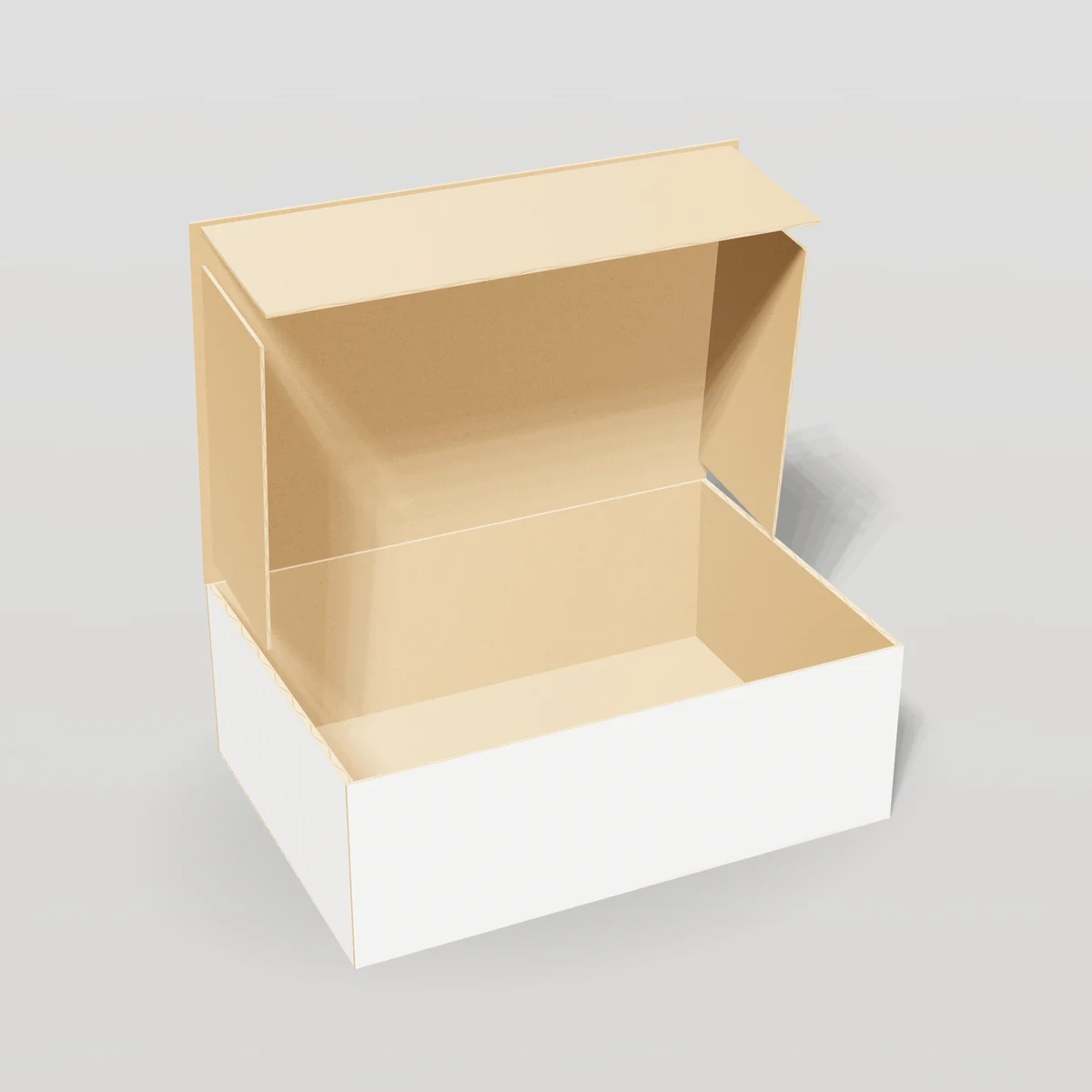
The liners determine the look and print quality:
- Kraft liner: unbleached and brown, made largely from long virgin fibers for strength (or recycled fibers in "test liners"). Economical and natural-looking; best with one or two dark inks.
- White (bleached) liner: bright white surface for full-color printing. Often called white top or mottled white (a slightly less uniform white).
- Coated white liner: a smooth coated surface for sharper printing and litho-lamination.
Inside and outside liners can differ, for example white outside and kraft inside.
Strength ratings: ECT and Mullen
Corrugated boxes in the US are typically rated by one of two tests, printed on the box maker's certificate on the bottom flap:
- Edge Crush Test (ECT): measures how much force the board withstands on its edge, in pounds per linear inch. It correlates with stacking strength. Common grades: 32 ECT (standard single-wall), 44 ECT (heavy single-wall), 48 ECT and 61 ECT (double-wall).
- Mullen (burst) test: measures the pressure needed to burst through the board face, in pounds per square inch. Common grades: 200# and 275# single-wall, 275# to 350# double-wall. It correlates with puncture resistance.
Modern distribution is dominated by stacking, so ECT-rated board has become the standard for most boxes. A box's actual compression strength also depends on its size, which you can estimate with the Box Strength Calculator.
Choosing corrugated for your box
| Need | Recommendation |
|---|---|
| Branded DTC mailer under 10 lb | E-flute, 32 ECT, white or kraft liner |
| Heavier mailer or larger box | B-flute, 32 ECT |
| Standard shipping carton | C-flute, 32 ECT kraft |
| 20–40 lb or humid storage | C-flute 44 ECT |
| Heavy, fragile, long stacking | BC double-wall 48 ECT or higher |
| Retail display | E or B flute, white liner, printed |
| Premium retail box | F or E flute with coated white liner |
Printing on corrugated
- Flexographic printing: prints directly on corrugated with water-based inks; economical for 1–3 color logos at volume. See flexographic printing.
- Digital printing: full color without plates; ideal for short runs and many designs. See digital printing.
- Litho-lamination: an offset-printed sheet laminated onto corrugated for the highest image quality.
Fine detail and small text can blur on fluted board because the surface is not perfectly flat ("washboarding"). Keep text bold and avoid hairlines, especially on B and C flute.
Moisture and storage
Corrugated board absorbs moisture from the air. In humid conditions it can lose a large share of its compression strength. Store boxes flat, off concrete floors, away from walls and in climate-controlled space where possible. For cold storage or high-humidity supply chains, ask about moisture-resistant coatings or heavier board.
Sustainability of corrugated
Corrugated is made from renewable wood fiber and typically contains a high share of recycled content. It is accepted in curbside recycling across nearly all of the US, and the industry reports high recovery rates. To keep your corrugated packaging easy to recycle:
- Use water-based inks and aqueous coatings
- Avoid unnecessary plastic laminations
- Use paper tape and paper void fill
- Right-size boxes to reduce material
Read our sustainable packaging guide for how to word recycling and recycled-content claims.
How corrugated board is specified
When a packaging engineer describes corrugated board, they use a short code that captures four things: flute, wall construction, strength grade and liner type. For example, "E-flute single-wall 32 ECT, white outside / kraft inside" tells a box maker everything they need to choose the right board. When you request a quote, giving the same four facts (or letting us recommend them) avoids the most common misunderstanding between buyers and suppliers: two quotes that look comparable but are priced on different board.
Paper weights
Each liner and medium is made from paper of a specific basis weight, measured in pounds per thousand square feet (lb/MSF). Heavier papers make stronger board.
| Component | Common basis weights | Notes |
|---|---|---|
| Liner (linerboard) | 26, 33, 35, 42, 56, 69, 90 lb/MSF | 42 lb is a very common outside liner for shipping boxes |
| Medium (fluting) | 23, 26, 33, 36 lb/MSF | Heavier medium improves crush resistance |
A typical 32 ECT single-wall board might combine two 35 lb liners with a 26 lb medium; a 44 ECT board uses heavier papers or high-performance (high-strength) liners. Board makers can reach the same ECT with different combinations, which is why buyers should specify performance (ECT or Mullen) rather than paper weights unless they have a technical reason to do otherwise.
Caliper
Caliper is the thickness of the finished board. It affects stacking strength (thicker board resists buckling), cushioning, fold quality and how much the inside dimensions differ from the outside. Approximate calipers:
| Flute | Approximate caliper |
|---|---|
| F | 0.03 in (0.8 mm) |
| E | 0.06 in (1.5 mm) |
| B | 0.12 in (3 mm) |
| C | 0.16 in (4 mm) |
| A | 0.19 in (4.8 mm) |
| EB double-wall | 0.18 in (4.5 mm) |
| BC double-wall | 0.27 in (7 mm) |
Board can be crushed slightly in printing and converting, which reduces caliper and strength. Good converting practice protects the flutes; it is one reason we prefer to match each job to the right production partner rather than forcing everything through one line.
Box maker's certificates and freight classification rules
Many brown shipping boxes carry a round stamp on the bottom flap called a box maker's certificate (BMC). It states the board grade, the maximum size and the maximum gross weight the box is designed for, and the name and location of the box maker.
The certificate comes from freight classification rules: Item 222 of the National Motor Freight Classification (for less-than-truckload freight) and the historical Rule 41 of the Uniform Freight Classification (for rail). These rules set minimum board grades for different weights and sizes when goods ship as freight in corrugated boxes. Parcel carriers such as UPS and FedEx do not require a certificate for most parcels, but the tables remain a useful reference for matching board to load.
Commonly cited single-wall pairings from these tables are:
| Burst test (Mullen) | Minimum ECT | Max gross weight (box + contents) | Max size (L + W + H) |
|---|---|---|---|
| 125 lb/in² | 23 lb/in | 20 lb | 40 in |
| 150 lb/in² | 26 lb/in | 35 lb | 60 in |
| 175 lb/in² | 29 lb/in | 50 lb | 65 in |
| 200 lb/in² | 32 lb/in | 65 lb | 75 in |
| 250 lb/in² | 40 lb/in | 80 lb | 85 in |
| 275 lb/in² | 44 lb/in | 95 lb | 95 in |
| 350 lb/in² | 55 lb/in | 120 lb | 105 in |
Note: These are maximum limits from classification rules, not a guarantee of performance. In parcel networks and long warehouse storage, real conditions (humidity, drops, stacking time) mean you should usually stay well below them. Rules and tables change; confirm current requirements with your freight carrier.
For e-commerce, our practical guidance is: 32 ECT single-wall for most parcels up to roughly 40 lb in a right-sized box, 44 ECT for heavier or humid supply chains, and double-wall for heavy, fragile or long-stacked loads.
How a corrugated box is made
Understanding the steps helps explain lead times, minimums and price differences between styles.
- Corrugating. The corrugator forms the flutes, glues the liners with starch adhesive and cuts the continuous board into sheets. Board for custom boxes is usually made to order in the grade and sheet size your job needs.
- Printing. Sheets are printed by flexo (direct print), digital inkjet, or by offset onto a paper sheet that is then laminated onto the board (litho-lamination).
- Die-cutting. A steel-rule die cuts the outline and presses crease lines. Rotary die-cutters are fast and economical for large runs; flatbed die-cutters are more precise and suit detailed mailer boxes. Simple regular slotted cartons can be made on a flexo folder-gluer without a custom die.
- Folding and gluing. Styles with a manufacturer's joint (like shipping boxes) are glued or taped into a flat tube. Mailer boxes typically ship flat and lock together without glue.
- Quality checks and bundling. Boxes are checked for print, registration, cutting and glue, then counted, bundled and palletized.
Because a die is made for each mailer design and size, mailers carry a one-time tooling cost that is spread across the run. Regular slotted cartons often need no custom die, which is one reason they are the most economical corrugated format.
Common corrugated box styles
The European FEFCO code, widely used in the US too, numbers standard corrugated designs. The most useful ones for brands:
| Style | FEFCO code | What it is | Best for |
|---|---|---|---|
| Regular slotted container (RSC) | 0201 | Four flaps top and bottom, outer flaps meet in the middle | Shipping cartons, case packs |
| Half slotted container | 0200 | RSC without top flaps | Trays with separate lids |
| Full overlap container | 0203 | Outer flaps overlap fully | Heavy items, extra protection |
| Roll end tuck front (mailer) | 0427 | One-piece die-cut with locking tuck lid | E-commerce and subscription boxes |
| Folder / book wrap | 0410-series | Wraps flat items | Books, prints, flat goods |
| Telescope box | 0300-series | Separate lid and base | Larger gift and apparel boxes |
| Die-cut display tray | Custom | Counter or shelf display | Retail merchandising |
See mailer boxes, shipping boxes and display boxes for live prices.
Corrugated vs. other packaging materials
| Property | Corrugated | Paperboard (SBS, kraft) | Rigid board |
|---|---|---|---|
| Shipping protection | High | Low (needs an outer box) | Medium |
| Print sharpness | Good (excellent with litho-lam) | Excellent | Excellent (printed wrap) |
| Weight | Light for its strength | Lightest | Heavy |
| Ships flat | Yes | Yes | Usually no |
| Relative cost | Medium | Low | High |
| Curbside recyclable | Widely | Widely | Usually, after removing magnets and non-paper parts |
The short version: use corrugated whenever the box itself travels through a carrier network, paperboard when it sits on a shelf or inside another box, and rigid board when the box is part of the product experience.
Coatings and treatments
Standard corrugated is not waterproof. Treatments can improve performance in tough environments:
- Aqueous moisture-resistant coatings: water-based barrier coatings that improve resistance to humidity and condensation while remaining repulpable in many systems.
- Wax treatments: traditional for produce, seafood and poultry. Wax-impregnated boxes are hard to recycle, so many supply chains are moving to recyclable alternatives.
- Grease-resistant treatments: for direct contact with oily foods such as pizza and baked goods.
- Varnishes and laminations on printed liners: protect print from scuffs in transit.
If your boxes will see cold storage, condensation or outdoor handling, tell us when you request a quote so we can specify the right board and treatment.
Humidity and compression strength
Corrugated board's strength depends heavily on its moisture content. As relative humidity rises, fibers absorb water and stiffness falls. Engineers commonly use the following approximate multipliers when estimating stacking strength in different conditions:
| Relative humidity | Approximate share of dry-condition strength retained |
|---|---|
| 50% | 100% (reference) |
| 60% | about 90% |
| 70% | about 80% |
| 80% | about 68% |
| 90% | about 50% |
Time under load also matters: a box that carries a load for weeks will fail at a lower load than one tested briefly in a lab. That is why the Box Strength Calculator applies retained-strength factors for storage conditions.
Specification checklist for corrugated boxes
Before you request a quote, gather:
- [ ] Inside dimensions (L × W × H) of the box
- [ ] Packed weight of the heaviest order
- [ ] How it ships: parcel, LTL freight, pallet, or retail
- [ ] How long it is stored and in what conditions (warehouse, humid, cold)
- [ ] How high boxes are stacked
- [ ] Look: kraft or white outside; printed inside?
- [ ] Print: none, 1–2 color logo, or full color
- [ ] Quantity and how often you reorder
Do not worry if you cannot answer everything. Send what you know and a packaging specialist will recommend the flute, grade and liner.
Worked example: choosing board for a candle subscription box
A brand ships two 10 oz candles in glass vessels, about 3.5 lb packed, in a 10 × 8 × 4 in mailer through UPS Ground. Boxes are stored for a month in a warehouse before use.
- Load: 3.5 lb is light, but glass is fragile.
- Board: E-flute 32 ECT handles the weight easily and gives a crisp printed exterior. B-flute would add cushioning but make the box bulkier.
- Protection: the bigger risk is the candles colliding, so a fitted paperboard insert matters more than heavier board.
- Print: white outside liner with full-color print, one-color interior message.
- Test: drop-test a packed box from about 30 inches on faces, edges and a corner before ordering at scale.
Result: E-flute 32 ECT white/kraft, printed outside and inside, with an insert. See candle boxes for more.
Common mistakes with corrugated packaging
- Ordering by outside dimensions. Custom boxes are specified by inside dimensions; the board adds thickness.
- Over-specifying board. Double-wall for a 2 lb product adds cost, weight and shipping charges without benefit.
- Under-specifying for storage. A box that survives one parcel trip may collapse after weeks at the bottom of a humid pallet stack.
- Fine print on fluted board. Hairlines and tiny text can blur on B and C flute. Use bold type or switch to E-flute or digital print.
- Forgetting the label. Leave a clean area for shipping labels on mailers and shipping boxes.
- Ignoring grain direction on large panels. Board is stiffer in one direction; box makers orient it for maximum stacking strength, which is one reason to use their production dieline.
How corrugated is recycled
Used corrugated is collected as OCC (old corrugated containers), baled and sent to paper mills. There it is pulped in water, screened to remove tape, staples and contaminants, and made into new linerboard and medium. Paper fibers can typically be recycled several times before they become too short, so the industry blends recovered and virgin fiber to maintain strength.
To help your customers recycle your boxes:
- Print a simple instruction such as "Please flatten and recycle with cardboard."
- Avoid gluing plastic inserts or foam into the box.
- Choose paper tape over plastic tape where practical.
- Keep labels and stickers small.
Printing methods on corrugated compared
| Method | How it works | Best for | Strengths | Watch-outs |
|---|---|---|---|---|
| Flexo (post-print) | Flexible plates print water-based ink directly on finished board | 1–3 color logos at higher volume | Economical per unit, fast | Plates add setup; limited fine detail on B/C flute |
| Digital inkjet | Ink jetted directly on board, no plates | Short runs, full color, many versions | No plates, photographic images, fast changes | Higher ink cost per unit at large volume |
| Pre-print | Liner printed on a roll before corrugating | Very large runs | High quality, efficient at scale | Very high minimums |
| Litho-lamination | Offset-printed paper laminated onto board | Premium retail and displays | Best image quality, coatings available | Extra step adds cost and lead time |
For most brands ordering hundreds to a few thousand printed mailers, digital gives the best mix of quality and cost. For thousands of shipping boxes with a one-color logo, flexo is usually cheapest. We choose the process for your run length and design and explain why in your quote.
What drives corrugated box prices
- Board area per box: larger boxes and styles with more flaps use more board. Mailers use more board than an RSC of the same inside size because of their double walls and tuck lid.
- Board grade: heavier papers and double-wall cost more per square foot.
- Liner: white and coated liners cost more than kraft.
- Print coverage and method: full coverage, inside printing and premium processes cost more.
- Tooling: custom dies and printing plates are one-time costs spread across your quantity.
- Quantity: the biggest lever; see the cost guide.
- Freight: corrugated is bulky even when flat; right-sizing reduces both box and freight cost.
The price table on this page shows real estimates from our pricing model for each corrugated box style.
Corrugated by industry
| Industry | Typical corrugated choice |
|---|---|
| Apparel | E-flute mailer, kraft or white, full-color or one-color print |
| Cosmetics and skincare | E-flute white mailer with insert; paperboard cartons inside |
| Food and bakery | E- or B-flute with food-safe treatment where food touches board |
| Electronics | B-flute or double-wall outer with fitted inserts |
| Subscription boxes | E-flute mailer printed inside and out |
| E-commerce shipping | C-flute RSCs in a small set of right-sized sizes |
Testing corrugated packaging
Lab tests turn "it feels strong" into numbers you can compare and repeat.
| Test | What it measures | Why it matters |
|---|---|---|
| ECT (TAPPI T 811) | Edge crush strength of the board | Predicts stacking strength |
| Mullen / burst (TAPPI T 810) | Pressure to burst the board face | Puncture and rough-handling resistance |
| BCT (TAPPI T 804, ASTM D642) | Top-to-bottom compression of a finished box | Real stacking performance of your box size |
| Flat crush | Resistance of flutes to being crushed flat | Print and converting damage, cushioning |
| ISTA procedures (e.g. 3A for parcel) | Drops, vibration and compression on a packed shipment | Whether your product arrives intact |
For most brands, a simple in-house drop test of a packed box (about 30 inches onto faces, edges and a corner) catches the majority of problems. For fragile, heavy or high-value products, a certified lab can run ISTA tests that simulate the parcel network more rigorously. Our e-commerce packaging guide explains the home test step by step.
Storing and handling your box inventory
How you store flat boxes affects how they perform:
- Store flat and square. Bundles stored on edge or under uneven loads can warp, which makes boxes harder to assemble and weaker.
- Keep off the floor. Concrete floors wick moisture; use pallets or shelving.
- Avoid heat sources and direct sun. Rapid drying can warp board and fade print.
- Use first in, first out. Older stock gets used before new deliveries.
- Keep away from exterior doors in humid or cold seasons to limit condensation.
- Plan reorders so you are not storing more than a few months of boxes; it saves space and reduces the risk of design changes leaving you with obsolete stock.
If your boxes arrive warped, tell us right away. Mild warp from transit often settles after boxes acclimate for a day or two in normal room conditions.
Corrugated in one paragraph
If you remember one thing from this page: corrugated board is fluted paper between liners, specified by flute (thickness), wall (single, double or triple), strength grade (ECT or Mullen) and liner (kraft or white). E-flute single-wall 32 ECT is the right starting point for most printed mailer boxes; C-flute 32 ECT kraft for standard shipping cartons; 44 ECT or double-wall when loads get heavy, humid or tall. Right-size the box, protect the product inside with inserts, and print with the process that suits your run length. Then test a packed box before ordering at scale.
Products made from corrugated
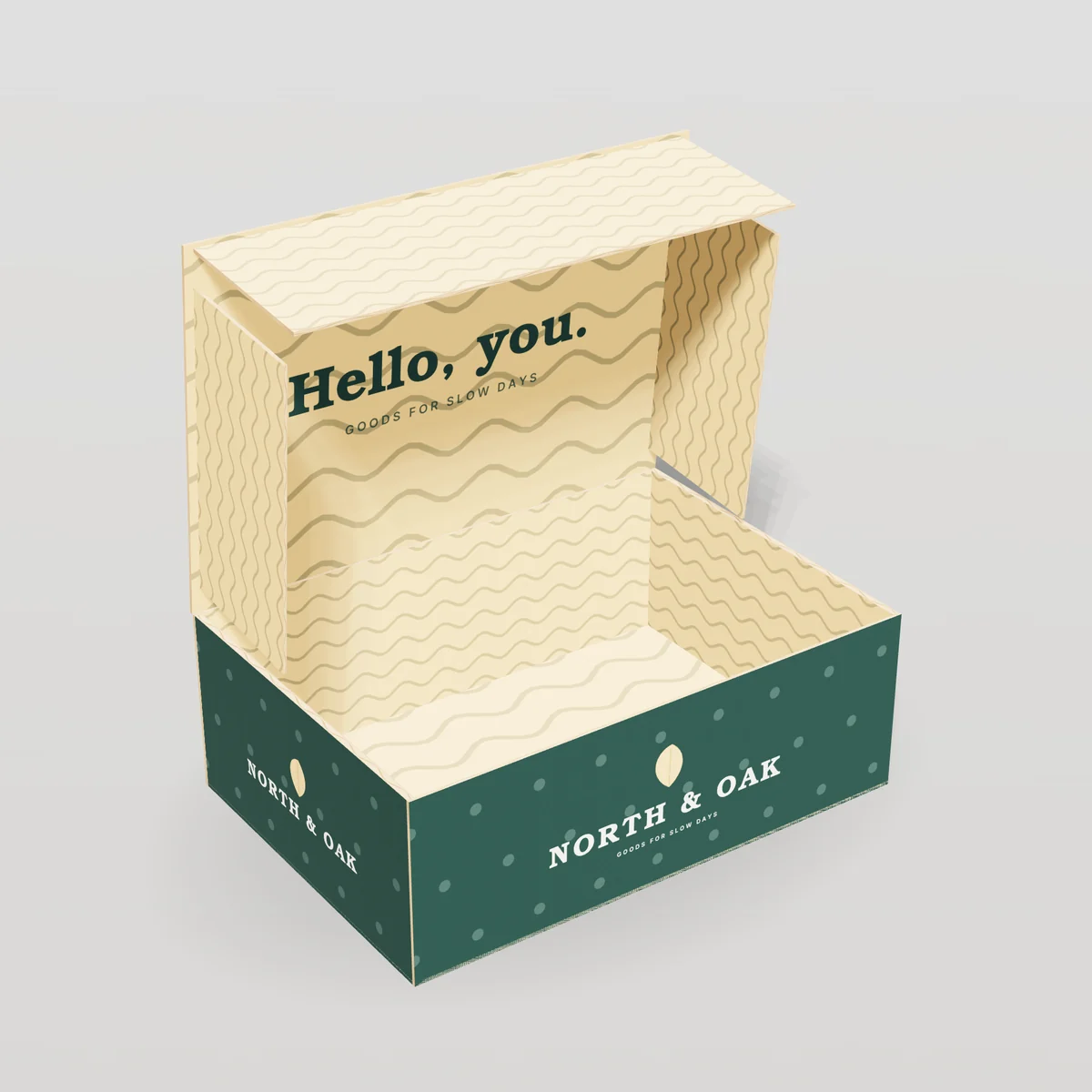 Box StylesMailer BoxesSelf-locking corrugated mailers printed inside and out. The go-to box for DTC brands and subscriptions.
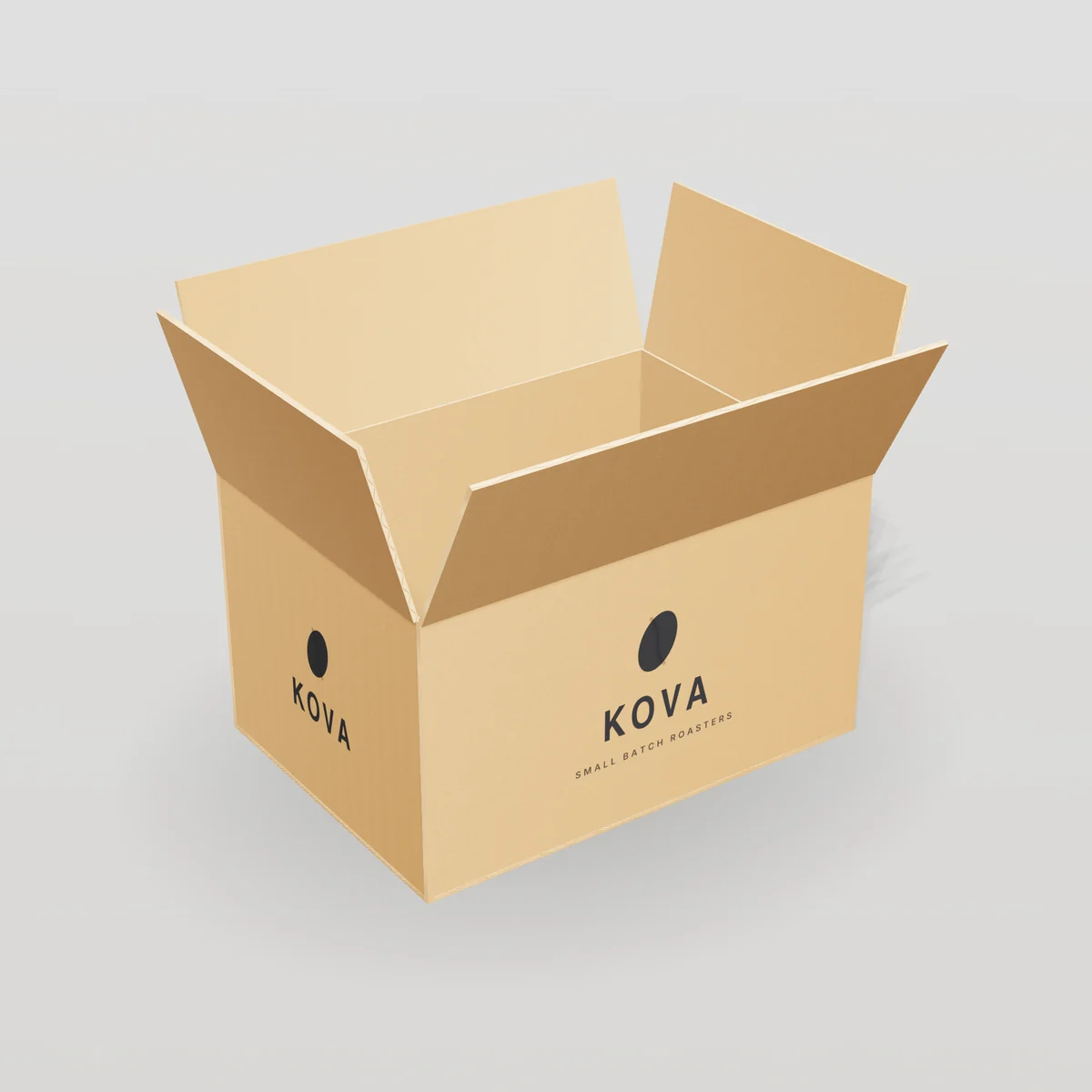 Box StylesShipping BoxesPrinted corrugated regular slotted cartons (RSC) for e-commerce, wholesale and freight.
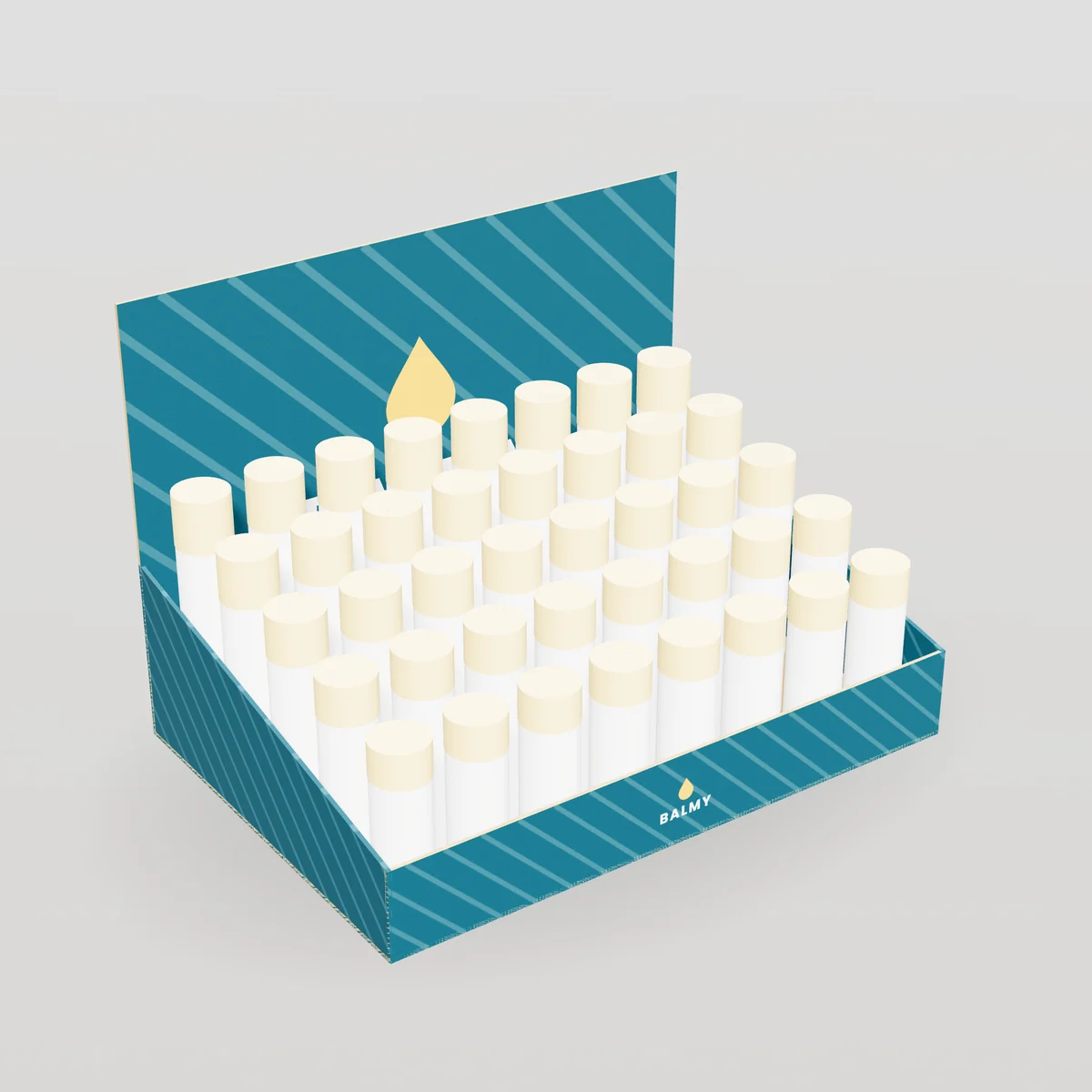 Box StylesDisplay BoxesCounter and shelf-ready displays that ship your product and sell it at the register.
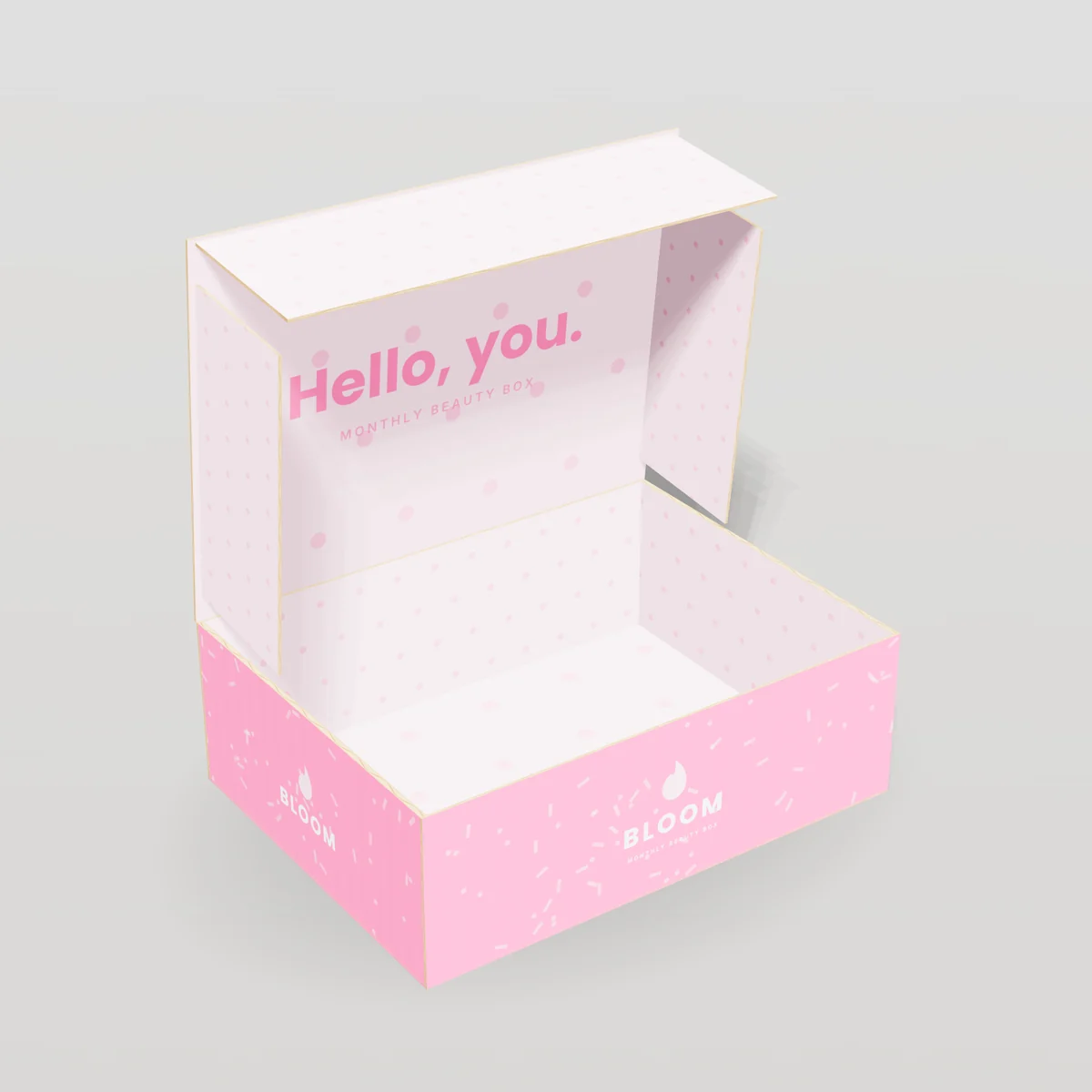 IndustriesSubscription BoxesShippable mailers with interior print that make every monthly box feel like a gift.
Wondering how corrugated differs from paperboard and chipboard? See corrugated vs cardboard explained.
Corrugated Cardboard prices by box style
Estimated unit prices for each box style we make in this material, at its most popular size with full-color print, delivered within the contiguous US. Use them to compare structures before you request a quote.
| Box style | Material grade | 500 units | 1,000 units | 5,000 units |
|---|---|---|---|---|
| Mailer Boxes9 × 6 × 3" | E-flute corrugated, white | $1.33 | $1.06 | $0.78 |
| Mailer Boxes9 × 6 × 3" | E-flute corrugated, kraft | $1.27 | $1.00 | $0.73 |
| Mailer Boxes9 × 6 × 3" | B-flute corrugated, kraft | $1.30 | $1.03 | $0.76 |
| Shipping Boxes12 × 10 × 6" | C-flute corrugated, kraft (32 ECT) | $1.58 | $1.31 | $1.01 |
| Shipping Boxes12 × 10 × 6" | C-flute 44 ECT | $1.71 | $1.43 | $1.11 |
| Shipping Boxes12 × 10 × 6" | BC double-wall (48 ECT) | $2.11 | $1.80 | $1.43 |
| Shipping Boxes12 × 10 × 6" | B-flute corrugated, kraft | $1.58 | $1.31 | $1.01 |
| Shipping Boxes12 × 10 × 6" | E-flute corrugated, kraft | $1.54 | $1.27 | $0.97 |
| Product Boxes4 × 4 × 4" | E-flute corrugated, white | $0.78 | $0.57 | $0.37 |
| Auto-Lock Bottom Boxes5 × 3 × 7" | E-flute corrugated, white | $0.86 | $0.63 | $0.41 |
| Gable Boxes6 × 4 × 5" | E-flute corrugated, kraft | $1.03 | $0.78 | $0.54 |
| Display Boxes10 × 7 × 4" | E-flute corrugated, white | $1.42 | $1.13 | $0.83 |
| Display Boxes10 × 7 × 4" | E-flute corrugated, kraft | $1.37 | $1.08 | $0.79 |
A dash means 500 units is below that style’s minimum order. Your quote confirms exact prices.
How to order corrugated cardboard
- 1Request a quote
Tell us the style, size, quantity and artwork you have. Use the form or the live estimator.
- 2Free design & dieline
We send a dieline for your exact size, check your artwork and help with layout at no charge.
- 3Approve your proof
Review a digital 3D proof (and an optional physical sample) before anything is printed.
- 4Production & QC
Your boxes are printed, finished, die-cut and inspected against the approved proof.
- 5Delivered to your door
Shipped flat-packed with tracking to any address in the contiguous US.
Key terms on this page
- Corrugated board
- Board made of a fluted (wavy) paper medium glued between flat liners. It is strong, light and the main material for shipping boxes and mailers.
- Board
- A general term for thick paper materials used in packaging, including paperboard, corrugated board and greyboard.
- Cushioning
- Materials that absorb shock and vibration to protect products, such as paper void fill, molded pulp, foam or air pillows.
- Flute
- The wavy middle layer of corrugated board. Flute size (A, B, C, E, F) determines thickness, cushioning and strength.
- E-flute
- A thin corrugated flute about 1/16 inch thick. It prints sharply and folds crisply, making it the standard for mailer boxes.
- BC double-wall
- Corrugated board with two fluted layers (B and C) and three liners. It is about 1/4 inch thick and used for heavy, fragile or long-stacked loads.
- Double-wall
- Corrugated board with two fluted layers, stronger than single-wall board.
- Liner
- The flat paper faces of corrugated board. Can be kraft (brown) or bleached (white).
- Single-wall
- Corrugated board with one fluted layer and two liners.
- Kraft
- Paper or board made from unbleached wood pulp, naturally brown and strong.
- Litho-lamination
- Printing a sheet by offset lithography and laminating it onto corrugated board for high-quality graphics on shipping and display boxes.
- ECT (edge crush test)
- A test measuring how much force corrugated board can take on its edge before crushing, in pounds per inch. It predicts stacking strength.
- Box maker's certificate
- A printed stamp on corrugated boxes stating the board construction, strength rating (ECT or Mullen), size and weight limits and the manufacturer.
- Stacking strength
- How much weight a box can carry from boxes stacked on top of it.
- Compression strength
- The ability of a box to resist being crushed from the top, which determines safe stacking height.
- BCT (box compression test)
- A lab test measuring how much top-to-bottom load a finished box can carry before it collapses. It predicts how high boxes can be stacked.
- B-flute
- A corrugated flute about 1/8 inch thick. It offers good crush resistance and printability and is used for shipping boxes, heavier mailers and die-cut shippers.
- Carton
- A box made from paperboard, usually a folding carton. In shipping, "carton" can also mean a corrugated case.
- C-flute
- A corrugated flute about 5/32 inch thick and the most common flute for standard shipping cartons, balancing cushioning, stacking strength and cost.
- Flexographic printing (flexo)
- A printing method using flexible relief plates and fast-drying inks, common on corrugated boxes, labels and flexible packaging.
- Digital printing
- Printing directly from a digital file without plates. Ideal for short runs, multiple designs and fast changes.
- Void fill
- Material that fills empty space in a shipping box to stop products moving, such as crinkle paper or air pillows.
- Basis weight
- The weight of a standard area of paper or board, used to specify liners and paperboard. Higher basis weight generally means a heavier, stronger sheet.
- Linerboard
- The flat paper used as the inner and outer faces of corrugated board.
- Caliper
- The thickness of paper or board. Paperboard caliper is usually given in points, where 1 point equals 0.001 inch.
- Inside dimensions
- The usable space inside a box, the standard way to specify custom box sizes (L × W × H).
- Die-cutting
- The process of cutting and creasing printed sheets into box shapes using a die.
- Die
- A custom tool, usually steel rule mounted in a board, used to cut and crease packaging to shape.
More definitions in our packaging glossary.
Customer reviews
Reviews come only from verified customers. Ordered corrugated cardboard from us? Share your experience.
Discussed on Quora & X
Corrugated Cardboard FAQ
What is the difference between cardboard and corrugated board?
In everyday language they are used interchangeably. In packaging, corrugated board refers specifically to fluted board with liners; "cardboard" can also refer to paperboard (like cereal boxes).
Which flute is best for mailer boxes?
E-flute is the standard for mailer boxes because it folds crisply and prints sharply. B-flute is better for heavier contents.
What does 32 ECT mean?
The board withstands 32 pounds per linear inch of edge crush force. It is the standard rating for single-wall shipping boxes.
Is corrugated cardboard recyclable?
Yes. Corrugated is one of the most widely recycled packaging materials in the US and is accepted in nearly all curbside programs.
Can you print full color on corrugated?
Yes. Digital printing and litho-lamination produce full-color graphics on corrugated board.
How do I choose between single-wall and double-wall?
Single-wall suits most shipments up to about 40 lb in well-sized boxes; double-wall is for heavier, fragile or long-stacked loads. Use our Box Strength Calculator to estimate.
What is the difference between ECT and Mullen?
ECT (edge crush test) measures stacking strength; Mullen (burst test) measures resistance to puncture and rough handling. Most modern boxes are specified by ECT because stacking is the main stress in distribution.
What is a box maker's certificate?
A stamp on the bottom flap stating the board grade, maximum gross weight and size limit the box is designed for under freight classification rules. Parcel carriers generally do not require one.
Does kraft or white corrugated cost more?
White liners usually cost slightly more than kraft. The difference is small compared with print and finishes, so choose based on the look you want.
Can corrugated boxes be used for food?
Yes, with appropriate food-contact materials and treatments where food touches the board. Tell us if packaging will contact food directly.
How long can corrugated boxes be stored?
Unused flat boxes store well for long periods in dry conditions, off the floor and away from heat and moisture. Humidity is the main enemy of strength.
What is litho-lamination?
A process where a sheet printed by offset lithography is glued onto corrugated board, combining offset print quality with corrugated strength. It is used for premium retail boxes and displays.
Which corrugated box is the cheapest?
A plain or one-color regular slotted container (RSC) in kraft C-flute, because it uses board efficiently and often needs no custom die.
Why does my mailer cost more than a shipping box of the same size?
Mailers use more board (double side walls and a tuck lid) and need a custom die. In exchange they look premium, open neatly and need no tape.