Quick answer
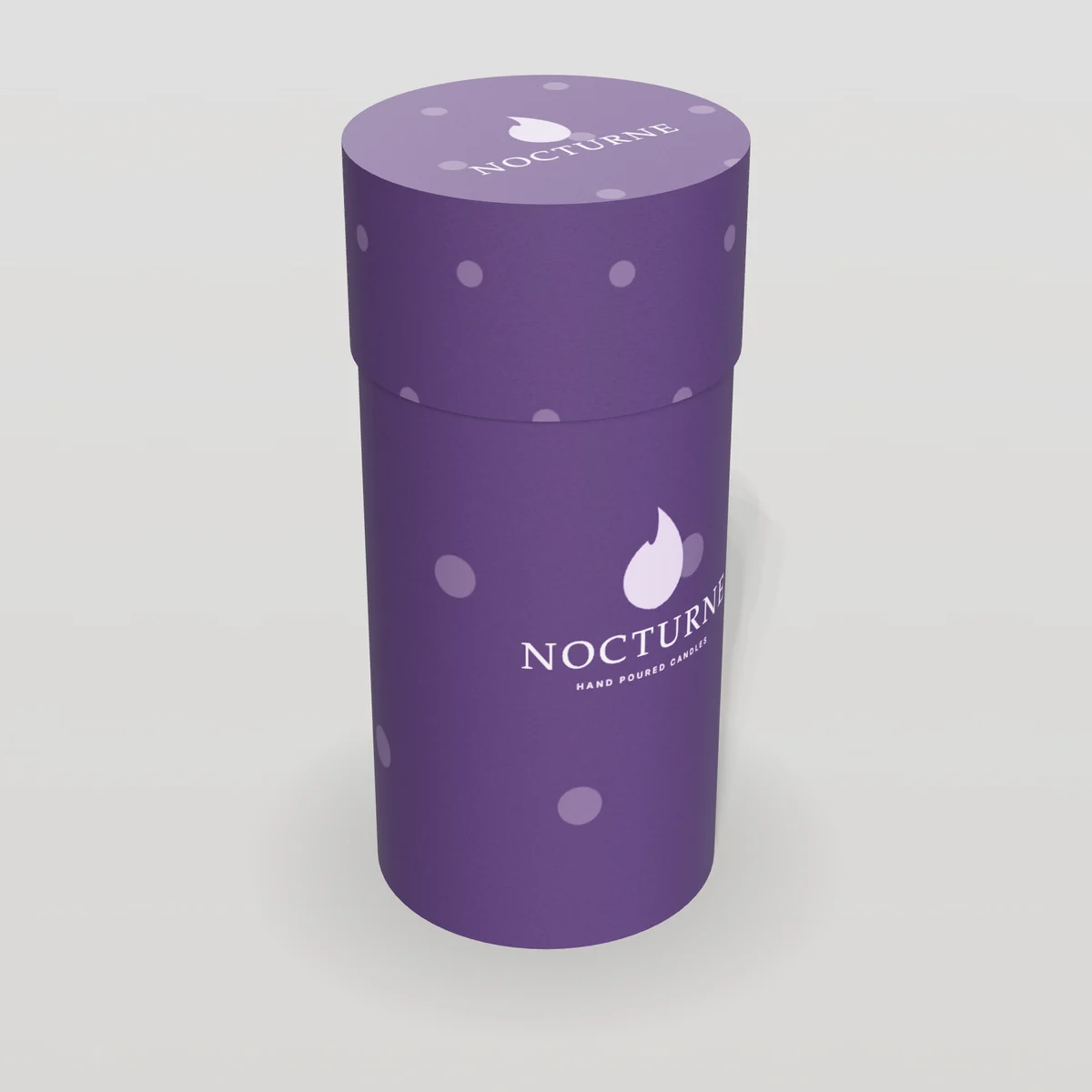
Cylindrical paperboard tubes with a lid, for candles, tea, cosmetics and apparel. Estimated prices start around $1.16 per unit at 10,000 units and $2.67 at 250 units for a 3×3×7" box. Typical turnaround is 10–14 business days after proof approval.
Tube Packaging: specifications
| Construction | Body + lid (+ optional inner neck); flat or rolled edge |
|---|---|
| Wall | 1.5–2 mm paperboard |
| Wrap | Printed paper, kraft, foil, soft-touch |
| Closures | Friction fit, shoulder/neck, metal/paper ends |
| Minimum order | 250 units |
| Turnaround | 14–18 business days after proof |
Tube Packaging: price breaks
How the estimated unit price of a 3×3×7" paper tube in Rigid greyboard + kraft wrap changes with quantity. Setup costs are spread over more boxes as the run gets longer, so the per-box price drops sharply in the first few tiers.
| Quantity | Est. unit price | Est. total | Saving vs. first tier |
|---|---|---|---|
| 250 | $2.67 | $668 | — |
| 500 | $2.01 | $1,005 | −25% |
| 1,000 | $1.64 | $1,636 | −39% |
| 2,500 | $1.36 | $3,404 | −49% |
| 5,000 | $1.24 | $6,196 | −54% |
| 10,000 | $1.16 | $11,560 | −57% |
Estimates from our published pricing model, full-color print, no finishes, delivered to the contiguous US. Your written quote confirms the exact price. Get an exact quote →
Popular sizes for tube packaging
Sizes are inside dimensions (length × width × height) in inches. Any custom size is available at no extra cost; these are simply the sizes brands order most.
| Size (L×W×H) | Typical use | Est. @ 500 | Est. @ 1,000 | Quote |
|---|---|---|---|---|
| 2 × 2 × 4" | Lip care, jewelry, single sachets, small accessories | $1.69 | $1.34 | Quote |
| 3 × 3 × 5" | Serums, candles, soaps, single small products | $1.90 | $1.53 | Quote |
| 3 × 3 × 7" | Gift sets, apparel accessories, small electronics | $2.01 | $1.64 | Quote |
| 4 × 4 × 6" | Gift sets, apparel accessories, small electronics | $2.17 | $1.78 | Quote |
| 3 × 3 × 12" | Gift sets, apparel accessories, small electronics | $2.29 | $1.89 | Quote |
Material options and how they affect price
Estimated unit price at 1,000 units for a 3×3×7" paper tube with full-color printing, by material. Material choice changes look, strength and recyclability as well as cost.
| Material | What it’s like | Est. unit price |
|---|---|---|
| Rigid greyboard + kraft wrap | Rigid greyboard wrapped in natural kraft paper: premium structure with a natural, understated finish. | $1.64 |
| Rigid greyboard + printed wrap | Thick greyboard (about 1.5–2.5 mm) wrapped in printed paper: the heavy, structured feel of luxury packaging. | $1.67 |
| SBS white paperboard (18pt) | Bright white, smooth solid bleached sulfate board. Sharpest print and the best base for foil, spot UV and embossing. | $1.21 |
Printing options compared
How the print specification changes the estimated unit price of a 3×3×7" paper tube in Rigid greyboard + kraft wrap. One- and two-color printing carries a small plate charge that matters less as quantities grow; full-color digital and offset printing have no plate charge in our model.
| Printing | 500 units | 1,000 units | 5,000 units |
|---|---|---|---|
| Plain (no print) | $1.94 | $1.57 | $1.18 |
| 1 color | $2.08 | $1.65 | $1.21 |
| 2 colors | $2.16 | $1.70 | $1.23 |
| Full color outside | $2.01 | $1.64 | $1.24 |
| Full color outside + inside | $2.08 | $1.70 | $1.29 |
What is tube packaging?
Tube packaging, also called paper tubes, cardboard cylinders or round boxes, is a cylindrical package made from spiral- or convolute-wound paperboard with a base and a lid. The body is a rigid tube; the lid slides over the top (or into it, on a neck), and the base is a disc or cap. Many tubes are wrapped in a printed paper label that covers the whole cylinder, giving a seamless 360° canvas.
Round packaging stands out instantly on shelves full of rectangles. It feels substantial in the hand, opens with a soft, slow "pop" as the air escapes, and is often kept and reused. That is why paper tubes are popular for candles, tea, coffee, cosmetics, fragrance, spirits, apparel (socks and T-shirts rolled), posters, chocolates, gifts and eco brands replacing plastic.
Tube construction
| Part | Options |
|---|---|
| Body | Spiral-wound or convolute-wound paperboard; wall thickness typically 1–2.5 mm |
| Lid | Telescoping lid over the body, or lid on an inner neck (shoulder) for a flush look |
| Base | Paperboard disc, rolled edge, or metal end for heavy products |
| Wrap | Printed paper (art paper, kraft, textured, metallic) glued around the tube |
| Inner liner | Optional food-grade or foil liner for coffee, tea and food |
| Inserts | Paperboard or pulp inserts to hold bottles or jars |
Neck (shoulder) tubes vs. telescoping lids
- Telescoping lid: the lid slides over the body. Simple, economical, a visible lid line.
- Neck tube: an inner collar extends above the body, and the lid sits flush on it. The closed tube looks like one continuous cylinder with a crisp seam, the premium choice for fragrance and spirits.
Materials and wraps
- Kraft wrap: natural brown, perfect for eco and artisan brands with one or two inks.
- White art paper: full-color printing and vivid brand colors.
- Textured and metallic papers: luxury looks without heavy printing.
- Soft-touch laminated wrap: a velvety finish for premium tubes.
Tubes are made largely of paper and recycled board, and can be fully plastic-free when paper ends and paper liners are used.
Printing and finishes
Because the wrap is printed flat before wrapping, the full range of finishes is available:
- Full-color offset or digital printing around the whole tube.
- Foil stamping on the lid top or wrap.
- Embossing on the lid or body.
- Spot UV accents.
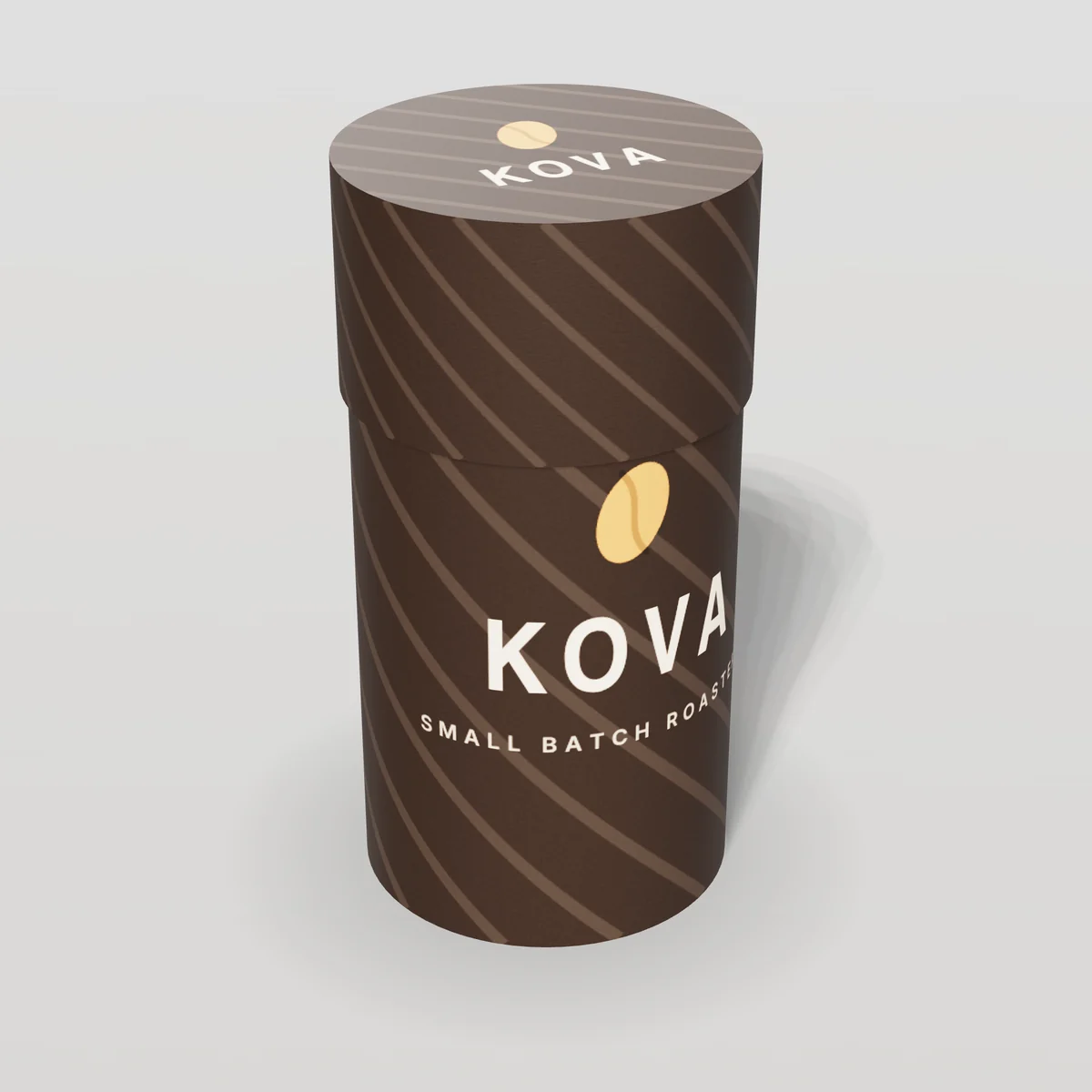
- Separate lid and body designs, for example a solid lid and a patterned body.
Tip: On a cylinder, the eye sees about a third of the circumference at once. Put the logo and product name in that front third, and use the rest for story, ingredients and barcode.
Sizing tubes
Tubes are specified by inside diameter × inside height (we show them on the site as diameter × diameter × height to keep our calculators consistent).
- Measure the product's widest point (diameter or diagonal).
- Add clearance: about 1/16–1/8 in on the diameter.
- Measure the height and add any insert.
- Choose lid depth (for telescoping lids, often 1–2 in).
For rolled apparel, posters and prints, measure the rolled diameter carefully; fabric compresses differently from paper.
Food and beverage tubes
Coffee, tea, spices, cookies and confectionery often go straight into tubes. For direct food contact, we specify food-grade inner liners and adhesives that meet FDA requirements. For aroma-sensitive products such as coffee, a foil or barrier liner keeps freshness in.
Pricing tubes
Tubes cost more than folding cartons because of the multiple components (body, lid, base, wrap) and assembly. The table at the top of this page shows estimates for a 3 × 3 × 6 in tube. A larger 4 in diameter candle tube compares like this:
| Quantity | Est. unit price | Est. total | Saving vs. first tier |
|---|---|---|---|
| 250 | $2.76 | $690 | — |
| 500 | $2.09 | $1,047 | −24% |
| 1,000 | $1.71 | $1,713 | −38% |
| 2,500 | $1.43 | $3,578 | −48% |
| 5,000 | $1.31 | $6,525 | −53% |
| 10,000 | $1.22 | $12,187 | −56% |
Estimates from our published pricing model, full-color print, no finishes, delivered to the contiguous US. Your written quote confirms the exact price. Get an exact quote →
Save on tubes
- Choose standard diameters, which use existing tooling.
- Use kraft wraps with one ink.
- Telescoping lids cost less than neck tubes.
- Order larger runs of a single diameter with different wraps for each SKU.
Tubes by industry
- Candles: tubes for jar and pillar candles. See candle boxes.
- Tea and coffee: lined tubes for loose leaf and beans. See coffee & tea boxes.
- Cosmetics and fragrance: neck tubes with inserts. See perfume boxes.
- Apparel: rolled socks, T-shirts and underwear. See apparel boxes.
- Gifts and spirits: premium tubes with foil. See gift boxes.
Sustainability
Paper tubes are a popular plastic-free alternative to plastic jars and canisters. Choose paper ends and liners for an all-paper package that recycles in most curbside programs, and avoid heavy laminations. Customers often reuse tubes for storage, extending their life.
Ordering checklist
- Product diameter, height and weight
- Telescoping lid or neck tube
- Base type and inner liner
- Wrap paper and print
- Finishes and inserts
- Quantity, delivery ZIP and target date
Why brands choose tubes
Cylindrical packaging stands out on shelves crowded with rectangular boxes, and it feels different in the hand. Tubes have a satisfying, slightly slow opening as air escapes from a well-fitted lid, a small moment of theatre similar to a rigid box. They are also strong for their weight, protect rolled or cylindrical products well and are often kept and reused as storage, extending the brand's presence in the home.
Typical uses include tea, coffee, spices, cosmetics, candles, fragrances, socks and apparel accessories, posters and prints, spirits gift packs, pens and stationery, and premium snacks.
Tube anatomy
| Part | Description | Options |
|---|---|---|
| Body | The main cylinder | Spiral-wound or convolute paperboard; wrapped with printed paper |
| Lid | Telescoping cap | Full-height, partial or shoulder lid |
| Base | Closed bottom | Paperboard disc, metal end, or rolled-edge paper end |
| Neck / shoulder | Inner collar where the lid sits | Creates a premium step and a snug fit |
| Inner liner | Inside surface | Plain, printed, foil-lined or food-contact |
| Inserts | Hold products | Paperboard rings, cradles, foam |
Spiral-wound vs. convolute tubes
- Spiral-wound tubes are made by winding paper strips at an angle around a mandrel, producing long tubes that are cut to length. Economical and common for food, cosmetics and posters.
- Convolute tubes are made by wrapping paper straight around the mandrel. They are thicker and stronger, used for premium gift tubes and heavier products.
For most branded consumer tubes, the producer chooses the construction based on diameter, length and strength needs.
Lid styles
| Lid style | Look | Use |
|---|---|---|
| Full telescope | Lid covers most of the body | Gift tubes, spirits |
| Shoulder (neck) | Lid meets a visible collar | Premium cosmetics, tea |
| Short cap | Small cap over the top | Posters, cosmetics |
| Window lid | Clear top showing product | Snacks, candles |
| Shaker or sifter lid | For powders and spices | Food |
Food tubes
Tubes are popular for tea, coffee, cocoa, spices, snacks and confectionery. Food tubes may need:
- Food-contact liners, such as foil or barrier-coated paper
- Moisture and aroma barriers for coffee and tea
- Tamper-evident seals, such as a membrane or band
- Freshness options, such as resealable lids
Tell us the product and shelf-life requirements.
Designing for a cylinder
- Artwork wraps 360 degrees. Decide where the "front" is, and keep the logo away from the wrap seam.
- Allow for distortion. Text near the top and bottom edges can be partly hidden by the lid or base.
- Use the lid. The top of the lid is seen from above on shelves and in unboxing photos.
- Patterns work well because they look good from every angle.
- Foil and emboss stand out beautifully on curved surfaces.
Worked example: a loose-leaf tea brand
A tea company sells 100 g of loose-leaf tea in a 3 in diameter × 6 in tube.
- Body: spiral-wound paperboard with a printed paper wrap.
- Liner: food-contact barrier liner to protect aroma.
- Lid: shoulder lid in a contrasting color.
- Print: an illustrated pattern wrapping the tube, with tea name and brewing guide on the back.
- Finish: matte lamination with copper foil logo on the lid.
Customers often keep tea tubes for refills, keeping the brand on their shelf. See coffee and tea boxes.
Common mistakes with tube packaging
- Logo on the wrap seam.
- Lid too loose or too tight; always test a sample with your product.
- No barrier liner for aromatic or moisture-sensitive products.
- Text hidden by the lid.
- Tubes shipped without an outer box in parcel networks.
How paper tubes are made
Spiral winding. Narrow strips of paper are coated with adhesive and wound at an angle around a steel mandrel, layer by layer, forming a continuous tube that is cut to length. It is fast and economical, and the most common method for food and cosmetic tubes.
Convolute winding. A wide sheet is wrapped straight around the mandrel several times, forming a thicker, stronger wall without the diagonal seam of spiral tubes. It is used for premium gift tubes and heavier products.
After the core tube is made, it is wrapped with a printed outer paper (often laminated or foil stamped), the lid is made the same way slightly wider, and ends are fitted: paperboard discs, rolled paper edges or metal ends. For premium tubes a neck (inner collar) is added so the lid sits on a visible step.
Tube sizing tips
- Measure the product's diameter at its widest point and its full height, including caps.
- Allow a small clearance (often around 1/16 in in diameter) so products slide in and out easily.
- Decide how far the lid overlaps the body: longer overlaps feel more premium and protect better.
- For loose contents (tea, salts), size for the filled volume with some headspace and use an inner liner or bag.
Tube packaging in one paragraph
Paper tubes are cylindrical boxes made by winding paperboard, wrapped in printed paper and finished with a telescoping lid. They stand out on shelves, feel premium in the hand and are often kept for reuse. Choose spiral tubes for economy and convolute tubes for strength, add food-contact liners for tea, coffee and spices, design artwork to wrap 360 degrees away from the seam, and ship tubes inside an outer box.
Three real-world scenarios
A spice brand's gift collection. Six small spice tubes with shaker lids sit in a sleeve box for holiday gifting. Each tube has a food-contact liner and a printed wrap in a different color, while the sleeve tells the brand story.
A sock company's premium line. Rolled socks fit perfectly in a 2.5 in diameter tube with a contrasting lid. The tube stands out among flat sock packs on the shelf, and customers reuse it as a pen holder.
A whisky miniature gift pack. A convolute tube with a neck, soft-touch wrap and gold foil holds a 50 ml miniature and a tasting card, protected by a die-cut insert. It ships inside a small corrugated mailer.
A buyer's guide to paper tubes
Measure the product precisely. Tubes are made to the product's diameter and height, so measure the widest point, including caps, and decide how much clearance you want. A small clearance gives a snug, premium fit.
Choose the construction. Spiral-wound tubes are economical and common for food and cosmetics. Convolute tubes have thicker, stronger walls for premium gifts and heavier products.
Decide the closure. Full telescoping lids feel substantial; shoulder lids create a refined step; short caps are economical. For food, add a membrane seal or shrink band for tamper evidence.
Specify liners for food and aroma. Tea, coffee and spices need food-contact liners and barriers to keep aroma in and moisture out.
Design for 360 degrees. Decide where the front is, keep the logo away from the seam, and use the lid top, which is seen from above on shelves.
Plan time and shipping. Tubes involve winding, wrapping and assembly, so allow 12–16 business days after proof approval. Ship them in an outer box to protect printed wraps.
Ordering timeline
| Step | Typical time |
|---|---|
| Quote with recommended structure and board | Within 1 business day |
| Dieline for your exact size | 1–2 business days |
| Artwork check, digital proof and 3D preview | 1–3 business days |
| Optional plain or printed sample | About 5–12 business days |
| Production after proof approval | 12–16 business days |
| Delivery within the contiguous US | 3–7 business days |
Plan backward from your in-hand date and tell us about deadlines when you request a quote.
Terms to know
- Spiral-wound tube: Tube formed by winding paper strips at an angle around a mandrel.
- Convolute tube: Tube formed by wrapping a wide sheet straight around a mandrel; thicker walls.
- Neck (shoulder): Inner collar that the lid sits on, creating a visible step.
- Telescoping lid: A lid that slides over the tube body.
- Liner: Inner layer of the tube, such as foil or food-contact paper.
- Membrane seal: A peelable seal across the opening for freshness and tamper evidence.
Photographing your tubes
Tubes look best photographed slightly from above at three-quarter view, so the lid top and the wrap are both visible. Group tubes of different heights or colors for a collection shot, and show one with the lid lifted and resting against it. Side light brings out foil and emboss on the curve; avoid flat front lighting, which makes cylinders look flat.
Tubes and the unboxing moment
Opening a well-made tube is one of the most satisfying moments in packaging. As the lid slides up, the air inside has to escape through the narrow gap between lid and body, so the lid rises slowly and smoothly rather than popping off. Designers call this a "controlled release", and it is the same effect that makes premium rigid boxes feel special. The effect depends on precise tolerances between the lid and the body, which is why we always recommend testing a sample with your product.
Brands build on that moment in several ways. Some print a message on the top of the inner tube or on the neck, so it appears as the lid lifts. Others place a rolled card, tissue or a small sample on top of the product. Spirits and fragrance brands often use a shoulder tube, where the visible neck adds a second color or material to the reveal. Tea and coffee brands sometimes add a printed membrane seal that customers peel back, combining freshness and ceremony.
Tube shapes beyond the cylinder
Most tubes are round, but the same winding and wrapping techniques can create other profiles:
- Oval tubes that sit flatter on shelves and fit slim products
- Tall slim tubes for pens, brushes and long accessories
- Short wide tubes (sometimes called "cans") for candles, bath salts and cookies
- Tubes with windows cut into the body or lid to show contents
- Tubes with handles or ribbons for carrying and gifting
Unusual shapes can add tooling and lead time; ask us early if you have a specific shape in mind.
Sustainability of paper tubes
Paper tubes are often marketed as a plastic-free alternative to plastic jars and canisters, and for many dry products they are. To make that claim accurately, check every component: metal or plastic ends, plastic lids, foil liners and plastic windows all affect recyclability. A tube with paper ends, a paper lid and a paper-based liner is the easiest to recycle. If your product needs a barrier liner, tell customers how to dispose of the tube and avoid absolute claims such as "100% plastic-free" unless every part qualifies.
Quality checks when your boxes arrive
- Open and close lids on tubes from several cartons: the lid should slide with smooth, consistent resistance.
- Inspect the wrap seam and ends for lifting or glue marks.
- Check liners are fitted and clean on food tubes.
- Confirm the product fits as on your sample.
- Compare print and foil with the approved proof.
Report anything that does not match your approved proof within 7 days of delivery under our reprint guarantee, with photos and your order number.
Related guides
 GuideSustainable packagingHow to make packaging lower-impact without greenwashing: recyclable paper formats, recycled content, FSC, inks, plastic-free inserts and honest claims.
 GuideFinishes & embellishmentsHow foil stamping, embossing, debossing, spot UV, soft-touch, windows and inserts work, what they cost, and how to combine them without overspending.
 GuidePackaging materials & board gradesUnderstand corrugated flutes and ECT, paperboard caliper (pt), SBS vs kraft vs recycled board, and rigid greyboard, so you can specify packaging like a pro.
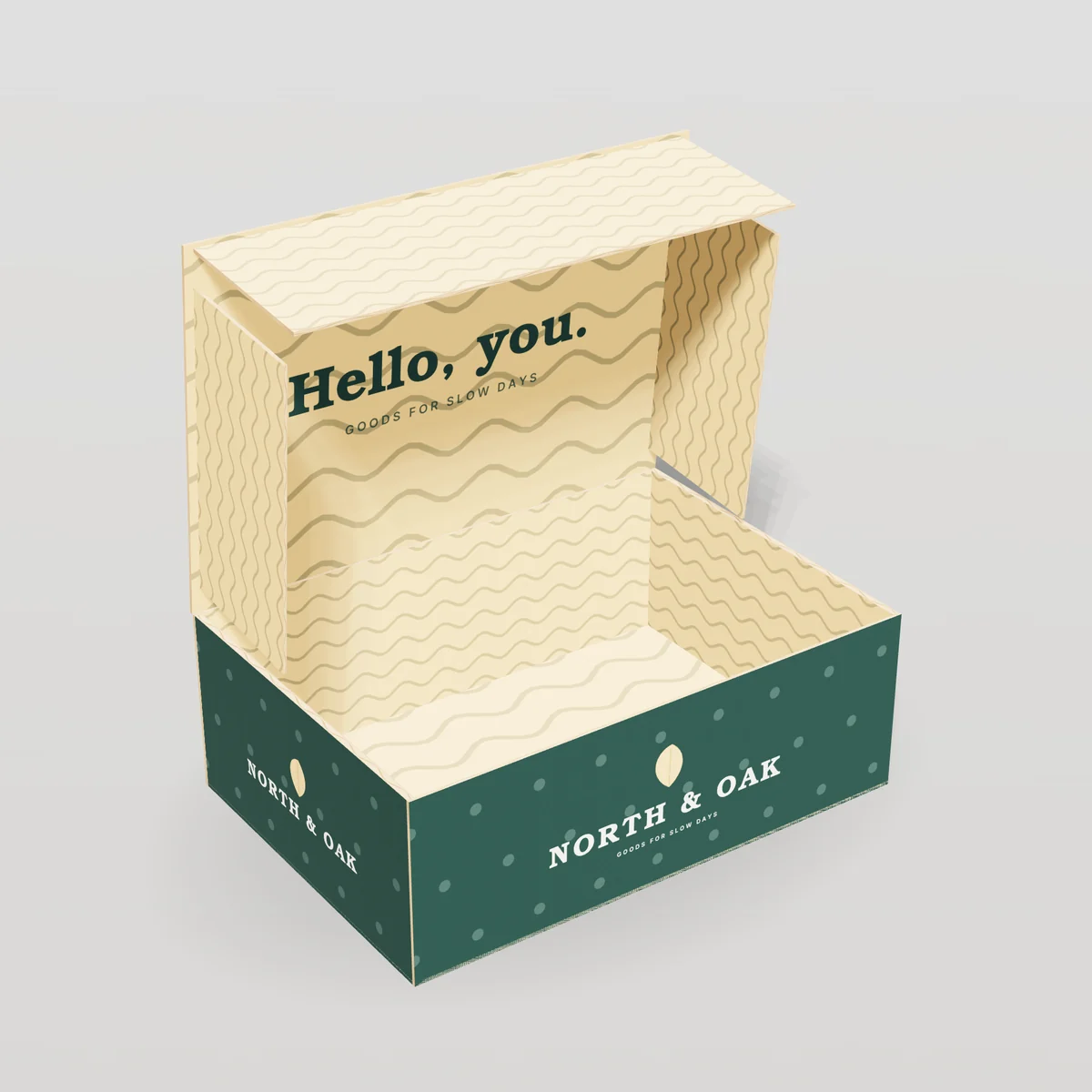 GuideUnboxing & brand designHow to design packaging that sells and gets shared: brand hierarchy, color, typography, the unboxing sequence, inserts and low-cost upgrades that matter.
What finishes and add-ons cost
Estimated extra cost per unit at 1,000 units when you add one finish to a 3×3×7" paper tube (base estimate $1.64). One-time tooling such as foil and embossing dies is already spread across the run in the per-unit figure and listed separately for reference.
| Finish | What it does | Adds per unit | One-time setup |
|---|---|---|---|
| Matte lamination | A thin film with a smooth, low-glare finish that protects print from scuffs. | +$0.01 | — |
| Soft-touch | A velvety, premium coating that invites customers to hold the box. | +$0.03 | — |
| Spot UV | Clear glossy varnish on selected areas for a sleek contrast against matte. | +$0.12 | $80.00 |
| Foil stamping | Gold, silver, rose gold or holographic foil for logos and accents. | +$0.19 | $120 |
| Embossing / debossing | Raised or recessed logo detail you can feel with your fingertips. | +$0.18 | $120 |
| Window | A die-cut window with clear film so the product sells itself. | +$0.13 | $60.00 |
| Custom insert | Paperboard, corrugated or foam inserts that hold products in place. | +$0.22 | $80.00 |
How tube packaging compare with similar styles
Estimated unit prices at 1,000 units for each style at its most popular size, full-color print, delivered within the contiguous US, so you can weigh tube packaging against the alternatives customers often consider.
| Style | Typical board | Minimum | 1,000 units | Ships | Best for |
|---|---|---|---|---|---|
| Tube Packaging3 × 3 × 7" | Rigid greyboard + kraft wrap | 250 units | $1.64 | Assembled | Cylindrical paperboard tubes with a lid, for candles, tea, cosmetics and apparel. |
| Rigid Boxes8 × 6 × 3" | Rigid greyboard + printed wrap | 100 units | $2.89 | Assembled | Luxury setup boxes made from thick greyboard wrapped in printed or specialty paper. |
| Two-Piece Boxes8 × 8 × 3" | Rigid greyboard + printed wrap | 100 units | $3.10 | Flat | Lid-and-base boxes in rigid board or paperboard. A timeless gift and apparel format. |
| Stand-Up Pouches6 × 3.5 × 9" | Matte laminated film (PET/PE) | 500 units | $0.49 | Flat | Printed resealable pouches with a gusseted base for coffee, snacks, supplements and bath products. |
| Sleeve Boxes6 × 4 × 2" | SBS white paperboard (18pt) | 250 units | $0.67 | Flat | A printed sleeve over a sliding tray. Interactive, premium and easy to brand on two surfaces. |
Learn about these materials
How to order tube packaging
- 1Request a quote
Tell us the style, size, quantity and artwork you have. Use the form or the live estimator.
- 2Free design & dieline
We send a dieline for your exact size, check your artwork and help with layout at no charge.
- 3Approve your proof
Review a digital 3D proof (and an optional physical sample) before anything is printed.
- 4Production & QC
Your boxes are printed, finished, die-cut and inspected against the approved proof.
- 5Delivered to your door
Shipped flat-packed with tracking to any address in the contiguous US.
Key terms on this page
- Paperboard
- Thick paper (usually 0.010 inch or more) used for folding cartons, such as SBS, kraft and recycled board.
- Lid
- The top part of a box, hinged or separate.
- Wrap
- The printed or specialty paper glued around the board of a rigid box or tube.
- Kraft
- Paper or board made from unbleached wood pulp, naturally brown and strong.
- Liner
- The flat paper faces of corrugated board. Can be kraft (brown) or bleached (white).
- Food-grade
- Materials, inks and adhesives suitable for packaging that contacts food, meeting the relevant FDA requirements.
- Neck tube
- A paper tube with an inner collar so the lid sits flush with the body.
- Finish
- Any treatment applied after printing to change appearance or protect the surface, such as coatings, laminations, foil, embossing or spot UV.
- Board
- A general term for thick paper materials used in packaging, including paperboard, corrugated board and greyboard.
- Right-sizing
- Designing packaging to fit products closely, reducing material, void fill and shipping costs.
- Void fill
- Material that fills empty space in a shipping box to stop products moving, such as crinkle paper or air pillows.
- Digital printing
- Printing directly from a digital file without plates. Ideal for short runs, multiple designs and fast changes.
- Foil stamping
- Applying metallic or pigmented foil to packaging with heat and pressure using a metal die.
- Embossing
- Raising part of the board surface into a relief using matched dies, often combined with foil or ink.
- Spot UV
- A clear, glossy UV-cured varnish applied to selected areas to create contrast with a matte background.
- Point (pt)
- The unit of paperboard thickness: 1 point equals 0.001 inch. 18pt board is 0.018 inch thick.
- Insert
- A component inside a box that holds products in place, such as die-cut paperboard, corrugated, foam or molded pulp.
- Greyboard
- Thick, dense recycled board used as the structural core of rigid boxes, usually 1.2 to 3 mm thick.
- Proof
- A preview of the final package (digital PDF, 3D render or physical sample) that the customer approves before production.
- Rigid box
- A premium box made from thick greyboard wrapped in printed or specialty paper, delivered assembled. Also called a setup box.
- Artwork
- The final graphic files (logos, images, text and colors) placed on a dieline and used to make printing plates or digital print files.
- Lamination
- Bonding a thin film (matte, gloss or soft-touch) or paper to board for protection and finish.
- Sleeve
- An open-ended band or tube that slides over a tray or box, often printed to brand plain packaging.
- Tamper evidence
- Features that show if a package has been opened, such as seals, tear strips or shrink bands.
- Dieline
- A flat template showing the exact shape of a box before folding, with cut, crease, bleed and safe zones. Artwork is designed on top of it.
- Lead time
- The time from order (or proof approval) to delivery, including production and shipping.
- FSC
- The Forest Stewardship Council, an organization that certifies responsible forest management and chain of custody for paper products. Using its label requires certified supply.
- Debossing
- Pressing a design into the board so it sits below the surface. The opposite of embossing.
More definitions in our packaging glossary.
Customer reviews
Reviews come only from verified customers. Ordered tube packaging from us? Share your experience.
Discussed on Quora & X
Tube Packaging FAQ
What is tube packaging?
Cylindrical packaging made from wound paperboard with a lid and base, usually wrapped in a printed paper label.
What is the minimum order?
Our minimum for custom paper tubes is 250 units.
Are paper tubes food safe?
With food-grade liners and adhesives, yes. Tell us if your product contacts the tube directly.
Are paper tubes recyclable?
All-paper tubes with paper ends are recyclable in most curbside programs. Metal ends or plastic liners should be separated.
What is a neck tube?
A tube with an inner collar so the lid sits flush with the body, creating a seamless premium cylinder.
Can you print the lid and body differently?
Yes. Lids and bodies are wrapped separately, so each can have its own design.
Can paper tubes be recycled?
Paper tubes with paper ends are generally recyclable. Metal ends, plastic lids and foil liners may need to be separated.
What diameters are available?
Tubes can be made in a wide range of diameters and lengths. Send your product dimensions and we will recommend a size.
Are tubes strong enough to ship?
Tubes are strong, but for parcel shipping we recommend an outer mailer to protect printed surfaces.
What products are best in paper tubes?
Tea, coffee, spices, cosmetics, candles, fragrances, socks, posters and prints, pens, spirits gift packs and premium snacks.
Can tubes have a window?
Yes, usually in the lid. Clear windows show colorful contents like candies or tea blends.
How is a tube closed?
Most tubes use a telescoping lid that slides over the body or onto a neck. Food tubes often add a peelable membrane or a shrink band for tamper evidence.
What finishes work on tubes?
Matte, gloss or soft-touch laminated wraps, foil stamping, embossing and spot UV, the same as rigid boxes.
Are tubes expensive?
Tubes cost more than folding cartons of similar size because of winding, wrapping and assembly, but less than many rigid boxes. Quantity reduces the unit price.
What is the minimum order for tubes?
Most custom paper tubes start at 250 units.
Can I get metal ends instead of paper ends?
Yes, metal ends are available for some tubes, especially food packaging. Paper ends keep the tube easier to recycle.
How long does tube production take?
Similar to rigid packaging: allow about 12–16 business days after proof approval, plus shipping.
Can I reuse the same tube size for different products?
Yes. A standard tube with different printed wraps or labels is an efficient way to package a product range.
Can tubes be printed inside?
The inner liner can be printed on many productions, adding a reveal when the lid comes off.
Where do you deliver paper tubes?
We deliver to business and residential addresses across the contiguous United States with tracking, usually within 3–7 business days after production. Alaska, Hawaii and expedited freight are quoted separately.
What if my paper tubes arrive with a defect?
Report it within 7 days of delivery with photos and your order number. If there is a production defect or the boxes do not match your approved proof, we reprint or refund the affected items under our reprint guarantee.