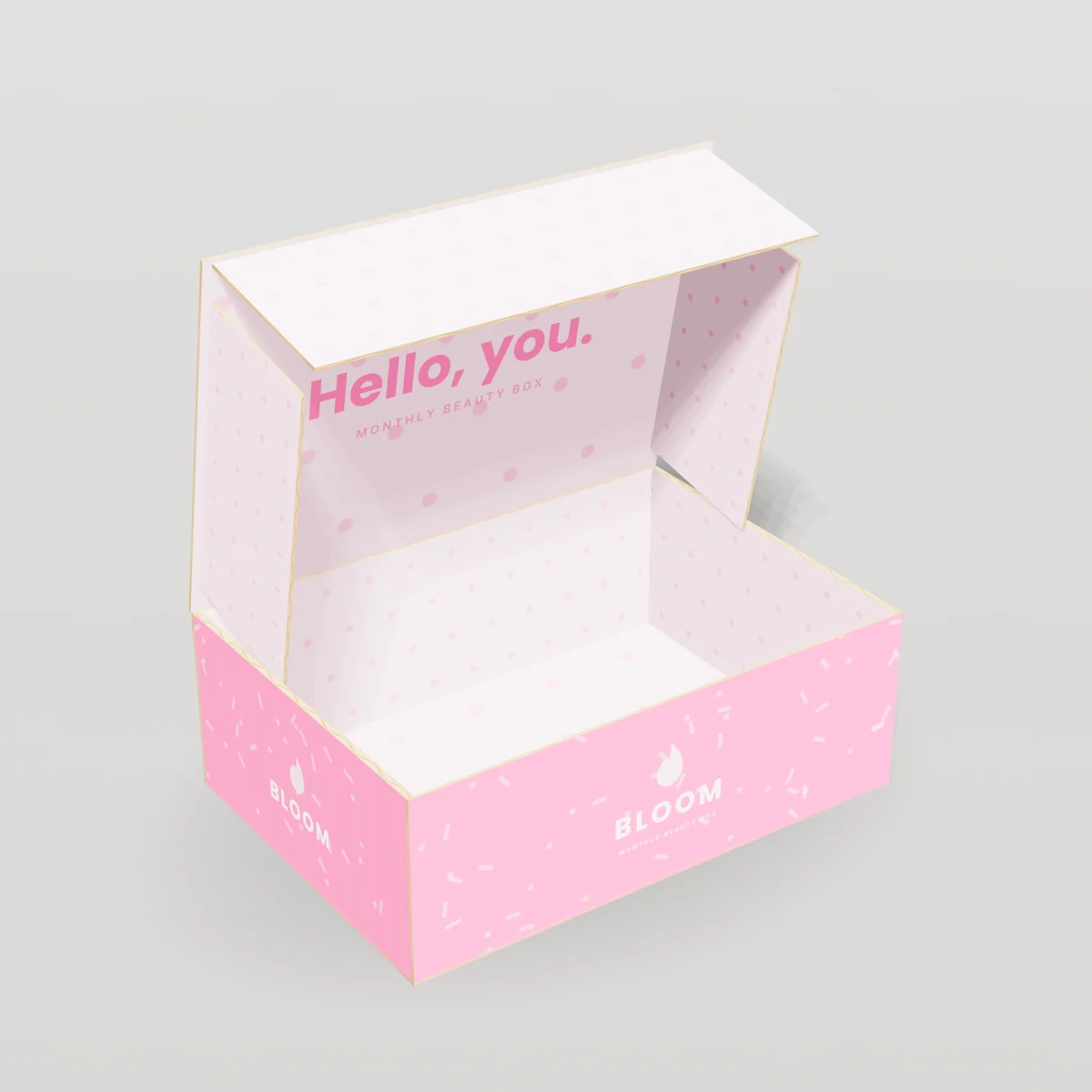
Quick answer
Plate-free full-color printing for short runs, variations and fast reorders. Typical turnaround is 10–14 business days after proof approval.
What is digital printing for packaging?
Digital printing prints directly from a digital file onto board, with no printing plates. Modern digital presses for packaging use inkjet or toner technology to print full-color graphics on paperboard and corrugated board. Because there are no plates, setup is fast and inexpensive, every sheet can be different, and short runs become economical.
Digital printing has transformed custom packaging for small and growing brands. It is the reason minimums of 100 units are now practical.

Strengths
- No plates: low setup cost and fast turnaround
- Short runs: economical from 100 units
- Versions and SKUs: many designs in one run at no extra setup
- Variable data: names, numbers, QR codes and personalization printed as collated sets in order
- Full color: photography and gradients
Limitations
- Higher unit cost at large volumes than offset or flexo
- Pantone colors are simulated (usually very close) rather than printed as true spot inks
-
Some special inks and effects are limited compared with offset
-
Special inks: most digital presses cannot print true metallic or fluorescent inks. Use foil for metallics.
- Very large runs: above a few thousand units per design, offset or flexo usually costs less.
- Large flat solids: some presses may show subtle banding in large flat areas; textures and gradients help.
- Exact Pantone matches: a few colors fall outside the process gamut.
- Substrate range: heavily textured or very dark substrates may need white ink or a different process.
When to choose digital
- First orders and test launches
- Seasonal or limited editions
- Many SKUs in small quantities
- Personalized or numbered packaging
- Fast reorders
Choose digital when:
- Your order is under a few thousand units per design.
- You have several designs or SKUs in the same box size.
- You need full color and photography.
- You want to launch quickly or test a design.
- You need personalization or variable data.
Consider offset or flexo when a single design runs in large quantities, when exact Pantone spot colors are critical, or when special inks (metallics, fluorescents) are required.
Digital on corrugated and paperboard
Digital presses print on both white and kraft liners and on paperboard. White board gives the brightest colors. On kraft, colors look warmer and darker unless a white base is used.
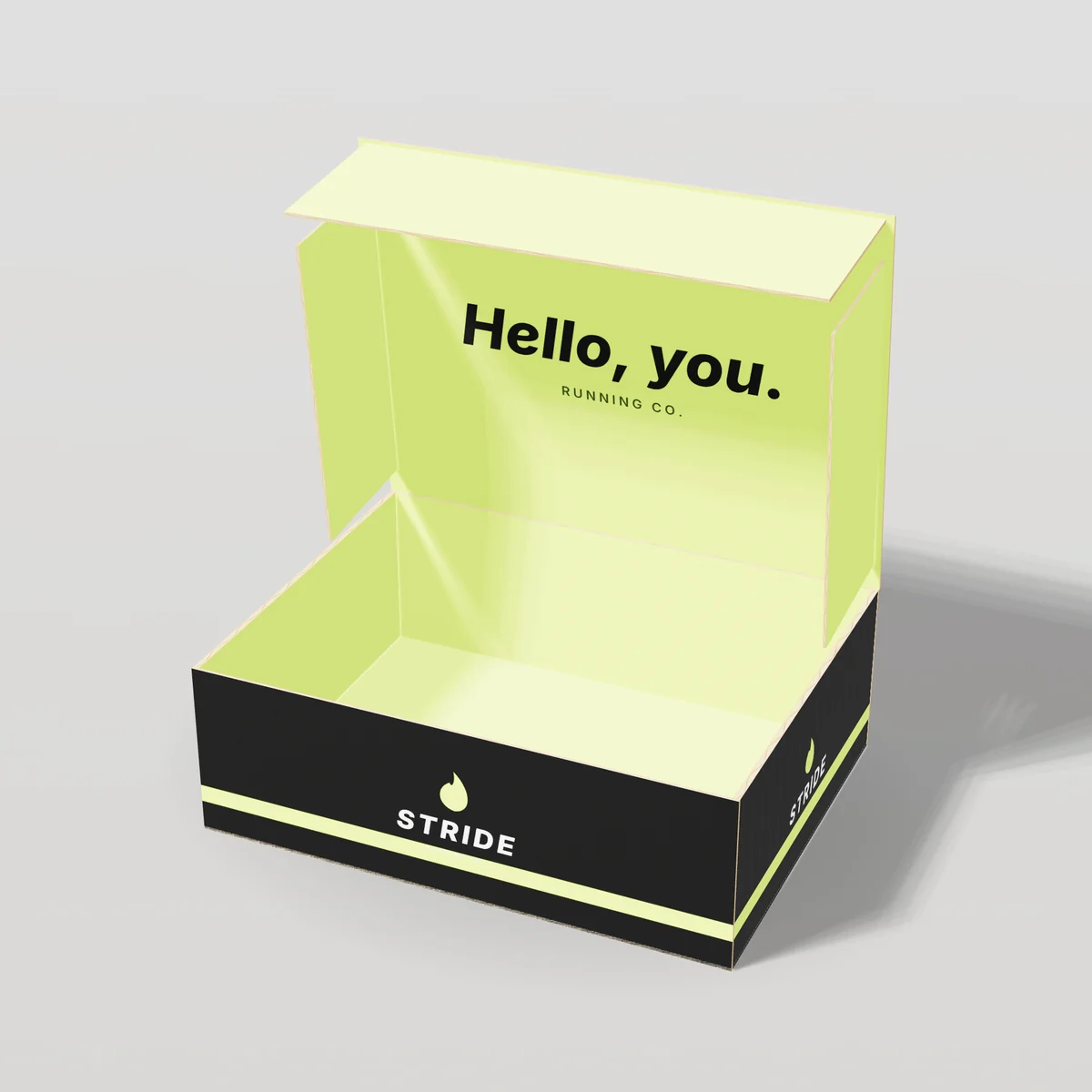
Single-pass inkjet presses print corrugated sheets directly with water-based inks, producing full-color mailers and shipping boxes without plates. Results are excellent on white-top liners, good on kraft (colors look darker and warmer) and best with bold graphics. Fine text should stay at 6 pt or above, and very large solid areas may show subtle banding on some presses; patterns and gradients often look better than perfectly flat solids.
Sheet-fed digital presses print SBS, kraft and CRB cartons with near-offset quality. Cartons can then be coated, laminated, foil stamped, embossed and spot UV coated just like offset cartons. Digital embellishment presses can add spot UV, raised UV and digital foil without dies, making premium effects possible on short runs.
How digital packaging printing works
Digital printing transfers your artwork straight from a file to the substrate, without printing plates. Two technologies dominate packaging:
Inkjet. Print heads fire microscopic droplets of ink onto the board as it passes underneath. Wide-format single-pass inkjet presses print corrugated sheets directly, while sheet-fed inkjet presses print folding carton board. Inks are typically water-based or UV-curable.
Liquid electrophotography (LEP) and toner. Similar in principle to a laser printer, these presses create an electrostatic image on a drum, attract ink or toner to it and transfer it to the sheet. They produce very sharp, offset-like quality on paperboard and labels.
Because there are no plates, every sheet can be different. That opens possibilities offset and flexo cannot match economically: multiple designs in one run, personalization, sequential numbering and fast changes between jobs.
Digital vs. offset vs. flexo
| Digital | Offset lithography | Flexography | |
|---|---|---|---|
| Plates / setup | None | Plates per color | Plates per color |
| Economical run length | About 100–2,000+ | About 1,000+ (cartons) | About 1,000+ (corrugated) |
| Full color | Yes | Yes | Possible; best for 1–3 colors on corrugated |
| Image quality | Very good to excellent | Excellent | Good |
| Pantone matching | Simulated with expanded gamut | Excellent with spot inks | Excellent with spot inks |
| Versioning | Easy, no extra setup | Costly | Costly |
| Speed to press | Fastest | Moderate | Moderate |
| Typical use | Short runs, many SKUs, prototypes | Premium cartons at volume | Shipping boxes at volume |
See offset printing and flexographic printing for the other methods.
The economics of digital printing
Traditional printing has high fixed costs (plates and press make-ready) and low per-unit costs. Digital printing is the reverse: almost no fixed cost, but a higher cost per unit for ink and machine time. The crossover point depends on the box, design and press, but for many custom boxes digital is the most economical choice up to a few thousand units.
That is why digital printing transformed custom packaging for small and growing brands. Ordering 100 or 250 full-color mailer boxes used to be prohibitively expensive because the plates alone could cost more than the boxes. With digital, small runs carry little setup, so brands can launch with modest quantities, test designs and reorder as they grow.
The price table on this page shows estimated unit prices at 100, 250 and 500 units for popular styles, the range where digital printing shines.
Color in digital printing
Digital presses print with process colors (CMYK), and many add extra colors (orange, green, violet) to extend the gamut. Brand colors specified in Pantone are matched as closely as possible by blending process inks. Most Pantone colors can be matched closely; a few very saturated or special colors (neons, metallics) cannot be reproduced with process inks alone.
Tips for color accuracy:
- Supply Pantone references for brand colors.
- Design in CMYK or let our prepress team convert RGB files.
- Approve a printed sample for color-critical brands.
- Expect excellent consistency between reorders: digital presses are color-managed to targets and files are reused exactly.
Versioning and personalization
Digital printing makes several things economical that are expensive with plates:
- Multiple designs in one order: different scents, flavors or SKUs in the same box size.
- Seasonal and limited editions: short runs for holidays, collaborations and launches.
- Regional or retailer-specific versions.
- Personalized packaging: names, numbers or messages that change per box (variable data printing).
- A/B testing: print two designs and see which performs better.
Finishes with digital printing
| Finish | Compatibility | Notes |
|---|---|---|
| Aqueous coating | Excellent | Common in-line |
| Matte / gloss lamination | Excellent | Digital-compatible films |
| Soft-touch | Good | Use films suited to digital inks |
| Spot UV | Excellent | Digital spot UV needs no screen |
| Foil | Excellent | Hot foil or digital foil |
| Embossing | Excellent | Same as offset cartons |
File preparation for digital printing
- CMYK artwork with Pantone references for brand colors
- 300 ppi images at final size
- Fonts outlined or embedded
- 1/8 in bleed and safe zones on the dieline
- Rich black (e.g., 60/40/40/100) for large black areas, 100% K for small text
- Separate layers for finishes
See our artwork guidelines.
Same as other methods: CMYK images at 300 ppi, Pantone references for brand colors, bleed, safe zones and dielines. See our artwork guidelines.
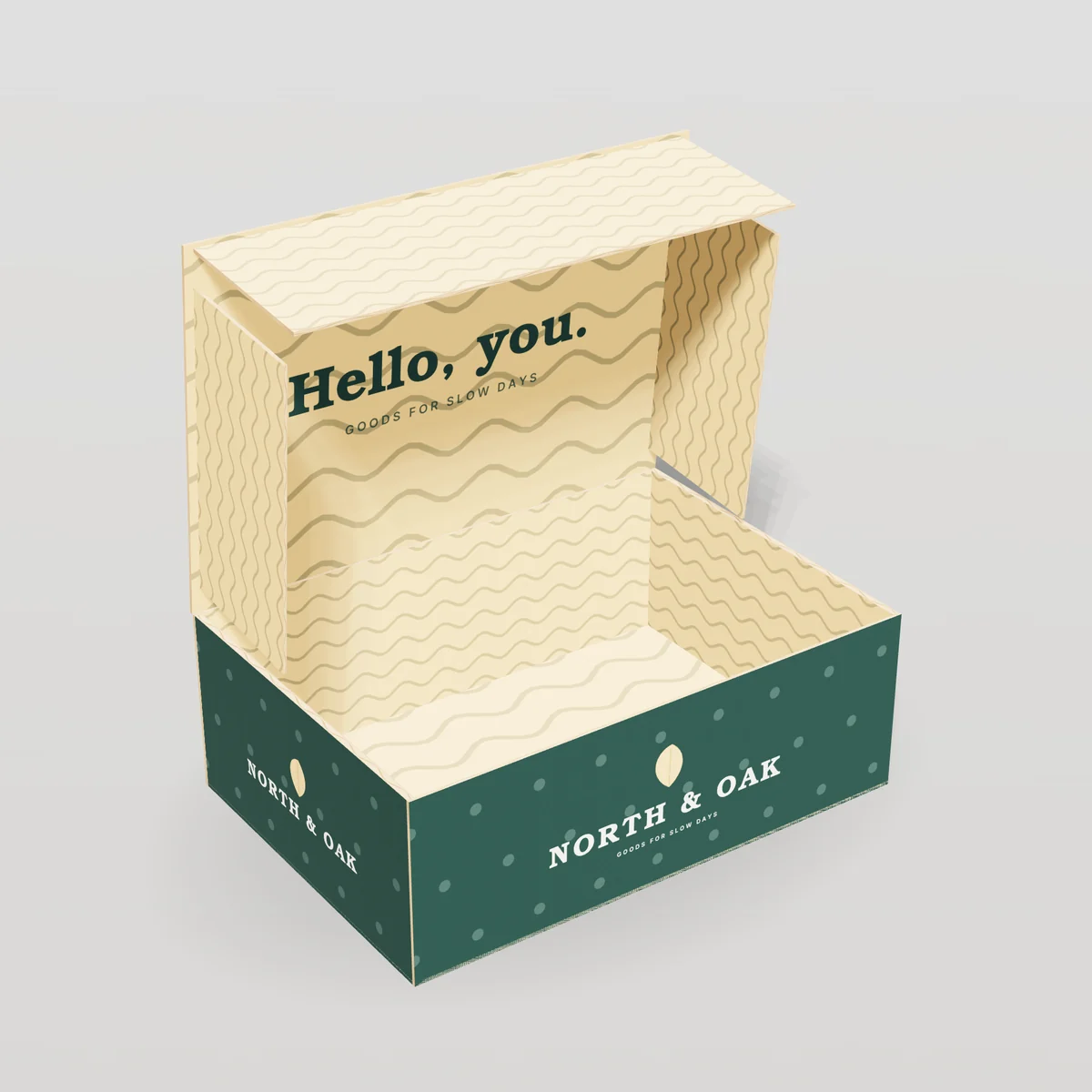 Box StylesMailer BoxesSelf-locking corrugated mailers printed inside and out. The go-to box for DTC brands and subscriptions.
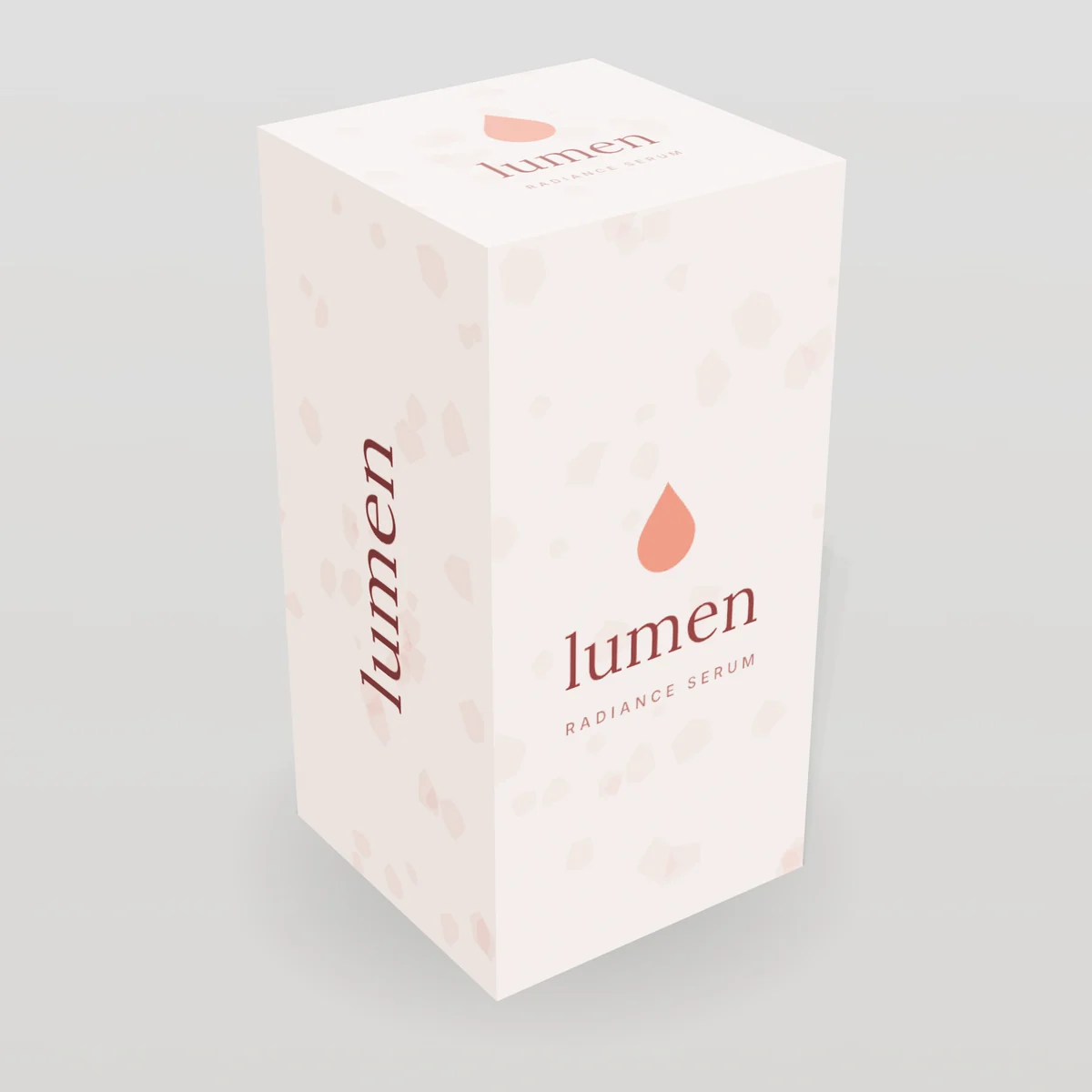 Box StylesTuck End BoxesStraight and reverse tuck end cartons that open and reclose cleanly. Ideal for lightweight retail products.
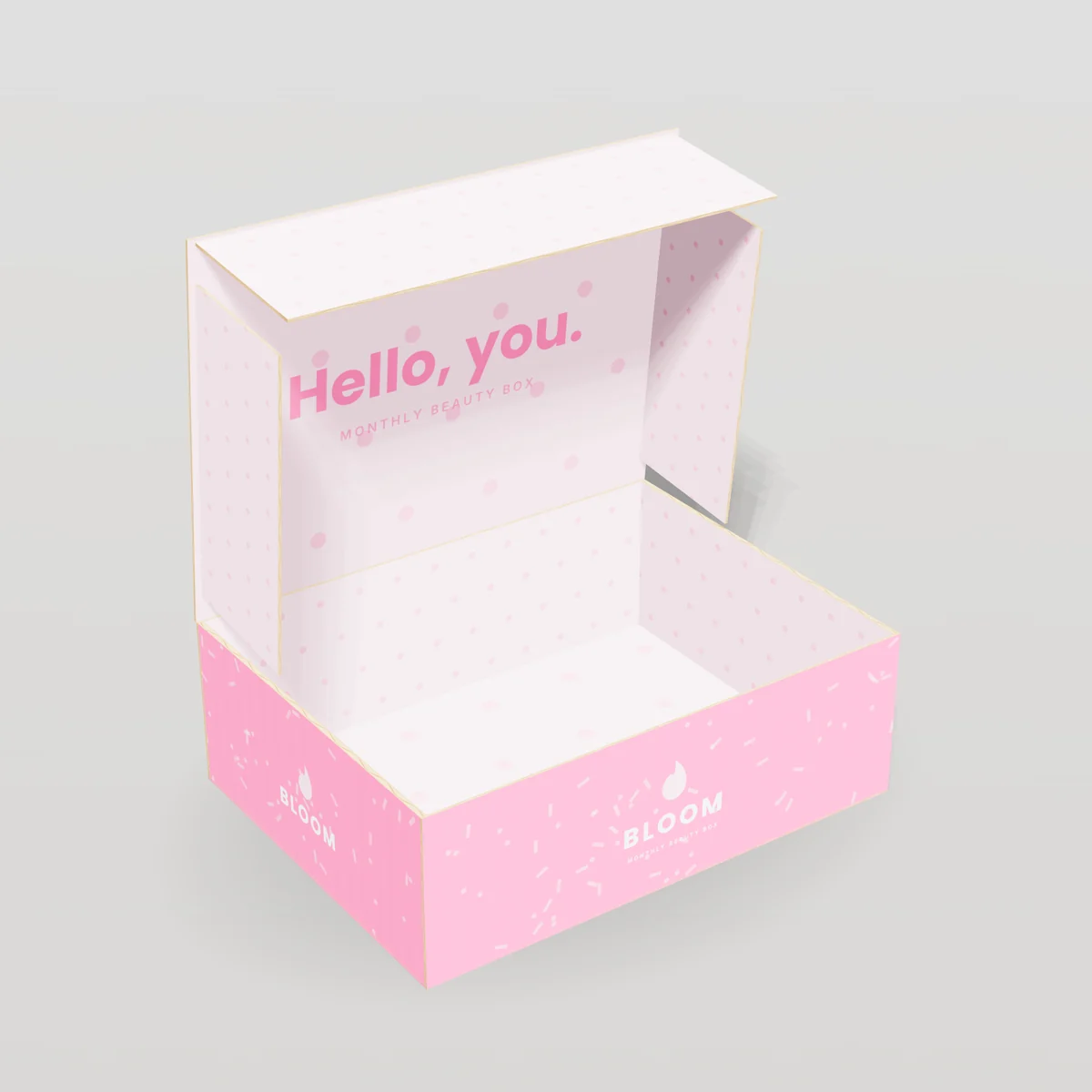 IndustriesSubscription BoxesShippable mailers with interior print that make every monthly box feel like a gift.
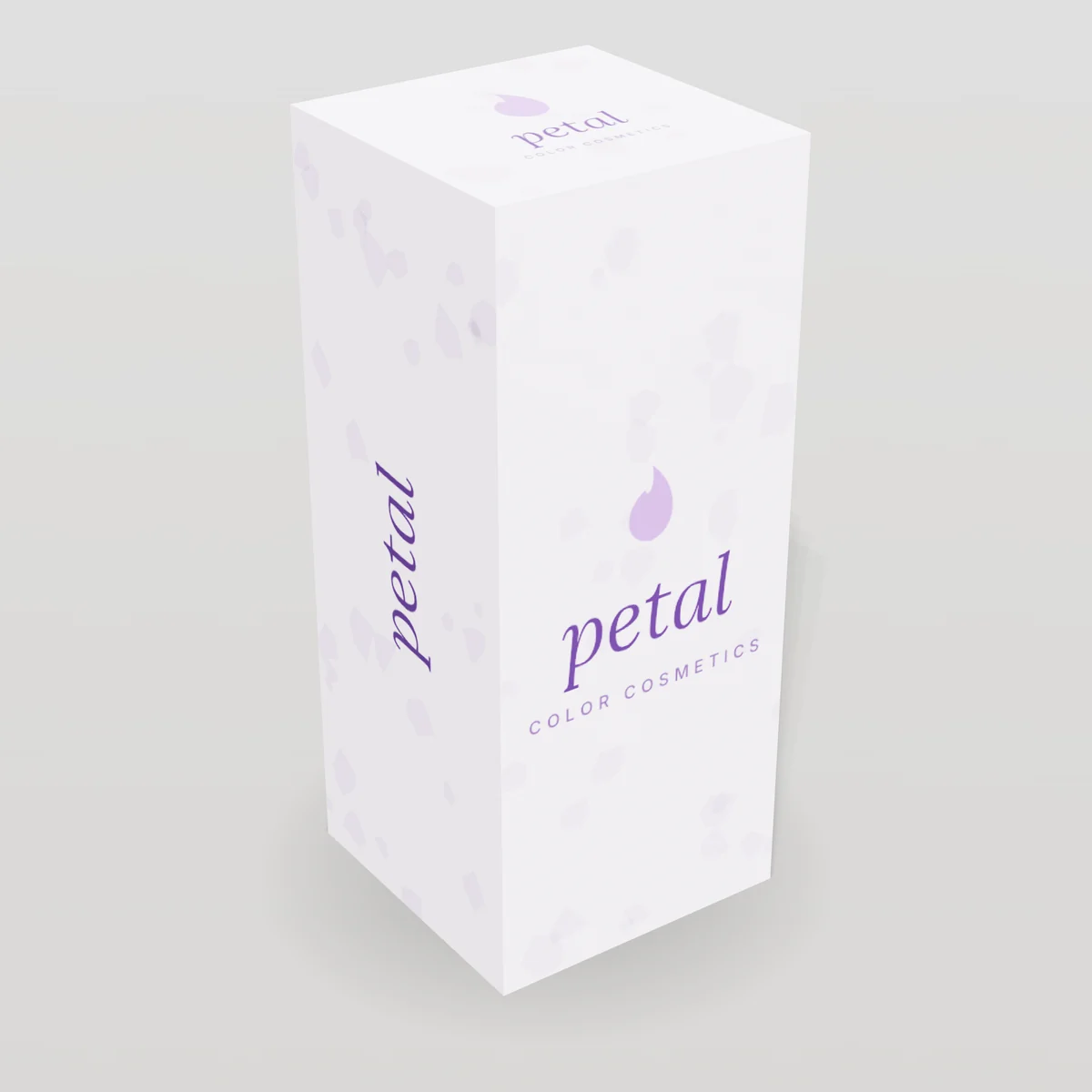 IndustriesCosmetic BoxesMakeup and beauty cartons with premium finishes and compliant label space.
Prototypes, samples and pre-production
Because digital printing needs no plates, it is ideal for samples and prototypes. A printed prototype lets you check color, structure, finishes and fit before committing to a large run, even if the production run will be offset or flexo. Many brands use digital for:
- Pre-production samples to approve a design
- Pitch samples for retail buyers
- Photo samples for e-commerce listings and crowdfunding pages before production
- Market tests of new products in small quantities
See samples for the options we offer.
Short runs, less waste
Digital printing changes inventory planning. With plates, brands often order large quantities to bring the unit price down, then store boxes for months and sometimes discard them when designs change. With digital, it is practical to:
- Order what you need for the next few months, and reorder as you grow.
- Update designs frequently without scrapping plates.
- Split one order into several designs instead of overstocking one.
That reduces storage costs, obsolete stock and waste, which is good for cash flow and for the environment.
How digital presses keep color consistent
Digital presses are calibrated regularly against color targets, and files are rendered through the same color profiles every time. Practical results:
- Reorders match the original closely when printed on the same board.
- Different designs in one run match each other because they are printed under identical conditions.
- Color can vary slightly between different presses or boards, so for brand-critical colors we keep your approved sample as the reference.
Worked example: a skincare launch with four scents
A skincare brand launches four body oils, each in its own carton (2 × 2 × 6 in), 300 units per scent.
- Process: digital printing, so all four designs print in one run without four sets of plates.
- Board: 18pt SBS.
- Finish: matte lamination with digital spot UV on the logo.
- Result: 1,200 cartons with a premium finish at a price that would be impossible with plates for 300 per design.
As sales grow, the best-selling scent can move to offset at higher quantities.
Inkjet and toner: the two kinds of digital press
Digital packaging presses fall into two broad families, and knowing which one prints your job explains a lot about how it will look.
Inkjet presses fire tiny droplets of ink through printheads directly onto the board. Single-pass inkjet presses print the full width of a sheet or web in one pass, which makes them fast enough for production runs of cartons and corrugated boxes. Inkjet handles large formats well, including full-size shipping box blanks, and works with water-based and UV-curable inks depending on the machine.
Toner (electrophotographic) presses use a charged drum to attract dry or liquid toner, then transfer it to the sheet. They are known for sharp text and fine detail, and liquid-toner presses in particular produce color close to offset quality. They are common for folding cartons, labels and short-run premium work, but sheet sizes are usually smaller than inkjet or offset.
You rarely need to choose the press yourself. A good supplier matches the press to your board, size, quantity and quality expectations. It helps to ask which technology will print your job, because it affects how colors behave on kraft, how solids look and which finishes can follow.
Primers, coatings and why the board matters
Digital inks sit on the surface of the board rather than being absorbed the way offset inks are. Many digital presses therefore apply a primer or use boards with a coating designed for digital ink adhesion. Uncoated kraft, for example, absorbs ink differently from coated white board, so colors look warmer and slightly softer.
After printing, an overprint varnish or lamination protects the ink from scuffing. This matters for shipping boxes that rub against each other in transit and for retail cartons handled by shoppers. If you plan to add foil, spot UV or lamination after digital printing, mention it early so the supplier can check compatibility between ink, coating and finish.
Low-migration inks and food packaging
When packaging holds food, ink must not transfer into the product. Primary food packaging, where the board touches food directly, needs inks and coatings designed and tested for that use, along with a functional barrier where appropriate. Secondary packaging, such as a carton holding a sealed bag of coffee, carries a lower risk but still benefits from low-migration inks, because ink can transfer between stacked cartons and printed sides touching inner packaging.
Tell your supplier exactly how the packaging will be used: direct food contact, indirect contact or no contact. They can then recommend suitable inks, coatings and barrier layers. Requirements differ by product and market, so food brands should keep documentation of the materials used.
Serialization, codes and traceability
Because every digital impression can be different, digital printing is the natural choice for packaging that carries unique information:
- Batch and lot codes printed as part of the artwork rather than added by a separate coder.
- Serial numbers for limited editions, warranty registration or authentication.
- Unique QR codes that link each box to a product page, a video message or a registration form.
- Personalized names or messages for gifts, events and corporate programs.
Variable data is supplied as a spreadsheet or database export. Your supplier will map each field to a position on the artwork and send a proof showing a sample of records. Check that long names fit, that codes scan and that the data is sorted in the order you want boxes packed.
Print on demand and smaller inventories
Traditional packaging buying pushes brands toward large runs to lower unit costs, which ties up cash and warehouse space and creates waste when designs change. Digital printing makes a different model possible: smaller, more frequent orders that match actual sales. For brands with many products, seasonal designs or frequent artwork updates, this can reduce obsolete stock significantly. The unit price of each short run is higher than a long offset run, but the total cost can be lower once storage, obsolescence and cash flow are counted.
White ink, metallic boards and special substrates
Some digital presses can print white ink, which opens up dark and metallic boards. White can be printed as a base under colors so they stay bright on brown kraft or silver board, or used alone as a crisp graphic element. On metallic board, leaving areas unprinted lets the metal shine through, creating a foil-like effect without separate foil stamping. Ask whether white ink is available on the press that will print your job, and supply a separate white layer in your artwork.
How to read a digital proof
A digital proof shows how your artwork will print on the press. Check it carefully:
- Text and data: spelling, prices, barcodes, regulatory statements and variable fields.
- Position: artwork aligned to the dieline, with bleed and safe zones respected.
- Color: compare against your brand references in good, neutral light. Remember the final board and finish affect color.
- Finishes: foil, spot UV and embossing positions match the intended design.
- Orientation: panels face the right way when the box is assembled.
If color is critical, ask for a printed proof on the actual board, or a short pre-production run.
Sustainability and digital printing
Digital printing reduces some environmental impacts. There are no plates to make and discard, setup waste is minimal, and short runs mean less obsolete packaging thrown away when designs change. Water-based inks are common on corrugated. On the other hand, ink use per square foot can be higher than offset for heavy coverage. Overall, for short and medium runs, digital usually wastes less material than conventional printing, and the savings from avoiding obsolete stock are often the largest benefit.
Ordering checklist for digital printing
- Final dieline for your exact size and board.
- Artwork in CMYK, with any white ink or spot finishes on separate layers.
- Pantone references for brand colors, with an understanding that digital matches closely but not always exactly.
- Variable data file, if any, with a sample of records.
- Quantities per version, so the supplier can plan the run.
- Finishing requirements: coating, lamination, foil, spot UV, windows.
- Delivery date, so the supplier can schedule printing and finishing.
Digital printing on mailer boxes
Mailer boxes are one of the most popular uses for digital printing. E-commerce brands often need short runs, several designs and full-color artwork inside and out. Digital printing on corrugated mailers delivers vivid color, photographs and gradients with no plates, so a small brand can order a few hundred boxes with the same graphic richness as a large run. Inside printing can be added for a surprise reveal. For durability in transit, a protective coating is applied, and for premium feel, matte or soft-touch lamination.
Digital printing for samples and market tests
Before committing to a large production run, many brands use digital printing to test designs in the real world. A short run lets you photograph packaging for marketing, show retailers, test with customers and run shipping trials. If the design changes after testing, only a small quantity is affected. When the design is settled, larger runs can move to offset or flexo if the volume justifies it, using the digital run as the color reference.
Matching digital and offset runs
Brands sometimes print early runs digitally and later runs by offset. Colors can differ slightly between the two methods because of ink, screening and board differences. To keep the brand consistent, use Pantone references for key colors, approve a proof for each method and keep printed samples from each run. Your supplier can adjust files for each press to bring them as close as possible.
Digital printing quality factors
Several factors affect how good a digital print looks:
- Image resolution: use images at 300 ppi at final size.
- Color setup: supply CMYK artwork with color profiles as specified by the supplier.
- Board choice: coated white board gives the brightest, sharpest results; kraft gives warmer, softer color.
- Coverage: large, heavy solid areas can show slight banding on some presses; textured or patterned backgrounds hide this.
- Finish: coatings and laminations protect the print and slightly change color and sheen.
Turnaround and scheduling
Digital printing has very little setup, so jobs can move from approved proof to printed sheets quickly. The overall timeline still includes die-cutting, gluing, any finishes and shipping. For launches and seasonal campaigns, digital printing provides flexibility to approve artwork later and still meet deadlines. Rush timelines are more achievable with digital than with plate-based methods.
Digital printing FAQ for designers
Designers often ask whether to design differently for digital printing. Most artwork prepared for offset works well digitally. Pay attention to large solid areas, which can show subtle banding on some presses, and to fine text on kraft, which can soften. Provide high-resolution images and convert to the supplier's preferred color profile.
Digital printing for personalized gifts
Digital printing makes personalized packaging possible at scale. Corporate gift programs, weddings, events and limited editions can carry names, messages or unique numbers on each box. Prepare data in a spreadsheet, check spelling carefully, and approve a sample of records before production.
Specification checklist for digital printing
- Board and print sides.
- Artwork in CMYK with white ink and finishes on separate layers.
- Variable data, if any.
- Quantities per version.
- Finishes and coatings.
- Delivery date.
More digital FAQ
Can digital printing match my Pantone colors?
Digital presses reproduce most Pantone colors closely using CMYK and extended gamut inks. Very bright or special colors may differ slightly. Approve a printed proof for critical colors.
Quick decision guide: is digital right for this job?
| If you need… | Choose… | Because… |
|---|---|---|
| Short runs or a launch | Digital | No plates and fast setup |
| Many versions in small quantities | Digital | Each design costs the same to set up |
| Personalized or serialized boxes | Digital | Variable data on every unit |
| Very large runs of one design | Offset or flexo | Lower unit cost at volume |
| Exact special colors | Offset with spot inks | Precise color mixing |
| Market tests and samples | Digital | Real packaging before committing |
How to brief us on a digital print job
Digital jobs move quickly with a clear brief:
- Box style, size and board. Mailers, cartons or shipping boxes.
- Designs and quantities per design. Digital handles many versions.
- Variable data. Names, codes or numbers.
- Finishes. Coatings, lamination, foil or spot UV.
- Deadline. Digital suits tight timelines.
Send what you have, even if some answers are rough. Our specialists reply within one business day with recommendations, a price estimate and next steps, and every order includes free design help and a 3D proof before anything goes to production.
Short-run prices for full-color designs
Digital printing has almost no setup, which is why it makes short runs affordable. Estimated unit prices for full-color print at small quantities:
| Box style | 100 units | 250 units | 500 units |
|---|---|---|---|
| Mailer Boxes9 × 6 × 3" | $3.16 | $1.82 | $1.33 |
| Product Boxes4 × 4 × 4" | — | $1.09 | $0.70 |
| Tuck End Boxes4 × 2 × 6" | — | $0.99 | $0.60 |
| Shipping Boxes12 × 10 × 6" | $3.33 | $2.06 | $1.58 |
| Rigid Boxes8 × 6 × 3" | $6.08 | $4.12 | $3.36 |
| Display Boxes10 × 7 × 4" | $3.43 | $1.95 | $1.42 |
A dash means the quantity is below that style’s minimum. Prices are estimates from our published model; the actual print process is chosen for your run length and design.
How to order digital printing
- 1Request a quote
Tell us the style, size, quantity and artwork you have. Use the form or the live estimator.
- 2Free design & dieline
We send a dieline for your exact size, check your artwork and help with layout at no charge.
- 3Approve your proof
Review a digital 3D proof (and an optional physical sample) before anything is printed.
- 4Production & QC
Your boxes are printed, finished, die-cut and inspected against the approved proof.
- 5Delivered to your door
Shipped flat-packed with tracking to any address in the contiguous US.
Key terms on this page
- Board
- A general term for thick paper materials used in packaging, including paperboard, corrugated board and greyboard.
- Paperboard
- Thick paper (usually 0.010 inch or more) used for folding cartons, such as SBS, kraft and recycled board.
- Corrugated board
- Board made of a fluted (wavy) paper medium glued between flat liners. It is strong, light and the main material for shipping boxes and mailers.
- Setup cost
- One-time costs to prepare a job, such as plates, dies, make-ready and proofing, spread across the order quantity.
- Turnaround
- The time to produce an order, usually counted from proof approval.
- Flexographic printing (flexo)
- A printing method using flexible relief plates and fast-drying inks, common on corrugated boxes, labels and flexible packaging.
- Pantone (PMS)
- The Pantone Matching System, a standardized color reference used to specify exact spot colors.
- Substrate
- The material being printed on, such as paperboard, corrugated, paper or film.
- Plate
- A printing surface (metal for offset, polymer for flexo) that carries the image of one color.
- Kraft
- Paper or board made from unbleached wood pulp, naturally brown and strong.
- SBS (solid bleached sulfate)
- Premium paperboard made from bleached virgin fiber, bright white throughout, with the best print and finish quality.
- Coated recycled board (CRB)
- Paperboard made from recycled fiber with a white clay-coated printing face and a grey back. Economical and widely used for food and household cartons.
- Spot UV
- A clear, glossy UV-cured varnish applied to selected areas to create contrast with a matte background.
- Embellishment
- A decorative finish such as foil, embossing or spot UV.
- Artwork
- The final graphic files (logos, images, text and colors) placed on a dieline and used to make printing plates or digital print files.
- Folding carton
- A paperboard box printed, die-cut, creased and glued, shipped flat and folded into shape at packing.
- Carton
- A box made from paperboard, usually a folding carton. In shipping, "carton" can also mean a corrugated case.
- Offset printing
- Lithographic printing that transfers ink from metal plates to a rubber blanket and then to the sheet. Sharp detail and consistent color for larger runs.
- Make-ready
- Setting up a press or machine before a run, including mounting plates and adjusting color. A major part of setup cost.
- Point (pt)
- The unit of paperboard thickness: 1 point equals 0.001 inch. 18pt board is 0.018 inch thick.
- CMYK
- The four process ink colors (cyan, magenta, yellow and key/black) combined in small dots to reproduce full-color images in print.
- Prepress
- Checking and preparing artwork files for printing, including color conversion, trapping and imposition.
- Variable data printing
- Printing unique information (names, codes, numbers) on each package, made possible by digital printing.
- Finish
- Any treatment applied after printing to change appearance or protect the surface, such as coatings, laminations, foil, embossing or spot UV.
- Aqueous coating
- A clear, water-based coating applied over printed board to protect it from scuffs and fingerprints. It is fast drying, low odor and keeps paper packaging easy to recycle.
- Lamination
- Bonding a thin film (matte, gloss or soft-touch) or paper to board for protection and finish.
- Hot foil
- Traditional foil stamping using a heated die.
- Embossing
- Raising part of the board surface into a relief using matched dies, often combined with foil or ink.
More definitions in our packaging glossary.
Customer reviews
Reviews come only from verified customers. Ordered digital printing from us? Share your experience.
Discussed on Quora & X
Digital Printing FAQ
What is digital packaging printing?
Printing directly from a file onto packaging without plates.
Is digital printing good quality?
Yes. Modern digital presses produce excellent full-color quality suitable for retail and e-commerce packaging.
Can digital match Pantone colors?
Digital presses simulate Pantone colors very closely. For exact spot colors, offset may be better.
When should I switch to offset?
When quantities grow to several thousand per design, offset often becomes more economical.
Is digital printing lower quality than offset?
Modern digital presses produce very high quality that most customers cannot distinguish from offset on packaging. Offset still leads on exact Pantone spot colors and very large runs.
Can digital printing match my Pantone color?
Most Pantone colors can be matched closely using expanded process color. Some very saturated, fluorescent or metallic colors cannot.
What is variable data printing?
Printing that changes from box to box (names, numbers, codes) without stopping the press, possible only with digital printing.
Is digital printing more sustainable?
It avoids plates and reduces setup waste, which makes short runs efficient and lets brands order only what they need, reducing obsolete stock.
What is the minimum order for digitally printed boxes?
Most of our digitally printed styles start at 100 units (cartons at 250), and several designs can share one order.
How long does digital printing take?
Printing itself is fast; most of the lead time is finishing, converting and quality checks. Typical production is 10–14 business days after proof approval.
Is digital printing more expensive than offset?
Per unit, digital costs more at large quantities but less at small quantities because there are no plates. For short runs and many versions, digital is usually the more economical choice.
Can digital printing be used for corrugated shipping boxes?
Yes. Wide-format digital presses print full-color graphics directly on corrugated board for mailers and shipping boxes.