Key takeaways
- Cardboard is an everyday umbrella word, not a technical material.
- Corrugated has a fluted middle layer and is built for shipping strength.
- Paperboard is a single thick ply used for printed retail cartons.
- Chipboard (greyboard) is dense recycled board used for rigid boxes and backers.
The short answer
Cardboard is an everyday word, not a technical material. People use it for almost any thick paper-based packaging: a cereal box, a shoebox, a moving box, the backing of a notepad. Packaging professionals avoid the word, because it hides the differences that matter.
What people call cardboard is almost always one of three materials:
- Corrugated board: two flat liners glued to a wavy, fluted middle layer. Built for shipping strength. Moving boxes, shipping boxes and mailers are corrugated.
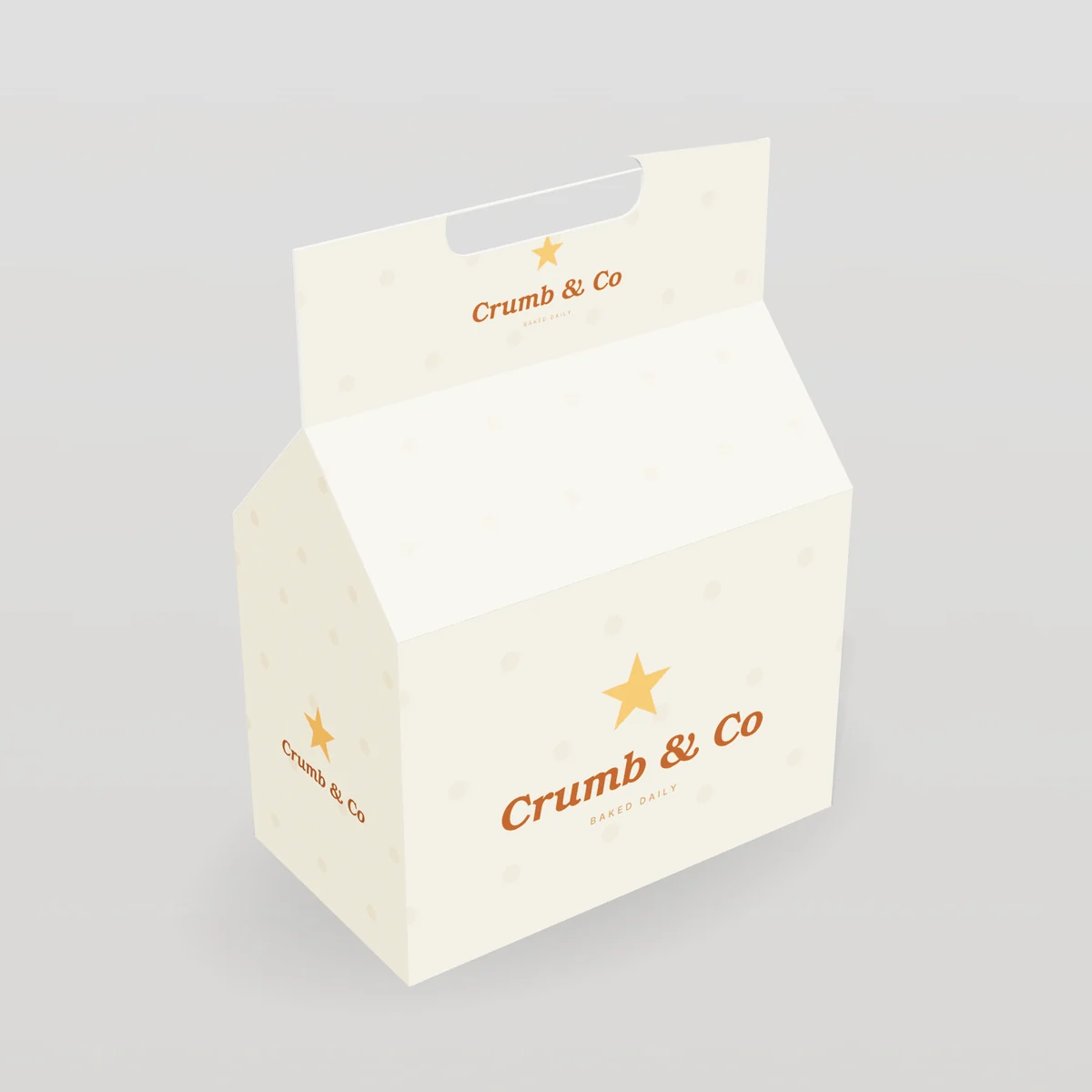
- Paperboard (also called boxboard or carton board): a single, thick, stiff sheet. Built for printing and retail. Cereal boxes, cosmetic cartons and medicine boxes are paperboard.
- Chipboard (also called greyboard, or rigid board when thick): dense, recycled board. Built for rigidity. Rigid gift boxes, puzzle backs and notepad backs are chipboard.
So "corrugated vs cardboard" is a bit like "sedan vs car": corrugated board is one specific type of what people loosely call cardboard. The rest of this guide explains how each material is made, how they compare on strength, print and price, and how to specify the right one for your packaging.
What is corrugated board?
Corrugated board (often called corrugated fiberboard or corrugated cardboard) is a sandwich:
- an outer liner, a flat sheet of paper (linerboard),
- a fluted medium, a sheet of paper formed into a series of arches,
- an inner liner, another flat sheet.
The arches act like a series of columns and beams. They resist crushing from above, cushion impacts and keep the board stiff while using surprisingly little paper. That is why corrugated is the dominant material for shipping boxes in the US.
How corrugated is made
Corrugated board is made on a machine called a corrugator. Rolls of paper are fed in, the medium is softened with steam and pressed between heated corrugating rolls to form flutes, starch adhesive is applied to the flute tips and the liners are bonded on. The continuous web is dried, cut into sheets and sent to converting, where it is printed, die-cut, folded and glued into boxes.
Flute sizes
The size of the arches, called the flute, is the main way corrugated is specified. Flutes are named with letters that reflect the order they were introduced, not their size.
| Flute | Approx. thickness | Flutes per foot (approx.) | Typical uses |
|---|---|---|---|
| A-flute | 3/16 in (4.8 mm) | 33 | Cushioning, some heavy shippers |
| B-flute | 1/8 in (3.2 mm) | 47 | Shippers for lighter goods, die-cut boxes, displays |
| C-flute | 5/32 in (4 mm) | 39 | The standard shipping carton |
| E-flute | 1/16 in (1.6 mm) | 90 | Mailer boxes, retail-ready packs, crisp printing |
| F-flute | 1/32 in (0.8 mm) | 128 | Small retail boxes, premium printed packaging |
| BC double-wall | about 1/4 in (6.4 mm) | — | Heavy, fragile or stacked freight |
Single-wall board has one medium and two liners. Double-wall has two mediums and three liners (for example B + C flute, called BC). Triple-wall adds a third, and is used for very heavy industrial shipping.
How corrugated strength is measured
Two tests are common in the US:
- Edge Crush Test (ECT): how much force a strip of board can take on its edge before it crushes, in pounds per linear inch. ECT predicts stacking strength, which is what matters most for most shipping. Common grades: 32 ECT (standard single-wall), 44 ECT (heavy single-wall), 48 ECT and higher (double-wall).
- Mullen (burst) test: how much pressure punches through the board, in pounds per square inch. It relates to puncture resistance and rough handling. Common grades: 200# and 275# single-wall.
The rating is often printed on the box maker's certificate, the round stamp on the bottom flap of many shipping boxes. You can learn more in our corrugated cardboard material guide or estimate box strength with our box strength calculator.
Linerboard and medium grades
Liners and mediums come in different weights, measured in pounds per thousand square feet (lb/MSF). Heavier liners give more strength and a better printing surface. Common liners range from about 26 to 90 lb/MSF; mediums are typically 23 to 36 lb/MSF. Liners can be:
- Kraft (brown): unbleached, strong, natural-looking.
- White top / mottled white: a white surface layer on a kraft base for brighter print.
- Bleached (full white): the cleanest white for full-color printing.
- Recycled (test liner): made largely from recovered fiber.
What is paperboard?
Paperboard is a single, thick, stiff paper product. There is no fluted middle layer; the strength comes from thickness and fiber. In the US, paperboard thickness is specified in points (pt), where 1 pt = 0.001 inch. Folding cartons are typically 14–30 pt. As a loose rule of thumb, paper becomes "board" at roughly 10–12 pt or about 200–250 g/m², though definitions vary by region and standard.
Paperboard is made on a paper machine in several plies, often with a clay coating on top for a smooth, bright printing surface. It is then printed (usually by offset lithography), coated or laminated, die-cut and folded into folding cartons: tuck end boxes, auto-lock bottom boxes, sleeves, window boxes and more.
Main paperboard grades
| Grade | What it is | Look | Typical uses |
|---|---|---|---|
| SBS (solid bleached sulfate) | Bleached virgin fiber, usually clay-coated | Bright white throughout | Cosmetics, pharma, premium retail |
| CUK / CNK (coated unbleached kraft) | Unbleached virgin kraft, coated top | Brown back, printable white or brown top | Beverage carriers, strong cartons, natural looks |
| FBB (folding boxboard) | Virgin mechanical pulp middle, bleached outer layers | White, light and stiff | Food, cosmetics, confectionery |
| CRB / URB (coated or uncoated recycled board) | Recycled fiber | Grey back; coated top prints well | Cereal, dry food, household goods |
See our SBS paperboard, kraft paperboard and recycled paperboard pages for detailed specifications.
Where paperboard wins
- Print quality. The smooth coated surface takes fine detail, small type, gradients and accurate brand color.
- Retail presence. Crisp edges and finishes like foil, embossing, soft-touch and spot UV.
- Efficiency at volume. Offset printing on sheets of paperboard is very economical at thousands of units.
- Lightweight. Ideal for products that sit on a shelf.
Where paperboard is not enough
Paperboard alone is rarely strong enough to ship a product through a parcel network. A cosmetic carton protects against scuffs and dust, not against a 3 ft drop. That is why e-commerce orders usually put a paperboard carton inside a corrugated shipper.
What is chipboard (greyboard)?
Chipboard is a dense, uncoated board made mostly from recycled paper. It is usually grey or brown and has no fluted layer. Thin chipboard (around 20–30 pt) is used for backing cards, notepad backs and simple cartons; thick chipboard, often called greyboard or rigid board, typically 1–3 mm, is the core of rigid boxes.
Rigid boxes are made by cutting greyboard into panels, forming them into a box and wrapping them in a printed paper. Unlike corrugated and paperboard boxes, rigid boxes do not fold flat. They feel substantial and are used for luxury, gifting, jewelry, electronics and premium cosmetics. See rigid chipboard and rigid boxes.
Corrugated vs paperboard vs chipboard: side by side
| Factor | Corrugated board | Paperboard | Chipboard / greyboard |
|---|---|---|---|
| Structure | Liner + flutes + liner | One thick multi-ply sheet | One dense sheet |
| Thickness | 1/32 in to 1/4 in+ | 0.014–0.030 in (14–30 pt) | 0.020 in to about 3 mm |
| Strength | Highest strength-to-weight; best for shipping | Moderate; stiff but not crush-resistant | Very rigid in thick grades |
| Cushioning | Good (flutes absorb shock) | Low | Low |
| Print quality | Good to excellent (E/F-flute, white liners) | Excellent | Printed on a wrap, not directly |
| Folds flat? | Yes | Yes | Rigid boxes do not |
| Typical box styles | Shipping boxes, mailers, displays | Tuck end, auto-lock, sleeves, windows | Rigid lid and base, magnetic, drawer |
| Relative cost per box | Low to medium | Low at volume | High |
| Recyclability (US) | Widely accepted curbside | Widely accepted when not heavily laminated | Board is recyclable; wraps, magnets and foils complicate it |
Is cardboard the same as corrugated?
Not quite. All corrugated board is "cardboard" in everyday speech, but not all cardboard is corrugated. If you can see wavy lines when you look at the cut edge of the box, it is corrugated. If the edge is solid, it is paperboard or chipboard.
A quick field test:
- Look at the edge. Waves = corrugated. Solid = paperboard or chipboard.
- Bend a corner. Paperboard creases neatly; corrugated crushes along the flutes; thick chipboard resists and then cracks.
- Check the color. Solid grey on the inside or edge usually means recycled board or chipboard. Brown inside with white outside can be white-top kraft corrugated or coated kraft paperboard.
Which material does your product need?
Start from the product's journey, not the material:
It ships alone through a parcel network
Use corrugated. For light, branded DTC orders, an E-flute mailer. For heavier items, a B- or C-flute shipping box. For heavy or stacked loads, double-wall. Read mailer box vs shipping box to choose the style.
It sits on a retail shelf
Use paperboard. SBS for the brightest, most premium print; kraft for a natural look; recycled board for economy. Finish with matte, gloss or soft-touch coatings, and add foil or embossing for premium lines. Then ship cartons in corrugated cases.
It is a premium gift or luxury product
Use rigid chipboard wrapped in printed or specialty paper. Add a magnetic closure, a ribbon or a custom insert. Ship it inside corrugated.
It is heavy and needs to look good
Use printed corrugated: E-flute with a white liner prints well enough for full-color branding, and B-flute adds strength. For the highest print quality on corrugated, a litho-laminated construction glues a printed paper sheet onto the corrugated board.
It is food
All three can be used with appropriate food-contact grades and barriers. Paperboard cartons dominate dry food retail; corrugated is used for shipping, pizza and produce; chipboard appears in confectionery and gift packaging. Check food-contact requirements for direct contact; our labeling and compliance guide has an overview.
Cost comparison
For the same footprint, costs typically rank like this, from lowest to highest per unit at a few thousand units:
- Plain corrugated RSC: the least expensive per cubic inch.
- Printed paperboard carton: very economical at volume with offset printing, but usually small.
- Printed corrugated mailer: more board and more print than an RSC.
- Rigid chipboard box: the most expensive, because of the manual wrapping and thick board.
Material is only one driver. Size, print method, finishes, inserts and quantity often move the price more than the board itself. Our packaging cost guide breaks down every driver, and the packaging cost calculator gives live estimates.
Sustainability: which is greener?
All three are paper-based and widely recyclable in the US when they are clean and not heavily laminated with plastic. Corrugated is one of the most recovered packaging materials in the country. Some differences:
- Corrugated commonly contains a significant share of recycled fiber and is accepted in nearly all curbside programs.
- Paperboard ranges from 100% virgin fiber (SBS) to 100% recycled (CRB). Both are recyclable; recycled grades make strong recycled-content claims possible.
- Rigid boxes use recyclable greyboard, but magnets, plastic trays, foil laminates and glued wraps can make recycling harder. They are often kept and reused, which also counts.
The most effective sustainability choice is usually using less material: right-sized boxes, lighter grades where strength allows, and fewer plastic components. Read the sustainable packaging guide for more.
How to specify board on a quote
Avoid "cardboard" on a purchase order or a quote request. Instead, specify:
- For corrugated: flute (E, B, C, BC), strength (ECT or Mullen), liner color (kraft, white top, bleached white) and any print.
- For paperboard: grade (SBS, CUK, CRB, FBB), caliper in points (for example 18 pt), coating side and finish.
- For rigid boxes: greyboard thickness in millimeters (for example 2 mm), wrap paper type, and any lining.
Examples of clear specifications:
- "Mailer box, E-flute, 32 ECT, white top outside, kraft inside, full color outside, 1 color inside."
- "Tuck end carton, 18 pt SBS, C1S, CMYK + soft-touch lamination, foil logo."
- "Two-piece rigid box, 2 mm greyboard, 157 gsm art paper wrap printed CMYK, matte lamination."
If you are not sure, describe the product, its weight and how it ships, and we will recommend the board. Every quote comes with a 3D proof.
A short history of corrugated and paperboard
Corrugated paper was first patented in England in 1856, to line tall hats. In the US, Albert Jones patented corrugated paper for wrapping bottles in 1871, and Oliver Long added liners on both sides in 1874, creating the board we recognize today. Around 1890, Robert Gair in Brooklyn developed a method of cutting and creasing paperboard in one operation, which made mass-produced folding cartons practical. In the early twentieth century corrugated boxes began to replace wooden crates for shipping, and by the mid-century they had become the standard.
Glossary
- Board: general term for thick paper products used in packaging.
- Caliper: thickness, usually in points (thousandths of an inch) for paperboard.
- Flute: the wavy middle layer of corrugated board; also the size class (A, B, C, E, F).
- Liner (linerboard): the flat outer and inner sheets of corrugated board.
- Medium: the paper formed into flutes.
- ECT: Edge Crush Test, a measure of stacking strength.
- Mullen: burst strength test.
- Folding carton: a box made from paperboard that is shipped flat and folded by the user.
- Rigid box: a box made from thick greyboard that is set up at the factory and does not fold flat.
- Litho-laminate: a printed paper sheet laminated onto corrugated board.
For more terms, see our packaging glossary.
Summary
- "Cardboard" is an umbrella word. On a spec, say corrugated, paperboard or chipboard.
- Corrugated = liner + flutes + liner. Best for shipping.
- Paperboard = one stiff sheet, specified in points. Best for retail cartons and fine print.
- Chipboard / greyboard = dense recycled board. Best for rigid, premium boxes.
- Choose from the product's journey: ship it, shelve it, or gift it.
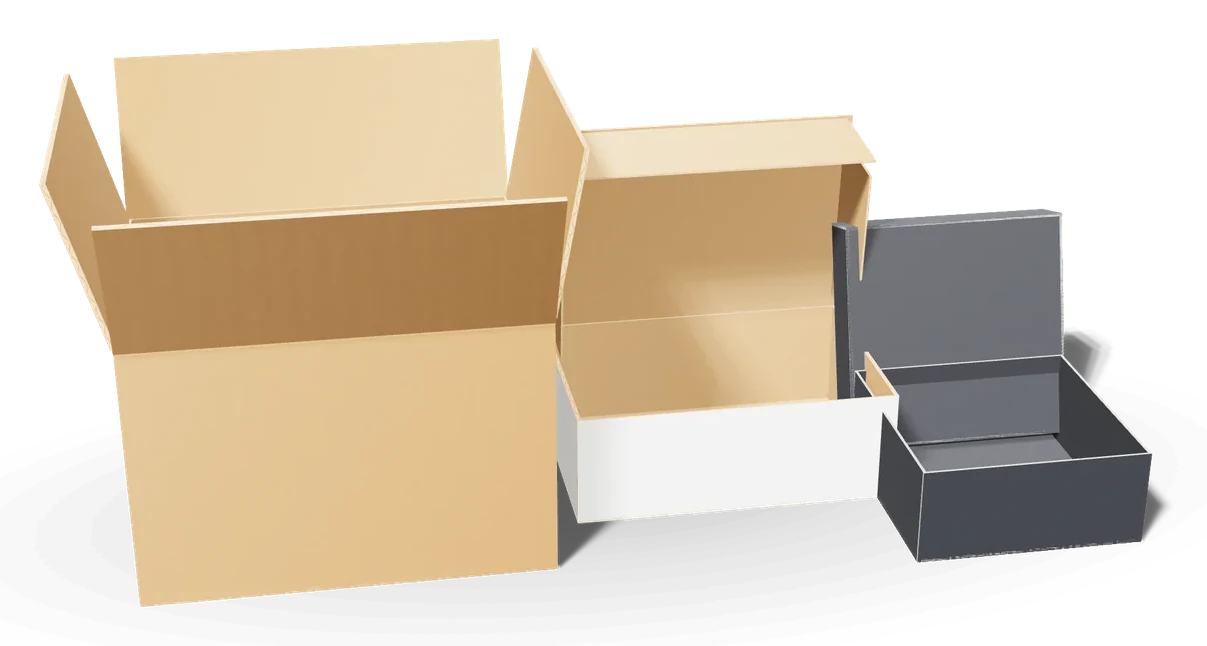 GuidePackaging materials & board gradesUnderstand corrugated flutes and ECT, paperboard caliper (pt), SBS vs kraft vs recycled board, and rigid greyboard, so you can specify packaging like a pro.
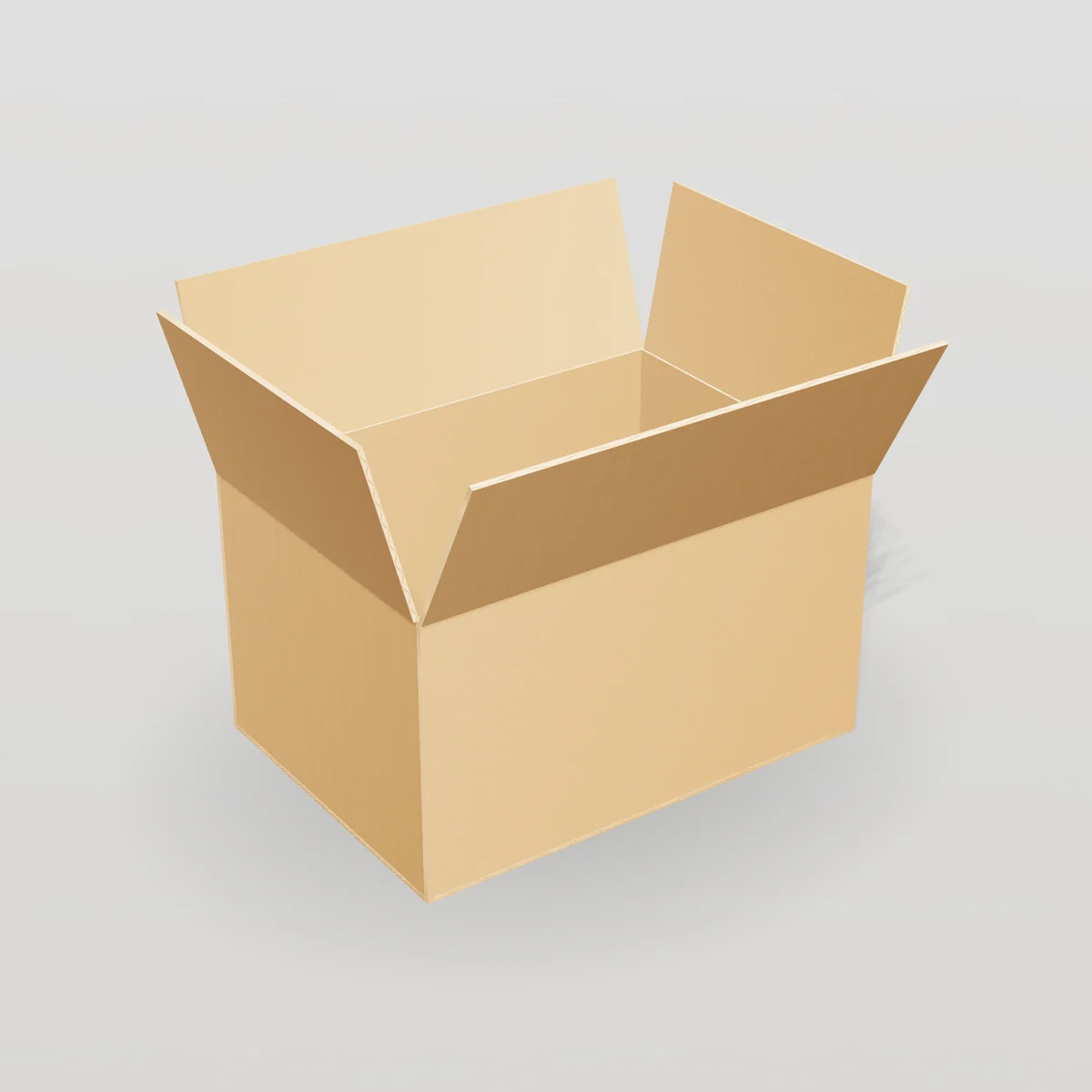 MaterialsCorrugated CardboardFluted board for mailers and shippers: E, B, C and double-wall grades from 32 to 48 ECT.
 MaterialsSBS PaperboardBright white premium paperboard (14–24pt) for cosmetics, pharma and retail cartons.
 MaterialsRigid ChipboardThick 1.2–3 mm greyboard wrapped in paper for luxury setup boxes.
Key terms on this page
- Corrugated board
- Board made of a fluted (wavy) paper medium glued between flat liners. It is strong, light and the main material for shipping boxes and mailers.
- Board
- A general term for thick paper materials used in packaging, including paperboard, corrugated board and greyboard.
- Paperboard
- Thick paper (usually 0.010 inch or more) used for folding cartons, such as SBS, kraft and recycled board.
- Carton
- A box made from paperboard, usually a folding carton. In shipping, "carton" can also mean a corrugated case.
- Chipboard
- A dense, usually recycled board. Thin chipboard is used for backing cards; thick chipboard (greyboard) forms the core of rigid boxes.
- Greyboard
- Thick, dense recycled board used as the structural core of rigid boxes, usually 1.2 to 3 mm thick.
- Flute
- The wavy middle layer of corrugated board. Flute size (A, B, C, E, F) determines thickness, cushioning and strength.
- Caliper
- The thickness of paper or board. Paperboard caliper is usually given in points, where 1 point equals 0.001 inch.
- Liner
- The flat paper faces of corrugated board. Can be kraft (brown) or bleached (white).
- Linerboard
- The flat paper used as the inner and outer faces of corrugated board.
- Cushioning
- Materials that absorb shock and vibration to protect products, such as paper void fill, molded pulp, foam or air pillows.
- B-flute
- A corrugated flute about 1/8 inch thick. It offers good crush resistance and printability and is used for shipping boxes, heavier mailers and die-cut shippers.
- C-flute
- A corrugated flute about 5/32 inch thick and the most common flute for standard shipping cartons, balancing cushioning, stacking strength and cost.
- E-flute
- A thin corrugated flute about 1/16 inch thick. It prints sharply and folds crisply, making it the standard for mailer boxes.
- F-flute
- A very thin corrugated flute (micro-flute) about 1/32 inch thick, used for premium retail boxes needing extra strength.
- BC double-wall
- Corrugated board with two fluted layers (B and C) and three liners. It is about 1/4 inch thick and used for heavy, fragile or long-stacked loads.
- Double-wall
- Corrugated board with two fluted layers, stronger than single-wall board.
- Single-wall
- Corrugated board with one fluted layer and two liners.
- ECT (edge crush test)
- A test measuring how much force corrugated board can take on its edge before crushing, in pounds per inch. It predicts stacking strength.
- Stacking strength
- How much weight a box can carry from boxes stacked on top of it.
- Box maker's certificate
- A printed stamp on corrugated boxes stating the board construction, strength rating (ECT or Mullen), size and weight limits and the manufacturer.
- Kraft
- Paper or board made from unbleached wood pulp, naturally brown and strong.
- Auto-lock bottom
- A pre-glued carton base, also called a crash-lock bottom, that locks into place automatically when the flattened box is opened. Stronger and faster to pack than a tuck bottom.
- SBS (solid bleached sulfate)
- Premium paperboard made from bleached virgin fiber, bright white throughout, with the best print and finish quality.
More definitions in our packaging glossary.
Discussed on Quora & X
Frequently asked questions
Is corrugated the same as cardboard?
Corrugated board is one type of what people call cardboard. It has a wavy fluted layer between two flat liners. Cardboard is an everyday word that also covers paperboard and chipboard, which have no fluted layer.
How can I tell if a box is corrugated?
Look at a cut edge. If you see a wavy layer between two flat sheets, it is corrugated. If the edge is solid, it is paperboard or chipboard.
Which is stronger, corrugated or paperboard?
Corrugated is much stronger for shipping and stacking because its flutes resist crushing and absorb impact. Paperboard is stiff and prints beautifully but is not designed to protect products in parcel networks on its own.
What is chipboard used for?
Thin chipboard is used for backing cards, notepad backs and simple cartons. Thick chipboard, called greyboard, forms the walls of rigid gift boxes, which are wrapped in printed paper.
What is the difference between paperboard and cardstock?
Cardstock is heavy paper used for printing cards and invitations, usually thinner than packaging paperboard. Paperboard is engineered for folding cartons, with properties like stiffness, crease performance and coating suitable for packaging.
Is corrugated cardboard recyclable?
Yes. Corrugated is widely accepted in US curbside recycling programs. Keep it clean and dry and flatten it before recycling.
What does 32 ECT mean?
It means a strip of the board can withstand 32 pounds of force per linear inch on its edge before crushing. 32 ECT is the most common grade for single-wall shipping boxes.
What is the thinnest corrugated board?
Among common grades, F-flute (about 1/32 inch) and E-flute (about 1/16 inch) are the thinnest. They are used for small retail boxes and printed mailers.
Related products & pages
MaterialsCorrugated CardboardFluted board for mailers and shippers: E, B, C and double-wall grades from 32 to 48 ECT.
MaterialsSBS PaperboardBright white premium paperboard (14–24pt) for cosmetics, pharma and retail cartons.
MaterialsRigid ChipboardThick 1.2–3 mm greyboard wrapped in paper for luxury setup boxes.
 MaterialsKraft PaperboardNatural brown, unbleached board with a handmade, eco-forward look.