Quick answer
Fast 1–3 color water-based printing on corrugated: the lowest cost for simple, high-volume designs. Typical turnaround is 10–14 business days after proof approval.
What is flexographic printing?
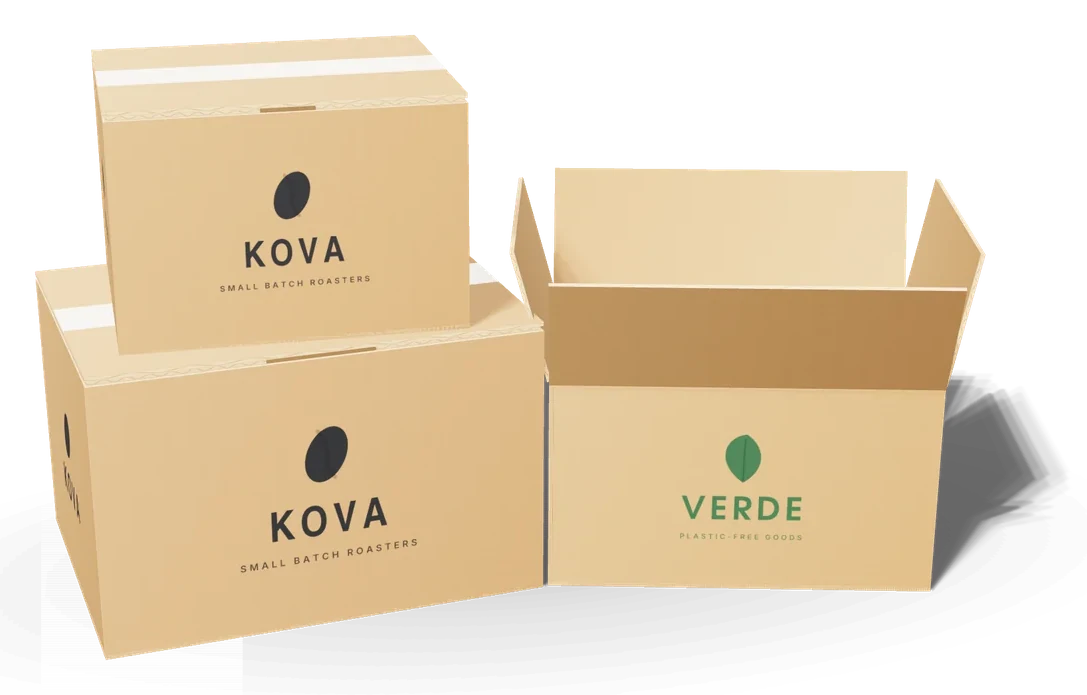
Flexographic printing (flexo) uses flexible relief plates made of rubber or photopolymer, mounted on cylinders. Fast-drying, usually water-based inks are transferred from an anilox roller to the raised areas of the plate and then onto the board. Flexo is the most common method for printing directly on corrugated shipping boxes, and it is also widely used for labels and flexible packaging.
Strengths
- Low unit cost at volume
- Fast production on large runs
- Prints directly on corrugated, even rough kraft liners
- Water-based inks keep boxes recyclable
- Bold, durable graphics for logos and handling marks
Limitations
- Plates per color add setup cost
- Less fine detail than offset or digital, especially on fluted board
- Best with 1–3 spot colors; full-color process flexo is possible but less common for small runs
How flexographic printing works
Flexography (flexo) uses flexible relief plates made of photopolymer, mounted on cylinders. The raised image areas pick up ink from an anilox roller, a precisely engraved cylinder that meters a consistent film of ink, and transfer it to the substrate. Each color has its own plate and print station.
Flexo is used across packaging: corrugated boxes, paper bags, labels, flexible films and tape. For corrugated, there are two main approaches:
- Post-print: finished corrugated sheets are printed directly, often on a flexo folder-gluer that prints, slots, folds and glues regular slotted containers in one pass.
- Pre-print: the liner is printed on a roll before it is made into corrugated board, giving higher quality on very long runs.
Water-based inks are standard for corrugated flexo, which dry quickly into the absorbent liner and keep boxes easy to recycle.
Why flexo dominates shipping boxes
- Speed: flexo folder-gluers convert and print boxes at high speed.
- Low cost per unit at volume.
- Durable inks that withstand shipping.
- Ideal for simple, bold graphics: logos, handling marks, text.
- Integrated converting: printing, slotting and gluing in one machine for RSCs.
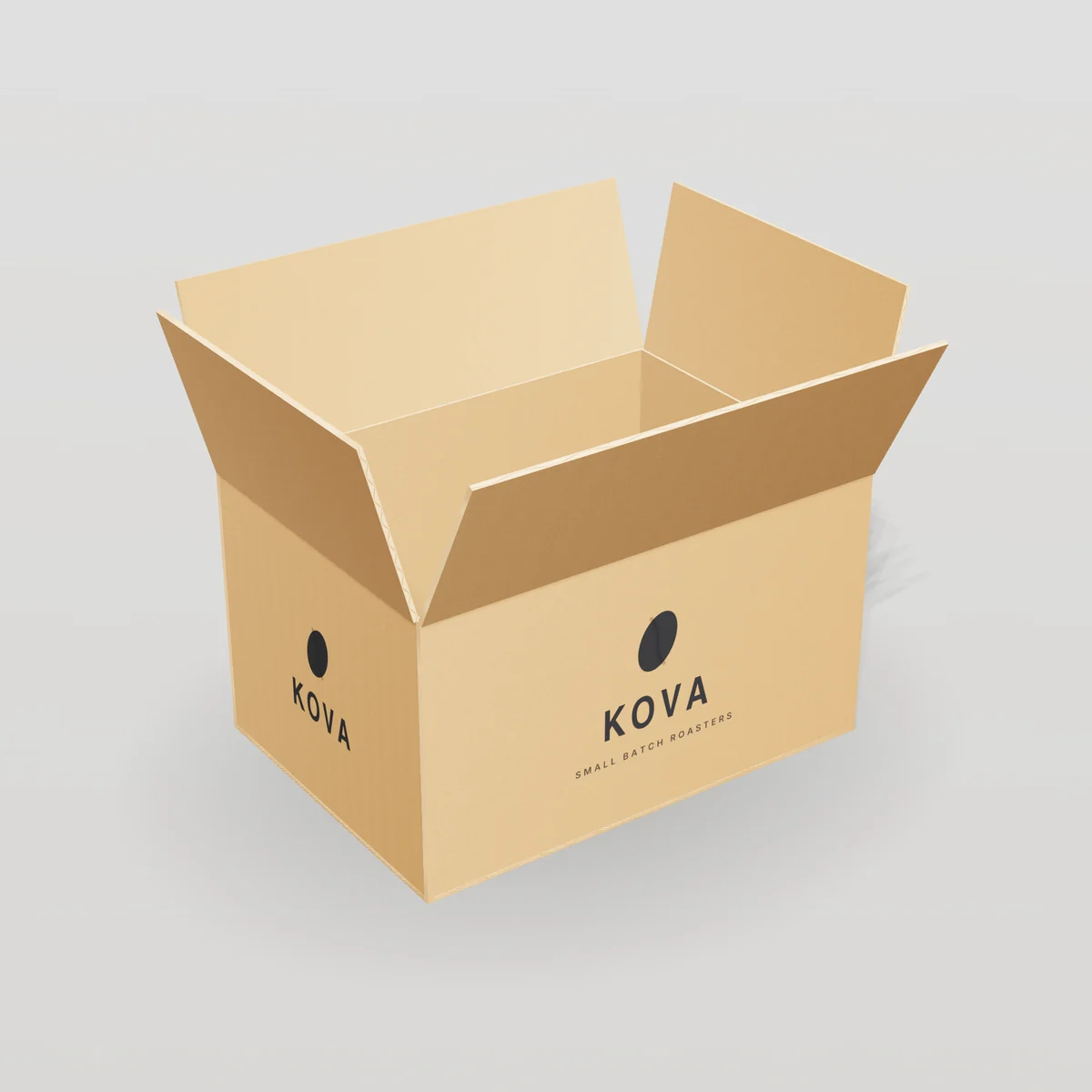
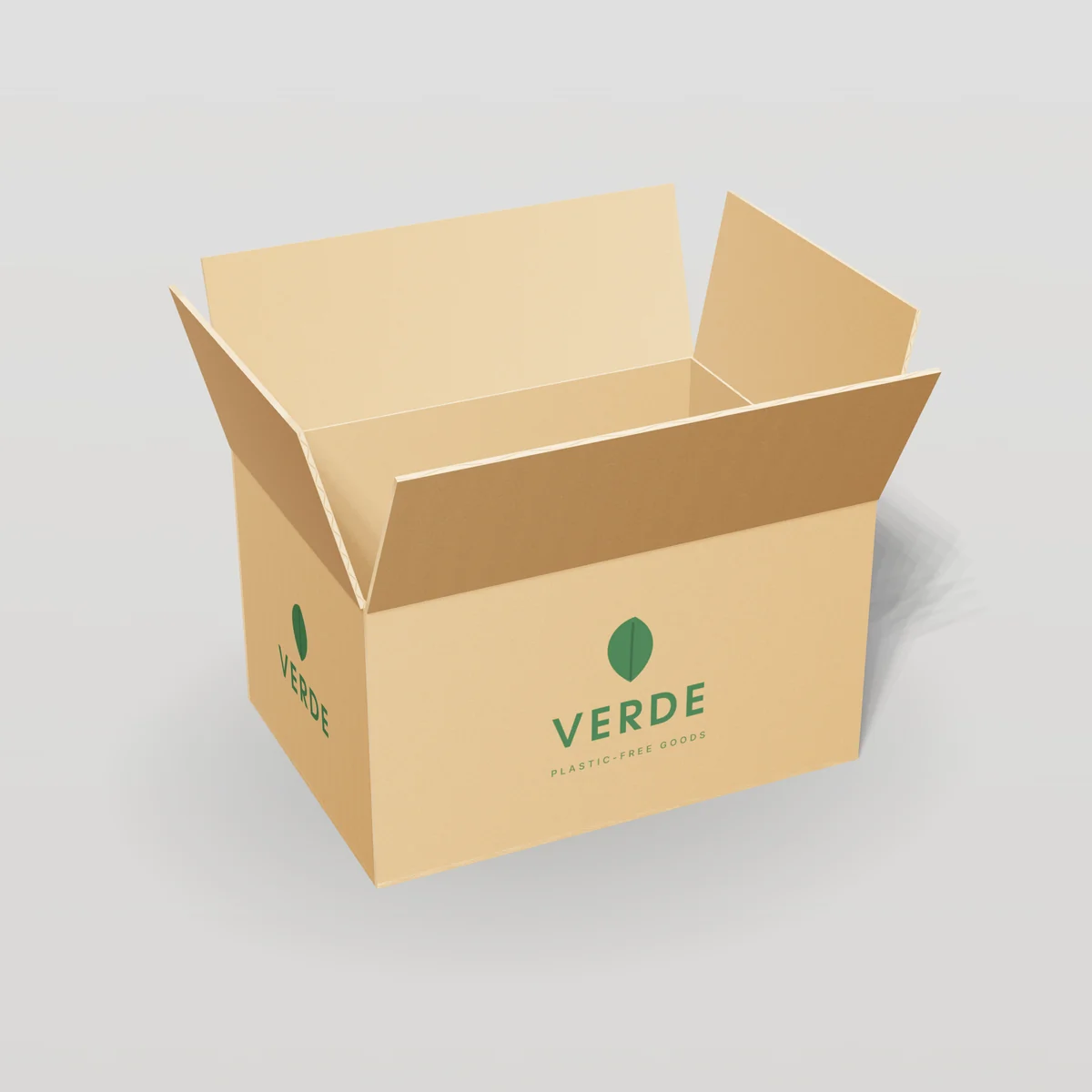
Most brown shipping boxes with a one- or two-color logo are printed by flexo.
Designing for flexo on corrugated
Corrugated board is not perfectly flat: the flutes create subtle ridges, and the liner absorbs ink. Design with that in mind:
| Guideline | Recommendation |
|---|---|
| Number of colors | 1–3 spot colors for best value |
| Minimum line weight | About 1 pt (0.35 mm), more on B/C flute |
| Minimum text size | About 8 pt; larger for reversed text |
| Halftones and gradients | Coarse screens only; avoid photos |
| Solids | Good, but may show slight "washboarding" on fluted board |
| Registration between colors | Allow tolerance; avoid tight multi-color registration |
| Reversed (knockout) text | Bold sans-serif fonts at larger sizes |
| Barcodes | Print in the direction of board travel where possible; check scan grade |
On kraft board, dark colors look best; on white-top liners, colors are brighter.
Plates and setup costs
Each color needs a photopolymer plate sized to the print area. Plates are a one-time cost per design and can be stored and reused for reorders as long as artwork does not change. Plate costs are moderate, which is why flexo is most economical at roughly 1,000 boxes and above, and very economical at tens of thousands.
Flexo vs. digital on corrugated
| Flexo | Digital inkjet | |
|---|---|---|
| Plates | Yes | No |
| Best quantities | 1,000+ | 100–2,000+ |
| Graphics | 1–3 spot colors, bold | Full color, photos, gradients |
| Cost per unit at volume | Lowest | Higher |
| Versioning | Each version needs plates | Free |
| Pantone accuracy | Excellent with spot inks | Close with process colors |
Many brands start with digital for small runs and switch to flexo for their highest-volume shipping boxes once designs are settled.
Flexo beyond boxes
Flexo also prints many packaging accessories: custom packing tape, paper bags, poly mailers, labels and flexible films for stand-up pouches. On films, modern high-definition flexo achieves detailed full-color graphics.
Sustainability
Water-based flexo inks on corrugated are compatible with standard recycling. Flexo printing on kraft with one color is one of the lowest-impact ways to brand a shipping box: minimal ink, no lamination and easily recyclable.
When to choose flexo
- Shipping boxes and mailers in quantities of 1,000+ with simple graphics
- One- to three-color logos and text
- Reorders of a stable design
- Cost-sensitive, high-volume programs
Choose digital for full-color short runs and offset or litho-lamination for photographic premium graphics.
A short history of flexography
Flexography grew out of "aniline printing" in the early twentieth century, when rubber plates and fast-drying dyes were used to print paper bags and wrappers. The name "flexography" was adopted in the 1950s to give the process a fresh identity as inks and plates improved. The real transformation came with photopolymer plates, laser-engraved ceramic anilox rollers and digital plate-making, which brought dramatic gains in detail and consistency. Today flexo prints a huge share of the world's packaging, from corrugated shipping boxes to labels and snack bags, and high-definition flexo can reproduce fine graphics that once required offset or gravure.
The anilox roller: why flexo is consistent
The anilox roller is the unsung hero of flexo. Its surface is engraved with millions of tiny cells, each holding a precise volume of ink. A doctor blade scrapes away excess ink so only the cells remain filled. The plate then picks up exactly the ink it needs.
- Higher cell volume carries more ink for strong solids on absorbent kraft.
- Finer cell counts carry less ink for detailed images and halftones.
- Printers choose anilox rollers to suit the substrate and design, which is part of the press setup for your job.
For brands, the takeaway is that flexo color is controlled mechanically and repeats well across long runs and reorders.
Inks for flexo packaging
| Ink type | Used on | Notes |
|---|---|---|
| Water-based | Corrugated, paper bags, kraft | Standard for corrugated; recyclable-friendly |
| UV-curable | Labels, films, some board | Fast curing, high gloss, durable |
| Solvent-based | Flexible films | Common on plastic films; controlled emissions required |
| Specialty (metallic, white, fluorescent) | Various | For special effects and opacity on kraft or film |
On corrugated, water-based inks absorb into the liner and dry fast, which is why flexo-printed shipping boxes come off the line ready to bundle.
Pantone matching in flexo
Flexo usually prints with mixed spot inks rather than CMYK, so your brand color can be mixed to a Pantone reference. The final appearance depends on the substrate:
- On white-top liner, colors look close to the Pantone guide (use coated or uncoated references as advised).
- On kraft liner, colors look darker and warmer; a Pantone color mixed for white board will not look the same on kraft.
- Drawdowns (ink samples on the actual board) are the best way to approve color for flexo jobs.
Quality checks in flexo production
Printers check flexo work for:
- Registration between colors
- Solid density and color against the approved standard
- Fill-in or dot gain in fine text and halftones
- Washboarding (ridged appearance) on fluted board
- Barcode readability with a verifier
- Ink rub resistance so print survives shipping
Common mistakes with flexo artwork
- Fine serif text and hairlines that fill in or break.
- Photos and soft gradients that band or posterize on corrugated.
- Tight registration between colors (thin outlines around shapes).
- Expecting white-board colors on kraft.
- Barcodes too small or printed across flutes without checking scan grade.
- Full-bleed solids on B/C flute, which can look uneven.
Worked example: a wholesale shipping carton
A food brand ships cases of 12 jars to retailers in a 16 × 12 × 10 in RSC, 5,000 boxes per order.
- Board: C-flute 32 ECT kraft.
- Print: two-color flexo: brand logo in dark green, product name and case count in black, plus handling icons.
- Barcode: case-level barcode (for example ITF-14) printed large with quiet zones.
- Result: a durable, recognizable case at a very low cost per box, easy to recycle.
Flexo plates and dots
Flexo plates are made from photopolymer, a light-sensitive material that hardens where it is exposed. The raised areas of the plate carry ink; the recessed areas do not. Modern digital platemaking images plates with a laser, which gives sharper detail and more consistent results than older film-based methods. Flat-top dot technologies help plates hold small highlight dots and print smoother tones, which has steadily improved how photographs and gradients reproduce in flexo.
Plates are flexible, which lets them wrap around a cylinder and print on uneven surfaces like corrugated board. That flexibility is also why fine detail is harder: the plate compresses slightly under pressure, and dots grow. Designers working with flexo allow for this "dot gain" by avoiding very small highlight dots, using minimum line weights and keeping type above a minimum size.
Pre-print and post-print corrugated
There are two main ways to print corrugated with flexo.
Post-print means printing directly onto finished corrugated board. It is the most common method for shipping boxes. Because the press prints onto the ridged surface of the flutes, very fine detail is limited, and heavy solids can show slight "washboarding", a faint striped pattern where the flutes sit under the liner.
Pre-print means printing the liner paper on a roll before it is made into corrugated board. Printing on smooth, flat paper allows much finer detail and process color, often close to offset quality. Pre-print is used for high-volume retail-ready packaging and displays, but it requires large quantities because the printed liner must be run through a corrugator.
For short and medium runs where high graphic quality is needed on corrugated, litho-lamination (an offset-printed sheet laminated to corrugated) and digital printing are the usual alternatives.
Spot colors, process color and simple graphics
Most flexo printing on shipping boxes uses one to four spot colors. Each color is a separate ink mixed to a specific shade and needs its own plate. Spot colors give strong, consistent brand colors and keep setup simple. Process color (CMYK) flexo reproduces photographs and full-color artwork, especially on pre-print and on smoother boards, but post-print process color on corrugated has limits in detail and smoothness.
For many brands, a one or two-color design on a kraft or white box is the most cost-effective and recognizable approach. Bold logos, simple icons, patterns and clear typography all reproduce beautifully.
Registration and trapping
When several colors print one after another, each plate must line up precisely. Small variations in registration can leave thin gaps or overlaps where colors meet. Designers use trapping, a slight overlap of adjoining colors, to hide these variations. Flexo generally needs more generous trapping than offset. Your supplier's prepress team usually applies trapping, but designs that avoid very tight color fits, such as thin colored outlines around other colors, print more reliably.
Barcodes on flexo
Barcodes print well in flexo when a few rules are followed. Bars should run in the direction of print travel where possible, so any slight stretching makes bars longer rather than wider. Prepress applies a bar width reduction to compensate for ink spread. Print barcodes in a single dark color on a light background, never in a tint or several colors, and keep quiet zones clear. Ask for barcode verification on the first run if your products are scanned at retail or in warehouses.
Flexo on films, labels and pouches
Flexo is not only for corrugated. It is widely used for flexible packaging such as films, pouches and wrappers, for labels and for paper bags. On films, flexo prints with high speed and consistent color across long runs, often with white ink as a base layer under colors. Many flexible packaging lines print, laminate and slit in a series of steps, producing printed rolls that are later formed into pouches or wrappers. If your packaging system includes cartons, pouches and labels, aligning color references across all three helps the brand look consistent even though each is printed differently.
Water-based, UV and solvent inks
Flexo inks fall into three main families:
- Water-based inks are standard on corrugated and paper. They dry by absorption and evaporation and are well suited to recycling.
- UV-curable inks dry instantly under ultraviolet light, giving sharp detail and good rub resistance. They are common on labels and some cartons.
- Solvent-based inks are used mainly on non-absorbent films where fast drying and adhesion are needed, with emissions controlled at the printing plant.
For paper-based packaging, water-based inks are usually the right choice. They support recyclability and perform well on kraft and white liners.
Costs and reorders
Flexo has a fixed setup cost in plates and, for die-cut boxes, a cutting die. These are one-time costs for a given design and size. Once made, they can be stored and reused for reorders, so the second and third orders of the same box are cheaper than the first. If you change artwork, only the affected plates need to be remade. For brands with stable designs and regular reorders, flexo becomes very economical over time. Keep artwork changes to scheduled updates so you do not pay for new plates more often than necessary.
Proofing flexo jobs
Flexo proofs are usually digital PDFs showing artwork on the dieline with colors indicated. For color-critical work, ask for a printed draw-down of your ink on the actual board, which shows how the color looks on kraft or white liner. On the first production run, a press check or approved production sample becomes the reference for future reorders.
Flexo artwork checklist
- One to four spot colors where possible, with Pantone references.
- Minimum line weights and type sizes confirmed with your supplier.
- No fine gradients or very small highlight dots on post-print corrugated.
- Barcodes in a single dark color, oriented correctly, with quiet zones.
- Generous trapping between adjacent colors.
- Artwork placed on the correct dieline, allowing for flaps and folds.
Flexo for retail-ready and display packaging
Retail-ready packaging, cases designed to go straight onto shelves, and corrugated displays often combine flexo with other methods. High-volume retail-ready trays may be printed by pre-print flexo for strong graphics. Smaller runs of displays may use digital or litho-laminated printing. Flexo's strength is consistency across very large quantities, which suits national retail programs where the same case appears in many stores.
Choosing board color for flexo
Flexo prints on kraft and white liners. Kraft is economical and natural-looking, and dark inks such as black, navy and deep green print with strong contrast. Light colors and pastels look muted on kraft because the brown shows through. White liners give brighter colors and suit designs with lighter tones. Mottled white liners are a cost-effective middle ground. Choose the liner color with your design rather than after it, because the same artwork looks very different on each.
Flexo color consistency across runs
Flexo is highly consistent when ink color, anilox volume, plate and board stay the same. Changes in board, such as a different liner supplier or a recycled liner with a different shade, can shift appearance. Keep an approved reference sample and share it at every reorder. For brand-critical colors, ask your supplier to record ink formulas and press settings so they can repeat the result.
Flexo printing on the inside of boxes
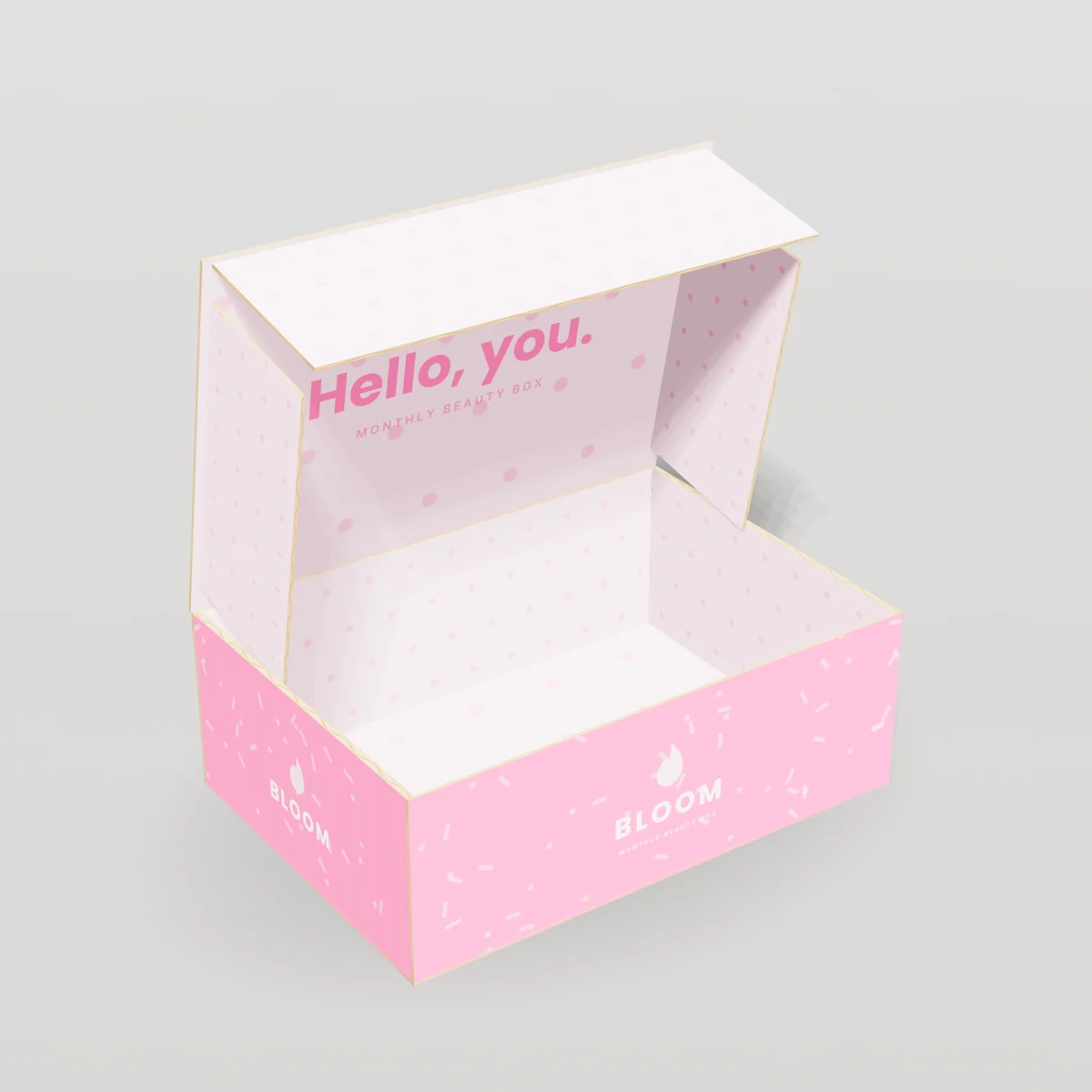
Shipping boxes can also be printed inside with flexo, often in one color. A message or pattern inside a plain kraft shipper adds a surprise at modest cost. Interior flexo printing is usually planned with the outside print and requires the board to pass through the press for each side, or a press set up to print both sides.
When flexo is not the best choice
Flexo is excellent for long runs of simple graphics, but other methods may suit better when you need fewer than a few thousand boxes, when artwork changes frequently, when you have many versions in small quantities, when you want photographic detail on corrugated post-print, or when you need samples quickly. Digital printing and litho-lamination fill these gaps. A good supplier will recommend the right method for each project.
Flexo glossary
- Anilox roller: an engraved roller that meters a precise amount of ink to the plate.
- Plate: the flexible, raised image carrier made from photopolymer.
- Dot gain: the growth of printed dots compared with the file, managed in prepress.
- Trapping: a slight overlap of adjacent colors that hides registration variation.
- Post-print: printing directly on corrugated board.
- Pre-print: printing on liner rolls before corrugating.
- Washboarding: faint stripes caused by flutes under the printed liner.
Flexo printing and the shipping box journey
Printed shipping boxes face rough handling: conveyor belts, stacking, rain and scuffs. Flexo inks on corrugated are designed to withstand this, but design choices also help. Dark, heavy solids show scuffs more than patterns or lighter coverage. Bold logos and patterns hide minor marks and still look good after transit. If boxes will travel without an outer carton, consider a protective varnish or choose designs that tolerate wear.
Flexo for multi-SKU programs
Brands with many products in different shipping boxes can standardize designs to share plates. A common brand pattern or logo can be printed on several box sizes with the same plates if the artwork is placed consistently. Product-specific information can be added with labels rather than separate printing plates. This reduces setup costs and simplifies reorders while keeping the brand consistent.
Reading a flexo quote
A flexo quote typically includes plate costs (one-time per color and design), die costs for die-cut boxes, board, printing and conversion per unit, and freight. Some suppliers amortize plates into the unit price; others list them separately. When comparing quotes, check whether plates and dies are included, how many colors are quoted, which board grade and liner color are specified, and whether reorders reuse existing plates and dies. A clear specification makes comparison easier.
Environmental benefits of flexo on corrugated
Flexo with water-based inks on corrugated board is one of the most recycling-friendly printing combinations. Corrugated boxes are widely recycled in the United States, and water-based inks do not interfere with recycling. Simple one or two-color designs use relatively little ink. For brands focused on sustainability, a well-designed flexo-printed kraft box can be both practical and attractive.
Flexo printing timeline
A typical flexo job follows a predictable sequence: artwork approval, plate and die making, printing, die-cutting or slotting, gluing and packing. Plate and die making usually takes a few days. Printing and conversion run quickly once set up. For reorders, plates and dies already exist, so lead times are shorter. Plan first orders with enough time for platemaking and any adjustments after the first proof.
Specification checklist for flexo printing
- Board grade, flute and liner color (kraft, mottled white, white).
- Number of colors, with Pantone references.
- Print sides (outside, inside or both).
- Artwork on the correct dieline, respecting minimum line weights.
- Barcode orientation, size and quiet zones.
- Quantity, delivery date and reorder plans.
More flexo FAQ
How many colors can flexo print?
Flexo presses for corrugated commonly print one to four colors, and some print more. Most shipping box designs use one or two colors for cost and clarity.
Can flexo print photographs?
Yes, with process color, especially on pre-print and smoother boards. On post-print corrugated, photographs look softer than on offset or digital.
Do I pay for plates again on reorders?
No, if the artwork is unchanged and plates are kept in good condition. Only changed colors or designs need new plates.
Quick decision guide: is flexo right for this job?
| If you need… | Choose… | Because… |
|---|---|---|
| Thousands of plain shipping boxes with a logo | Flexo post-print | Lowest unit cost and consistent color |
| A few hundred boxes | Digital | No plates; economical at low quantities |
| Photographic graphics on corrugated | Litho-lamination or digital | Higher detail than post-print flexo |
| High-volume retail-ready trays | Pre-print flexo | Fine detail at very large volumes |
| Printed films or pouches | Flexo or gravure on film | Designed for flexible packaging |
| Frequent artwork changes | Digital | Avoids repeated plate costs |
Design tips that make flexo shine
- Use bold logos and clear typography that reads from a distance in warehouses and on doorsteps.
- Use the kraft color as part of the design rather than trying to cover it.
- Choose one strong brand color and one neutral rather than many colors.
- Use patterns that hide minor scuffs from transit.
- Keep fine details and small text for labels rather than box print.
How to brief us on a flexo job
Flexo jobs are quoted on plates, dies and run size. Send:
- Box style, size and board. Including liner color.
- Colors. Number of colors and Pantone references.
- Quantities and reorder plans. Plates and dies are reused.
- Artwork. Vector logos and any patterns.
Send what you have, even if some answers are rough. Our specialists reply within one business day with recommendations, a price estimate and next steps, and every order includes free design help and a 3D proof before anything goes to production.
Flexo in one paragraph
Flexographic printing is the workhorse of shipping box printing: fast, consistent and economical at volume, especially with one or two bold colors on kraft or white corrugated. Plates and dies are reused for reorders, making flexo increasingly cost-effective over time.
Corrugated prices with one- and two-color print
Flexo is the workhorse for simple, bold corrugated graphics. Estimated unit prices with one-color print:
| Box style | 1,000 units | 2,500 units | 5,000 units | 10,000 units |
|---|---|---|---|---|
| Shipping Boxes12 × 10 × 6" | $1.12 | $0.90 | $0.81 | $0.75 |
| Mailer Boxes9 × 6 × 3" | $0.95 | $0.74 | $0.65 | $0.59 |
| Display Boxes10 × 7 × 4" | $1.05 | $0.82 | $0.72 | $0.66 |
| Gable Boxes6 × 4 × 5" | $0.66 | $0.47 | $0.39 | $0.35 |
A dash means the quantity is below that style’s minimum. Prices are estimates from our published model; the actual print process is chosen for your run length and design.
How to order flexographic printing
- 1Request a quote
Tell us the style, size, quantity and artwork you have. Use the form or the live estimator.
- 2Free design & dieline
We send a dieline for your exact size, check your artwork and help with layout at no charge.
- 3Approve your proof
Review a digital 3D proof (and an optional physical sample) before anything is printed.
- 4Production & QC
Your boxes are printed, finished, die-cut and inspected against the approved proof.
- 5Delivered to your door
Shipped flat-packed with tracking to any address in the contiguous US.
Key terms on this page
- Flexographic printing (flexo)
- A printing method using flexible relief plates and fast-drying inks, common on corrugated boxes, labels and flexible packaging.
- Plate
- A printing surface (metal for offset, polymer for flexo) that carries the image of one color.
- Board
- A general term for thick paper materials used in packaging, including paperboard, corrugated board and greyboard.
- Kraft
- Paper or board made from unbleached wood pulp, naturally brown and strong.
- Shipper
- A box used to ship products, often corrugated.
- Setup cost
- One-time costs to prepare a job, such as plates, dies, make-ready and proofing, spread across the order quantity.
- Substrate
- The material being printed on, such as paperboard, corrugated, paper or film.
- Liner
- The flat paper faces of corrugated board. Can be kraft (brown) or bleached (white).
- Corrugated board
- Board made of a fluted (wavy) paper medium glued between flat liners. It is strong, light and the main material for shipping boxes and mailers.
- Flute
- The wavy middle layer of corrugated board. Flute size (A, B, C, E, F) determines thickness, cushioning and strength.
- Registration
- The alignment of printed colors and finishes with each other and with the dieline.
- Knockout
- An area where one color is removed so another color or the board shows through, instead of printing on top.
- Artwork
- The final graphic files (logos, images, text and colors) placed on a dieline and used to make printing plates or digital print files.
- Pantone (PMS)
- The Pantone Matching System, a standardized color reference used to specify exact spot colors.
- Lamination
- Bonding a thin film (matte, gloss or soft-touch) or paper to board for protection and finish.
- Litho-lamination
- Printing a sheet by offset lithography and laminating it onto corrugated board for high-quality graphics on shipping and display boxes.
- Bundle
- A group of flat boxes tied or banded together for shipping and storage.
- CMYK
- The four process ink colors (cyan, magenta, yellow and key/black) combined in small dots to reproduce full-color images in print.
- Dot gain
- The tendency of printed dots to spread on paper, making images darker than the digital file. Printers compensate for it in prepress.
- Carton
- A box made from paperboard, usually a folding carton. In shipping, "carton" can also mean a corrugated case.
- Regular slotted container (RSC)
- The standard corrugated shipping box with four top and four bottom flaps of equal depth (FEFCO 0201).
- C-flute
- A corrugated flute about 5/32 inch thick and the most common flute for standard shipping cartons, balancing cushioning, stacking strength and cost.
- ECT (edge crush test)
- A test measuring how much force corrugated board can take on its edge before crushing, in pounds per inch. It predicts stacking strength.
- Wrap
- The printed or specialty paper glued around the board of a rigid box or tube.
- Process color
- A color printed using CMYK dots rather than a mixed spot ink.
- Digital printing
- Printing directly from a digital file without plates. Ideal for short runs, multiple designs and fast changes.
- Trapping
- Slightly overlapping adjacent colors in prepress to prevent white gaps if registration shifts.
- Prepress
- Checking and preparing artwork files for printing, including color conversion, trapping and imposition.
More definitions in our packaging glossary.
Customer reviews
Reviews come only from verified customers. Ordered flexographic printing from us? Share your experience.
Discussed on Quora & X
Flexographic Printing FAQ
What is flexographic printing?
A printing method using flexible relief plates and fast-drying inks, common on corrugated boxes.
Is flexo good for photos?
Flexo on corrugated is best for bold graphics. For photos, choose digital or litho-lamination.
How many colors can flexo print?
Typically 1–3 spot colors on corrugated boxes; more on specialized presses.
Is flexo printing eco-friendly?
Flexo commonly uses water-based inks, which keep corrugated boxes easy to recycle.
Can flexo print full color on corrugated?
It can, especially with pre-print, but for most custom boxes full color is better done by digital printing or litho-lamination. Post-print flexo is best for 1–3 colors.
Why does my flexo-printed logo look slightly different on kraft?
Kraft is brown and absorbent, so inks appear darker and warmer, and fine details spread slightly. Bold designs and dark inks work best.
Can I reuse my flexo plates?
Yes. Plates are stored and reused for reorders as long as the artwork and size stay the same.
What is an anilox roller?
A precision-engraved roller that transfers a controlled amount of ink to the flexo plate, giving consistent color.
Is flexo suitable for small orders?
Plates make very small flexo orders less economical. For runs under about 1,000 boxes, digital printing is usually better value.
Can flexo print white on kraft?
Yes. White ink on kraft can look striking, though it usually needs strong ink coverage and may look slightly creamy rather than bright white.
Is flexo good for pizza and food boxes?
Yes. Flexo with suitable inks is widely used for food service boxes such as pizza boxes, printed in one or two colors on kraft or white board.