Quick answer
High-gloss UV varnish on selected areas for contrast against a matte background. Typical turnaround is 10–14 business days after proof approval.
What is spot UV?
Spot UV is a clear, high-gloss coating applied only to selected areas of a printed package and cured instantly with ultraviolet light. "Spot" means it covers specific spots (a logo, a pattern, product names, an image) rather than the whole surface. When spot UV sits on top of a matte or soft-touch background, the contrast between shiny and matte makes the coated areas glow and stand slightly proud of the surface.
Spot UV is one of the most versatile premium effects: subtle on a black box, eye-catching on photography, and affordable compared with foil or embossing.
Popular spot UV techniques
| Technique | Effect |
|---|---|
| Logo highlight | The logo shines against matte |
| Tone-on-tone pattern | A gloss pattern on a same-color matte background, visible only in reflected light |
| Image highlight | Gloss on product photos makes them look wet and vivid |
| Raised (dimensional) UV | Thicker UV that you can feel, like an emboss |
| Textured UV | Sand or patterned textures for grip and interest |
Design guidelines
- Supply spot UV as a separate vector layer or spot color named "SPOT UV" at 100%.
- Keep lines at least 0.5 pt and text at 6–8 pt or larger.
- Allow small registration tolerances; very tight alignment to tiny printed details can show slight offsets.
- Avoid folds where the coating can crack.
Tip: For a refined effect, use spot UV on a pattern in the same color as the background. It will be almost invisible from the front and appear as the box turns.
How spot UV is applied
Spot UV is applied after printing and, usually, after lamination. There are three main methods, and the choice affects cost, minimum quantities and how thick the effect can be.
Screen printing. A fine mesh screen with a stencil of your spot UV artwork lets the UV liquid through only where it is needed. Screen-applied UV can be laid down relatively thick, giving a glossy, slightly raised finish. It suits medium and large runs and is the traditional method for premium cartons.
Offset coating plate. On larger offset presses, a dedicated coating unit applies UV from a plate. It is fast and precise, with a thinner layer than screen printing; ideal for large runs.
Digital spot UV. Digital embellishment machines jet UV varnish directly from the file, with no screens or plates. They can build up layers to create raised (dimensional) UV you can feel, and they make spot UV economical for short runs and variable designs.
After application, the coated sheets pass under UV lamps, which cure the liquid into a hard, clear film in a fraction of a second.
| Method | Thickness | Setup | Best for |
|---|---|---|---|
| Screen | Medium–thick | Screen per design | Medium runs, classic gloss contrast |
| Offset plate | Thin | Plate per design | Long runs |
| Digital | Thin to very thick (raised) | None | Short runs, raised effects, variable designs |
The science of contrast
Spot UV works because our eyes read gloss and matte as different materials. A matte surface scatters light in every direction, so it looks soft and even. A glossy surface reflects light in one direction, so it shines when the light hits it at the right angle and looks darker when it does not. Put the two side by side and the eye sees the glossy area as a separate layer floating above the matte background, even when the color is identical.
That is why spot UV is most dramatic:
- On matte or soft-touch laminations, which maximize contrast
- On dark colors, where reflections stand out
- On boxes that are moved and turned, so the glossy areas catch the light
On a flat, glossy background, spot UV almost disappears.
Creative ideas for spot UV
- Hidden pattern. A tone-on-tone pattern (logo monogram, botanical illustration, geometric repeat) in spot UV on a matte black or navy box. It appears only when the light catches it, rewarding a closer look.
- Hero highlight. Spot UV on the product photo or illustration so it looks wet, juicy or glossy (excellent for food, cosmetics and beverages).
- Logo glow. Spot UV only on the logo, the simplest and most cost-effective premium touch.
- Raised texture. Dimensional digital UV on droplets, bubbles or brand icons that customers can feel.
- Typography play. Large type in spot UV across the lid, legible only in the light.
- Inside reveal. Spot UV on the inside lid of a mailer for a surprise detail.
- Combined with foil. Gold foil logo with a spot UV pattern around it.
Spot UV on different materials and finishes
| Base | Result | Recommendation |
|---|---|---|
| Matte lamination | Strong, crisp contrast | Best overall |
| Soft-touch lamination | Very strong contrast: velvet vs. glass | Premium choice |
| Aqueous coating (matte) | Good contrast | Economical |
| Gloss lamination | Very weak contrast | Not recommended |
| Uncoated paper / kraft | UV sinks in; little shine | Choose foil or emboss instead |
| Coated SBS without lamination | Good | Common on cartons |
| Litho-laminated corrugated | Good | Mailers and displays |
| Digitally printed corrugated | Possible with compatible coating | Ask for samples |
Registration and tolerances
Because spot UV is applied in a separate step, it must line up (register) with the printed artwork. Typical registration tolerance is small but not zero, so:
- Avoid perfectly matching tiny details. If spot UV must cover exactly the same area as a small printed shape, a slight shift may show as a thin glossy edge. Very fine registered details are better done with digital spot UV.
- Use slight overlaps or "choke" where spot UV covers printed elements, as advised by our prepress team.
- Keep spot UV 1/16 in (1.5 mm) away from folds and cut edges to prevent cracking and edge flaking.
- Minimum sizes: lines 0.5 pt or thicker; text 8 pt or larger for screen UV (smaller is possible with digital).
File setup for spot UV
- Create a separate layer named "Spot UV".
- Draw the spot UV shapes as vector objects in a 100% spot color named "Spot UV" (any color; it is a mask, not printed).
- Set the layer to overprint so it does not knock out the artwork beneath.
- Keep it aligned to the artwork exactly where you want gloss.
- For raster textures (digital UV), supply a grayscale or 1-bit image at high resolution, confirmed with us first.
- Export a print-ready PDF with all layers preserved.
Our artwork guidelines cover finish layers for foil and emboss too.
Spot UV vs. other premium finishes
| Spot UV | Foil stamping | Embossing | |
|---|---|---|---|
| Visual | Clear gloss | Metallic shine | Relief and shadow |
| Feel | Smooth (raised with digital UV) | Smooth, slightly pressed | Raised or recessed |
| Color | Takes the color underneath | Foil color | Takes the color underneath (or blind) |
| Tooling | Screen or plate (none for digital) | Metal die | Metal die (male/female) |
| Relative cost | Low–medium | Medium | Medium |
| Best for | Patterns, highlights, subtle luxury | Logos, accents | Logos, tactile branding |
Many premium boxes combine spot UV with one of the others: for example, soft-touch base + gold foil logo + spot UV pattern.
Cost of spot UV
Spot UV needs a screen or plate for the coating pattern and a per-unit pass, generally less costly than foil or embossing. See each product page's "What finishes cost" table for estimates on that box.
Spot UV adds a one-time setup cost (screen or plate) and a per-unit cost that depends on the area covered. Because the setup is modest, spot UV is one of the most affordable premium effects, especially at 1,000 units and above. Digital spot UV has no setup but a higher per-unit cost, so it suits short runs. The table on this page shows estimated per-unit cost by box style at 1,000 and 5,000 units.
Durability and sustainability
Cured UV coating is hard and scratch-resistant. Over sharp folds it can crack, which is why we keep it away from folds. In normal quantities on paperboard and corrugated, UV coatings are generally compatible with paper recycling. Large overall laminations under the spot UV have a bigger effect on recyclability than the spot UV itself.
Specification checklist
- [ ] Base finish: matte lamination, soft-touch, aqueous matte
- [ ] Spot UV areas: logo, pattern, image, text
- [ ] Flat gloss or raised (dimensional)
- [ ] Combined with foil or emboss?
- [ ] Artwork layer prepared as a 100% spot color
- [ ] Quantity (digital for short runs, screen for longer)
Worked example: a candle brand's retail carton
A candle brand wants its 4 × 4 × 4.5 in carton to look premium on a boutique shelf.
- Board: 18pt SBS.
- Print: deep charcoal with the brand name in white.
- Base finish: matte lamination.
- Spot UV: a tone-on-tone botanical pattern across all four sides, visible as shoppers turn the box.
- Extra: gold foil on the scent name.
At 1,000 units, spot UV adds only a modest amount per carton while transforming its shelf presence. See candle boxes.
Common mistakes with spot UV
- Applying spot UV on gloss lamination, where it is barely visible.
- Spot UV across folds, causing cracking.
- Tiny, exactly registered details with screen UV.
- Spot UV on uncoated kraft, where it soaks in.
- Too much coverage, which removes the contrast that makes spot UV special.
- Forgetting to separate the spot UV layer in the artwork file.
A short history of UV coating in packaging
Ultraviolet-curable coatings entered commercial printing in the second half of the twentieth century, offering something conventional varnishes could not: an instant cure. Instead of waiting for oil-based varnish to oxidize and dry, printers could pass sheets under UV lamps and stack them immediately. Early uses were mainly overall gloss coatings for magazine covers and cartons. As screen printing and coating technology improved, printers learned to apply UV selectively, and "spot UV" became a signature of premium print: business cards, book covers and, eventually, packaging.
The most recent change has been digital embellishment. Inkjet-based machines can now apply UV varnish directly from a digital file in precise, variable shapes and multiple layers. That has made raised UV textures and spot UV on short runs practical for growing brands that would once have needed thousands of units to justify a screen.
Where spot UV adds the most value
- Matte lamination or soft-touch lamination, which give maximum contrast
- Coated SBS paperboard and laminated corrugated
- Dark colors, where gloss reflections stand out
On uncoated kraft or uncoated paper, spot UV soaks in and loses its shine; we recommend other effects there.
Spot UV is not equally effective everywhere. It earns its keep when:
- Customers see the box in changing light. Retail shelves, gift unboxings and social videos all move the box, so glossy areas flash in and out of view.
- The base is calm. A matte or soft-touch base gives the gloss somewhere to stand out.
- The design has a clear focal point. Spot UV draws the eye; use it on what you want customers to notice first.
- Budgets are tight but you want a premium feel. Spot UV often delivers more visual impact per dollar than foil on large areas.
It adds less value on plain shipping boxes that are opened and discarded quickly, on uncoated kraft, and on designs that are already busy with glossy photography.
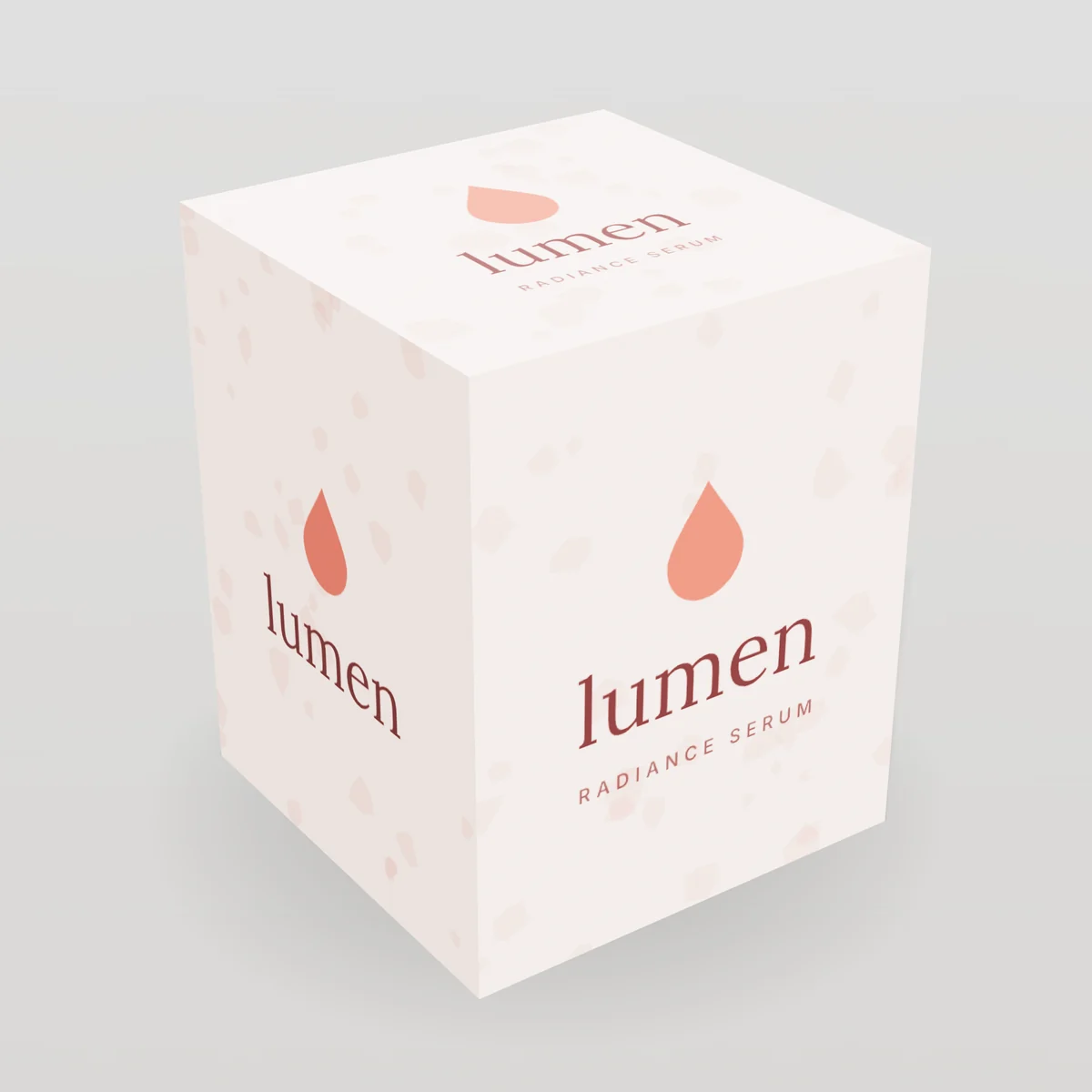
 Box StylesTuck End BoxesStraight and reverse tuck end cartons that open and reclose cleanly. Ideal for lightweight retail products.
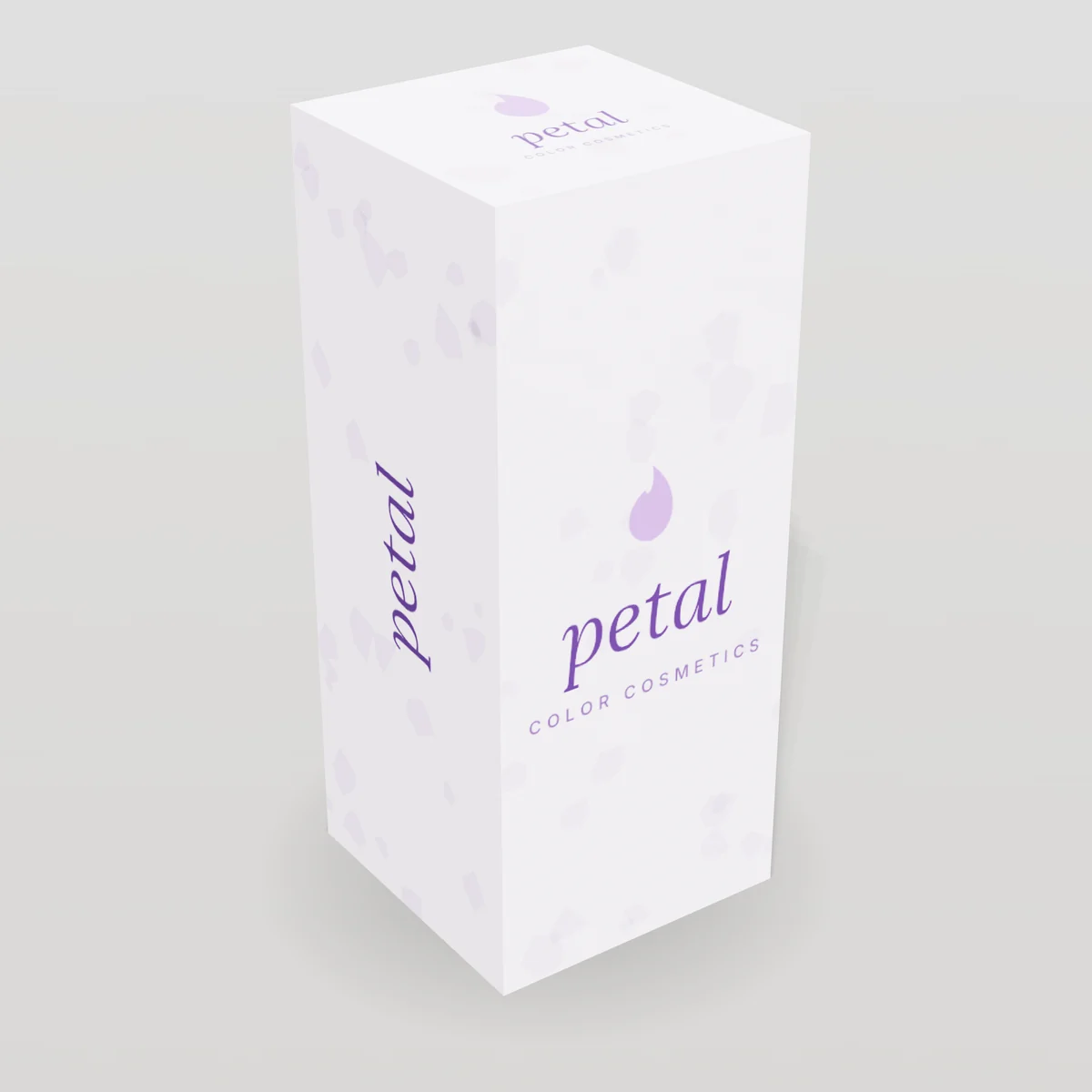
 Box StylesProduct BoxesPrinted paperboard boxes for retail shelves, gift sets and everyday products.
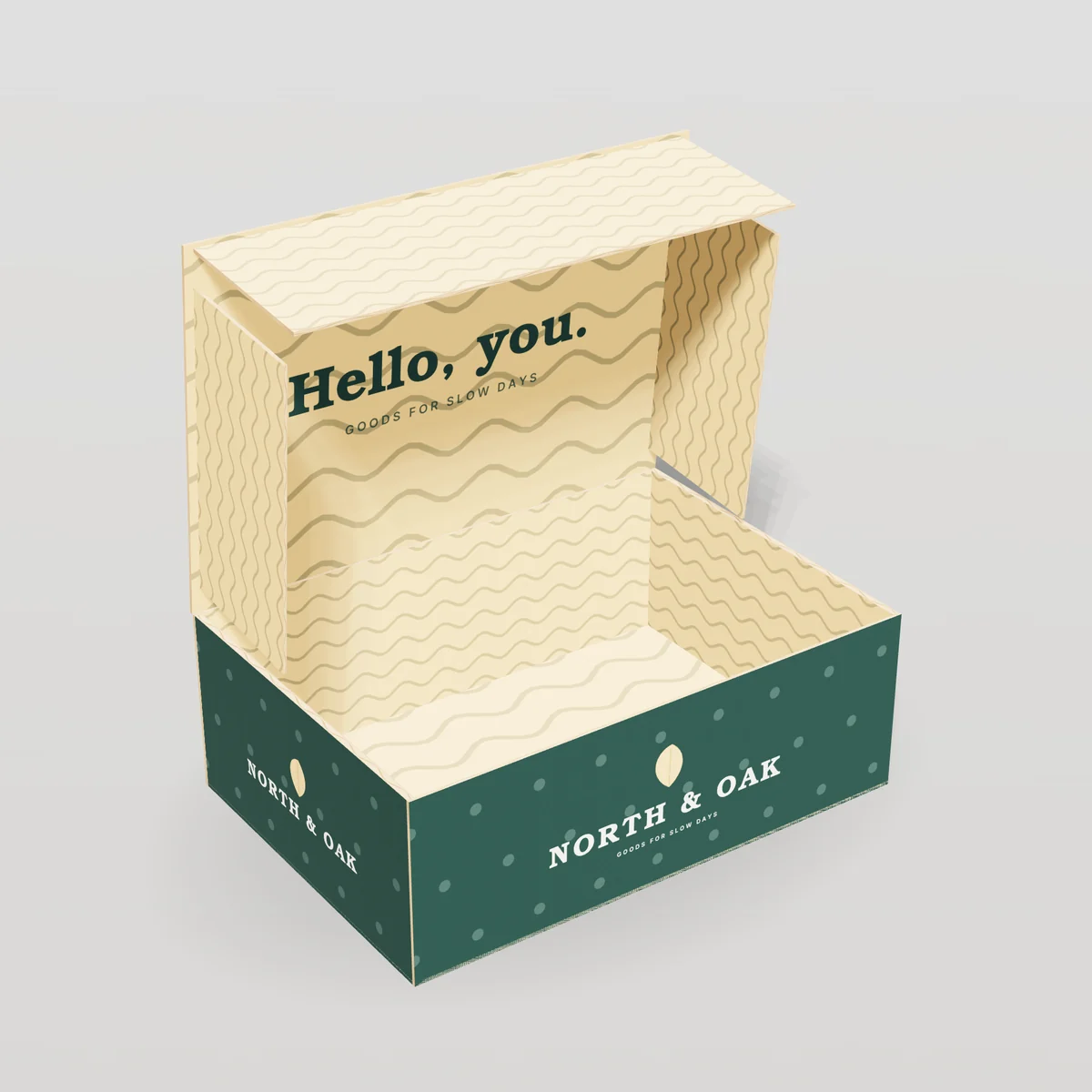
 IndustriesCosmetic BoxesMakeup and beauty cartons with premium finishes and compliant label space.
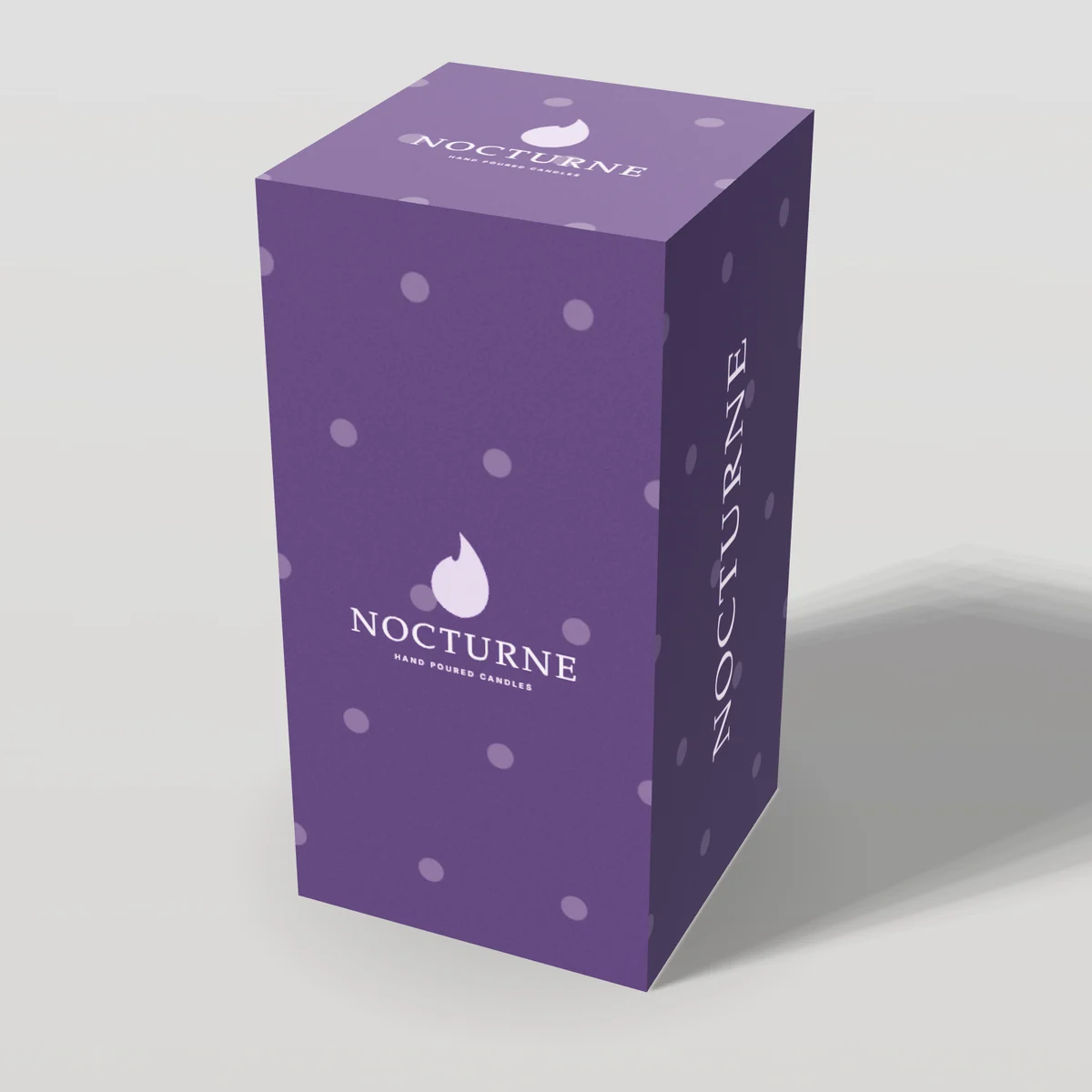
 Box StylesMailer BoxesSelf-locking corrugated mailers printed inside and out. The go-to box for DTC brands and subscriptions.
Designing a tone-on-tone spot UV pattern
Tone-on-tone patterns are one of the most elegant uses of spot UV. To design one:
- Choose a dark, matte base color. Black, navy, deep green, burgundy and charcoal work best.
- Create a simple repeat. A monogram, a line illustration or a geometric grid. Avoid hairline detail; strokes of at least 0.75 pt read best.
- Leave breathing room. Keep the logo and key text clear of the pattern, or reverse the pattern around them.
- Mind the folds. Stop the pattern 1/16 in before folds and cut edges.
- Preview it. Mock up the pattern as a slightly lighter version of the base color to visualize how it will appear in reflected light.
The effect is discreet in photos and striking in person, which makes it ideal for brands that prefer understated luxury.
Raised (dimensional) UV in detail
Raised UV, also called 3D UV or dimensional UV, is built up in multiple layers by digital embellishment machines to create relief you can feel. Applications include:
- Water droplets on a beverage or skincare image
- Textured logos that feel embossed without an embossing die
- Braille-like dots or patterns for tactile interest (not a substitute for compliant braille)
- Raised icons such as stars, hearts or leaves
Because there are no dies or screens, raised UV is particularly attractive for short runs, limited editions and prototypes. It is applied on laminated or coated surfaces and should be kept away from folds.
Spot UV and color
Spot UV is clear, so it takes on the color of the print beneath it. But it can change how that color looks:
- Gloss deepens color. A logo in spot UV looks slightly darker and richer than the matte area around it.
- On light colors, the effect is subtle. Contrast is mainly in sheen, not color.
- On metallic inks, spot UV increases sparkle.
For a strong visible difference on light designs, combine spot UV with a slightly different printed color under the coated area.
Spot UV for different industries
| Industry | Popular spot UV use |
|---|---|
| Cosmetics | Logo and product name on soft-touch cartons |
| Skincare | Botanical patterns, droplet textures |
| Candles | Tone-on-tone patterns on dark cartons |
| Chocolate | Glossy product imagery on matte boxes |
| Electronics | Product silhouettes on black boxes |
| Supplements | Highlighting the product name and key benefit |
| Subscription boxes | Pattern on the inside lid of a mailer |
| Perfume | Spot UV combined with foil and emboss |
Proofing spot UV
A flat PDF proof shows spot UV as a colored overlay layer, which helps check placement but not the look. To judge the effect:
- Ask for a printed sample when the effect is central to the design.
- Check the overlay on your PDF proof carefully: every spot UV area should be intended.
- Confirm the base finish (matte or soft-touch) on the proof specifications.
Spot UV on kraft and uncoated boards
Spot UV works by contrast between glossy and matte areas. On uncoated or kraft board, the board absorbs some of the coating, so the effect is subtler than on laminated board. Some suppliers apply a primer or use a heavier coating on absorbent boards, but if a strong gloss contrast is important, a matte lamination or coated board underneath gives the best result. On kraft, spot UV often looks like a gentle sheen rather than a mirror-like gloss, which can suit natural brands well.
Spot UV and digital embellishment
Digital embellishment presses apply spot UV without screens or plates, using inkjet technology. This makes spot UV affordable for short runs and allows variable effects, such as a personalized name in gloss on each box. Digital spot UV can also build raised, dimensional effects. Because there is no screen or plate, design changes are quick and inexpensive.
Combining spot UV with foil and embossing
Spot UV pairs well with other finishes, but restraint matters. A foil logo with a spot UV pattern around it can look rich; foil, spot UV and embossing on the same area can look busy. Plan finishes as a hierarchy: one hero effect, supported by one secondary effect. Make sure each finish has its own artwork layer and that registration tolerances are respected.
Spot UV on mailer boxes
Spot UV on matte-laminated mailers gives e-commerce packaging a premium touch. Because mailers travel through carriers, choose effects that tolerate handling: patterns and logos rather than tiny details. A spot UV pattern across the lid or a glossy logo on soft-touch can be one of the most cost-effective premium upgrades for a mailer.
Spot UV for packaging photography
Spot UV catches light differently depending on the angle, which can be magical in person but harder to capture in photos. When photographing packaging with spot UV, use angled lighting to reveal the gloss areas. Short videos that rotate the box show the effect better than still images, which makes spot UV popular for social media unboxings.
Questions to ask before choosing spot UV
- What surface will the spot UV sit on: matte lamination, soft-touch, coated or uncoated board?
- How strong should the contrast be: subtle sheen or bold gloss?
- Is the design detail fine or bold?
- Will the packaging be shipped without an outer box?
- Do you need raised (dimensional) UV, or a flat effect?
Spot UV on business cards, tags and labels
Spot UV is a popular finish on small printed items such as business cards, thank-you cards, hang tags and labels. A glossy logo on a matte card is an inexpensive premium touch that ties accessories to the main packaging. Ordering spot UV accessories with boxes keeps the look consistent.
Spot UV and sustainability
Spot UV adds a thin layer of cured coating to selected areas. Small areas on paperboard are generally compatible with paper recycling. Large areas of UV coating, combined with plastic laminations, add more non-paper material. If sustainability is a priority, keep spot UV selective and prefer aqueous coatings or recyclable laminates underneath.
Spot UV FAQ for designers
Designers often ask how to supply spot UV artwork. Provide a separate vector layer or spot color named clearly, in 100% of a single color, aligned precisely with the artwork. Avoid gradients; spot UV is either on or off. Allow for registration tolerance by slightly adjusting spot UV areas that align with printed elements.
More spot UV FAQ
Can spot UV be used on corrugated mailers?
Yes, especially on mailers with smooth printed liners and matte lamination. Bold designs work best.
Does spot UV change color?
Spot UV deepens colors slightly and makes them look richer where it is applied. The contrast with surrounding matte areas is part of the effect.
How long does spot UV add to production?
Spot UV adds a finishing step, typically a few extra days for screen or plate setup and application. Digital spot UV can be faster for short runs.
Quick decision guide for spot UV
| If you need… | Choose… | Because… |
|---|---|---|
| Strong gloss contrast | Spot UV on matte or soft-touch lamination | Maximum shine vs. matte |
| Subtle sheen on natural boards | Spot UV on kraft or uncoated board | Gentle, understated effect |
| Tactile raised effect | Raised (dimensional) UV | Adds texture as well as gloss |
| Short runs or personalization | Digital spot UV | No screens; variable effects |
| Premium with metal | Foil plus spot UV pattern | Rich combination when used sparingly |
| Durable shipping mailers | Bold spot UV pattern on anti-scuff matte | Hides minor scuffs |
How to brief us on spot UV
Spot UV is quoted with your packaging. Tell us:
- Box style and surface. Matte lamination, soft-touch, coated or kraft.
- Spot UV areas. On a separate layer, and whether flat or raised.
- Other finishes. Foil or embossing nearby.
- Quantities and timing. Digital spot UV suits short runs.
Send what you have, even if some answers are rough. Our specialists reply within one business day with recommendations, a price estimate and next steps, and every order includes free design help and a 3D proof before anything goes to production.
Spot UV in one paragraph
Spot UV adds glossy highlights to selected areas, creating contrast against matte surfaces. It works best on matte or soft-touch lamination, suits logos and patterns, and can be raised for texture. Keep designs bold and finishes restrained.
What spot uv adds to popular box styles
Estimated unit prices from our published pricing model for each style at its most popular size, full-color print, delivered within the contiguous US. The last two columns show what spot uv adds per box at 1,000 and 5,000 units; setup tooling is spread across the run, so the premium shrinks as quantity grows.
| Box style | Without (1,000) | With (1,000) | Adds at 1,000 | Adds at 5,000 |
|---|---|---|---|---|
| Mailer Boxes9 × 6 × 3" | $1.06 | $1.23 | +$0.17 | +$0.09 |
| Shipping Boxes12 × 10 × 6" | $1.31 | $1.51 | +$0.20 | +$0.12 |
| Product Boxes4 × 4 × 4" | $0.49 | $0.62 | +$0.13 | +$0.06 |
| Folding Cartons3 × 3 × 5" | $0.42 | $0.54 | +$0.12 | +$0.06 |
| Tuck End Boxes4 × 2 × 6" | $0.40 | $0.53 | +$0.13 | +$0.05 |
| Auto-Lock Bottom Boxes5 × 3 × 7" | $0.55 | $0.68 | +$0.13 | +$0.06 |
| Rigid Boxes8 × 6 × 3" | $2.89 | $3.03 | +$0.14 | +$0.07 |
| Magnetic Closure Boxes9 × 7 × 3" | $3.51 | $3.67 | +$0.16 | +$0.09 |
| Two-Piece Boxes8 × 8 × 3" | $3.10 | $3.25 | +$0.15 | +$0.08 |
| Sleeve Boxes6 × 4 × 2" | $0.67 | $0.80 | +$0.13 | +$0.05 |
| Pillow Boxes6 × 3 × 1.5" | $0.32 | $0.43 | +$0.11 | +$0.05 |
| Gable Boxes6 × 4 × 5" | $0.71 | $0.85 | +$0.14 | +$0.07 |
| Display Boxes10 × 7 × 4" | $1.13 | $1.28 | +$0.15 | +$0.08 |
| Window Boxes5 × 3 × 5" | $0.63 | $0.76 | +$0.13 | +$0.06 |
| Hanger Boxes4 × 1.5 × 6" | $0.41 | $0.53 | +$0.12 | +$0.05 |
| Tube Packaging3 × 3 × 7" | $1.64 | $1.76 | +$0.12 | +$0.05 |
Estimates for planning. Your quote confirms the exact price for your size, coverage and artwork.
How to order spot uv
- 1Request a quote
Tell us the style, size, quantity and artwork you have. Use the form or the live estimator.
- 2Free design & dieline
We send a dieline for your exact size, check your artwork and help with layout at no charge.
- 3Approve your proof
Review a digital 3D proof (and an optional physical sample) before anything is printed.
- 4Production & QC
Your boxes are printed, finished, die-cut and inspected against the approved proof.
- 5Delivered to your door
Shipped flat-packed with tracking to any address in the contiguous US.
Key terms on this page
- Embossing
- Raising part of the board surface into a relief using matched dies, often combined with foil or ink.
- Spot color
- A pre-mixed ink printed as a solid color, often matched to a Pantone reference.
- Registration
- The alignment of printed colors and finishes with each other and with the dieline.
- Die
- A custom tool, usually steel rule mounted in a board, used to cut and crease packaging to shape.
- Lamination
- Bonding a thin film (matte, gloss or soft-touch) or paper to board for protection and finish.
- Artwork
- The final graphic files (logos, images, text and colors) placed on a dieline and used to make printing plates or digital print files.
- Finish
- Any treatment applied after printing to change appearance or protect the surface, such as coatings, laminations, foil, embossing or spot UV.
- Plate
- A printing surface (metal for offset, polymer for flexo) that carries the image of one color.
- Embellishment
- A decorative finish such as foil, embossing or spot UV.
- Varnish
- A clear coating applied on press for protection or gloss effects.
- Lid
- The top part of a box, hinged or separate.
- Soft-touch lamination
- A film with a velvety, matte texture that makes packaging feel premium and resists fingerprints.
- Aqueous coating
- A clear, water-based coating applied over printed board to protect it from scuffs and fingerprints. It is fast drying, low odor and keeps paper packaging easy to recycle.
- Kraft
- Paper or board made from unbleached wood pulp, naturally brown and strong.
- SBS (solid bleached sulfate)
- Premium paperboard made from bleached virgin fiber, bright white throughout, with the best print and finish quality.
- Prepress
- Checking and preparing artwork files for printing, including color conversion, trapping and imposition.
- Overprint
- Printing one color on top of another without knocking out the color beneath.
- Resolution
- The detail in a raster image, measured in pixels per inch (ppi). Print usually needs 300 ppi at final size.
- Foil stamping
- Applying metallic or pigmented foil to packaging with heat and pressure using a metal die.
- Setup cost
- One-time costs to prepare a job, such as plates, dies, make-ready and proofing, spread across the order quantity.
- UV coating
- A clear coating cured by ultraviolet light, giving high gloss and a hard surface.
- Paperboard
- Thick paper (usually 0.010 inch or more) used for folding cartons, such as SBS, kraft and recycled board.
- Carton
- A box made from paperboard, usually a folding carton. In shipping, "carton" can also mean a corrugated case.
- Board
- A general term for thick paper materials used in packaging, including paperboard, corrugated board and greyboard.
- Coverage
- The proportion of a surface covered by ink. Heavy coverage uses more ink and can affect drying and cracking.
- Point (pt)
- The unit of paperboard thickness: 1 point equals 0.001 inch. 18pt board is 0.018 inch thick.
- Reverse tuck end (RTE)
- A carton whose top and bottom tucks close from opposite sides. The most economical tuck style.
- Proof
- A preview of the final package (digital PDF, 3D render or physical sample) that the customer approves before production.
More definitions in our packaging glossary.
Customer reviews
Reviews come only from verified customers. Ordered spot uv from us? Share your experience.
Discussed on Quora & X
Spot UV FAQ
What is spot UV?
A clear gloss coating applied only to selected areas of a package, cured with UV light.
Does spot UV work on kraft?
Not well on uncoated kraft, where it absorbs and loses shine. It works best on coated or laminated board.
Can spot UV be raised?
Yes. Raised (dimensional) UV adds a tactile effect similar to embossing.
Is spot UV expensive?
It is generally less expensive than foil or embossing and adds a premium touch.
Can you feel spot UV?
Standard spot UV feels slightly smoother than the matte background. Raised or dimensional UV is thick enough to feel clearly, like a light emboss.
Does spot UV work on mailer boxes?
Yes, on litho-laminated corrugated or suitably coated digitally printed mailers, especially over matte lamination.
What color should the spot UV layer be?
Any color, as long as it is a 100% spot color named for the finish on a separate layer. It is used as a mask, not printed.
Is spot UV cheaper than foil?
Usually yes, especially for larger areas, because UV is applied by screen or plate and uses inexpensive material, while foil needs a metal die and foil film.
Can spot UV be applied to the inside of a box?
Yes, if the inside is printed and coated. Inside spot UV on a mailer lid is a memorable detail.
Will spot UV yellow over time?
Modern UV coatings are formulated to resist yellowing under normal indoor conditions.
Is digital spot UV as good as screen spot UV?
For most designs, yes. Digital excels at fine detail, raised effects and short runs; screen UV is very economical on large runs with simpler shapes.
Can spot UV be added to an existing design?
Usually, yes. We create a spot UV layer from your artwork, for example by isolating the logo or a pattern, and send it for approval with the proof.
Is spot UV food safe?
Spot UV is applied to the outside of packaging. For any surface that touches food directly, we use coatings designed for that purpose instead.