Quick answer
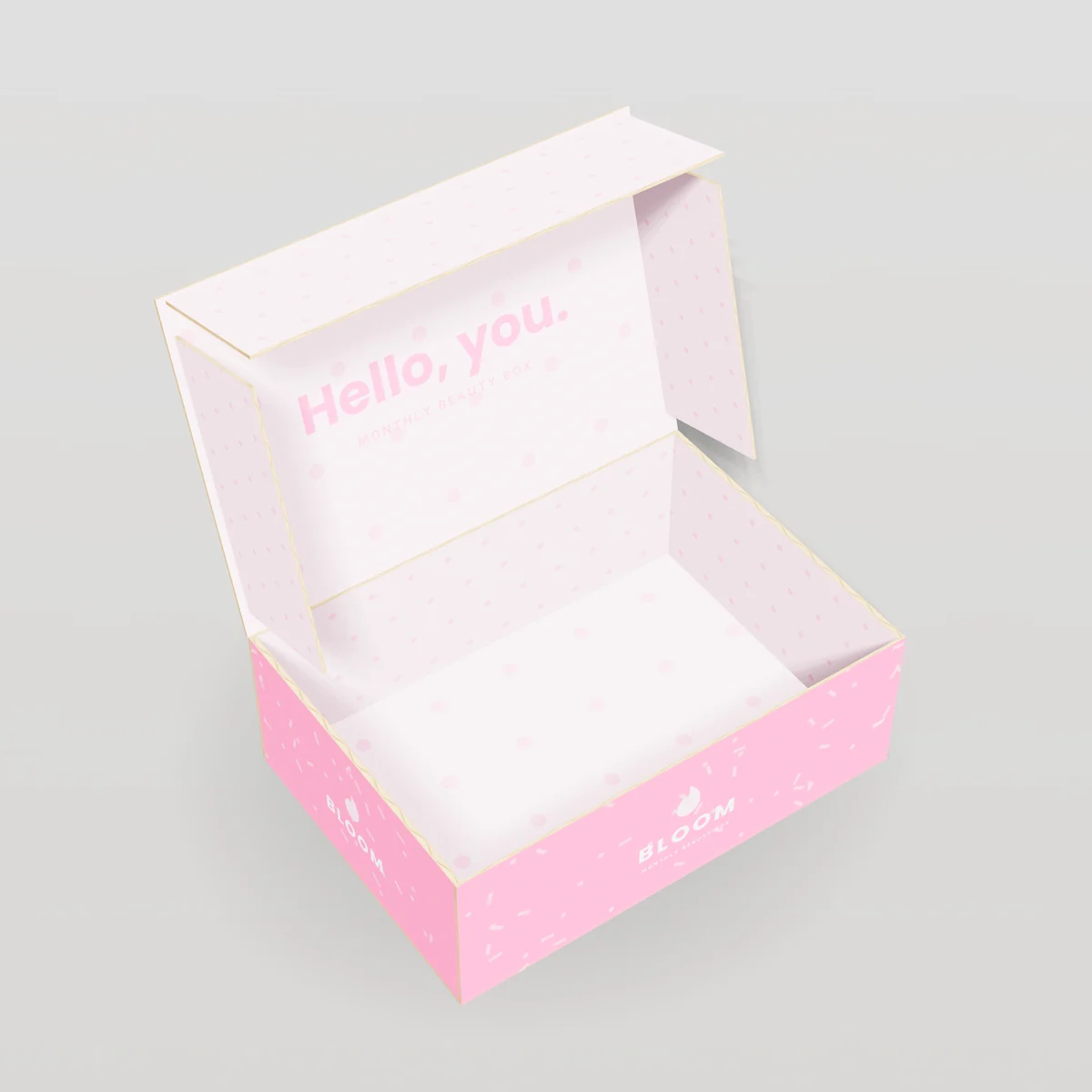
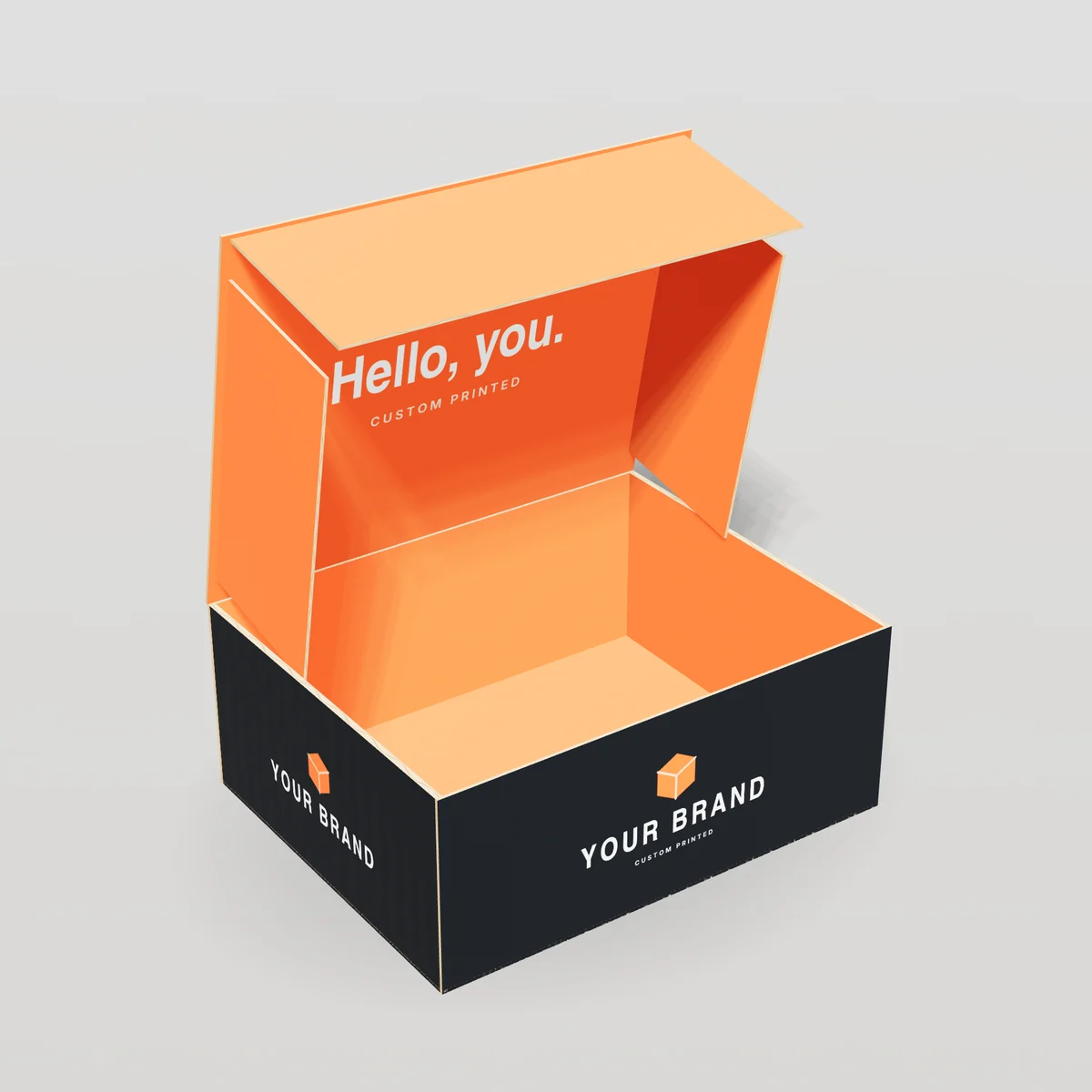
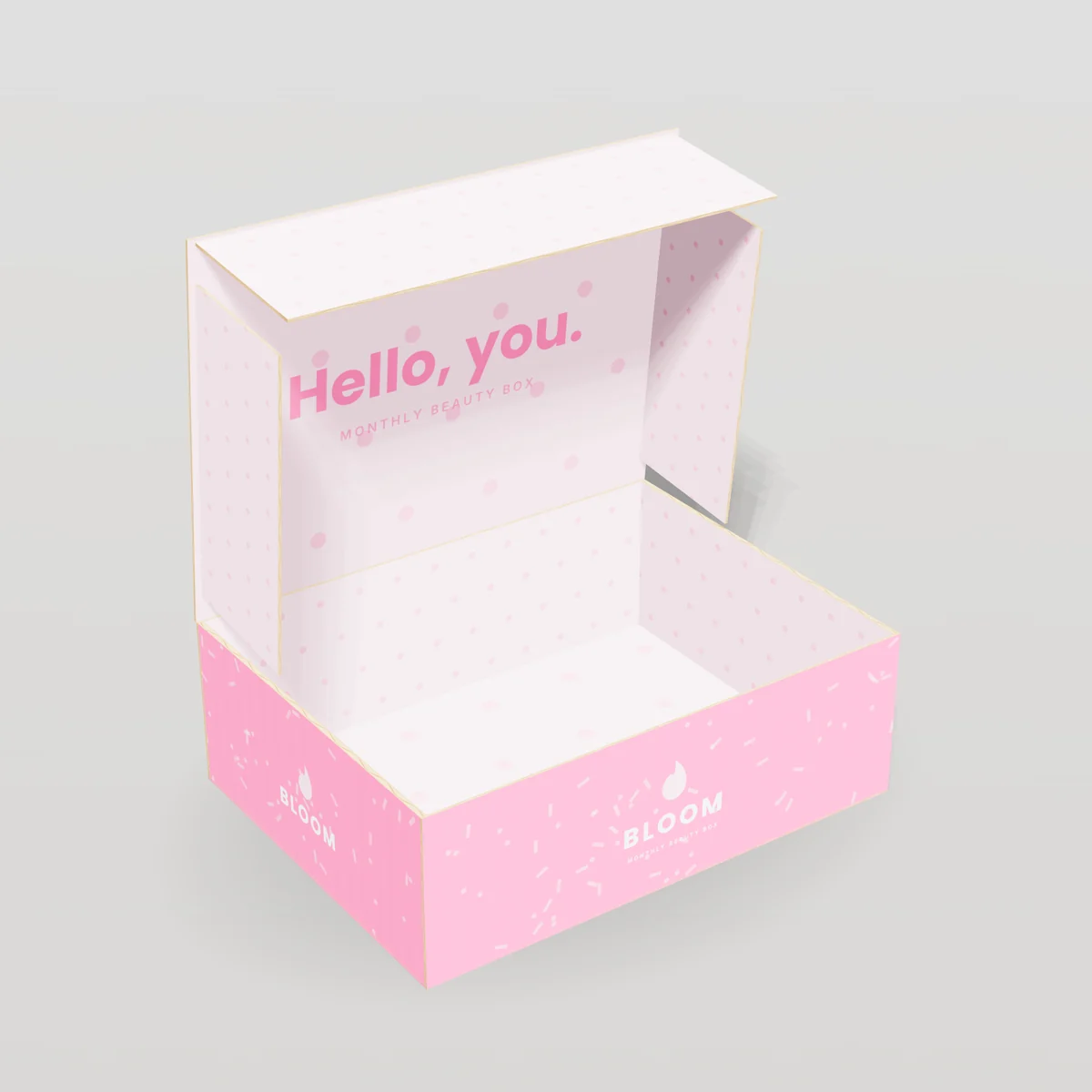
Shippable mailers with interior print that make every monthly box feel like a gift. Estimated prices start around $1.23 per unit at 10,000 units and $3.99 at 100 units for a 12×9×4" box. Typical turnaround is 10–14 business days after proof approval.
Subscription Boxes: price breaks
How the estimated unit price of a 12×9×4" mailer box in E-flute corrugated, white changes with quantity. Setup costs are spread over more boxes as the run gets longer, so the per-box price drops sharply in the first few tiers.
| Quantity | Est. unit price | Est. total | Saving vs. first tier |
|---|---|---|---|
| 100 | $3.99 | $399 | — |
| 250 | $2.54 | $635 | −36% |
| 500 | $1.99 | $995 | −50% |
| 1,000 | $1.67 | $1,668 | −58% |
| 2,500 | $1.42 | $3,554 | −64% |
| 5,000 | $1.31 | $6,532 | −67% |
| 10,000 | $1.23 | $12,254 | −69% |
Estimates from our published pricing model, full-color print, no finishes, delivered to the contiguous US. Your written quote confirms the exact price. Get an exact quote →
Material options and how they affect price
Estimated unit price at 1,000 units for a 12×9×4" mailer box with full-color printing, by material. Material choice changes look, strength and recyclability as well as cost.
| Material | What it’s like | Est. unit price |
|---|---|---|
| E-flute corrugated, white | E-flute corrugated (about 1/16 in) with a white liner: crisp print with real cushioning and parcel strength. | $1.67 |
| E-flute corrugated, kraft | E-flute corrugated with a natural kraft liner: thin, strong and economical, with a natural look. | $1.57 |
Printing options compared
How the print specification changes the estimated unit price of a 12×9×4" mailer box in E-flute corrugated, white. One- and two-color printing carries a small plate charge that matters less as quantities grow; full-color digital and offset printing have no plate charge in our model.
| Printing | 500 units | 1,000 units | 5,000 units |
|---|---|---|---|
| Plain (no print) | $1.49 | $1.21 | $0.91 |
| 1 color | $1.78 | $1.42 | $1.05 |
| 2 colors | $1.95 | $1.55 | $1.15 |
| Full color outside | $1.99 | $1.67 | $1.31 |
| Full color outside + inside | $2.43 | $2.08 | $1.66 |
What subscription packaging has to do
A subscription box arrives again and again, which makes its packaging both a big opportunity and a recurring cost. The box is how subscribers feel the value of their subscription each month. A great unboxing keeps people subscribed; a forgettable one makes them question the charge on their card. At the same time, packaging costs multiply with every shipment, so the system has to be efficient.
Successful subscription packaging balances four goals:
- Delight at every delivery, with something new to discover
- Consistency so the brand is instantly recognizable on the doorstep
- Protection for varied contents that change month to month
- Efficiency in cost, packing time and shipping weight
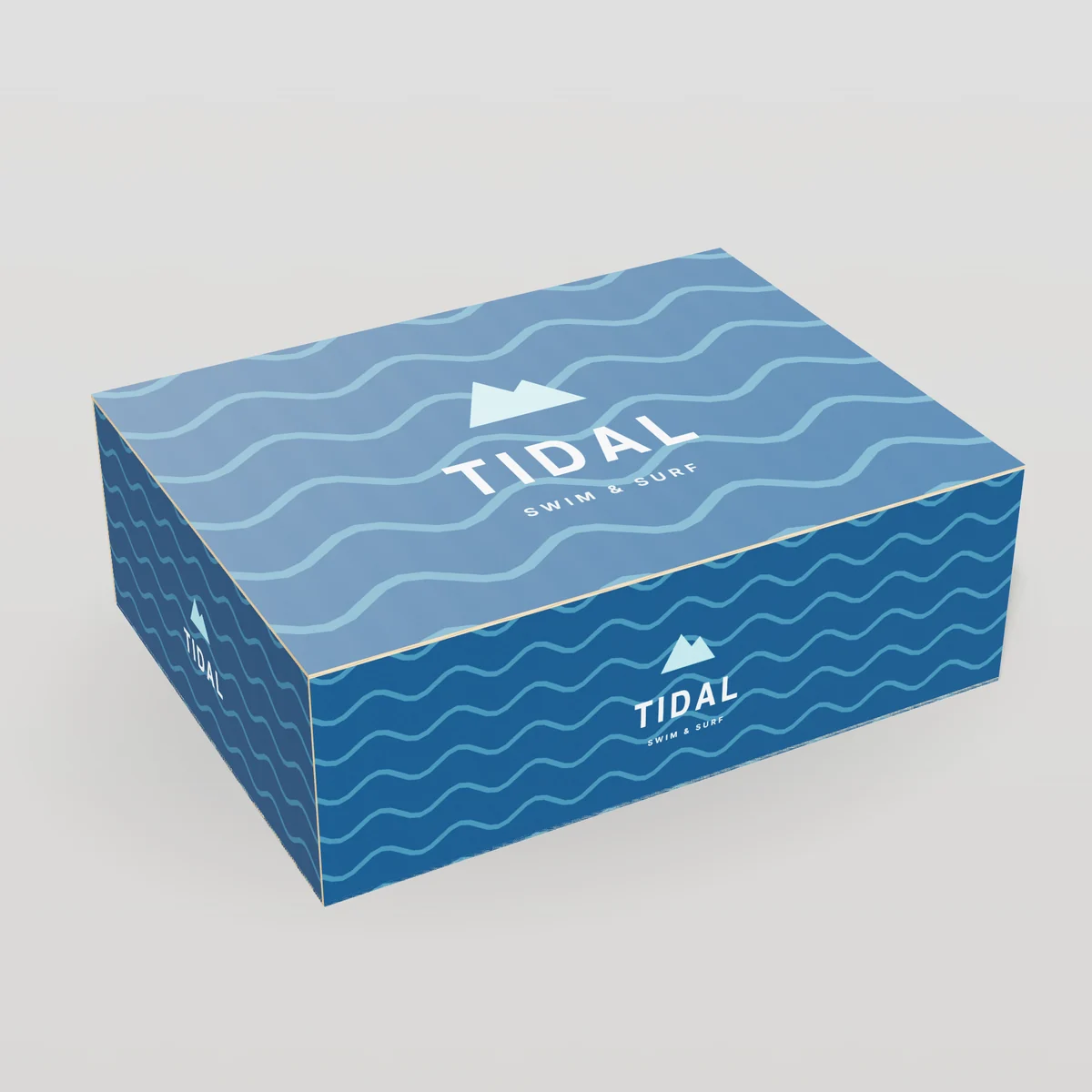
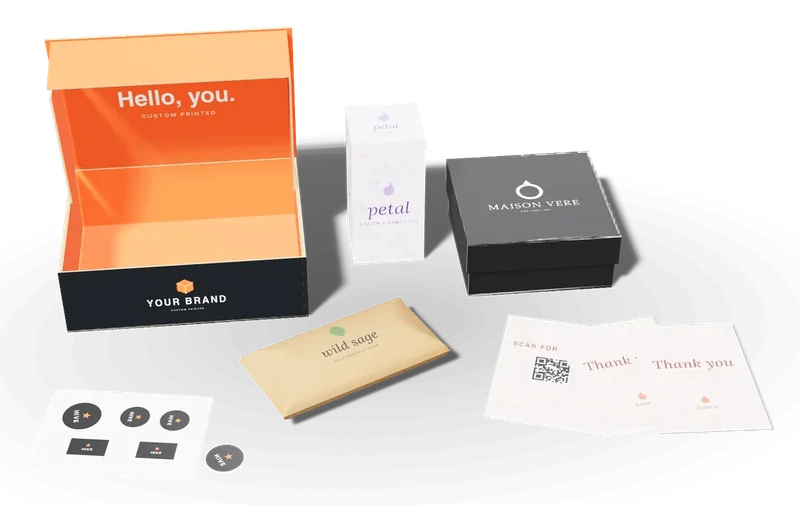
The subscription packaging system
| Component | Purpose | Options |
|---|---|---|
| Outer mailer | Brand recognition, protection | Printed mailer box outside and inside |
| Monthly insert or card | What's inside, story, tips | Thank-you cards, booklets |
| Tissue and stickers | Reveal moment | Tissue paper, stickers |
| Product inserts | Hold items in place | Custom inserts |
| Seasonal sleeve or sticker | Novelty without new boxes | Belly bands, themed stickers |
| Shipping protection | Fragile items | Paper void fill, dividers |
The most efficient approach is a standard printed mailer that rarely changes, plus a monthly printed card or sleeve that changes with each theme.
Choosing the right mailer
- E-flute corrugated is the standard: light, strong and printable.
- B-flute for heavier boxes (books, food, candles).
- White liner for bright colors and patterns; kraft for natural brands.
- Inside print is a must for subscriptions: it creates the reveal.
- Tear strips add tamper evidence and an easy-open moment.
Size the mailer for your typical box contents, not the largest month. If one month needs more space, use a larger size for that month only, rather than shipping air every month.
Designing for retention
- Outside: a bold, consistent pattern or logo so subscribers recognize the box instantly.
- Inside lid: a message that changes with the theme, or a fixed brand message plus a monthly card.
- Theme cards: what's inside, how to use it, the story behind the products, and a QR code to tutorials or a community.
- Surprises: occasional extras (a sticker sheet, a mini sample) keep things fresh.
- Milestones: special packaging for a subscriber's 3rd, 6th or 12th box.
Tip: Plan a 12-month packaging calendar. Print the main mailer in one larger run for the year, and print monthly cards or sleeves digitally in smaller batches.
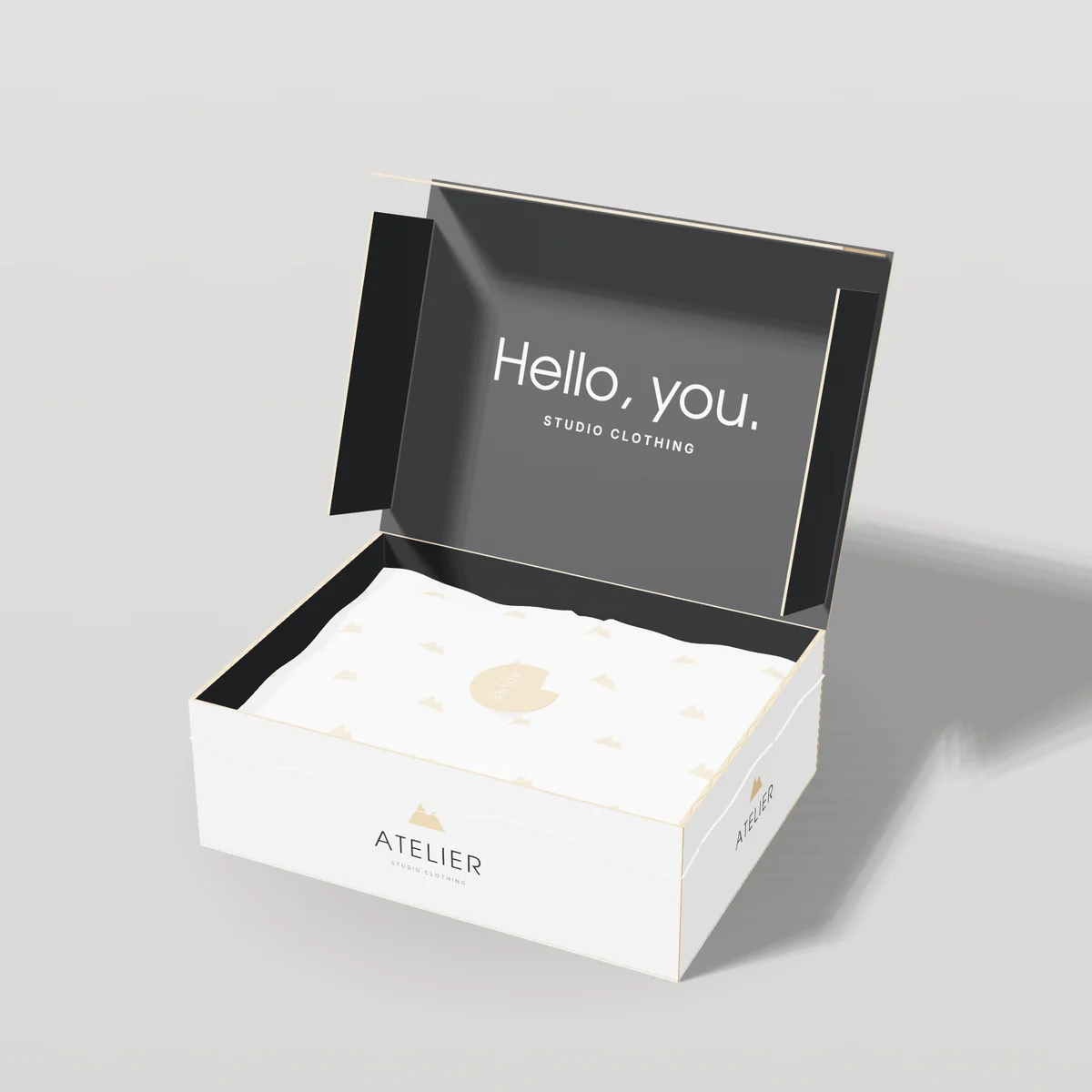
Sizing subscription boxes
| Box contents | Typical mailer (in) |
|---|---|
| Beauty samples and minis | 8 × 6 × 2 |
| Snacks and treats | 10 × 8 × 4 |
| Books or stationery | 12 × 9 × 3 |
| Apparel and accessories | 12 × 9 × 4 |
| Home goods and candles | 12 × 10 × 6 |
| Meal or craft kits | 14 × 10 × 6 |
Check dimensional weight; a smaller box can save significantly at subscription volumes. Use the DIM Weight Calculator.
Costs at scale
Because you ship every month, unit cost matters. The table at the top of this page shows estimates for a 12 × 9 × 4 in mailer printed outside and inside. Strategies:
- Order the mailer in larger runs (for example six to twelve months of volume) to lower the unit price.
- Keep the mailer design evergreen and change cards or sleeves.
- Use one or two sizes.
- Print the inside in one color if full color is not essential.
Here is a smaller beauty sample box for comparison:
| Quantity | Est. unit price | Est. total | Saving vs. first tier |
|---|---|---|---|
| 100 | $3.04 | $304 | — |
| 250 | $1.71 | $427 | −44% |
| 500 | $1.23 | $616 | −60% |
| 1,000 | $0.97 | $968 | −68% |
| 2,500 | $0.78 | $1,953 | −74% |
| 5,000 | $0.70 | $3,510 | −77% |
| 10,000 | $0.65 | $6,502 | −79% |
Estimates from our published pricing model, full-color print, no finishes, delivered to the contiguous US. Your written quote confirms the exact price. Get an exact quote →
Operations: packing faster
- Pre-fold mailers in batches.
- Use inserts that make product placement obvious.
- Standardize contents to a few layouts.
- Pre-print shipping labels and keep a consistent label area on the mailer.
Sustainability
Subscribers notice waste because they receive boxes often. Reduce it by right-sizing, using paper void fill and tissue, recyclable mailers with water-based inks, and offering an option to skip inserts or cards. Share recycling guidance on the box.
Launch checklist
- Typical monthly contents and size range
- Mailer size(s), board and print (outside and inside)
- Monthly card or sleeve system
- Inserts, tissue and stickers
- 12-month calendar and print plan
- Shipping method and DIM weight check
- Quantities and launch date
Packaging by budget: starter, growing, premium
| Tier | Typical spec | Best for |
|---|---|---|
| Starter | Kraft E-flute mailer with one-color logo, branded sticker, printed card | New subscriptions under a few hundred subscribers |
| Growing | Mailer printed outside and inside, monthly insert card, tissue | Established subscriptions |
| Premium | Full-color mailer with seasonal sleeves, fitted inserts and collectible elements | Large subscriptions, premium price points |
Designing for month after month
A subscription box is opened again and again by the same customer. That changes the design brief:
- Keep the box consistent so it is instantly recognizable on the doorstep.
- Change something small each month: a card, a sticker, a sleeve or tissue color.
- Create collectible elements, such as numbered cards or seasonal stickers.
- Avoid printing dates or themes on the box itself; put them on cards or sleeves.
- Design one box for several product mixes, using flexible inserts.
Inventory planning for subscriptions
Subscription growth makes packaging planning tricky. Practical approach:
- Forecast subscribers for the next three to six months.
- Order boxes for that period at a price break, with a buffer for growth.
- Keep variable items (cards, sleeves) on short reorder cycles.
- Reorder boxes when stock reaches lead time plus a safety margin.
- Review sizes if product mixes change.
Reducing churn with packaging
Packaging cannot fix a weak product, but it influences how customers feel about renewing:
- A consistent, delightful reveal makes the subscription feel worth it.
- Clear product cards help customers use what they receive.
- Easy access to account management (a QR code) reduces frustration.
- Sustainable materials reassure environmentally minded subscribers.
Worked example: a monthly snack box
A snack subscription ships 10–12 items monthly.
- Mailer: 12 × 9 × 4 in E-flute, printed kraft outside and full-color inside.
- Insert: a single printed card describing each snack, changing monthly.
- Fill: crinkle paper in a seasonal color.
- Seal: a monthly sticker as a collectible.
- Packing: boxes packed by hand in batches, with no tape needed.
A buyer's guide to subscription packaging
Design the box for the hundredth opening, not just the first. A subscriber may open your box every month for years. The packaging should be instantly recognizable on the doorstep, quick to open, easy to unpack and easy to dispose of or reuse. Novelty fades; consistency, quality and small monthly surprises keep the experience fresh.
Separate the permanent from the variable. Print the box once in a larger, cheaper run, and put everything that changes (the theme, the products, the story) on cards, stickers, tissue or a sleeve. That keeps unit costs down and gives you flexibility when products change at the last minute, which they often do.
Engineer for packing speed. Subscription fulfillment happens in batches, often by hand. Self-locking mailers, inserts that make product placement obvious, and pre-folded components speed packing and reduce errors. Time a test batch and adjust before launch day.
Right-size for shipping costs. Because subscriptions ship every month, a box that is one inch too large on each side costs you on every shipment. Use the DIM Weight Calculator to compare sizes, and consider mailbox-friendly dimensions for smaller boxes to reduce missed deliveries.
Use the box to reduce churn. A clear product card explains how to use each item, a QR code links to tutorials or the subscriber's account, and a short message from the founder builds a relationship. Packaging cannot replace good products, but it can make subscribers feel looked after.
Plan inventory with growth. Forecast subscribers, order boxes for three to six months at a price break, and reorder when stock covers lead time plus a safety margin. The reorder tracker in our Spec Sheet & RFQ Kit helps.
Common subscription packaging mistakes
- Printing the month or theme on the box, leaving unusable stock.
- Boxes sized for the biggest month, wasting space and shipping costs in smaller months.
- Slow-to-pack designs that bottleneck fulfillment.
- No product information, leaving subscribers unsure what they received.
- Plastic-heavy fill that undermines the brand's values.
Terms to know
- Churn: the share of subscribers who cancel each period.
- Kitting: assembling multiple items into one package.
- Mailbox-friendly: small enough to fit in a standard mailbox, reducing missed deliveries.
- Insert card: a printed card describing the contents.
- Batch packing: packing many identical boxes at once.
Subscription packaging in one paragraph
Subscription packaging is opened again and again by the same customers, so consistency, quality and speed of packing matter more than novelty. Print one recognizable mailer in larger runs, vary cards, stickers or sleeves each month, right-size boxes to cut shipping costs, design inserts that make batch packing fast, and plan inventory around subscriber forecasts.
Packaging ideas by subscription type
| Subscription | Packaging idea |
|---|---|
| Beauty and skincare samples | Small printed mailer with tiered insert |
| Snacks | Medium mailer with crinkle paper and product card |
| Coffee | Mailbox-friendly mailer for one or two pouches |
| Books | Slim mailer or book wrap |
| Pet treats and toys | Sturdy mailer with fun interior print |
| Meal kits | Insulated corrugated boxes |
| Apparel and socks | Poly or paper mailer, or slim box with tissue |
| Hobby and craft kits | Box with compartment insert and instruction card |
Unboxing ideas that keep subscribers engaged
- A themed card each month with stories behind the products.
- Collectible stickers subscribers can save or share.
- A changing color of tissue or crinkle paper by season.
- A message under the lid that changes occasionally (printed in short runs).
- A QR code to a monthly video, playlist or tutorial.
- Milestone surprises for subscribers at three, six and twelve months.
Second example: a craft kit subscription
A craft brand sends a monthly kit with materials and instructions.
- Mailer: 12 × 9 × 3 in E-flute, white outside with a one-color logo and a printed inside lid.
- Insert: a die-cut tray with compartments for tools and materials.
- Instructions: a printed booklet plus a QR code to a video tutorial.
- Variation: each month's theme is printed on a sleeve around the instruction booklet.
- Packing: the tray makes missing items obvious during batch packing.
Photographing subscription boxes
Subscribers share flat-lay photos of their boxes. Shoot your own as top-down flat lays with every item arranged around the open box, plus a close-up of the inside lid message. These images also make strong marketing for new subscribers.
The unit economics of subscription packaging
Subscription businesses live on margins per box, so packaging decisions compound every month. A simple way to think about packaging cost per shipment:
Packaging cost per box = mailer + inserts + fill + cards and stickers + tape (if any) + packing labor
Plus the shipping cost, which packaging influences through size and weight. A few practical observations:
- Shipping usually costs more than the box. Shaving an inch off each side can save more per month than switching to cheaper board.
- Printed mailers get cheaper at volume. Ordering three to six months of boxes at a price break lowers the unit cost noticeably.
- Variable components should be cheap. Monthly cards and stickers in short runs keep the experience fresh at low cost.
- Labor matters. A design that saves 20 seconds of packing per box adds up quickly at hundreds or thousands of boxes a month.
Use the Packaging Cost Calculator and the DIM Weight Calculator to test options.
Subscription packaging for different growth stages
| Stage | Packaging approach |
|---|---|
| First 100 subscribers | Kraft mailers with stickers and printed cards; flexible and low commitment |
| 100–1,000 | Printed mailers outside and inside; standard inserts |
| 1,000+ | Optimized sizes, larger runs, packing efficiency and possibly a 3PL |
Ordering timeline for subscription packaging
| Step | Typical time |
|---|---|
| Quote with structure and material recommendation | Within 1 business day |
| Dieline and insert design | 1–3 business days |
| Artwork check, proof and 3D preview | 1–3 business days |
| Optional sample | About 5–12 business days |
| Production after approval | 10–14 business days for mailers |
| Delivery within the contiguous US | 3–7 business days |
Keep enough stock for lead time plus a few weeks, and reorder before seasonal spikes.
How to brief a designer for subscription boxes
Give your designer, or our team, these details before work starts:
- Typical and maximum monthly contents
- Brand assets and permanent box design
- Variable elements each month
- Packing workflow
- Shipping budget per box
- Growth forecast
A clear brief usually saves at least one round of revisions and avoids surprises at the proof stage.
Sustainability checklist for subscriptions
- [ ] Right-sized mailer
- [ ] Paper fill and inserts
- [ ] No tape needed (self-locking mailer)
- [ ] Monthly card printed on recycled paper
- [ ] Recycling instructions inside the lid
How subscription packaging grows with your brand
First 100–500 units. Kraft mailers, stickers and printed cards.
500–2,500 units. Printed mailers inside and out, inserts and monthly cards.
2,500 units and up. Optimized sizes, larger runs, a 3PL and milestone surprises for loyal subscribers.
Recommended finishes for subscription boxes
Subscription mailers benefit from durable finishes outside (aqueous coating or matte lamination for dark designs) and expressive print inside. Because the box is seen every month, spend on interior print and inserts rather than outside effects. Seasonal stickers or sleeves add novelty without changing the box.
Three things to get right with subscription boxes
- Consistency. A box subscribers recognize every month.
- Packing speed. Inserts and self-locking mailers.
- Variable delight. Cards, stickers and sleeves that change.
Related guides
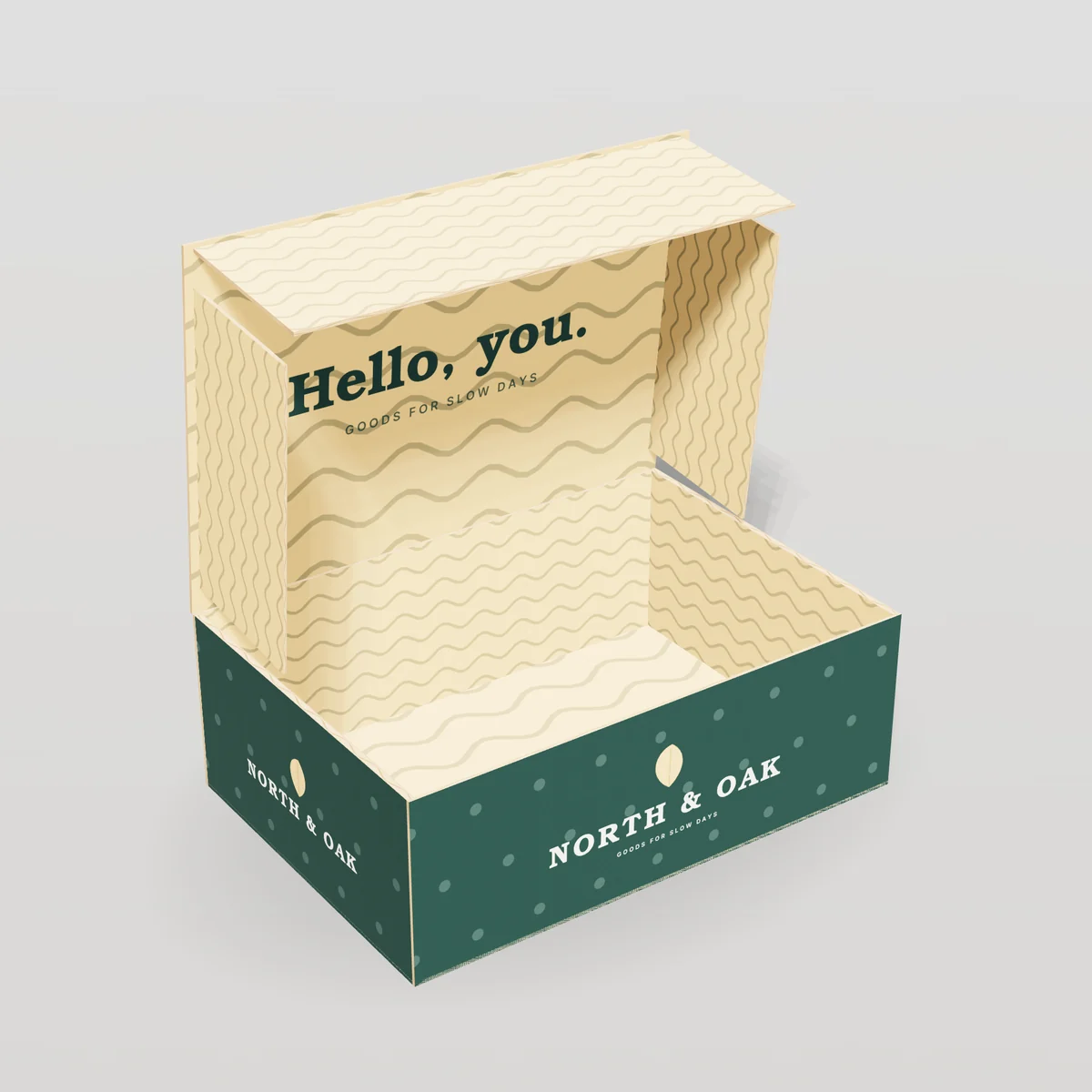 GuideUnboxing & brand designHow to design packaging that sells and gets shared: brand hierarchy, color, typography, the unboxing sequence, inserts and low-cost upgrades that matter.
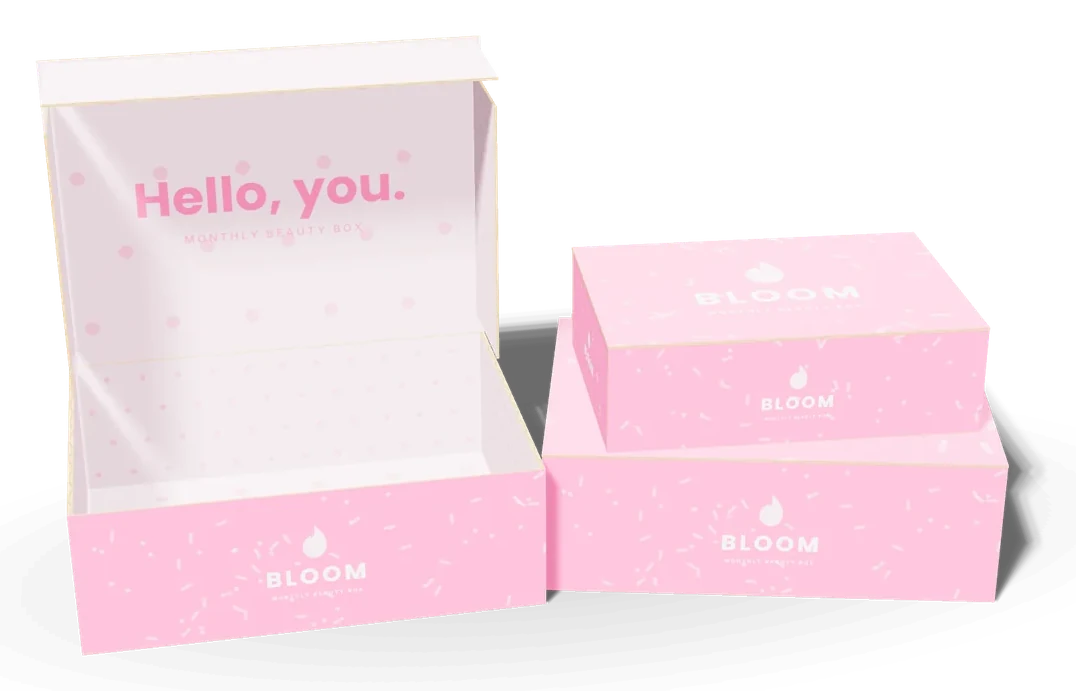 GuideE-commerce shipping packagingHow to package e-commerce orders so they arrive intact: board strength, void fill, inserts, drop testing, Amazon FBA prep and branded unboxing on a budget.
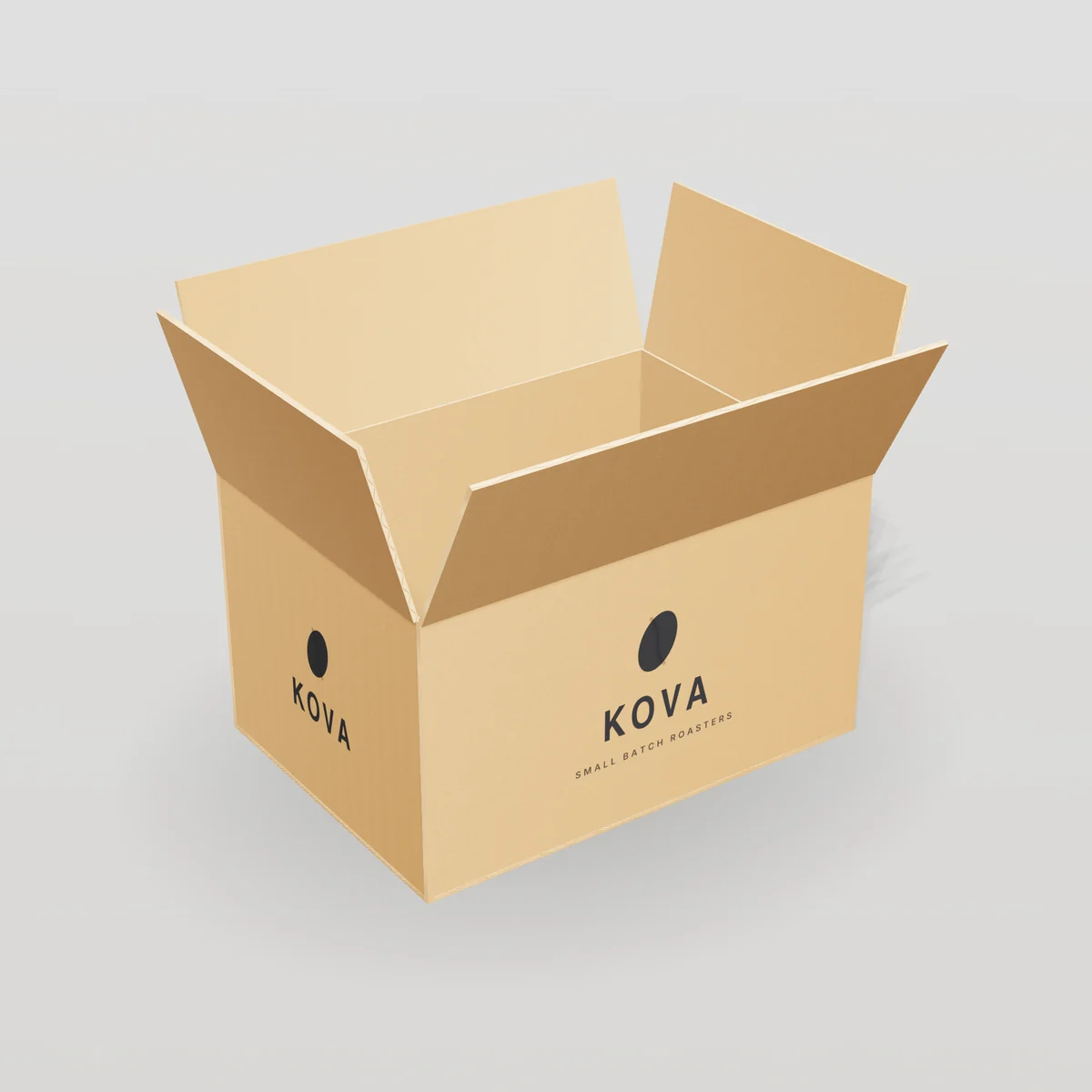 GuideBox sizing & DIM weightHow to measure inside vs outside box size, choose clearances, calculate UPS, FedEx and USPS dimensional weight, and right-size boxes to cut shipping costs.
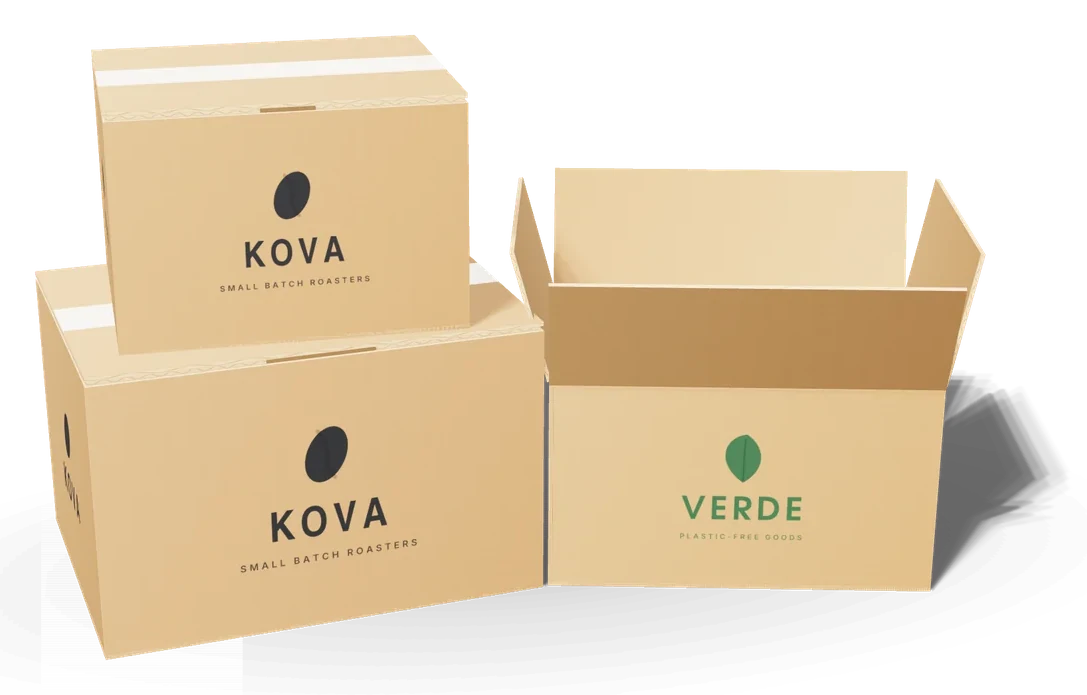 GuideHow much custom packaging costsRealistic 2026 price ranges for custom mailer, shipping, carton, rigid and pouch packaging, what drives cost, and proven ways to lower your unit price.
What finishes and add-ons cost
Estimated extra cost per unit at 1,000 units when you add one finish to a 12×9×4" mailer box (base estimate $1.67). One-time tooling such as foil and embossing dies is already spread across the run in the per-unit figure and listed separately for reference.
| Finish | What it does | Adds per unit | One-time setup |
|---|---|---|---|
| Matte lamination | A thin film with a smooth, low-glare finish that protects print from scuffs. | +$0.12 | — |
| Soft-touch | A velvety, premium coating that invites customers to hold the box. | +$0.22 | — |
| Spot UV | Clear glossy varnish on selected areas for a sleek contrast against matte. | +$0.22 | $80.00 |
| Foil stamping | Gold, silver, rose gold or holographic foil for logos and accents. | +$0.29 | $120 |
| Embossing / debossing | Raised or recessed logo detail you can feel with your fingertips. | +$0.28 | $120 |
| Window | A die-cut window with clear film so the product sells itself. | +$0.14 | $60.00 |
| Custom insert | Paperboard, corrugated or foam inserts that hold products in place. | +$0.29 | $80.00 |
Estimated prices for recommended subscription boxes styles
Unit price estimates from our published pricing model for each recommended style at its most popular size with full-color print, delivered within the contiguous US. Use them as a budget starting point; your quote confirms exact prices for your size and options.
| Style | Typical board | 500 units | 1,000 units | 5,000 units |
|---|---|---|---|---|
| Mailer Boxes9 × 6 × 3" | E-flute corrugated, white | $1.33 | $1.06 | $0.78 |
| Shipping Boxes12 × 10 × 6" | C-flute corrugated, kraft (32 ECT) | $1.58 | $1.31 | $1.01 |
A dash means the quantity is below that style’s minimum order.
Popular mailer boxes sizes for subscription boxes
Mailer Boxes are the most common starting point for subscription boxes. Estimated unit prices for popular sizes with full-color print on e-flute corrugated, white, delivered within the contiguous US:
| Inside size | Typical use | 500 units | 1,000 units | Quote |
|---|---|---|---|---|
| 6 × 4 × 2" | Serums, candles, soaps, single small products | $0.91 | $0.67 | Quote |
| 8 × 6 × 2" | Gift sets, apparel accessories, small electronics | $1.07 | $0.82 | Quote |
| 9 × 6 × 3" | T-shirts, subscription kits, books, multi-item orders | $1.33 | $1.06 | Quote |
| 10 × 8 × 4" | T-shirts, subscription kits, books, multi-item orders | $1.80 | $1.50 | Quote |
| 12 × 9 × 4" | Shoes, hoodies, bundles, home goods | $1.99 | $1.67 | Quote |
| 14 × 10 × 4" | Shoes, hoodies, bundles, home goods | $2.19 | $1.85 | Quote |
| 16 × 12 × 6" | Bulk orders, small appliances, wholesale packs | $3.37 | $2.94 | Quote |
What finishes add to subscription boxes
Estimated extra cost per unit at 1,000 units when you add one finish to a 9×6×3" mailer box (base estimate $1.06). Choose one hero finish rather than several.
| Finish | What it does | Adds per unit |
|---|---|---|
| Matte lamination | A thin film with a smooth, low-glare finish that protects print from scuffs. | +$0.06 |
| Soft-touch | A velvety, premium coating that invites customers to hold the box. | +$0.12 |
| Spot UV | Clear glossy varnish on selected areas for a sleek contrast against matte. | +$0.17 |
| Foil stamping | Gold, silver, rose gold or holographic foil for logos and accents. | +$0.24 |
| Embossing / debossing | Raised or recessed logo detail you can feel with your fingertips. | +$0.23 |
| Window | A die-cut window with clear film so the product sells itself. | +$0.14 |
| Custom insert | Paperboard, corrugated or foam inserts that hold products in place. | +$0.25 |
Learn about these materials
Best box styles for subscription boxes
Box StylesMailer BoxesSelf-locking corrugated mailers printed inside and out. The go-to box for DTC brands and subscriptions.
Box StylesShipping BoxesPrinted corrugated regular slotted cartons (RSC) for e-commerce, wholesale and freight.
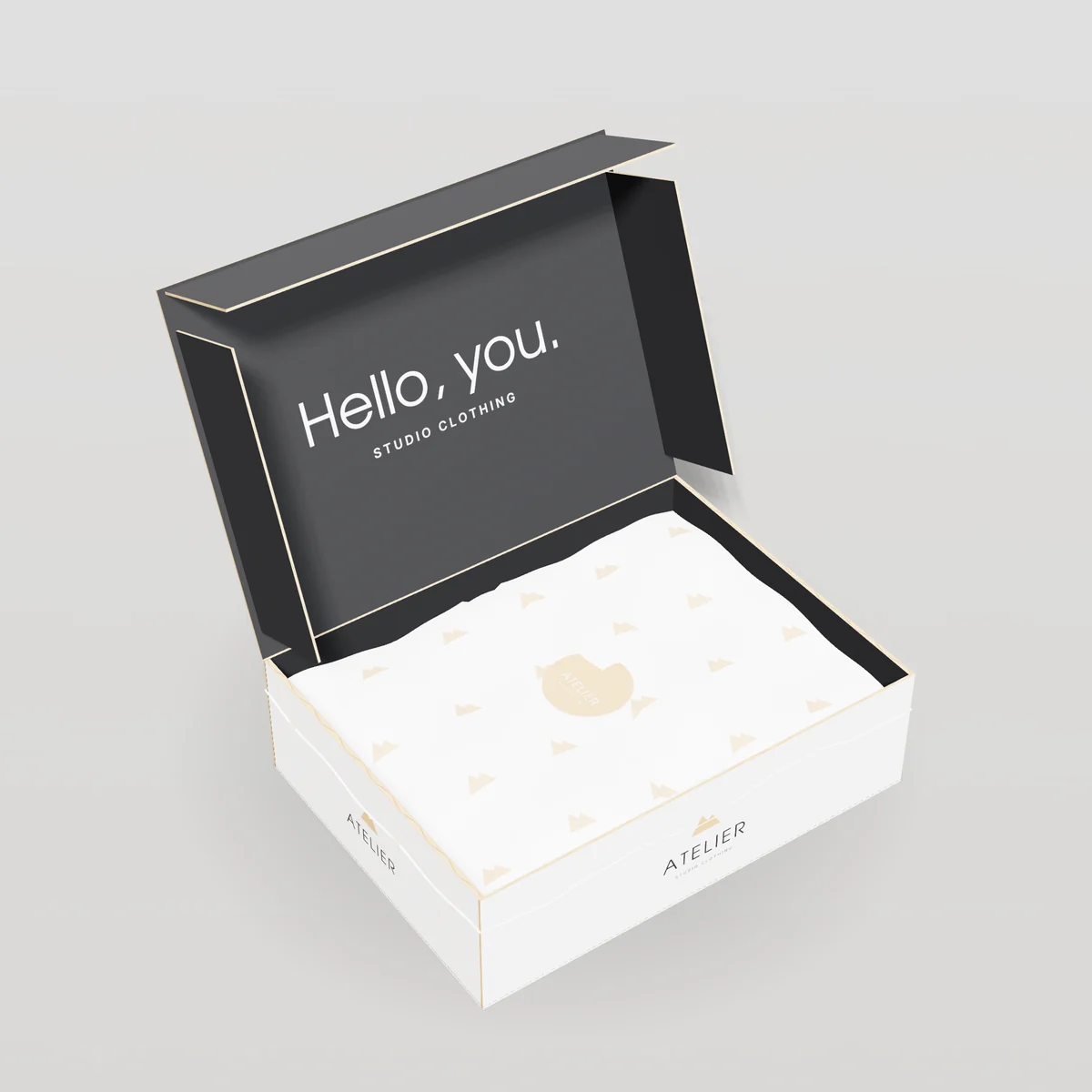 AccessoriesCustom Tissue PaperBranded tissue paper (17gsm) printed with your logo in one or two colors.
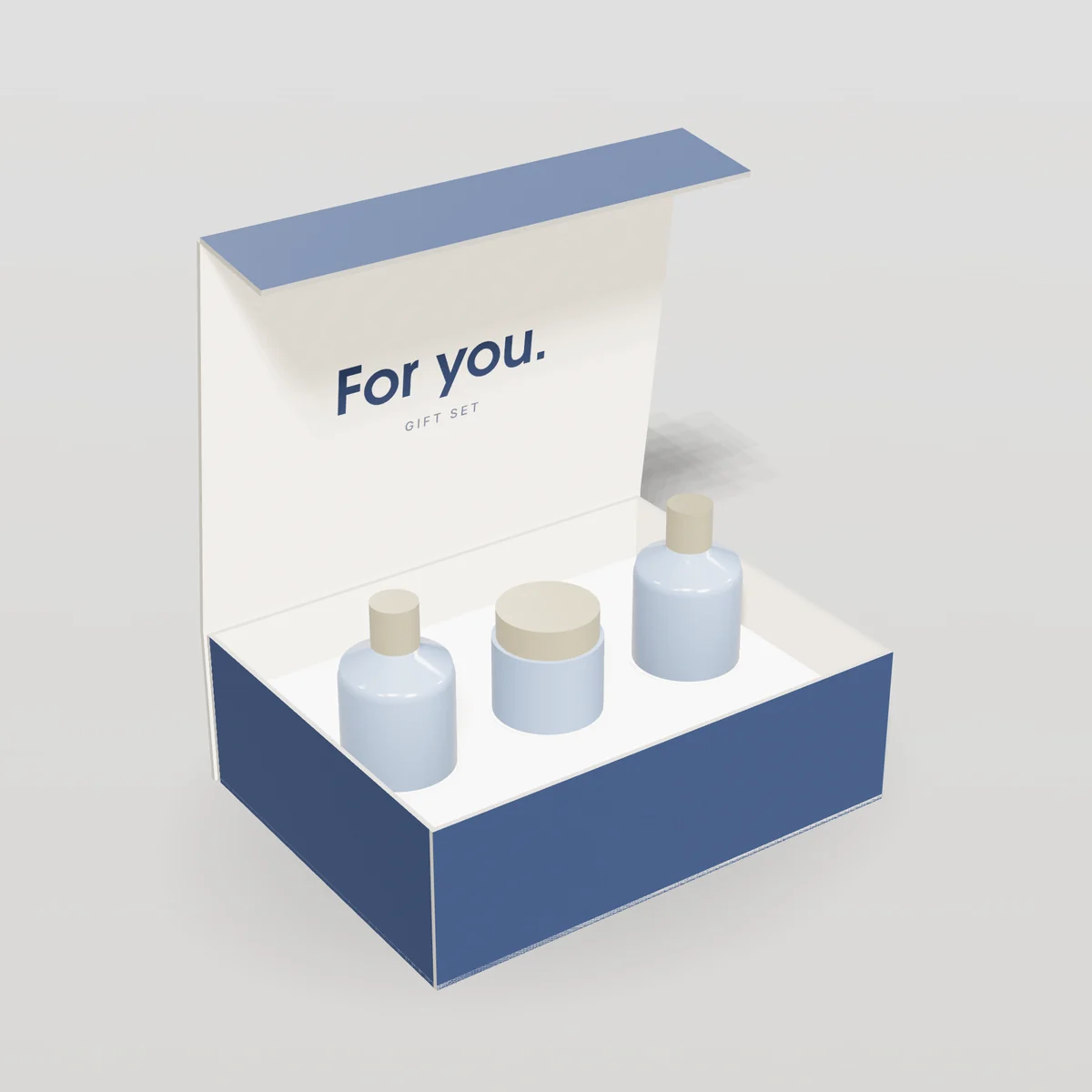 Finishes & Add-onsCustom InsertsDie-cut paperboard, corrugated, EVA foam and molded pulp inserts that lock products in place.
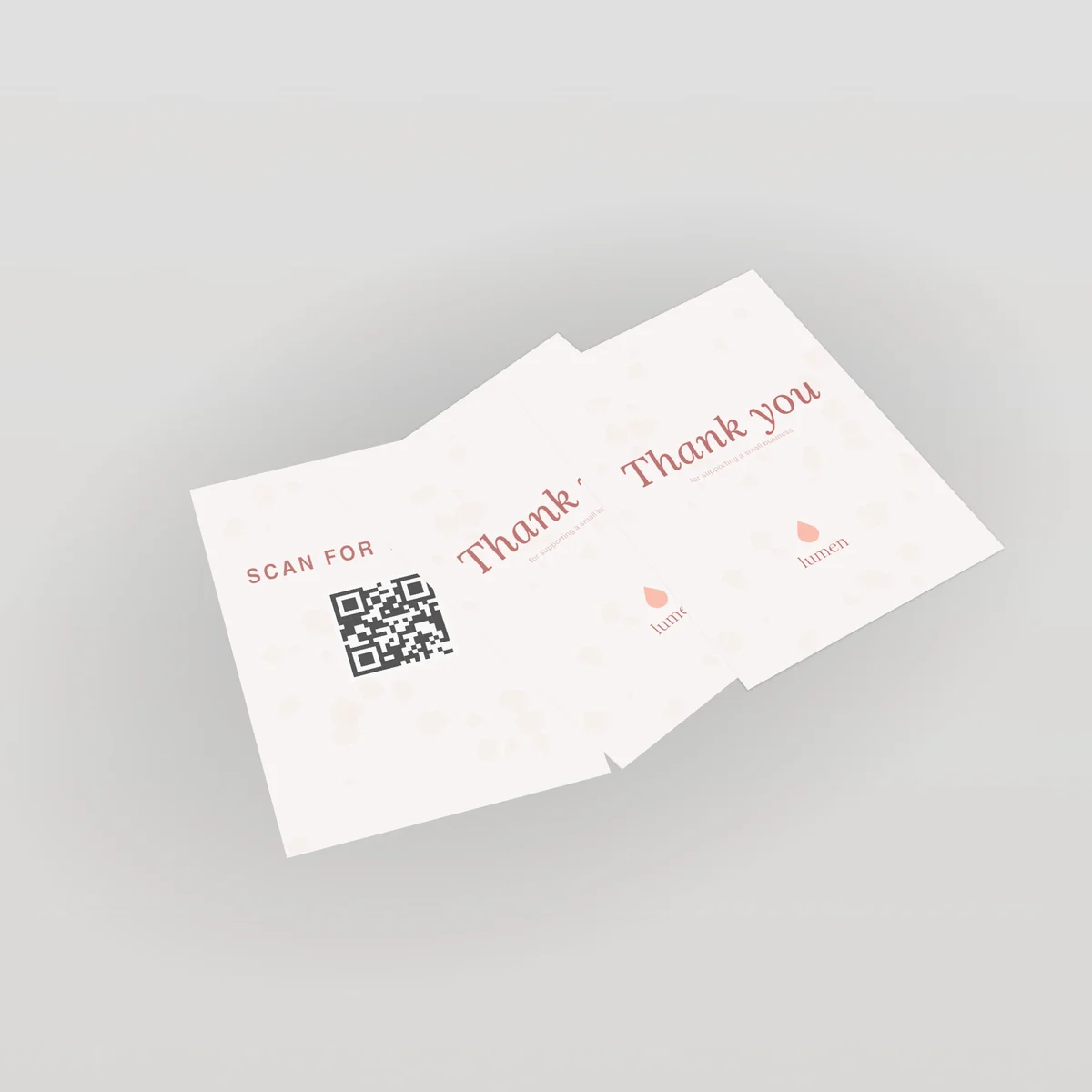 AccessoriesThank You Cards & InsertsPrinted thank-you cards, care cards and discount inserts that drive repeat orders.
How to order subscription boxes
- 1Request a quote
Tell us the style, size, quantity and artwork you have. Use the form or the live estimator.
- 2Free design & dieline
We send a dieline for your exact size, check your artwork and help with layout at no charge.
- 3Approve your proof
Review a digital 3D proof (and an optional physical sample) before anything is printed.
- 4Production & QC
Your boxes are printed, finished, die-cut and inspected against the approved proof.
- 5Delivered to your door
Shipped flat-packed with tracking to any address in the contiguous US.
Key terms on this page
- Mailer box
- A self-locking corrugated box with a hinged lid and tuck front, widely used for e-commerce and subscriptions.
- Insert
- A component inside a box that holds products in place, such as die-cut paperboard, corrugated, foam or molded pulp.
- Tissue paper
- Thin, light paper used to wrap products inside boxes, often printed with a brand pattern.
- Sleeve
- An open-ended band or tube that slides over a tray or box, often printed to brand plain packaging.
- Void fill
- Material that fills empty space in a shipping box to stop products moving, such as crinkle paper or air pillows.
- E-flute
- A thin corrugated flute about 1/16 inch thick. It prints sharply and folds crisply, making it the standard for mailer boxes.
- B-flute
- A corrugated flute about 1/8 inch thick. It offers good crush resistance and printability and is used for shipping boxes, heavier mailers and die-cut shippers.
- Liner
- The flat paper faces of corrugated board. Can be kraft (brown) or bleached (white).
- Kraft
- Paper or board made from unbleached wood pulp, naturally brown and strong.
- Tamper evidence
- Features that show if a package has been opened, such as seals, tear strips or shrink bands.
- Lid
- The top part of a box, hinged or separate.
- Dimensional weight (DIM weight)
- A billing method used by carriers that charges by package volume when it is higher than actual weight. Calculated as L × W × H divided by a divisor.
- Right-sizing
- Designing packaging to fit products closely, reducing material, void fill and shipping costs.
- Board
- A general term for thick paper materials used in packaging, including paperboard, corrugated board and greyboard.
- Proof
- A preview of the final package (digital PDF, 3D render or physical sample) that the customer approves before production.
- Lead time
- The time from order (or proof approval) to delivery, including production and shipping.
- Wrap
- The printed or specialty paper glued around the board of a rigid box or tube.
- Tray
- An open-topped box base, often used with a sleeve or lid.
- Dieline
- A flat template showing the exact shape of a box before folding, with cut, crease, bleed and safe zones. Artwork is designed on top of it.
- Artwork
- The final graphic files (logos, images, text and colors) placed on a dieline and used to make printing plates or digital print files.
- Aqueous coating
- A clear, water-based coating applied over printed board to protect it from scuffs and fingerprints. It is fast drying, low odor and keeps paper packaging easy to recycle.
- Lamination
- Bonding a thin film (matte, gloss or soft-touch) or paper to board for protection and finish.
- Carton
- A box made from paperboard, usually a folding carton. In shipping, "carton" can also mean a corrugated case.
More definitions in our packaging glossary.
Customer reviews
Reviews come only from verified customers. Ordered subscription boxes from us? Share your experience.
Discussed on Quora & X
Subscription Boxes FAQ
What is the best box for a subscription service?
A printed E-flute mailer box with inside print is the most popular choice: it ships on its own, protects contents and creates a strong unboxing.
How do I keep costs down for monthly boxes?
Print one evergreen mailer in larger runs and change monthly cards or sleeves, keep to one or two sizes, and right-size to reduce shipping costs.
What is the minimum order?
Our minimum for mailer boxes is 100 units, but subscription brands usually order larger runs to reduce the unit price.
Can each month look different?
Yes. Change printed cards, sleeves, stickers or tissue each month while keeping the main box consistent.
Do you make inserts for subscription boxes?
Yes. Paperboard and corrugated inserts hold products in place and speed up packing.
Should my subscription box change every month?
Keep the box consistent and vary smaller elements like cards, stickers and tissue. It keeps costs down and builds recognition.
How many subscription boxes should I order?
Order enough for three to six months of forecast subscribers, at a price break, with a buffer for growth.
What box size is best for subscriptions?
The smallest size that fits your typical monthly contents with light padding; many subscriptions use mailers between 9 × 6 × 3 in and 12 × 9 × 4 in.
Can I change products each month with the same box?
Yes. Flexible inserts or paper fill accommodate changing products in a consistent box.
How do I keep a subscription box exciting every month?
Keep the box consistent and change smaller elements: a themed card, a collectible sticker, a new tissue color or a seasonal sleeve.
What is the cheapest way to brand a subscription box?
A kraft mailer with a one-color logo and a printed card inside; add interior print as volume grows.
Can I order subscription boxes in small batches?
Yes. Most mailer styles start at 100 units, but larger runs lower the unit price significantly.
How far ahead should I order boxes?
Keep at least lead time plus a few weeks of stock, and reorder before you run low, especially before seasonal spikes.
Can I print a different message each month?
Use monthly cards, stickers or sleeves; short digital runs of interior print are also possible.
What is a mailbox-friendly box?
A box small enough to fit in a standard mailbox, reducing missed deliveries.
How do I reduce subscription packaging costs?
Right-size boxes, order mailers at price breaks and keep variable items inexpensive.
Do you work with 3PLs?
Yes. We can deliver packaging to your fulfillment partner.
Can subscription boxes be recyclable?
Corrugated mailers with paper fill, paper inserts and paper tape are widely recyclable.
How much do custom subscription boxes cost?
Printed mailers fall steeply in price between 100 and 1,000 units. See the price table on this page for estimates at several quantities.
How long does it take to get subscription boxes?
About 10–14 business days after proof approval, plus shipping.
Can I change box sizes later?
Yes. Many subscriptions adjust sizes as product mixes change; we keep your artwork and adapt the dieline.
Can I get a sample before launching?
Yes. A printed sample is useful for launch photos and testing the unboxing.
Do you offer free design help for subscription boxes?
Yes. Every quote includes a free dieline for your exact size, an artwork check, and a digital proof with a 3D preview. Our designers can also lay out artwork from your logo, brand colors and ideas, so you do not need a packaging designer to get started.
Can I see a 3D preview of my subscription boxes before ordering?
Yes. You can try styles and colors yourself in the free 3D Box Builder, and every quote includes a 3D preview made from your real artwork before anything is printed.
Where do you deliver subscription boxes?
We deliver to business and residential addresses across the contiguous United States with tracking, usually within 3–7 business days after production. Alaska, Hawaii and expedited freight are quoted separately.
What if my subscription boxes arrive with a defect?
Report it within 7 days of delivery with photos and your order number. If there is a production defect or the boxes do not match your approved proof, we reprint or refund the affected items under our reprint guarantee.