Quick answer
Counter and shelf-ready displays that ship your product and sell it at the register. Estimated prices start around $0.77 per unit at 10,000 units and $3.43 at 100 units for a 10×7×4" box. Typical turnaround is 10–14 business days after proof approval.
Display Boxes: specifications
| Styles | Counter display with header, PDQ tray, tear-away shipper |
|---|---|
| Board | E-flute or B-flute corrugated; SBS for light products |
| Full-color litho or digital | |
| Minimum order | 100 units |
| Turnaround | 10–14 business days after proof |
Display Boxes: price breaks
How the estimated unit price of a 10×7×4" counter display box in E-flute corrugated, white changes with quantity. Setup costs are spread over more boxes as the run gets longer, so the per-box price drops sharply in the first few tiers.
| Quantity | Est. unit price | Est. total | Saving vs. first tier |
|---|---|---|---|
| 100 | $3.43 | $343 | — |
| 250 | $1.95 | $488 | −43% |
| 500 | $1.42 | $711 | −59% |
| 1,000 | $1.13 | $1,126 | −67% |
| 2,500 | $0.92 | $2,290 | −73% |
| 5,000 | $0.83 | $4,128 | −76% |
| 10,000 | $0.77 | $7,660 | −78% |
Estimates from our published pricing model, full-color print, no finishes, delivered to the contiguous US. Your written quote confirms the exact price. Get an exact quote →
Popular sizes for display boxes
Sizes are inside dimensions (length × width × height) in inches. Any custom size is available at no extra cost; these are simply the sizes brands order most.
| Size (L×W×H) | Typical use | Est. @ 500 | Est. @ 1,000 | Quote |
|---|---|---|---|---|
| 8 × 6 × 3" | Gift sets, apparel accessories, small electronics | $1.22 | $0.94 | Quote |
| 10 × 7 × 4" | T-shirts, subscription kits, books, multi-item orders | $1.42 | $1.13 | Quote |
| 12 × 8 × 4" | T-shirts, subscription kits, books, multi-item orders | $1.53 | $1.22 | Quote |
| 14 × 10 × 5" | Shoes, hoodies, bundles, home goods | $1.82 | $1.49 | Quote |
Material options and how they affect price
Estimated unit price at 1,000 units for a 10×7×4" counter display box with full-color printing, by material. Material choice changes look, strength and recyclability as well as cost.
| Material | What it’s like | Est. unit price |
|---|---|---|
| E-flute corrugated, white | E-flute corrugated (about 1/16 in) with a white liner: crisp print with real cushioning and parcel strength. | $1.13 |
| E-flute corrugated, kraft | E-flute corrugated with a natural kraft liner: thin, strong and economical, with a natural look. | $1.08 |
| SBS white paperboard (18pt) | Bright white, smooth solid bleached sulfate board. Sharpest print and the best base for foil, spot UV and embossing. | $0.99 |
Printing options compared
How the print specification changes the estimated unit price of a 10×7×4" counter display box in E-flute corrugated, white. One- and two-color printing carries a small plate charge that matters less as quantities grow; full-color digital and offset printing have no plate charge in our model.
| Printing | 500 units | 1,000 units | 5,000 units |
|---|---|---|---|
| Plain (no print) | $1.21 | $0.93 | $0.66 |
| 1 color | $1.40 | $1.05 | $0.72 |
| 2 colors | $1.51 | $1.13 | $0.77 |
| Full color outside | $1.42 | $1.13 | $0.83 |
| Full color outside + inside | $1.61 | $1.30 | $0.98 |
What is a display box?
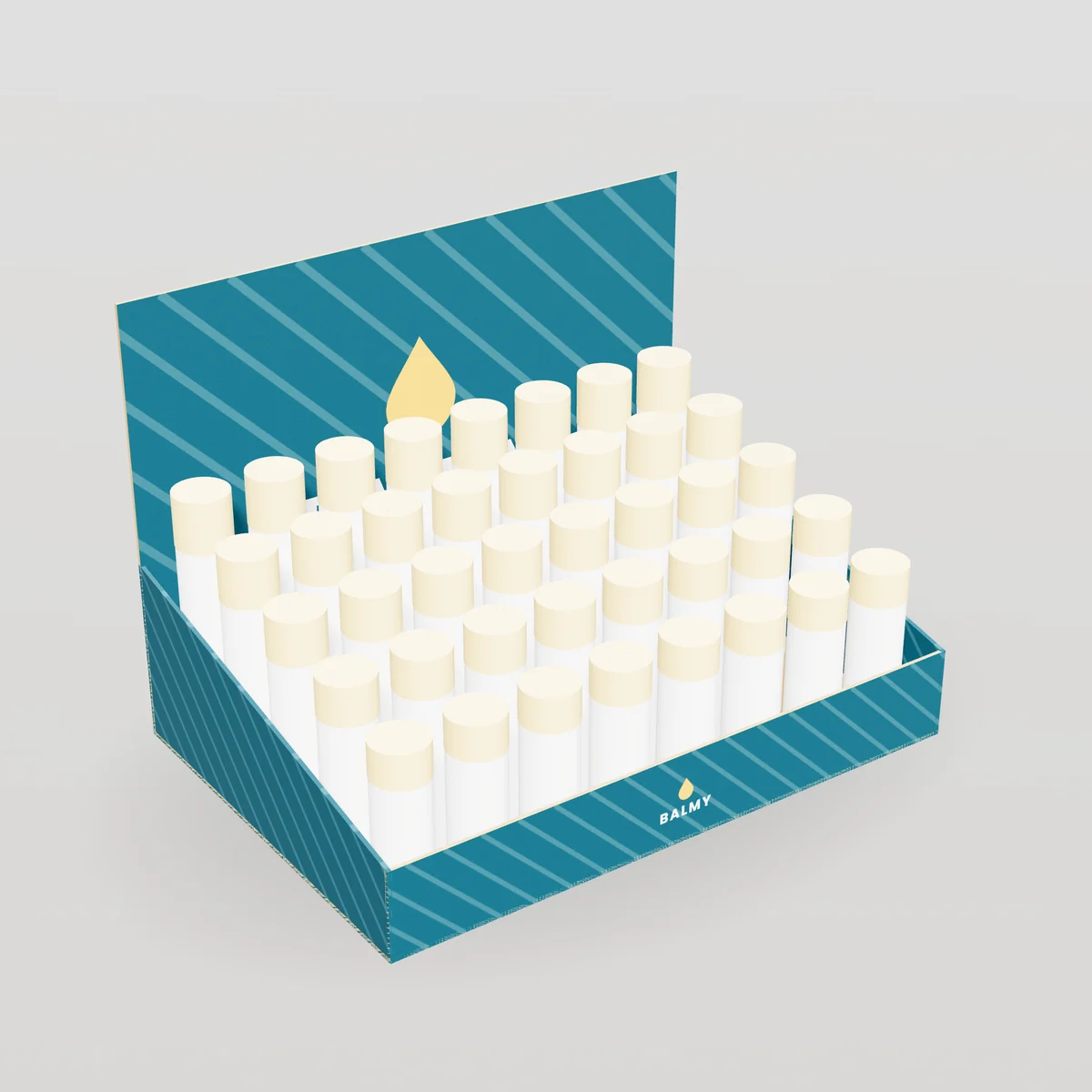
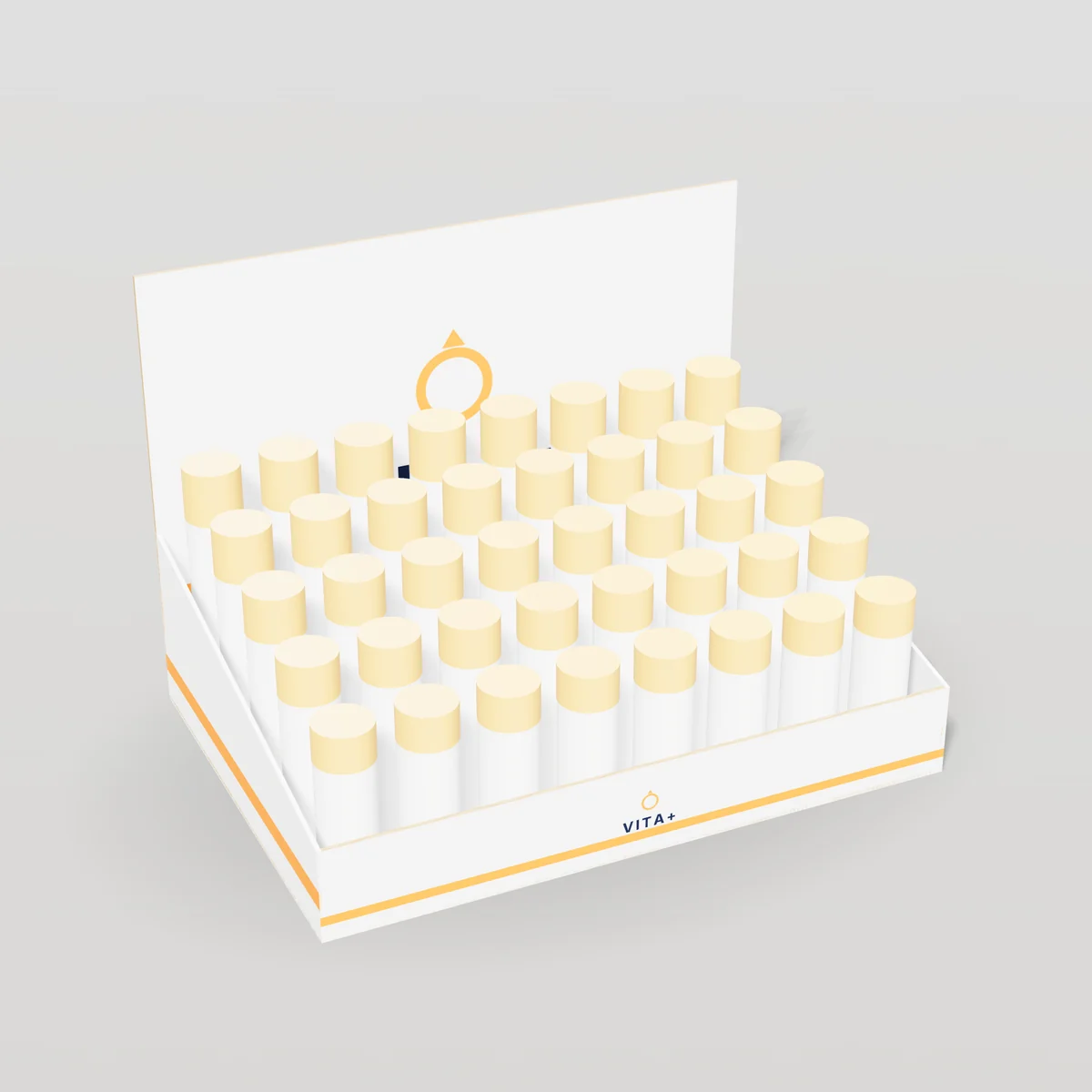
A display box is a printed box designed to sit on a counter or shelf and present products for sale, holding multiple units at once. It is often called a counter display, PDQ ("pretty darn quick", a box that ships and displays in one) or shelf-ready packaging (SRP). The typical design has a lower front lip and a tall, printed back panel (the "header") that carries the brand message, while the products sit inside facing the customer.
Display boxes do a lot of work for a small price. They earn a spot by the register, make impulse purchases easy, and keep your products together and branded in stores that otherwise mix everything up. For wholesale and retail brands, a good display box is often the difference between sitting on a back shelf and selling at checkout.
Types of display boxes
| Type | How it works | Best for |
|---|---|---|
| Counter display (tray + header) | Open tray with a tall back panel | Lip balm, snacks, cosmetics, accessories |
| Shipper display (PDQ) | Ships closed; the top tears off along perforations to become a display | Retail chains, fast setup |
| Tiered display | Steps or shelves inside the box | Several SKUs or sizes |
| Dump bin | Deep open box for loose products | Candy, toys, promotions |
| Shelf-ready tray (SRP) | Low tray that slides onto a shelf | Grocery and drugstore |
| Hanging / peg display | Box with a header that hangs on a peg | Small accessories |
Materials
Display boxes need stiffness to stand up and carry weight without bowing.
- E-flute corrugated with white liner: the most common; good print and strength.
- B-flute corrugated: for heavier products and larger displays.
- SBS paperboard (20–24pt): for small, light counter displays with premium print.
- Kraft liners: for natural brands.
For PDQs that ship full of product, the box must survive shipping as well as look good on the counter, so B-flute or heavier E-flute is often specified.
Printing and finishes
- Full-color digital or litho-lam printing for photo-rich headers.
- Inside printing: the inside back and floor are visible to shoppers, so print them too.
- Gloss or matte lamination to resist scuffs in busy stores.
- Foil and spot UV for premium brands.
- Die-cut header shapes that break the rectangle and catch the eye.
Tip: Shoppers see a display box from about 3–6 feet away. Use large type for the brand and one product benefit, and keep the price or call to action readable from that distance.
Sizing a display box
Start with the products:
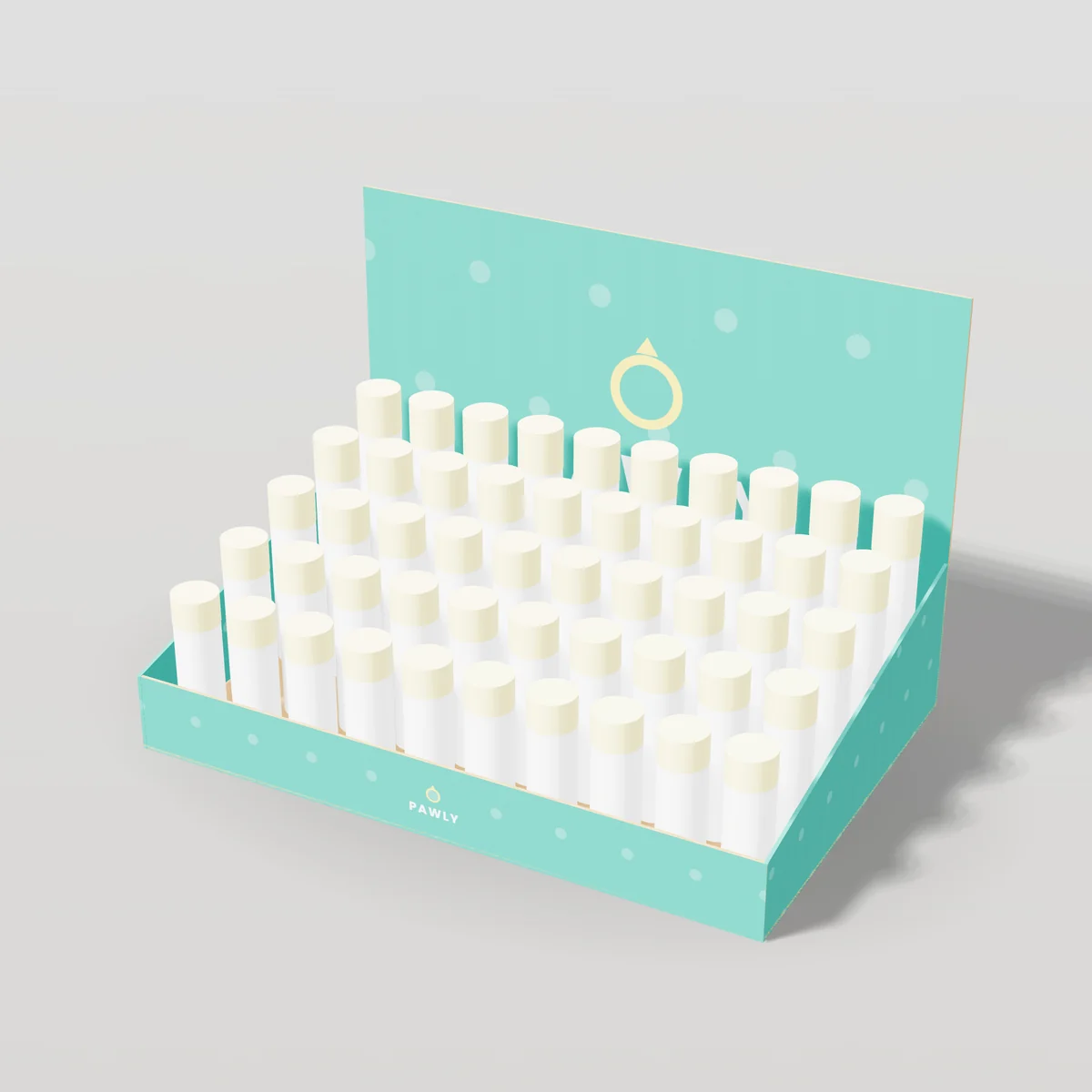
- Count the units you want per display (for example 12, 24 or 36).
- Arrange them in rows and columns, upright or lying down, and measure the footprint.
- Add dividers if products tip over or you have several SKUs.
- Choose header height (often 3–6 in above the tray back wall).
- Set front lip height low enough to see and grab products easily (usually 1–2 in).
- Check counter space limits set by the retailer.
Our team designs the internal layout and dieline for you. Send product samples or exact dimensions and the number of units.
Pricing display boxes
Display boxes involve more board and more complex die-cutting than simple cartons. The table at the top of this page shows estimates for a 10 × 7 × 3 in counter display. Price drivers:
- Size and header height (board area).
- Board grade (E vs. B flute).
- Complexity: tiers, dividers, die-cut header shapes.
- Print coverage, including inside printing.
- Quantity: displays are often ordered in smaller quantities (one per store), so setup costs weigh more.
A smaller paperboard counter display compares like this:
| Quantity | Est. unit price | Est. total | Saving vs. first tier |
|---|---|---|---|
| 100 | $3.02 | $302 | — |
| 250 | $1.59 | $398 | −47% |
| 500 | $1.09 | $545 | −64% |
| 1,000 | $0.82 | $821 | −73% |
| 2,500 | $0.64 | $1,592 | −79% |
| 5,000 | $0.56 | $2,811 | −81% |
| 10,000 | $0.52 | $5,152 | −83% |
Estimates from our published pricing model, full-color print, no finishes, delivered to the contiguous US. Your written quote confirms the exact price. Get an exact quote →
Designing a display box
- Header: brand, product name, one strong benefit. Big and simple.
- Front lip: a short tagline or price point.
- Sides: brand and product imagery, visible on angled counters.
- Inside back and floor: printed so the display looks complete as it empties.
- Ship-closed PDQs: design the outer panels to work as a shipping carton too, with handling marks and product counts.
Display boxes by industry
- Cosmetics and lip care: small counter displays. See cosmetic boxes.
- Snacks and confectionery: PDQs and dump bins. See food boxes.
- CBD and wellness: counter displays with compliance panels. See CBD boxes.
- Accessories and electronics: peg and tiered displays. See electronics boxes.
- Retail and gifts: seasonal displays. See retail packaging.
Sustainability
Corrugated displays are recyclable with other cardboard. Using a display instead of plastic racks keeps point-of-sale materials paper-based. Avoid plastic windows and keep lamination modest for the simplest recycling.
Ordering checklist
- Products, dimensions and units per display
- Display type (counter, PDQ, tiered, dump bin)
- Header height and shape
- Board grade
- Print outside and inside
- Retailer requirements and counter space
- Quantity, delivery ZIP and target date
Where display boxes earn their place
Counter display boxes (also called PDQ displays, shelf-ready trays or point-of-purchase boxes) put products right where buying decisions happen: next to the register, at the end of an aisle, on a boutique counter or a pharmacy shelf. They serve as both shipping container and display, so a retailer can open the box, fold back the lid and place it on the counter in seconds. That speed matters to stores, and it is why brands with small, impulse-friendly products (lip balms, snacks, candles, accessories, supplements in sachets, keychains, cards) use them.
A good display box does four jobs:
- Ships products safely to the store, often in a case pack.
- Converts into a display without tools, tape or instructions.
- Attracts attention with a tall printed header and clear branding.
- Holds products neatly as shoppers take them, so the display still looks good half-empty.
Anatomy of a counter display
| Part | Purpose | Design tip |
|---|---|---|
| Header | Tall printed panel behind the products | Put the brand and one key message here |
| Front lip | Low front panel that keeps products in | Keep it low so products are visible; print a price or name |
| Sides | Often angled for visibility | Use for secondary messages |
| Base / tray | Holds the products | Reinforce for heavy items |
| Tear-away or fold-back lid | Protects in transit, becomes the header | Mark the tear line clearly |
| Dividers | Separate SKUs or keep items upright | Optional die-cut inserts |
Designing for the store environment
- Read from six feet away. Shoppers glance at counters while waiting; large logos and short messages work best.
- Design for half-empty. Print the inside of the tray so the display looks intentional as products sell.
- Show the price or leave a space for a price sticker; retailers appreciate it.
- Use the inside of the lid: when the lid folds back to form the header, its inside becomes the most visible surface.
- Make assembly obvious: print "Tear here" or "Fold back" in small type on the outside.
- Consider shelf height: a display on a low shelf is seen from above; the base and front lip matter more.
Working with retailers
Retailers often have guidelines for displays:
- Maximum footprint for counter space
- Case pack quantity (for example 12 or 24 units)
- Barcodes on the display and individual products
- Shipping and labeling requirements for the outer case
- Seasonal timing for promotional displays
Ask your retailer for a vendor guide before designing. If you are pitching to retailers, a printed sample display can be a powerful sales tool.
Worked example: a lip balm counter display
A natural skincare brand sells lip balms (0.15 oz tubes) to independent shops.
- Structure: counter display with a fold-back lid header, holding 24 tubes in a 4 × 6 grid.
- Material: E-flute white corrugated for strength in transit.
- Print: full color outside and inside; the header shows the brand and "100% plant-based balm" (only if accurate).
- Dividers: a die-cut insert keeps tubes upright.
- Shipping: the display ships closed; the shop tears the lid perforation and folds it back.
The display doubles as the shipping carton, reducing packaging and making it easy for shops to stock.
Display boxes for e-commerce and events
Display boxes are not only for stores. Brands use them at:
- Markets and pop-ups, to organize products on a table
- Trade shows, to present samples neatly
- Subscription unboxings, where an inner display tray presents products
- Wholesale samples, sent to buyers as a ready-made display
Common mistakes with display boxes
- Headers too short to be seen above surrounding products.
- Front lips too high, hiding products.
- Too little strength for heavy products like candles or jars.
- Unclear assembly, so store staff open it the wrong way.
- Ignoring the inside print, so half-empty displays look bare.
Display box structures in more detail
Tear-away lid PDQ. The box ships closed like a carton. A perforated line around the lid lets store staff tear off the top front section, leaving a printed header behind the products. Fast to set up and very common for small consumables.
Fold-back lid display. The lid is hinged at the back; it folds up and locks into a slot to become the header. No perforation, so it can be closed again, useful for samples, trade shows and market stalls.
Tiered display. Internal steps raise the back rows so every product is visible. Good for jars, candles and cosmetics in several shades.
Counter tray with header card. A shallow tray with a separate printed header card slotted in. Flexible and economical; the header can be changed for promotions.
Shelf-ready tray. A shipping case whose front panel tears away so it can go straight onto a shelf; less of a display and more of a labor saver for stores.
Floor display. Larger corrugated stands with several shelves, used for promotions in larger stores. These are quoted individually.
Strength and stability
Displays are handled constantly. To keep them looking good:
- Choose E- or B-flute corrugated for most counter displays; paperboard suits only very light products.
- Reinforce the base for heavy products, or add a double floor.
- Lock the header with tabs so it does not lean or sag.
- Use dividers so products stay upright as the display empties.
- Test with full product weight for several days before ordering at scale.
Display boxes in one paragraph
A display box ships products to the store and turns into a printed counter display in seconds, putting impulse products where shoppers decide. Choose a tear-away or fold-back structure, size the tray to a standard case pack, print the header and the inside of the tray, use corrugated for strength, and make assembly obvious for store staff.
Three real-world scenarios
A snack bar brand in coffee shops. A 12-unit tear-away display sits beside the register. The header shows the brand and price; the inside of the tray is printed so the display still looks good half empty.
A lip balm brand at markets. A fold-back lid display holds 24 tubes in a grid with a divider insert. It closes for transport between events and opens into a counter display in seconds.
A candle brand's holiday promotion. A tiered corrugated display holds three rows of travel candles so every scent label is visible, with a seasonal header card that can be swapped after the holidays.
A buyer's guide to display boxes
Start with the retailer. Counter space is limited, so ask about maximum footprint, case quantity, barcode needs and how staff open displays.
Choose the structure. Tear-away lids are fastest for stores; fold-back lids can be reused at events; tiered displays suit products with several shades or scents.
Make it strong enough. Use corrugated for most products, reinforce the base for heavy items and test with full product weight.
Design the header and the inside. The header carries your brand above nearby products; the printed tray keeps the display attractive as it empties.
Make assembly foolproof. Print simple instructions on the outside and design tabs that lock firmly.
Plan the outer shipping. Displays often ship in an outer case; specify counts and labels so stores can receive them easily.
Ordering timeline
| Step | Typical time |
|---|---|
| Quote with recommended structure and board | Within 1 business day |
| Dieline for your exact size | 1–2 business days |
| Artwork check, digital proof and 3D preview | 1–3 business days |
| Optional plain or printed sample | About 5–12 business days |
| Production after proof approval | 10–14 business days |
| Delivery within the contiguous US | 3–7 business days |
Plan backward from your in-hand date and tell us about deadlines when you request a quote.
Terms to know
- PDQ display: A shipping case that converts quickly into a display.
- Header: The raised printed panel behind the products.
- Tear-away perforation: A perforated line that lets staff remove the lid.
- Tiered insert: Steps inside the tray that raise rear products.
- Shelf-ready packaging: A case designed to go straight onto a shelf after opening.
- Case pack: The number of units in one display or case.
Photographing your display boxes
When pitching to retailers or posting wholesale listings, photograph the display fully stocked on a counter at eye level, then a top-down shot showing the arrangement. Include a person's hand reaching for a product to suggest the impulse-buy moment. A photo of the closed shipping state helps buyers understand setup.
Display box sizes by product
| Product | Typical display | Case pack |
|---|---|---|
| Lip balms | 6 × 4 grid tray, 8–10 in header | 24 |
| Snack bars | Two rows, angled tray | 12–24 |
| Travel candles | Three tiers | 12–18 |
| Gift cards and accessories | Slotted card display | 24–48 |
| Hand creams | Single row, tall header | 8–12 |
| Keychains and pins | Hanging display with header | 12–24 |
Display boxes and retail sell-through
A display's job is not only to look good on the first day but to keep selling as it empties. Tips that help sell-through:
- Print the tray floor and inner walls, so a half-empty display still looks deliberate.
- Use dividers or tiers so remaining products stay upright and visible.
- Show the price clearly, or leave a space for a price label.
- Make reordering easy: print a reorder code or contact on the outside for the store.
Quality checks when your boxes arrive
- Assemble a display following the printed instructions, exactly as store staff would.
- Load it with full product weight and check the base and header stay firm.
- Tear the perforation on a few units to confirm it tears cleanly.
- Check dividers or tiers fit and hold products upright.
- Compare print with the approved proof.
Report anything that does not match your approved proof within 7 days of delivery under our reprint guarantee, with photos and your order number.
Who uses display boxes
- Cosmetic: Lip care, minis and impulse beauty items
- Food: Snack bars and confectionery at the register
- Candle: Travel candles and seasonal minis
- CBD: Balms and gummies on dispensary counters
- Retail Packaging: Accessories, cards and keychains
- Jewelry: Earring cards and small pieces
See all industries for packaging recommendations by category.
Related box styles
For shipping without a display function, use shipping boxes or mailer boxes. For single products on pegs, use hanger boxes. For individual retail units inside the display, use tuck end boxes or window boxes sized to fit the tray.
Related guides
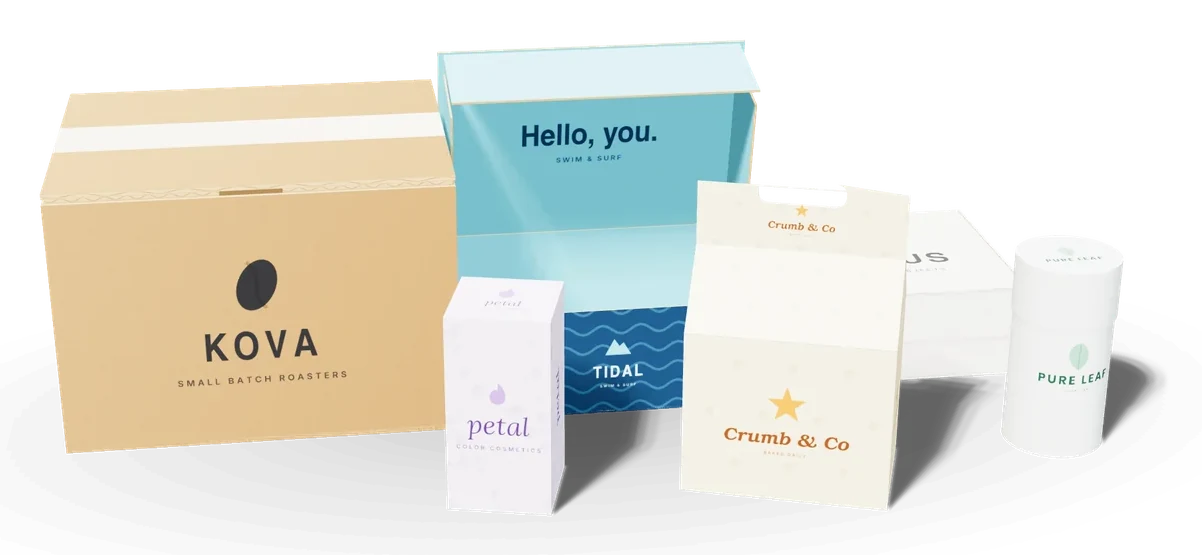 GuideBox styles explainedA practical comparison of every common box style: mailer, RSC shipper, tuck end, auto-lock, rigid, magnetic, sleeve, pillow, gable, display, window and tube.
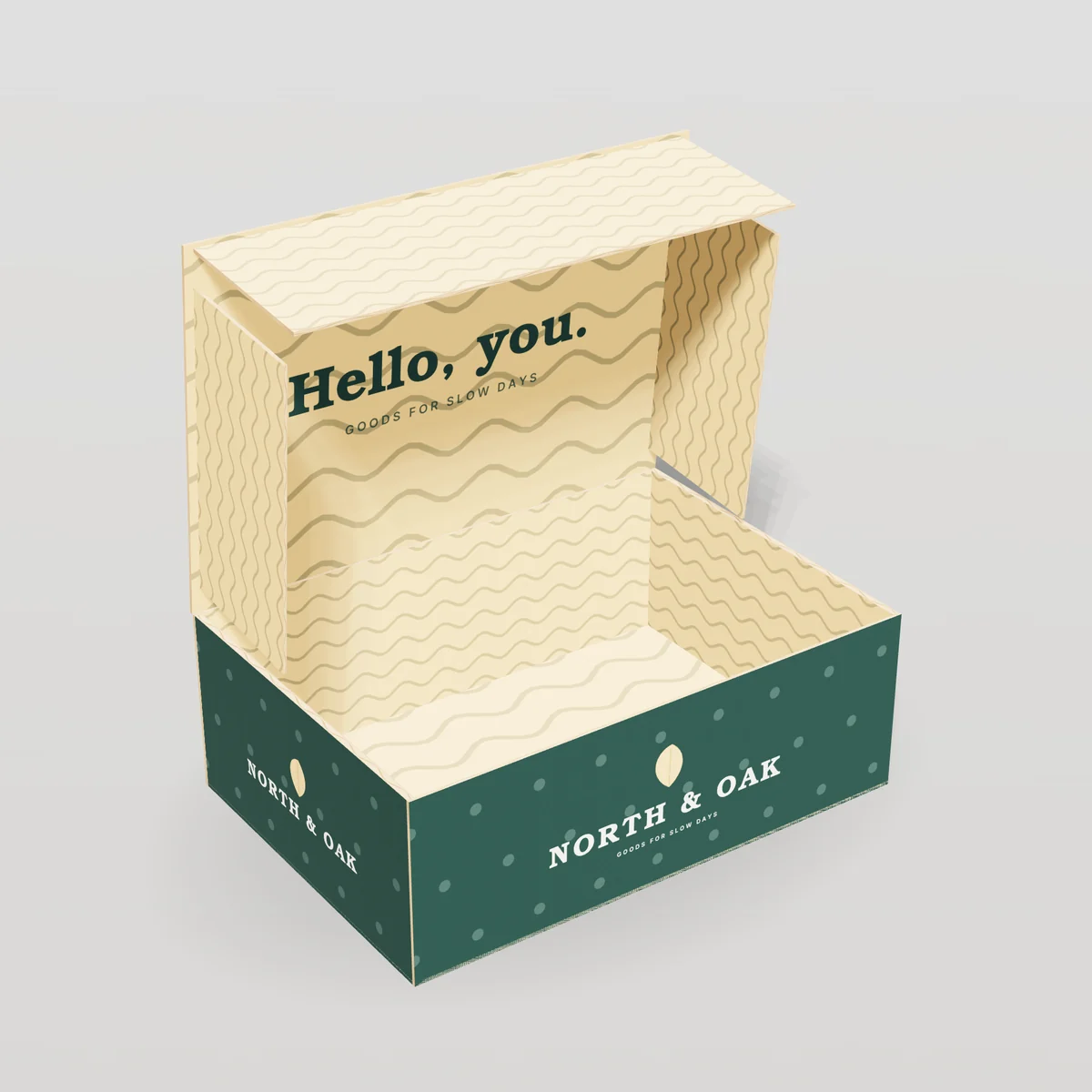 GuideUnboxing & brand designHow to design packaging that sells and gets shared: brand hierarchy, color, typography, the unboxing sequence, inserts and low-cost upgrades that matter.
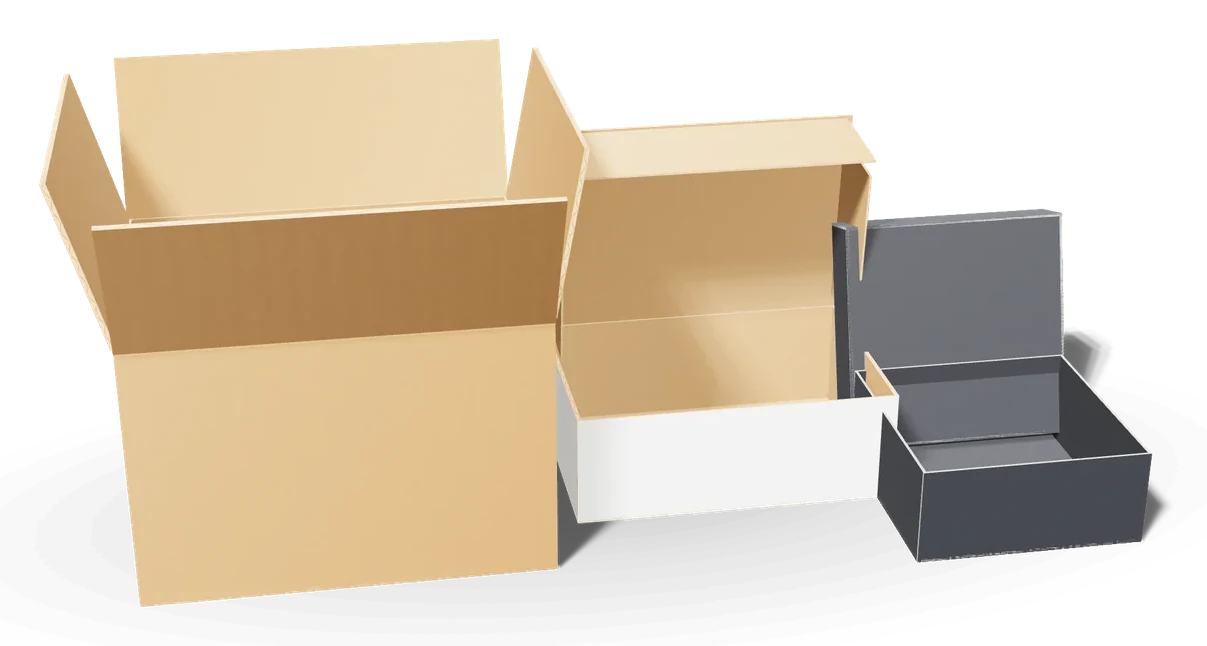 GuidePackaging materials & board gradesUnderstand corrugated flutes and ECT, paperboard caliper (pt), SBS vs kraft vs recycled board, and rigid greyboard, so you can specify packaging like a pro.
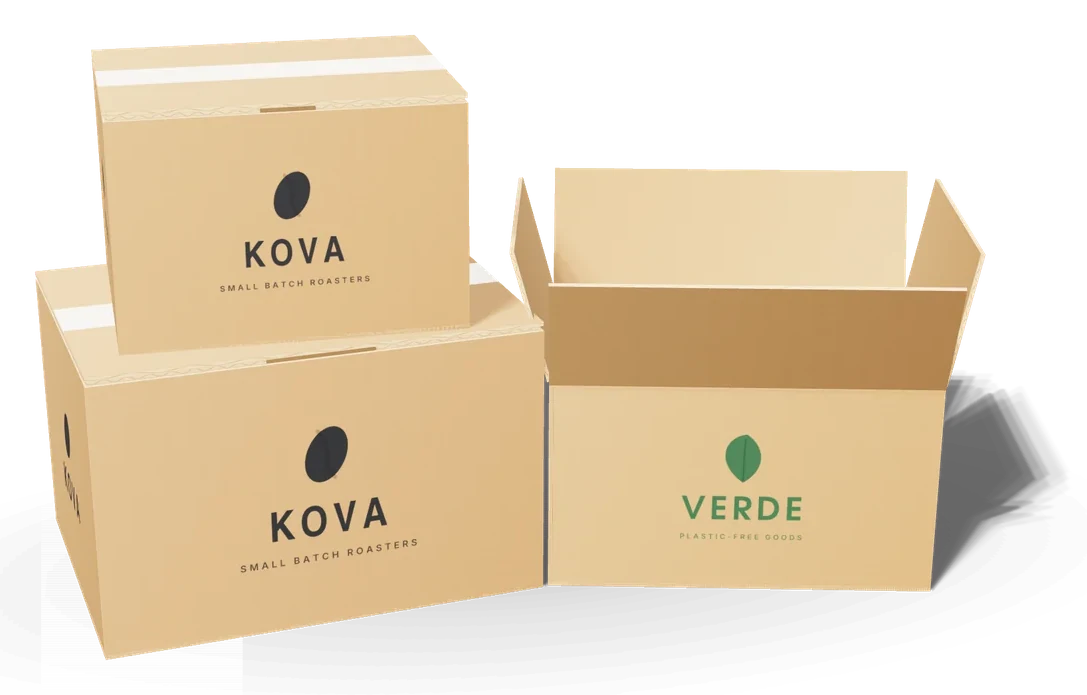 GuideHow much custom packaging costsRealistic 2026 price ranges for custom mailer, shipping, carton, rigid and pouch packaging, what drives cost, and proven ways to lower your unit price.
What finishes and add-ons cost
Estimated extra cost per unit at 1,000 units when you add one finish to a 10×7×4" counter display box (base estimate $1.13). One-time tooling such as foil and embossing dies is already spread across the run in the per-unit figure and listed separately for reference.
| Finish | What it does | Adds per unit | One-time setup |
|---|---|---|---|
| Matte lamination | A thin film with a smooth, low-glare finish that protects print from scuffs. | +$0.05 | — |
| Soft-touch | A velvety, premium coating that invites customers to hold the box. | +$0.09 | — |
| Spot UV | Clear glossy varnish on selected areas for a sleek contrast against matte. | +$0.15 | $80.00 |
| Foil stamping | Gold, silver, rose gold or holographic foil for logos and accents. | +$0.25 | $120 |
| Embossing / debossing | Raised or recessed logo detail you can feel with your fingertips. | +$0.24 | $120 |
| Window | A die-cut window with clear film so the product sells itself. | +$0.13 | $60.00 |
| Custom insert | Paperboard, corrugated or foam inserts that hold products in place. | +$0.26 | $80.00 |
How display boxes compare with similar styles
Estimated unit prices at 1,000 units for each style at its most popular size, full-color print, delivered within the contiguous US, so you can weigh display boxes against the alternatives customers often consider.
| Style | Typical board | Minimum | 1,000 units | Ships | Best for |
|---|---|---|---|---|---|
| Display Boxes10 × 7 × 4" | E-flute corrugated, white | 100 units | $1.13 | Flat | Counter and shelf-ready displays that ship your product and sell it at the register. |
| Shipping Boxes12 × 10 × 6" | C-flute corrugated, kraft (32 ECT) | 100 units | $1.31 | Flat | Printed corrugated regular slotted cartons (RSC) for e-commerce, wholesale and freight. |
| Mailer Boxes9 × 6 × 3" | E-flute corrugated, white | 100 units | $1.06 | Flat | Self-locking corrugated mailers printed inside and out. The go-to box for DTC brands and subscriptions. |
| Tuck End Boxes4 × 2 × 6" | SBS white paperboard (18pt) | 250 units | $0.40 | Flat | Straight and reverse tuck end cartons that open and reclose cleanly. Ideal for lightweight retail products. |
| Window Boxes5 × 3 × 5" | SBS white paperboard (18pt) | 250 units | $0.63 | Flat | Paperboard boxes with a die-cut window and clear film so shoppers see the product. |
Learn about these materials
How to order display boxes
- 1Request a quote
Tell us the style, size, quantity and artwork you have. Use the form or the live estimator.
- 2Free design & dieline
We send a dieline for your exact size, check your artwork and help with layout at no charge.
- 3Approve your proof
Review a digital 3D proof (and an optional physical sample) before anything is printed.
- 4Production & QC
Your boxes are printed, finished, die-cut and inspected against the approved proof.
- 5Delivered to your door
Shipped flat-packed with tracking to any address in the contiguous US.
Key terms on this page
- Shelf-ready packaging (SRP)
- Packaging that goes from shipping case to store shelf with minimal handling, often a tray with a tear-off front.
- Panel
- A face of a box, such as the front, back, side, top or bottom panel.
- Tray
- An open-topped box base, often used with a sleeve or lid.
- Shipper
- A box used to ship products, often corrugated.
- E-flute
- A thin corrugated flute about 1/16 inch thick. It prints sharply and folds crisply, making it the standard for mailer boxes.
- Liner
- The flat paper faces of corrugated board. Can be kraft (brown) or bleached (white).
- B-flute
- A corrugated flute about 1/8 inch thick. It offers good crush resistance and printability and is used for shipping boxes, heavier mailers and die-cut shippers.
- SBS (solid bleached sulfate)
- Premium paperboard made from bleached virgin fiber, bright white throughout, with the best print and finish quality.
- Paperboard
- Thick paper (usually 0.010 inch or more) used for folding cartons, such as SBS, kraft and recycled board.
- Kraft
- Paper or board made from unbleached wood pulp, naturally brown and strong.
- Lamination
- Bonding a thin film (matte, gloss or soft-touch) or paper to board for protection and finish.
- Spot UV
- A clear, glossy UV-cured varnish applied to selected areas to create contrast with a matte background.
- Dieline
- A flat template showing the exact shape of a box before folding, with cut, crease, bleed and safe zones. Artwork is designed on top of it.
- Board
- A general term for thick paper materials used in packaging, including paperboard, corrugated board and greyboard.
- Die-cutting
- The process of cutting and creasing printed sheets into box shapes using a die.
- Flute
- The wavy middle layer of corrugated board. Flute size (A, B, C, E, F) determines thickness, cushioning and strength.
- Coverage
- The proportion of a surface covered by ink. Heavy coverage uses more ink and can affect drying and cracking.
- Point (pt)
- The unit of paperboard thickness: 1 point equals 0.001 inch. 18pt board is 0.018 inch thick.
- Carton
- A box made from paperboard, usually a folding carton. In shipping, "carton" can also mean a corrugated case.
- Proof
- A preview of the final package (digital PDF, 3D render or physical sample) that the customer approves before production.
- Lid
- The top part of a box, hinged or separate.
- Insert
- A component inside a box that holds products in place, such as die-cut paperboard, corrugated, foam or molded pulp.
- Perforation
- A line of small cuts that lets packaging tear easily, used for tear strips and PDQ tops.
- Header card
- A printed card at the top of a hanging package carrying the brand and hang hole.
- Artwork
- The final graphic files (logos, images, text and colors) placed on a dieline and used to make printing plates or digital print files.
- PDQ display
- A display box that ships with product inside and opens quickly into a counter display.
- Regular slotted container (RSC)
- The standard corrugated shipping box with four top and four bottom flaps of equal depth (FEFCO 0201).
- Sleeve
- An open-ended band or tube that slides over a tray or box, often printed to brand plain packaging.
More definitions in our packaging glossary.
Customer reviews
Reviews come only from verified customers. Ordered display boxes from us? Share your experience.
Discussed on Quora & X
Display Boxes FAQ
What is a PDQ display?
A PDQ is a display box that ships closed with products inside; the top is removed along perforations so it becomes a counter display in seconds.
What is the minimum order for display boxes?
Our minimum is 100 units.
Can display boxes hold several products?
Yes. We design inserts, dividers and tiers to hold multiple SKUs and sizes.
Can you print inside the display?
Yes. Printing the inside back and floor keeps the display looking good as products sell.
What material is best?
E-flute corrugated with a white liner is the most common; B-flute for heavier products.
Do display boxes ship flat?
Most ship flat and assemble quickly; PDQs can also be packed with product before shipping.
Can display boxes hold heavy products?
Yes, with E- or B-flute corrugated, reinforced bases and dividers. Tell us the product weight and count.
What size should a counter display be?
Small enough for crowded counters (often about 8–12 in wide and deep) and tall enough for the header to be seen above nearby products. Retailers may have limits; check with them.
What is a counter display box?
A printed box that holds several units of a product on a store counter, with a raised header for branding. Most ship closed and convert into a display by tearing or folding the lid.
How many products should a display hold?
Common case packs are 6, 12, 24 or 36 units, depending on product size and price. Retailers often prefer quantities that match their reorder habits.
Can display boxes be printed inside?
Yes, and they should be: the inside of the tray and header is what shoppers see as products sell.
What material is used for display boxes?
Usually E-flute or B-flute corrugated with a printed white liner for strength. Very light products can use paperboard.
Do displays come assembled?
Most ship flat and assemble in seconds; some are pre-glued so the tray pops up instantly.
Can I use a display box at markets and trade shows?
Yes. Fold-back lid displays can be closed for transport and reopened, ideal for events.
How tall should the header be?
Tall enough to be seen above nearby products, often 4–8 in above the tray, while staying stable.
What is the minimum order?
Display boxes typically start at 100 units.
Can a display hold different products?
Yes, with dividers that create compartments for different SKUs or colors.
Are display boxes recyclable?
Corrugated displays are recyclable with cardboard once emptied.
Can I put a QR code on a display?
Yes. A QR code on the header linking to a short video or your website can help shoppers learn more at the counter.
How long does a display take to produce?
Typically 10–14 business days after proof approval, plus shipping.
Can I order displays and individual product boxes together?
Yes. We can quote both so the product cartons fit the display tray precisely.
Do you offer free design help for display boxes?
Yes. Every quote includes a free dieline for your exact size, an artwork check and a digital and 3D proof. Our designers can also lay out a design from your logo and brand colors.
Can I see a sample before ordering display boxes?
Yes. Order a plain structural sample to check size and fit, or a printed sample to check color and finishes before production.