Quick answer
Luxury setup boxes made from thick greyboard wrapped in printed or specialty paper. Estimated prices start around $2.19 per unit at 10,000 units and $6.08 at 100 units for a 8×6×3" box. Typical turnaround is 10–14 business days after proof approval.
Rigid Boxes: specifications
| Structure | Two-piece (lid & base), shoulder/neck, book style, drawer, magnetic |
|---|---|
| Board | 1.2–3.0 mm greyboard (36–100pt equivalent) |
| Wrap | Printed art paper, kraft, specialty textured, linen, soft-touch |
| Inserts | Paperboard, EVA foam, velvet, molded pulp |
| Minimum order | 100 units |
| Turnaround | 12–16 business days after proof |
Rigid Boxes: price breaks
How the estimated unit price of a 8×6×3" rigid box (lid & base) in Rigid greyboard + printed wrap changes with quantity. Setup costs are spread over more boxes as the run gets longer, so the per-box price drops sharply in the first few tiers.
| Quantity | Est. unit price | Est. total | Saving vs. first tier |
|---|---|---|---|
| 100 | $6.08 | $608 | — |
| 250 | $4.12 | $1,031 | −32% |
| 500 | $3.36 | $1,678 | −45% |
| 1,000 | $2.89 | $2,887 | −52% |
| 2,500 | $2.51 | $6,273 | −59% |
| 5,000 | $2.32 | $11,622 | −62% |
| 10,000 | $2.19 | $21,897 | −64% |
Estimates from our published pricing model, full-color print, no finishes, delivered to the contiguous US. Your written quote confirms the exact price. Get an exact quote →
Popular sizes for rigid boxes
Sizes are inside dimensions (length × width × height) in inches. Any custom size is available at no extra cost; these are simply the sizes brands order most.
| Size (L×W×H) | Typical use | Est. @ 500 | Est. @ 1,000 | Quote |
|---|---|---|---|---|
| 4 × 4 × 2" | Serums, candles, soaps, single small products | $2.54 | $2.14 | Quote |
| 6 × 6 × 3" | Gift sets, apparel accessories, small electronics | $3.10 | $2.65 | Quote |
| 8 × 6 × 3" | Gift sets, apparel accessories, small electronics | $3.36 | $2.89 | Quote |
| 10 × 8 × 4" | T-shirts, subscription kits, books, multi-item orders | $4.19 | $3.66 | Quote |
| 12 × 10 × 4" | Shoes, hoodies, bundles, home goods | $4.95 | $4.35 | Quote |
Material options and how they affect price
Estimated unit price at 1,000 units for a 8×6×3" rigid box (lid & base) with full-color printing, by material. Material choice changes look, strength and recyclability as well as cost.
| Material | What it’s like | Est. unit price |
|---|---|---|
| Rigid greyboard + printed wrap | Thick greyboard (about 1.5–2.5 mm) wrapped in printed paper: the heavy, structured feel of luxury packaging. | $2.89 |
| Rigid greyboard + kraft wrap | Rigid greyboard wrapped in natural kraft paper: premium structure with a natural, understated finish. | $2.81 |
Printing options compared
How the print specification changes the estimated unit price of a 8×6×3" rigid box (lid & base) in Rigid greyboard + printed wrap. One- and two-color printing carries a small plate charge that matters less as quantities grow; full-color digital and offset printing have no plate charge in our model.
| Printing | 500 units | 1,000 units | 5,000 units |
|---|---|---|---|
| Plain (no print) | $3.20 | $2.74 | $2.20 |
| 1 color | $3.37 | $2.85 | $2.25 |
| 2 colors | $3.46 | $2.91 | $2.29 |
| Full color outside | $3.36 | $2.89 | $2.32 |
| Full color outside + inside | $3.50 | $3.02 | $2.44 |
What is a rigid box?
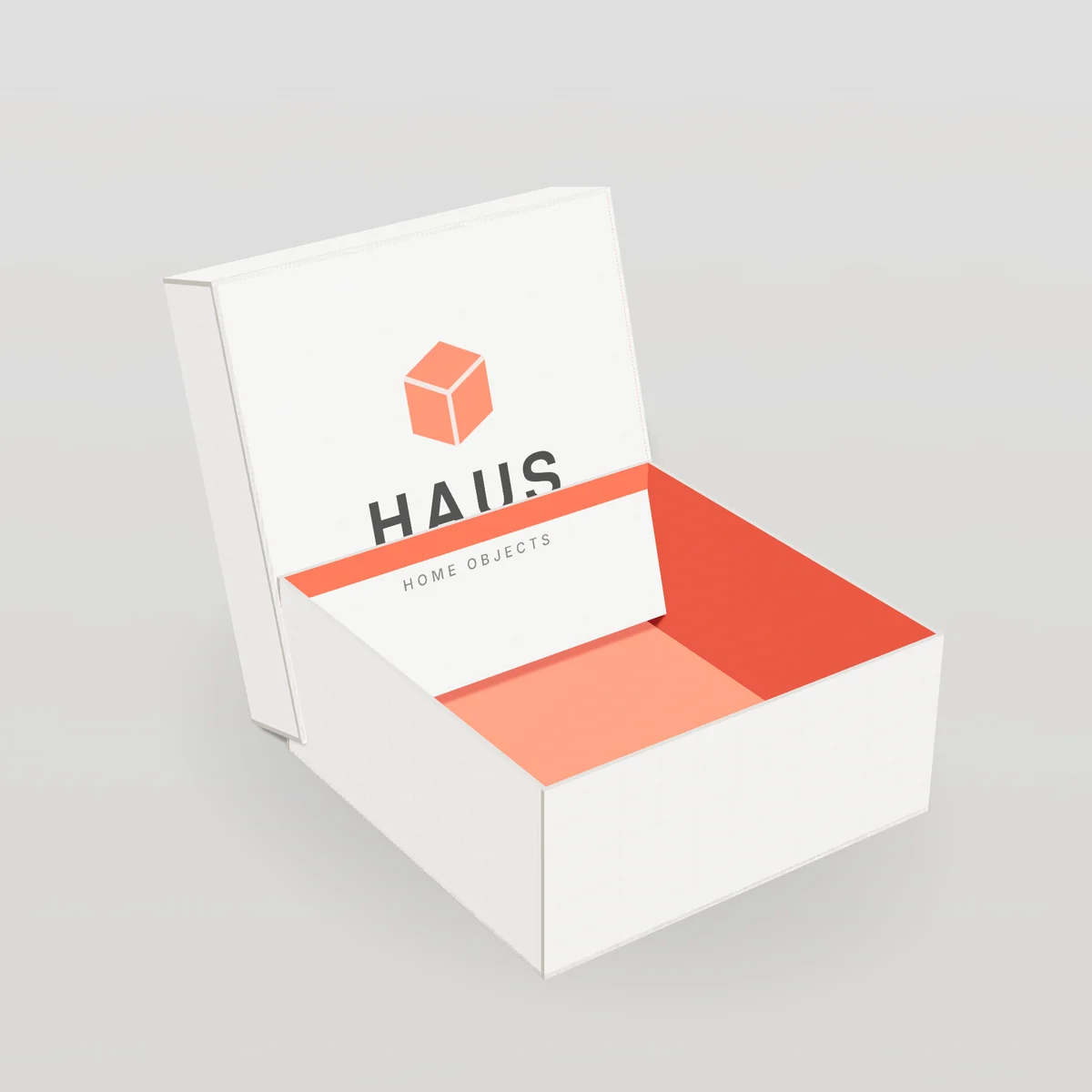
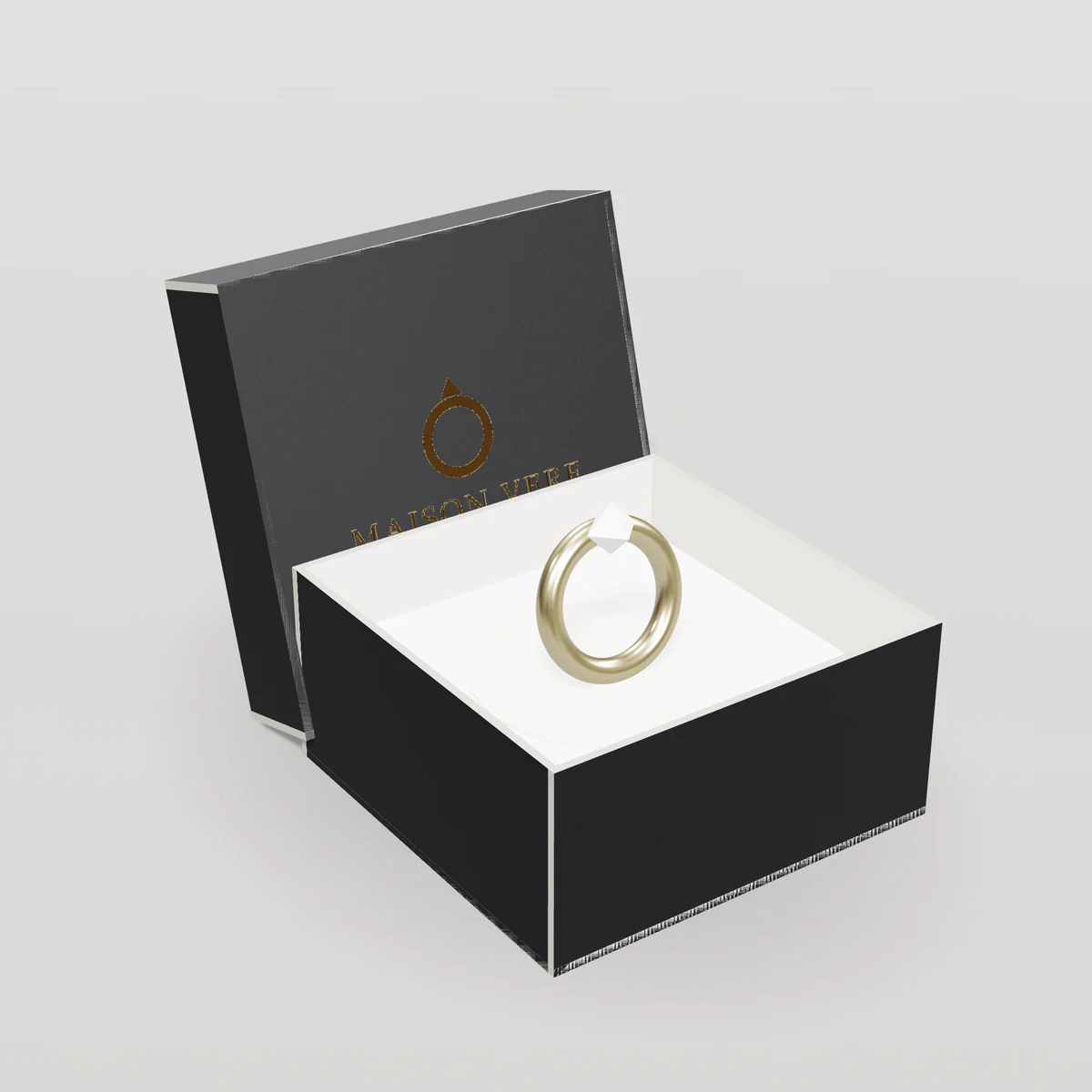
A rigid box, also called a setup box, is a premium box made from thick, non-folding greyboard (also called chipboard or binder's board) that is wrapped in printed or specialty paper. Unlike folding cartons, rigid boxes are assembled at the factory and arrive at your door in their final shape. Their walls are typically 1.2 to 3 mm thick, which gives them the weight, crisp corners and solid feel that people instantly associate with luxury.
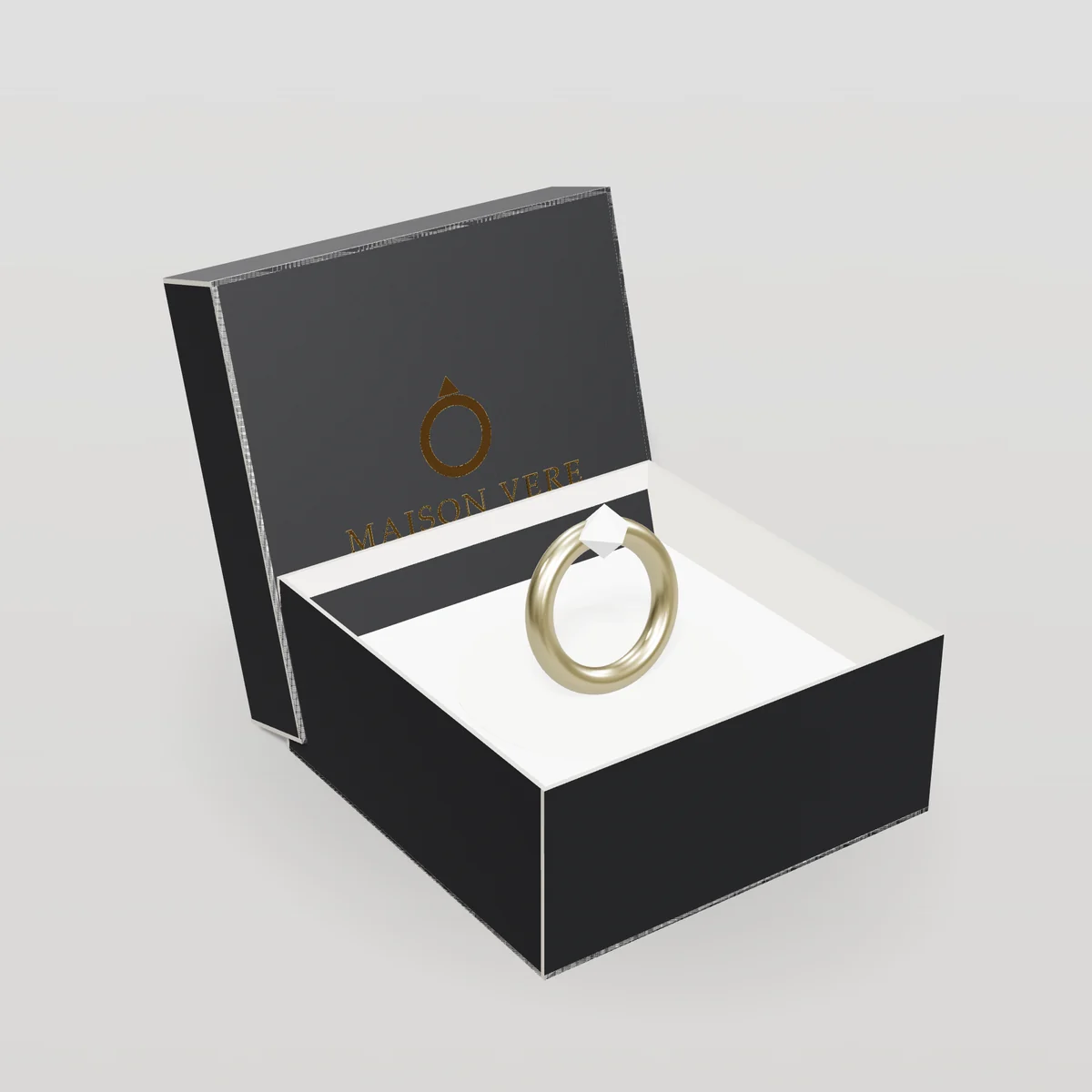
Open any high-end phone box, watch case, fragrance gift set or designer jewelry box and you are almost certainly holding a rigid box. Brands choose them because the box itself becomes part of the product: customers keep them, display them and reuse them for years.
Rigid boxes are not just for luxury houses. Smaller brands use them for limited editions, influencer and PR kits, corporate gifts, wedding favors, subscription "hero" boxes and anything where the first impression justifies a higher packaging budget.
How rigid boxes are made
Rigid box production is part machine, part craft. Knowing the process explains the lead time and price.
- Board cutting. Greyboard is cut to size for the base and lid. Corners are V-grooved or cut so the walls fold up at right angles.
- Corner taping or staying. The walls are folded up and the corners are secured with tape or glued stays to form a tray.
- Wrap printing. The decorative wrap paper is printed (usually offset), then coated, laminated or embellished with foil, embossing or spot UV.
- Wrapping. Glue is applied to the wrap, the tray is placed on it, and the wrap is folded up and over the walls, tucked inside and pressed smooth. Machines handle most of this; complex shapes and finishing touches are done by hand.
- Lining. The inside is optionally lined with a separate paper.
- Inserts and accessories. Foam, paperboard or molded pulp inserts, ribbons, magnets or drawers are added.
- Quality control and packing. Boxes are inspected and packed into protective shipping cartons, usually nested or stacked.
Because every rigid box is wrapped individually, they take longer to make than folding cartons. Typical production is 12–16 business days after proof approval.
Rigid box styles
| Style | Description | Best for |
|---|---|---|
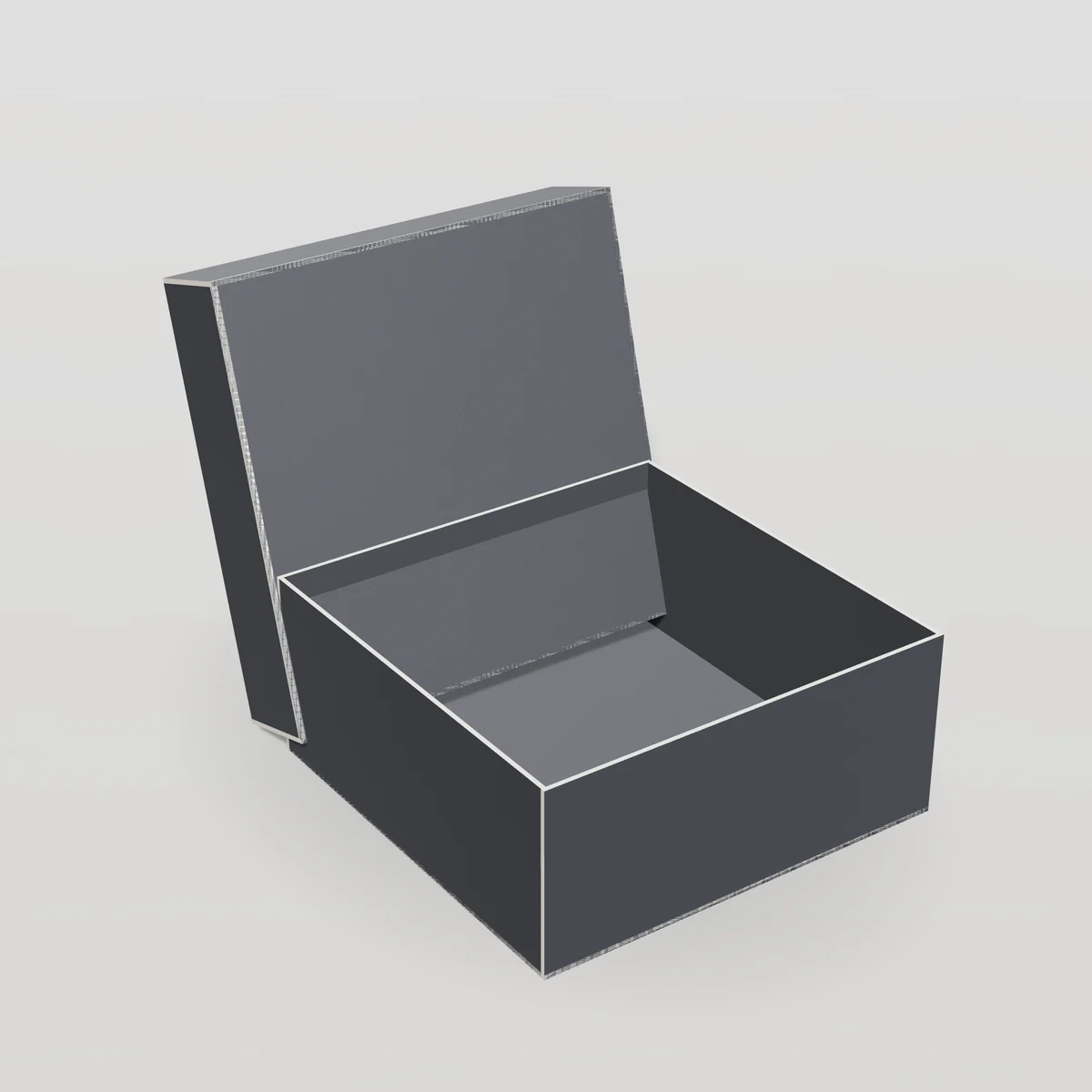
| Lid and base (telescope) | Separate lid fits over a base; full-depth or partial-depth lid | Gift sets, apparel, keepsakes |
| Shoulder / neck box | Base has an inner collar (neck) that the lid rests on, showing a contrasting band | Fragrance, watches, luxury cosmetics |
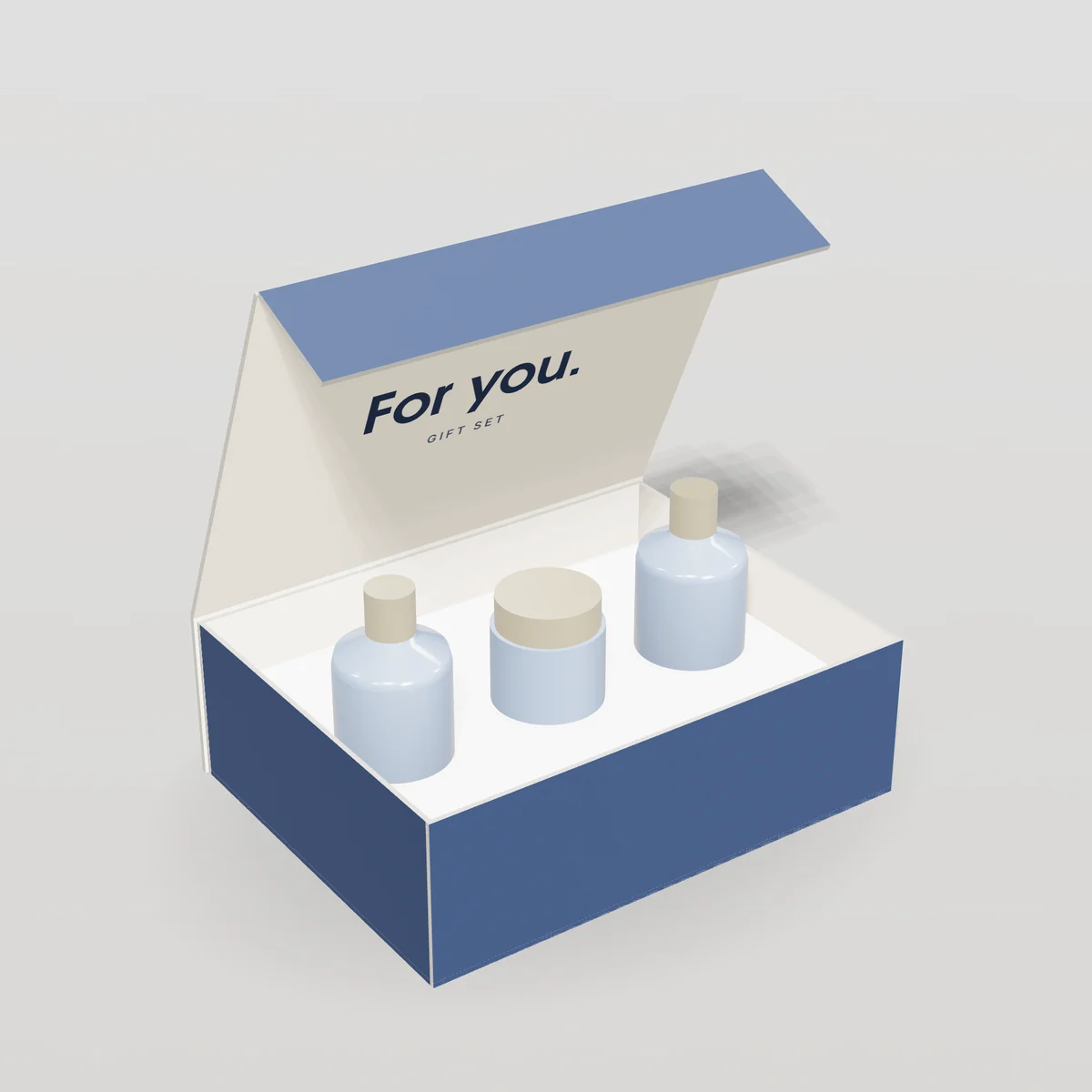
| Book style / magnetic | Hinged lid with a front flap that closes with hidden magnets | PR kits, premium gift sets. See magnetic closure boxes |
| Drawer (slide) | A tray slides out of a rigid sleeve, often with a ribbon pull | Jewelry, chocolate, cards |
| Hinged lid | Lid attached at the back with a paper hinge | Collectibles, premium accessories |
| Collapsible rigid | Ships flat; folds into a rigid box with magnets | Saves storage and freight |
| Cylinder / tube | Rigid round tube with a lid | Candles, tea, spirits. See tube packaging |
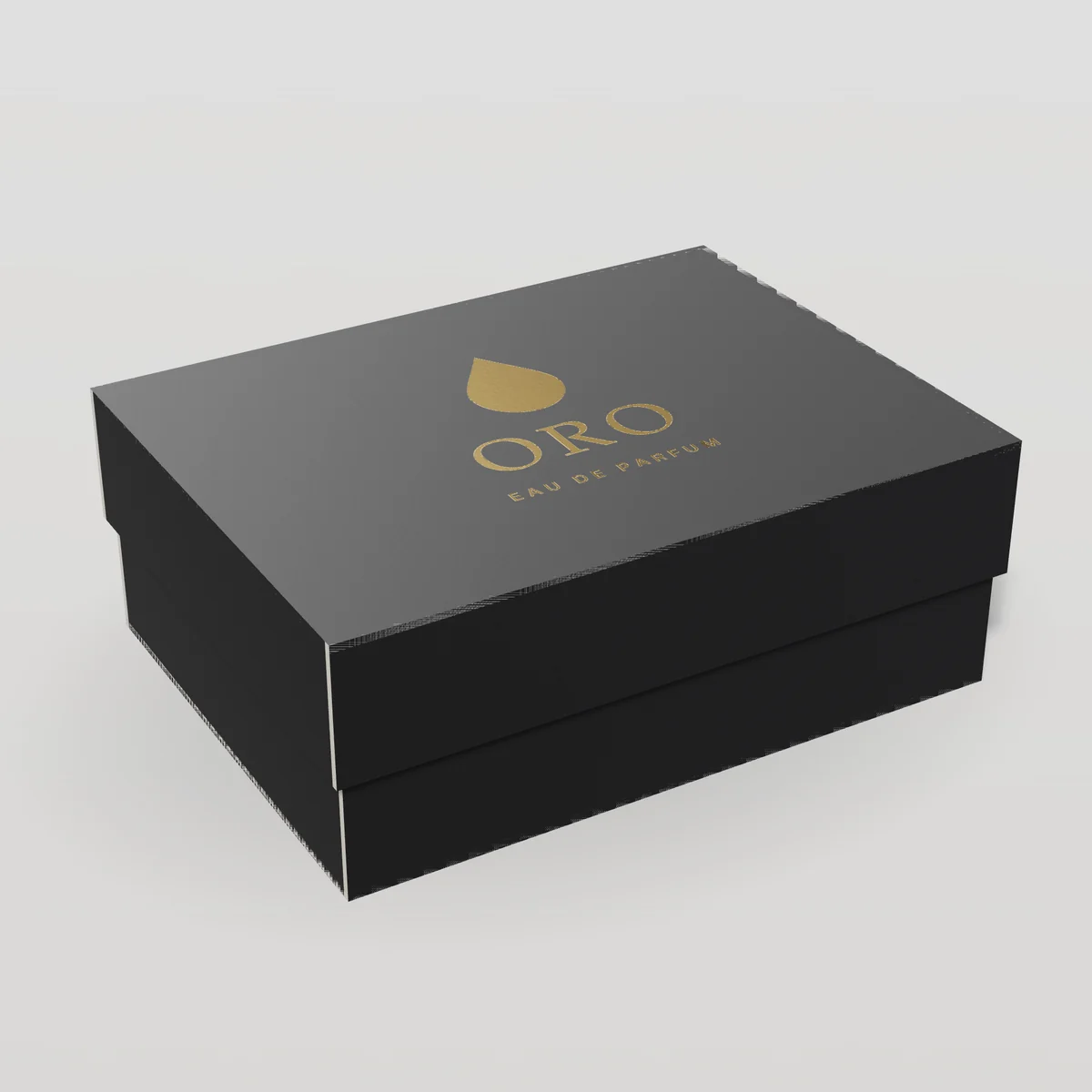
For lift-off lids, a full telescope lid covers the whole base; a partial telescope lid covers part of it, leaving a band of the base visible. Both are made to your dimensions.
Materials
Greyboard
The structural core is dense recycled greyboard. Thickness options:
| Thickness | Feel | Use |
|---|---|---|
| 1.2–1.5 mm | Light but rigid | Small boxes, cards, jewelry |
| 2.0 mm | Standard premium | Most gift and cosmetic boxes |
| 2.5–3.0 mm | Heavy, substantial | Large boxes, heavy contents, flagship products |
Wrap papers
- Printed art paper (coated): the most versatile; prints full color and takes lamination, spot UV and foil.
- Kraft paper: natural brown, for organic and artisan brands.
- Specialty textured papers: linen, felt-marked, pearlescent, metallic and colored-through stocks that need little or no printing.
- Soft-touch laminated paper: a velvety finish that feels expensive and hides fingerprints.
- Fabric or faux leather: for the highest-end jewelry and watch presentation.
Learn more in our rigid chipboard guide.
Printing and finishes for rigid boxes
The wrap paper is printed flat before wrapping, so you can use the full range of print and finishing techniques:
- Offset CMYK and Pantone printing for accurate brand color.
- Foil stamping in gold, silver, rose gold, copper, holographic or colored foils.
- Embossing and debossing, blind or combined with foil.
- Spot UV on soft-touch or matte lamination for a tone-on-tone effect.
- Inside printing on the lid lining or base liner for a reveal moment.
- Edge painting or contrasting neck colors on shoulder boxes.
Tip: Rigid boxes reward restraint. A single foil logo on a beautifully textured paper often looks more expensive than full-coverage printing.
Inserts for rigid boxes
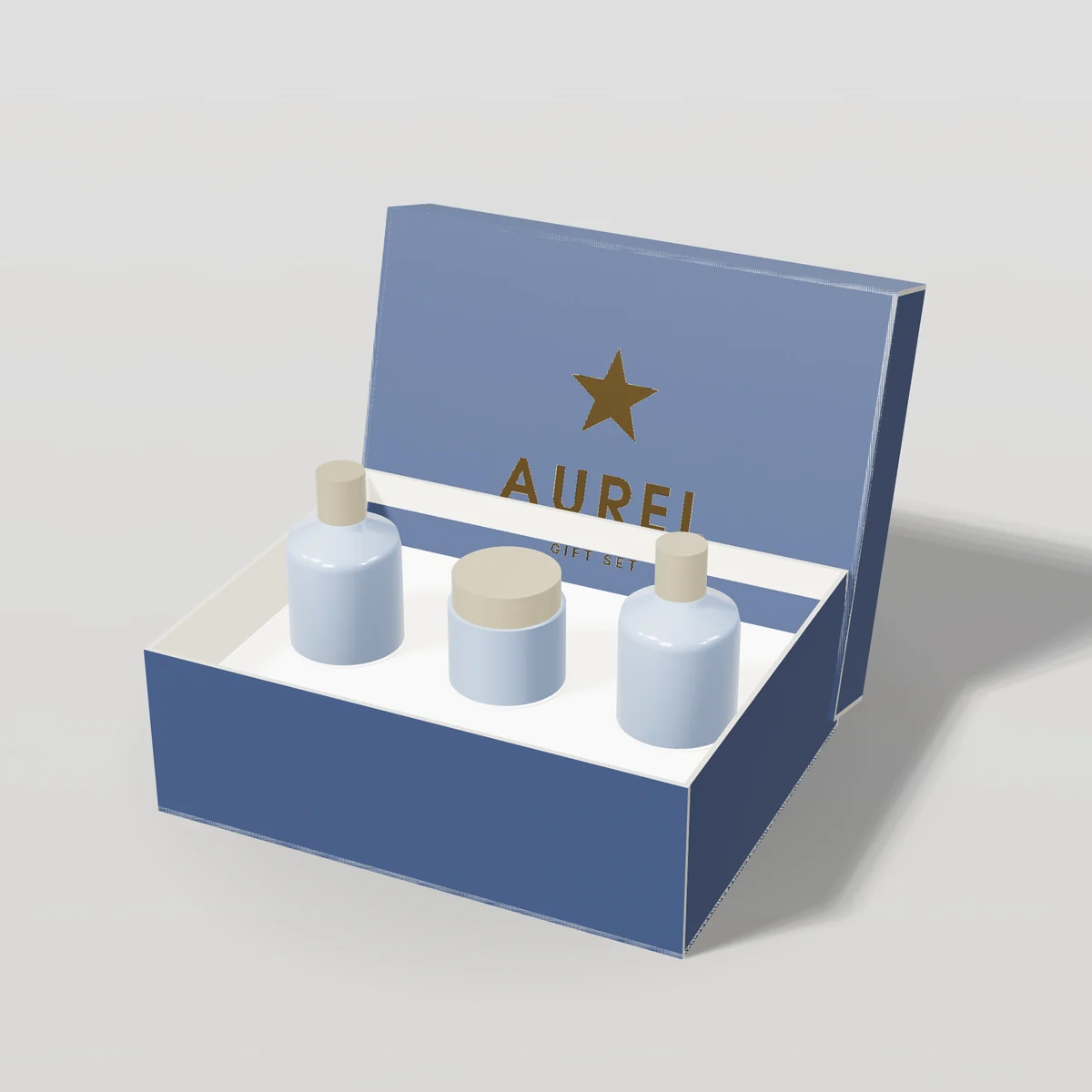
Inserts turn a box into a presentation. Common types:
- Paperboard or greyboard inserts wrapped to match the box, with die-cut cavities.
- EVA foam inserts with precise cutouts, often flocked or covered in fabric. Excellent protection for glass and electronics.
- Velvet or satin-lined inserts for jewelry and watches.
- Molded pulp inserts, a plastic-free option for irregular shapes.
- Ribbon pulls and lift tabs that help customers lift products out.
See custom inserts for design tips.
Sizing rigid boxes
Rigid boxes are specified by inside dimensions (Length × Width × Height). Because walls are thick, the outside size is noticeably larger: a 2 mm board adds roughly 0.2 in to each outside dimension once wrapping and the lid are included.
- Measure the product or the insert footprint.
- Decide on the presentation: does the product sit in a cavity, on a platform, or loose with tissue?
- Add insert thickness to the inside height.
- Choose lid depth: full or partial telescope.
- Check outside dimensions if the box must fit inside a shipper or on a retail shelf.
Our team designs inserts and box dimensions together so everything fits on the first sample.
Shipping rigid boxes
Rigid boxes are strong but their wrapped surfaces can scuff. For e-commerce:
- Ship inside a mailer or shipping box. A branded mailer box with the rigid box inside creates a two-step unboxing.
- Add a dust sleeve or tissue to protect soft-touch and dark finishes.
- Consider collapsible rigid boxes to save storage space and inbound freight, since standard rigid boxes ship assembled and take up much more space than flat cartons.
Rigid box pricing
Rigid boxes cost more than folding cartons because of thicker board, separate wrap paper, labor-intensive wrapping and the fact that they ship assembled. The table at the top of this page shows estimates for an 8 × 6 × 3 in lid-and-base box. Key cost drivers:
- Size: board and wrap area grow with every dimension, and shipping volume grows fast because boxes ship assembled.
- Board thickness.
- Wrap paper: specialty papers cost more than printed art paper.
- Finishes: foil, embossing and spot UV each add setup and per-unit cost.
- Inserts: foam and wrapped inserts add significantly.
- Structure: magnetic and drawer styles involve more parts and labor.
- Quantity: setup spreads across the run, but rigid boxes have a higher labor component, so prices fall more gently with volume than cartons do.
Here is a small jewelry-size rigid box, 4 × 4 × 2 in, for comparison:
| Quantity | Est. unit price | Est. total | Saving vs. first tier |
|---|---|---|---|
| 100 | $5.06 | $506 | — |
| 250 | $3.23 | $809 | −36% |
| 500 | $2.54 | $1,271 | −50% |
| 1,000 | $2.14 | $2,135 | −58% |
| 2,500 | $1.82 | $4,557 | −64% |
| 5,000 | $1.68 | $8,381 | −67% |
| 10,000 | $1.57 | $15,729 | −69% |
Estimates from our published pricing model, full-color print, no finishes, delivered to the contiguous US. Your written quote confirms the exact price. Get an exact quote →
How to get luxury for less
- Use a textured or colored paper instead of full-coverage printing.
- Choose one hero finish: a foil logo usually does the most work.
- Use a paperboard insert instead of foam when protection needs are modest.
- Pick a standard lid-and-base before considering magnetic or drawer structures.
- Order collapsible rigid boxes if storage or inbound freight is expensive.
Designing rigid box artwork
Design the wrap paper for the lid and base separately. Each wrap includes turn-ins (the part that folds inside the walls), typically 0.5–0.75 in deep, so your artwork must extend into those areas. We provide wrap dielines showing:
- Face panel (top of the lid)
- Wall panels
- Turn-in area that wraps inside
- Corner miters where paper overlaps
Keep logos centered on the face panel, avoid placing text across corners, and extend background color through the turn-ins. Foil and emboss artwork must be on separate vector layers. Our artwork guidelines cover file setup in detail.
Rigid boxes by industry
- Jewelry and watches: small lid-and-base or drawer boxes with velvet inserts. See jewelry boxes.
- Perfume and cosmetics: shoulder boxes and magnetic boxes with foil. See perfume boxes and cosmetic boxes.
- Gift sets and corporate gifting: large lid-and-base or magnetic boxes with fitted inserts. See gift boxes.
- Electronics: phone-style lid-and-base boxes with foam or pulp inserts. See electronics boxes.
- Chocolate and confectionery: drawer and lid boxes with compartment inserts. See chocolate boxes.
- Candles: rigid tubes and lid boxes for premium candle lines. See candle boxes.
Sustainability
Rigid boxes are made largely from recycled greyboard and paper, and the main reason they are sustainable is that people keep and reuse them. To make them easier to recycle at end of life:
- Choose paper or molded pulp inserts instead of foam.
- Keep plastic laminations and large foil areas modest.
- Consider uncoated or textured papers, which recycle easily.
- Use magnets only where needed, since they must be removed before recycling.
Rigid vs. other premium options
| Compared with | Choose a rigid box when… | Choose the alternative when… |
|---|---|---|
| Magnetic closure box | A lift-off lid suits the product | You want the hinged, magnetic "snap" |
| Two-piece box | You want thick, heavy walls | A lighter paperboard lid-and-base is enough |
| Sleeve box | Maximum premium feel | A slide-out reveal at a lower cost |
| Mailer box | The box is a keepsake | The box must ship on its own at low cost |
Ordering checklist
- Product dimensions, weight and quantity per box
- Style: lid and base, shoulder, magnetic, drawer, hinged, collapsible
- Board thickness
- Wrap paper (printed, kraft, specialty) and inside liner
- Print colors and Pantone references
- Finishes: foil, emboss, spot UV, lamination
- Insert type and layout
- Quantity, delivery ZIP and target date
Common rigid box mistakes
- Designing without the wrap dieline. Artwork must include turn-ins.
- Text across corners. Wrap paper folds at corners, distorting text.
- Underestimating storage space. Rigid boxes ship assembled; plan pallet space or choose collapsible.
- Shipping rigid boxes without an outer carton. They scuff and dent in parcel networks.
- Too many finishes. One strong foil or emboss is usually enough.
Planning a rigid box project: a timeline
Rigid boxes take a little longer than cartons, so plan backward from your launch date.
| Week | Step |
|---|---|
| 1 | Brief, quote and structure choice; order a plain sample if fit is uncertain |
| 1–2 | Dieline for wrap and liner; artwork preparation and free check |
| 2 | Digital proof and 3D preview; optional printed sample |
| 3–5 | Production (typically 12–16 business days after approval) |
| 5–6 | Shipping and delivery (3–7 business days within the contiguous US) |
For holiday launches, start at least two months ahead so there is room for a printed sample and any revisions.
Questions to ask about rigid boxes
- What board thickness and wrap paper are quoted?
- Is the wrap laminated, and which film?
- Are liner and insert included, and in what material?
- How will boxes be packed for shipping to protect corners?
- What are the tolerances on wrap position and fit?
- Is a physical sample available, and at what cost?
- How much storage space will the order need?
Rigid boxes and brand storytelling
Because rigid boxes are kept, they keep telling your story long after the product is used. Design for that second life:
- A timeless exterior that looks good on a shelf or dresser
- A printed interior message that is still meaningful months later
- Durable finishes that resist handling
- Useful dimensions for storing jewelry, cards, cables or keepsakes
Some brands add a line inside the lid inviting customers to reuse the box, a subtle reminder that encourages reuse.
Worked example: a luxury candle gift set
A brand sells a gift set of three 4 oz candles.
- Structure: rigid lid-and-base box, 10 × 4 × 3.5 in.
- Board: 2.0 mm greyboard.
- Wrap: textured cream specialty paper (no lamination), gold foil logo.
- Liner: printed with scent notes.
- Insert: wrapped greyboard with three round cavities and finger notches.
- Shipping: packed in a corrugated mailer with a paper insert.
Collapsible vs. traditional rigid: deciding factors
Choose traditional rigid when the box is displayed in retail or opened in person, when you need perfect seamless edges, or when quantities are modest and storage is not a concern.
Choose collapsible rigid when boxes are stored at a warehouse or 3PL, when inbound freight costs matter, or when you order large quantities.
Rigid boxes by size
| Size range | Typical contents | Board thickness |
|---|---|---|
| Small (up to 4 in) | Rings, earrings, small accessories | 1.5 mm |
| Medium (4–8 in) | Watches, fragrance, cosmetics sets | 2.0 mm |
| Large (8–14 in) | Apparel, gift sets, electronics | 2.0–2.5 mm |
| Extra large (14 in+) | Presentation kits, large gifts | 2.5–3.0 mm |
Larger boxes need thicker board to stay square and resist bowing, and they cost more to ship assembled. For very large rigid boxes, consider a collapsible construction.
Rigid box closures and opening mechanisms
| Mechanism | Feel | Notes |
|---|---|---|
| Lift-off lid | Slow, elegant | Classic two-piece rigid box |
| Magnetic flap | Satisfying snap | See magnetic closure boxes |
| Ribbon tie | Gift-like | Ribbon threaded through the lid or base |
| Drawer with pull | Playful reveal | Ribbon or thumb notch to pull the tray |
| Hinged lid with ribbon stay | Presentation | Lid stays open for display |
| Book-style | Storytelling | Opens like a book, often magnetic |
Wrapping paper finishes and how they age
Rigid boxes are kept, so consider how the surface ages:
- Matte lamination keeps its look and resists scuffs well.
- Soft-touch feels luxurious but can show marks over time on dark colors.
- Uncoated textured papers develop a natural patina and may mark with handling.
- Gloss stays bright but shows fingerprints and fine scratches.
- Fabric and faux leather are durable and tactile.
Choose the surface that matches how long you expect the box to be kept and handled.
Why rigid boxes cost what they do
Rigid boxes are often several times the price of a folding carton of similar size, and it helps to understand where that money goes. First, the material: dense greyboard 1.5–3 mm thick, plus a printed wrap paper and a liner, adds up to far more fiber per box than an 18pt carton. Second, the steps: board has to be cut, corner-grooved and formed; wraps have to be printed, laminated, foiled or embossed; then each piece is glued, wrapped, turned in and lined, and often hand-finished at the corners. Third, freight and storage: assembled boxes take many times the space of flat cartons, so fewer fit on a pallet or in a truck.
That is also why rigid box prices fall less steeply with quantity than carton prices. Setup is a smaller share of the total, and most of the cost is in materials and handwork that repeat for every box. Doubling an order from 500 to 1,000 rigid boxes typically reduces the unit price, but not by as much as it would for cartons.
What you get for that investment is permanence. A rigid box is not packaging customers throw away; it becomes a place to keep jewelry, cables, letters or keepsakes, and your brand stays on a shelf or dresser for years. For hero products, gifts and launches, that lasting presence is often the point.
Choosing between rigid and premium paperboard
If budget is tight, a 24pt SBS carton with soft-touch lamination, foil and a well-made insert can deliver much of the premium feel of a rigid box at a fraction of the cost, and it ships flat. Many brands use rigid boxes only for their top product or gift sets, and premium cartons for the rest of the line. We are happy to quote both so you can compare.
Rigid boxes in one paragraph
A rigid box is a set-up box made from thick greyboard wrapped in printed or specialty paper, delivered assembled and kept by customers for years. Choose a structure (lid and base, shoulder, magnetic, drawer, book-style or collapsible), 1.5–2.5 mm board by size, a wrap and lamination that suit how long the box will be handled, one premium finish, and a paper-based insert. Plan 12–16 business days of production, ship inside a corrugated mailer and budget storage for assembled boxes.
Related guides
 GuideFinishes & embellishmentsHow foil stamping, embossing, debossing, spot UV, soft-touch, windows and inserts work, what they cost, and how to combine them without overspending.
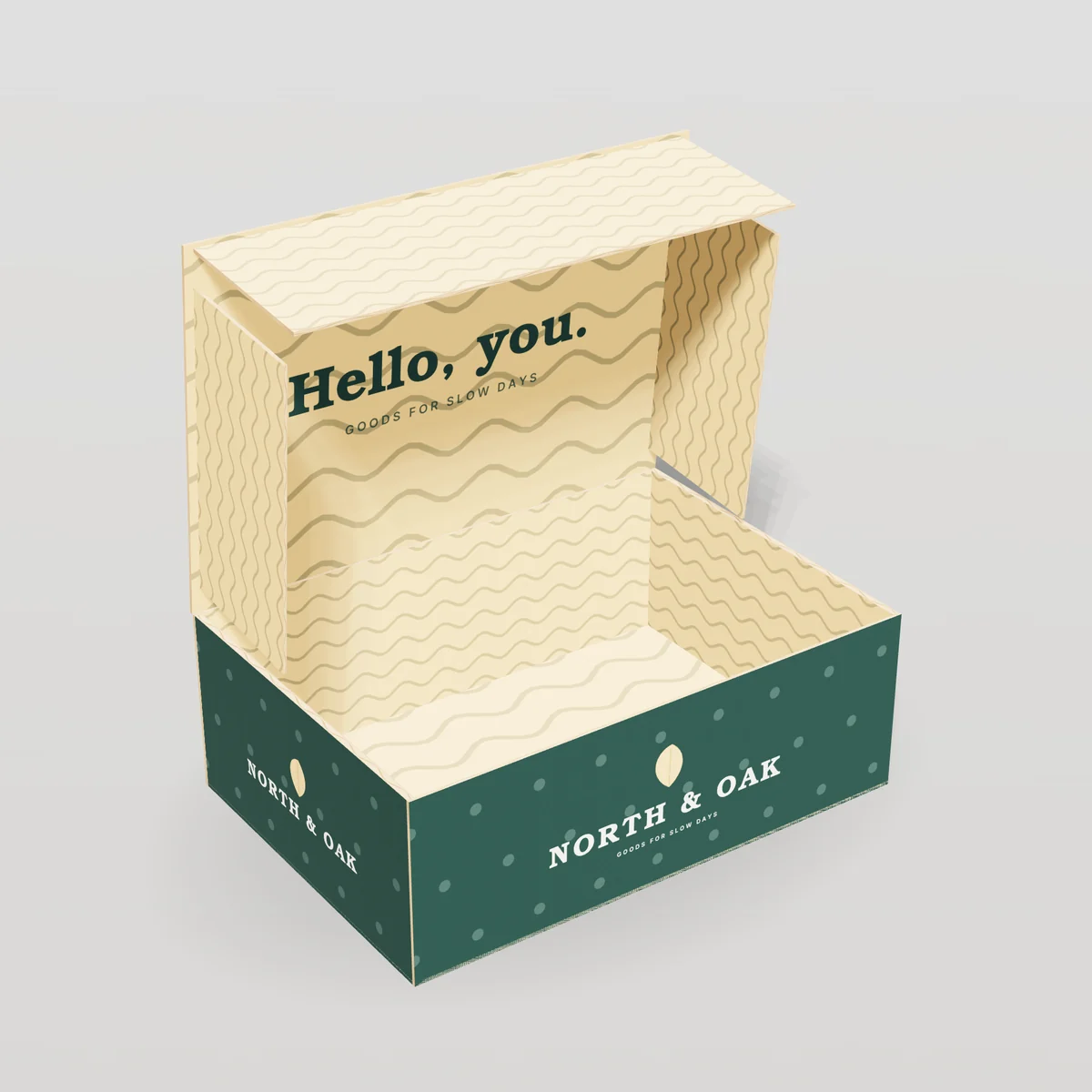 GuideUnboxing & brand designHow to design packaging that sells and gets shared: brand hierarchy, color, typography, the unboxing sequence, inserts and low-cost upgrades that matter.
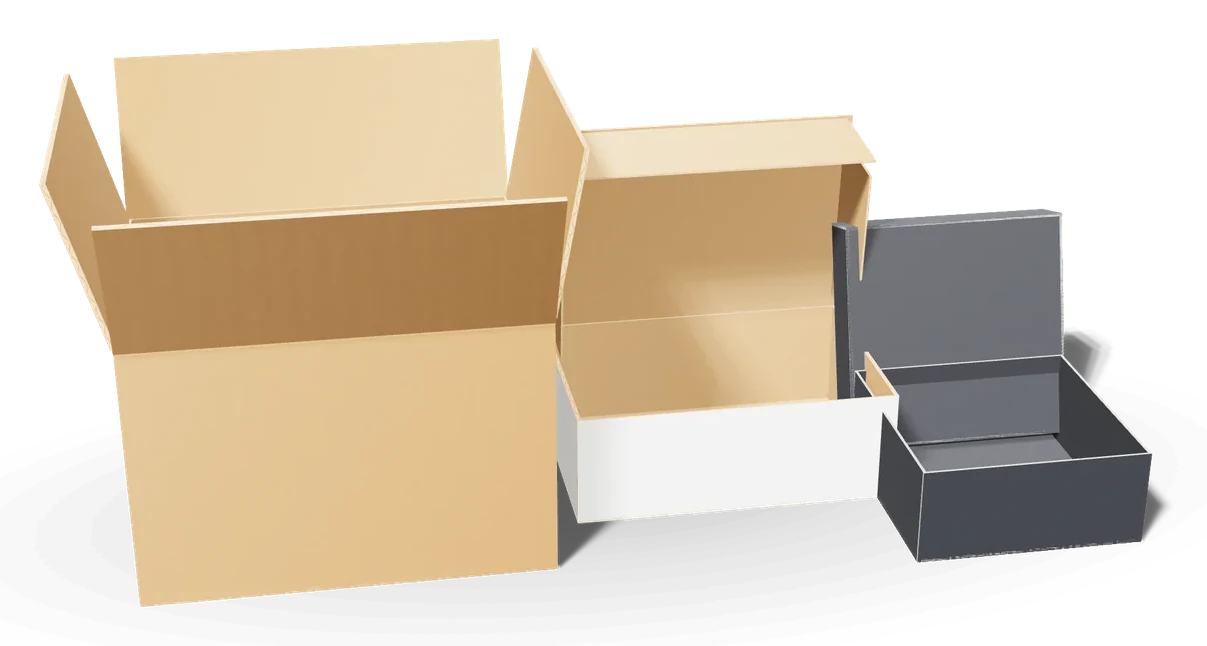 GuidePackaging materials & board gradesUnderstand corrugated flutes and ECT, paperboard caliper (pt), SBS vs kraft vs recycled board, and rigid greyboard, so you can specify packaging like a pro.
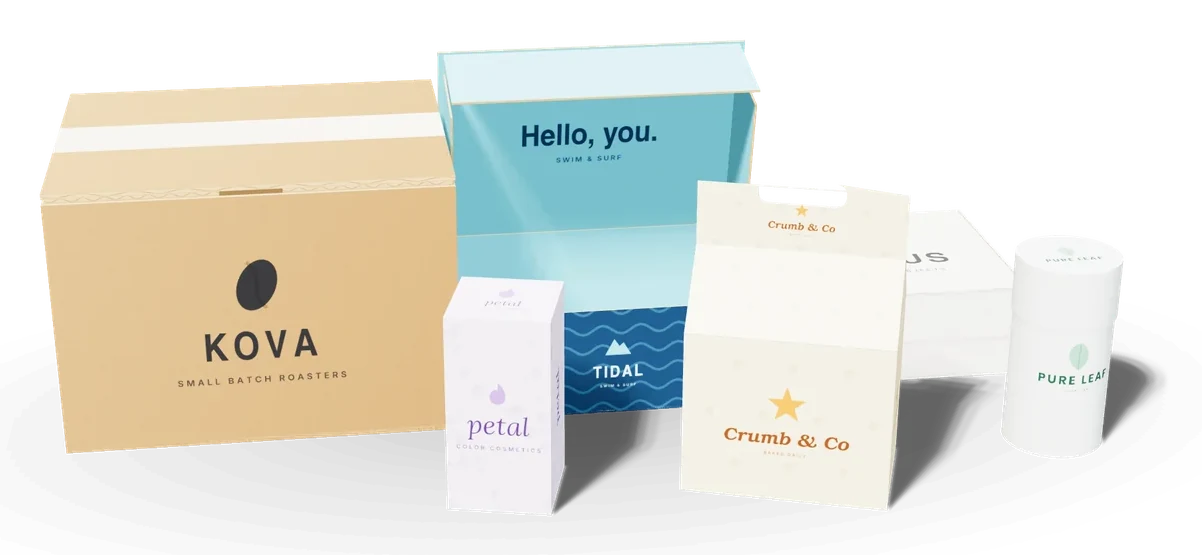 GuideBox styles explainedA practical comparison of every common box style: mailer, RSC shipper, tuck end, auto-lock, rigid, magnetic, sleeve, pillow, gable, display, window and tube.
What finishes and add-ons cost
Estimated extra cost per unit at 1,000 units when you add one finish to a 8×6×3" rigid box (lid & base) (base estimate $2.89). One-time tooling such as foil and embossing dies is already spread across the run in the per-unit figure and listed separately for reference.
| Finish | What it does | Adds per unit | One-time setup |
|---|---|---|---|
| Matte lamination | A thin film with a smooth, low-glare finish that protects print from scuffs. | +$0.04 | — |
| Soft-touch | A velvety, premium coating that invites customers to hold the box. | +$0.07 | — |
| Spot UV | Clear glossy varnish on selected areas for a sleek contrast against matte. | +$0.14 | $80.00 |
| Foil stamping | Gold, silver, rose gold or holographic foil for logos and accents. | +$0.23 | $120 |
| Embossing / debossing | Raised or recessed logo detail you can feel with your fingertips. | +$0.22 | $120 |
| Window | A die-cut window with clear film so the product sells itself. | +$0.14 | $60.00 |
| Custom insert | Paperboard, corrugated or foam inserts that hold products in place. | +$0.24 | $80.00 |
How rigid boxes compare with similar styles
Estimated unit prices at 1,000 units for each style at its most popular size, full-color print, delivered within the contiguous US, so you can weigh rigid boxes against the alternatives customers often consider.
| Style | Typical board | Minimum | 1,000 units | Ships | Best for |
|---|---|---|---|---|---|
| Rigid Boxes8 × 6 × 3" | Rigid greyboard + printed wrap | 100 units | $2.89 | Assembled | Luxury setup boxes made from thick greyboard wrapped in printed or specialty paper. |
| Magnetic Closure Boxes9 × 7 × 3" | Rigid greyboard + printed wrap | 100 units | $3.51 | Assembled | Book-style rigid boxes with hidden magnets for a satisfying, reclosable unboxing. |
| Two-Piece Boxes8 × 8 × 3" | Rigid greyboard + printed wrap | 100 units | $3.10 | Flat | Lid-and-base boxes in rigid board or paperboard. A timeless gift and apparel format. |
| Sleeve Boxes6 × 4 × 2" | SBS white paperboard (18pt) | 250 units | $0.67 | Flat | A printed sleeve over a sliding tray. Interactive, premium and easy to brand on two surfaces. |
| Tube Packaging3 × 3 × 7" | Rigid greyboard + kraft wrap | 250 units | $1.64 | Assembled | Cylindrical paperboard tubes with a lid, for candles, tea, cosmetics and apparel. |
| Product Boxes4 × 4 × 4" | SBS white paperboard (18pt) | 250 units | $0.49 | Flat | Printed paperboard boxes for retail shelves, gift sets and everyday products. |
Learn about these materials
How to order rigid boxes
- 1Request a quote
Tell us the style, size, quantity and artwork you have. Use the form or the live estimator.
- 2Free design & dieline
We send a dieline for your exact size, check your artwork and help with layout at no charge.
- 3Approve your proof
Review a digital 3D proof (and an optional physical sample) before anything is printed.
- 4Production & QC
Your boxes are printed, finished, die-cut and inspected against the approved proof.
- 5Delivered to your door
Shipped flat-packed with tracking to any address in the contiguous US.
Key terms on this page
- Rigid box
- A premium box made from thick greyboard wrapped in printed or specialty paper, delivered assembled. Also called a setup box.
- Setup box
- Another name for a rigid box.
- Greyboard
- Thick, dense recycled board used as the structural core of rigid boxes, usually 1.2 to 3 mm thick.
- Chipboard
- A dense, usually recycled board. Thin chipboard is used for backing cards; thick chipboard (greyboard) forms the core of rigid boxes.
- Board
- A general term for thick paper materials used in packaging, including paperboard, corrugated board and greyboard.
- Specialty paper
- Textured, colored, metallic or otherwise distinctive paper used to wrap rigid boxes or print labels.
- Lead time
- The time from order (or proof approval) to delivery, including production and shipping.
- Lid
- The top part of a box, hinged or separate.
- Tray
- An open-topped box base, often used with a sleeve or lid.
- Wrap
- The printed or specialty paper glued around the board of a rigid box or tube.
- Embossing
- Raising part of the board surface into a relief using matched dies, often combined with foil or ink.
- Spot UV
- A clear, glossy UV-cured varnish applied to selected areas to create contrast with a matte background.
- Paperboard
- Thick paper (usually 0.010 inch or more) used for folding cartons, such as SBS, kraft and recycled board.
- Molded pulp
- Packaging formed from wet paper fiber in molds and dried, used for protective inserts and trays. Plastic-free and recyclable.
- Proof
- A preview of the final package (digital PDF, 3D render or physical sample) that the customer approves before production.
- Sleeve
- An open-ended band or tube that slides over a tray or box, often printed to brand plain packaging.
- Lamination
- Bonding a thin film (matte, gloss or soft-touch) or paper to board for protection and finish.
- Kraft
- Paper or board made from unbleached wood pulp, naturally brown and strong.
- Finish
- Any treatment applied after printing to change appearance or protect the surface, such as coatings, laminations, foil, embossing or spot UV.
- CMYK
- The four process ink colors (cyan, magenta, yellow and key/black) combined in small dots to reproduce full-color images in print.
- Pantone (PMS)
- The Pantone Matching System, a standardized color reference used to specify exact spot colors.
- Foil stamping
- Applying metallic or pigmented foil to packaging with heat and pressure using a metal die.
- Debossing
- Pressing a design into the board so it sits below the surface. The opposite of embossing.
- Liner
- The flat paper faces of corrugated board. Can be kraft (brown) or bleached (white).
- EVA foam
- A dense, smooth foam used for protective inserts with precise cavities, common in premium electronics and jewelry packaging.
- Insert
- A component inside a box that holds products in place, such as die-cut paperboard, corrugated, foam or molded pulp.
- Inside dimensions
- The usable space inside a box, the standard way to specify custom box sizes (L × W × H).
- Outside dimensions
- The external size of a box, larger than inside dimensions by the board thickness.
More definitions in our packaging glossary.
Customer reviews
Reviews come only from verified customers. Ordered rigid boxes from us? Share your experience.
Discussed on Quora & X
Rigid Boxes FAQ
What is the difference between a rigid box and a folding carton?
A rigid box is made from thick greyboard wrapped in paper and arrives fully assembled. A folding carton is made from thin paperboard and ships flat. Rigid boxes feel heavier and more luxurious; folding cartons are more economical.
What is the minimum order for custom rigid boxes?
Our minimum for custom rigid boxes is 100 units.
How long does it take to make rigid boxes?
Typical production is 12–16 business days after proof approval because each box is wrapped individually, plus shipping time.
Can rigid boxes be shipped by mail?
They are strong, but we recommend shipping them inside a mailer or shipping box to protect the wrapped surface from scuffs.
Are rigid boxes recyclable?
Rigid boxes are mostly paper and greyboard, which are recyclable once foam inserts and magnets are removed. Paper or molded pulp inserts make recycling easier.
What is a collapsible rigid box?
A rigid box designed to ship flat and fold into shape, usually held by magnets. It saves storage space and inbound shipping cost while keeping a rigid feel.
Can you add a foam insert?
Yes. We offer EVA foam, paperboard, wrapped greyboard and molded pulp inserts, custom-cut to your products.
What thickness of board should I choose?
2 mm is the most common for gift and cosmetic boxes. Use 1.2–1.5 mm for small boxes and 2.5–3 mm for large boxes or heavy contents.
What is the minimum order for rigid boxes?
Most rigid styles start at 100 units.
Can I get a sample before ordering?
Yes. A plain structural sample checks size and insert fit; a printed sample confirms wrap, color and finishes.
Do rigid boxes come with inserts?
Inserts are optional and quoted separately: wrapped board, molded pulp or foam.
Can rigid boxes be printed inside?
Yes. The liner paper can be printed with a pattern, message or brand color for an interior reveal.
How are rigid boxes shipped to me?
Traditional rigid boxes ship assembled in protective cartons, nested where possible. Collapsible versions ship flat.
What thickness is a rigid box?
Most rigid boxes use greyboard between 1.5 and 2.5 mm thick, wrapped in printed or specialty paper.
Can rigid boxes have foil and embossing?
Yes. Foil, embossing, debossing and spot UV are applied to the wrap paper before wrapping.
How long do rigid boxes take?
Typically 12–16 business days after proof approval, plus shipping.
Are rigid boxes worth the cost?
For hero products, gifts and launches, often yes: they lift perceived value and are kept for years. For everyday products, a premium carton may be better value.
Can rigid boxes be recycled?
Paper-wrapped greyboard is generally recyclable after removing magnets, ribbons and foam.