Quick answer
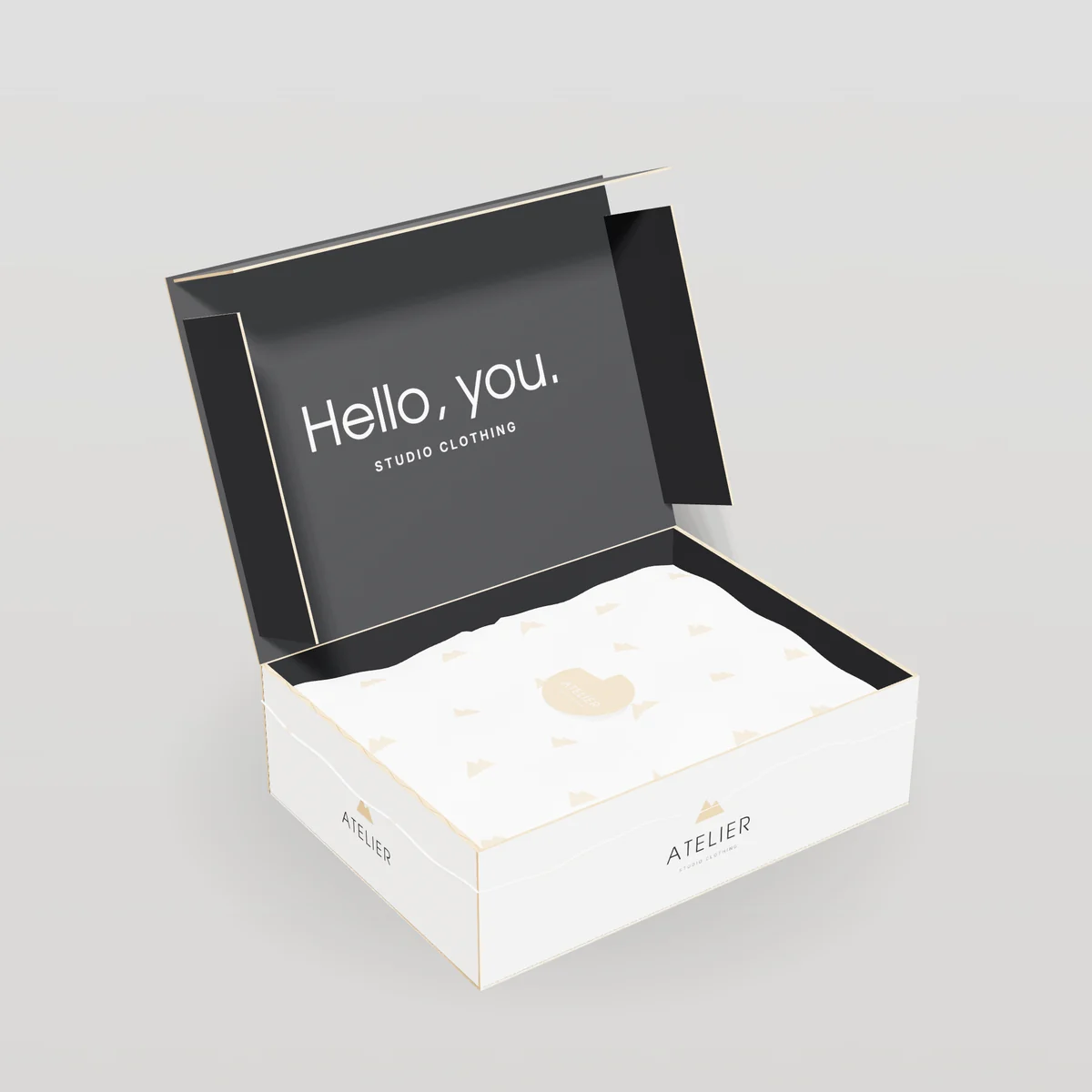
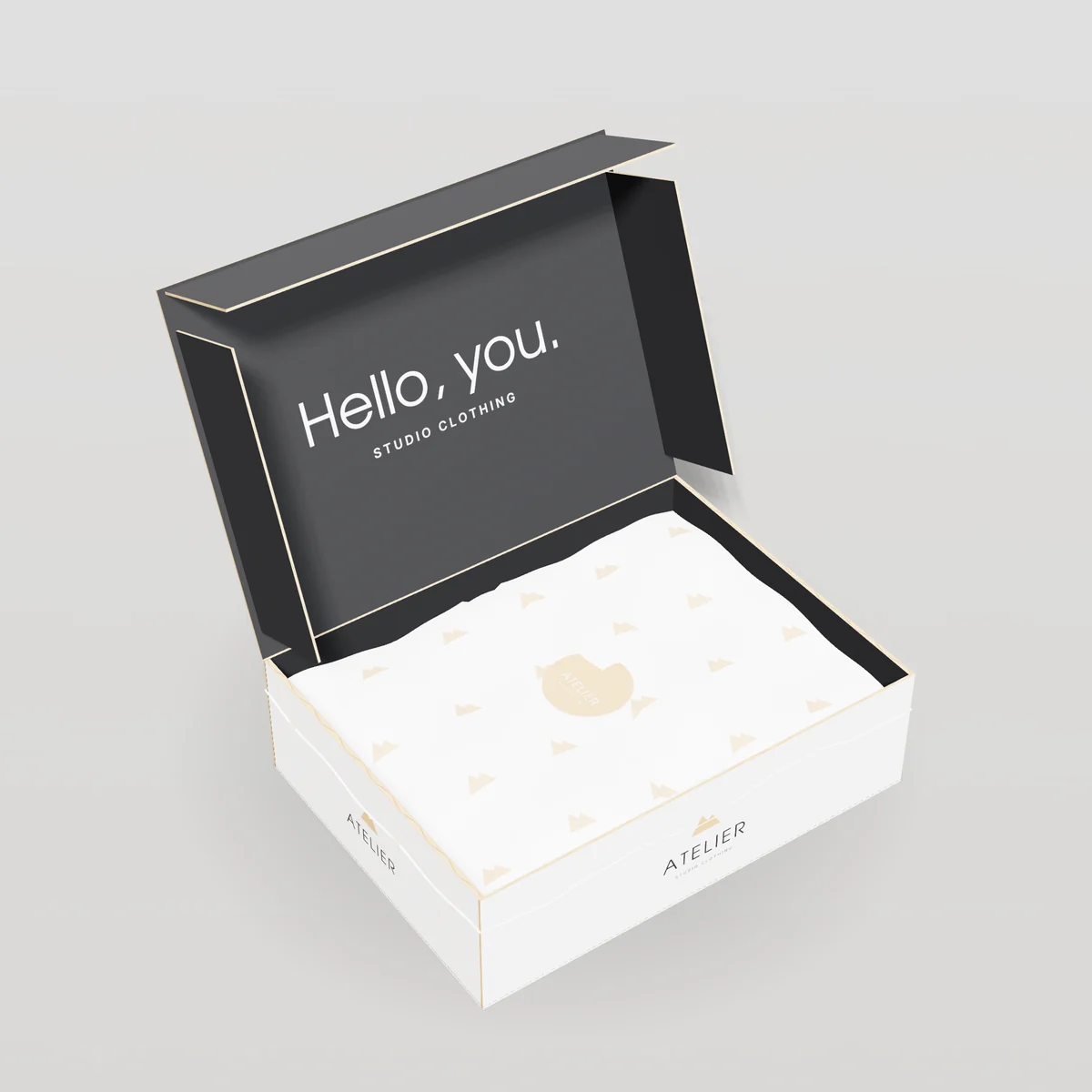
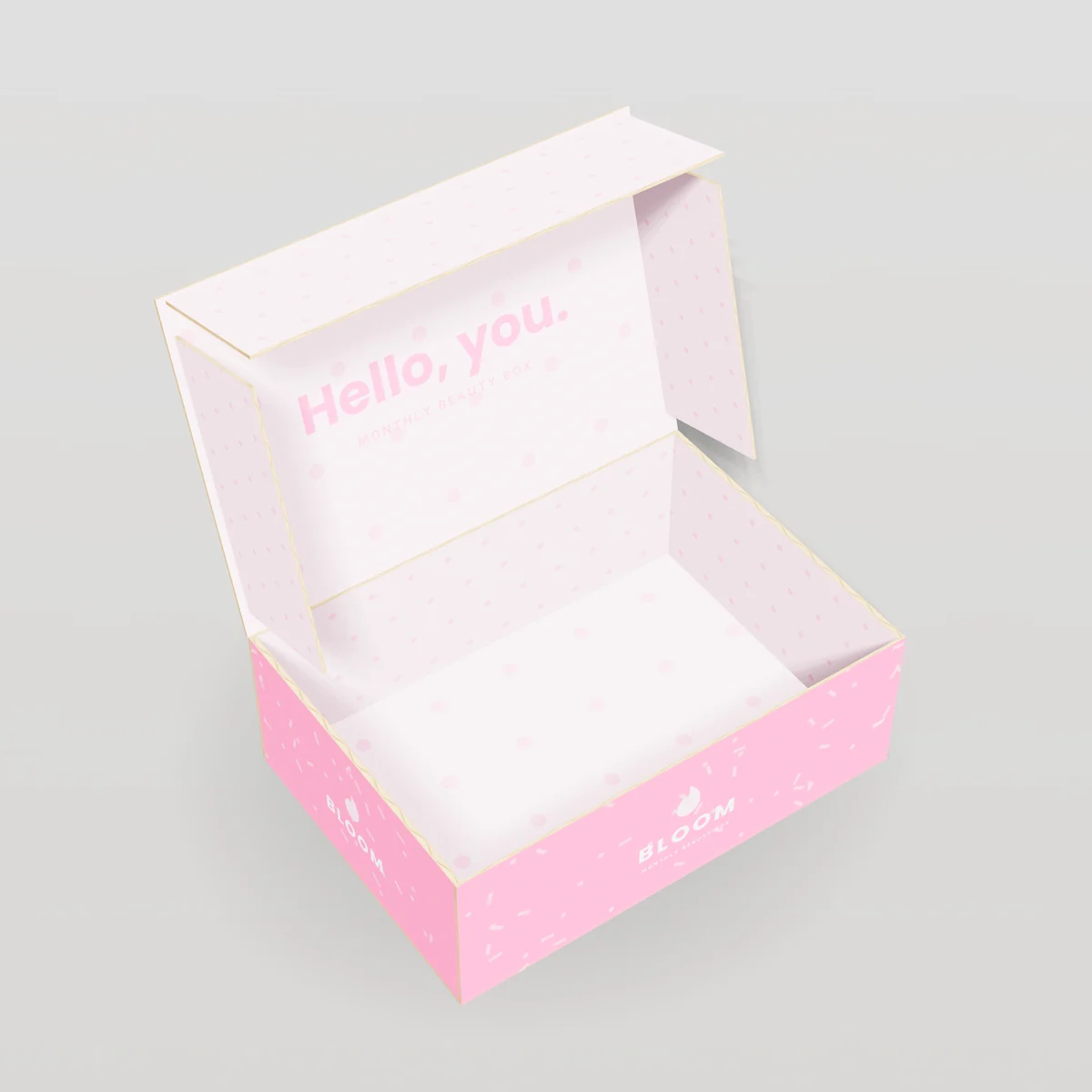
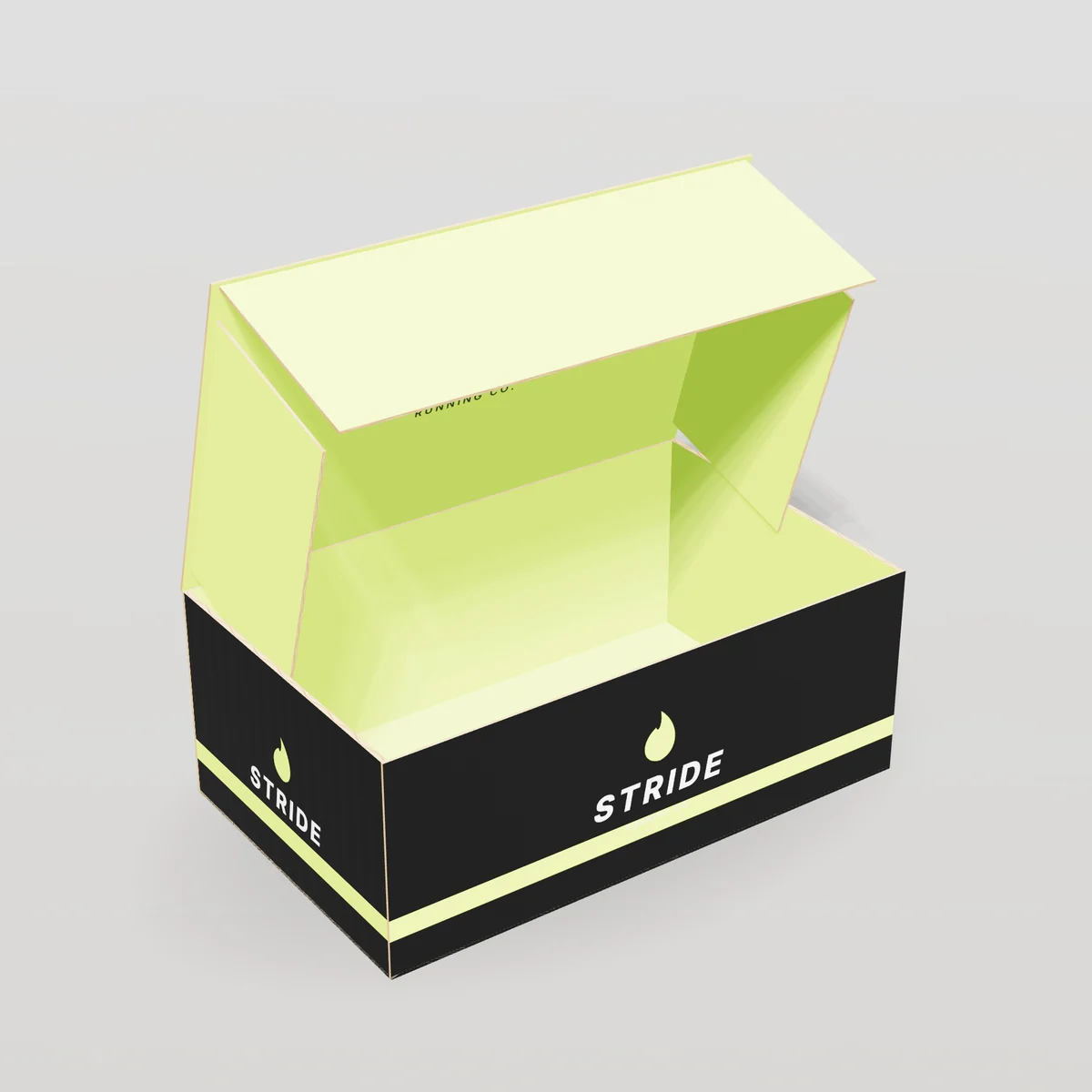
Sneaker and footwear boxes that stack in the stockroom and ship direct to consumers. Estimated prices start around $1.45 per unit at 10,000 units and $4.37 at 100 units for a 13×8×5" box. Typical turnaround is 10–14 business days after proof approval.
Shoe Boxes: price breaks
How the estimated unit price of a 13×8×5" mailer box in E-flute corrugated, white changes with quantity. Setup costs are spread over more boxes as the run gets longer, so the per-box price drops sharply in the first few tiers.
| Quantity | Est. unit price | Est. total | Saving vs. first tier |
|---|---|---|---|
| 100 | $4.37 | $437 | — |
| 250 | $2.87 | $718 | −34% |
| 500 | $2.29 | $1,146 | −48% |
| 1,000 | $1.95 | $1,948 | −55% |
| 2,500 | $1.68 | $4,193 | −62% |
| 5,000 | $1.55 | $7,738 | −65% |
| 10,000 | $1.45 | $14,549 | −67% |
Estimates from our published pricing model, full-color print, no finishes, delivered to the contiguous US. Your written quote confirms the exact price. Get an exact quote →
Material options and how they affect price
Estimated unit price at 1,000 units for a 13×8×5" mailer box with full-color printing, by material. Material choice changes look, strength and recyclability as well as cost.
| Material | What it’s like | Est. unit price |
|---|---|---|
| E-flute corrugated, white | E-flute corrugated (about 1/16 in) with a white liner: crisp print with real cushioning and parcel strength. | $1.95 |
| E-flute corrugated, kraft | E-flute corrugated with a natural kraft liner: thin, strong and economical, with a natural look. | $1.82 |
| B-flute corrugated, kraft | B-flute corrugated (about 1/8 in) with a kraft liner: more crush resistance for heavier or larger contents. | $1.89 |
Printing options compared
How the print specification changes the estimated unit price of a 13×8×5" mailer box in E-flute corrugated, white. One- and two-color printing carries a small plate charge that matters less as quantities grow; full-color digital and offset printing have no plate charge in our model.
| Printing | 500 units | 1,000 units | 5,000 units |
|---|---|---|---|
| Plain (no print) | $1.69 | $1.39 | $1.07 |
| 1 color | $2.01 | $1.64 | $1.24 |
| 2 colors | $2.20 | $1.79 | $1.35 |
| Full color outside | $2.29 | $1.95 | $1.55 |
| Full color outside + inside | $2.83 | $2.44 | $1.98 |
What a shoe box has to do
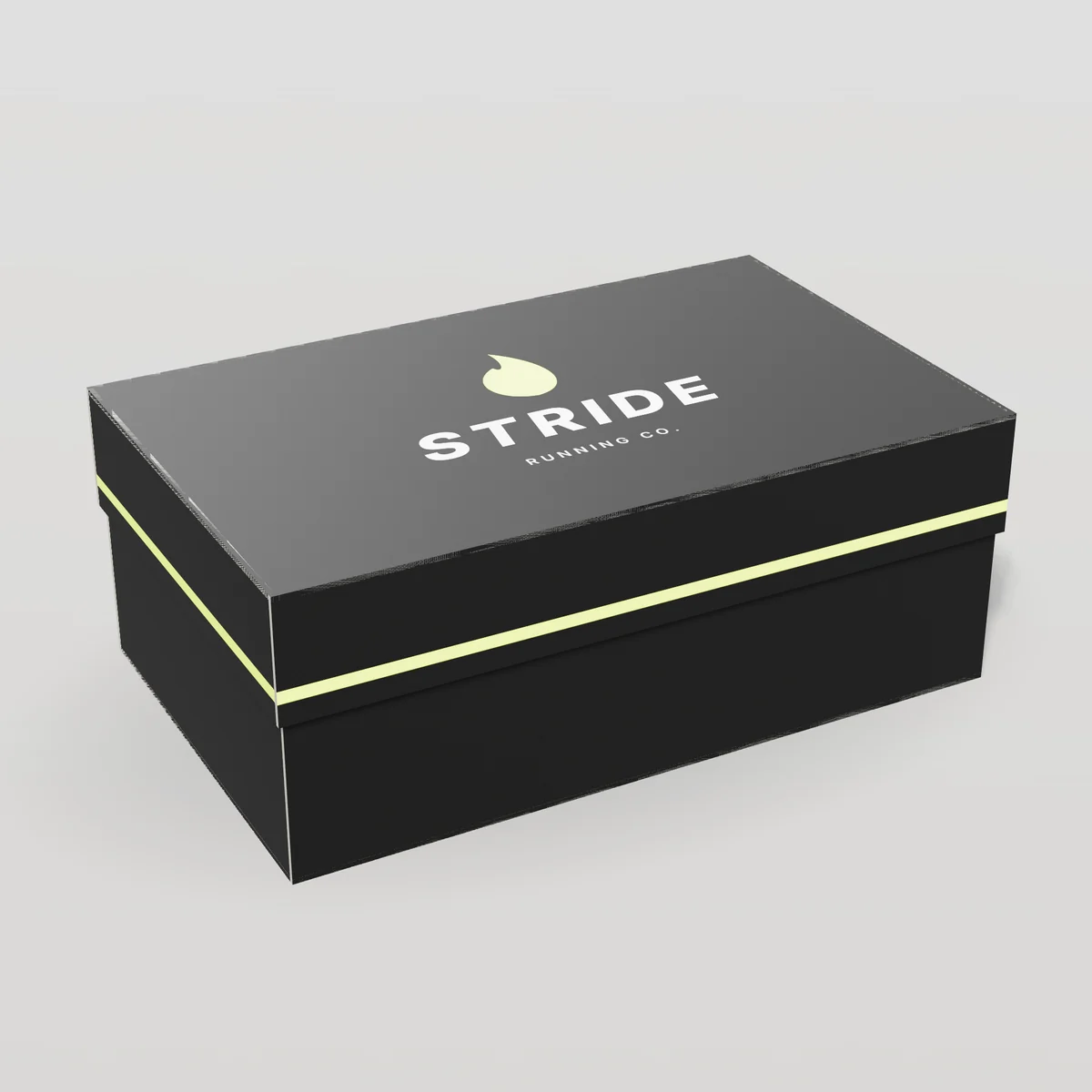
The shoe box is one of the most recognizable packages in retail. It stacks on stockroom shelves by the thousand, travels to customers' homes and often gets kept for storage. A good custom shoe box has to:
- Protect shoe shape so toes and heels are not crushed
- Stack strongly in stockrooms and warehouses
- Identify the product quickly with a size and style label on the end panel
- Present the brand when opened, ideally with tissue and an interior print
- Ship efficiently, either inside a shipper or as a mailer-style box that travels on its own
Shoe box formats
| Format | Description | Best for |
|---|---|---|
| Two-piece (lid and base) | Classic lift-off lid | Retail stores and stockrooms |
| Hinged-lid / mailer-style | One-piece box with an attached lid | DTC shipping without an outer box |
| Drawer (sleeve and tray) | Tray slides out of a sleeve | Premium and limited releases |
| Rigid box | Heavy, wrapped board | Luxury footwear, collectors' editions |
| Shipping carton | Outer shipper for retail boxes | Case packs and DTC shipping |
See two-piece boxes, mailer boxes, sleeve boxes and shipping boxes.
Materials
- E-flute corrugated with a printed liner: the most common for modern shoe boxes; light and strong.
- B-flute for boots and heavier footwear.
- Paperboard over chipboard for traditional retail boxes.
- Rigid greyboard for premium editions.
White liners give bright, full-color prints; kraft liners give a natural look at lower cost.
Shoe box design
- End label panel: most shoe boxes are stored end-out, so the short end panel needs a clear area for size, style, color and barcode labels.
- Lid: brand logo or pattern; often the only face customers see in the store.
- Interior: a printed liner or message under the lid.
- Tissue: wrap shoes in branded tissue; add a sticker seal.
- Inserts: paper stuffing or cardboard shapers keep the toe box and heel firm.
Tip: Keep the end label area plain and consistent across all your shoe boxes so warehouse staff and retailers can read sizes at a glance. For typical men's, women's, kids' and boot box sizes, see our shoe box dimensions guide.

Sizing shoe boxes
Shoe boxes are sized to the largest shoe size in each box family, with a little room for tissue:
| Footwear | Typical inside box (in) |
|---|---|
| Kids' shoes | 9 × 6 × 4 |
| Women's flats and sneakers | 11 × 7 × 4 |
| Women's heels | 12 × 7 × 4.5 |
| Men's sneakers | 13 × 8 × 5 |
| Men's boots (ankle) | 14 × 10 × 5 |
| Tall boots | 18 × 13 × 5 |
Many brands use two or three box sizes across their size range. Measure the largest pair in each group with tissue.
Shoe box costs
Estimated prices for a 13 × 8 × 5 in shoe mailer are at the top of this page. A traditional two-piece shoe box compares like this:
| Quantity | Est. unit price | Est. total | Saving vs. first tier |
|---|---|---|---|
| 100 | $3.48 | $348 | — |
| 250 | $1.85 | $463 | −47% |
| 500 | $1.28 | $640 | −63% |
| 1,000 | $0.97 | $970 | −72% |
| 2,500 | $0.76 | $1,894 | −78% |
| 5,000 | $0.67 | $3,354 | −81% |
| 10,000 | $0.62 | $6,159 | −82% |
Estimates from our published pricing model, full-color print, no finishes, delivered to the contiguous US. Your written quote confirms the exact price. Get an exact quote →
Cost tips
- Use two or three box sizes across the size run.
- Print the lid, keep the base plain or one color.
- Kraft with one ink is economical and looks authentic.
- Ship retail boxes in a plain outer shipper for DTC to protect the printed box, or use a mailer-style box that ships alone.
DTC shipping for footwear
- Box-in-box: the retail shoe box inside a plain shipper; protects the branded box for resale and returns.
- Shipping-ready shoe box: a printed mailer-style box with a tuck lid that ships on its own; less material and a single branded experience.
- Returns: a resealable strip helps customers return shoes in the original box.
Sustainability
Shoe boxes are paper-based and widely recyclable, and many customers reuse them for storage. Choose recycled-content board, paper tissue and paper shapers instead of plastic, and design shipping-ready boxes to avoid a second outer box where possible.
Launch checklist
- Size groups and box sizes
- Box style (two-piece, mailer-style, drawer)
- Board and print (lid, base, interior)
- End label area and label system
- Tissue, shapers and stickers
- Shipping approach (box-in-box or ship-alone)
- Quantities and target date
Packaging by budget: starter, growing, premium
| Tier | Typical spec | Best for |
|---|---|---|
| Starter | E-flute kraft mailer-style shoe box, one-color logo, tissue | DTC sneaker and sandal startups |
| Growing | Full-color printed corrugated shoe box with lid, printed interior, branded tissue | Growing footwear brands, wholesale |
| Premium | Rigid two-piece or drawer shoe box with soft-touch wrap and foil | Luxury footwear, limited releases |
Shoe box formats compared
| Format | Description | Notes |
|---|---|---|
| Two-piece (lid and base) | Classic retail shoe box | Easy to stack in stockrooms |
| Hinged lid (one-piece) | Lid attached at the back | Doubles as a mailer when designed to lock |
| Drawer (sleeve and tray) | Tray slides out | Premium and collectible |
| Mailer-style shoe box | Self-locking corrugated | Ships without an outer box when strong enough |
| Rigid shoe box | Wrapped greyboard | Luxury and collectors |
Shipping shoes direct to consumer
Shoe boxes shipped as-is in parcel networks get scuffed and labeled. Options:
- Ship-in-own-container (SIOC): design the shoe box strong enough (E- or B-flute) to ship without an outer box, with a lock closure.
- Box-in-box: a retail shoe box inside a shipping box protects collector packaging.
- Shipping sleeve: a printed corrugated sleeve around the shoe box adds protection and a label area.
Collectors care about box condition, so premium sneaker brands often ship box-in-box.
Shoe box design ideas
- Size and colorway labels on the end panel for stockroom picking
- Printed interior with brand story or a pattern
- Tissue wrap and a sticker seal
- Care card with cleaning and storage tips
- Handles for carry-out at stores
- Reusable design that looks good on a shelf for storage
Worked example: a sneaker brand
A DTC sneaker brand ships pairs directly.
- Box: hinged-lid shoe box in B-flute white corrugated, 13 × 8 × 5 in, with locking tabs so it ships without an outer box.
- Print: full color outside; a one-color pattern inside.
- End label: size, colorway and barcode on a printed end panel.
- Inside: branded tissue, a care card and paper shoe trees instead of plastic inserts.
A buyer's guide to shoe boxes
Size from your largest size run. Shoe boxes are usually produced in a few sizes that cover a size range: for example, one box for women's sizes 5–8, another for 8.5–11. Measure the largest shoe in each range, wrapped as it will be packed (tissue, paper shoe trees, bags), and add a little clearance. Fewer box sizes means larger, cheaper runs and simpler inventory.
Decide where the box lives. If the box sits in a stockroom and on a store shelf, a two-piece or hinged lid box with clear end labels works best. If it ships directly to customers, choose corrugated with a secure closure, or ship the retail box inside an outer carton. If customers collect shoe boxes, invest in a sturdier, more beautiful box.
Label the end panel. Store staff find shoes by the end panel: size, colorway, style name and barcode. A consistent printed area or a label space on the end saves time in stockrooms and warehouses.
Make the inside count. Tissue wrap, a printed interior and a care card turn a standard shoe box into a memorable unboxing. Paper shoe trees or crumpled paper can replace plastic inserts.
Think about returns. Footwear has frequent exchanges and returns. A box that can be closed securely again and survives a second trip saves money. Avoid designs that must be torn to open.
Plan for collectors. Sneaker and boot customers often keep boxes. Collectible editions may justify special finishes, numbered labels or rigid construction, and should always ship box-in-box.
Ordering timeline
| Step | Typical time |
|---|---|
| Size range analysis and quote | 1–3 business days |
| Dieline, artwork and proof | 2–5 business days |
| Structural sample with shoes | About 5–7 business days |
| Production | 10–14 business days (rigid 12–16) |
| Delivery | 3–7 business days |
Common shoe box mistakes
- Too many box sizes, raising costs and complicating storage.
- No end label area, slowing picking in stockrooms.
- Retail boxes shipped without protection, arriving scuffed and covered in labels.
- Plastic stuffing where paper shoe trees would do.
- Lids that do not stay on after the first opening.
Shoe boxes in one paragraph
Shoe boxes protect footwear, organize stockrooms and create the unboxing moment. Size two to four boxes per category from your largest shoes, label end panels with size, colorway and barcode, choose corrugated for direct shipping or ship retail boxes inside an outer carton, print the inside for a reveal, and use paper shoe trees instead of plastic.
Packaging ideas by footwear type
| Footwear | Packaging idea |
|---|---|
| Sneakers | Hinged-lid corrugated box that ships without an overbox; printed interior; paper shoe trees |
| Boots | Larger two-piece box with stronger board and paper stuffing for the shafts |
| Sandals and slides | Slim mailer box or pouch; tissue wrap |
| Kids' shoes | Bright printed boxes with handles and playful interiors |
| Dress shoes | Two-piece box with tissue and cloth dust bags |
| Luxury and limited editions | Rigid drawer or two-piece box, shipped box-in-box |
| Slippers | Window box or printed sleeve |
The shoe box as a marketing channel
Shoe boxes are one of the few packaging formats customers routinely keep. They end up in closets and under beds as storage for shoes, photos, cables and keepsakes. Some sneaker fans collect boxes and display them on shelves. That long life makes the box a quiet but persistent brand reminder, and it is why footwear brands invest in boxes that look good years after purchase: durable board, a lid that still fits after many openings, and branding on the ends and sides where boxes are seen when stacked.
For direct-to-consumer brands, the box is also the first physical contact a customer has with the brand. A printed interior message, a care card with tips for cleaning the material, and a simple exchange guide inside the lid all help a first purchase turn into a second.
Questions to answer before ordering
- What size range does each box need to cover?
- Will boxes ship alone through carriers, or inside an outer carton?
- How are boxes stored in your stockroom or warehouse, and how high are they stacked?
- What information must be on the end panel for picking?
- Do you need handles for in-store carry-out?
- Will you sell limited editions that need special boxes?
Second example: a children's shoe brand
A children's shoe brand sells online and in independent shops.
- Box: a printed corrugated box with a die-cut handle, in bright brand colors.
- End panel: size, color and barcode for shop stockrooms.
- Inside: a coloring panel printed inside the lid and a fit guide for parents.
- Stuffing: paper shoe trees instead of plastic.
- Online: boxes ship inside a plain outer carton to keep the printed box clean.
Photographing shoe packaging
Photograph shoes partly out of the box with tissue folded back, at a low three-quarter angle. Show the end label for retail buyers and the interior print for consumers.
Shoe boxes in the stockroom
Shoe boxes spend most of their life stacked in stockrooms and warehouses, so practical details matter as much as design:
- Consistent footprints make stable stacks and efficient shelving.
- Strong corners keep stacks from leaning; corrugated boxes resist crushing better than thin paperboard.
- Clear end labels let staff find sizes without pulling boxes out.
- Lids that stay put prevent boxes from opening when moved.
- Barcodes on the end speed inventory counts.
Ask your retail partners how they store footwear; some have shelving that dictates box dimensions.
Shoe boxes and sustainability
Shoe boxes are reused more than almost any other packaging, which extends their life. To make them easy to recycle eventually, use paper shoe trees and tissue rather than plastic, water-based inks, and avoid gluing plastic windows or foam. Corrugated shoe boxes are accepted in most recycling programs.
Unboxing ideas for footwear
- Tissue sealed with a sticker
- Paper shoe trees in brand colors
- A care card for the material
- A printed inside lid
- A dust bag for premium shoes
Terms to know
- End panel: the short side of the box that faces out on stockroom shelves.
- Hinged lid: a lid attached to the base along one edge.
- Shoe tree: an insert that keeps the shoe's shape.
- Box-in-box: shipping a retail box inside an outer carton.
- Size run: the range of sizes a box design covers.
How to brief a designer for shoe boxes
Give your designer, or our team, these details before work starts:
- Size ranges and the largest shoe in each
- Storage and shipping method
- End panel information for stockrooms
- Interior print and inserts
- Collector or limited editions
- Brand colors and logo placement on lid and ends
A clear brief usually saves at least one round of revisions and avoids surprises at the proof stage.
Sustainability checklist for footwear
- [ ] Corrugated or recycled board
- [ ] Paper shoe trees and tissue
- [ ] No plastic windows
- [ ] Boxes designed to be reused for storage
- [ ] Minimal box sizes for efficient shipping
How footwear packaging grows with your brand
First 100–500 units. Kraft corrugated boxes with a one-color logo and labels for sizes.
500–2,500 units. Printed boxes with interior print and printed end panels.
2,500 units and up. Optimized box sizes per category, collector editions and retailer-specific requirements.
Recommended finishes for shoe boxes
Most shoe boxes use simple, durable finishes: an aqueous coating on printed corrugated, or uncoated kraft with one or two inks. Premium and collector boxes may add matte lamination, foil logos or embossing. Because shoe boxes are stacked and handled, choose finishes that resist scuffing on the lid and ends.
Three things to get right with shoe boxes
- Sizes. A few boxes that cover your size runs.
- End panels. Size, color and barcode where stockroom staff look.
- Shipping. Strong enough to ship alone, or protected inside an outer box.
Related guides
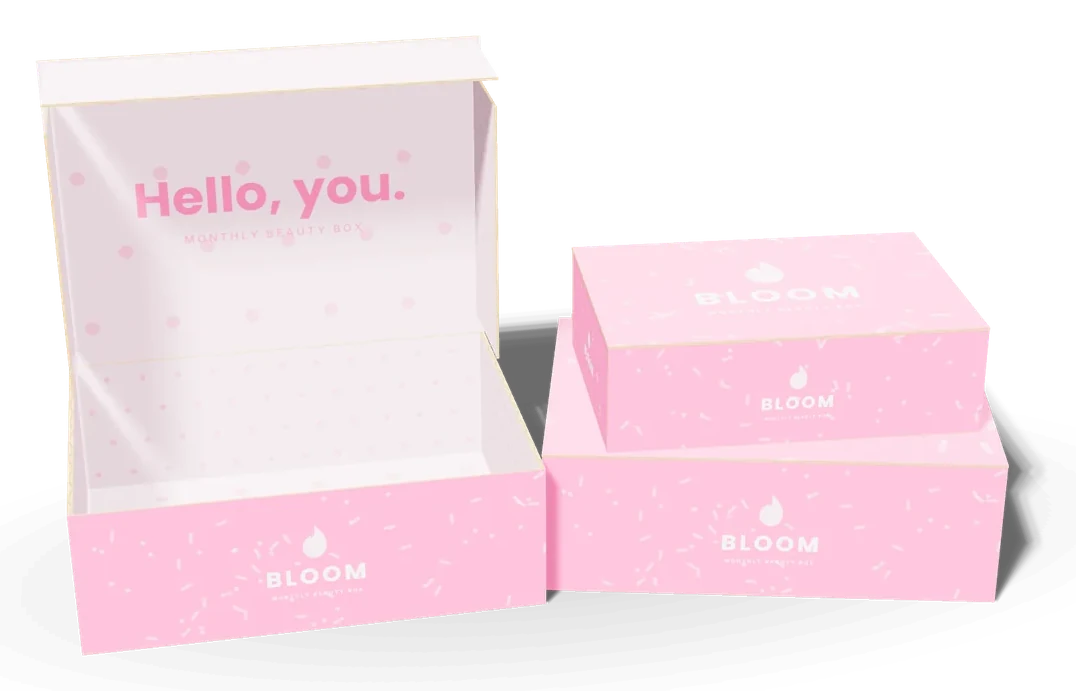
 GuideBox styles explainedA practical comparison of every common box style: mailer, RSC shipper, tuck end, auto-lock, rigid, magnetic, sleeve, pillow, gable, display, window and tube.
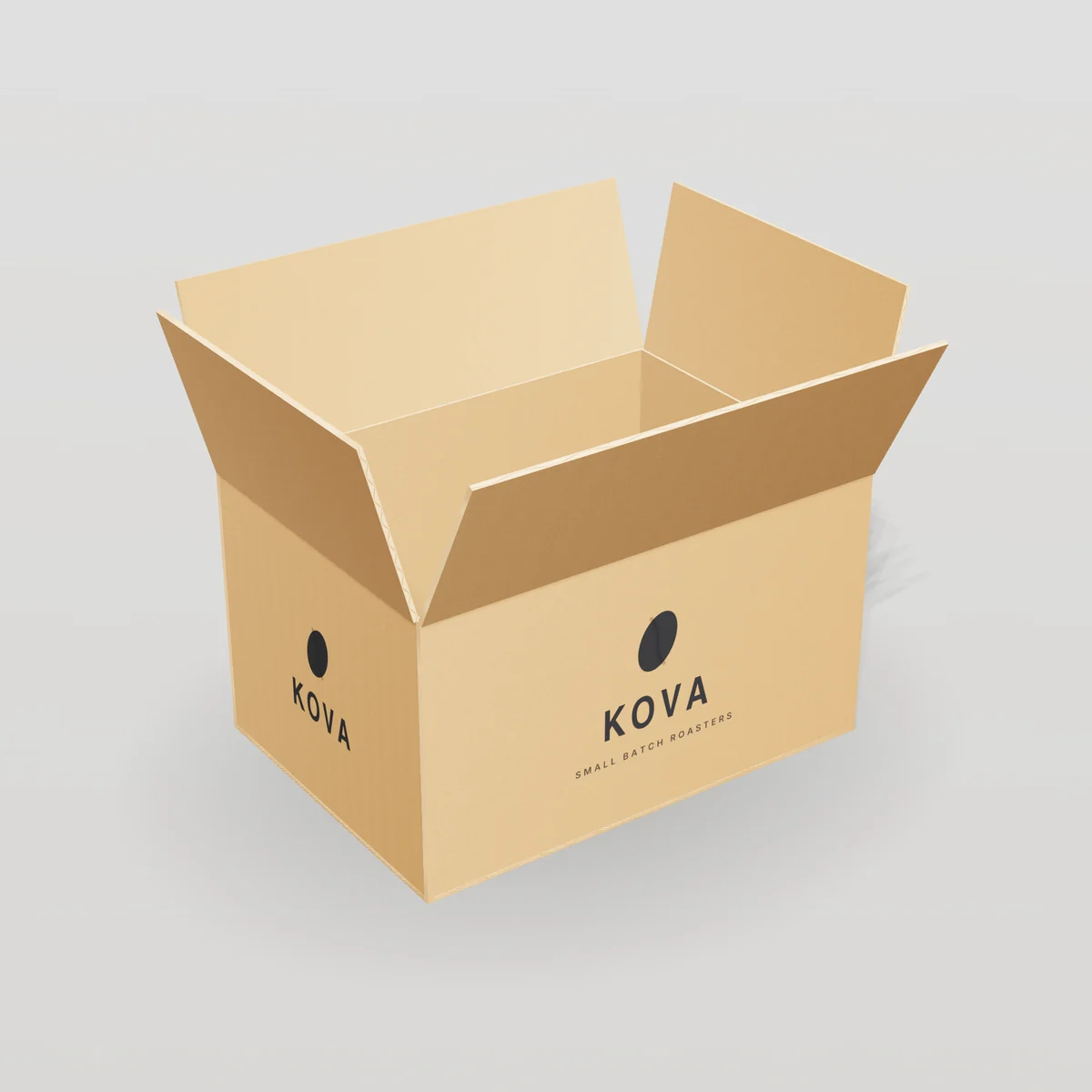
 GuideE-commerce shipping packagingHow to package e-commerce orders so they arrive intact: board strength, void fill, inserts, drop testing, Amazon FBA prep and branded unboxing on a budget.
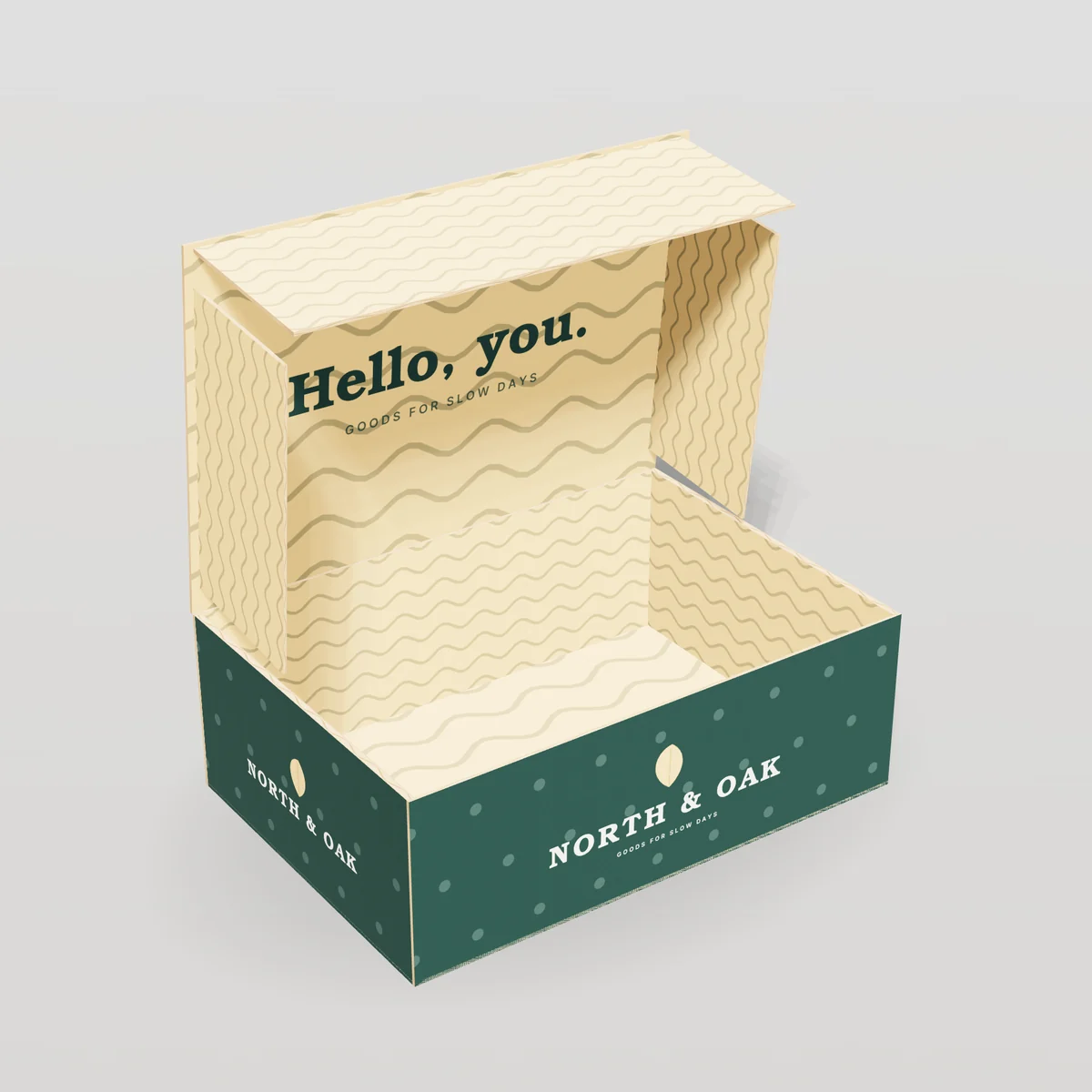
 GuideBox sizing & DIM weightHow to measure inside vs outside box size, choose clearances, calculate UPS, FedEx and USPS dimensional weight, and right-size boxes to cut shipping costs.
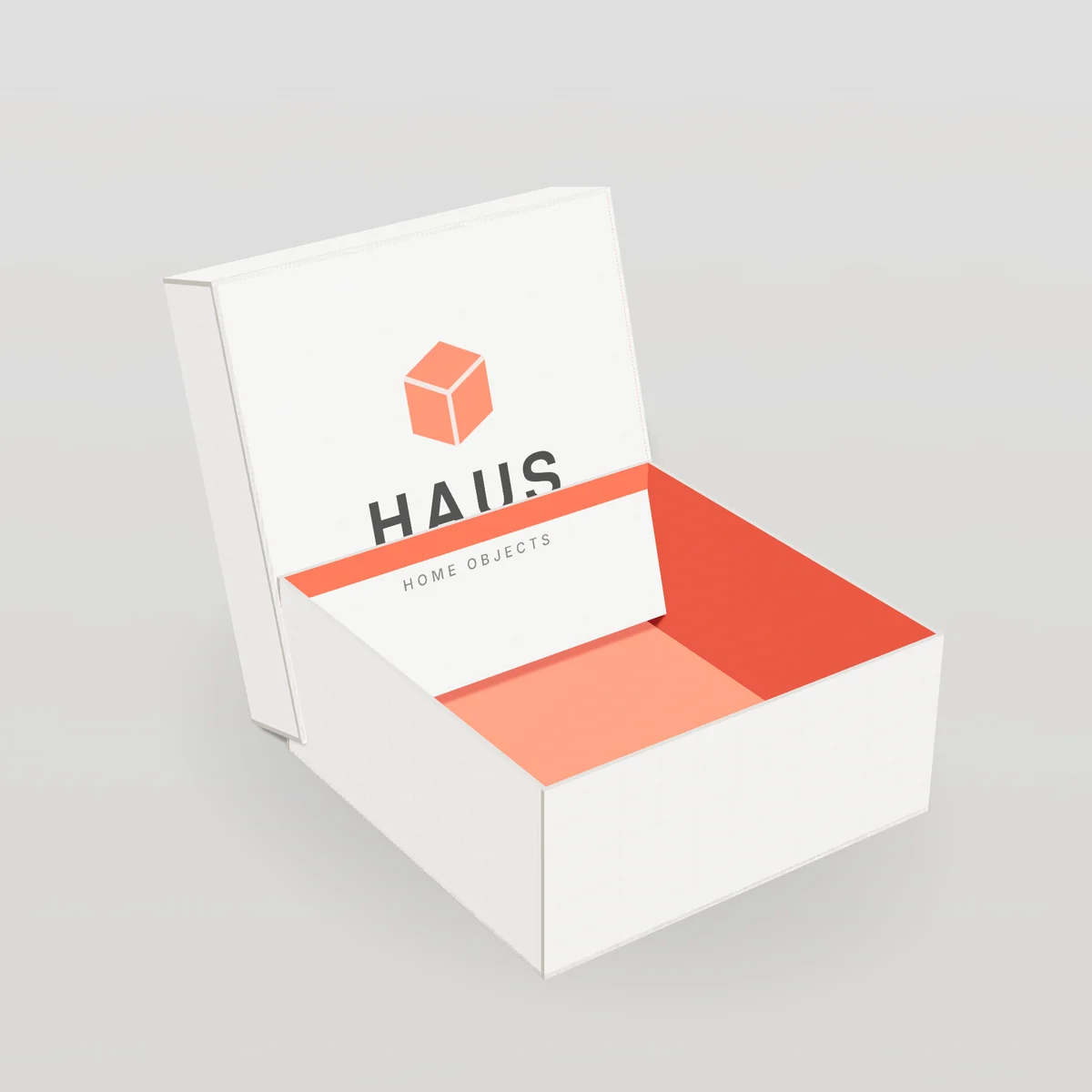
 GuideUnboxing & brand designHow to design packaging that sells and gets shared: brand hierarchy, color, typography, the unboxing sequence, inserts and low-cost upgrades that matter.
What finishes and add-ons cost
Estimated extra cost per unit at 1,000 units when you add one finish to a 13×8×5" mailer box (base estimate $1.95). One-time tooling such as foil and embossing dies is already spread across the run in the per-unit figure and listed separately for reference.
| Finish | What it does | Adds per unit | One-time setup |
|---|---|---|---|
| Matte lamination | A thin film with a smooth, low-glare finish that protects print from scuffs. | +$0.15 | — |
| Soft-touch | A velvety, premium coating that invites customers to hold the box. | +$0.27 | — |
| Spot UV | Clear glossy varnish on selected areas for a sleek contrast against matte. | +$0.25 | $80.00 |
| Foil stamping | Gold, silver, rose gold or holographic foil for logos and accents. | +$0.29 | $120 |
| Embossing / debossing | Raised or recessed logo detail you can feel with your fingertips. | +$0.28 | $120 |
| Window | A die-cut window with clear film so the product sells itself. | +$0.14 | $60.00 |
| Custom insert | Paperboard, corrugated or foam inserts that hold products in place. | +$0.28 | $80.00 |
Estimated prices for recommended shoe boxes styles
Unit price estimates from our published pricing model for each recommended style at its most popular size with full-color print, delivered within the contiguous US. Use them as a budget starting point; your quote confirms exact prices for your size and options.
| Style | Typical board | 500 units | 1,000 units | 5,000 units |
|---|---|---|---|---|
| Mailer Boxes9 × 6 × 3" | E-flute corrugated, white | $1.33 | $1.06 | $0.78 |
| Two-Piece Boxes8 × 8 × 3" | Rigid greyboard + printed wrap | $3.59 | $3.10 | $2.51 |
| Shipping Boxes12 × 10 × 6" | C-flute corrugated, kraft (32 ECT) | $1.58 | $1.31 | $1.01 |
| Sleeve Boxes6 × 4 × 2" | SBS white paperboard (18pt) | $0.91 | $0.67 | $0.45 |
A dash means the quantity is below that style’s minimum order.
Popular mailer boxes sizes for shoe boxes
Mailer Boxes are the most common starting point for shoe boxes. Estimated unit prices for popular sizes with full-color print on e-flute corrugated, white, delivered within the contiguous US:
| Inside size | Typical use | 500 units | 1,000 units | Quote |
|---|---|---|---|---|
| 6 × 4 × 2" | Serums, candles, soaps, single small products | $0.91 | $0.67 | Quote |
| 8 × 6 × 2" | Gift sets, apparel accessories, small electronics | $1.07 | $0.82 | Quote |
| 9 × 6 × 3" | T-shirts, subscription kits, books, multi-item orders | $1.33 | $1.06 | Quote |
| 10 × 8 × 4" | T-shirts, subscription kits, books, multi-item orders | $1.80 | $1.50 | Quote |
| 12 × 9 × 4" | Shoes, hoodies, bundles, home goods | $1.99 | $1.67 | Quote |
| 14 × 10 × 4" | Shoes, hoodies, bundles, home goods | $2.19 | $1.85 | Quote |
| 16 × 12 × 6" | Bulk orders, small appliances, wholesale packs | $3.37 | $2.94 | Quote |
What finishes add to shoe boxes
Estimated extra cost per unit at 1,000 units when you add one finish to a 9×6×3" mailer box (base estimate $1.06). Choose one hero finish rather than several.
| Finish | What it does | Adds per unit |
|---|---|---|
| Matte lamination | A thin film with a smooth, low-glare finish that protects print from scuffs. | +$0.06 |
| Soft-touch | A velvety, premium coating that invites customers to hold the box. | +$0.12 |
| Spot UV | Clear glossy varnish on selected areas for a sleek contrast against matte. | +$0.17 |
| Foil stamping | Gold, silver, rose gold or holographic foil for logos and accents. | +$0.24 |
| Embossing / debossing | Raised or recessed logo detail you can feel with your fingertips. | +$0.23 |
| Window | A die-cut window with clear film so the product sells itself. | +$0.14 |
| Custom insert | Paperboard, corrugated or foam inserts that hold products in place. | +$0.25 |
Learn about these materials
Best box styles for shoe boxes
Box StylesMailer BoxesSelf-locking corrugated mailers printed inside and out. The go-to box for DTC brands and subscriptions.
 Box StylesTwo-Piece BoxesLid-and-base boxes in rigid board or paperboard. A timeless gift and apparel format.
Box StylesShipping BoxesPrinted corrugated regular slotted cartons (RSC) for e-commerce, wholesale and freight.
 Box StylesSleeve BoxesA printed sleeve over a sliding tray. Interactive, premium and easy to brand on two surfaces.
How to order shoe boxes
- 1Request a quote
Tell us the style, size, quantity and artwork you have. Use the form or the live estimator.
- 2Free design & dieline
We send a dieline for your exact size, check your artwork and help with layout at no charge.
- 3Approve your proof
Review a digital 3D proof (and an optional physical sample) before anything is printed.
- 4Production & QC
Your boxes are printed, finished, die-cut and inspected against the approved proof.
- 5Delivered to your door
Shipped flat-packed with tracking to any address in the contiguous US.
Key terms on this page
- Panel
- A face of a box, such as the front, back, side, top or bottom panel.
- Shipper
- A box used to ship products, often corrugated.
- Lid
- The top part of a box, hinged or separate.
- Sleeve
- An open-ended band or tube that slides over a tray or box, often printed to brand plain packaging.
- Tray
- An open-topped box base, often used with a sleeve or lid.
- Rigid box
- A premium box made from thick greyboard wrapped in printed or specialty paper, delivered assembled. Also called a setup box.
- Board
- A general term for thick paper materials used in packaging, including paperboard, corrugated board and greyboard.
- Carton
- A box made from paperboard, usually a folding carton. In shipping, "carton" can also mean a corrugated case.
- E-flute
- A thin corrugated flute about 1/16 inch thick. It prints sharply and folds crisply, making it the standard for mailer boxes.
- Liner
- The flat paper faces of corrugated board. Can be kraft (brown) or bleached (white).
- B-flute
- A corrugated flute about 1/8 inch thick. It offers good crush resistance and printability and is used for shipping boxes, heavier mailers and die-cut shippers.
- Paperboard
- Thick paper (usually 0.010 inch or more) used for folding cartons, such as SBS, kraft and recycled board.
- Chipboard
- A dense, usually recycled board. Thin chipboard is used for backing cards; thick chipboard (greyboard) forms the core of rigid boxes.
- Greyboard
- Thick, dense recycled board used as the structural core of rigid boxes, usually 1.2 to 3 mm thick.
- Kraft
- Paper or board made from unbleached wood pulp, naturally brown and strong.
- Wrap
- The printed or specialty paper glued around the board of a rigid box or tube.
- Tissue paper
- Thin, light paper used to wrap products inside boxes, often printed with a brand pattern.
- Two-piece box
- A box with a separate base and lid that lifts off.
- SBS (solid bleached sulfate)
- Premium paperboard made from bleached virgin fiber, bright white throughout, with the best print and finish quality.
- Proof
- A preview of the final package (digital PDF, 3D render or physical sample) that the customer approves before production.
- Dieline
- A flat template showing the exact shape of a box before folding, with cut, crease, bleed and safe zones. Artwork is designed on top of it.
- Artwork
- The final graphic files (logos, images, text and colors) placed on a dieline and used to make printing plates or digital print files.
- Mailer box
- A self-locking corrugated box with a hinged lid and tuck front, widely used for e-commerce and subscriptions.
- Insert
- A component inside a box that holds products in place, such as die-cut paperboard, corrugated, foam or molded pulp.
- Aqueous coating
- A clear, water-based coating applied over printed board to protect it from scuffs and fingerprints. It is fast drying, low odor and keeps paper packaging easy to recycle.
- Lamination
- Bonding a thin film (matte, gloss or soft-touch) or paper to board for protection and finish.
- Embossing
- Raising part of the board surface into a relief using matched dies, often combined with foil or ink.
- Regular slotted container (RSC)
- The standard corrugated shipping box with four top and four bottom flaps of equal depth (FEFCO 0201).
More definitions in our packaging glossary.
Customer reviews
Reviews come only from verified customers. Ordered shoe boxes from us? Share your experience.
Discussed on Quora & X
Shoe Boxes FAQ
What size is a standard shoe box?
Common sizes are about 13 × 8 × 5 in for men's sneakers and 11 × 7 × 4 in for women's flats, but sizes vary by style and brand.
Can shoe boxes be shipped without an outer box?
Yes, if you use a mailer-style shoe box designed to ship on its own. Traditional two-piece retail boxes should ship inside a shipper.
What is the minimum order for custom shoe boxes?
Our minimum is 100 units.
What material is best for shoe boxes?
E-flute corrugated with a printed liner is the most common: light, strong and good for printing.
Can you print the inside of shoe boxes?
Yes. Interior printing under the lid is a popular upgrade.
Can shoe boxes ship without an outer box?
Yes, if they are built from strong corrugated with a secure closure. Collector packaging is usually shipped inside an outer box.
How many shoe box sizes do I need?
Usually two to four per category, each covering a range of shoe sizes.
Can shoe boxes be printed inside?
Yes. Inside printing adds a reveal for DTC customers at modest cost.
Can shoe boxes have handles?
Yes. Die-cut handles or rope handles make carry-out easier.
Can I print different sizes on the same box design?
Yes. Use a printed end panel with a size label or a variable-printed area.
What is the minimum order for shoe boxes?
Most styles start at 100 units.
What is the strongest shoe box material?
B-flute or E-flute corrugated, which resists crushing in stacks and in transit.
How do I print sizes on shoe boxes?
Use a printed end panel with a size label area, or variable digital printing.
Can shoe boxes be kraft?
Yes. Kraft corrugated shoe boxes with a one-color logo are popular and economical.
Do you make shoe bags?
We can quote branded paper bags and pouches to accompany shoe boxes.
How much do custom shoe boxes cost?
Costs depend on size, material and quantity; corrugated boxes with one-color print are the most economical. See the price table on this page for recommended styles.
How long do custom shoe boxes take?
About 10–14 business days after proof approval for corrugated and paperboard boxes, and 12–16 for rigid boxes.
Can you design boxes to fit my retailer’s shelves?
Yes. Share shelf dimensions and requirements, and we will size boxes accordingly.
Can I order several box sizes at once?
Yes, each size is a separate line item in the same order.
Do you offer free design help for shoe boxes?
Yes. Every quote includes a free dieline for your exact size, an artwork check, and a digital proof with a 3D preview. Our designers can also lay out artwork from your logo, brand colors and ideas, so you do not need a packaging designer to get started.
Can I see a 3D preview of my shoe boxes before ordering?
Yes. You can try styles and colors yourself in the free 3D Box Builder, and every quote includes a 3D preview made from your real artwork before anything is printed.
Where do you deliver shoe boxes?
We deliver to business and residential addresses across the contiguous United States with tracking, usually within 3–7 business days after production. Alaska, Hawaii and expedited freight are quoted separately.
What if my shoe boxes arrive with a defect?
Report it within 7 days of delivery with photos and your order number. If there is a production defect or the boxes do not match your approved proof, we reprint or refund the affected items under our reprint guarantee.
Can shoe boxes be reused by customers?
Yes. Two-piece and drawer-style shoe boxes are often kept for storage, which keeps your logo in the customer's home for years. A sturdy board grade, a clean lid fit and a simple, attractive print make reuse more likely.