Quick answer
Printed corrugated regular slotted cartons (RSC) for e-commerce, wholesale and freight. Estimated prices start around $0.94 per unit at 10,000 units and $3.33 at 100 units for a 12×10×6" box. Typical turnaround is 10–14 business days after proof approval.
Shipping Boxes: specifications
| Construction | Regular Slotted Container (RSC, FEFCO 0201); also FOL, HSC, die-cut |
|---|---|
| Board | B, C, BC double-wall; kraft or white top liner |
| Strength | 32 / 44 / 48 ECT, or 200#–275# Mullen |
| 1–3 color flexo, full-color digital, litho-lam | |
| Size range | 4×4×4" to 48×40×40" |
| Minimum order | 100 units |
| Turnaround | 10–14 business days after proof |
| Ships | Flat, bundled, palletized |
Shipping Boxes: price breaks
How the estimated unit price of a 12×10×6" shipping box (rsc) in C-flute corrugated, kraft (32 ECT) changes with quantity. Setup costs are spread over more boxes as the run gets longer, so the per-box price drops sharply in the first few tiers.
| Quantity | Est. unit price | Est. total | Saving vs. first tier |
|---|---|---|---|
| 100 | $3.33 | $333 | — |
| 250 | $2.06 | $514 | −38% |
| 500 | $1.58 | $791 | −53% |
| 1,000 | $1.31 | $1,308 | −61% |
| 2,500 | $1.10 | $2,758 | −67% |
| 5,000 | $1.01 | $5,047 | −70% |
| 10,000 | $0.94 | $9,445 | −72% |
Estimates from our published pricing model, full-color print, no finishes, delivered to the contiguous US. Your written quote confirms the exact price. Get an exact quote →
Popular sizes for shipping boxes
Sizes are inside dimensions (length × width × height) in inches. Any custom size is available at no extra cost; these are simply the sizes brands order most.
| Size (L×W×H) | Typical use | Est. @ 500 | Est. @ 1,000 | Quote |
|---|---|---|---|---|
| 8 × 6 × 4" | T-shirts, subscription kits, books, multi-item orders | $0.93 | $0.70 | Quote |
| 10 × 8 × 6" | Shoes, hoodies, bundles, home goods | $1.27 | $1.02 | Quote |
| 12 × 10 × 6" | Shoes, hoodies, bundles, home goods | $1.58 | $1.31 | Quote |
| 12 × 12 × 12" | Bulk orders, small appliances, wholesale packs | $2.28 | $1.95 | Quote |
| 14 × 10 × 8" | Bulk orders, small appliances, wholesale packs | $1.83 | $1.54 | Quote |
| 16 × 12 × 10" | Bulk orders, small appliances, wholesale packs | $2.40 | $2.06 | Quote |
| 18 × 18 × 18" | Freight, wholesale cases, large or heavy goods | $4.49 | $3.99 | Quote |
| 24 × 18 × 12" | Freight, wholesale cases, large or heavy goods | $4.37 | $3.88 | Quote |
Material options and how they affect price
Estimated unit price at 1,000 units for a 12×10×6" shipping box (rsc) with full-color printing, by material. Material choice changes look, strength and recyclability as well as cost.
| Material | What it’s like | Est. unit price |
|---|---|---|
| C-flute corrugated, kraft (32 ECT) | C-flute 32 ECT kraft: the standard shipping carton board, balancing stacking strength, cushioning and cost. | $1.31 |
| C-flute corrugated, white | C-flute corrugated with a bleached white top liner for brighter printed graphics on shipping cartons. | $1.39 |
| C-flute 44 ECT | Heavy-duty 44 ECT single-wall board for heavier cartons, humid warehouses and taller stacks. | $1.43 |
| BC double-wall (48 ECT) | BC double-wall (48 ECT) for heavy, fragile or long-stacked freight and wholesale cases. | $1.80 |
| B-flute corrugated, kraft | B-flute corrugated (about 1/8 in) with a kraft liner: more crush resistance for heavier or larger contents. | $1.31 |
Printing options compared
How the print specification changes the estimated unit price of a 12×10×6" shipping box (rsc) in C-flute corrugated, kraft (32 ECT). One- and two-color printing carries a small plate charge that matters less as quantities grow; full-color digital and offset printing have no plate charge in our model.
| Printing | 500 units | 1,000 units | 5,000 units |
|---|---|---|---|
| Plain (no print) | $1.19 | $0.94 | $0.69 |
| 1 color | $1.44 | $1.12 | $0.81 |
| 2 colors | $1.59 | $1.24 | $0.89 |
| Full color outside | $1.58 | $1.31 | $1.01 |
| Full color outside + inside | $1.93 | $1.63 | $1.29 |
What is a custom shipping box?
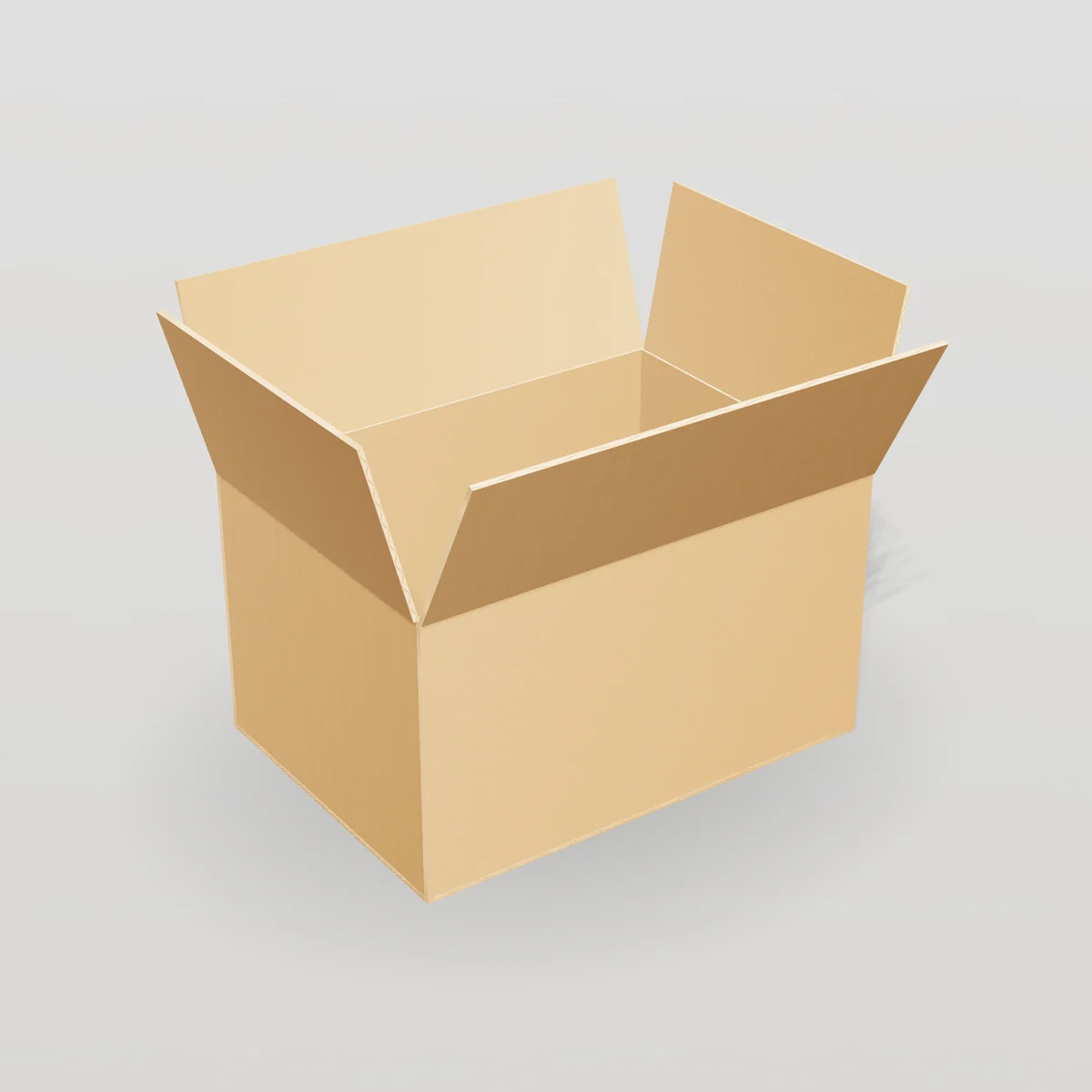
A custom shipping box is a corrugated carton made to your exact dimensions and printed with your brand. The most common construction is the regular slotted container (RSC), known in the European FEFCO code as style 0201. An RSC is one piece of corrugated board, scored and slotted so that four flaps fold in at the top and four at the bottom. The outer (major) flaps meet in the middle; the inner (minor) flaps sit underneath. It is sealed with tape or glue.
The RSC is the most efficient box ever designed. It uses very little waste board, folds quickly by hand or machine, stacks well on pallets and protects its contents through rough handling. That is why it moves the overwhelming majority of goods shipped in the United States, from e-commerce orders to wholesale case packs and freight.
"Custom" means three things here: the box is cut to your inside dimensions so products do not rattle, it is made from the board grade your shipping demands, and it is printed with your brand, handling instructions or both.
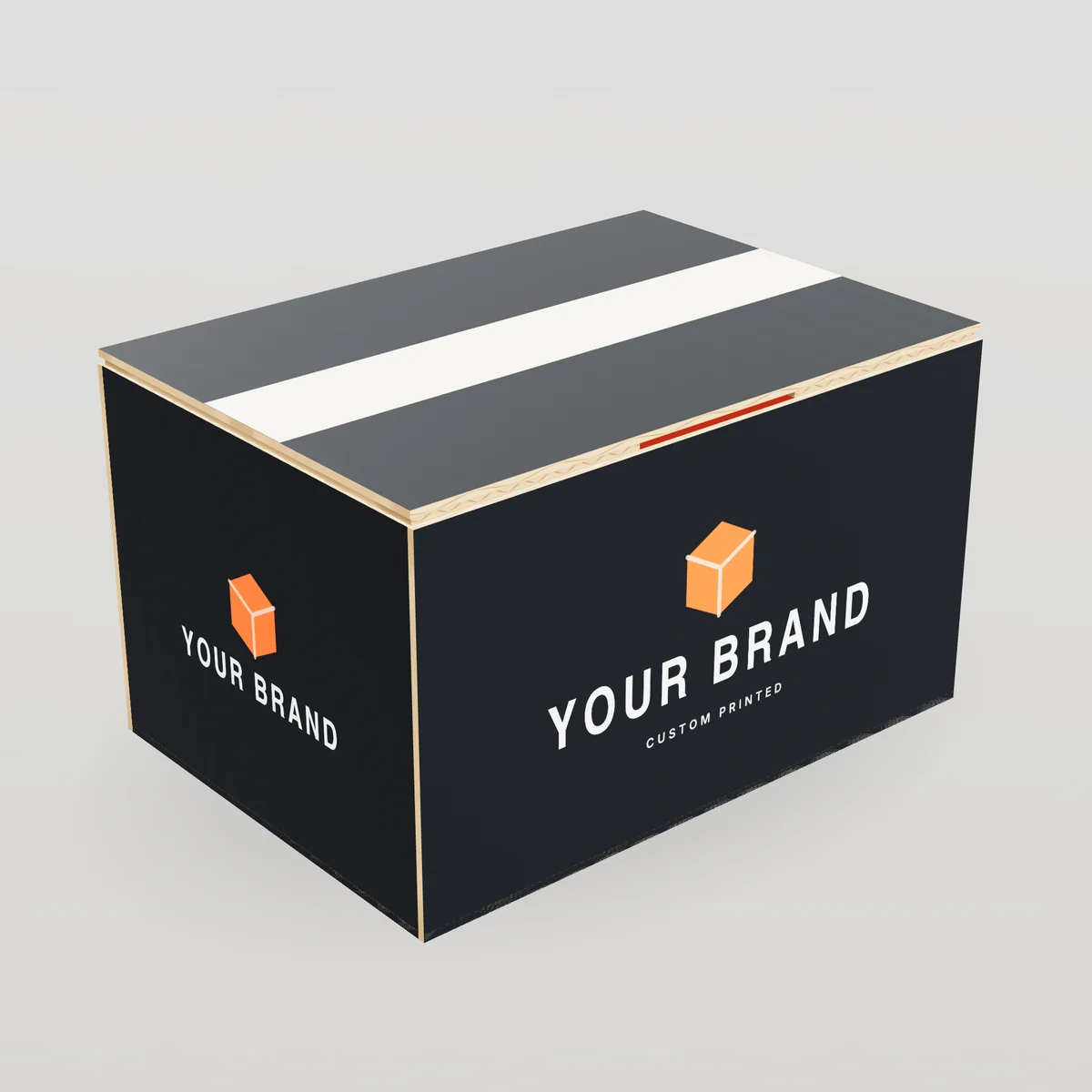
When a shipping box is the right choice
- You ship heavier products (over about 10 lb), tall items or several products together.
- You need the lowest cost per cubic inch of protected space.
- Boxes travel on pallets, through distribution centers or as wholesale case packs.
- You want a branded box but do not need a lift-off lid or inside print.
- You fulfill through a 3PL or Amazon and need standard, sturdy cartons.
If presentation on opening matters more than cost per cubic inch, compare with mailer boxes, which open like a gift box and print inside.
Shipping box styles
RSC is the default, but corrugated shipping boxes come in several standard constructions. Each one handles a different job.
| Style | FEFCO code | How it works | Best for |
|---|---|---|---|
| Regular slotted container (RSC) | 0201 | All flaps the same depth; outer flaps meet in the center | Most shipping and storage |
| Half slotted container (HSC) | 0200 | RSC with no top flaps; used with a separate lid or open top | Trays, bins, kitting |
| Full overlap container (FOL) | 0203 | Outer flaps run the full width and overlap | Heavy or rough-handled loads; extra stacking strength |
| Center special slotted (CSSC) | 0204 | Inner and outer flaps both meet in the center | Flat-bottom protection for items that need full coverage |
| Die-cut shipping box | 04xx family | Cut to a custom shape with locking tabs | Branded shippers, inserts, self-locking cartons |
| Telescope box | 03xx family | Separate top and bottom trays | Long or flat items, apparel, archives |
Not sure which you need? Describe the product and how it ships in your quote request and our specialists will recommend the most economical construction.
Board grades and strength
Corrugated shipping boxes are specified by flute (the wavy middle layer that determines thickness) and strength rating. Getting this right is the single biggest factor in whether your products arrive intact.
Flutes
- B-flute (about 1/8 in): lighter shippers, die-cut boxes, products up to around 20 lb in small boxes. Prints better than C-flute.
- C-flute (about 5/32 in): the standard shipping carton. A good balance of crush resistance, stacking strength and cost.
- E-flute (about 1/16 in): for small branded shippers where print quality matters more than stacking.
- BC double-wall (about 1/4 in): two fluted layers for heavy, fragile, high-value or long-stacked loads.
ECT and Mullen ratings
Two tests are used to rate corrugated board in the US:
- Edge Crush Test (ECT) measures how much force the board can take on its edge before crushing, in pounds per inch. It predicts stacking strength, which is what matters most in modern distribution. Common grades are 32 ECT (standard single-wall), 44 ECT (heavy-duty single-wall) and 48 ECT (double-wall).
- Mullen (burst) test measures how much pressure punctures the board face, in pounds per square inch. It predicts puncture and rough-handling resistance. Common grades are 200#, 275# (single-wall) and 275# to 350# (double-wall).
Most e-commerce and warehouse boxes today are specified by ECT because stacking is the main failure mode. Mullen-rated board can make sense for very rough handling or high puncture risk.
Matching board to weight
These are typical starting points for a box sized correctly around its contents. The box maker's certificate printed on the bottom flap states the actual rating.
| Packed weight | Suggested board | Typical rating |
|---|---|---|
| Up to 20 lb | Single-wall B or C flute | 32 ECT |
| 20–40 lb | Single-wall C flute, heavy duty | 44 ECT |
| 40–65 lb | Double-wall BC flute | 48 ECT |
| 65–120 lb | Heavy double-wall | 61–71 ECT |
| Over 120 lb | Triple-wall or wood | 112 ECT and up |
Use our Box Strength Calculator to estimate box compression strength (BCT) from ECT and box size, and to check how high your cartons can safely stack.
Printing options for shipping boxes
Shipping boxes can be plain, lightly branded or printed edge to edge. Each method fits a different budget and look.
Flexographic printing (1–3 colors)
Flexo prints water-based ink directly onto the corrugated surface with flexible rubber or polymer plates. It is the most economical way to print a logo, website and handling marks on large runs. It suits bold, simple artwork: solid logos, type and line graphics. Fine detail, photos and gradients do not reproduce as well on corrugated flutes. See flexographic printing.
Digital printing (full color)
Digital presses print full-color artwork straight onto the board without plates. They are ideal for short runs (100 to a few thousand boxes), multiple designs and photographic artwork. White board gives the brightest result. See digital printing.
Litho-lamination (premium full color)
A sheet is printed by offset lithography, then laminated onto corrugated board. This gives the sharpest image quality and smooth, glossy or matte finishes, at a higher setup cost. It is used for retail-ready shippers and premium e-commerce boxes.
What to print on a shipping box
- Logo and website. The minimum for brand recognition on the doorstep.
- A tagline or social handle. Encourages unboxing posts.
- Handling icons. This side up, fragile, keep dry. Use standard symbols so carriers recognize them.
- SKU or contents panel. Helps warehouses identify cartons. Leave a clear area for a printed label if contents vary.
- Recycling message. A short "Please recycle" mark and the corrugated recycling symbol.
Tip: On kraft (brown) shipping boxes, one or two dark colors such as black, navy or deep green read best. Bright colors look muted on kraft; switch to white board if your brand color must pop.
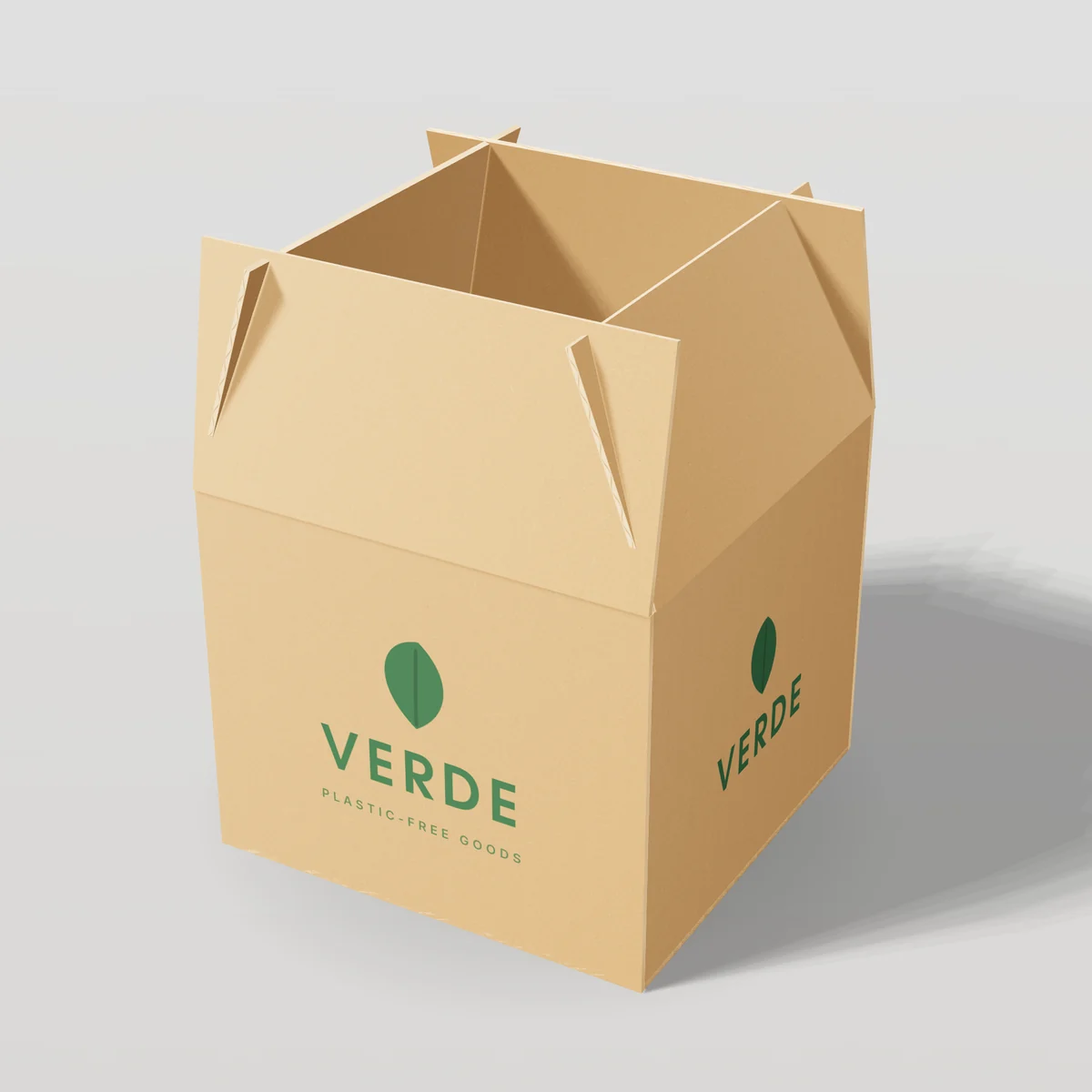
How to size shipping boxes
Shipping boxes are quoted by inside dimensions: Length × Width × Height. Length and width are the opening; height is the distance between the top and bottom flaps. The length is always the longer side of the opening.
- Measure the packed contents, including any inner cartons, inserts or void fill you plan to use.
- Add clearance. About 1/8 in per dimension for a tight retail pack, 1/2 in for light void fill, and 2 in on all sides for fragile items with cushioning. Fragile goods also benefit from a box-in-box approach.
- Keep proportions sensible. For RSCs, a length no more than about 2.5 times the width and a height no more than about 2 times the length keeps the box stable and efficient.
- Check dimensional weight. UPS and FedEx bill by dimensional weight (L × W × H ÷ 139 for daily rates) when it is higher than actual weight. Oversized boxes cost you on every shipment.
- Check your pallet pattern if you ship cases on pallets. A box that fits a 48 × 40 in pallet cleanly cuts freight costs. Our Pallet Calculator shows how many cartons fit per layer.
Popular shipping box sizes
| Size (in) | Typical use |
|---|---|
| 8 × 6 × 4 | Small accessories, single cosmetics, supplements |
| 10 × 8 × 6 | Shoes (single pair), small electronics, gift sets |
| 12 × 10 × 6 | Apparel bundles, books, small appliances |
| 12 × 12 × 12 | Cube shipper for mixed orders and bulk items |
| 14 × 10 × 8 | Multi-item orders, home goods |
| 16 × 12 × 10 | Wholesale case packs, larger kits |
| 18 × 18 × 18 | Bulky lightweight items, bedding |
| 24 × 18 × 12 | Large items, freight case packs |
Custom sizes are made to order at no extra charge.
Shipping box pricing explained
The table at the top of this page shows estimated prices for a 12 × 10 × 6 in box. The main cost drivers are:
- Board area. RSC board area is roughly (2 × (L + W) + glue flap) × (H + W). Width counts twice because it sets flap depth, so a narrower box saves more board than you might expect.
- Board grade. 44 ECT and double-wall board cost more than standard 32 ECT.
- Print method and coverage. Plain boxes are cheapest. One-color flexo adds a plate charge but little per unit; full-color digital adds a per-unit ink cost.
- Quantity. Larger runs spread setup across more boxes.
- Finishes and inserts. Partitions, pads and die-cut inserts add per-unit cost.
- Freight. Corrugated is light but bulky. Flat-packed boxes ship on pallets; delivery cost depends on volume and destination.
Here is the same size in heavy-duty 44 ECT board with one-color printing, a common spec for heavier wholesale cartons:
| Quantity | Est. unit price | Est. total | Saving vs. first tier |
|---|---|---|---|
| 100 | $3.77 | $377 | — |
| 250 | $2.15 | $538 | −43% |
| 500 | $1.57 | $785 | −58% |
| 1,000 | $1.25 | $1,247 | −67% |
| 2,500 | $1.02 | $2,539 | −73% |
| 5,000 | $0.92 | $4,581 | −76% |
| 10,000 | $0.85 | $8,504 | −77% |
Estimates from our published pricing model, full-color print, no finishes, delivered to the contiguous US. Your written quote confirms the exact price. Get an exact quote →
Ways to save on shipping boxes
- Right-size first. The cheapest box is one sized to your product. It also cuts void fill and dimensional weight.
- Standardize sizes. Three or four well-chosen sizes covering most of your orders beat dozens of near-duplicates.
- Use one or two colors of flexo on kraft for large runs.
- Order in larger quantities if you have storage space. Corrugated keeps well when stored flat and dry.
- Match board to load. Do not over-specify double-wall for light products.
The Packaging Cost Calculator lets you compare shipping box setups side by side.
Protection and testing
A well-made shipping box is only part of a protective package. Products survive when the whole system works together:
- Fit: contents should not move when the box is shaken. Empty space lets items build momentum and break.
- Cushioning: paper void fill, molded pulp, corrugated inserts or air pillows absorb shock.
- Closure: use a quality tape (pressure-sensitive or water-activated) in an H pattern for heavy boxes. Water-activated paper tape bonds into the fibers and is very hard to tamper with. See custom packing tape.
- Stacking: boxes in warehouses and trucks are stacked. Use the Box Strength Calculator to check compression.
For important launches, we recommend a simple drop test based on ISTA procedures: pack a finished box, drop it from about 30 inches onto a hard floor on each face, edge and corner, then inspect the product. Our e-commerce packaging guide walks through a full at-home test.
Amazon and 3PL requirements
If your cartons go into Amazon fulfillment centers or a 3PL, they may need to meet specific rules: box strength minimums, size and weight limits, label placement and case-pack consistency. Amazon publishes packaging and prep requirements for sellers; check the latest version in Seller Central before ordering, because rules change. We can size and spec cartons to your 3PL's requirements; just include them with your quote.
Sustainability of corrugated shipping boxes
Corrugated board is made from renewable wood fiber, often contains recycled content, and is recycled at high rates in the United States. To make your shipping boxes even more sustainable:
- Right-size to use less board and fewer trucks.
- Choose recycled-content board where performance allows.
- Avoid plastic void fill in favor of paper or molded pulp.
- Print with water-based inks, standard for flexo and most digital corrugated printing.
- Use paper tape so the whole package goes into one recycling stream.
- Word claims carefully. "Recyclable" and "made with recycled content" are different claims under the FTC Green Guides. Our sustainable packaging guide explains how to use them.
Shipping boxes compared
| Compared with | Choose a shipping box when… | Choose the alternative when… |
|---|---|---|
| Mailer box | Cost per cubic inch, heavy or tall items, warehouse handling | You want a presentation-style opening and inside print |
| Poly mailer | Products can be crushed or need structure | Items are soft and unbreakable and shipping cost dominates |
| Display box | The box only needs to ship | The case must open into a counter display at retail |
| Stock brown box | You want your brand, a perfect fit and lower DIM weight | You only need a handful of boxes immediately |
Ordering checklist
- Inside dimensions (L × W × H) and packed weight
- Box style (RSC unless you need another)
- Board: flute and rating (for example C-flute 32 ECT)
- Liner: kraft or white
- Printing: plain, 1–3 color flexo, or full color; which panels
- Quantity, with two or three price breaks
- Delivery ZIP code, dock or residential, and target date
- Any 3PL or Amazon requirements
Common shipping box mistakes
- Choosing a box that is "close enough." Extra space means more void fill, more damage and higher DIM charges.
- Under-specifying board for stacked loads. Warehouses stack high. A box that survives a parcel trip may crush on a pallet.
- Over-specifying double-wall for light products and paying for strength you do not use.
- Printing fine detail on corrugated with flexo. Thin lines and small text fill in on fluted board. Keep type bold.
- Ignoring humidity. Corrugated loses strength when damp. Store boxes dry and off the floor.
- Forgetting the label area. Leave space for carrier labels and SKU stickers.
- Mixing too many sizes. Each extra size means a separate run, more storage and slower packing.
Building a shipping box program
Brands that ship many orders benefit from treating shipping boxes as a system rather than a one-off purchase:
- Analyze orders. List the most common product combinations and their packed dimensions.
- Choose a small set of sizes. Three to five sizes often cover most orders efficiently.
- Standardize board grades by weight band (for example, 32 ECT for most, 44 ECT for heavy orders).
- Brand consistently with one or two ink colors across all sizes.
- Plan inventory with reorder points based on usage and lead time.
- Review quarterly as your product mix changes.
Branding shipping boxes economically
| Option | Cost | Effect |
|---|---|---|
| Plain kraft + custom tape | Lowest | Brand on every box without printed boxes |
| One-color logo (flexo or digital) | Low | Recognizable, durable |
| Two-color print | Low–medium | More visual interest |
| Full-color digital | Medium | Rich graphics, short runs |
| Printed inside | Medium | Reveal moment for DTC |
For many brands, a one-color logo on kraft plus branded tape delivers most of the benefit at minimal cost.
Shipping box labeling
Shipping boxes often need more than branding:
- Handling marks: "This side up", "Fragile" icons
- Case labels: product, quantity, SKU and barcode for wholesale shipments
- Return information for DTC orders
- Recycling instructions
Leave clear space for the shipping label (typically 4 × 6 in) on the top panel.
Worked example: an online home goods store
A store ships candles, ceramics and textiles.
- Sizes: four RSC sizes from 8 × 6 × 6 in to 16 × 12 × 10 in.
- Board: C-flute 32 ECT kraft; 44 ECT for the largest size.
- Print: one-color logo on two sides plus "Fragile: handle with care" icon.
- Protection: paper void fill and corrugated inserts for ceramics.
- Tape: branded water-activated paper tape.
Questions to ask before ordering shipping boxes
- What is the heaviest order this box will carry? It decides the board grade.
- Will boxes be stacked in storage or on pallets? Long stacking needs more compression strength.
- Do orders ship through parcel carriers, freight or both? Parcel networks add drops and vibration; freight adds stacking.
- How will boxes be sealed? Tape type and pattern affect strength and presentation.
- Do you need handling marks or case labels? Plan print areas early.
- How many boxes do you use each month? Quantity drives price and how often you reorder.
- Where will flat boxes be stored? Dry, flat storage keeps them strong.
Shipping boxes in one paragraph
A custom shipping box is a regular slotted carton cut to your exact inside dimensions in a board grade matched to your weight and handling. Most brands do well with C-flute 32 ECT kraft for everyday orders, 44 ECT or double-wall for heavy or long-stacked loads, a small set of right-sized sizes, one- or two-color branding and water-activated paper tape. Right-sizing lowers material, void fill, damage and dimensional weight at the same time, so start there, then add print where customers will notice it.
Related guides
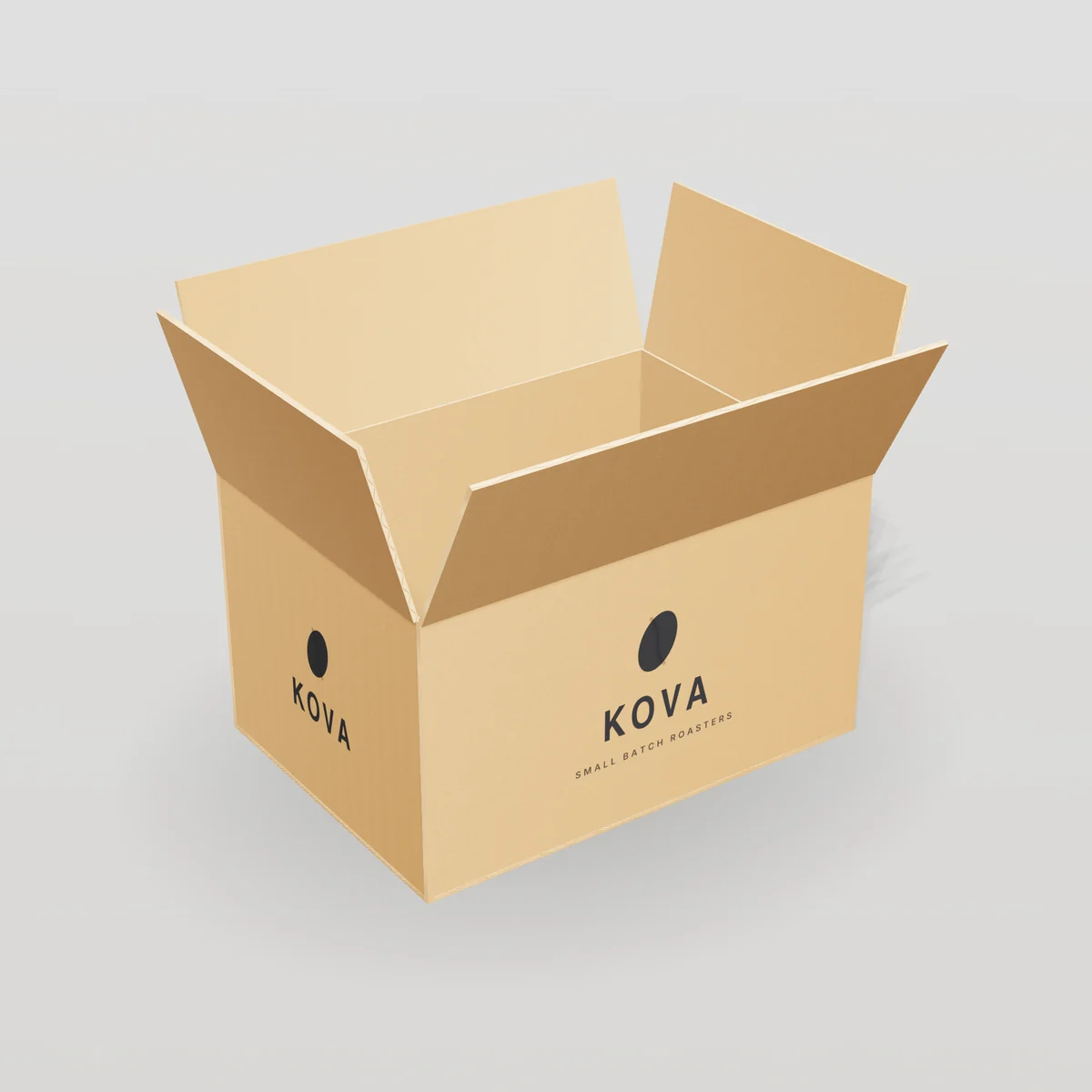 GuideBox sizing & DIM weightHow to measure inside vs outside box size, choose clearances, calculate UPS, FedEx and USPS dimensional weight, and right-size boxes to cut shipping costs.
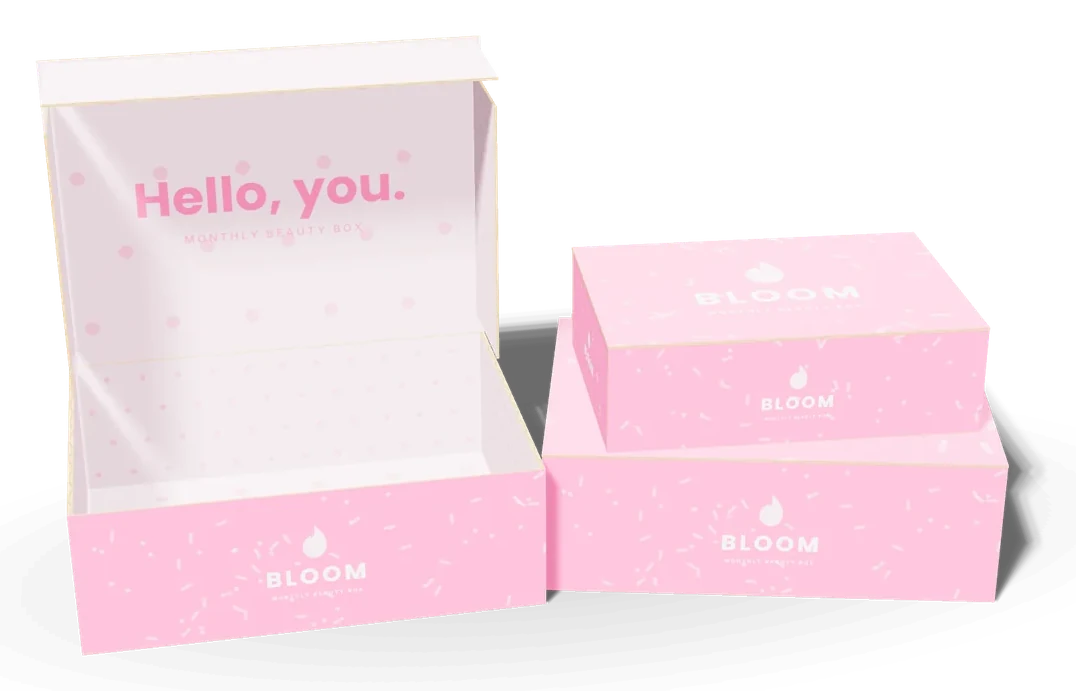 GuideE-commerce shipping packagingHow to package e-commerce orders so they arrive intact: board strength, void fill, inserts, drop testing, Amazon FBA prep and branded unboxing on a budget.
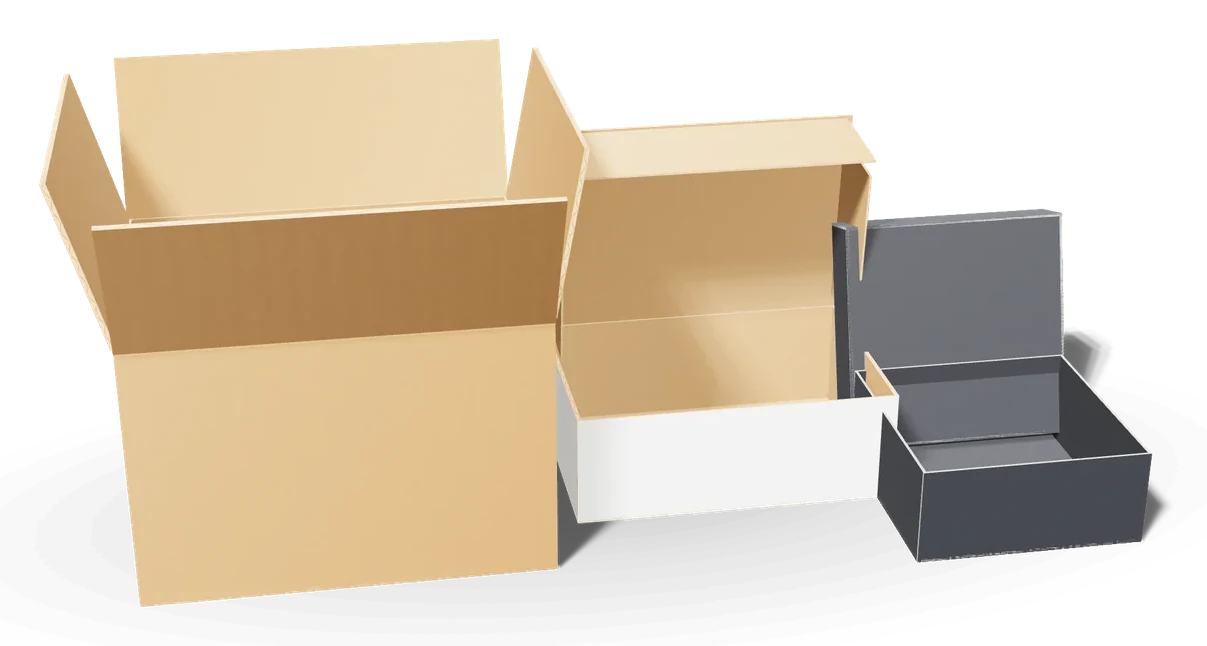 GuidePackaging materials & board gradesUnderstand corrugated flutes and ECT, paperboard caliper (pt), SBS vs kraft vs recycled board, and rigid greyboard, so you can specify packaging like a pro.
 GuideHow much custom packaging costsRealistic 2026 price ranges for custom mailer, shipping, carton, rigid and pouch packaging, what drives cost, and proven ways to lower your unit price.
Comparing formats? Read mailer box vs shipping box and browse our standard box sizes chart.
What finishes and add-ons cost
Estimated extra cost per unit at 1,000 units when you add one finish to a 12×10×6" shipping box (rsc) (base estimate $1.31). One-time tooling such as foil and embossing dies is already spread across the run in the per-unit figure and listed separately for reference.
| Finish | What it does | Adds per unit | One-time setup |
|---|---|---|---|
| Matte lamination | A thin film with a smooth, low-glare finish that protects print from scuffs. | +$0.10 | — |
| Soft-touch | A velvety, premium coating that invites customers to hold the box. | +$0.18 | — |
| Spot UV | Clear glossy varnish on selected areas for a sleek contrast against matte. | +$0.20 | $80.00 |
| Foil stamping | Gold, silver, rose gold or holographic foil for logos and accents. | +$0.31 | $120 |
| Embossing / debossing | Raised or recessed logo detail you can feel with your fingertips. | +$0.30 | $120 |
| Window | A die-cut window with clear film so the product sells itself. | +$0.14 | $60.00 |
| Custom insert | Paperboard, corrugated or foam inserts that hold products in place. | +$0.29 | $80.00 |
How shipping boxes compare with similar styles
Estimated unit prices at 1,000 units for each style at its most popular size, full-color print, delivered within the contiguous US, so you can weigh shipping boxes against the alternatives customers often consider.
| Style | Typical board | Minimum | 1,000 units | Ships | Best for |
|---|---|---|---|---|---|
| Shipping Boxes12 × 10 × 6" | C-flute corrugated, kraft (32 ECT) | 100 units | $1.31 | Flat | Printed corrugated regular slotted cartons (RSC) for e-commerce, wholesale and freight. |
| Mailer Boxes9 × 6 × 3" | E-flute corrugated, white | 100 units | $1.06 | Flat | Self-locking corrugated mailers printed inside and out. The go-to box for DTC brands and subscriptions. |
| Display Boxes10 × 7 × 4" | E-flute corrugated, white | 100 units | $1.13 | Flat | Counter and shelf-ready displays that ship your product and sell it at the register. |
| Product Boxes4 × 4 × 4" | SBS white paperboard (18pt) | 250 units | $0.49 | Flat | Printed paperboard boxes for retail shelves, gift sets and everyday products. |
| Stand-Up Pouches6 × 3.5 × 9" | Matte laminated film (PET/PE) | 500 units | $0.49 | Flat | Printed resealable pouches with a gusseted base for coffee, snacks, supplements and bath products. |
Learn about these materials
- C-flute corrugated, kraft (32 ECT)
- C-flute corrugated, white
- C-flute 44 ECT
- BC double-wall (48 ECT)
- B-flute corrugated, kraft
How to order shipping boxes
- 1Request a quote
Tell us the style, size, quantity and artwork you have. Use the form or the live estimator.
- 2Free design & dieline
We send a dieline for your exact size, check your artwork and help with layout at no charge.
- 3Approve your proof
Review a digital 3D proof (and an optional physical sample) before anything is printed.
- 4Production & QC
Your boxes are printed, finished, die-cut and inspected against the approved proof.
- 5Delivered to your door
Shipped flat-packed with tracking to any address in the contiguous US.
Key terms on this page
- Carton
- A box made from paperboard, usually a folding carton. In shipping, "carton" can also mean a corrugated case.
- Regular slotted container (RSC)
- The standard corrugated shipping box with four top and four bottom flaps of equal depth (FEFCO 0201).
- FEFCO code
- A standard numbering system for corrugated box designs published by the European federation of corrugated board manufacturers. For example, 0201 is the regular slotted container.
- Corrugated board
- Board made of a fluted (wavy) paper medium glued between flat liners. It is strong, light and the main material for shipping boxes and mailers.
- Board
- A general term for thick paper materials used in packaging, including paperboard, corrugated board and greyboard.
- Inside dimensions
- The usable space inside a box, the standard way to specify custom box sizes (L × W × H).
- Lid
- The top part of a box, hinged or separate.
- Half slotted container (HSC)
- A corrugated box like an RSC but with no top flaps, used as a tray or with a separate lid (FEFCO 0200).
- Full overlap container (FOL)
- A corrugated box whose outer flaps overlap fully, adding strength for heavy or rough-handled loads (FEFCO 0203).
- Stacking strength
- How much weight a box can carry from boxes stacked on top of it.
- Coverage
- The proportion of a surface covered by ink. Heavy coverage uses more ink and can affect drying and cracking.
- Telescope box
- A two-piece box whose lid slides over the base. A full telescope lid covers the base completely.
- Flute
- The wavy middle layer of corrugated board. Flute size (A, B, C, E, F) determines thickness, cushioning and strength.
- E-flute
- A thin corrugated flute about 1/16 inch thick. It prints sharply and folds crisply, making it the standard for mailer boxes.
- BC double-wall
- Corrugated board with two fluted layers (B and C) and three liners. It is about 1/4 inch thick and used for heavy, fragile or long-stacked loads.
- Double-wall
- Corrugated board with two fluted layers, stronger than single-wall board.
- B-flute
- A corrugated flute about 1/8 inch thick. It offers good crush resistance and printability and is used for shipping boxes, heavier mailers and die-cut shippers.
- C-flute
- A corrugated flute about 5/32 inch thick and the most common flute for standard shipping cartons, balancing cushioning, stacking strength and cost.
- ECT (edge crush test)
- A test measuring how much force corrugated board can take on its edge before crushing, in pounds per inch. It predicts stacking strength.
- Single-wall
- Corrugated board with one fluted layer and two liners.
- BCT (box compression test)
- A lab test measuring how much top-to-bottom load a finished box can carry before it collapses. It predicts how high boxes can be stacked.
- Box maker's certificate
- A printed stamp on corrugated boxes stating the board construction, strength rating (ECT or Mullen), size and weight limits and the manufacturer.
- Compression strength
- The ability of a box to resist being crushed from the top, which determines safe stacking height.
- Flexographic printing (flexo)
- A printing method using flexible relief plates and fast-drying inks, common on corrugated boxes, labels and flexible packaging.
- Artwork
- The final graphic files (logos, images, text and colors) placed on a dieline and used to make printing plates or digital print files.
- Digital printing
- Printing directly from a digital file without plates. Ideal for short runs, multiple designs and fast changes.
- Litho-lamination
- Printing a sheet by offset lithography and laminating it onto corrugated board for high-quality graphics on shipping and display boxes.
- Setup cost
- One-time costs to prepare a job, such as plates, dies, make-ready and proofing, spread across the order quantity.
More definitions in our packaging glossary.
Customer reviews
Reviews come only from verified customers. Ordered shipping boxes from us? Share your experience.
Discussed on Quora & X
Shipping Boxes FAQ
What is the minimum order for custom shipping boxes?
Our minimum for printed custom shipping boxes is 100 units. Larger quantities lower the unit price considerably, especially from 500 units up.
What does RSC mean?
RSC stands for regular slotted container, the standard corrugated shipping box with four top and four bottom flaps of equal depth. The outer flaps meet in the middle when closed. It is FEFCO style 0201.
What ECT rating do I need?
For most e-commerce shipments under about 20 lb, 32 ECT single-wall board is sufficient. Heavier boxes, long stacking times or humid warehouses call for 44 ECT or 48 ECT double-wall. Our Box Strength Calculator estimates the right grade for your load.
Can you print full color on corrugated shipping boxes?
Yes. Digital printing produces full-color graphics directly on corrugated board, and litho-lamination produces premium full-color results for larger runs. White board gives the brightest colors.
Are your shipping boxes inside or outside dimensions?
We quote by inside dimensions (L × W × H) so your products fit. Outside dimensions are slightly larger depending on board thickness; we provide both on your proof.
How long does production take?
Typical production is 10–14 business days after proof approval, plus 3–7 business days shipping within the contiguous US.
Do shipping boxes ship flat?
Yes. Boxes ship flat and bundled, usually on pallets for larger orders, to save space and freight cost. RSCs are fast to assemble with tape.
Can you make boxes that meet Amazon requirements?
We can size and specify cartons to meet the requirements you provide from Amazon or your 3PL. Requirements change, so please share the current rules with your quote request.
Is corrugated cardboard recyclable?
Yes. Corrugated cardboard is accepted in curbside recycling programs across almost all of the US and is one of the most recycled packaging materials.
What is the difference between ECT and Mullen?
ECT (edge crush test) predicts stacking strength; Mullen (burst test) predicts puncture resistance. ECT is the most common rating for modern shipping boxes because stacking is the main cause of failure in distribution.
What is an RSC box?
A regular slotted container: the standard shipping box with four flaps top and bottom that meet in the middle.
How many box sizes should I have?
Most e-commerce businesses do well with three to five sizes based on their most common orders.
Can shipping boxes be printed inside?
Yes. Printing the inside flaps or walls adds a reveal for direct-to-consumer orders while keeping the outside simple.
What is the difference between 32 ECT and 44 ECT?
44 ECT board resists stacking loads better than 32 ECT. Choose it for heavier contents, humid storage or tall pallet stacks.