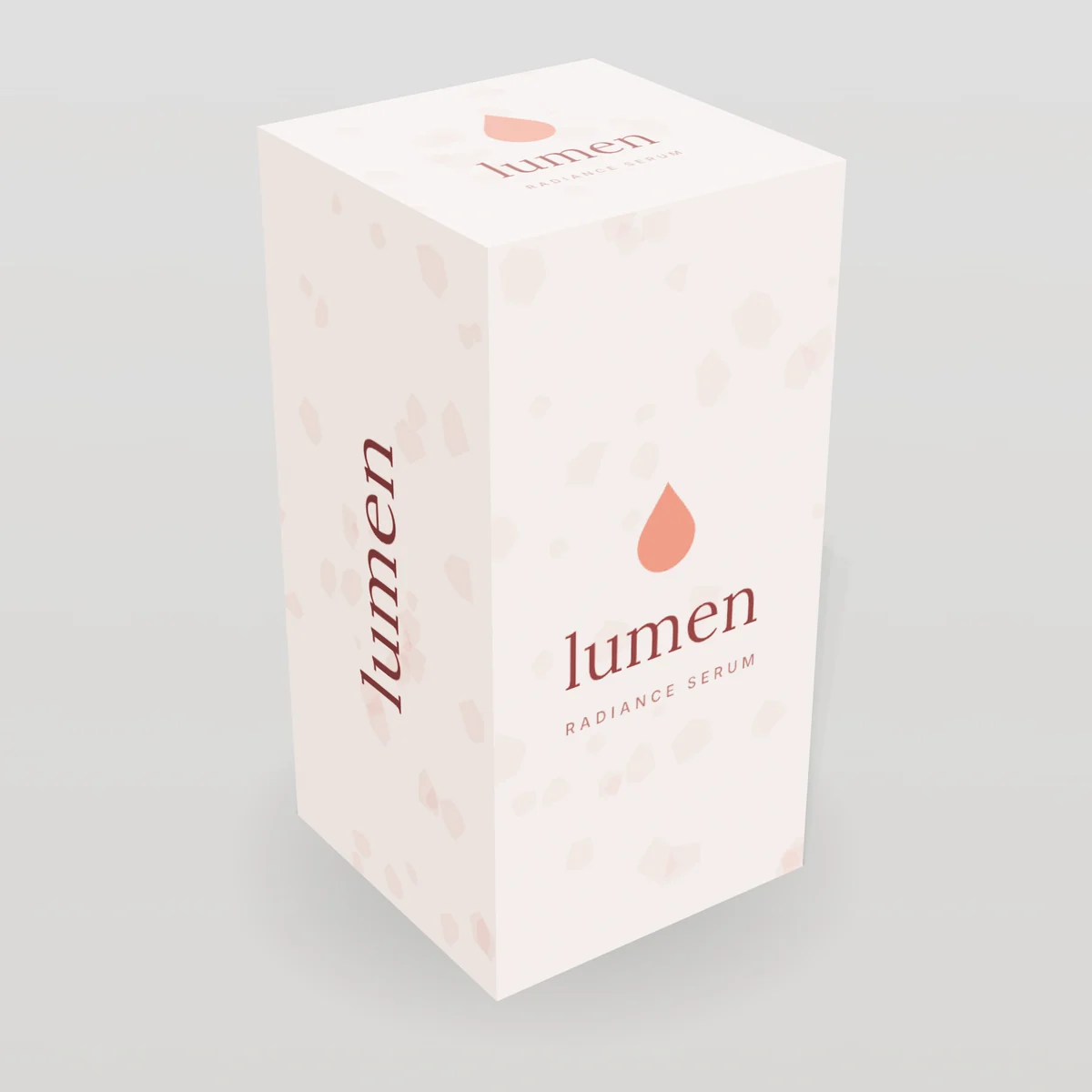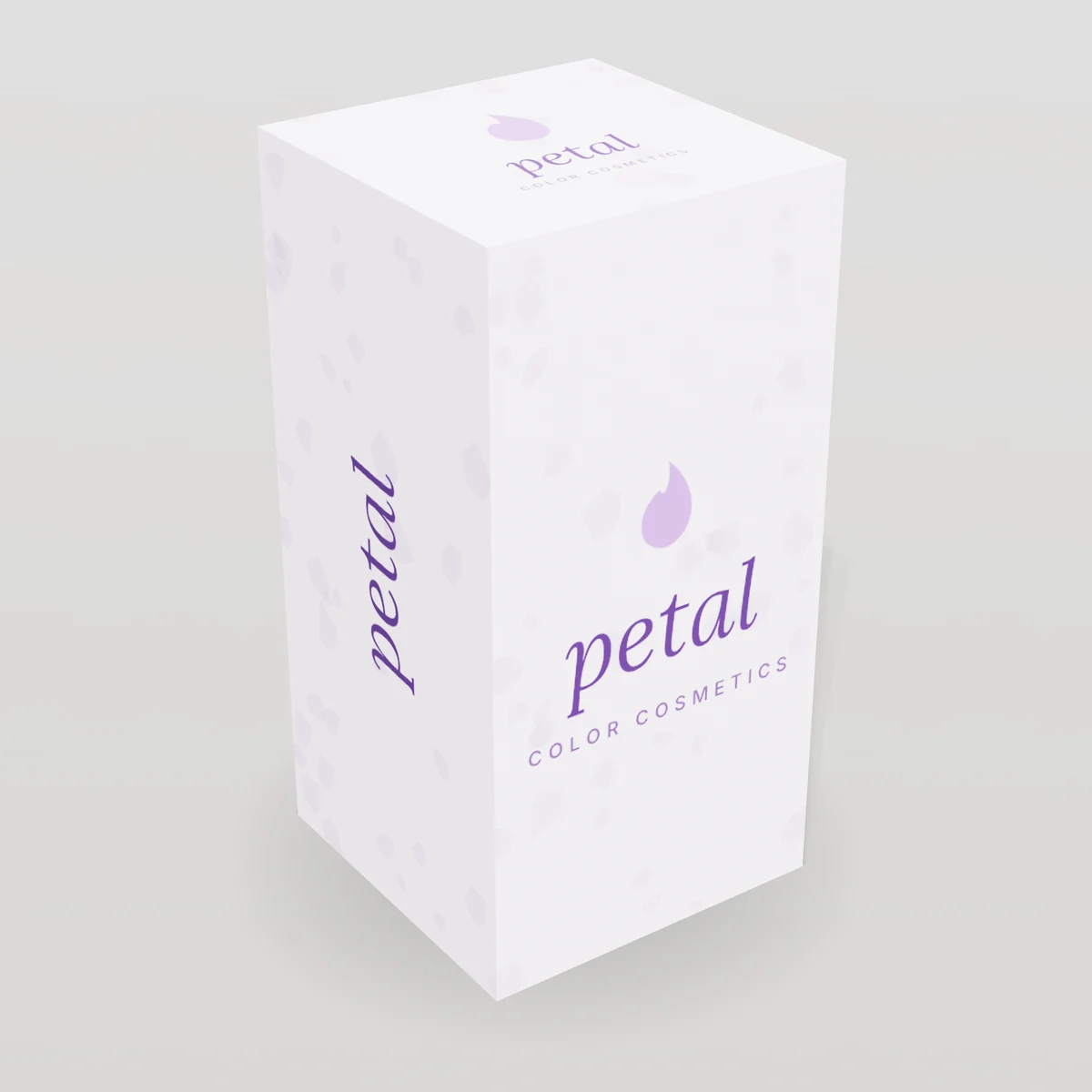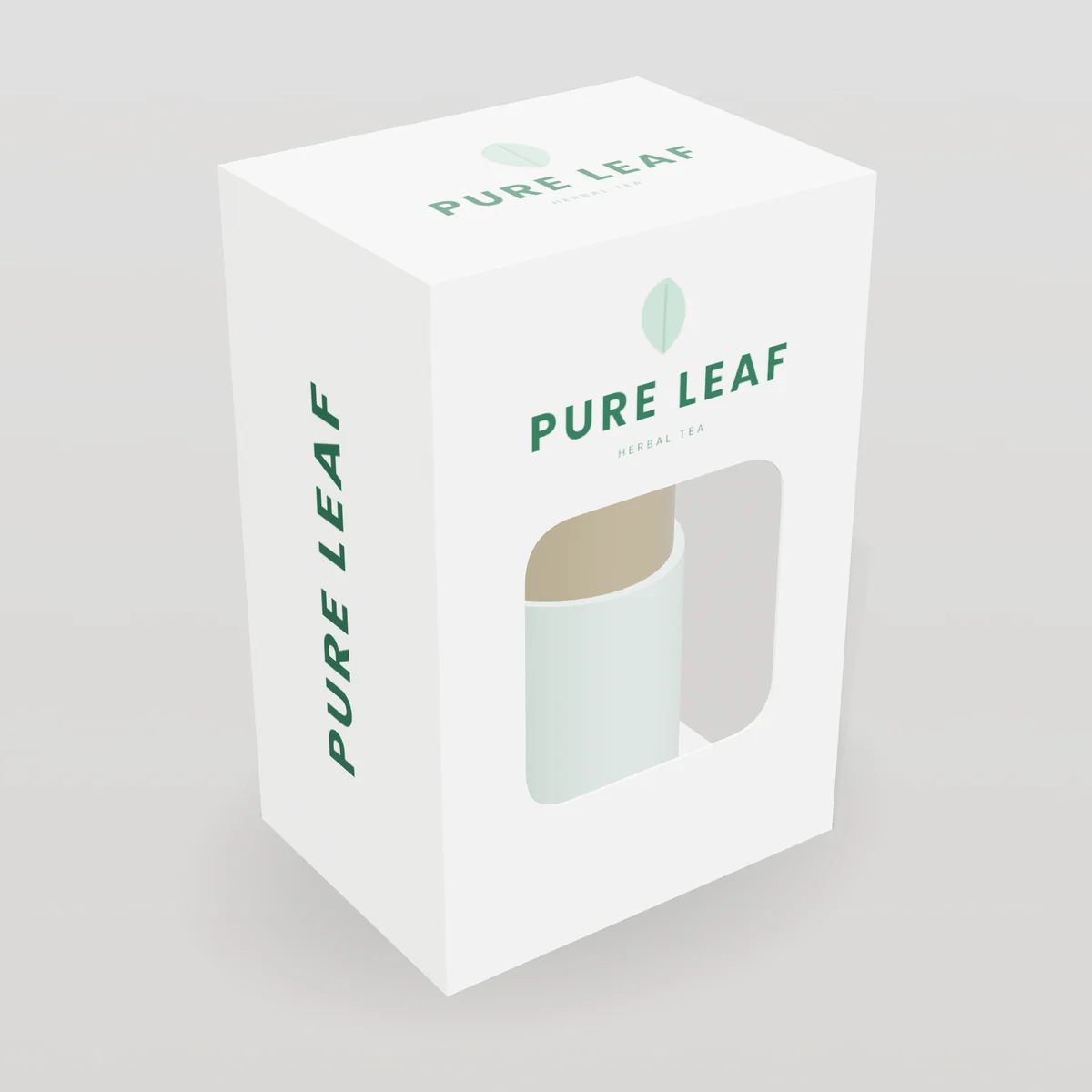
Quick answer
Printed paperboard boxes for retail shelves, gift sets and everyday products. Estimated prices start around $0.27 per unit at 10,000 units and $1.09 at 250 units for a 4×4×4" box. Typical turnaround is 10–14 business days after proof approval.
Product Boxes: specifications
| Styles | Tuck end, auto-lock bottom, sleeve, window, hanger |
|---|---|
| Board | 14–24pt SBS, kraft CUK, recycled; E/F-flute for heavier products |
| CMYK + Pantone offset or digital | |
| Finishes | Coatings, lamination, spot UV, foil, embossing, window |
| Minimum order | 250 units |
| Turnaround | 10–14 business days after proof |
Product Boxes: price breaks
How the estimated unit price of a 4×4×4" product box in SBS white paperboard (18pt) changes with quantity. Setup costs are spread over more boxes as the run gets longer, so the per-box price drops sharply in the first few tiers.
| Quantity | Est. unit price | Est. total | Saving vs. first tier |
|---|---|---|---|
| 250 | $1.09 | $272 | — |
| 500 | $0.70 | $349 | −36% |
| 1,000 | $0.49 | $492 | −55% |
| 2,500 | $0.36 | $892 | −67% |
| 5,000 | $0.31 | $1,525 | −72% |
| 10,000 | $0.27 | $2,741 | −75% |
Estimates from our published pricing model, full-color print, no finishes, delivered to the contiguous US. Your written quote confirms the exact price. Get an exact quote →
Popular sizes for product boxes
Sizes are inside dimensions (length × width × height) in inches. Any custom size is available at no extra cost; these are simply the sizes brands order most.
| Size (L×W×H) | Typical use | Est. @ 500 | Est. @ 1,000 | Quote |
|---|---|---|---|---|
| 2 × 2 × 4" | Lip care, jewelry, single sachets, small accessories | $0.53 | $0.34 | Quote |
| 3 × 3 × 3" | Serums, candles, soaps, single small products | $0.59 | $0.39 | Quote |
| 4 × 4 × 4" | Gift sets, apparel accessories, small electronics | $0.70 | $0.49 | Quote |
| 5 × 3 × 7" | Gift sets, apparel accessories, small electronics | $0.72 | $0.51 | Quote |
| 6 × 4 × 2" | Serums, candles, soaps, single small products | $0.71 | $0.50 | Quote |
| 8 × 6 × 3" | Gift sets, apparel accessories, small electronics | $0.99 | $0.76 | Quote |
Material options and how they affect price
Estimated unit price at 1,000 units for a 4×4×4" product box with full-color printing, by material. Material choice changes look, strength and recyclability as well as cost.
| Material | What it’s like | Est. unit price |
|---|---|---|
| SBS white paperboard (18pt) | Bright white, smooth solid bleached sulfate board. Sharpest print and the best base for foil, spot UV and embossing. | $0.49 |
| Kraft paperboard (18pt CUK) | Natural brown unbleached kraft board with long, tough fibers. Looks handmade and eco-minded; best with one or two dark inks. | $0.48 |
| Recycled paperboard (CRB) | Coated recycled board with a white printing face and grey back. The economical, high-recycled-content choice for everyday retail. | $0.46 |
| E-flute corrugated, white | E-flute corrugated (about 1/16 in) with a white liner: crisp print with real cushioning and parcel strength. | $0.57 |
Printing options compared
How the print specification changes the estimated unit price of a 4×4×4" product box in SBS white paperboard (18pt). One- and two-color printing carries a small plate charge that matters less as quantities grow; full-color digital and offset printing have no plate charge in our model.
| Printing | 500 units | 1,000 units | 5,000 units |
|---|---|---|---|
| Plain (no print) | $0.58 | $0.38 | $0.21 |
| 1 color | $0.74 | $0.48 | $0.25 |
| 2 colors | $0.82 | $0.53 | $0.28 |
| Full color outside | $0.70 | $0.49 | $0.31 |
| Full color outside + inside | $0.80 | $0.59 | $0.39 |
What are custom product boxes?
"Product box" is the everyday name for the printed box a product is sold in: the carton on a store shelf, the box inside an e-commerce mailer, the gift box that holds a set. Technically, most product boxes are folding cartons made from paperboard, die-cut and creased so they ship flat and fold into shape in seconds. Heavier products sometimes use thin micro-flute corrugated instead, which looks like paperboard but adds strength.
A good product box does four jobs at once. It protects the product from scuffs and minor knocks. It informs, carrying the product name, contents, instructions, barcodes and required labeling. It sells, standing out on a shelf or in a photo. And it represents your brand every time someone sees it on a counter or in a cupboard.
This page covers product boxes as a category: the structures, boards, print and finishes that work for retail and DTC products. If you already know your style, jump straight to tuck end boxes, auto-lock bottom boxes, window boxes or sleeve boxes.
Product box structures
The structure is the folding pattern of the box. It determines how the box opens, how fast it packs, how much weight it holds and how much board it uses.
| Structure | How it closes | Best for | Packing speed |
|---|---|---|---|
| Reverse tuck end (RTE) | Tuck flaps at top and bottom, from opposite sides | Cosmetics, supplements, lightweight goods | Fast |
| Straight tuck end (STE) | Both tucks from the same side for a clean front | Premium cartons with a window or large front panel | Fast |
| Tuck top, auto-lock bottom | Tuck lid; pre-glued crash-lock base pops into place | Jars, bottles, heavier products | Very fast |
| Seal end | Glued flaps at both ends | High-volume food and household goods on machines | Machine packed |
| Sleeve and tray | Tray slides out of a printed sleeve | Gift sets, chocolate, premium kits | Moderate |
| Hanger / header card | Tuck box with a die-cut hang tab | Peg-hook retail displays | Fast |
| Window box | Any of the above with a die-cut window | Products that sell on looks | Fast |
If your product weighs more than about a pound, or is a glass jar or bottle, an auto-lock bottom is usually worth the small extra cost because the bottom will not pop open under weight.
Paperboard grades for product boxes
Paperboard is specified by caliper (thickness) in points, where 1 point (pt) = 0.001 inch. Most product boxes use 14pt to 24pt board.
| Board | Look | Typical caliper | Best for |
|---|---|---|---|
| SBS (solid bleached sulfate) | Bright white, smooth | 14–24pt | Cosmetics, pharma, premium retail, vivid color |
| CUK / kraft paperboard | Natural brown | 16–24pt | Natural, organic and eco-minded brands |
| CRB (coated recycled board) | Grey back, white printed face | 16–24pt | Everyday retail, food, cost-sensitive runs |
| E-flute / F-flute micro-corrugated | Corrugated with a printed liner | 1/16 in or less | Heavier products, e-commerce-ready retail boxes |
SBS gives the best print and takes every finish beautifully; it is the default for premium product boxes. Kraft brings a handmade, natural feel and looks best with one or two strong ink colors. Recycled board (CRB) is economical and widely recyclable, with a slightly less bright white. Learn more in our SBS paperboard, kraft paperboard and recycled paperboard guides.
Choosing the caliper
- 14–16pt: small, light items such as lip balm, sachets, single sachets and tea.
- 18pt: the all-rounder for most cosmetics, supplements and small goods.
- 20–24pt: larger boxes, heavier products, or when you want a sturdier, premium feel.
- Micro-flute: anything that needs real crush protection or ships direct to consumers without an outer box.
Printing product boxes
Product boxes are printed before they are cut and folded, so the whole flat sheet is a canvas.
- Offset (lithographic) printing is the standard for paperboard cartons at volume. It prints CMYK plus Pantone spot colors with very fine detail and the most consistent color. Plates add setup cost, so offset is most economical from about 1,000 units up. See offset printing.
- Digital printing needs no plates, so it suits short runs, test launches, seasonal variants and multiple SKUs. Quality is excellent on SBS. See digital printing.
- Inside printing adds a printed message or pattern inside the box. It is especially effective on tuck lids and sleeves.
Color and contrast
If your brand color is critical, specify a Pantone number. On SBS, CMYK simulations of most Pantone colors are close; for exact matches on large runs, offset can print a true spot color. On kraft, colors darken and warm up; white ink underneath (available on some presses) can restore brightness for a premium look.
Rule of thumb: On a product box, the front panel should communicate three things in under three seconds: what it is, who makes it, and why it is different. Everything else goes on the side and back panels.
Finishes and embellishments
Finishes are where product boxes earn their price. Choose one hero finish, and use it where the eye lands first.
- Aqueous coating: a clear water-based protective coat, usually included.
- Matte or gloss lamination: a film that adds scuff resistance and depth of color.
- Soft-touch lamination: a velvety, premium texture; pairs beautifully with spot UV and foil.
- Spot UV: glossy highlights on a logo or pattern against a matte background.
- Foil stamping: metallic gold, silver, rose gold, holographic or colored foil.
- Embossing and debossing: raised or recessed logos and textures you can feel.
- Window patching: a die-cut window, optionally covered with clear film.
- Inserts: paperboard dividers or trays that hold bottles and multiple items.
Each finish is explained, with costs and file setup, in our finishes guide and on the finishes & add-ons pages.

Labeling on product boxes
Retail product boxes often carry information that is regulated or required by retailers. Requirements depend on what you sell, so treat this as a starting checklist and confirm details with a regulatory professional:
- Product identity: what the product is, prominently on the main (front) display panel.
- Net quantity: weight, volume or count, typically in the bottom 30% of the front panel for many consumer products under US packaging and labeling rules.
- Responsible party: the name and place of business of the manufacturer, packer or distributor.
- Ingredients or contents: for cosmetics, food and supplements, in the format required for that category.
- Barcode: a UPC (GTIN-12) for most US retailers. Print it in black on white or a light background, at a size scanners can read, and test it.
- Warnings and instructions: usage directions, cautions and any state-specific warnings.
Our US packaging labeling guide explains the common rules for food, cosmetics, supplements and CBD, and where to verify them.
How to size a product box
Product boxes are measured by inside dimensions: Length × Width × Height, where length and width form the opening (the tuck end) and height runs between the top and bottom tucks.
- Measure the product at its widest points, including caps, pumps and labels.
- Add clearance: about 1/16 to 1/8 in for a snug retail fit. Too loose and the product slides; too tight and packing slows down and corners crush.
- Account for inserts, which reduce usable space.
- Check shelf and display limits if a retailer has set maximum facings or shelf depth.
- Order a plain sample if fit is critical, especially for glass bottles and pumps.
Product box pricing
The price table at the top of this page shows estimated unit prices for a 4 × 4 × 4 in box. What moves the price:
- Quantity: offset setup and dies are spread across the run, so unit prices fall sharply up to several thousand units.
- Size: board usage grows with each dimension. Tuck boxes also include tuck and dust flaps in the blank.
- Board: SBS costs a little more than CRB; thicker caliper costs more.
- Print: full-color offset or digital; extra spot colors add plates.
- Finishes: each finish adds per-unit cost; foil and embossing add a one-time die charge.
- Structure: auto-lock bottoms and windows require gluing and extra steps.
Here is a typical supplement-style box, 3 × 3 × 6 in on kraft paperboard, for comparison:
| Quantity | Est. unit price | Est. total | Saving vs. first tier |
|---|---|---|---|
| 250 | $1.01 | $252 | — |
| 500 | $0.62 | $312 | −39% |
| 1,000 | $0.42 | $424 | −58% |
| 2,500 | $0.30 | $738 | −70% |
| 5,000 | $0.25 | $1,233 | −75% |
| 10,000 | $0.22 | $2,185 | −78% |
Estimates from our published pricing model, full-color print, no finishes, delivered to the contiguous US. Your written quote confirms the exact price. Get an exact quote →
Smart ways to save
- Group SKUs on one sheet. Several products of similar size can be printed together (ganged), spreading setup costs.
- Keep one structure across your line and change only the artwork.
- Use a single premium finish in a small area rather than full coverage.
- Choose CRB for cost-sensitive products where a bright white is not essential.
- Order more of fewer sizes. Fewer, larger runs beat many tiny ones.
Designing product box artwork
Design a product box as a 3D object, not a flat poster. Customers see one face at a time, rotate it in their hands, and read different information at different moments.
- Front panel: brand, product name, the one benefit that matters, and the net quantity.
- Side panels: variants, key claims, icons (cruelty-free, recyclable), and a short story.
- Back panel: directions, ingredients or contents, warnings, barcode, company details.
- Top and bottom: often the first thing seen on a shelf or in a drawer. A repeat logo here pays off.
Work on the exact dieline for your size, keep text 1/8 in inside folds and cut lines, extend backgrounds 1/8 in into the bleed, and keep body text at 6 pt or larger. Our artwork & dieline guide has a full checklist, and the free Dieline Generator creates templates for tuck end and auto-lock boxes.
Product boxes by industry
- Cosmetics and skincare: SBS, soft-touch and foil, inserts for bottles. See cosmetic boxes and skincare boxes.
- Supplements: auto-lock bottoms around bottles, room for the Supplement Facts panel. See supplement boxes.
- Candles: kraft or SBS tuck boxes with an insert around the glass. See candle boxes.
- Food and confectionery: food-safe coatings, windows, sleeves. See food boxes.
- Electronics: sturdy SBS or micro-flute with a fitted insert. See electronics boxes.
- Retail and gifts: window and hanger boxes for peg and shelf displays. See retail packaging.
Sustainability
Paperboard product boxes are lightweight, made from renewable fiber and widely recyclable. To make yours lower impact, right-size the box, choose recycled-content board where print quality allows, prefer paper inserts to plastic, and keep laminations and foils to small areas. Recyclability claims should follow the FTC Green Guides; our sustainability page explains our approach.
Product boxes compared
| Compared with | Choose a product box when… | Choose the alternative when… |
|---|---|---|
| Mailer box | The product sits on a shelf or inside a shipper | The box itself ships to the customer |
| Rigid box | You need an efficient retail carton | The box is part of a luxury gift experience |
| Stand-up pouch | Products are solid, boxed goods | You sell loose food, coffee or powders |
| Display box | Each unit has its own box | Many small units sit in one counter display |
Ordering checklist
- Product dimensions and weight, and inside box size
- Structure (tuck end, auto-lock, sleeve, window, hanger)
- Board and caliper (for example 18pt SBS)
- Print: full color, Pantone references, inside print
- Finishes: lamination, spot UV, foil, embossing, window
- Quantities, number of SKUs and artwork versions
- Labeling requirements and barcode
- Delivery ZIP code and target date
Common product box mistakes
- Forgetting the cap or pump when measuring bottles.
- Too little contrast between text and background on small panels.
- Barcodes in brand colors that scanners cannot read. Use black on white.
- Too many finishes competing for attention.
- Tuck boxes for heavy jars. Use an auto-lock bottom instead.
- Skipping a physical fit test for critical products.
- Designing on a generic template instead of the dieline for your exact size and board.
A product box launch checklist
Use this sequence when launching a new product box:
- Collect product samples and measure them with caps, pumps and accessories.
- List required information for your category (ingredients, net contents, warnings, barcode).
- Choose the structure: tuck end, auto-lock, sleeve, window or two-piece.
- Choose board and caliper for product weight and look.
- Request a quote with two or three quantities.
- Get the dieline and design on it.
- Approve the proof carefully (text, barcode, colors, finishes).
- Order a sample if color or fit is critical.
- Plan secondary packaging (shippers, mailers, inserts).
- Schedule reorders based on sales and lead times.
How shoppers read a product box
On the shelf, shoppers scan quickly. Research in packaging design consistently points to a few practical rules:
- Brand and product name first. If shoppers cannot tell what it is in a few seconds, they move on.
- One key benefit on the front, not five.
- Visual cues (color, shape, imagery) that match the category or deliberately break it.
- Consistency across a product line so shoppers recognize your brand block.
- Information hierarchy on the back: what it is, how to use it, what is in it.
Product boxes for marketplaces
On Amazon and other marketplaces, product boxes are photographed for listings and sometimes inspected for packaging requirements:
- Main image: the box should look good in a clean, straight-on photo.
- Barcode labels: some programs require specific barcode labels; leave room.
- Packaging requirements: fulfillment programs have rules for preparing products; check current requirements.
- Damage: cartons ship inside outer boxes; corners must be protected.
Worked example: a skincare duo
A brand sells a cleanser and moisturizer as a set.
- Structure: a sleeve box with a paperboard tray and two-cavity insert.
- Board: 18pt SBS.
- Print: CMYK with a Pantone brand color; inside print on the tray.
- Finish: soft-touch with spot UV logo.
- Information: ingredients for both products on the sleeve back.
Product boxes and brand architecture
As a brand grows from one product to many, packaging needs a system so the shelf reads as one family:
- Master brand zone: the logo always sits in the same place and size on every box.
- Product name zone: a consistent typeface and position for product names.
- Variant color: each flavor, scent or strength gets its own color, used on the same panels.
- Information grid: back panels share one layout so customers find ingredients and directions in the same place.
- Shared structure: a few standard carton sizes for the whole line.
A simple system makes new products faster to launch: designers drop new names and colors into an approved template, and the dieline already exists.
Product boxes for subscription and e-commerce
Product boxes are retail cartons, but many DTC brands use them inside mailers to add a second reveal and protect individual items:
- The mailer carries the shipping label and protects the order.
- The product box presents the item as a gift and keeps it clean.
- Inserts hold several cartons neatly in the mailer.
This approach also prepares a brand for retail, because the cartons are already shelf-ready.
Storage and shelf life of printed cartons
Printed paperboard cartons keep well for a long time when stored flat, dry, out of direct sunlight and away from heat. Practical tips:
- Store cartons in their shipping cases until needed.
- Keep humidity moderate to avoid curling.
- Use older stock first.
- Reorder before stock runs low rather than ordering years of supply at once; designs and regulations change.
How product boxes influence the buying decision
A product box works hardest in the few seconds when a shopper decides whether to pick something up. On a crowded shelf, the box is the product's only salesperson: it has to be noticed, understood and trusted almost instantly. Three things drive that moment. The first is recognition: a consistent brand color and logo position let returning customers find you without reading. The second is clarity: a clear product name and one strong benefit tell new customers what they are looking at. The third is quality signals: crisp print, clean folds, a well-chosen finish and a box that fits its contents snugly all suggest that the product inside is made with the same care.
Online, the box plays a different role. Customers first see it in product photos and then hold it at home, so the inside, the opening and the way the product sits matter more than shelf impact. Many brands therefore design two layers: a strong front panel for the shelf and the listing photo, and a considered interior and insert for the unboxing.
Product boxes in one paragraph
Custom product boxes are printed paperboard cartons that protect, identify and sell a product on the shelf, in a listing photo and in the customer's hands. Choose the structure by weight (tuck end for light items, auto-lock for heavier ones), the board by the look you want (SBS, kraft or recycled), size the box snugly around the packed product, plan required information before the design, and add one premium finish. Ship cartons in corrugated outers, and build a simple design system so every new product joins a consistent family.
Related guides
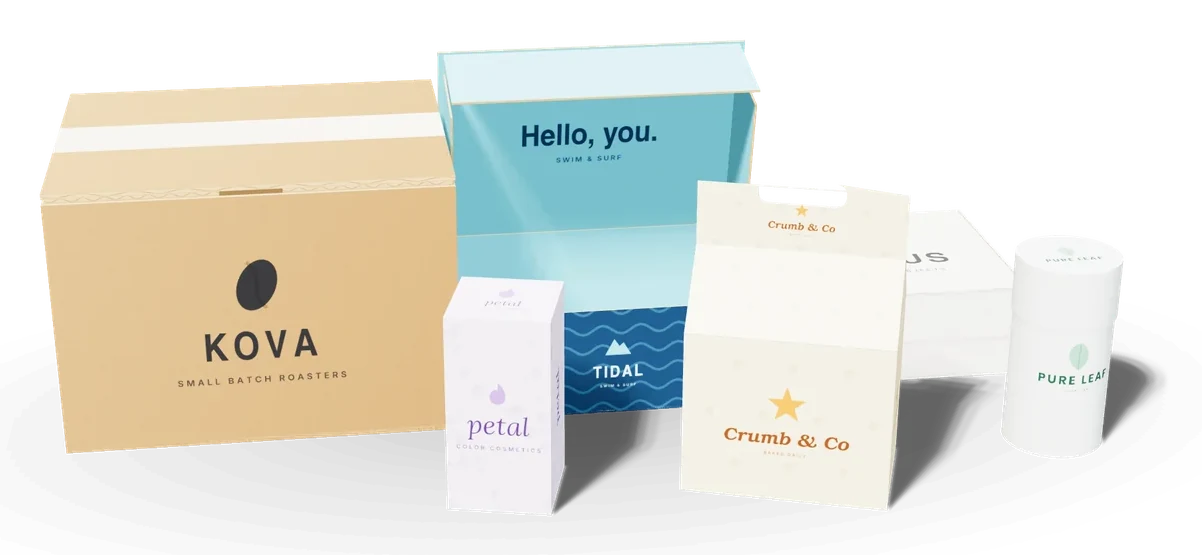 GuideBox styles explainedA practical comparison of every common box style: mailer, RSC shipper, tuck end, auto-lock, rigid, magnetic, sleeve, pillow, gable, display, window and tube.
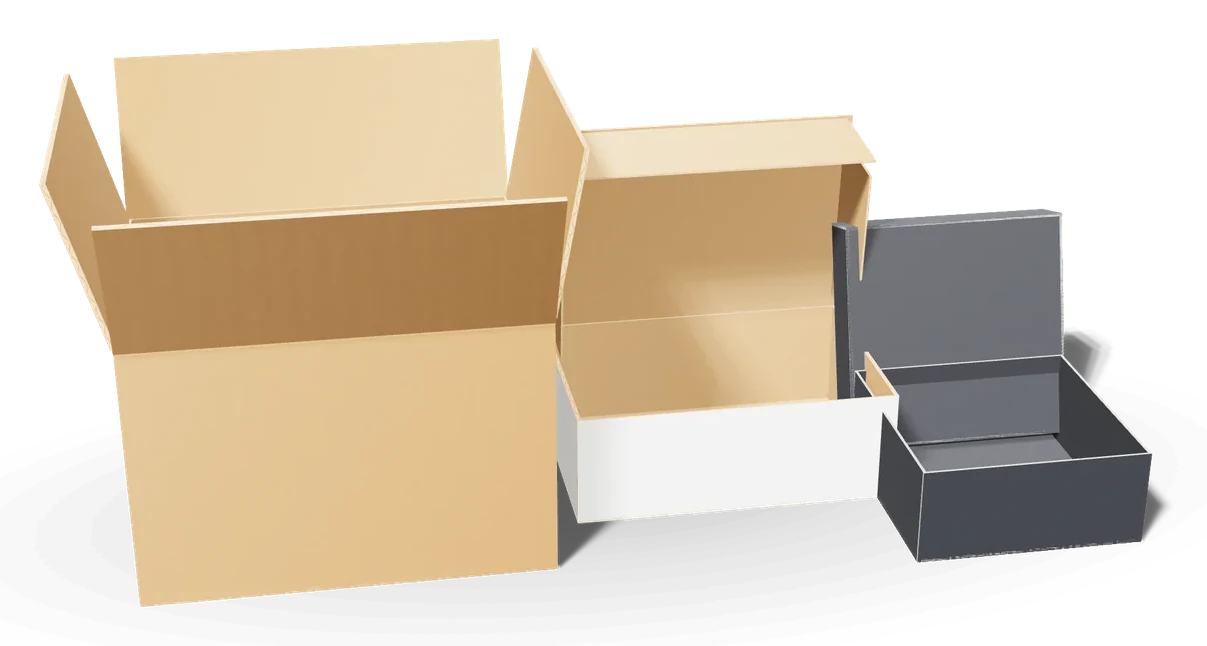 GuidePackaging materials & board gradesUnderstand corrugated flutes and ECT, paperboard caliper (pt), SBS vs kraft vs recycled board, and rigid greyboard, so you can specify packaging like a pro.
 GuideFinishes & embellishmentsHow foil stamping, embossing, debossing, spot UV, soft-touch, windows and inserts work, what they cost, and how to combine them without overspending.
 GuideLabeling & compliance (US)What US packaging typically must show for food, cosmetics, dietary supplements and hemp/CBD products: net quantity, ingredients, food contact, Prop 65 and more.
What finishes and add-ons cost
Estimated extra cost per unit at 1,000 units when you add one finish to a 4×4×4" product box (base estimate $0.49). One-time tooling such as foil and embossing dies is already spread across the run in the per-unit figure and listed separately for reference.
| Finish | What it does | Adds per unit | One-time setup |
|---|---|---|---|
| Matte lamination | A thin film with a smooth, low-glare finish that protects print from scuffs. | +$0.03 | — |
| Soft-touch | A velvety, premium coating that invites customers to hold the box. | +$0.06 | — |
| Spot UV | Clear glossy varnish on selected areas for a sleek contrast against matte. | +$0.13 | $80.00 |
| Foil stamping | Gold, silver, rose gold or holographic foil for logos and accents. | +$0.21 | $120 |
| Embossing / debossing | Raised or recessed logo detail you can feel with your fingertips. | +$0.19 | $120 |
| Window | A die-cut window with clear film so the product sells itself. | +$0.14 | $60.00 |
| Custom insert | Paperboard, corrugated or foam inserts that hold products in place. | +$0.23 | $80.00 |
How product boxes compare with similar styles
Estimated unit prices at 1,000 units for each style at its most popular size, full-color print, delivered within the contiguous US, so you can weigh product boxes against the alternatives customers often consider.
| Style | Typical board | Minimum | 1,000 units | Ships | Best for |
|---|---|---|---|---|---|
| Product Boxes4 × 4 × 4" | SBS white paperboard (18pt) | 250 units | $0.49 | Flat | Printed paperboard boxes for retail shelves, gift sets and everyday products. |
| Tuck End Boxes4 × 2 × 6" | SBS white paperboard (18pt) | 250 units | $0.40 | Flat | Straight and reverse tuck end cartons that open and reclose cleanly. Ideal for lightweight retail products. |
| Auto-Lock Bottom Boxes5 × 3 × 7" | SBS white paperboard (18pt) | 250 units | $0.55 | Flat | Crash-lock bottom cartons that pop open in one motion and carry heavier products safely. |
| Sleeve Boxes6 × 4 × 2" | SBS white paperboard (18pt) | 250 units | $0.67 | Flat | A printed sleeve over a sliding tray. Interactive, premium and easy to brand on two surfaces. |
| Window Boxes5 × 3 × 5" | SBS white paperboard (18pt) | 250 units | $0.63 | Flat | Paperboard boxes with a die-cut window and clear film so shoppers see the product. |
| Rigid Boxes8 × 6 × 3" | Rigid greyboard + printed wrap | 100 units | $2.89 | Assembled | Luxury setup boxes made from thick greyboard wrapped in printed or specialty paper. |
Learn about these materials
- SBS white paperboard (18pt)
- Kraft paperboard (18pt CUK)
- Recycled paperboard (CRB)
- E-flute corrugated, white
How to order product boxes
- 1Request a quote
Tell us the style, size, quantity and artwork you have. Use the form or the live estimator.
- 2Free design & dieline
We send a dieline for your exact size, check your artwork and help with layout at no charge.
- 3Approve your proof
Review a digital 3D proof (and an optional physical sample) before anything is printed.
- 4Production & QC
Your boxes are printed, finished, die-cut and inspected against the approved proof.
- 5Delivered to your door
Shipped flat-packed with tracking to any address in the contiguous US.
Key terms on this page
- Carton
- A box made from paperboard, usually a folding carton. In shipping, "carton" can also mean a corrugated case.
- Paperboard
- Thick paper (usually 0.010 inch or more) used for folding cartons, such as SBS, kraft and recycled board.
- Micro-flute
- Very thin corrugated board (E, F or N flute) that combines paperboard-like print quality with extra strength.
- Auto-lock bottom
- A pre-glued carton base, also called a crash-lock bottom, that locks into place automatically when the flattened box is opened. Stronger and faster to pack than a tuck bottom.
- Sleeve
- An open-ended band or tube that slides over a tray or box, often printed to brand plain packaging.
- SBS (solid bleached sulfate)
- Premium paperboard made from bleached virgin fiber, bright white throughout, with the best print and finish quality.
- Board
- A general term for thick paper materials used in packaging, including paperboard, corrugated board and greyboard.
- Reverse tuck end (RTE)
- A carton whose top and bottom tucks close from opposite sides. The most economical tuck style.
- Straight tuck end (STE)
- A carton whose top and bottom tucks close from the same side, leaving the front panel uninterrupted.
- Panel
- A face of a box, such as the front, back, side, top or bottom panel.
- Lid
- The top part of a box, hinged or separate.
- Tray
- An open-topped box base, often used with a sleeve or lid.
- Header card
- A printed card at the top of a hanging package carrying the brand and hang hole.
- Hang tab
- An extension of a carton with a hole so it can hang on a retail peg.
- Caliper
- The thickness of paper or board. Paperboard caliper is usually given in points, where 1 point equals 0.001 inch.
- Point (pt)
- The unit of paperboard thickness: 1 point equals 0.001 inch. 18pt board is 0.018 inch thick.
- CUK
- Coated unbleached kraft paperboard: a strong brown board with a white clay-coated printing surface.
- Kraft
- Paper or board made from unbleached wood pulp, naturally brown and strong.
- Kraft paperboard
- Unbleached paperboard with a natural brown surface, used for eco-minded and artisan packaging.
- Coated recycled board (CRB)
- Paperboard made from recycled fiber with a white clay-coated printing face and a grey back. Economical and widely used for food and household cartons.
- E-flute
- A thin corrugated flute about 1/16 inch thick. It prints sharply and folds crisply, making it the standard for mailer boxes.
- F-flute
- A very thin corrugated flute (micro-flute) about 1/32 inch thick, used for premium retail boxes needing extra strength.
- Liner
- The flat paper faces of corrugated board. Can be kraft (brown) or bleached (white).
- Finish
- Any treatment applied after printing to change appearance or protect the surface, such as coatings, laminations, foil, embossing or spot UV.
- CMYK
- The four process ink colors (cyan, magenta, yellow and key/black) combined in small dots to reproduce full-color images in print.
- Pantone (PMS)
- The Pantone Matching System, a standardized color reference used to specify exact spot colors.
- Setup cost
- One-time costs to prepare a job, such as plates, dies, make-ready and proofing, spread across the order quantity.
- Offset printing
- Lithographic printing that transfers ink from metal plates to a rubber blanket and then to the sheet. Sharp detail and consistent color for larger runs.
More definitions in our packaging glossary.
Customer reviews
Reviews come only from verified customers. Ordered product boxes from us? Share your experience.
Discussed on Quora & X
Product Boxes FAQ
What is the minimum order for custom product boxes?
Our minimum for printed paperboard product boxes is 250 units. For very short runs, digital printing keeps setup costs low.
What is the best material for product boxes?
For most brands, 18pt SBS paperboard is the best balance of print quality, stiffness and cost. Choose kraft for a natural look, recycled CRB for economy, or micro-flute corrugated for heavy products.
What is the difference between a tuck end box and an auto-lock bottom box?
A tuck end box closes with tuck flaps at both ends. An auto-lock bottom box has a pre-glued crash-lock base that pops into place and holds more weight, making it better for jars, bottles and heavier products.
Can I print different designs in one order?
Yes. With digital printing you can print several designs (SKUs or flavors) in the same run. With offset, similar-sized designs can often be ganged on one sheet to save setup costs.
Do you add barcodes to product boxes?
We print the barcode you supply. You need to obtain your own GS1-registered UPC numbers; we can help place and size the barcode correctly.
How long does it take to make product boxes?
Typical production is 10–14 business days after proof approval, plus shipping. Rush options are available for some specifications.
Can product boxes have a window?
Yes. Any product box can have a die-cut window, open or covered with clear film. See our window boxes page.
Are paperboard boxes recyclable?
Paperboard boxes are widely accepted in US curbside recycling. Keep plastic windows and laminations small and use paper inserts to make recycling easiest.
Can I get a sample of my product box?
Yes. You can order a plain structural sample to test fit, or a printed pre-production sample. See samples.
Do product boxes need a barcode?
Retailers generally require a GS1 UPC barcode. Direct-to-consumer brands may not need one but often include it for future retail.
What is the most economical product box?
A reverse tuck end carton in recycled or SBS paperboard, printed in CMYK with an aqueous coating, at 1,000 units or more.
Can I order product boxes in several designs at once?
Yes. Several designs in the same size and board can often share setup, especially with digital printing or ganged offset runs.
Do product boxes need inserts?
Light products that fit snugly may not. Bottles, jars and fragile items usually benefit from a simple paperboard insert.