Quick answer
Printed kraft and white shopping bags with rope, twisted or die-cut handles. Typical turnaround is 10–14 business days after proof approval.
What are custom paper bags?
Custom paper shopping bags are printed bags with handles that carry purchases out of your store, pop-up or event. A good bag is a walking advertisement: customers carry it through streets, malls and offices, and many reuse it.

Bag styles
| Style | Description | Best for |
|---|---|---|
| Twisted paper handle | Kraft or white bag with twisted paper handles | Retail, takeaway |
| Flat paper handle | Folded paper strip handles | Food, grocery |
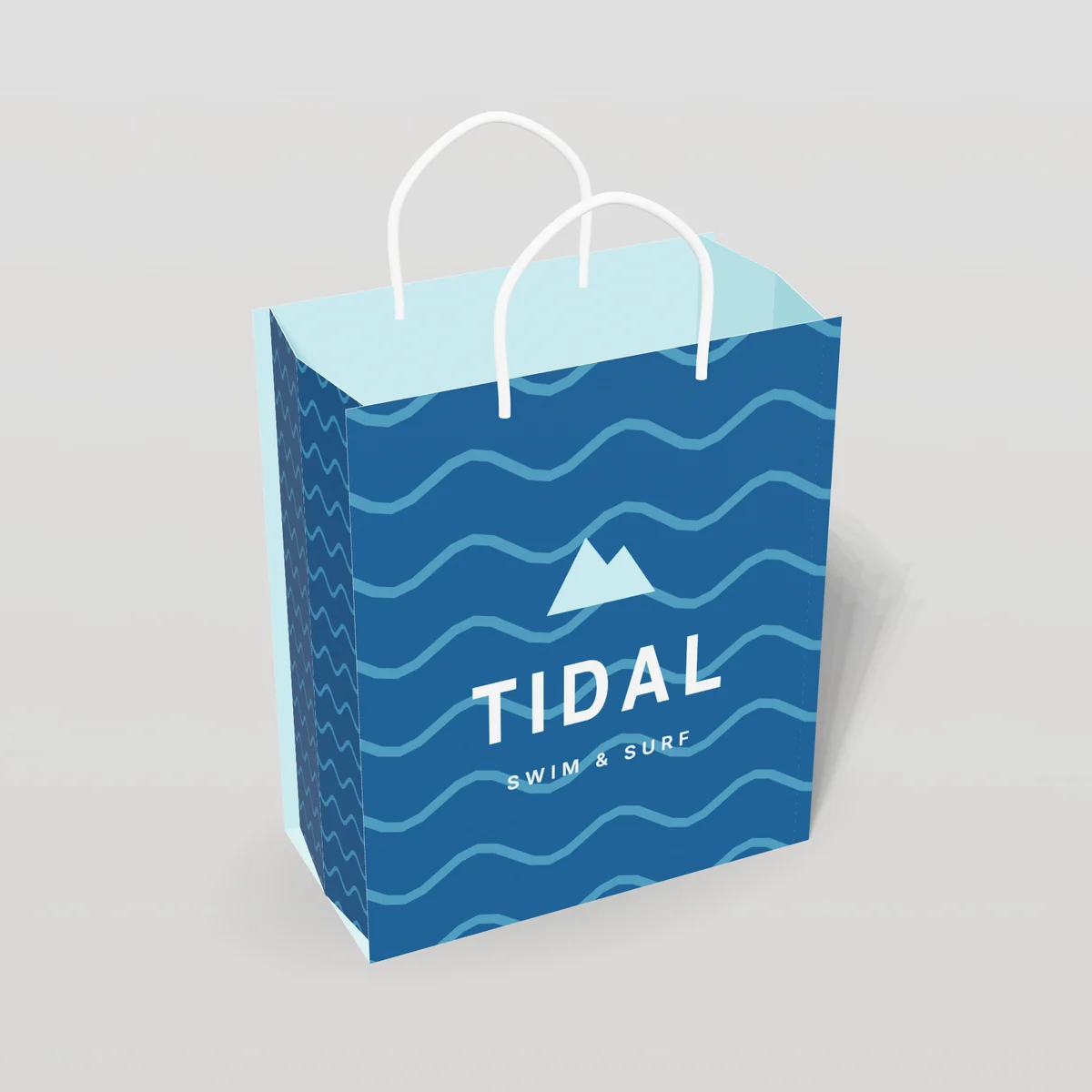
| Rope handle (euro tote) | Heavier paper with rope or ribbon handles | Boutiques, luxury, gifting |
| Die-cut handle | Handle cut into the bag | Lightweight items, events |
| SOS (no handle) | Self-opening square bag | Bakery, takeaway |
SOS (self-opening sack) bags. Flat-bottomed bags without handles that open into a stable, standing shape. They are common for food takeaway, bakery items, groceries and small retail purchases.
Twisted handle bags. Machine-made bags with twisted paper handles glued inside the top. They are economical and widely used in retail and food service.
Flat handle bags. Bags with flat paper strips as handles, glued inside. Common for takeaway and grocery, especially for heavier items.
Rope handle and ribbon handle bags. Often called boutique or luxury bags, these use cotton rope, ribbon or cord handles inserted through reinforced holes. They feel premium and are often reused by customers.
Die-cut handle bags. Handles cut directly into the bag top, often with a reinforcing panel. They look clean and modern and suit lighter items.
Euro tote bags. Laminated or heavyweight paper bags with a reinforced top fold, card base and rope handles. They are premium bags for fashion, gifts and events.
Paper, weights and finishes
- Kraft paper: natural, strong, economical
- White paper: bright print
- Laminated paper (euro totes): premium, durable
- Finishes: matte or gloss lamination, foil, embossing, spot UV
Paper bags are made from kraft paper or bleached white paper in different weights. Heavier paper gives a stronger, stiffer bag that holds its shape and carries more weight. Lighter paper keeps costs and material use down for lighter items. Unbleached kraft is strong and natural-looking, bleached white kraft gives a clean base for bright printing, recycled kraft supports sustainability goals with slightly variable color, and coated or laminated papers give a smooth, premium surface for luxury bags. Ask for the paper weight when comparing quotes; two bags of the same size can feel very different.
Paper bags can be made from naturally colored kraft, bleached white or dyed papers in many colors. Dyed papers can save printing costs when the whole bag is one color. Coated and laminated surfaces add sheen or a soft matte feel. Uncoated papers feel natural and suit eco-focused brands. Matte lamination looks premium but adds a plastic layer; aqueous coatings offer protection with fewer recycling concerns.
Sizing
Choose bag sizes based on your products, not just guesswork. Measure your most common purchases, including boxes or wrapped items, and add a little room for easy packing. Many retailers use two or three sizes: a small bag for accessories or single items, a medium bag for typical purchases and a large bag for bulky items or multiple products. A bag that is too large looks empty and wastes material; a bag that is too small frustrates staff and customers.
| Use | Typical size (W × D × H, in) |
|---|---|
| Jewelry, cosmetics | 5.5 × 3.25 × 8.4 |
| Small retail | 8 × 4.75 × 10.5 |
| Apparel | 10 × 5 × 13 |
| Large apparel, shoes | 16 × 6 × 12 |
Why branded paper bags work
A branded paper bag is a walking advertisement. Customers carry it through streets, malls, offices and events, reuse it for errands and gifts, and photograph it with their purchases. For retail stores, pop-ups, markets, events and gifting, a good bag extends the brand experience beyond the counter at a low cost per impression.
Paper bags also suit the move away from single-use plastic bags: many US states and cities restrict plastic carryout bags, and customers increasingly expect paper.
Handle types
| Handle | Look | Strength | Best for |
|---|---|---|---|
| Twisted paper | Classic, natural | High | Everyday retail, takeaway |
| Flat paper | Simple, economical | Medium–high | Food, takeaway, groceries |
| Rope (cotton or polypropylene) | Premium, boutique | High | Fashion, cosmetics, gifts |
| Ribbon | Luxury | Medium | Jewelry, premium gifts |
| Die-cut handle | Clean, modern, all-paper | Medium | Merchandise, light items |
| No handle (SOS bag) | Grocery style | Medium | Bakery, takeaway |
Bag construction details
- Gusset: the side folds that let the bag expand; wider gussets carry boxes and bulky items.
- Base reinforcement: a cardboard insert in the base keeps premium bags square and strong.
- Top turnover: a folded top edge reinforces handles and gives a finished look.
- Handle attachment: glued patches inside for twisted and flat handles; knotted through reinforced holes for rope handles.
Printing paper bags
| Method | Look | Best for |
|---|---|---|
| Flexo (1–3 colors) | Bold logos on kraft or white | High-volume retail and takeaway |
| Offset (full color, laminated) | Photographic, premium | Luxury boutique bags |
| Hot foil | Metallic logos | Premium, gift |
| Screen print | Opaque inks on colored bags | Small runs, specialty |
Kraft bags with a one-color logo are economical and look natural. Laminated full-color bags look luxurious but are harder to recycle.
Designing a bag customers carry with pride
- Logo placement: centered on both faces is classic; a large logo on one face and a pattern on the other is modern.
- Use the gussets: your website or social handle reads well on the side panels.
- Keep it bold: bags are seen from a distance while carried.
- Match your boxes: consistent colors and patterns create a family.
- Consider the inside: a printed interior color is a premium surprise.
A paper bag is a walking advertisement. Customers carry it down streets, into offices and onto public transport. Designs that work well are simple and bold, with a clear logo visible from a distance. Many brands place the logo on both large faces so it shows regardless of which way the bag is carried. Gussets can carry a website, social handle or short message. The inside of the bag can be printed as a surprise for the customer.
Keep the design timeless if you order large quantities. Seasonal designs are charming but can leave you with stock once the season passes.
Weight capacity and safety
A bag's capacity depends on the paper weight, handle type, construction and reinforcements. Rope handles with reinforced tops generally carry more than twisted paper handles, and twisted paper handles generally carry more than die-cut handles. For heavy products such as bottles, books or homeware, choose a heavier paper, reinforced construction and stronger handles, and test bags with your heaviest typical purchase. Moisture weakens paper. For food or drink that might leak, or for customers walking in wet weather, consider a coated paper, a liner or double bagging.
Paper bags and sustainability
Paper bags are widely accepted in curbside recycling and are made from renewable fibers. Their environmental benefit depends on how they are made and used. Heavier bags use more material but are more likely to be reused. Recycled-content paper reduces virgin fiber use. Unlaminated paper and paper handles keep the bag in one material family. Encourage reuse by designing bags customers want to keep. If you describe your bags as recyclable, compostable or made from recycled content, keep the claim specific and accurate. Some state and local laws regulate carryout bags, including minimum recycled content or fees, so check the rules where you operate.
Bags for different industries
Fashion and boutiques. Rope or ribbon handle bags in heavy paper, often with matte lamination and a foil logo, signal quality and are frequently reused.
Cosmetics and beauty. Small, elegant bags with ribbon handles suit compact purchases. White or pastel stocks with crisp printing match clean beauty branding.
Food takeaway and bakeries. SOS bags and flat-handle bags hold boxes and containers securely. Grease-resistant papers or liners suit pastries and fried foods.
Grocery and specialty food. Strong kraft bags with flat or twisted handles carry heavier loads. Bold one or two-color prints keep costs down.
Wine and spirits. Bottle bags with dividers, reinforced bases and rope handles protect bottles and suit gifting.
Events and trade shows. Branded bags hold samples and brochures and keep your brand visible as attendees walk the floor.
Gifts and corporate packaging. Premium bags with tissue and a tag create a complete gift presentation.
Food-contact considerations
If your bags will touch food directly, such as pastries, sandwiches or produce, the paper, inks and coatings should be suitable for food contact. Grease-resistant papers help with oily foods, and liners or inner sheets add protection. Tell your supplier how the bags will be used so they can recommend suitable materials. For hot or very oily food, test bags with real products to check for staining or weakening.
Inside print and finishing touches
Printing inside a bag is a simple way to surprise customers. A pattern, a thank-you message or a bright color revealed when the bag opens turns an ordinary moment into a memorable one. Finishing touches that work well with bags include tissue paper in brand colors, a sticker seal across the top, a hang tag on the handle and a printed card inside. For premium bags, a card insert at the base helps the bag hold its shape and keeps contents level.
Bags for e-commerce and click-and-collect
Paper bags are not only for in-store purchases. Brands use them inside shipping boxes to recreate the in-store experience at home, for click-and-collect orders and for local deliveries. A folded bag inside a shipping box can feel like a gift and gives customers something useful to reuse. For local delivery, a sturdy bag with a sticker seal can replace a box entirely for lighter orders.
Paper bags versus other carryout options
| Option | Look and feel | Strength | Reuse potential | Considerations |
|---|---|---|---|---|
| Paper bag, twisted handle | Natural, familiar | Good | Moderate | Economical for most retail |
| Paper bag, rope handle | Premium, boutique | Very good | High | Higher cost; often kept |
| Laminated euro tote | Luxury | Very good | High | Lamination complicates recycling |
| Reusable fabric tote | Casual, practical | Very high | Very high | Highest cost; best as a sold or gifted item |
| Plastic carrier bag | Functional | Good | Low to moderate | Restricted in many places |
The right choice depends on your products, your brand and local rules. Many brands use paper bags for everyday purchases and offer a reusable tote as a gift with larger purchases.
Laws and local rules
Carryout bag rules vary across the United States. Some states and cities restrict single-use plastic bags, require minimum recycled content in paper bags, require fees per bag or set labeling requirements. If you operate stores or events in multiple locations, check the rules for each. Your supplier can help you choose bags that meet common recycled-content requirements, but responsibility for compliance usually sits with the business providing the bags.
How paper bags are made
Machine-made bags are produced on equipment that forms paper from a roll into a tube, folds the bottom, glues seams and attaches handles in one continuous process. This is efficient for large quantities and standard sizes. Handmade or semi-handmade bags, often used for luxury rope-handle and laminated bags, are printed on sheets, then cut, folded and glued, with handles inserted by hand. This allows more flexibility in size, materials and finishes, with higher cost and longer lead times. Ask your supplier which method suits your quantity and design.
Ordering paper bags
Before you order, decide on style and handle type, size (width, gusset and height), paper type and weight, print colors and sides, finishes (lamination, foil or inside print), quantity per size and delivery timing. Supply artwork for each face and gusset using the supplier's template. Confirm color expectations on kraft versus white paper. For large orders, ask for a sample to check strength and print quality before production.
Gift bags and seasonal bags
Gift bags are designed to be reused and often carry decorative patterns, ribbons and tissue. For seasonal campaigns, such as holidays, Valentine's Day or brand anniversaries, a limited-edition bag can create excitement and encourage gifting. Plan seasonal bags early and order realistic quantities so stock does not outlast the season. A good approach is a timeless core bag for everyday use and a smaller seasonal run with a special pattern or color.
Wine and bottle bags
Bottle bags are tall and narrow, often with a reinforced base and strong handles to carry the weight of glass. Multi-bottle bags use dividers to keep bottles apart and prevent them from knocking together. Heavy paper, rope handles and card reinforcements are common. Test bottle bags carefully with full bottles before ordering large quantities, because glass is heavy and the consequences of failure are messy.
Checking quality on delivery
When your bags arrive, check a sample from several cartons. Look at print quality and color consistency, handle attachment strength, glue lines and seams, base folds and card reinforcements, and overall dimensions. Load a few bags with heavier products and carry them for a few minutes. Report any issues promptly with photos, carton numbers and quantities so your supplier can investigate.
Designing for reuse
The longer a customer reuses your bag, the more often your brand is seen and the better the bag's environmental profile becomes. Bags that get reused share a few qualities: they are strong enough to carry everyday items, they look good enough to be seen with, and they are the right size for common errands. A heavier paper, comfortable handles, a reinforced base and an attractive, understated design all encourage reuse. Some brands print a small message encouraging customers to reuse the bag, which is a gentle reminder that it was designed to last.
Planning quantities and storage
Paper bags are bulky, even when folded flat, so plan storage before ordering large quantities. Estimate how many bags you use per week for each size, then decide how many weeks of stock you can store. Larger orders lower unit cost but take up space and tie up cash. For seasonal bags, order closer to the season and avoid excess. Store bags off the floor, away from moisture and direct sunlight, and rotate stock so older bags are used first.
Paper bags and the customer journey
A bag is often the last thing a customer receives in a store and the first thing they show to others. It travels with them to cafes, offices, trains and homes. A well-designed bag extends your store's atmosphere beyond its walls and turns customers into ambassadors. For online brands, a folded bag inside a shipping box recreates this moment at home and gives customers something useful to reuse. Think of the bag as a continuation of the experience, not just a way to carry products.
Matching bags with other packaging
Coordinate bags with boxes, tissue, stickers and cards so your packaging feels like one system. Use the same colors, typography and logo placement across items. If your boxes are kraft with black print, a kraft bag with black print, black rope handles and white tissue keeps everything consistent. Ordering bags alongside other printed packaging makes color matching easier and simplifies planning.
Working with us on paper bags
Tell us what you sell, how heavy typical purchases are, the look you want and how many bags you need in each size. We will recommend a bag style, paper, handles and printing method, and provide a proof on the correct template. For premium bags, we can provide a physical sample before production so you can check strength, print and finish.
What paper bags cost
Paper bag pricing depends on size, paper weight, handle type, construction method, print colors, finishes and quantity. Machine-made twisted-handle bags in kraft with one or two colors are the most economical. Rope-handle bags with lamination, foil and card reinforcements cost more because more of the work is done by hand. Larger quantities lower the unit cost for both types, but bags are bulky to store, so balance price breaks against space and how quickly you use them. Seasonal designs cost the same to make as everyday bags but carry the risk of leftover stock, so order them in smaller quantities.
Lead times and planning
Machine-made bags usually take a few weeks from proof approval, plus shipping. Handmade premium bags take longer because of manual finishing steps. Plan bag orders well ahead of busy seasons and store openings, and keep a reorder point so you never run out at the counter. If you are launching a new store or event, order a small quantity early to check size and strength before ordering in volume.
Common paper bag mistakes
Choosing size by guesswork. Measure your real purchases and test before ordering thousands of bags.
Weak handles for heavy products. Bottles and books need reinforced tops, heavier paper and stronger handles.
Fine detail on kraft. Kraft absorbs ink and softens fine lines. Use bold shapes and strong contrast.
Laminating every bag. Lamination looks premium but makes recycling harder. Use it where it really adds value.
Ignoring local rules. Check carryout bag laws in each city and state where you trade.
Paper bag sizes by industry
| Industry | Typical sizes | Notes |
|---|---|---|
| Jewelry and accessories | Small bags, about 5–6 in wide | Ribbon handles feel premium |
| Cosmetics | Small to medium | Coated paper for crisp print |
| Apparel | Medium to large | Rope handles encourage reuse |
| Shoes | Wide gusset to fit boxes | Strong base reinforcement |
| Food takeaway | SOS or flat-handle bags | Grease-resistant options |
| Wine and spirits | Tall bottle bags | Dividers for multi-bottle bags |
| Events and trade shows | Medium to large | Bold branding visible at distance |
Use these as a starting point, then measure your most common purchases.
Bags for pop-up shops and markets
Pop-up shops, markets and events need bags that are easy to transport, quick to pack and memorable. Flat-packed twisted-handle bags in two sizes usually cover most purchases. A bold logo visible from a distance turns every customer into a walking sign around the event. Pack bags flat in a sturdy box for transport, and bring stickers or tissue to make purchases feel special even at a busy stall.
Window and die-cut details on bags
Paper bags can include die-cut windows, decorative cutouts or shaped tops. A window can show products inside, such as baked goods or flowers. Decorative cutouts can echo a logo or pattern. These details add character but can reduce strength, so keep them away from handles and stress points, and test with real loads.
Bags and brand consistency
A paper bag often appears alongside boxes, tissue and stickers. Keeping colors, typography and logo placement consistent across these items makes the brand recognizable. If your boxes use a specific Pantone color, ask for the same reference on your bags, remembering that kraft and white paper show colors differently. Approve samples side by side to check consistency.
Worked example: a boutique's bag refresh
A boutique used thin white bags with a small printed logo that often tore at the handles. It switched to heavier kraft bags with cotton rope handles, a reinforced top fold and a card base. The logo was printed large in one color on both faces, with the boutique's web address on the gussets. Two sizes replaced four, which simplified ordering and storage. Customers began reusing the bags around town, and the boutique noticed them in social posts. The bags cost more per unit, but fewer sizes and less waste from torn bags balanced part of the difference.
Specification checklist for paper bags
- Style and handle type, chosen for product weight and brand.
- Size: width, gusset and height, tested with real purchases.
- Paper type and weight; color (kraft, white, dyed).
- Print method and colors, with Pantone references.
- Finishes: lamination, foil, inside print.
- Reinforcements: top fold, base card.
- Quantity per size and delivery timing.
- Local carryout bag rules where the bags will be used.
Quick decision guide for paper bags
| If you need… | Choose… | Because… |
|---|---|---|
| Economical everyday bags | Machine-made kraft, twisted handles | Low cost, strong, recyclable |
| Boutique and gifting | Rope or ribbon handles, heavy paper | Premium feel and reuse |
| Food takeaway | SOS or flat-handle bags, grease-resistant | Practical and food-friendly |
| Bottles | Bottle bags with reinforced bases | Carry weight safely |
| Events | Bold one-color bags in two sizes | Visible branding at low cost |
| Luxury retail | Laminated euro totes with foil | Maximum premium impression |
How to brief us on paper bags
A clear brief gets you an accurate quote faster and avoids back-and-forth. For paper bags, these details matter most:
- What goes in the bag. The heaviest and bulkiest typical purchase decides paper weight, handles and gusset.
- Where the bags are used. Store counter, events, takeaway or inside shipping boxes each suggest a different style.
- Sizes and quantities. Approximate width, gusset and height for each size, and how many you use per month.
- Look and feel. Kraft or white, matte or laminated, rope or paper handles, and any finishes.
- Artwork. Your logo as a vector file and any patterns or messages for faces and gussets.
- Timing and location. When you need them and where they will be used, so we can check local bag rules.
Send what you have, even if some answers are rough. Our specialists reply within one business day with recommendations, a price estimate and next steps, and every order includes free design help and a 3D proof before anything goes to production.
Paper bags in one paragraph
A branded paper bag carries your brand beyond the store. Choose a style and handle strong enough for your heaviest common purchase, size bags to real products, print bold designs that read from a distance, and design bags customers will want to reuse. Check local carryout bag rules where you trade.
Ordering
Our minimum is 250 pieces. Request pricing above.
 IndustriesApparel BoxesMailers, lid-and-base boxes and poly mailers for clothing, from tees to outerwear.
 IndustriesRetail PackagingShelf-ready cartons, hang-tab boxes and displays built for store buyers and planograms.
 AccessoriesCustom Tissue PaperBranded tissue paper (17gsm) printed with your logo in one or two colors.
 AccessoriesCustom Hang TagsPrinted swing tags for apparel, candles and gifts, with strings, grommets and finishes.
How to order custom paper bags
- 1Request a quote
Tell us the style, size, quantity and artwork you have. Use the form or the live estimator.
- 2Free design & dieline
We send a dieline for your exact size, check your artwork and help with layout at no charge.
- 3Approve your proof
Review a digital 3D proof (and an optional physical sample) before anything is printed.
- 4Production & QC
Your boxes are printed, finished, die-cut and inspected against the approved proof.
- 5Delivered to your door
Shipped flat-packed with tracking to any address in the contiguous US.
Key terms on this page
- Kraft
- Paper or board made from unbleached wood pulp, naturally brown and strong.
- Panel
- A face of a box, such as the front, back, side, top or bottom panel.
- Lamination
- Bonding a thin film (matte, gloss or soft-touch) or paper to board for protection and finish.
- Embossing
- Raising part of the board surface into a relief using matched dies, often combined with foil or ink.
- Spot UV
- A clear, glossy UV-cured varnish applied to selected areas to create contrast with a matte background.
- Gusset
- A folded expansion panel in a bag or pouch that lets it stand up or hold more volume.
- Insert
- A component inside a box that holds products in place, such as die-cut paperboard, corrugated, foam or molded pulp.
- Flexographic printing (flexo)
- A printing method using flexible relief plates and fast-drying inks, common on corrugated boxes, labels and flexible packaging.
- Hot foil
- Traditional foil stamping using a heated die.
- Liner
- The flat paper faces of corrugated board. Can be kraft (brown) or bleached (white).
- Tissue paper
- Thin, light paper used to wrap products inside boxes, often printed with a brand pattern.
- Artwork
- The final graphic files (logos, images, text and colors) placed on a dieline and used to make printing plates or digital print files.
- Carton
- A box made from paperboard, usually a folding carton. In shipping, "carton" can also mean a corrugated case.
- Proof
- A preview of the final package (digital PDF, 3D render or physical sample) that the customer approves before production.
- Finish
- Any treatment applied after printing to change appearance or protect the surface, such as coatings, laminations, foil, embossing or spot UV.
- Point (pt)
- The unit of paperboard thickness: 1 point equals 0.001 inch. 18pt board is 0.018 inch thick.
- Pantone (PMS)
- The Pantone Matching System, a standardized color reference used to specify exact spot colors.
More definitions in our packaging glossary.
Customer reviews
Reviews come only from verified customers. Ordered custom paper bags from us? Share your experience.
Discussed on Quora & X
Custom Paper Bags FAQ
What is the minimum order for custom paper bags?
Our minimum is 250 pieces.
What handles are available?
Twisted paper, flat paper, rope, ribbon and die-cut handles.
Are paper bags recyclable?
Yes, paper bags are widely recyclable. Remove rope or ribbon handles if they are not paper.
What paper weight do I need for a bag?
Lighter kraft (around 80–100 gsm) suits takeaway and light items; heavier paper (120–170 gsm or more) and laminated board suit premium and heavier purchases.
Can paper bags be recycled?
Unlaminated paper bags with paper handles are widely recyclable. Rope or ribbon handles and plastic lamination should be removed or avoided for easy recycling.
What is an SOS bag?
A "self-opening sack": a flat-bottomed paper bag without handles, common for groceries, bakery and takeaway.
Can paper bags be printed on all sides?
Yes. Bags can be printed on both faces, gussets and even inside, depending on the style and printing method.
Are kraft paper bags strong enough for heavy items?
Heavier kraft paper with reinforced tops and bases and strong handles can carry substantial weight. Test with your heaviest typical purchase.
Can paper bags be used for food?
Yes, with paper, inks and coatings suitable for food contact. Grease-resistant papers or liners help with oily foods.
How should I store paper bags?
Store bags flat in a dry place, away from sunlight and moisture, which can weaken paper and fade print.
Are laminated paper bags recyclable?
Lamination adds a plastic layer that can make recycling harder. If recyclability is important, choose uncoated or aqueous-coated papers and paper or cotton handles.
Can paper bags be made in custom sizes?
Yes. Handmade and semi-handmade bags can be produced in custom sizes. Machine-made bags are most economical in standard sizes.
Can you print white ink on kraft bags?
Yes. White ink on kraft is possible with screen printing or heavy flexo coverage and gives a striking, natural look.
Are rope handles recyclable?
Cotton rope is natural fiber but is usually removed before paper recycling. Paper twisted or flat handles keep the whole bag paper-based.
Can paper bags be recycled with cardboard?
Paper bags are widely accepted in paper recycling. Remove rope or ribbon handles where possible.
Can I order paper bags in my brand color?
Yes. Dyed papers or full-coverage printing can match your brand color closely.
How strong are rope handle bags?
Rope handles with reinforced tops and card bases are among the strongest options and are often reused for everyday errands.
Do you offer bags in standard sizes?
Yes. Standard sizes are the most economical, and custom sizes are available when your products need them.