Quick answer
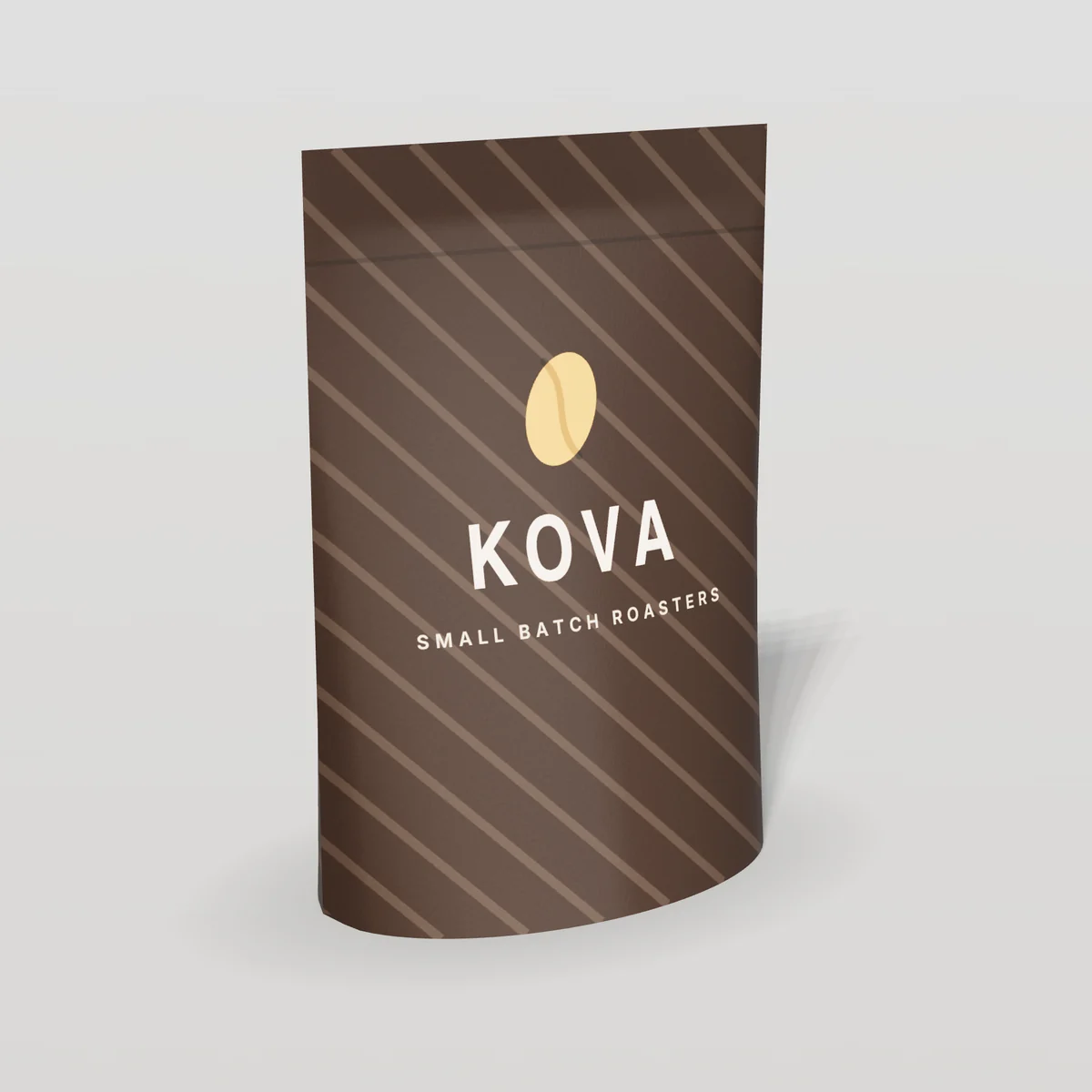
Printed resealable pouches with a gusseted base for coffee, snacks, supplements and bath products. Estimated prices start around $0.22 per unit at 10,000 units and $0.76 at 500 units for a 6×3.5×9" box. Typical turnaround is 10–14 business days after proof approval.
Stand-Up Pouches: specifications
| Construction | Stand-up with bottom gusset; flat-bottom and 3-side-seal on request |
|---|---|
| Films | Matte or gloss PET/PE, metallized barrier, kraft paper/PE, recyclable mono-PE |
| Features | Press-to-close zipper, tear notches, hang hole, degassing valve, clear window |
| Digital up to 10 colors or rotogravure for volume | |
| Food contact | Food-grade films and inks |
| Minimum order | 500 units |
| Turnaround | 12–18 business days after proof |
Stand-Up Pouches: price breaks
How the estimated unit price of a 6×3.5×9" stand-up pouch in Matte laminated film (PET/PE) changes with quantity. Setup costs are spread over more boxes as the run gets longer, so the per-box price drops sharply in the first few tiers.
| Quantity | Est. unit price | Est. total | Saving vs. first tier |
|---|---|---|---|
| 500 | $0.76 | $379 | — |
| 1,000 | $0.49 | $488 | −36% |
| 2,500 | $0.32 | $793 | −58% |
| 5,000 | $0.26 | $1,275 | −66% |
| 10,000 | $0.22 | $2,202 | −71% |
Estimates from our published pricing model, full-color print, no finishes, delivered to the contiguous US. Your written quote confirms the exact price. Get an exact quote →
Popular sizes for stand-up pouches
Sizes are inside dimensions (length × width × height) in inches. Any custom size is available at no extra cost; these are simply the sizes brands order most.
| Size (L×W×H) | Typical use | Est. @ 500 | Est. @ 1,000 | Quote |
|---|---|---|---|---|
| 4 × 2.5 × 6" | Approx. 4–8 oz fill | $0.66 | $0.40 | Quote |
| 5 × 3 × 8" | Approx. 8–16 oz fill | $0.71 | $0.45 | Quote |
| 6 × 3.5 × 9" | Approx. 8–16 oz fill | $0.76 | $0.49 | Quote |
| 7 × 4 × 11" | Approx. 16–32 oz fill | $0.83 | $0.55 | Quote |
| 9 × 4.5 × 13" | Approx. 16–32 oz fill | $0.95 | $0.66 | Quote |
Material options and how they affect price
Estimated unit price at 1,000 units for a 6×3.5×9" stand-up pouch with full-color printing, by material. Material choice changes look, strength and recyclability as well as cost.
| Material | What it’s like | Est. unit price |
|---|---|---|
| Matte laminated film (PET/PE) | Matte laminated barrier film with a soft, modern look and excellent print quality. | $0.49 |
| Gloss laminated film (PET/PE) | Gloss laminated barrier film for vivid, high-shine graphics. | $0.48 |
| Kraft paper / PE pouch | Kraft paper laminated to a food-safe barrier layer for a natural look with product protection. | $0.49 |
| Recyclable mono-PE film | Mono-material PE film designed for store drop-off recycling where accepted. | $0.50 |
Printing options compared
How the print specification changes the estimated unit price of a 6×3.5×9" stand-up pouch in Matte laminated film (PET/PE). One- and two-color printing carries a small plate charge that matters less as quantities grow; full-color digital and offset printing have no plate charge in our model.
| Printing | 500 units | 1,000 units | 5,000 units |
|---|---|---|---|
| Plain (no print) | $0.68 | $0.42 | $0.20 |
| 1 color | $0.83 | $0.50 | $0.23 |
| 2 colors | $0.90 | $0.55 | $0.25 |
| Full color outside | $0.76 | $0.49 | $0.26 |
What is a stand-up pouch?
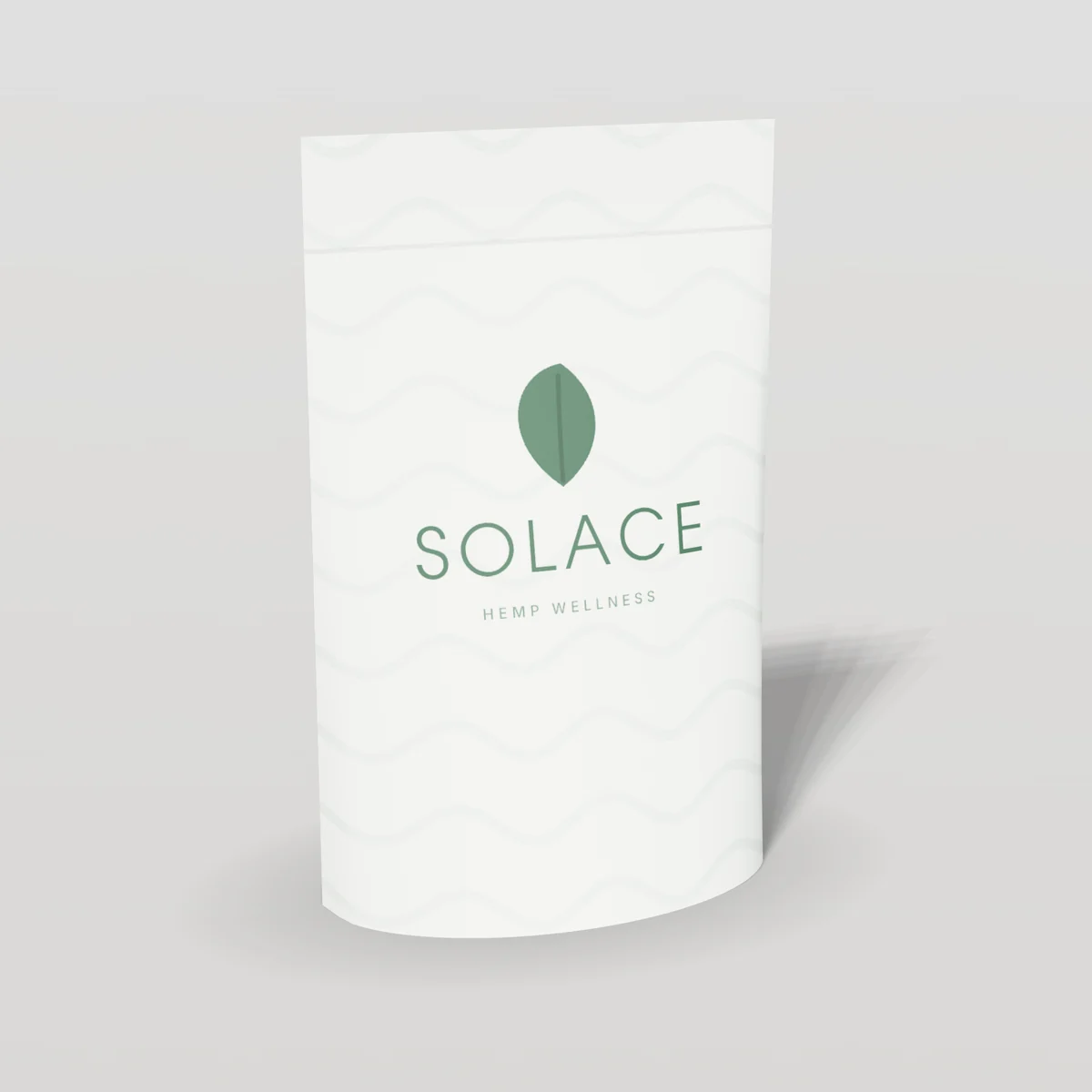
A stand-up pouch (often called a doypack) is a flexible bag with a gusseted bottom that opens into a base so the pouch stands upright on a shelf. It is made from laminated films (and sometimes paper) that create a barrier against moisture, oxygen, light and aroma. Most pouches have a resealable zipper and a tear notch, and many include a hang hole, a degassing valve for coffee, or a clear window.
Stand-up pouches have replaced jars, tins and boxes across food and wellness categories because they are light, protective and easy to brand. Coffee, tea, snacks, granola, candy, pet treats, protein powders, supplements, bath salts, spices and dried fruit are all commonly sold in pouches.
Why choose stand-up pouches
- Shelf presence. They stand upright like a box, with a large front panel.
- Protection. Multi-layer barrier films keep products fresh.
- Light and compact. Lower shipping weight than rigid containers; empty pouches ship flat.
- Convenience. Resealable zippers and tear notches make them easy to use.
- Lower cost than many rigid alternatives at similar quantities.
Pouch features and options
| Feature | What it does | Typical use |
|---|---|---|
| Press-to-close zipper | Reseals the pouch | Snacks, coffee, supplements |
| Tear notch | Easy opening above the zipper | Almost all pouches |
| Degassing valve | Releases CO₂ while keeping air out | Fresh-roasted coffee |
| Clear or shaped window | Shows the product | Snacks, granola, candy |
| Hang hole (round or Euro) | Hangs on retail pegs | Small snacks, samples |
| Rounded corners | Softer look, safer handling | Premium and kids' products |
| Matte, gloss or soft-touch finish | Look and feel | Brand style |
| Spot matte / spot gloss | Contrast effect | Premium designs |
Materials
Pouches are laminates of two to four layers, each doing a job: an outer print layer, a barrier layer and an inner sealant layer.
| Material option | Characteristics | Best for |
|---|---|---|
| Matte laminated film (PET/PE) | Soft matte look, strong print | Most food and wellness products |
| Gloss laminated film | Vivid, shiny graphics | Snacks, candy, pet treats |
| Kraft paper / PE | Natural paper look with a barrier lining | Coffee, tea, granola, eco brands |
| Metallized or foil barrier | High barrier to oxygen and light | Coffee, sensitive supplements |
| Recyclable mono-PE | Single polymer family for store drop-off recycling where accepted | Brands prioritizing recyclability |
Barrier needs depend on your product's sensitivity to moisture, oxygen and light, and on its shelf life. Tell us the product and target shelf life, and we will recommend a structure. For food, all materials in contact with the product must be food-grade and meet FDA requirements; we confirm this for your specification.
Printing pouches
- Digital printing for short runs and multiple SKUs (flavors, sizes) with no plate costs.
- Rotogravure or flexographic printing for large runs at the lowest unit cost, with plates or cylinders per color.
Pouches can be printed edge to edge on the front, back and gusset. Many brands use the back panel for nutrition or supplement facts, ingredients, directions and the barcode, and the gusset for a pattern or social handles.
Tip: Clear windows show the product, but they also show any settling and breakage. They work best for products that look good in bulk (granola, nuts, candy).

Sizing stand-up pouches
Pouches are specified by width × height + gusset (bottom depth). On this site we show them as width × gusset × height for our calculators. The right size depends on volume and density, not just weight: 8 oz of popcorn needs far more space than 8 oz of coffee beans.
Typical starting points:
| Fill (approx.) | Typical size (W × H + gusset) |
|---|---|
| 2–4 oz (snacks, samples) | 4 × 6 + 2.5 in |
| 8 oz (coffee, tea, granola) | 5.5 × 8.5 + 3 in |
| 12 oz | 6 × 9 + 3.5 in |
| 16 oz / 1 lb | 7 × 11.5 + 4 in |
| 2 lb | 9 × 13.5 + 4.5 in |
The best way to confirm size is a fill test with a sample pouch; we can send plain stock pouches for testing.
Pricing stand-up pouches
Pouch prices depend on size, material structure, features (zipper, valve, window), print method and quantity. Our minimum is higher than for boxes because of how flexible packaging is produced. The table at the top of this page shows estimates for a 6 × 3.5 × 9 in pouch. A kraft coffee pouch compares like this:
| Quantity | Est. unit price | Est. total | Saving vs. first tier |
|---|---|---|---|
| 500 | $0.74 | $368 | — |
| 1,000 | $0.47 | $467 | −36% |
| 2,500 | $0.30 | $747 | −59% |
| 5,000 | $0.24 | $1,188 | −68% |
| 10,000 | $0.20 | $2,035 | −73% |
Estimates from our published pricing model, full-color print, no finishes, delivered to the contiguous US. Your written quote confirms the exact price. Get an exact quote →
Save on pouches
- Use one size across flavors and print digitally to vary designs.
- Choose the barrier you need, not the highest available.
- Skip the window if it does not help sell the product.
- Order larger runs of your best sellers.
Designing pouches
- Front: brand, product name, flavor, net weight, one strong claim.
- Back: facts panel, ingredients, allergens, directions, barcode, company details.
- Gusset: pattern or social handle.
- Keep artwork clear of seals (the top, side and bottom seal areas) and the zipper line.
Our labeling guide covers what US food and supplement packaging typically needs.
Pouches by industry
- Coffee: kraft or matte pouches with valves. See coffee & tea boxes.
- Snacks and food: gloss pouches with windows. See food boxes.
- Supplements and protein: high-barrier pouches with scoops. See supplement boxes.
- CBD edibles: pouches with compliance panels. See CBD boxes.
- Pet treats: resealable gloss pouches.
- Bath and body: bath salts and scrubs.
Sustainability
Pouches use much less material by weight than rigid containers, which reduces shipping emissions, but most multi-layer laminates are not curbside recyclable. Options to improve:
- Mono-material PE pouches designed for store drop-off recycling where accepted.
- Right-size the pouch to the fill.
- Make honest claims. Describe recyclability exactly as it applies (for example, "Recycle at store drop-off where accepted"), following the FTC Green Guides.
Ordering checklist
- Product, fill weight and density
- Pouch size (or fill target)
- Material and barrier needs
- Features: zipper, valve, window, hang hole, corners
- Print: number of designs and finish
- Labeling requirements
- Quantity per design, delivery ZIP and target date
How stand-up pouches are made
Stand-up pouches are made from laminated films: several layers bonded together, each with a job.
| Layer | Purpose | Examples |
|---|---|---|
| Outer print layer | Carries the printed design; gives gloss or matte finish | PET, BOPP, kraft paper |
| Barrier layer | Blocks oxygen, moisture, light and aroma | Metallized PET, aluminum foil, EVOH, high-barrier coatings |
| Sealant layer | Heat-seals the pouch; contacts the product | PE (polyethylene), CPP |
The printed outer film is usually reverse-printed (printed on the inside surface) so the ink is protected between layers. Films are laminated, slit and converted on pouch-making machines that fold the bottom gusset, add zippers and seal the sides.
Barrier levels explained
Choosing barrier correctly protects shelf life without overpaying.
| Barrier level | Typical structure | Suitable for |
|---|---|---|
| Low | PET/PE or kraft/PE | Dry goods with short shelf life, non-food items |
| Medium | Metallized PET/PE | Snacks, supplements, dried fruit, pet treats |
| High | PET/aluminum foil/PE | Coffee, powders, products needing long shelf life and light protection |
| Recyclable mono-material | PE/PE with barrier coating | Brands prioritizing store drop-off recyclability |
Your shelf-life target, the product's sensitivity to oxygen and moisture, and how it is filled all affect the right structure. We recommend a structure after you tell us the product.
Pouch features in detail
- Press-to-close zipper: resealable after opening
- Tear notches: easy opening at the top
- One-way degassing valve: lets coffee release CO₂ without letting oxygen in
- Hang hole: round or sombrero for peg display
- Window: clear area to show the product (not available on full foil structures without a clear window)
- Rounded corners: a premium look and safer handling
- Spout: for liquids and purees
- Matte, gloss or soft-touch finishes, and spot matte/gloss effects
Filling and sealing
Stand-up pouches are filled through the open top and then heat-sealed above the zipper. Brands can fill:
- By hand with a tabletop impulse sealer for small runs
- With semi-automatic fillers for powders and granules
- On automated pouch machines at scale, using pre-made pouches
Ask your co-packer or filling line which pouch dimensions, zipper positions and seal widths they need.
Pouch sizing
Pouches are specified by width × height × bottom gusset. A pouch's usable volume is less than its dimensions suggest because of the seal areas and the shape when filled. The best way to size a pouch is to fill sample pouches with your product. As a rough guide for coffee: 12 oz of whole beans often fits a pouch around 6.75 × 10 × 3.5 in, but bean density and roast change this.
Designing pouch artwork
- Front panel: brand, product name and key benefit in the upper half, which stays visible when the pouch slumps.
- Back panel: story, directions, required information, barcode.
- Gusset: visible when the pouch stands; a pattern or brand color.
- Seal areas: keep text away from side and top seals and the zipper line.
- Windows: plan the window position relative to how the product settles.
- Required labeling: food and supplements need space for facts panels and ingredients; see the labeling guide.
Worked example: a specialty coffee roaster
A roaster sells 12 oz whole-bean coffee.
- Structure: high-barrier matte PET/foil/PE with a one-way degassing valve.
- Size: sized from filled samples to sit neatly at about two-thirds full.
- Features: zipper, tear notches, rounded corners.
- Print: digital printing for several origins in one order.
- Labels: roast date on a small label or stamped in a clear area.
See coffee and tea boxes.
Pouches vs. rigid containers
Brands often weigh a stand-up pouch against a jar, tin, bottle or carton. Pouches use far less material by weight, ship flat to the filler, take less space in trucks and warehouses, and offer a large printable surface. Rigid containers feel more premium, stack neatly, protect fragile contents better and are easier to reuse. Many brands combine them: a pouch as a lower-cost refill and a jar or tin as the first purchase.
| Stand-up pouch | Rigid container (jar, tin, carton) | |
|---|---|---|
| Packaging weight | Very low | Higher |
| Inbound freight | Flat, efficient | Bulky (except flat cartons) |
| Shelf presence | Large print area, can slump | Stable, premium |
| Product protection | Excellent barrier options, little crush protection | Good crush protection |
| Reuse | Limited | Often reused |
| Recyclability | Limited unless mono-material | Often better (glass, metal, paper) |
How to choose pouch size from your product
Because pouch capacity depends on product density, sizes are best confirmed with real product:
- Request blank sample pouches in two or three sizes.
- Fill each with the target weight of product.
- Check headspace above the product for the zipper and seal (usually at least about 1 in).
- Stand them up and look at how they sit on a shelf.
- Pick the size that looks full without straining the gusset.
Stand-up pouches in one paragraph
A stand-up pouch is a laminated flexible bag with a bottom gusset that lets it stand on the shelf, ideal for coffee, snacks, supplements and dry goods. Choose barrier by shelf-life needs, add zippers, valves and tear notches as needed, size from filled samples, use digital printing for several designs in one run, and label recyclability honestly.
A buyer's guide to stand-up pouches
Start with the product, not the pouch. The first questions are about what goes inside. Is it dry, oily, powdery or liquid? Does it lose flavor or crispness when exposed to air? Does light change its color? Does it need to breathe, like fresh coffee releasing carbon dioxide? Those answers decide the barrier structure, and the barrier decides most of the pouch's cost and recyclability. A dried fruit snack eaten within a few weeks needs far less protection than a specialty coffee expected to stay fresh for months.
Decide how customers will use it. A product used once (a single bag of chips) does not need a zipper. A product used over weeks (protein powder, coffee, pet treats) benefits from a press-to-close zipper and a clear tear notch above it. A product poured or scooped benefits from a wide gusset so the pouch stays open and stable. A product sold on pegs needs a hang hole and enough headspace above the zipper.
Think about the shelf. Pouches look their best when they are filled to about two-thirds or more of their height; under-filled pouches slump and look tired. That is why sizing from filled samples matters. On the shelf, the top half of the front panel is the most visible, so put the brand, product name and key benefit there. The bottom gusset is visible when the pouch stands and is a good place for a brand color or pattern.
Choose the finish deliberately. Matte films look modern and photograph without glare. Gloss films make food photography look appetizing. Kraft-paper outer layers signal natural products but print more softly. Spot matte and gloss combinations add contrast without extra materials. Soft-touch films feel premium for supplements and beauty products.
Plan the filling process. Small brands often fill by hand with a scoop and seal with a tabletop impulse sealer; larger brands use co-packers with automatic fillers. Ask your filler which pouch formats, dimensions and seal areas they need before finalizing artwork. A pouch that fits your product but not the filler's machine is an expensive mistake.
Be honest about recyclability. Most multi-layer pouches cannot go in curbside recycling. Mono-material PE pouches may be accepted at store drop-off where programs exist. Label only what is true for your structure, and consider telling customers where to find recycling information on your website.
Order strategically. Digital printing lets you order several designs (flavors, origins, sizes) in one run at modest quantities, which is ideal for launches. As volumes grow and designs settle, longer runs reduce unit cost. Keep a few months of stock and reorder in step with sales.
Ordering timeline
| Step | Typical time |
|---|---|
| Quote with recommended structure and board | Within 1 business day |
| Dieline for your exact size | 1–2 business days |
| Artwork check, digital proof and 3D preview | 1–3 business days |
| Optional plain or printed sample | About 5–12 business days |
| Production after proof approval | 10–14 business days |
| Delivery within the contiguous US | 3–7 business days |
Plan backward from your in-hand date and tell us about deadlines when you request a quote.
Terms to know
- Gusset: The folded bottom panel that lets the pouch stand.
- Laminate: Several films bonded together, each with a job.
- Barrier: How well a material blocks oxygen, moisture, light and aroma.
- Degassing valve: A one-way valve that lets gas out of coffee pouches.
- Reverse printing: Printing on the inside of the outer film so ink is protected.
- Mono-material: A pouch made from one plastic family, designed for recycling where accepted.
Photographing your pouches
Photograph pouches filled to their intended level, standing on a flat surface, slightly from above. Add the product itself in front (beans, granola, powder in a scoop) for context. Matte pouches are easiest to light; gloss pouches need large, soft light sources to avoid glare.
Pouch sizes by product (approximate)
| Product and fill | Typical pouch (W × H × gusset) |
|---|---|
| Coffee beans, 12 oz | about 6.75 × 10 × 3.5 in |
| Coffee beans, 2 lb | about 9 × 13.5 × 4.5 in |
| Granola, 12 oz | about 7 × 10 × 3.5 in |
| Protein powder, 2 lb | about 9 × 13 × 4.5 in |
| Pet treats, 8 oz | about 6 × 9 × 3 in |
| Bath salts, 16 oz | about 6 × 9 × 3.5 in |
Always confirm with filled samples, because density varies.
Quality checks when your boxes arrive
- Check seals by pressing filled sample pouches firmly; no leaks or weak seams.
- Open and close zippers several times.
- Confirm valves are fitted correctly on coffee pouches.
- Compare print color and registration with the approved proof.
- Run a few pouches through your sealing equipment to confirm the seal area works.
Report anything that does not match your approved proof within 7 days of delivery under our reprint guarantee, with photos and your order number.
Who uses stand-up pouches
- Coffee Tea: Whole bean and ground coffee, loose tea
- Food: Snacks, granola and dried fruit
- Supplement: Powders and gummies
- CBD: Gummies and edibles
- Soap: Bath salts and refills
- Retail Packaging: Pet treats and refills
See all industries for packaging recommendations by category.
Related guides
 GuideLabeling & compliance (US)What US packaging typically must show for food, cosmetics, dietary supplements and hemp/CBD products: net quantity, ingredients, food contact, Prop 65 and more.
 GuideSustainable packagingHow to make packaging lower-impact without greenwashing: recyclable paper formats, recycled content, FSC, inks, plastic-free inserts and honest claims.
 GuidePrinting methods & colorOffset, digital and flexographic printing compared for packaging, plus CMYK vs Pantone, rich black, color matching, proofs and how to avoid color surprises.
 GuideHow much custom packaging costsRealistic 2026 price ranges for custom mailer, shipping, carton, rigid and pouch packaging, what drives cost, and proven ways to lower your unit price.
What finishes and add-ons cost
Estimated extra cost per unit at 1,000 units when you add one finish to a 6×3.5×9" stand-up pouch (base estimate $0.49). One-time tooling such as foil and embossing dies is already spread across the run in the per-unit figure and listed separately for reference.
| Finish | What it does | Adds per unit | One-time setup |
|---|---|---|---|
| Matte lamination | A thin film with a smooth, low-glare finish that protects print from scuffs. | +$0.02 | — |
| Soft-touch | A velvety, premium coating that invites customers to hold the box. | +$0.03 | — |
| Spot UV | Clear glossy varnish on selected areas for a sleek contrast against matte. | +$0.12 | $80.00 |
| Foil stamping | Gold, silver, rose gold or holographic foil for logos and accents. | +$0.21 | $120 |
| Embossing / debossing | Raised or recessed logo detail you can feel with your fingertips. | +$0.20 | $120 |
| Window | A die-cut window with clear film so the product sells itself. | +$0.14 | $60.00 |
| Custom insert | Paperboard, corrugated or foam inserts that hold products in place. | +$0.23 | $80.00 |
How stand-up pouches compare with similar styles
Estimated unit prices at 1,000 units for each style at its most popular size, full-color print, delivered within the contiguous US, so you can weigh stand-up pouches against the alternatives customers often consider.
| Style | Typical board | Minimum | 1,000 units | Ships | Best for |
|---|---|---|---|---|---|
| Stand-Up Pouches6 × 3.5 × 9" | Matte laminated film (PET/PE) | 500 units | $0.49 | Flat | Printed resealable pouches with a gusseted base for coffee, snacks, supplements and bath products. |
| Tube Packaging3 × 3 × 7" | Rigid greyboard + kraft wrap | 250 units | $1.64 | Assembled | Cylindrical paperboard tubes with a lid, for candles, tea, cosmetics and apparel. |
| Tuck End Boxes4 × 2 × 6" | SBS white paperboard (18pt) | 250 units | $0.40 | Flat | Straight and reverse tuck end cartons that open and reclose cleanly. Ideal for lightweight retail products. |
| Mailer Boxes9 × 6 × 3" | E-flute corrugated, white | 100 units | $1.06 | Flat | Self-locking corrugated mailers printed inside and out. The go-to box for DTC brands and subscriptions. |
| Hanger Boxes4 × 1.5 × 6" | SBS white paperboard (18pt) | 250 units | $0.41 | Flat | Cartons with a built-in hang tab for pegboard and slat-wall retail displays. |
Learn about these materials
How to order stand-up pouches
- 1Request a quote
Tell us the style, size, quantity and artwork you have. Use the form or the live estimator.
- 2Free design & dieline
We send a dieline for your exact size, check your artwork and help with layout at no charge.
- 3Approve your proof
Review a digital 3D proof (and an optional physical sample) before anything is printed.
- 4Production & QC
Your boxes are printed, finished, die-cut and inspected against the approved proof.
- 5Delivered to your door
Shipped flat-packed with tracking to any address in the contiguous US.
Key terms on this page
- Stand-up pouch
- A flexible bag with a gusseted bottom that stands upright, often with a zipper and barrier layers.
- Doypack
- Another name for a stand-up pouch with a gusseted bottom.
- Zipper (press-to-close)
- A resealable closure on flexible pouches and bags.
- Panel
- A face of a box, such as the front, back, side, top or bottom panel.
- Finish
- Any treatment applied after printing to change appearance or protect the surface, such as coatings, laminations, foil, embossing or spot UV.
- Kraft
- Paper or board made from unbleached wood pulp, naturally brown and strong.
- Food-grade
- Materials, inks and adhesives suitable for packaging that contacts food, meeting the relevant FDA requirements.
- Digital printing
- Printing directly from a digital file without plates. Ideal for short runs, multiple designs and fast changes.
- Plate
- A printing surface (metal for offset, polymer for flexo) that carries the image of one color.
- Flexographic printing (flexo)
- A printing method using flexible relief plates and fast-drying inks, common on corrugated boxes, labels and flexible packaging.
- Gusset
- A folded expansion panel in a bag or pouch that lets it stand up or hold more volume.
- Liner
- The flat paper faces of corrugated board. Can be kraft (brown) or bleached (white).
- Fill test
- Filling a sample bag or box with product to confirm the size is right.
- Artwork
- The final graphic files (logos, images, text and colors) placed on a dieline and used to make printing plates or digital print files.
- Proof
- A preview of the final package (digital PDF, 3D render or physical sample) that the customer approves before production.
- Matte finish
- A low-gloss surface that reduces glare and gives a modern, soft look.
- Carton
- A box made from paperboard, usually a folding carton. In shipping, "carton" can also mean a corrugated case.
- Board
- A general term for thick paper materials used in packaging, including paperboard, corrugated board and greyboard.
- Dieline
- A flat template showing the exact shape of a box before folding, with cut, crease, bleed and safe zones. Artwork is designed on top of it.
- Registration
- The alignment of printed colors and finishes with each other and with the dieline.
- Net quantity
- The amount of product in a package (weight, volume or count), which many US consumer products must state on the main display panel.
- FSC
- The Forest Stewardship Council, an organization that certifies responsible forest management and chain of custody for paper products. Using its label requires certified supply.
- CMYK
- The four process ink colors (cyan, magenta, yellow and key/black) combined in small dots to reproduce full-color images in print.
- Pantone (PMS)
- The Pantone Matching System, a standardized color reference used to specify exact spot colors.
- Rich black
- Black printed with CMYK plus black ink for a deeper tone in large areas. Small text should use 100% black only.
More definitions in our packaging glossary.
Customer reviews
Reviews come only from verified customers. Ordered stand-up pouches from us? Share your experience.
Discussed on Quora & X
Stand-Up Pouches FAQ
What is the minimum order for custom stand-up pouches?
Our minimum is 500 units per order, with digital printing allowing several designs.
Are stand-up pouches food safe?
Yes, when made with food-grade films and adhesives. We confirm food-contact compliance for your specification.
Do you offer coffee pouches with valves?
Yes. One-way degassing valves are available for fresh-roasted coffee.
Are stand-up pouches recyclable?
Most multi-layer pouches are not curbside recyclable. Mono-PE pouches can be recycled through store drop-off programs where accepted.
Can I get a clear window?
Yes. Windows can be rectangular or shaped, and clear or frosted.
How do I choose the right pouch size?
Size depends on product volume, not just weight. We recommend a fill test with a sample pouch before ordering.
What is a degassing valve?
A one-way valve that releases gases from freshly roasted coffee without letting air in.
Can I fill pouches myself?
Yes. Many small brands fill by hand and seal with a heat sealer.
What is the minimum order for custom printed pouches?
Custom printed stand-up pouches typically start at 500 units per design, and several designs can often be printed in one digital run.
Can pouches be used for liquids?
Yes, with spouted pouches and suitable laminates. Tell us the product so we specify the structure.
What is the difference between matte and gloss pouches?
Matte films feel soft and look modern with low glare; gloss films make colors vivid. Spot matte/gloss effects combine both.
Can I add a window to a foil pouch?
Full aluminum-foil structures are opaque, but a clear window can be designed into the laminate, with some reduction in barrier.
How long do pouches keep products fresh?
It depends on the barrier, seal, product and storage conditions. High-barrier foil laminates offer the longest protection; test shelf life with your product.
Can I print the roast date on a coffee pouch?
Leave a clear area for a date stamp or label, or use variable data printing.
Do pouches need a carton for retail?
Not usually. Pouches stand on shelves by themselves; some brands use a carton or sleeve for gift or premium lines.
How are pouches shipped to me?
Flat, in cartons, ready for filling.
What is a sombrero hole?
A curved hang-hole shape that lets pouches hang on pegs.
Can pouches be compostable?
Some compostable films exist, but composting access is limited in the US. Label any compostability claim carefully.
Where do you deliver pouches?
We deliver to business and residential addresses across the contiguous United States with tracking, usually within 3–7 business days after production. Alaska, Hawaii and expedited freight are quoted separately.
What if my pouches arrive with a defect?
Report it within 7 days of delivery with photos and your order number. If there is a production defect or the boxes do not match your approved proof, we reprint or refund the affected items under our reprint guarantee.