

Complete the unboxing
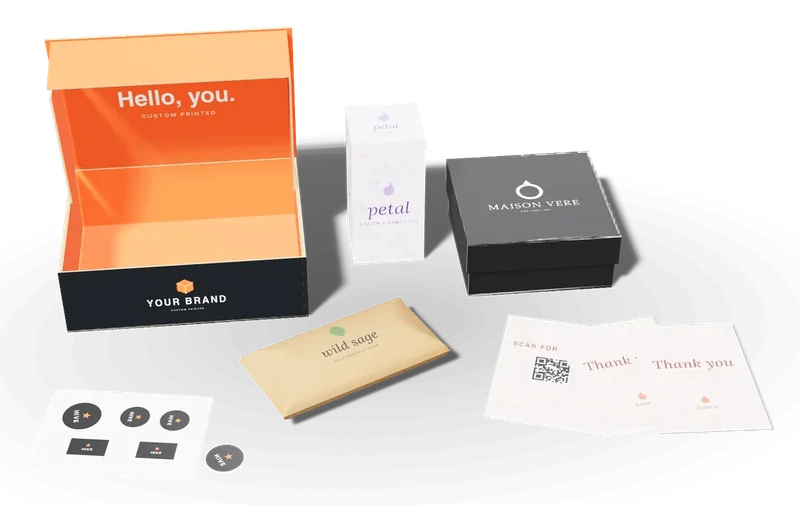
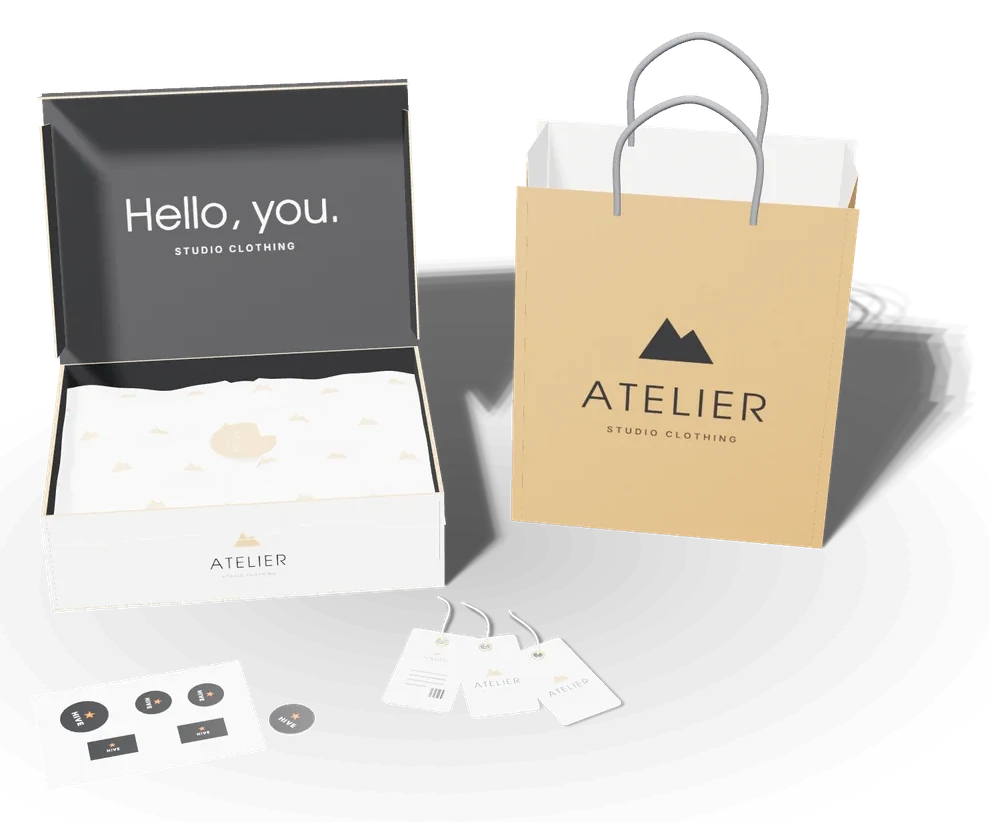
Boxes carry the brand; accessories carry the details. Branded tissue, seal stickers, thank-you cards, hang tags, custom tape, poly mailers and paper bags are small, inexpensive pieces that make every order feel considered. For many brands, accessories are the fastest and most affordable way to upgrade an unboxing, because they work with the boxes you already have. A plain stock mailer with printed tape, a logo sticker on tissue and a well-written card can feel more personal than an expensive box with nothing inside.
The accessory range at a glance
| Accessory | What it does | Typical sizes | Popular with | |
|---|---|---|---|---|
| Tissue paper | Wraps products for a boutique reveal | Full sheets, often cut to fit the box | One or two colors, repeat pattern | Apparel, beauty, gifts |
| Stickers & labels | Seals tissue and boxes, labels products and variants | 1–4 in circles, rectangles, custom shapes | Full color | Every category |
| Thank-you cards | Personal message, care tips, offers, QR codes | Business-card size to 5 × 7 in | Full color, one or two sides | DTC brands, subscriptions |
| Hang tags | Brand, price, size and care details on products | About 2 × 3.5 in and custom shapes | Full color, both sides | Apparel, candles, gifts |
| Packing tape | Brands plain shippers, shows tampering | Rolls in standard widths | One or two colors | E-commerce, wholesale |
| Poly mailers | Light, water-resistant shipping for soft goods | Many flat sizes | One or more colors | Apparel, textiles |
| Paper bags | Retail carry-out, events, pop-ups | Small to large, with handles | One or more colors | Retail stores, markets |
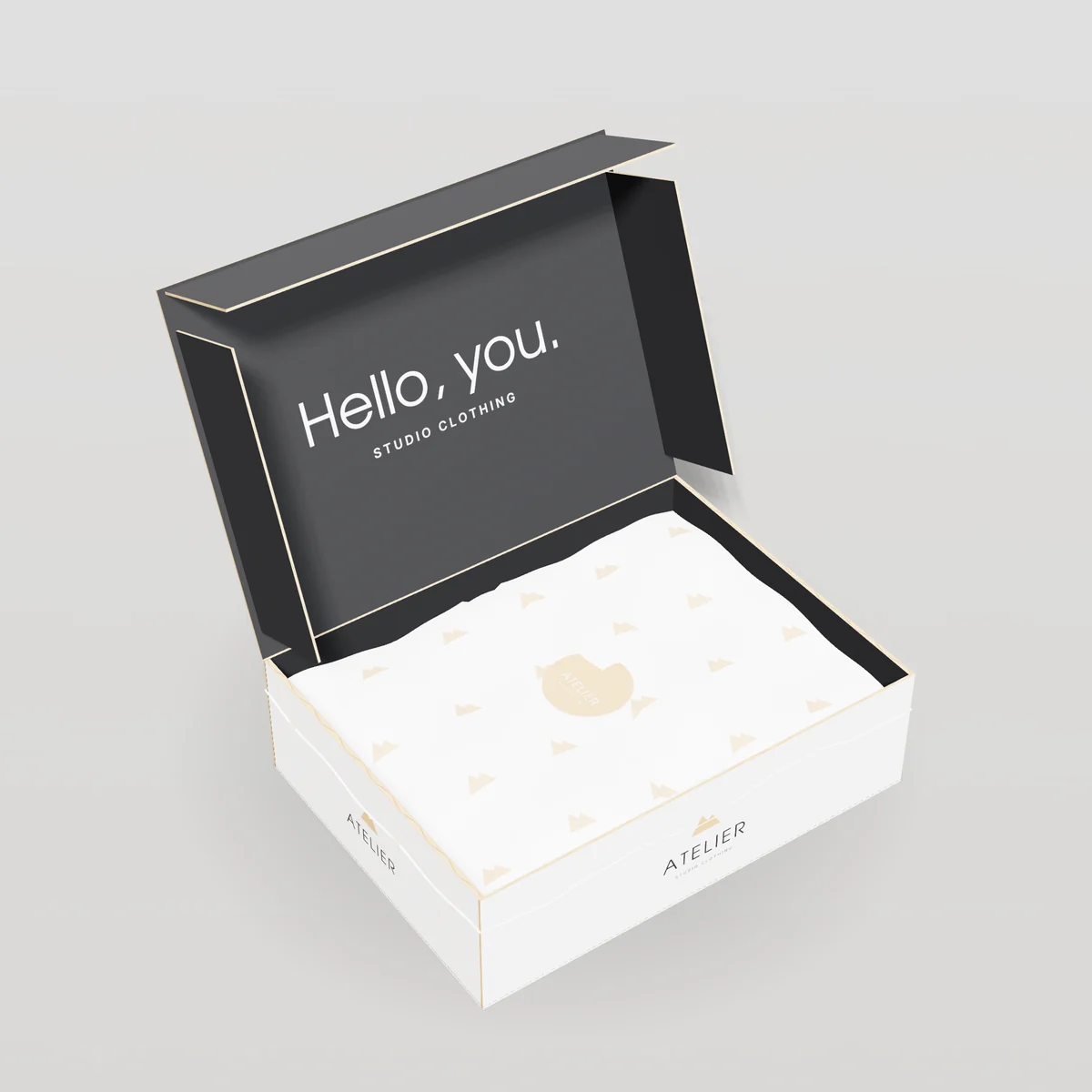
Tissue paper
Tissue is thin, light and inexpensive, yet it changes the opening moment completely: the customer unfolds something instead of simply lifting a product out. Custom tissue is usually printed with one or two colors in a repeat pattern so it looks right however it is cut and folded.
Choosing tissue
- Color: white or colored tissue; dark ink on matching tissue gives a sophisticated tone-on-tone look.
- Pattern: a small repeat logo or a simple graphic pattern looks best when wrapped.
- Seal: finish with a logo sticker in the center fold.
- Use: one or two sheets per order for apparel; a half sheet for small items.
Tissue is paper and can usually be recycled with paper or reused for gifts; keep claims specific to what you use.
Stickers and labels
Stickers are the most versatile accessory. The same circle sticker can seal tissue, close a stock box, brand a bag and decorate a thank-you card. Labels also identify variants (scents, shades, sizes) on stock cartons, which lets one box serve many products.
Common uses
- Logo seal on tissue or on a mailer's tuck flap.
- "Thank you" or "Handmade with care" stickers.
- Variant labels on a single carton design.
- Product labels on jars, tins and bottles.
- Freebie stickers customers keep and share.
Materials: matte or gloss paper for dry use; white or clear film (BOPP) for jars, bottles and anything that may get wet; kraft for natural brands; metallic films for luxury seals. Our Sticker & Label Template Pack includes 24 cut-line templates and a material guide.

Thank-you cards and inserts
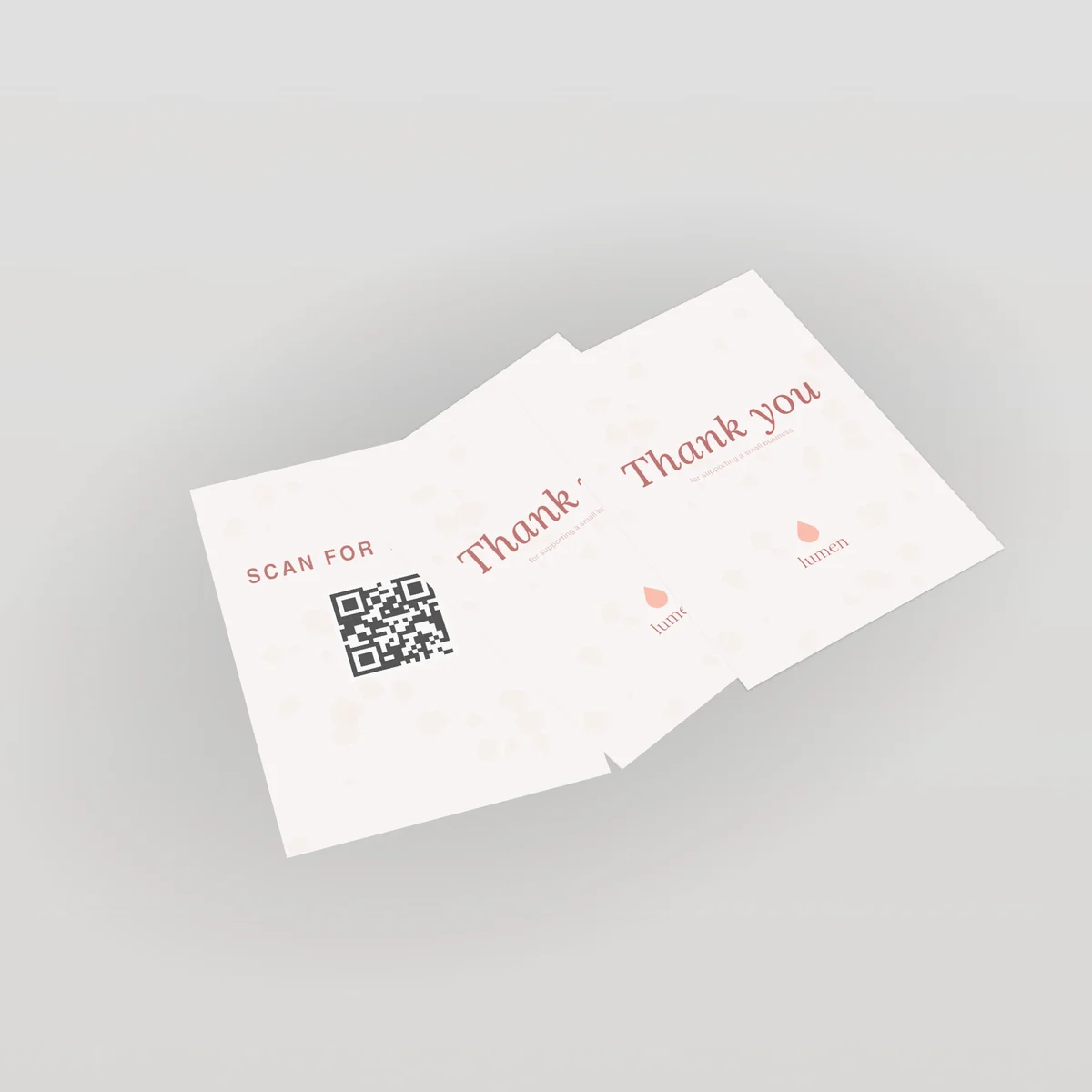
A card is often the first thing customers read, and the easiest place to sound human. The best cards are short, specific and useful.
What to put on a card
- A specific thank-you ("Thank you for supporting our two-person studio").
- One useful thing: a care tip, a routine step, a recipe.
- One action: follow, share, reorder or leave an honest review.
- A name or signature.
Formats: business-card size for codes and handles; 4 × 6 in postcards for thank-you notes and care cards; 5 × 7 in for brand stories; folded cards for gift messages. Ask for honest reviews only, and never offer discounts or gifts in exchange for positive reviews.
The Insert & Thank-You Card Template Pack includes 10 sizes, 12 sample designs and a 40-message copy library.
Hang tags
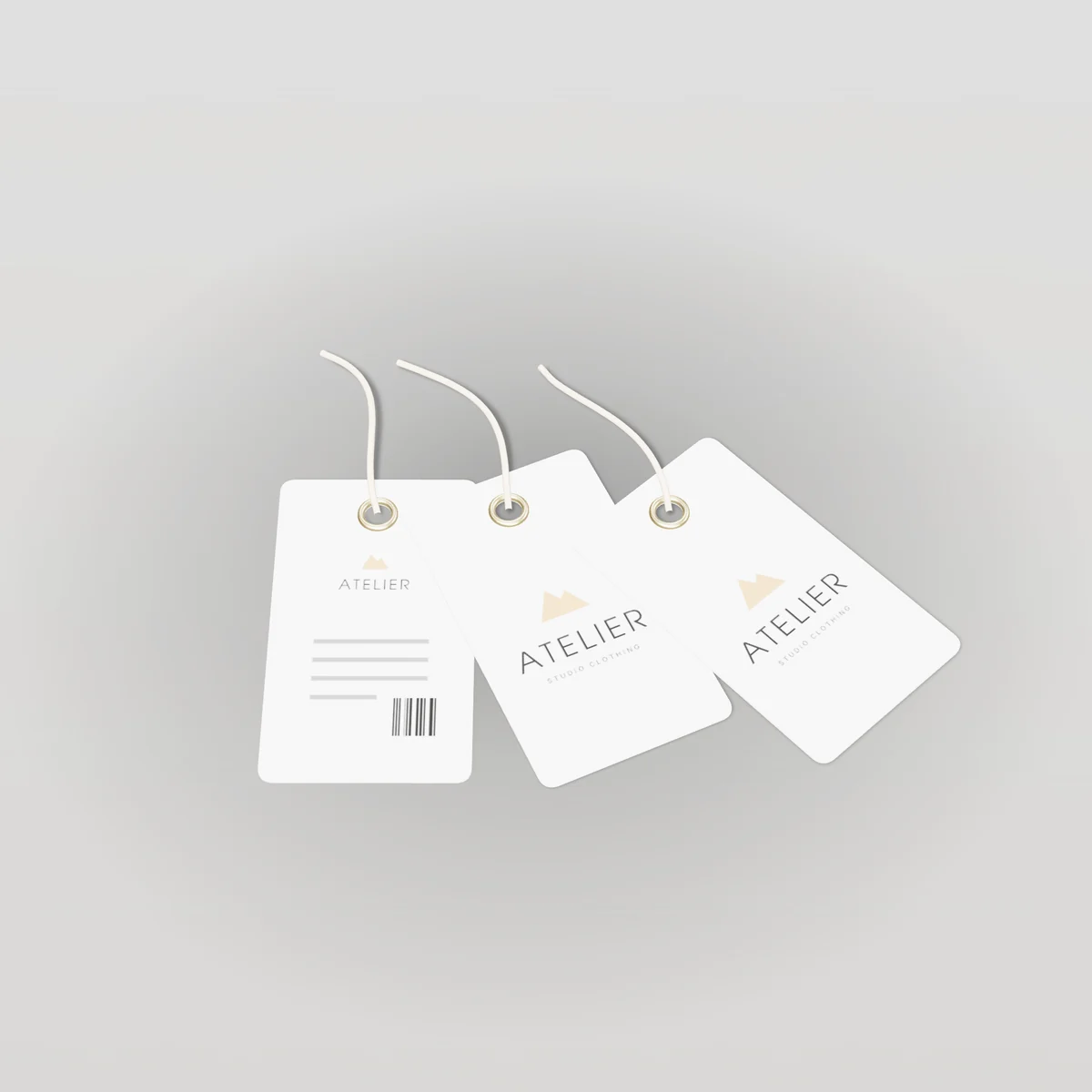
Hang tags carry brand, price, size, style and care details on apparel, candles, bouquets, coffee bags and gift sets. Thicker card (from about 16 pt, up to duplex boards of 24–32 pt) feels more premium.
Tips
- Keep the front for brand and a short line; put price, size and care on the back.
- Leave clear space around the hole.
- Choose the attachment: string, ribbon, plastic loop pins or safety pins.
- For apparel, hang tags can repeat care and fiber information, but required information generally belongs on permanently attached labels.
Templates with hole and fold guides are in the Hang Tag Template Pack.
Packing tape
Printed tape turns a plain shipping box into a branded package, and it shows if a box has been opened. It is a practical first step for brands not ready for printed boxes.
| Tape type | Look | Notes |
|---|---|---|
| Printed paper tape (water-activated) | Natural, strong bond | Paper-based; often recycled with the box |
| Printed paper tape (self-adhesive) | Natural | Easy to apply without a dispenser |
| Printed plastic tape | Smooth, glossy | Common and economical |
Keep tape designs simple: a repeat logo or short message in one or two colors reads well at any length.
Poly mailers
Poly mailers are light, flexible and water-resistant, ideal for apparel and textiles that do not need crush protection. They often cost less to ship than boxes because they are light and compact.
Considerations
- Choose a size that fits snugly; excess film flaps and looks untidy.
- Opaque films keep contents private.
- A second adhesive strip makes returns easier.
- Recycled-content and recyclable options exist; recycling is usually through store drop-off where film is accepted, so keep claims qualified.
For brands moving away from plastic, paper mailers and lightweight mailer boxes are alternatives.
Paper bags
Branded paper bags carry your identity out of the store, from markets and pop-ups to events. Options include kraft or white paper, twisted or flat paper handles, rope or ribbon handles, and printed or plain interiors.
Tips: choose a size that fits your most common purchase; add a sticker or printed tissue for a gift look; consider sturdier paper and reinforced bases for heavier products.

Building an unboxing kit
You do not need everything at once. These three kits show how brands typically grow:
| Kit | Pieces | Feel |
|---|---|---|
| Starter | Stock kraft mailer, printed tape, logo sticker, thank-you card | Personal and tidy |
| Branded | Printed mailer, tissue with sticker seal, card, branded tape | Recognizable and giftable |
| Signature | Printed mailer with inside print, printed tissue, custom insert, card and booklet | Memorable and shareable |
Track packaging cost per order as you upgrade. The Packaging Budget & Landed-Cost Planner calculates cost per order and as a share of order value, and the Unboxing Experience Workbook walks through the design decisions.
Matching accessories to your boxes
Accessories look best when they are designed as one system with the box:
- Use the same Pantone references across boxes, tissue, stickers and cards.
- Repeat one element: a pattern, icon or color that appears on every piece.
- Size accessories to the box: cards that lie flat on top, tissue that wraps without bunching.
- Order together so colors are proofed side by side and everything arrives at once.
| Box | Pairs well with |
|---|---|
| Mailer boxes | Tissue + sticker, card, interior print |
| Shipping boxes | Printed tape, card, sticker on inner packaging |
| Rigid boxes | Card, ribbon, insert |
| Product boxes | Variant labels, hang tags on gift sets |
| Poly mailers | Card, sticker on folded garment |
| Paper bags | Tissue, sticker seal, hang tag |
Accessories by industry
| Industry | Typical accessories |
|---|---|
| Apparel | Hang tags, tissue, poly or paper mailers, stickers |
| Cosmetics and skincare | Tissue, seal stickers, routine cards |
| Candles | Care cards, labels, hang tags for gift sets |
| Coffee and tea | Labels, brew cards, bag tags |
| Bakery and food | Seal stickers, labels, paper bags |
| Subscription boxes | Monthly cards, stickers, tissue |
| Gift boxes | Tissue, ribbons, gift message cards |
| Retail | Paper bags, stickers, tissue |
Quantities and lead times
Accessories are usually ordered in larger quantities than boxes because they are used one or more per order and cost little per piece. Plan for:
- Usage per order: for example two sheets of tissue and one sticker per order.
- Reorder point: weekly use × lead time + safety stock.
- Seasonal peaks: order holiday tissue, stickers and cards early; see the US packaging calendar.
| Accessory | Typical usage per order |
|---|---|
| Tissue | 1–2 sheets |
| Seal sticker | 1–2 |
| Thank-you card | 1 |
| Tape | A share of a roll (for example 1/100) |
| Hang tag | 1 per product |
| Poly mailer | 1 |
Artwork for accessories
| Accessory | Artwork tips |
|---|---|
| Tissue | Repeat pattern; one or two flat colors; avoid fine detail |
| Stickers | Bleed and safe zone; cut line for custom shapes |
| Cards | Bleed 1/8 in; text inside the safe zone; test QR codes |
| Hang tags | Keep 1/8 in clear around the hole; plan front and back |
| Tape | Short repeat; one or two colors; high contrast |
| Poly mailers | Simple bold graphics; consider the seal flap area |
| Paper bags | Account for gussets and handles in the layout |
Use the Artwork Preflight Checklist and our artwork guidelines before sending files.
Sustainability and accessories
Small choices add up across thousands of orders:
- Choose paper tape, paper tissue and paper void fill with paper boxes so the whole package is paper-based.
- Use stickers instead of extra printed layers when you want variety.
- Right-size poly mailers and consider recycled-content film or paper mailers.
- Print clear disposal instructions on a card or inside the box.
- Keep claims specific: "tissue and tape are paper" is better than "eco-friendly packaging".
The Honest Sustainability Claims Kit has ready phrases and a disposal-label layout.
How accessories are priced
Price depends on quantity, size, number of colors, material and finishing (for example custom die-cut sticker shapes or foil on cards). Like boxes, accessories become much cheaper per piece at higher quantities. Ordering several accessories with your boxes can also reduce freight and setup.
Each accessory page has a pricing request form: tell us the quantity, size and colors, and we reply with options and prices within one business day.
Common accessory mistakes
| Mistake | Result | Better approach |
|---|---|---|
| Tissue pattern too detailed | Muddy print on thin paper | Bold, simple repeat in one or two colors |
| Card too large for the box | Bent or crushed cards | Size cards to lie flat on the top layer |
| Generic card copy | Card is ignored | Specific thank-you, one useful tip, one action |
| Paper stickers on wet products | Peeling or smudging | Film (BOPP) labels with suitable adhesive |
| Oversized poly mailers | Untidy look, wasted film | Choose the closest size to the folded product |
| Accessories ordered separately from boxes | Colors do not match | Order together with shared Pantone references |
Choosing materials for accessories
| Accessory | Material options | Choose based on |
|---|---|---|
| Tissue | Standard tissue, heavier tissue, colored tissue | Print clarity, color, how much it is handled |
| Stickers | Matte or gloss paper, white or clear film, kraft, metallic | Moisture, surface, look |
| Cards | Coated or uncoated card, kraft, thick duplex | Writable surface, premium feel |
| Hang tags | 16–18 pt card, duplex 24–32 pt, kraft | Durability, feel, price point |
| Tape | Paper (water-activated or self-adhesive), plastic | Bond strength, look, recyclability |
| Mailers | Poly film (virgin or recycled content), paper | Weight, water resistance, end of life |
| Bags | Kraft or white paper, laminated paper | Weight carried, look, reuse |
Designing an accessory system
A small set of rules keeps every piece looking like one brand:
- Pick one hero pattern or icon and use it on tissue, tape and stickers.
- Limit colors to two or three brand colors with Pantone references.
- Keep the logo in the same position on each piece where possible.
- Write in one voice: the card, sticker and inside-lid message should sound like the same person.
- Design for real sizes: print a mockup at 100% and check legibility.
Card copy examples by category
These are starting points to adapt in your own words:
| Category | Front | Back idea |
|---|---|---|
| Skincare | "Made for slow mornings" | Routine order: cleanse, serum, moisturize |
| Candles | "Burn well" | Trim the wick to about 1/4 in; first burn to the edges |
| Coffee | "Brewed your way" | A simple pour-over recipe and grind guide |
| Apparel | "Made to be worn often" | Care summary and a fit-feedback QR code |
| Bakery | "Baked this morning" | Storage tips and best-by guidance |
| Gifts | "A little something for you" | Space for a handwritten message |
| Subscription | "Box No. 01" | What's inside and when the next box ships |
Packing station workflow
Accessories only work if they are packed the same way every time:
- Lay out materials within reach: boxes, tissue, stickers, cards, tape.
- Place the product in the insert or on tissue.
- Wrap and seal tissue with a sticker in the same position each time.
- Add the card on top, facing up.
- Close and tape the box; apply the shipping label on a flat panel.
- Check against a photo of a perfect order posted at the station.
The Unboxing Experience Workbook includes a packing-station SOP template.
Seasonal and limited-edition accessories
Accessories are the easiest way to make packaging seasonal without new boxes:
- Holiday tissue colors or a seasonal sticker.
- A limited-edition card design for a launch.
- Gift message cards in Q4.
- Event-specific paper bags for pop-ups and markets.
Plan quantities around the season and order early; see order-by dates on the US packaging calendar.
Returns-friendly packaging
If returns are common in your category (for example apparel), make them easy:
- Poly mailers with a second adhesive strip can be resealed for returns.
- Mailer boxes that open without tearing can be reused.
- A returns card with simple instructions reduces support emails.
- Reusable packaging cuts waste on both trips.
Accessories for retail and wholesale
Selling through stores adds a few requirements:
- Hang tags and labels with barcodes if retailers scan items.
- Consistent variant labels so staff can find sizes and scents quickly.
- Shelf-ready presentation: tissue and bags for gift purchases.
- Retailer guidelines: some stores specify tag sizes, barcode placement or packaging materials.
Accessories glossary
| Term | Meaning |
|---|---|
| Kiss cut | Sticker cut through the face material only, leaving the backing intact |
| Die cut | Cut through all layers to a custom shape |
| BOPP | A durable film used for water-resistant labels |
| Water-activated tape | Paper tape with adhesive activated by water; forms a strong bond |
| Duplex board | Two boards laminated together for thick, premium cards and tags |
| Gusset | The folded side panel that lets a bag or mailer expand |
| Repeat | A pattern tile repeated across tissue, tape or wrapping |
| Seal sticker | A sticker that closes tissue, boxes or bags |
How to brief an accessories order
- Which accessories and how many of each.
- Sizes (or the box sizes they must fit).
- Colors and Pantone references.
- Material preferences (paper, film, kraft).
- Artwork status and any templates you used.
- Delivery date and whether they ship with your boxes.
Accessory spotlights in detail
Tissue: sizes and wrapping methods
Custom tissue is printed on full sheets and can be cut or folded to fit any box. Choose sheet size by how you wrap:
| Wrap method | How it works | Best for |
|---|---|---|
| Envelope fold | Product in the center, sides folded in, top and bottom folded over, sealed with a sticker | Apparel, flat items |
| Fan or bloom | Sheet pleated and placed so it rises out of the box | Gift boxes, candles, beauty |
| Liner | Sheet laid in the box with edges hanging over, folded over the product | Mailers, subscription boxes |
| Bundle wrap | Several small items wrapped together | Sets and samples |
Tip: test your wrap with a stopwatch. A wrap that takes 10 seconds longer adds up quickly at hundreds of orders a day.
Stickers: shapes, finishes and placement
- Shapes: circles are the most versatile; rectangles suit text; custom die-cut shapes match logos and mascots.
- Finishes: matte reads as calm and premium; gloss makes colors pop; foil accents suit luxury seals.
- Placement: center of the tissue fold, on the mailer tuck flap, or across a box seam as a tamper-evident seal.
- Size: 1.5–2 in circles are common for seals; 3 in and larger for logo stickers customers keep.
Tape: widths and application
Standard tape widths suit most boxes; wider tape covers more seam and gives a stronger brand band. Water-activated paper tape needs a dispenser that wets the adhesive; it forms a strong bond with corrugated and is popular with paper-based packaging. Self-adhesive paper and plastic tapes work with standard handheld dispensers.
Poly mailers: sizing by product
| Product | Typical mailer approach |
|---|---|
| T-shirt, folded | Small to medium flat mailer |
| Hoodie or knitwear | Medium to large mailer |
| Jeans or jacket | Large mailer |
| Several garments | Larger mailer or a mailer box |
Fold garments the same way every time so they fit the chosen size; a snug fit looks better and uses less film.
Paper bags: sizes by use
| Use | Size approach |
|---|---|
| Jewelry, cosmetics | Small bag with ribbon or rope handles |
| Apparel, gifts | Medium bag with flat or twisted handles |
| Shoe boxes, larger gifts | Large bag with a wide gusset |
| Food and bakery | Bags suited to food use, with or without handles |
Planning cost per order (illustrative)
Packaging cost per order is the sum of every component multiplied by how many go in each order. An illustrative starter kit might include one stock mailer, one sticker, one card, two tissue sheets and a share of a tape roll. Divide the price of a roll by the number of orders it seals (for example 1 ÷ 100) to include tape fairly. The Packaging Budget & Landed-Cost Planner does this calculation for up to six order types and shows packaging cost as a percentage of order value.
Quality checks for accessories
Before approving accessories, check:
- Colors against your box proof and Pantone references.
- Text size and legibility at real size, especially on stickers and tags.
- Sticker adhesion on the actual surface (tissue, kraft, film, glass).
- Card stock thickness and writability if you handwrite notes.
- Hang tag hole position and attachment.
- Tape print visibility on your box color.
- Mailer seal strength and the returns strip if used.
Accessories that customers keep
Some pieces stay with customers long after the box is recycled, extending your brand's reach:
- Well-designed stickers end up on laptops and water bottles.
- Sturdy paper bags get reused for errands and gifts.
- Beautiful cards are kept on desks and fridges.
- Hang tags become bookmarks and gift tags.
Design these pieces to be worth keeping: a strong graphic, a short line of personality and good materials.
Accessories by industry, in detail
Apparel
Fold garments consistently, wrap them in tissue sealed with a logo sticker and ship in a poly mailer, paper mailer or printed mailer box. Hang tags carry size, price and style; a card with care tips and a fit-feedback QR code helps reduce returns. See apparel boxes.
Beauty and skincare
Tissue in a soft brand color, a seal sticker and a routine card turn a small order into a ritual. Product labels on jars and bottles need film materials that resist water and oils. See cosmetic boxes and skincare boxes.
Candles and home fragrance
Care cards matter here: trimming the wick and safe burning guidance improve the experience and reduce complaints. Hang tags dress up gift sets; labels carry scent names on stock jars. See candle boxes.
Coffee and tea
Labels let one bag or tin serve many origins and blends. Brew cards with simple recipes add value; tags on gift bags carry tasting notes. Printed tape brands plain shippers for wholesale cafés. See coffee and tea boxes.
Bakery and food
Seal stickers close boxes and bags and show they have not been opened. Labels carry product names and required information; paper bags carry orders out of the store. Keep materials suitable for any food contact. See bakery boxes and food boxes.
Gifts and seasonal products
Gift message cards, ribbons and tissue make products ready to give. Seasonal stickers and tissue update the look without new boxes. See gift boxes.
Subscription boxes
A new card each cycle explains what is inside and builds anticipation for the next box. Stickers and tissue carry themes; interior printing on the box stays constant. See subscription boxes.
Retail stores and pop-ups
Paper bags, tissue for gift purchases and stickers to seal bags are the core kit. Hang tags with barcodes help checkout. See retail packaging.
Gift wrapping as a service
Many brands offer gift wrapping at checkout. Accessories make it efficient:
- Keep a dedicated gift kit: tissue, a premium sticker, ribbon and a message card.
- Print a short "A gift for you" line inside the box or on the card.
- Leave prices out of gift orders and include a gift receipt or returns card.
- Photograph the standard gift wrap so every packer matches it.
Quick specification reference
| Accessory | Specify |
|---|---|
| Tissue | Sheet size, paper color, ink colors, pattern repeat, quantity |
| Stickers | Shape, size, material, finish, cut type (die or kiss), quantity per design |
| Cards | Size, stock, finish, one or two sides, quantity per design |
| Hang tags | Shape, size, stock thickness, hole, attachment, both sides |
| Tape | Material, width, print colors, roll length, quantity of rolls |
| Poly mailers | Size, film color, print, adhesive strips, quantity |
| Paper bags | Size, paper, handle type, print, quantity |
Brand consistency checklist
- Same Pantone references used on every piece.
- Logo version and minimum size consistent.
- Fonts and tone of voice consistent across cards, stickers and inside-lid messages.
- Pattern or icon repeated across tissue, tape and stickers.
- Colors approved side by side on proofs from each material.
- Photos of the finished kit shared with everyone who packs orders.
How accessories support marketing
Accessories are small media channels in every order:
- A QR code on a card can lead to a how-to video, a playlist or a reorder page.
- A handle or hashtag inside the lid or on a sticker invites sharing.
- A referral code on a card turns customers into ambassadors.
- Limited-edition stickers give fans something to collect.
Keep every promotion clear and honest, and track which ones customers actually use so you can refine the next print run.
A launch timeline for accessories
| When | What to do |
|---|---|
| 8 weeks before launch | Decide the kit: which accessories, how many per order |
| 7 weeks | Brief the design: colors, pattern, card copy, sticker shapes |
| 6 weeks | Finalize artwork using templates; check sizes against the box |
| 5 weeks | Request quotes; order samples if materials are new to you |
| 4 weeks | Approve proofs side by side with the box proof |
| 3 weeks | Production |
| 1–2 weeks | Delivery; set up the packing station and photograph a perfect order |
| Launch | Pack, film an unboxing, gather feedback |
Allow more time ahead of the holiday season, when printers and carriers are busiest. If you are launching close to a major gifting date, order accessories with your boxes so everything arrives together.
Measuring whether accessories work
Accessories are an investment, so it is worth checking that they pay off:
- Unboxing shares: count tagged posts and videos before and after adding tissue, stickers or a new card.
- Code redemptions: put a unique discount or referral code on cards to see how many customers use it.
- QR scans: use a dedicated link or tracking parameter on card QR codes.
- Review mentions: note how often reviews mention the packaging or the note.
- Repeat purchase rate: compare customers who received a new insert with those who did not.
- Packing time and cost: make sure the extra steps do not slow the packing station too much.
Change one thing at a time so you know what made the difference, and keep the pieces that customers notice.
Accessories for small and growing brands
Small brands often worry that branded accessories are only for big companies. In practice they are the best place to start:
- Low minimums: stickers, cards and tape are available in quantities that suit small order volumes.
- Works with stock boxes: no need to commit to printed boxes before you know your sizes and volumes.
- Easy to change: a new card or sticker design costs far less than reprinting boxes.
- Big perceived value: customers remember the note and the seal more than the box style.
As order volume grows, move the elements that work best onto the box itself, such as a logo and inside-lid message on a printed mailer, and keep accessories for seasonal and personal touches. Many established brands still use a simple sticker seal and a handwritten-style card because customers love them.
Key takeaways
- Accessories are the fastest, most affordable way to upgrade an unboxing.
- Start with a sticker, printed tape and a card on stock boxes, then grow.
- Design every piece as one system with shared colors and a repeated element.
- Choose materials for the job: film labels for wet products, paper tape for paper packaging.
- Write cards that are specific, useful and human, and ask only for honest reviews.
- Plan quantities from usage per order and order early for peak seasons.
Learn more
- Tissue paper
- Custom stickers & labels
- Thank-you cards
- Hang tags
- Packing tape
- Poly mailers
- Paper bags
- Unboxing and brand packaging design guide
Frequently asked questions
Can I order accessories without ordering boxes?
Yes. Accessories can be ordered on their own. Many brands start with printed tape, stickers and cards on stock boxes before moving to printed boxes.
What is the most affordable way to brand a plain box?
A logo sticker and printed tape. Add a thank-you card for a personal touch. Together they cost far less than printed boxes and can be used on any stock box.
Can accessories match my box colors?
Yes. Share your Pantone references and order accessories with your boxes so colors are proofed together. Different materials (tissue, film, card) take ink differently, so exact matches vary slightly.
What size thank-you card should I use?
A 4 × 6 in card suits most mailer boxes. Use business-card size for codes and handles, and 5 × 7 in for brand stories or premium boxes.
Are poly mailers recyclable?
Many poly mailers can be recycled where plastic film is accepted, often at store drop-off points, but access varies. Paper mailers are an alternative if you want a paper-only package.
What stickers work on jars and bottles?
Film labels such as white or clear BOPP with an adhesive suited to the container. Test one label on the real container before ordering a full run.
Do hang tags replace care labels on clothing?
No. In the US, required care, fiber and origin information for most textile products belongs on permanently attached labels. Hang tags can repeat it.
Do you offer templates for accessories?
Yes. Our shop has template packs for insert cards, stickers and labels and hang tags.
What is the difference between kiss-cut and die-cut stickers?
Die-cut stickers are cut through the sticker and backing to the shape. Kiss-cut stickers are cut through the sticker only, leaving them on a larger backing sheet or roll, which is convenient for packing stations.
How many sheets of tissue do I need per order?
Usually one or two full sheets for apparel and a half sheet for small items. Test your wrap and count actual usage over a week.
Can I order small quantities of accessories?
Minimums depend on the accessory and print method. Tell us your quantity and we will suggest the most cost-effective option.
Can accessories be shipped to a different address from my boxes?
Yes. Accessories can ship with your boxes or separately, for example straight to a fulfillment center or to a store for a launch event. Tell us each delivery address when you request a quote.
How should I store tissue, stickers and cards?
Keep them flat, dry and out of direct sunlight. Store stickers in their original packaging so the backing stays flat, and keep tissue away from moisture so it does not wrinkle or stick together.
Do you help write card copy?
Yes. Share your brand voice and the message you want, and we can suggest wording for cards, stickers and inside-lid messages as part of design help.