Quick answer
Food-grade cartons, pouches and mailers for snacks, takeaway, meal kits and specialty foods. Estimated prices start around $0.33 per unit at 10,000 units and $1.17 at 250 units for a 6×3×8" box. Typical turnaround is 10–14 business days after proof approval.
Food Boxes: price breaks
How the estimated unit price of a 6×3×8" tuck end box in SBS white paperboard (18pt) changes with quantity. Setup costs are spread over more boxes as the run gets longer, so the per-box price drops sharply in the first few tiers.
| Quantity | Est. unit price | Est. total | Saving vs. first tier |
|---|---|---|---|
| 250 | $1.17 | $294 | — |
| 500 | $0.77 | $387 | −34% |
| 1,000 | $0.56 | $563 | −52% |
| 2,500 | $0.42 | $1,055 | −64% |
| 5,000 | $0.37 | $1,833 | −68% |
| 10,000 | $0.33 | $3,326 | −72% |
Estimates from our published pricing model, full-color print, no finishes, delivered to the contiguous US. Your written quote confirms the exact price. Get an exact quote →
Material options and how they affect price
Estimated unit price at 1,000 units for a 6×3×8" tuck end box with full-color printing, by material. Material choice changes look, strength and recyclability as well as cost.
| Material | What it’s like | Est. unit price |
|---|---|---|
| SBS white paperboard (18pt) | Bright white, smooth solid bleached sulfate board. Sharpest print and the best base for foil, spot UV and embossing. | $0.56 |
| Kraft paperboard (18pt CUK) | Natural brown unbleached kraft board with long, tough fibers. Looks handmade and eco-minded; best with one or two dark inks. | $0.55 |
Printing options compared
How the print specification changes the estimated unit price of a 6×3×8" tuck end box in SBS white paperboard (18pt). One- and two-color printing carries a small plate charge that matters less as quantities grow; full-color digital and offset printing have no plate charge in our model.
| Printing | 500 units | 1,000 units | 5,000 units |
|---|---|---|---|
| Plain (no print) | $0.62 | $0.42 | $0.24 |
| 1 color | $0.79 | $0.53 | $0.30 |
| 2 colors | $0.89 | $0.59 | $0.33 |
| Full color outside | $0.77 | $0.56 | $0.37 |
| Full color outside + inside | $0.91 | $0.69 | $0.48 |
What food packaging has to do
Food packaging protects, preserves and sells. It has to keep products safe and fresh, survive distribution, carry required labeling and stand out against competitors that are often just inches away on the shelf. For small and growing food brands, packaging is also one of the first real investments, and one of the most visible.
Food brands typically need some combination of:
- Retail cartons for snacks, cereals, baking mixes, confectionery and frozen goods (see what famous cereal mascots teach about front-panel design)
- Flexible packaging such as stand-up pouches for snacks, coffee, granola and dried fruit
- Gift and sampler boxes for holidays and corporate gifting
- E-commerce mailers for direct-to-consumer orders and subscriptions
- Display boxes and shippers for wholesale and retail
Food packaging formats
| Format | Best for | Notes |
|---|---|---|
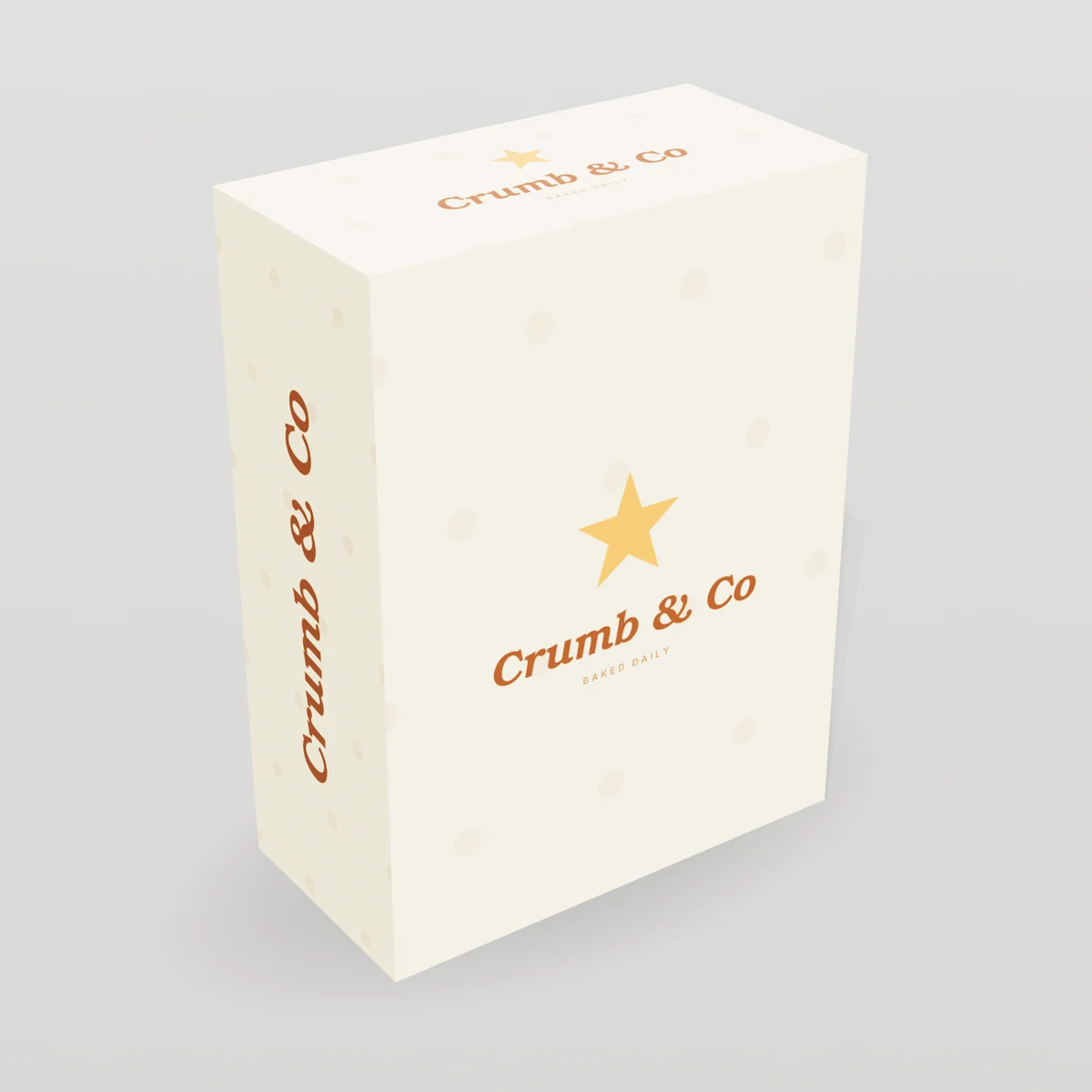
| Tuck end box | Snacks, tea, confectionery, small goods | Economical retail carton |
| Auto-lock bottom box | Jars, sauces, honey, heavier items | Strong base, fast packing |
| Stand-up pouch | Snacks, granola, coffee, candy, jerky | Barrier, resealable |
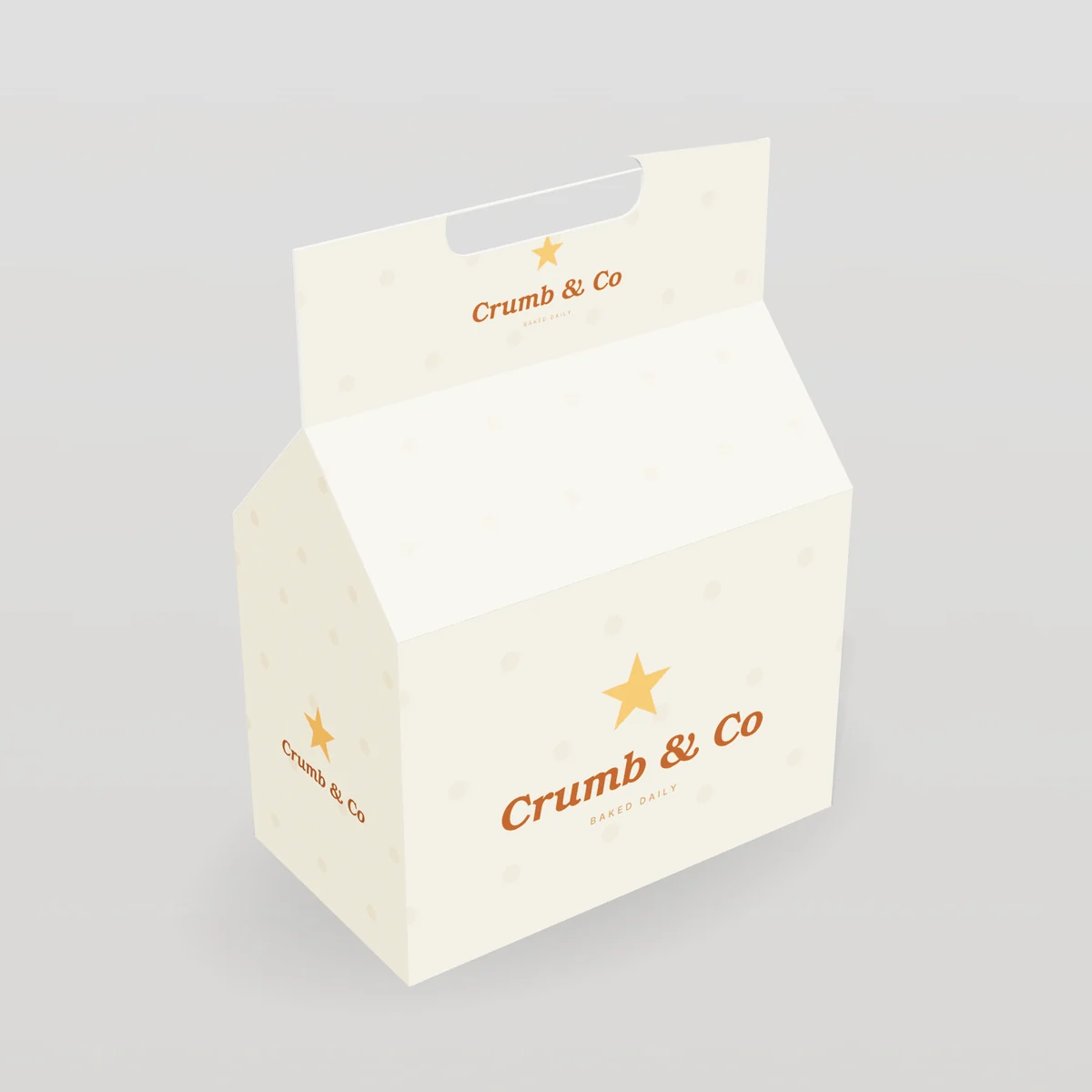
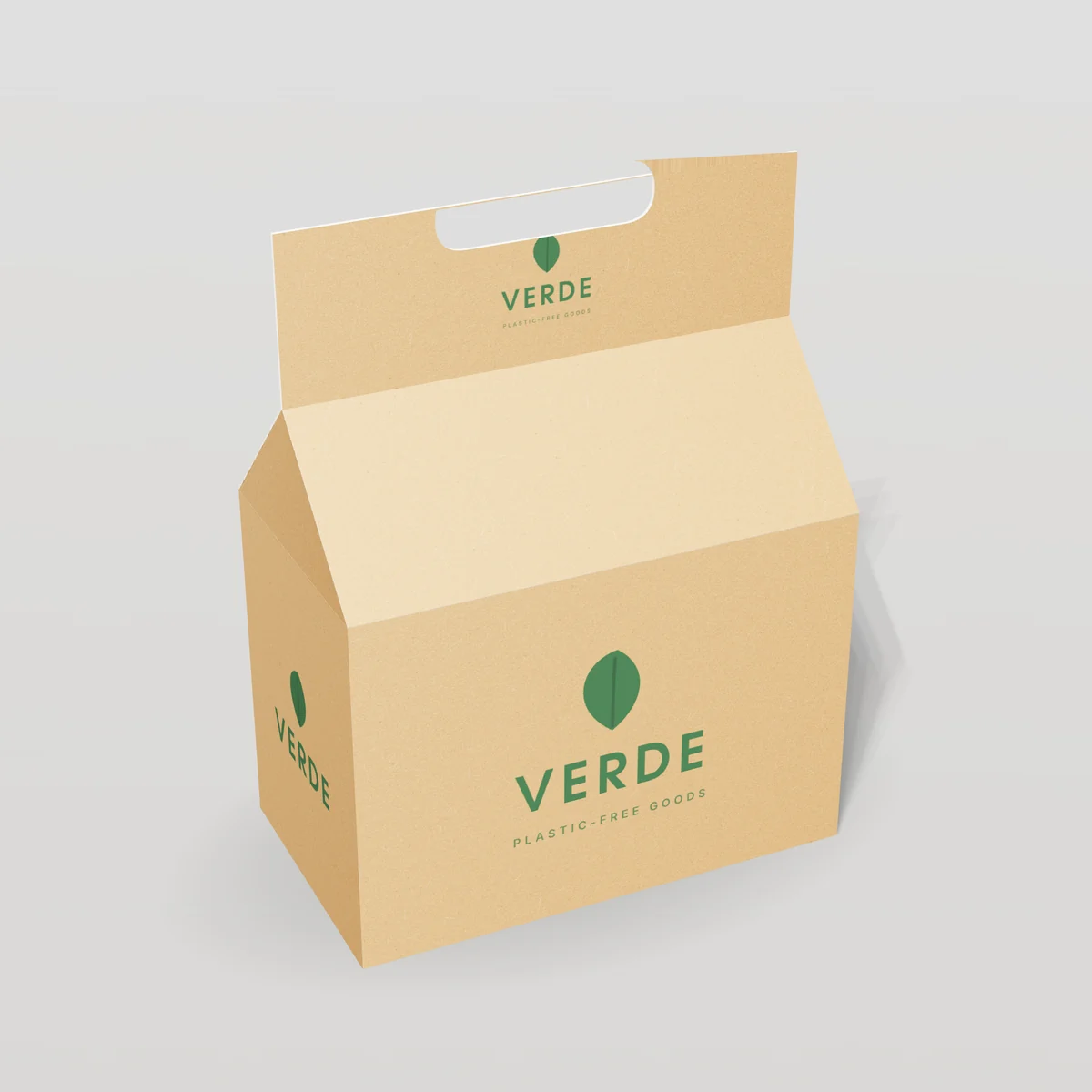
| Gable box | Takeout, bakery, gift packs | Handle for carrying |
| Window box | Pasta, cookies, colorful products | Shows the food |
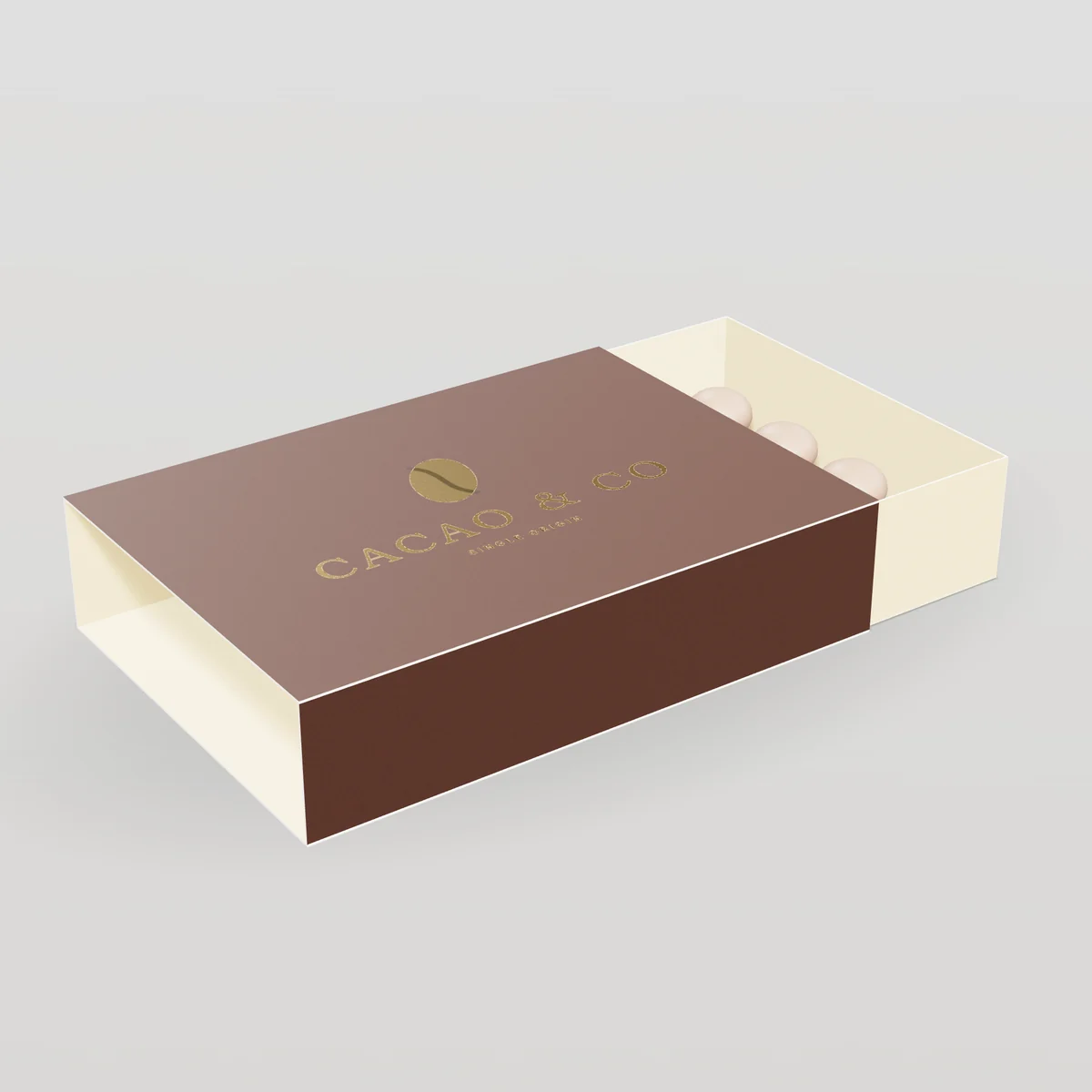
| Sleeve box | Chocolate, bars, gift trays | Slide-out reveal |
| Mailer box | DTC orders, subscriptions, samplers | Protects and brands |
| Display box | Snacks and candy at checkout | Impulse sales |
Food safety and materials
Food-contact packaging in the United States is regulated by the FDA. Materials, inks, coatings and adhesives that may migrate into food must be appropriate for food contact (the relevant regulations sit in 21 CFR parts 174–178). In practice:
- Direct contact (food touches the board): use food-grade paperboard and coatings, or a food-safe liner or bag.
- Indirect contact (food is in an inner bag or wrapper): the outer carton is not in contact with the food, so standard printed board is usually fine.
- Grease and moisture: use grease-resistant board, barrier coatings or inner liners.
- Frozen and chilled foods: use moisture-resistant board and coatings designed for cold storage.
Tell us how your food contacts the packaging and its storage conditions so we can specify appropriate materials.
Food labeling basics
US food labeling is detailed. This summary is for planning; confirm requirements with a regulatory professional.
- Statement of identity (the common name of the food) on the principal display panel
- Net quantity in US customary and metric units in the bottom 30% of the principal display panel
- Nutrition Facts panel in the FDA format (some small businesses and products are exempt)
- Ingredient list in descending order of predominance
- Allergen declaration for the major food allergens: milk, eggs, fish, crustacean shellfish, tree nuts, peanuts, wheat, soybeans and sesame
- Name and place of business of the manufacturer, packer or distributor
- Country of origin where required
- Date marking (best by) where used
Our labeling guide covers these rules in more depth with links to FDA resources.
Tip: Design the Nutrition Facts panel and ingredient list first, then build the rest of the pack around them. They often take more space than expected.
Designing food packaging that sells
- Appetite appeal: real food photography or illustration, warm colors, a window.
- Clarity: product name and flavor readable from a few feet away.
- Differentiation: one big idea per pack ("small batch", "high protein", "made with real fruit").
- Flavor systems: a consistent layout with color-coded flavors.
- Trust signals: certifications you actually hold (organic, gluten-free certifications) with permission to use their marks.

Sizing food packaging
Size food cartons to the product or inner bag with a little headroom. For pouches, size by volume, not weight; a fill test with a sample pouch avoids underfilled or overfilled packs. For shippers and displays, plan case counts that match retailers' requirements.
Food packaging costs
Estimated prices for a 6 × 3 × 8 in carton are at the top of this page. A snack pouch compares like this:
| Quantity | Est. unit price | Est. total | Saving vs. first tier |
|---|---|---|---|
| 500 | $0.70 | $349 | — |
| 1,000 | $0.43 | $433 | −39% |
| 2,500 | $0.27 | $667 | −61% |
| 5,000 | $0.21 | $1,038 | −70% |
| 10,000 | $0.17 | $1,750 | −76% |
Estimates from our published pricing model, full-color print, no finishes, delivered to the contiguous US. Your written quote confirms the exact price. Get an exact quote →
Budget tips
- Share structures across flavors and print variations digitally.
- Choose the barrier you need for pouches, not the maximum.
- Use windows where they sell and skip them where they do not.
- Start with digital print for test markets, then move best sellers to offset or gravure.
E-commerce and gifting for food brands
- Sampler boxes with inserts introduce several flavors.
- Gift boxes for holidays and corporate orders. See gift boxes.
- Mailers with inserts protect jars and bottles.
- Cold-chain shipments need specialist insulated packaging; our boxes can be printed outer shippers around insulated liners from your supplier.
Sustainability in food packaging
- Paper-based cartons are widely recyclable when clean.
- Mono-material pouches can be recycled through store drop-off where accepted.
- Right-sizing reduces material and freight.
- Honest claims: recyclability depends on local programs; follow the FTC Green Guides.
Launch checklist
- Product format and contact type (direct or indirect)
- Packaging format per SKU (carton, pouch, gift box)
- Barrier, grease and temperature needs
- Labeling content reviewed by a regulatory professional
- Barcodes per SKU
- Case packs for retail
- Quantities and target date
Packaging by budget: starter, growing, premium
| Tier | Typical spec | Best for |
|---|---|---|
| Starter | Stock-style food-safe cartons or pouches with printed labels | Cottage food and farmers market brands |
| Growing | Custom printed cartons with inner bags, printed pouches | Specialty food brands entering retail |
| Premium | Gift boxes, rigid sets, windowed cartons with foil | Gourmet gifts, holiday collections |
Direct vs. indirect food contact
The single most important question in food packaging is whether food touches the packaging:
- Direct contact: the food sits against the board or film. Materials, coatings and inks on the contact side must be suitable for food contact under FDA regulations.
- Indirect contact: food is in an inner bag, wrap or container, and the carton is outer packaging. Requirements on the carton are less strict, though good practice still applies.
- Fatty, moist or hot foods need barrier properties and materials qualified for those conditions.
Tell us exactly how your food is packed so we can specify suitable materials.
Food packaging by category
| Category | Common packaging |
|---|---|
| Snacks and crackers | Cartons with inner bags, pouches |
| Sauces and condiments | Cartons for bottles, gift sets |
| Spices and seasonings | Tubes, pouches, small cartons |
| Confectionery | Window boxes, tins, pouches |
| Frozen foods | Moisture-resistant cartons |
| Meal kits | Corrugated boxes with insulation |
| Pet food and treats | Pouches and cartons |
Shelf life and packaging
Packaging is part of food preservation. Barrier levels, seals and oxygen exposure affect shelf life. Work with your food scientist or co-packer to define shelf-life targets, then choose packaging that meets them. Packaging alone cannot make up for product formulation or processing.
Worked example: a hot sauce gift set
- Box: auto-lock bottom carton holding three 5 oz bottles.
- Insert: paperboard partition separating bottles.
- Print: full color with a heat-scale graphic.
- Information: each bottle has its own regulatory label; the box carries brand story and contents.
- Shipping: inside a mailer with a corrugated insert for e-commerce.
Common food packaging mistakes
- Food touching non-food-contact board.
- Too little space for Nutrition Facts and allergen statements.
- No grease or moisture barrier where needed.
- Ignoring shelf-life testing with the final packaging.
- Vague health or environmental claims.
A buyer's guide to food packaging
Begin with food safety. Decide which packaging will touch food and choose materials and coatings suitable for that contact. Use inner bags, liners or trays where outer cartons are not food-contact materials. Consider grease, moisture, temperature (frozen, chilled, hot) and how long the product must last.
Design for the shelf and the label. Food packaging must sell and inform at the same time. Plan the Nutrition Facts panel, ingredients, allergens, net quantity and company information before designing the front panel, then build a clear, appetizing front around them.
Show the food honestly. Windows and photography help shoppers judge quality. Photography should represent the product fairly; a "serving suggestion" note helps when imagery includes items not in the package.
Think about the whole journey. Food travels from co-packer to warehouse to store or customer. Cases must protect cartons; e-commerce orders need mailers and inserts; temperature-sensitive products need insulation and fast shipping.
Design for families of products. Food brands often grow by adding flavors. A consistent layout with color-coded variants keeps the line recognizable and makes new launches faster.
Make claims carefully. Nutrient, health, organic, gluten-free and environmental claims all have specific rules. Confirm claims with a regulatory professional.
Terms to know
- Food-contact material: packaging suitable for direct contact with food.
- Functional barrier: a layer that prevents substances migrating into food.
- Nutrition Facts panel: the FDA-required nutrition label format.
- Net quantity: the amount of product, typically in US and metric units.
- Shelf life: how long the product stays at its intended quality.
Food packaging in one paragraph
Food packaging must keep food safe, protect quality and inform customers. Choose food-contact materials or inner barriers where food touches packaging, plan Nutrition Facts, ingredients and allergens before the front-panel design, show the product honestly, protect it through the whole supply chain, and make every claim accurate.
Food packaging ideas by sales channel
| Channel | Packaging approach |
|---|---|
| Farmers markets | Simple cartons or pouches with labels; quick to restock |
| Specialty retail | Printed cartons or pouches with strong shelf presence |
| Grocery | Shelf-ready cases, consistent line design, barcodes |
| E-commerce | Mailers with inserts; insulated shippers for perishables |
| Gifting | Gift boxes and sets with inserts |
| Food service | Bulk packaging and branded takeaway |
Working with co-packers
Many food brands use co-packers (contract manufacturers) to produce and pack their products. Packaging decisions should be made with them:
- Machine compatibility: cartons, pouches and labels must suit their equipment.
- Material specifications: they may require specific board grades, film structures or dimensions.
- Delivery logistics: packaging must arrive at their facility on time and in the right quantities.
- Lot coding: agree how batch codes and dates will be printed.
- Approvals: share final proofs with the co-packer before printing.
Tell us your co-packer's requirements when you request a quote.
Questions to answer before ordering
- Does packaging contact food directly?
- What shelf life and storage conditions apply?
- Who fills and seals the packaging?
- Which retailers or channels will you sell through?
- What claims will appear on pack, and are they substantiated?
Second example: a sauce brand going online
A small-batch sauce brand starts shipping bottles directly to customers.
- Retail: existing bottles with labels only.
- Online: a printed E-flute mailer with a corrugated insert holding three bottles upright.
- Protection: drop-tested at about 30 inches; no breakage.
- Unboxing: a recipe card and a printed inside lid.
- Gifting: the same mailer becomes a holiday gift set with a seasonal sleeve.
Photographing food packaging
Show the product being used: a sauce poured, a snack bowl filled, a cookie broken. Pair packaging with ingredients and natural light, and keep labels readable in at least one image.
Ordering timeline for food packaging
| Step | Typical time |
|---|---|
| Quote with structure and material recommendation | Within 1 business day |
| Dieline and insert design | 1–3 business days |
| Artwork check, proof and 3D preview | 1–3 business days |
| Optional sample | About 5–12 business days |
| Production after approval | 10–14 business days |
| Delivery within the contiguous US | 3–7 business days |
Coordinate delivery dates with your co-packer so packaging arrives before production.
Unboxing ideas for food brands
- A recipe or serving suggestion card
- A printed inside lid with the brand story
- A sticker seal for tamper evidence
- A sample of another flavor
- A QR code to recipes or pairing ideas
How to brief a designer for food packaging
Give your designer, or our team, these details before work starts:
- Product and pack format: bag-in-box, pouch, tray, bottle
- Food-contact needs and storage conditions
- Nutrition, ingredient and allergen content from your analysis
- Co-packer requirements for dimensions and materials
- Retailer requirements: barcodes, shelf-ready cases
- Brand and flavor system for the range
A clear brief usually saves at least one round of revisions and avoids surprises at the proof stage.
Sustainability checklist for food packaging
- [ ] Inner barrier only where food needs it
- [ ] Recycled board for outer cartons where suitable
- [ ] Right-sized cartons and pouches
- [ ] Clear disposal instructions by component
- [ ] Claims checked against FTC Green Guides
How food packaging grows with your brand
First 100–500 units. Use labels on stock-style packaging or short runs of printed cartons and pouches while recipes and markets are tested.
500–2,500 units. Commit to printed packaging with a consistent line system and retailer-ready cases.
2,500 units and up. Offset or flexo printing for volume, co-packer integration and shelf-ready packaging.
Recommended finishes for food packaging
Food packaging usually benefits from practical finishes: an aqueous coating for scuff resistance on cartons, a matte or gloss film on pouches depending on the look, and spot UV to make product photography look appetizing. Foil works well for premium gift lines and holiday editions. Keep inner food-contact surfaces uncoated or use coatings suitable for food contact, and avoid heavy laminations on cartons that customers will recycle with paper. For natural and organic brands, uncoated kraft with one or two inks often communicates the positioning better than glossy finishes.
Three things to get right with food boxes
- Food safety. The right materials where food touches packaging.
- Labeling. Required information planned before design.
- The journey. Packaging that survives co-packing, distribution and delivery.
Related guides
 GuideLabeling & compliance (US)What US packaging typically must show for food, cosmetics, dietary supplements and hemp/CBD products: net quantity, ingredients, food contact, Prop 65 and more.
 GuideSustainable packagingHow to make packaging lower-impact without greenwashing: recyclable paper formats, recycled content, FSC, inks, plastic-free inserts and honest claims.
 GuidePrinting methods & colorOffset, digital and flexographic printing compared for packaging, plus CMYK vs Pantone, rich black, color matching, proofs and how to avoid color surprises.
 GuideBox styles explainedA practical comparison of every common box style: mailer, RSC shipper, tuck end, auto-lock, rigid, magnetic, sleeve, pillow, gable, display, window and tube.
What finishes and add-ons cost
Estimated extra cost per unit at 1,000 units when you add one finish to a 6×3×8" tuck end box (base estimate $0.56). One-time tooling such as foil and embossing dies is already spread across the run in the per-unit figure and listed separately for reference.
| Finish | What it does | Adds per unit | One-time setup |
|---|---|---|---|
| Matte lamination | A thin film with a smooth, low-glare finish that protects print from scuffs. | +$0.04 | — |
| Soft-touch | A velvety, premium coating that invites customers to hold the box. | +$0.07 | — |
| Spot UV | Clear glossy varnish on selected areas for a sleek contrast against matte. | +$0.14 | $80.00 |
| Foil stamping | Gold, silver, rose gold or holographic foil for logos and accents. | +$0.21 | $120 |
| Embossing / debossing | Raised or recessed logo detail you can feel with your fingertips. | +$0.20 | $120 |
| Window | A die-cut window with clear film so the product sells itself. | +$0.14 | $60.00 |
| Custom insert | Paperboard, corrugated or foam inserts that hold products in place. | +$0.23 | $80.00 |
Estimated prices for recommended food boxes styles
Unit price estimates from our published pricing model for each recommended style at its most popular size with full-color print, delivered within the contiguous US. Use them as a budget starting point; your quote confirms exact prices for your size and options.
| Style | Typical board | 500 units | 1,000 units | 5,000 units |
|---|---|---|---|---|
| Tuck End Boxes4 × 2 × 6" | SBS white paperboard (18pt) | $0.60 | $0.40 | $0.23 |
| Auto-Lock Bottom Boxes5 × 3 × 7" | SBS white paperboard (18pt) | $0.78 | $0.55 | $0.34 |
| Gable Boxes6 × 4 × 5" | SBS white paperboard (18pt) | $0.95 | $0.71 | $0.48 |
| Stand-Up Pouches6 × 3.5 × 9" | Matte laminated film (PET/PE) | $0.76 | $0.49 | $0.26 |
| Mailer Boxes9 × 6 × 3" | E-flute corrugated, white | $1.33 | $1.06 | $0.78 |
A dash means the quantity is below that style’s minimum order.
Popular tuck end boxes sizes for food boxes
Tuck End Boxes are the most common starting point for food boxes. Estimated unit prices for popular sizes with full-color print on sbs white paperboard (18pt), delivered within the contiguous US:
| Inside size | Typical use | 500 units | 1,000 units | Quote |
|---|---|---|---|---|
| 2 × 2 × 4" | Lip care, jewelry, single sachets, small accessories | $0.53 | $0.34 | Quote |
| 2 × 2 × 6" | Serums, candles, soaps, single small products | $0.55 | $0.36 | Quote |
| 3 × 3 × 5" | Serums, candles, soaps, single small products | $0.62 | $0.42 | Quote |
| 4 × 2 × 6" | Serums, candles, soaps, single small products | $0.60 | $0.40 | Quote |
| 4 × 4 × 8" | Gift sets, apparel accessories, small electronics | $0.78 | $0.57 | Quote |
What finishes add to food boxes
Estimated extra cost per unit at 1,000 units when you add one finish to a 4×2×6" tuck end box (base estimate $0.40). Choose one hero finish rather than several.
| Finish | What it does | Adds per unit |
|---|---|---|
| Matte lamination | A thin film with a smooth, low-glare finish that protects print from scuffs. | +$0.02 |
| Soft-touch | A velvety, premium coating that invites customers to hold the box. | +$0.04 |
| Spot UV | Clear glossy varnish on selected areas for a sleek contrast against matte. | +$0.13 |
| Foil stamping | Gold, silver, rose gold or holographic foil for logos and accents. | +$0.20 |
| Embossing / debossing | Raised or recessed logo detail you can feel with your fingertips. | +$0.19 |
| Window | A die-cut window with clear film so the product sells itself. | +$0.14 |
| Custom insert | Paperboard, corrugated or foam inserts that hold products in place. | +$0.22 |
Learn about these materials
Best box styles for food boxes
 Box StylesTuck End BoxesStraight and reverse tuck end cartons that open and reclose cleanly. Ideal for lightweight retail products.
 Box StylesAuto-Lock Bottom BoxesCrash-lock bottom cartons that pop open in one motion and carry heavier products safely.
 Box StylesGable BoxesCarry-out boxes with a built-in handle for bakery items, takeaway, gifts and events.
 Box StylesStand-Up PouchesPrinted resealable pouches with a gusseted base for coffee, snacks, supplements and bath products.
 Box StylesMailer BoxesSelf-locking corrugated mailers printed inside and out. The go-to box for DTC brands and subscriptions.
How to order food boxes
- 1Request a quote
Tell us the style, size, quantity and artwork you have. Use the form or the live estimator.
- 2Free design & dieline
We send a dieline for your exact size, check your artwork and help with layout at no charge.
- 3Approve your proof
Review a digital 3D proof (and an optional physical sample) before anything is printed.
- 4Production & QC
Your boxes are printed, finished, die-cut and inspected against the approved proof.
- 5Delivered to your door
Shipped flat-packed with tracking to any address in the contiguous US.
Key terms on this page
- Carton
- A box made from paperboard, usually a folding carton. In shipping, "carton" can also mean a corrugated case.
- Tuck end box
- A paperboard carton that closes with tuck flaps at its ends.
- Auto-lock bottom
- A pre-glued carton base, also called a crash-lock bottom, that locks into place automatically when the flattened box is opened. Stronger and faster to pack than a tuck bottom.
- Stand-up pouch
- A flexible bag with a gusseted bottom that stands upright, often with a zipper and barrier layers.
- Gable box
- A paperboard box with a built-in carry handle formed by two angled top panels that lock together.
- Sleeve
- An open-ended band or tube that slides over a tray or box, often printed to brand plain packaging.
- Mailer box
- A self-locking corrugated box with a hinged lid and tuck front, widely used for e-commerce and subscriptions.
- Board
- A general term for thick paper materials used in packaging, including paperboard, corrugated board and greyboard.
- Food-grade
- Materials, inks and adhesives suitable for packaging that contacts food, meeting the relevant FDA requirements.
- Paperboard
- Thick paper (usually 0.010 inch or more) used for folding cartons, such as SBS, kraft and recycled board.
- Liner
- The flat paper faces of corrugated board. Can be kraft (brown) or bleached (white).
- Panel
- A face of a box, such as the front, back, side, top or bottom panel.
- Net quantity
- The amount of product in a package (weight, volume or count), which many US consumer products must state on the main display panel.
- Fill test
- Filling a sample bag or box with product to confirm the size is right.
- Right-sizing
- Designing packaging to fit products closely, reducing material, void fill and shipping costs.
- Proof
- A preview of the final package (digital PDF, 3D render or physical sample) that the customer approves before production.
- Wrap
- The printed or specialty paper glued around the board of a rigid box or tube.
- Insert
- A component inside a box that holds products in place, such as die-cut paperboard, corrugated, foam or molded pulp.
- E-flute
- A thin corrugated flute about 1/16 inch thick. It prints sharply and folds crisply, making it the standard for mailer boxes.
- Lid
- The top part of a box, hinged or separate.
- Dieline
- A flat template showing the exact shape of a box before folding, with cut, crease, bleed and safe zones. Artwork is designed on top of it.
- Artwork
- The final graphic files (logos, images, text and colors) placed on a dieline and used to make printing plates or digital print files.
- Tamper evidence
- Features that show if a package has been opened, such as seals, tear strips or shrink bands.
- Tray
- An open-topped box base, often used with a sleeve or lid.
- Flexographic printing (flexo)
- A printing method using flexible relief plates and fast-drying inks, common on corrugated boxes, labels and flexible packaging.
- Shelf-ready packaging (SRP)
- Packaging that goes from shipping case to store shelf with minimal handling, often a tray with a tear-off front.
- Aqueous coating
- A clear, water-based coating applied over printed board to protect it from scuffs and fingerprints. It is fast drying, low odor and keeps paper packaging easy to recycle.
- Spot UV
- A clear, glossy UV-cured varnish applied to selected areas to create contrast with a matte background.
More definitions in our packaging glossary.
Customer reviews
Reviews come only from verified customers. Ordered food boxes from us? Share your experience.
Discussed on Quora & X
Food Boxes FAQ
Is your packaging food safe?
We specify food-grade materials, inks and coatings for packaging that contacts food. Tell us whether your food touches the packaging directly.
What labeling does food packaging need?
Typically a statement of identity, net quantity, Nutrition Facts, ingredients, allergens and the responsible company's name and place of business. Confirm with a regulatory professional.
What is the minimum order for food boxes?
Our minimum is 250 units for paperboard cartons and 500 units for pouches.
Can you make grease-resistant boxes?
Yes. Grease-resistant board and coatings are available for oily or buttery foods.
Can I print several flavors in one order?
Yes. Digital printing handles several flavors in one run.
Do you make packaging for frozen food?
We can make moisture-resistant cartons for chilled and frozen products. Tell us the storage conditions.
Is your food packaging FDA compliant?
We specify food-contact materials appropriate to your use. Final compliance of the packaged food, including labeling, is the brand's responsibility.
Can I print nutrition facts on my box?
Yes. Plan space for the Nutrition Facts panel at the start of design.
What makes food packaging food safe?
Materials, coatings and inks suitable for the specific food-contact use, or an inner barrier between food and the outer carton.
Can I put a window on food packaging?
Yes, with food-safe film; consider light sensitivity and shelf life.
Do food boxes need a barcode?
Retailers generally require GS1 UPC barcodes.
Can you make packaging for frozen food?
Yes, with moisture-resistant boards and coatings suitable for frozen storage.
Do you print Nutrition Facts panels?
We print whatever your approved artwork contains. Nutrition content and format must come from your nutrition analysis and should be reviewed by a qualified professional.
Can food boxes be made from recycled board?
Yes, usually with an inner bag or liner as a barrier when food is not individually wrapped.
What packaging is best for cookies sold online?
A rigid-feeling carton or tin inside a mailer, or cookies individually wrapped in a box with a divider insert, protects against breakage.
Can you make packaging for hot food?
Yes, with food-contact, grease-resistant board and venting. Tell us the food and temperature.
How do I choose between a pouch and a carton?
Pouches are lighter and seal in freshness; cartons stack neatly, protect better against crushing and offer a crisp printed surface. Many brands use a bag inside a carton.
How much does custom food packaging cost?
Costs vary by format: cartons, pouches, trays and gift boxes differ widely. The price table on this page shows estimates for recommended box styles, and pouch prices are on the stand-up pouch page.
Can you deliver packaging to my co-packer?
Yes. Provide the receiving address and any delivery requirements.
Do you provide food-contact documentation?
We specify food-contact materials appropriate to your use. Ask in your quote about documentation available for your materials.
Do you offer free design help for food boxes?
Yes. Every quote includes a free dieline for your exact size, an artwork check, and a digital proof with a 3D preview. Our designers can also lay out artwork from your logo, brand colors and ideas, so you do not need a packaging designer to get started.
Can I see a 3D preview of my food boxes before ordering?
Yes. You can try styles and colors yourself in the free 3D Box Builder, and every quote includes a 3D preview made from your real artwork before anything is printed.
Where do you deliver food boxes?
We deliver to business and residential addresses across the contiguous United States with tracking, usually within 3–7 business days after production. Alaska, Hawaii and expedited freight are quoted separately.
What if my food boxes arrive with a defect?
Report it within 7 days of delivery with photos and your order number. If there is a production defect or the boxes do not match your approved proof, we reprint or refund the affected items under our reprint guarantee.
How far ahead should I order food packaging?
Allow time for artwork, proofs, production and delivery, plus a buffer for seasonal peaks. Many brands order several weeks ahead and set a reorder point based on how many weeks of packaging they use, so they never run out during busy periods.