Key takeaways
- “Standard” box sizes are common stock sizes, not a regulation; every supplier’s list differs slightly.
- Box sizes are written inside L × W × H in inches; carriers bill on outside size.
- Cubes (8×8×8, 12×12×12) are flexible; flat boxes (12×9×4) suit apparel and books.
- If more than a few thousand orders a year ship in a box with 2 in+ of empty space, a custom size usually pays for itself.
Is there such a thing as a standard box size?
Search for "standard box sizes" and you will find dozens of charts that do not quite agree with each other. That is because there is no official US standard for box dimensions. What exists instead is a set of sizes that box makers, distributors and carriers have converged on over decades, because they fit common products, stack well on a 48 × 40 in pallet and come off existing dies and corrugator settings efficiently.
So when this guide says "standard", read it as common stock size: a size you can usually buy off the shelf from several suppliers, in plain brown corrugated, within a few days. Custom boxes, by contrast, are made to whatever length, width and height your product needs, and can be printed.
The charts below collect the sizes that come up again and again across stock catalogs, carrier programs and our own quoting. Use them to:
- get a quick sense of what size range your product falls into,
- compare a stock box against a right-sized custom box,
- plan inserts, cases and pallets around sizes that already work,
- and avoid ordering a box that looks fine on paper but wastes space in transit.
How box sizes are written
Every chart on this page uses the packaging industry convention:
Length × Width × Height (L × W × H), inside dimensions, in inches.
- Length is the longer side of the opening.
- Width is the shorter side of the opening.
- Height (also called depth) runs from the opening to the bottom.
The opening matters. A 12 × 9 × 4 in mailer opens on its 12 × 9 face and is 4 in deep. A 4 × 9 × 12 box would be a tall carton opening on a small end. If you are unsure which side is which, our step-by-step guide on how to measure a box walks through every common style.
Two more conventions are worth knowing:
- Inside vs outside. Box makers quote inside dimensions so your product fits. Carriers measure the outside, which is larger by roughly the board thickness on each side: about 1/8 in overall for E-flute, 1/4 in for C-flute and 1/2 in for double-wall.
- Whole inches. UPS, FedEx and, under its 2026 rules for larger parcels, USPS round each outside dimension up to the next whole inch when they calculate dimensional weight. A 12.1 in side is billed as 13 in. That is one reason common stock sizes tend to be whole numbers.
Standard shipping box sizes (RSC)
The regular slotted container (RSC) is the classic brown shipping box with four flaps on top and bottom. It is the most economical box per cubic inch of space, which is why distributors stock it in hundreds of sizes. The sizes below are among the most widely stocked.
Small shipping boxes (up to 10 in)
| Size (in) | Volume (in³) | Typical contents |
|---|---|---|
| 4 × 4 × 4 | 64 | Small parts, jewelry in a gift box, a single cosmetic |
| 6 × 4 × 4 | 96 | Phone accessories, small bottles, sample kits |
| 6 × 6 × 6 | 216 | Mugs, small candles, jars, small electronics |
| 8 × 6 × 4 | 192 | Books (small), boxed cosmetics, supplements |
| 8 × 8 × 8 | 512 | A flexible cube: candles, kitchenware, gift sets |
| 9 × 6 × 4 | 216 | Paperbacks, small apparel, boxed retail goods |
| 10 × 8 × 6 | 480 | Shoes (some), small appliances, multi-item orders |
| 10 × 10 × 10 | 1,000 | Gift baskets, larger candles, small home goods |
Medium shipping boxes (11–18 in)
| Size (in) | Volume (in³) | Typical contents |
|---|---|---|
| 12 × 9 × 6 | 648 | Books, folded apparel, small kits |
| 12 × 10 × 8 | 960 | Kitchen goods, multi-item e-commerce orders |
| 12 × 12 × 6 | 864 | Flat goods, picture frames, board games |
| 12 × 12 × 12 | 1,728 (1 ft³) | The most common cube; mixed household items |
| 14 × 10 × 8 | 1,120 | Small appliances, boxed retail products |
| 14 × 14 × 14 | 2,744 | Bulky but light goods, bedding samples |
| 16 × 12 × 8 | 1,536 | Apparel, shoes in shoeboxes, files |
| 16 × 16 × 16 | 4,096 | Pillows, lampshades, large light items |
| 18 × 12 × 12 | 2,592 | Small appliances, wholesale case packs |
| 18 × 18 × 18 | 5,832 | Large light items, storage |
Large shipping boxes (over 18 in)
| Size (in) | Volume (in³) | Typical contents |
|---|---|---|
| 20 × 20 × 20 | 8,000 | Comforters, large décor, bulky retail |
| 24 × 18 × 18 | 7,776 | Moving, wholesale, mixed freight cases |
| 24 × 24 × 24 | 13,824 | Large furniture parts, lamps, pet beds |
| 30 × 20 × 20 | 12,000 | Long items, rolled goods, large décor |
| 36 × 24 × 24 | 20,736 | Oversize items; check carrier size limits |
Large boxes are where costs climb fastest. A 24 × 24 × 24 in box with 15 lb of contents has a dimensional weight of about 100 lb at a 139 divisor (13,824 ÷ 139 ≈ 99.5, rounded up), so you pay for far more than the product weighs. If your product is large but light, a custom size or a different format, such as a vacuum-packed bag inside a smaller box, is worth pricing.
Standard mailer box sizes
Mailer boxes (roll-end tuck-front boxes) are the printed, self-locking boxes that most direct-to-consumer brands use. Because they are often custom printed, they are less standardized than RSCs, but a handful of sizes cover most orders.
| Size (in) | Best for | Notes |
|---|---|---|
| 6 × 4 × 2 | Jewelry, small cosmetics, accessories | Fits in many mailboxes; very low DIM weight |
| 7 × 5 × 2 | Cards, small gifts, single skincare item | Good for subscription samples |
| 8 × 6 × 2 | Socks, small accessories, flat kits | Popular small DTC size |
| 8 × 6 × 4 | Candles, mugs with insert, small bundles | Deeper version for 3D items |
| 9 × 6 × 3 | Skincare sets, books, supplements | A common all-rounder |
| 10 × 8 × 4 | Apparel, multi-item kits | Popular subscription-box size |
| 12 × 9 × 4 | Folded apparel, gift sets, larger kits | Common apparel mailer |
| 12 × 10 × 4 | Subscription boxes, bundles | Slightly wider for inserts |
| 14 × 10 × 4 | Hoodies, larger apparel, boxed sets | Watch DIM weight on light items |
| 14 × 10 × 6 | Shoes, deeper bundles | Consider an RSC for heavy contents |
Mailers are typically made from E-flute or B-flute corrugated. E-flute gives a crisp printed surface and tight folds; B-flute adds crush resistance for heavier contents. See our mailer boxes page for the full specification range.
| Quantity | Est. unit price | Est. total | Saving vs. first tier |
|---|---|---|---|
| 100 | $3.16 | $316 | — |
| 250 | $1.82 | $454 | −42% |
| 500 | $1.33 | $664 | −58% |
| 1,000 | $1.06 | $1,057 | −66% |
| 2,500 | $0.86 | $2,158 | −73% |
| 5,000 | $0.78 | $3,898 | −75% |
| 10,000 | $0.72 | $7,239 | −77% |
Estimates from our published pricing model, full-color print, no finishes, delivered to the contiguous US. Your written quote confirms the exact price. Get an exact quote →
USPS flat rate box sizes
USPS Priority Mail Flat Rate boxes are free from USPS and charged at one price regardless of weight (up to 70 lb) and, broadly, destination within the US. They are useful benchmarks because so many small businesses start with them. Dimensions below are the inside sizes USPS publishes for its common flat rate boxes; check the USPS site before you rely on them, as programs and sizes are updated from time to time.
| Flat rate box | Inside size (in) | Good for |
|---|---|---|
| Small | 8 5/8 × 5 3/8 × 1 5/8 | Jewelry, phone cases, small accessories |
| Medium (top-loading) | 11 × 8 1/2 × 5 1/2 | Shoes (some), books, small kits |
| Medium (side-loading) | 13 5/8 × 11 7/8 × 3 3/8 | Flat items, apparel |
| Large | 12 × 12 × 5 1/2 | Heavier mixed orders |
Flat rate boxes are economical for heavy, small items. For light items, a right-sized box at commercial weight-based rates is usually cheaper. They also cannot be printed with your brand, and USPS packaging is intended only for USPS shipments.
Standard moving box sizes
Moving boxes are sold by volume class rather than an exact size, and dimensions vary by retailer. These are typical:
| Class | Typical size (in) | Volume | Typical use |
|---|---|---|---|
| Small | 16 × 12 × 12 | about 1.3–1.5 ft³ | Books, tools, canned goods |
| Medium | 18 × 18 × 16 | about 3 ft³ | Kitchenware, toys, small appliances |
| Large | 18 × 18 × 24 | about 4.5 ft³ | Linens, lampshades, bulky light items |
| Extra large | 24 × 18 × 24 | about 6 ft³ | Bedding, pillows, light bulky items |
| Wardrobe | about 24 × 20 × 34–46 | 10+ ft³ | Hanging clothes (with a bar) |
The rule movers use applies to shipping too: heavy items go in small boxes, light items in large ones. A large box full of books is hard to lift and likely to fail at the bottom seam.
Standard product box and carton sizes
Retail folding cartons are almost always custom-sized, because they are built around a specific bottle, jar or tube. Still, some sizes recur because the containers inside them are standardized. These are indicative ranges based on common containers; always measure your own.
| Product | Typical carton size (in) | Common style |
|---|---|---|
| Lipstick / lip balm | 1 × 1 × 3.5 | Tuck end |
| 15–30 ml dropper bottle | 1.5 × 1.5 × 4.5 | Tuck end, often with an insert |
| 50 ml perfume bottle | 2.5 × 1.75 × 5 | Tuck end or rigid two-piece |
| 1.7–2 oz cream jar | 2.5 × 2.5 × 2.25 | Tuck end, cube |
| Bar soap (4 oz) | 3.5 × 2.5 × 1.25 | Tuck end, sleeve or window box |
| 8 oz candle jar | 3.5 × 3.5 × 4 | Tuck end, rigid or two-piece |
| 60-count supplement bottle | 2.5 × 2.5 × 4.75 | Tuck end, auto-lock bottom |
| Tea (20 sachets) | 5.5 × 3 × 2.75 | Tuck end |
| Playing cards | 2.6 × 0.8 × 3.6 | Tuck box |
| Smartphone accessory | 4 × 1 × 7 | Hanger box, window box |
| Pair of sneakers | 13 × 8 × 5 | Two-piece or lidded shoebox |
For anything regulated, such as supplements, cosmetics and food, the carton must also hold all required label text at a legible size. That sometimes forces a carton a little larger than the container alone would need. Our labeling and compliance guide covers the panel rules.
Popular box sizes by product type
If you are starting from a product rather than a box, these pairings are common starting points. Each assumes a product wrapped in tissue or held by a simple insert; fragile items need more room for cushioning.
| Product | Common box | Size range (in) |
|---|---|---|
| T-shirt (folded) | Mailer | 10 × 8 × 2 to 12 × 9 × 2 |
| Hoodie or sweater | Mailer | 12 × 10 × 4 to 14 × 10 × 4 |
| Jeans | Mailer or RSC | 12 × 10 × 3 to 14 × 10 × 4 |
| Sneakers in shoebox | RSC | 14 × 10 × 6 to 16 × 12 × 6 |
| Hardcover book | Mailer or book wrap | 11 × 9 × 2 to 12 × 9 × 3 |
| Jewelry piece | Mailer or rigid | 4 × 4 × 2 to 6 × 4 × 2 |
| Single candle (8 oz) | Mailer with insert | 5 × 5 × 5 to 6 × 6 × 6 |
| Coffee bag (12 oz) | Mailer | 8 × 6 × 3 to 9 × 6 × 4 |
| Skincare set (3 pieces) | Mailer with insert | 9 × 6 × 3 to 10 × 8 × 3 |
| Bottle of wine | Molded or partitioned shipper | Purpose-built; follow carrier rules |
| Laptop | RSC with foam or box-in-box | 18 × 14 × 6 or larger |
| Small appliance | RSC | 14 × 10 × 10 to 18 × 14 × 12 |
Our box size finder does this matching for you: enter product dimensions and packing style and it recommends a box size and style, with clearance built in.
Envelope and flat mailer sizes for comparison
Some products do not need a box at all. Soft goods, prints and documents often ship cheaper in a padded mailer or a rigid flat mailer. For reference:
| Format | Common sizes (in) | Good for |
|---|---|---|
| Rigid flat mailer | 6 × 8, 9 × 11.5, 11 × 13.5, 12.75 × 15 | Prints, photos, documents |
| Padded (bubble) mailer | #0 6 × 10, #2 8.5 × 12, #5 10.5 × 16 | Small accessories, books |
| Poly mailer | 6 × 9, 10 × 13, 14.5 × 19 | Apparel, soft goods |
If you are weighing a poly mailer against a box for apparel, our poly mailers page compares protection, cost and recyclability honestly.
Stock box or custom size?
Stock boxes are fast and cheap per unit at low volumes. Custom boxes cost more per unit at very small quantities but pay back in three ways:
- Shipping. A box that matches your product removes empty space, and carriers charge for space. Cutting one inch from each side of a 14 × 10 × 8 in box takes it from 1,120 in³ to 819 in³, about 27% less volume, and drops billable weight from 9 lb to 6 lb at a 139 divisor.
- Damage. Products that cannot move inside the box break far less often. Less void fill also means less packing time.
- Brand. A printed box, inside or out, turns a delivery into a moment customers remember.
A simple way to decide:
- Under about 100 orders a month, or many different product sizes: stock boxes plus a printed sticker, stamp and card usually make sense.
- A few hundred orders a month in a handful of product sizes: price a custom mailer in one or two sizes. Compare the box cost difference with your shipping saving.
- Over a thousand orders a month: custom sizes almost always win. Consider a family of two to four sizes that covers most orders.
How to build your own size range
Brands that ship many products rarely need a unique box for each one. The goal is a small family of sizes that covers most orders with little empty space. Here is a simple process that works for most catalogs:
- Export three months of orders with the items in each order.
- Group orders by the packed size they need (measure the products with their wraps and inserts).
- Find the clusters. Usually 60–80% of orders fall into two or three size groups.
- Design one box per cluster, sized to the largest typical order in that group plus clearance.
- Handle outliers with a stock RSC rather than adding another custom size.
- Review every six months, because product mixes change.
A candle brand might end up with a 5 × 5 × 5 in mailer for one candle, a 10 × 5 × 5 in mailer for two, and a stock RSC for bundles. An apparel brand might use 10 × 8 × 2, 12 × 9 × 4 and 14 × 10 × 4 in. Our box sizing and DIM weight guide has a worked example with real numbers.
Carrier size and weight limits to keep in mind
Even a perfect box is useless if a carrier will not take it at a normal rate. Limits change, so treat these as typical figures and confirm with each carrier's current service guide:
| Carrier (ground parcel) | Max weight | Max size | Notes |
|---|---|---|---|
| USPS | 70 lb | 108 in length + girth for most services; up to 130 in for Ground Advantage | Oversize and nonstandard fees apply above set thresholds |
| UPS | 150 lb | 108 in length; 165 in length + girth | Additional handling and large package surcharges apply |
| FedEx | 150 lb | 108 in length; 165 in length + girth | Similar surcharge structure to UPS |
Length + girth = the longest side plus twice the sum of the other two sides. A 24 × 18 × 18 in box has a girth of 2 × (18 + 18) = 72 in, so length + girth = 96 in.
Surcharges often begin well before the hard limits, for example when the longest side exceeds about 48 in or the second-longest exceeds about 30 in. If your box is close to any threshold, shaving a few inches can remove a surcharge that costs more than the box.
Board strength for common box sizes
Size and strength go together. Larger boxes carry heavier loads and stack under more weight, so they need stronger board. A rough guide for single-shipment parcels:
| Box size | Contents weight | Typical board |
|---|---|---|
| Up to 10 in per side | Up to 10 lb | E- or B-flute, 32 ECT |
| 10–18 in per side | Up to 30 lb | B- or C-flute, 32 ECT |
| 18–24 in per side | 30–50 lb | C-flute, 44 ECT or double-wall |
| Over 24 in per side | Over 50 lb | Double-wall (BC flute), 48 ECT+ |
The Edge Crush Test (ECT) measures how much force the board can take on its edge, which predicts stacking strength. If your boxes will be stacked in a warehouse or on a pallet, check the numbers with our box strength calculator and read the packaging materials guide for flute and grade details.
Pallet-friendly box sizes
If you ship wholesale or to fulfillment centers, the 48 × 40 in GMA pallet is the US standard. Boxes whose footprints divide evenly into 48 × 40 in stack with no overhang and little wasted space. Examples:
| Box footprint (in) | Boxes per layer | Fit |
|---|---|---|
| 24 × 20 | 4 | Perfect |
| 16 × 12 | 10 | Perfect with mixed orientation |
| 12 × 10 | 16 | Perfect |
| 20 × 12 | 8 | Perfect |
| 16 × 10 | 12 | Perfect |
Overhang is a real problem: a box that hangs over the edge of a pallet loses much of its stacking strength at that corner. Our pallet calculator shows layers, boxes per pallet and overhang for any case size.
Common mistakes when choosing box sizes
- Using the product's size as the box size. Products need clearance for wraps, inserts and tolerances. A box that "fits exactly" on paper is often too tight in reality.
- Mixing up inside and outside sizes. Ordering a custom box by outside size can leave it too small; rating shipping costs by inside size understates them.
- Writing dimensions in the wrong order. 9 × 6 × 3 and 3 × 6 × 9 describe very different boxes.
- Ignoring dimensional weight. A box an inch too big on each side can cost a third more to ship.
- Choosing too many sizes. Every extra size adds inventory, storage and packing decisions. Two to four sizes cover most catalogs.
- Forgetting the pallet. Wholesale cartons that do not fit a 48 × 40 in pallet waste freight space on every shipment.
How to order a custom size
When you are ready to move beyond stock sizes, send a supplier:
- The product's dimensions (or a sample), including caps, handles and any packaging inside.
- What goes in the box with it: inserts, tissue, cards, accessories.
- The style you want (mailer, RSC, tuck end, rigid) or the job the box must do.
- Quantity and how often you will reorder.
- Print: outside only, inside and out, or plain.
We turn that into a dieline and a 3D proof, with the inside dimensions shown. Nothing is produced until you approve. You can start with the quote form or build the box yourself in the box builder.
Summary: standard box sizes at a glance
- There is no single official chart. "Standard" means widely stocked.
- Write and read sizes as L × W × H, inside, in inches.
- Popular shipping boxes: 6 × 6 × 6, 8 × 8 × 8, 10 × 8 × 6, 12 × 12 × 12, 16 × 12 × 8, 18 × 18 × 18 and 24 × 18 × 18 in.
- Popular mailers: 6 × 4 × 2, 8 × 6 × 2, 9 × 6 × 3, 10 × 8 × 4 and 12 × 9 × 4 in.
- Check dimensional weight and carrier limits before you commit to a size.
- Once you ship a few hundred orders a month, a small family of custom sizes usually saves money.
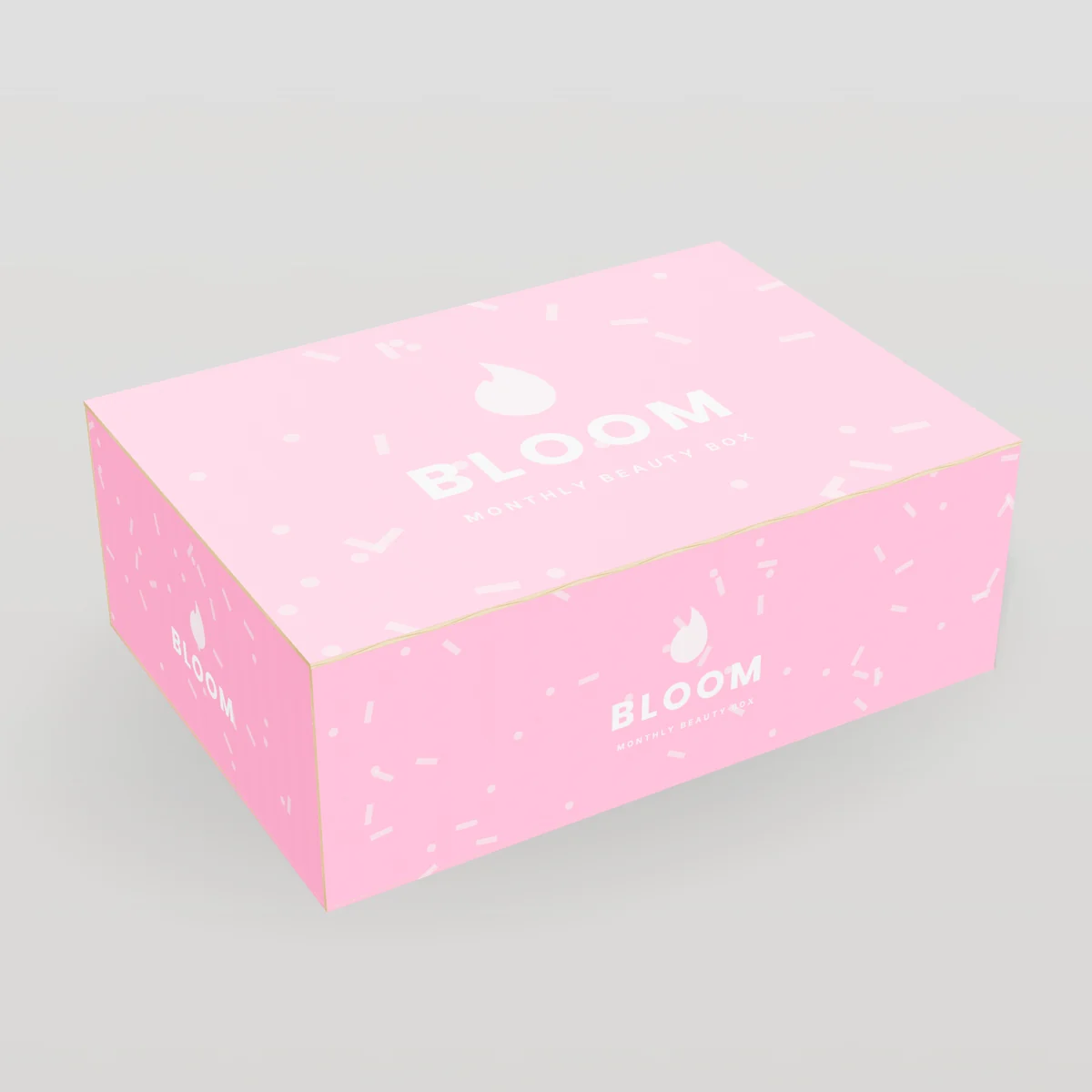 GuideHow to measure a box (L × W × H)Which side is length, width and height, inside vs outside dimensions, how to measure mailers, tuck boxes and rigid boxes, and how to order a size that fits.
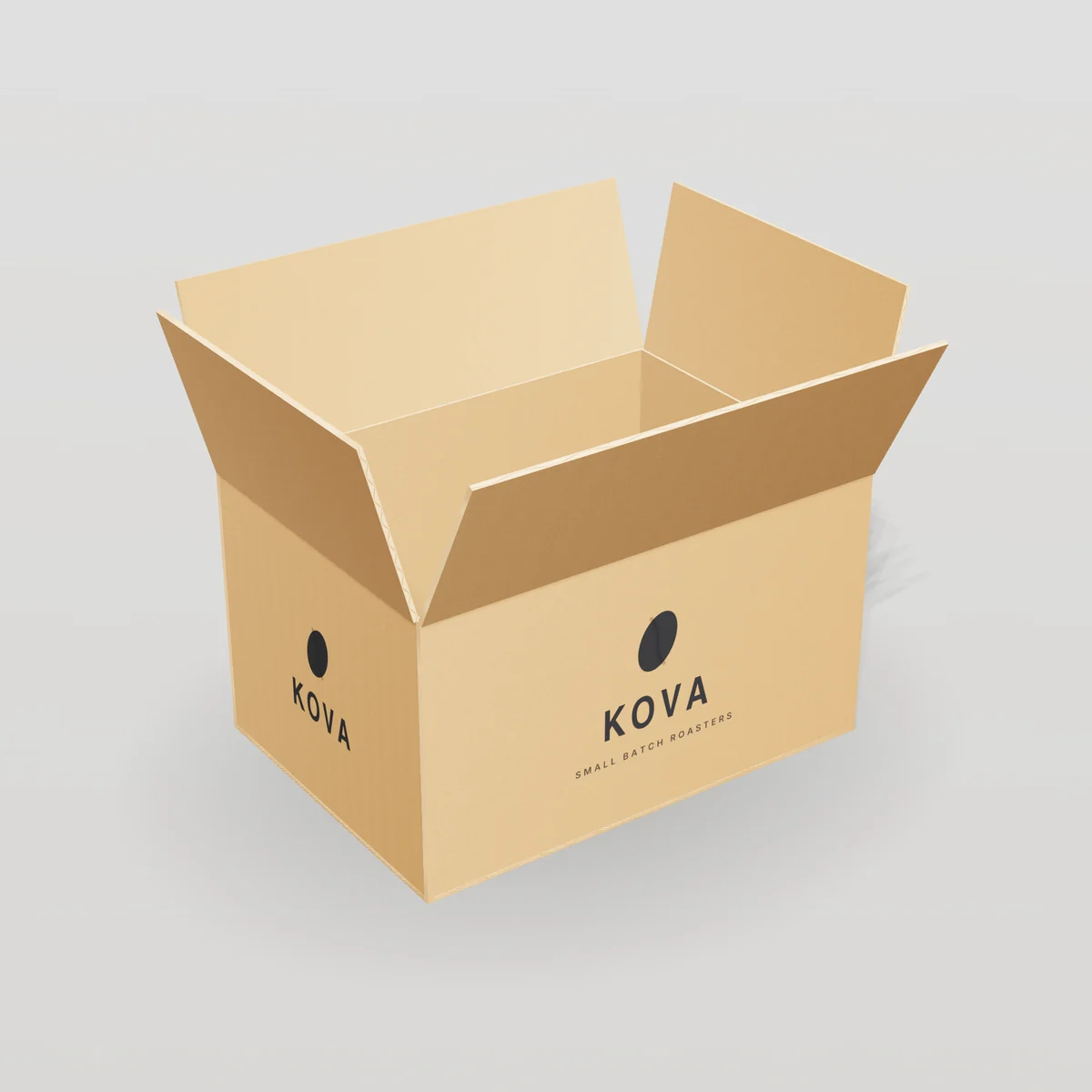 GuideBox sizing & DIM weightHow to measure inside vs outside box size, choose clearances, calculate UPS, FedEx and USPS dimensional weight, and right-size boxes to cut shipping costs.
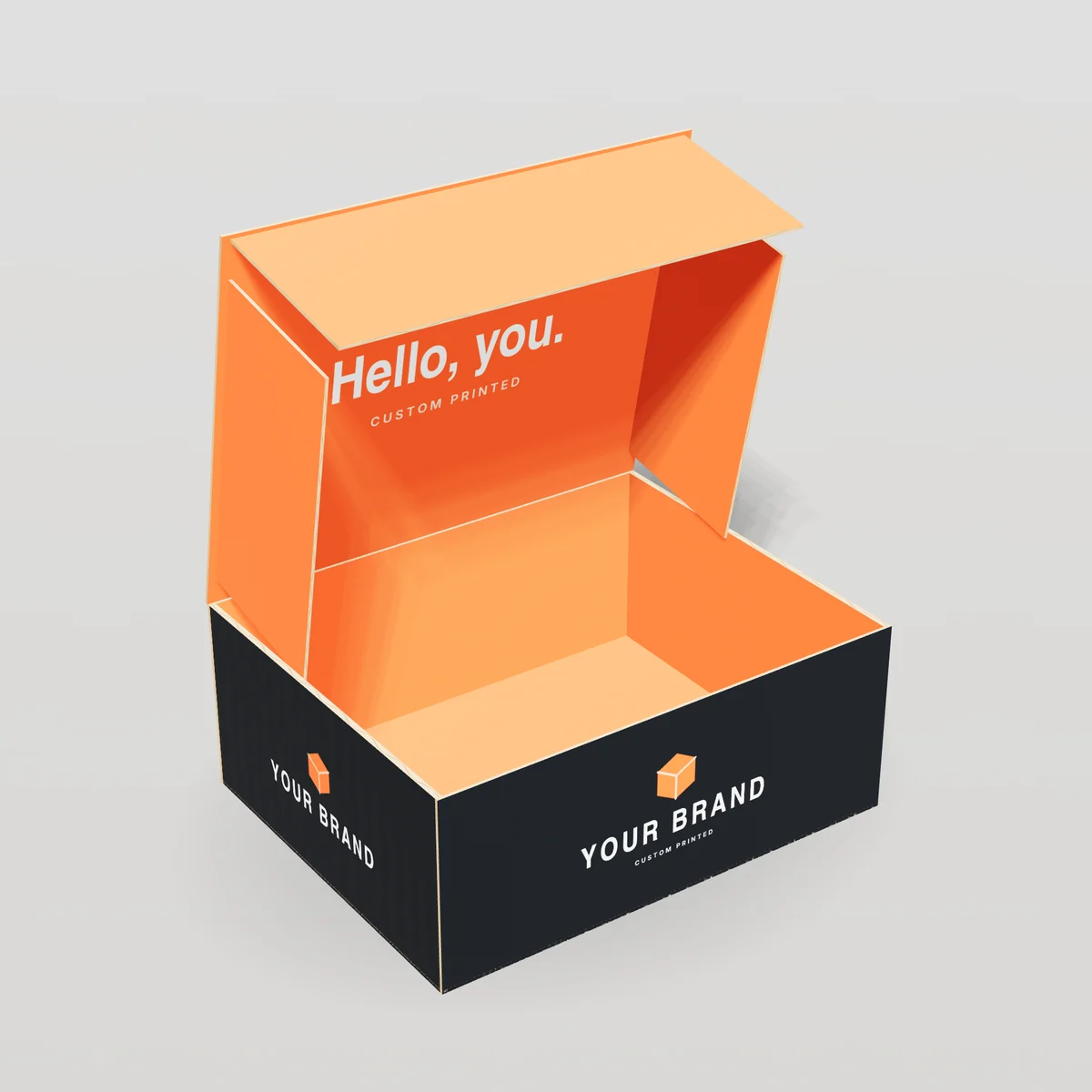 GuideMailer box vs shipping boxMailer boxes and shipping boxes (RSCs) compared on structure, strength, print, packing speed, cost per unit and customer experience, with real price examples.
Box StylesShipping BoxesPrinted corrugated regular slotted cartons (RSC) for e-commerce, wholesale and freight.
Sources and further reading
Official and standards-body pages we used for this guide. Rules and standards are updated from time to time, so check the current version before you rely on them.
- USPS Flat Rate quick reference: current Flat Rate box and envelope options.
- UPS packaging guidelines (PDF): carrier guidance on boxes, cushioning and sealing.
Key terms on this page
- Pallet
- A flat platform used to ship stacked goods. The standard US GMA pallet is 48 by 40 inches.
- Inside dimensions
- The usable space inside a box, the standard way to specify custom box sizes (L × W × H).
- Carton
- A box made from paperboard, usually a folding carton. In shipping, "carton" can also mean a corrugated case.
- Board
- A general term for thick paper materials used in packaging, including paperboard, corrugated board and greyboard.
- E-flute
- A thin corrugated flute about 1/16 inch thick. It prints sharply and folds crisply, making it the standard for mailer boxes.
- C-flute
- A corrugated flute about 5/32 inch thick and the most common flute for standard shipping cartons, balancing cushioning, stacking strength and cost.
- Double-wall
- Corrugated board with two fluted layers, stronger than single-wall board.
- Dimensional weight (DIM weight)
- A billing method used by carriers that charges by package volume when it is higher than actual weight. Calculated as L × W × H divided by a divisor.
- Regular slotted container (RSC)
- The standard corrugated shipping box with four top and four bottom flaps of equal depth (FEFCO 0201).
- Mailer box
- A self-locking corrugated box with a hinged lid and tuck front, widely used for e-commerce and subscriptions.
- Insert
- A component inside a box that holds products in place, such as die-cut paperboard, corrugated, foam or molded pulp.
- B-flute
- A corrugated flute about 1/8 inch thick. It offers good crush resistance and printability and is used for shipping boxes, heavier mailers and die-cut shippers.
- Sleeve
- An open-ended band or tube that slides over a tray or box, often printed to brand plain packaging.
- Auto-lock bottom
- A pre-glued carton base, also called a crash-lock bottom, that locks into place automatically when the flattened box is opened. Stronger and faster to pack than a tuck bottom.
- Panel
- A face of a box, such as the front, back, side, top or bottom panel.
- Cushioning
- Materials that absorb shock and vibration to protect products, such as paper void fill, molded pulp, foam or air pillows.
- Wrap
- The printed or specialty paper glued around the board of a rigid box or tube.
- Shipper
- A box used to ship products, often corrugated.
- Poly mailer
- A lightweight plastic shipping envelope used mainly for apparel and soft goods.
- Void fill
- Material that fills empty space in a shipping box to stop products moving, such as crinkle paper or air pillows.
- ECT (edge crush test)
- A test measuring how much force corrugated board can take on its edge before crushing, in pounds per inch. It predicts stacking strength.
- Flute
- The wavy middle layer of corrugated board. Flute size (A, B, C, E, F) determines thickness, cushioning and strength.
- Stacking strength
- How much weight a box can carry from boxes stacked on top of it.
- Dieline
- A flat template showing the exact shape of a box before folding, with cut, crease, bleed and safe zones. Artwork is designed on top of it.
More definitions in our packaging glossary.
Discussed on Quora & X
Frequently asked questions
What are the most common shipping box sizes?
Widely stocked shipping box sizes include 6 × 6 × 6, 8 × 6 × 4, 8 × 8 × 8, 10 × 8 × 6, 12 × 9 × 6, 12 × 12 × 12, 14 × 10 × 8, 16 × 12 × 8, 18 × 18 × 18 and 24 × 18 × 18 inches. Exact lists vary by supplier.
What is the standard size of a small shipping box?
There is no single standard, but 6 × 6 × 6, 8 × 6 × 4 and 8 × 8 × 8 inches are among the most common small shipping box sizes. For very small items, 4 × 4 × 4 inch boxes and 6 × 4 × 2 inch mailers are also popular.
How are box dimensions written?
As length × width × height in inches, using inside dimensions. Length and width describe the opening; height is the depth from the opening to the bottom.
What size box is 1 cubic foot?
A 12 × 12 × 12 inch box holds exactly 1 cubic foot (1,728 cubic inches). Any combination whose product is 1,728, such as 16 × 12 × 9, has the same volume.
What are the USPS flat rate box sizes?
USPS lists its Small Flat Rate Box at about 8 5/8 × 5 3/8 × 1 5/8 inches, the Medium boxes at about 11 × 8 1/2 × 5 1/2 (top-loading) and 13 5/8 × 11 7/8 × 3 3/8 inches (side-loading), and the Large box at about 12 × 12 × 5 1/2 inches. Check USPS for current sizes.
What size box should I use for a T-shirt?
A folded T-shirt usually fits a 10 × 8 × 2 or 12 × 9 × 2 inch mailer, or a 10 × 13 inch poly mailer. Add depth if you include tissue, a card or more than one item.
Are custom box sizes more expensive than standard sizes?
Per box, a custom size can cost more at very small quantities. Overall, a right-sized custom box often costs less because it reduces dimensional weight, void fill and damage. Above a few hundred orders a month, the savings usually outweigh the box price difference.
Which box size is best for e-commerce?
The best size is the smallest box that holds your packed product with the clearance it needs. Many DTC brands use two to four mailer sizes such as 6 × 4 × 2, 9 × 6 × 3 and 12 × 9 × 4 inches to cover most orders.
Related products & pages
Box StylesShipping BoxesPrinted corrugated regular slotted cartons (RSC) for e-commerce, wholesale and freight.
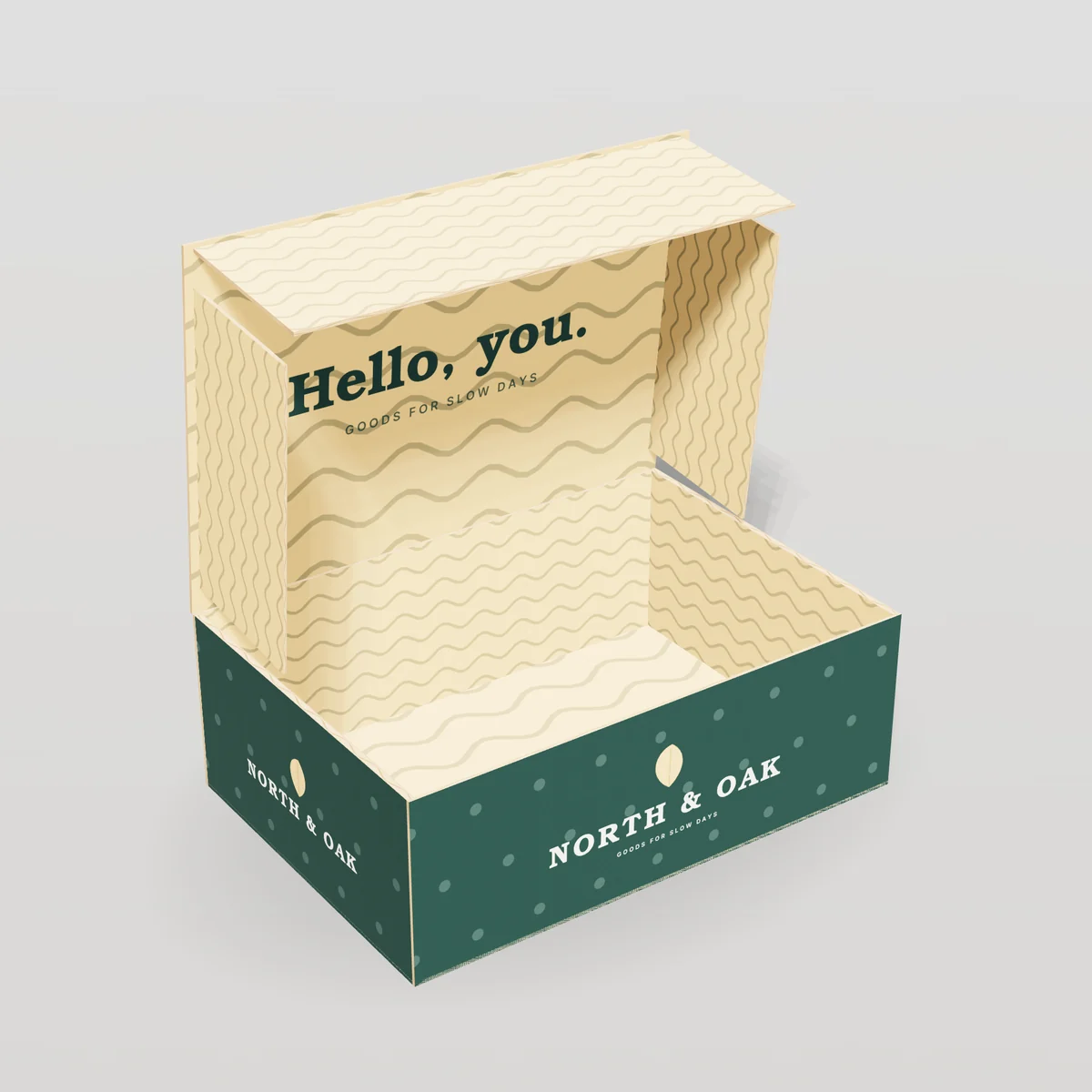 Box StylesMailer BoxesSelf-locking corrugated mailers printed inside and out. The go-to box for DTC brands and subscriptions.
 Free toolBox Size FinderFind the right inside and outside box size for your product.
Free toolDIM Weight CalculatorBillable weight for UPS, FedEx and USPS, and how to cut it.