Quick answer
Hang-tab cartons, rigid unboxing sets and protective mailers for devices and accessories. Estimated prices start around $0.20 per unit at 10,000 units and $0.99 at 250 units for a 4×2×6" box. Typical turnaround is 10–14 business days after proof approval.
Electronics Boxes: price breaks
How the estimated unit price of a 4×2×6" tuck end box in SBS white paperboard (18pt) changes with quantity. Setup costs are spread over more boxes as the run gets longer, so the per-box price drops sharply in the first few tiers.
| Quantity | Est. unit price | Est. total | Saving vs. first tier |
|---|---|---|---|
| 250 | $0.99 | $247 | — |
| 500 | $0.60 | $302 | −39% |
| 1,000 | $0.40 | $405 | −60% |
| 2,500 | $0.28 | $694 | −72% |
| 5,000 | $0.23 | $1,150 | −77% |
| 10,000 | $0.20 | $2,026 | −80% |
Estimates from our published pricing model, full-color print, no finishes, delivered to the contiguous US. Your written quote confirms the exact price. Get an exact quote →
Printing options compared
How the print specification changes the estimated unit price of a 4×2×6" tuck end box in SBS white paperboard (18pt). One- and two-color printing carries a small plate charge that matters less as quantities grow; full-color digital and offset printing have no plate charge in our model.
| Printing | 500 units | 1,000 units | 5,000 units |
|---|---|---|---|
| Plain (no print) | $0.53 | $0.33 | $0.17 |
| 1 color | $0.67 | $0.42 | $0.20 |
| 2 colors | $0.75 | $0.46 | $0.22 |
| Full color outside | $0.60 | $0.40 | $0.23 |
| Full color outside + inside | $0.67 | $0.47 | $0.28 |
What electronics packaging has to do
Consumer electronics packaging has been shaped by the most famous unboxings in the world: a tight-fitting lid that slowly slides off, a device presented on a tray, accessories hidden underneath. Today, even small accessory brands are expected to deliver that level of polish. Electronics packaging must:
- Protect devices from drops, pressure and static-sensitive damage
- Present the product with precision and a sense of quality
- Organize accessories (cables, chargers, manuals) neatly
- Inform with specifications, compatibility and regulatory marks
- Deter theft and show tampering in retail

Packaging formats
| Product | Recommended packaging | Notes |
|---|---|---|
| Cables, chargers, adapters | Hanger box or tuck end box | Peg-ready retail |
| Earbuds, wearables, small devices | Rigid two-piece box with insert | Premium unboxing |
| Phones, tablets, speakers | Rigid lid-and-base with molded insert | Precise fit and protection |
| Gaming and accessories bundles | Magnetic box | Collector appeal |
| DTC shipping | Mailer box | Protects the retail box |
| Retail counters | Display box | Small accessories |
Inserts: the heart of electronics packaging
- Molded pulp: plastic-free, protective and increasingly used by major brands. Shapes precisely around devices.
- Paperboard inserts: folded trays and dividers for accessories.
- EVA foam: precise, premium, strong protection for heavy or fragile devices.
- Corrugated inserts: economical protection for larger items.
- Accessory compartments: under the main tray, with labeled lids.
See custom inserts.
Tip: Design the box around the device and the insert together. The "slow slide" of a premium two-piece lid comes from precise clearance between lid and base, typically 1–2 mm on rigid boxes.
Materials and finishes
- Rigid greyboard wrapped in printed or textured paper for premium devices
- SBS paperboard for accessories and hanger boxes
- E-flute for shipping and heavier products
- Matte lamination with spot UV product imagery, or soft-touch with a minimal logo
- Embossed product silhouettes for a tactile, premium look
Information on electronics packaging
Typical information includes product name and model, key specifications, compatibility, contents list, warranty information, the company's name and address, barcode and serial or batch area, and regulatory marks applicable to your product (for example FCC information for devices that emit radio frequency energy, and battery or recycling marks). Requirements depend on the product category and markets, so confirm with your compliance team.

Retail security
- Hang tabs with reinforced holes
- Tamper-evident seals across lids
- Clamshell alternatives: paperboard boxes with windows reduce plastic while showing the product
Sizing
Size around the device and insert. Typical starting sizes:
| Product | Typical inside box (in) |
|---|---|
| USB cable | 3 × 1 × 5 (hanger) |
| Wall charger | 3 × 2 × 4 |
| Earbuds | 4 × 4 × 2 rigid |
| Smartwatch | 4 × 4 × 3 rigid |
| Phone | 7 × 4 × 2 rigid |
| Speaker | 6 × 6 × 6 |
Costs
Estimated prices for a 4 × 2 × 6 in carton are at the top of this page. A premium rigid earbuds box compares like this:
| Quantity | Est. unit price | Est. total | Saving vs. first tier |
|---|---|---|---|
| 100 | $5.06 | $506 | — |
| 250 | $3.23 | $809 | −36% |
| 500 | $2.54 | $1,271 | −50% |
| 1,000 | $2.14 | $2,135 | −58% |
| 2,500 | $1.82 | $4,557 | −64% |
| 5,000 | $1.68 | $8,381 | −67% |
| 10,000 | $1.57 | $15,729 | −69% |
Estimates from our published pricing model, full-color print, no finishes, delivered to the contiguous US. Your written quote confirms the exact price. Get an exact quote →
Sustainability
Many electronics brands are moving from plastic trays and blister packs to molded pulp and paperboard. Choose paper-based inserts, minimize plastic bags for accessories, and include clear recycling instructions for packaging and devices.
Launch checklist
- Device and accessory dimensions
- Box format and insert material
- Information and regulatory marks
- Retail requirements (hang tabs, security)
- DTC shipping approach
- Quantities and target date
Packaging by budget: starter, growing, premium
| Tier | Typical spec | Best for |
|---|---|---|
| Starter | E-flute white mailer, full color outside, die-cut corrugated insert | Accessories and gadgets sold online |
| Growing | SBS sleeve box or two-piece paperboard box with molded pulp or board insert; matte lamination | Retail-ready devices, marketplaces |
| Premium | Rigid two-piece or magnetic box with wrapped tray, accessory compartments, soft-touch and foil | Flagship devices, launch editions |
Packaging by product type
| Product | Packaging focus |
|---|---|
| Phones, tablets, laptops | Rigid or premium paperboard box, suspension tray, cable compartments |
| Headphones and earbuds | Molded pulp or board cradle, window or sleeve for retail |
| Smart home devices | Corrugated or SBS box with pulp tray, setup guide on the lid |
| Cables and chargers | Hanger boxes with windows, compact cartons |
| Cases and accessories | Hanger boxes, sleeve packs, header cards |
| Cameras and drones | Corrugated outer + fitted inserts, sometimes reusable carry cases |
| Batteries and power banks | Strong cartons with clear safety information |
The out-of-box experience
Tech companies pay close attention to the "out-of-box experience" (OOBE): the sequence from opening the box to using the device. Good electronics packaging guides that sequence:
- Lid lift reveals the device first, presented like a product photo.
- Pull tab lifts the device or tray.
- Lower layer holds cables, chargers and accessories in labeled compartments.
- Quick-start guide is visible and short; detailed manuals are digital via QR code.
- Repacking is easy for returns or storage.
Small details, like cable ties replaced by paper bands and tabs that make removal effortless, make a large difference to perceived quality.
Protection and testing for electronics
Electronics are high-value and sensitive to shock:
- Suspension inserts keep devices away from walls and corners.
- Molded pulp absorbs shock and replaces foam.
- Anti-static bags may be required for bare circuit boards and some components.
- Drop testing according to ISTA procedures is common for devices sold online.
- Compression matters for stacked retail stock.
See custom inserts and the e-commerce packaging guide.
Information on the box
Electronics packaging commonly includes model information, specifications, what is in the box, compatibility, regulatory marks that apply to the product (for example FCC information for certain devices), battery and safety information, warranty and support details, barcodes and recycling information. Requirements depend on the product; confirm them with your compliance team.
Worked example: wireless earbuds
A startup sells wireless earbuds online and in boutiques.
- Box: SBS two-piece box, 4 × 4 × 2 in, with a sleeve for retail information.
- Insert: molded pulp tray holding the charging case; a paper compartment beneath for the cable and ear tips.
- Finish: matte lamination with a spot UV product silhouette.
- Guide: a small quick-start card with a QR code.
- Shipping: inside a printed mailer for online orders.
Common electronics packaging mistakes
- Foam inserts where molded pulp or board would protect as well.
- Too many plastic bags and ties.
- Devices touching walls without suspension.
- Thick printed manuals instead of short guides plus QR codes.
- Ignoring returns: packaging that cannot be repacked.
A buyer's guide to electronics packaging
Protection is the first job. Electronics are dense, expensive and sensitive to shock. Packaging has to keep devices from moving, keep them away from the walls of the box, and absorb the energy of drops. That job belongs mostly to the insert, not the outer box. Molded pulp trays, die-cut corrugated suspension inserts and fitted paperboard cradles all work; the right one depends on the device's weight, shape and value.
Design the out-of-box experience. Customers remember how a device felt to unpack. Present the device first, at the top of the box, facing the customer when the lid opens. Put cables, chargers and accessories in a lower layer or side compartments, each in its own space, with paper bands or sleeves rather than plastic bags and twist ties. Keep the quick-start guide visible and short, and move detailed manuals online behind a QR code.
Plan for retail and online at once. Many electronics brands sell through marketplaces, their own store and retail chains. One box can serve all three if it is strong enough to ship inside a mailer, attractive enough for the shelf, and carries the information retailers need: model, contents, compatibility, barcode and any required regulatory marks. A sleeve can carry retail-specific information over a minimal, premium base box.
Think about returns. Electronics have higher return rates than many categories. Packaging that can be repacked easily, with inserts that still fit after opening and a box that closes neatly, makes returns faster and keeps returned items resellable.
Watch materials and claims. Brands are moving from foam and plastic to molded pulp and paperboard. Where anti-static protection is required for components, use it; elsewhere, paper solutions are often enough. Be accurate in claims about plastic-free or recyclable packaging.
Budget by tier. Accessories often sit in hanger boxes or simple cartons; mid-range devices in printed SBS or E-flute boxes with pulp trays; flagship devices in rigid boxes with layered trays. The price table on this page compares recommended styles.
Ordering timeline
| Step | Typical time |
|---|---|
| Quote and structure recommendation | Within 1 business day |
| Insert design from your device dimensions or sample | 2–5 business days |
| Proof and 3D preview | 1–3 business days |
| Structural sample with real device (recommended) | About 5–10 business days |
| Production after approval | 10–16 business days depending on style |
| Delivery within the contiguous US | 3–7 business days |
Molded pulp inserts with new molds can take longer; ask when you request a quote.
Terms to know
- OOBE (out-of-box experience): the full experience of opening and setting up a product.
- Suspension insert: a structure that holds the device away from all walls.
- Molded pulp: inserts formed from recycled paper pulp in a mold.
- Anti-static bag: a bag that protects electronic components from static discharge.
- Ship-in-own-container: packaging strong enough to ship without an outer box.
- Drop test: dropping a packed box onto faces, edges and corners to check protection.
Electronics packaging in one paragraph
Electronics packaging protects valuable, shock-sensitive devices while shaping the out-of-box experience. Design the insert first (molded pulp, corrugated suspension or paperboard cradles), present the device at the top with accessories in their own compartments, keep guides short with a QR code to manuals, carry retail information on a sleeve or panel, and make the box easy to repack for returns.
Packaging ideas by product
| Product | Packaging idea |
|---|---|
| Earbuds and headphones | Two-piece SBS box with molded pulp tray |
| Phone cases and screen protectors | Hanger box or slim sleeve pack |
| Chargers and cables | Hanger box with window |
| Smart home devices | E-flute printed box with pulp insert and setup card |
| Cameras and drones | Corrugated box with suspension inserts, sometimes a carry case |
| Laptops and tablets | Premium rigid or SBS box with layered tray |
| Keyboards and peripherals | Printed corrugated box with cradle insert |
Returns, refurbishment and packaging
Electronics returns are common, and many returned items are refurbished and resold. Packaging that can be opened without destruction and repacked neatly makes refurbishment easier and keeps resale value. Tamper-evident seals that tear cleanly, inserts that hold accessories after opening and boxes that close firmly a second time all help. Some brands print a small "repack guide" inside the lid.
Questions to answer before ordering
- What does the device weigh, and how fragile is it?
- How many accessories go in the box?
- Will you sell through retail, marketplaces or your own store?
- What regulatory or compliance information must appear?
- Do you need anti-static protection for any component?
Second example: a smart plug
A home automation startup sells smart plugs in two-packs.
- Box: E-flute printed box with a paperboard insert holding two plugs.
- Guide: a setup card with a QR code to the app.
- Retail: a hang tab version for peg displays.
- Information: model, compatibility and required marks on the back.
- Sustainability: no plastic bags; paper sleeves for the plugs.
Photographing electronics packaging
Show the box closed for listings, then the open box with the device presented and accessories in compartments. Dark backgrounds suit premium devices; bright ones suit consumer accessories.
Shipping products with batteries
Many electronics contain lithium batteries, which are regulated for transport. Packages may need specific marks, documentation and packaging limits depending on battery type, size, quantity and whether batteries are packed with or inside equipment. Air transport rules are stricter than ground. Work with your carrier and compliance team to confirm requirements, and leave space on outer shipping cartons for any required lithium battery marks.
Unboxing ideas for electronics
- The device presented first, facing the customer
- A pull tab or ribbon to lift the device
- Accessories in labeled compartments
- A short quick-start card with a QR code
- A printed message inside the lid
How to brief a designer for electronics packaging
Give your designer, or our team, these details before work starts:
- Device dimensions and weight, plus a sample if possible
- Contents list: cables, chargers, guides, accessories
- Unboxing sequence you want customers to experience
- Regulatory and compliance information for the box
- Retail requirements: barcode, hang tab, sleeve
- Material preferences, such as plastic-free inserts
A clear brief usually saves at least one round of revisions and avoids surprises at the proof stage.
Sustainability checklist for electronics
- [ ] Molded pulp or paperboard inserts instead of foam
- [ ] Paper bands instead of plastic ties and bags
- [ ] Short printed guide with a QR code to full manuals
- [ ] Box sized to the device and accessories
- [ ] Clear recycling guidance for each component
How electronics packaging grows with your brand
First 100–500 units. Use printed SBS or E-flute boxes with die-cut board inserts and short digital runs while the product design settles.
500–2,500 units. Invest in molded pulp inserts and retail-ready features such as sleeves and hang tabs.
2,500 units and up. Move to larger runs, engineer packaging for automated packing and refine returns-friendly designs.
Recommended finishes for electronics packaging
Electronics brands often use matte black or white boxes with spot UV product silhouettes, silver foil logos and soft-touch laminations for flagship devices. Accessory packaging favors durable gloss or matte aqueous coatings that resist scuffs on peg walls. Embossed logos add a tactile cue of quality without extra ink.
Three things to get right with electronics boxes
- The insert. Suspend and immobilize the device; drop-test packed boxes.
- The sequence. Present the device first, accessories second, guide third.
- Returns. Make packaging easy to reopen and repack.
Related guides
 Box StylesRigid BoxesLuxury setup boxes made from thick greyboard wrapped in printed or specialty paper.
 Finishes & Add-onsCustom InsertsDie-cut paperboard, corrugated, EVA foam and molded pulp inserts that lock products in place.
 GuideFinishes & embellishmentsHow foil stamping, embossing, debossing, spot UV, soft-touch, windows and inserts work, what they cost, and how to combine them without overspending.
 GuideSustainable packagingHow to make packaging lower-impact without greenwashing: recyclable paper formats, recycled content, FSC, inks, plastic-free inserts and honest claims.
What finishes and add-ons cost
Estimated extra cost per unit at 1,000 units when you add one finish to a 4×2×6" tuck end box (base estimate $0.40). One-time tooling such as foil and embossing dies is already spread across the run in the per-unit figure and listed separately for reference.
| Finish | What it does | Adds per unit | One-time setup |
|---|---|---|---|
| Matte lamination | A thin film with a smooth, low-glare finish that protects print from scuffs. | +$0.02 | — |
| Soft-touch | A velvety, premium coating that invites customers to hold the box. | +$0.04 | — |
| Spot UV | Clear glossy varnish on selected areas for a sleek contrast against matte. | +$0.13 | $80.00 |
| Foil stamping | Gold, silver, rose gold or holographic foil for logos and accents. | +$0.20 | $120 |
| Embossing / debossing | Raised or recessed logo detail you can feel with your fingertips. | +$0.19 | $120 |
| Window | A die-cut window with clear film so the product sells itself. | +$0.14 | $60.00 |
| Custom insert | Paperboard, corrugated or foam inserts that hold products in place. | +$0.22 | $80.00 |
Estimated prices for recommended electronics boxes styles
Unit price estimates from our published pricing model for each recommended style at its most popular size with full-color print, delivered within the contiguous US. Use them as a budget starting point; your quote confirms exact prices for your size and options.
| Style | Typical board | 500 units | 1,000 units | 5,000 units |
|---|---|---|---|---|
| Hanger Boxes4 × 1.5 × 6" | SBS white paperboard (18pt) | $0.62 | $0.41 | $0.23 |
| Rigid Boxes8 × 6 × 3" | Rigid greyboard + printed wrap | $3.36 | $2.89 | $2.32 |
| Tuck End Boxes4 × 2 × 6" | SBS white paperboard (18pt) | $0.60 | $0.40 | $0.23 |
| Mailer Boxes9 × 6 × 3" | E-flute corrugated, white | $1.33 | $1.06 | $0.78 |
| Magnetic Closure Boxes9 × 7 × 3" | Rigid greyboard + printed wrap | $4.07 | $3.51 | $2.82 |
A dash means the quantity is below that style’s minimum order.
Popular hanger boxes sizes for electronics boxes
Hanger Boxes are the most common starting point for electronics boxes. Estimated unit prices for popular sizes with full-color print on sbs white paperboard (18pt), delivered within the contiguous US:
| Inside size | Typical use | 500 units | 1,000 units | Quote |
|---|---|---|---|---|
| 3 × 1 × 5" | Lip care, jewelry, single sachets, small accessories | $0.56 | $0.35 | Quote |
| 4 × 1.5 × 6" | Serums, candles, soaps, single small products | $0.62 | $0.41 | Quote |
| 5 × 2 × 7" | Gift sets, apparel accessories, small electronics | $0.69 | $0.48 | Quote |
| 6 × 2 × 8" | Gift sets, apparel accessories, small electronics | $0.75 | $0.53 | Quote |
What finishes add to electronics boxes
Estimated extra cost per unit at 1,000 units when you add one finish to a 4×1.5×6" hanger box (base estimate $0.41). Choose one hero finish rather than several.
| Finish | What it does | Adds per unit |
|---|---|---|
| Matte lamination | A thin film with a smooth, low-glare finish that protects print from scuffs. | +$0.02 |
| Soft-touch | A velvety, premium coating that invites customers to hold the box. | +$0.03 |
| Spot UV | Clear glossy varnish on selected areas for a sleek contrast against matte. | +$0.12 |
| Foil stamping | Gold, silver, rose gold or holographic foil for logos and accents. | +$0.19 |
| Embossing / debossing | Raised or recessed logo detail you can feel with your fingertips. | +$0.18 |
| Window | A die-cut window with clear film so the product sells itself. | +$0.14 |
| Custom insert | Paperboard, corrugated or foam inserts that hold products in place. | +$0.22 |
Learn about these materials
Best box styles for electronics boxes
 Box StylesHanger BoxesCartons with a built-in hang tab for pegboard and slat-wall retail displays.
Box StylesRigid BoxesLuxury setup boxes made from thick greyboard wrapped in printed or specialty paper.
 Box StylesTuck End BoxesStraight and reverse tuck end cartons that open and reclose cleanly. Ideal for lightweight retail products.
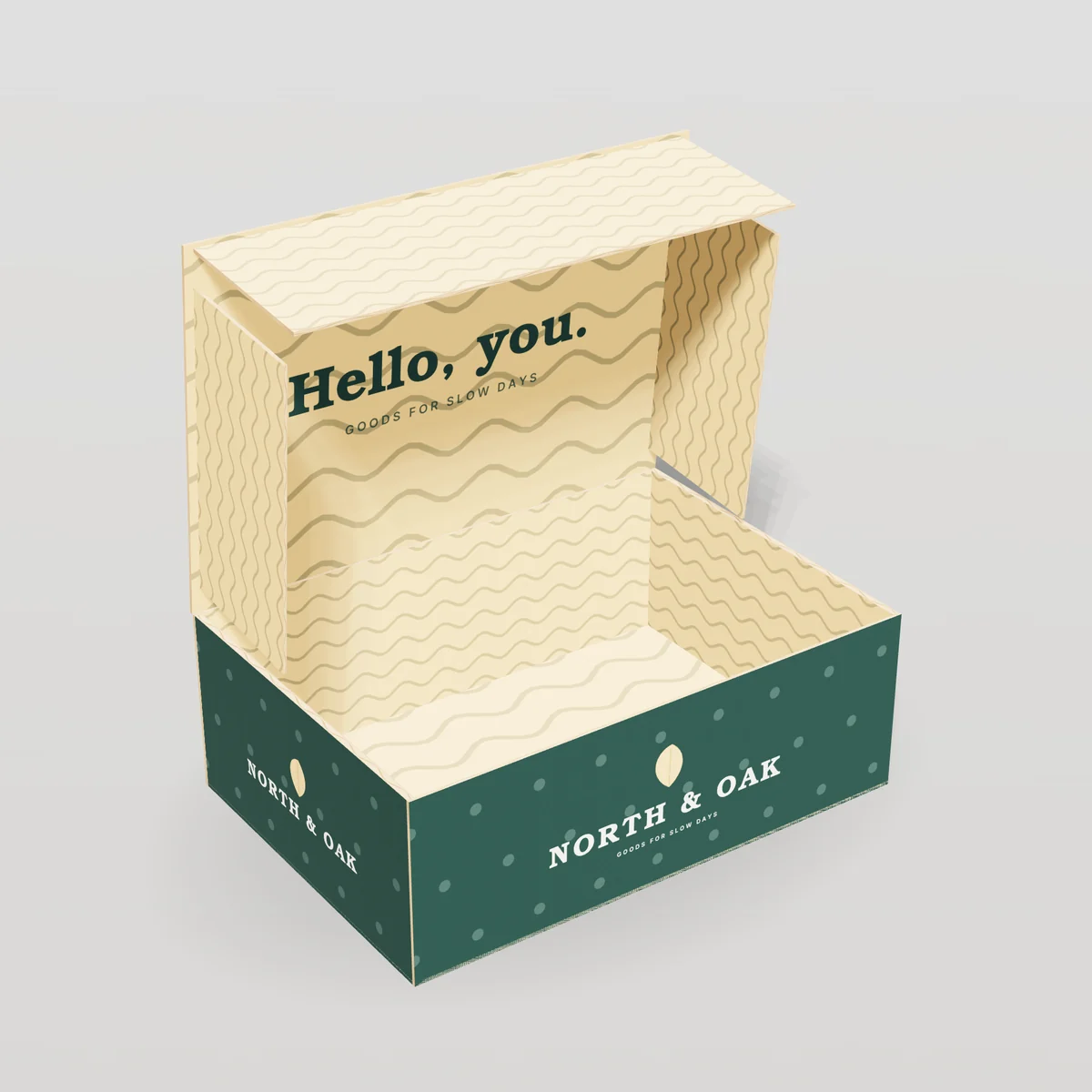 Box StylesMailer BoxesSelf-locking corrugated mailers printed inside and out. The go-to box for DTC brands and subscriptions.
 Box StylesMagnetic Closure BoxesBook-style rigid boxes with hidden magnets for a satisfying, reclosable unboxing.
How to order electronics boxes
- 1Request a quote
Tell us the style, size, quantity and artwork you have. Use the form or the live estimator.
- 2Free design & dieline
We send a dieline for your exact size, check your artwork and help with layout at no charge.
- 3Approve your proof
Review a digital 3D proof (and an optional physical sample) before anything is printed.
- 4Production & QC
Your boxes are printed, finished, die-cut and inspected against the approved proof.
- 5Delivered to your door
Shipped flat-packed with tracking to any address in the contiguous US.
Key terms on this page
- Lid
- The top part of a box, hinged or separate.
- Tray
- An open-topped box base, often used with a sleeve or lid.
- Tuck end box
- A paperboard carton that closes with tuck flaps at its ends.
- Two-piece box
- A box with a separate base and lid that lifts off.
- Insert
- A component inside a box that holds products in place, such as die-cut paperboard, corrugated, foam or molded pulp.
- Mailer box
- A self-locking corrugated box with a hinged lid and tuck front, widely used for e-commerce and subscriptions.
- Molded pulp
- Packaging formed from wet paper fiber in molds and dried, used for protective inserts and trays. Plastic-free and recyclable.
- Paperboard
- Thick paper (usually 0.010 inch or more) used for folding cartons, such as SBS, kraft and recycled board.
- EVA foam
- A dense, smooth foam used for protective inserts with precise cavities, common in premium electronics and jewelry packaging.
- Greyboard
- Thick, dense recycled board used as the structural core of rigid boxes, usually 1.2 to 3 mm thick.
- SBS (solid bleached sulfate)
- Premium paperboard made from bleached virgin fiber, bright white throughout, with the best print and finish quality.
- E-flute
- A thin corrugated flute about 1/16 inch thick. It prints sharply and folds crisply, making it the standard for mailer boxes.
- Lamination
- Bonding a thin film (matte, gloss or soft-touch) or paper to board for protection and finish.
- Spot UV
- A clear, glossy UV-cured varnish applied to selected areas to create contrast with a matte background.
- Rigid box
- A premium box made from thick greyboard wrapped in printed or specialty paper, delivered assembled. Also called a setup box.
- Carton
- A box made from paperboard, usually a folding carton. In shipping, "carton" can also mean a corrugated case.
- Wrap
- The printed or specialty paper glued around the board of a rigid box or tube.
- Proof
- A preview of the final package (digital PDF, 3D render or physical sample) that the customer approves before production.
- Sleeve
- An open-ended band or tube that slides over a tray or box, often printed to brand plain packaging.
- Board
- A general term for thick paper materials used in packaging, including paperboard, corrugated board and greyboard.
- ISTA
- The International Safe Transit Association, which publishes standard test procedures for package performance during shipping.
- Finish
- Any treatment applied after printing to change appearance or protect the surface, such as coatings, laminations, foil, embossing or spot UV.
- Drop test
- A test where packed boxes are dropped from set heights onto faces, edges and corners to check product protection.
- Panel
- A face of a box, such as the front, back, side, top or bottom panel.
- Hang tab
- An extension of a carton with a hole so it can hang on a retail peg.
- Specialty paper
- Textured, colored, metallic or otherwise distinctive paper used to wrap rigid boxes or print labels.
- Foil stamping
- Applying metallic or pigmented foil to packaging with heat and pressure using a metal die.
- Embossing
- Raising part of the board surface into a relief using matched dies, often combined with foil or ink.
More definitions in our packaging glossary.
Customer reviews
Reviews come only from verified customers. Ordered electronics boxes from us? Share your experience.
Discussed on Quora & X
Electronics Boxes FAQ
What is the best packaging for electronics?
Rigid two-piece boxes with molded pulp or foam inserts for devices, and hanger or tuck end boxes for accessories.
Can you make plastic-free electronics packaging?
Yes. Molded pulp and paperboard inserts replace plastic trays and blisters.
What is the minimum order?
Our minimum is 100 units for rigid boxes and 250 units for paperboard cartons.
Do you include regulatory marks?
We print the marks you provide. Confirm requirements for your product with your compliance team.
Can I get a sample to test fit?
Yes. We make plain or printed samples to test device and insert fit.
Can electronics packaging be plastic-free?
Often, yes: molded pulp trays, paperboard compartments and paper bands replace most plastic. Some components may still need anti-static protection.
What is the best insert for a device?
Molded pulp or die-cut board suspension inserts protect well and are recyclable; foam suits very high-value or irregular items.
Should electronics boxes be rigid?
Rigid boxes suit premium devices; well-designed SBS or corrugated boxes protect just as well at lower cost for accessories.
Do I need a rigid box for a premium device?
Not necessarily. A printed SBS or E-flute box with a well-designed insert and premium finishes can feel high-end at a lower cost and ships flat.
Can you design inserts from my device?
Yes. Send exact dimensions or a sample, and we design the insert and provide a structural sample to test fit.
How do I reduce returns damage?
Use inserts that still fit after opening, avoid tearing tape closures, and include clear repacking guidance.
What material is best for electronics boxes?
SBS paperboard or E-flute corrugated for most accessories and devices, with molded pulp or board inserts; rigid board for flagship products.
What is the minimum order for electronics boxes?
Most styles start at 100–250 units; molded pulp inserts with custom molds have higher minimums.
Should I include a printed manual?
A short quick-start card plus a QR code to a full online manual saves paper and space.
What is the best insert material for electronics?
Molded pulp and die-cut corrugated suspension inserts protect well and are recyclable; foam suits very high-value or irregular items.
Can you make packaging for a Kickstarter launch?
Yes. Short digital runs and samples suit crowdfunding launches, with larger runs as orders grow.
Do electronics boxes need a window?
Not usually. Windows suit accessories on peg walls; devices are better shown with photography and a premium reveal.
What is a sleeve used for on electronics packaging?
A printed sleeve can carry retail information, barcodes and translations over a minimal premium box.
How do I make packaging easy to repack for returns?
Use inserts that still fit after opening, closures that do not need to be destroyed and simple repacking guidance.
How much do custom electronics boxes cost?
Costs depend on structure, size, inserts and quantity. Printed SBS or E-flute boxes with board inserts are the most economical; rigid boxes with layered trays cost more. The price table on this page shows estimates for recommended styles.
Can I order samples to test my device?
Yes. A plain structural sample with the insert lets you check fit and run drop tests before printing.
How long does electronics packaging take?
Typically 10–14 business days for cartons and corrugated boxes after proof approval, and 12–16 for rigid boxes. New molded pulp molds may add time.
Can the same box be used for retail and online?
Yes. Design the box to protect the product inside a mailer and add a sleeve or panel with retail information and barcodes.
Do you offer free design help for electronics boxes?
Yes. Every quote includes a free dieline for your exact size, an artwork check, and a digital proof with a 3D preview. Our designers can also lay out artwork from your logo, brand colors and ideas, so you do not need a packaging designer to get started.
Can I see a 3D preview of my electronics boxes before ordering?
Yes. You can try styles and colors yourself in the free 3D Box Builder, and every quote includes a 3D preview made from your real artwork before anything is printed.
Where do you deliver electronics boxes?
We deliver to business and residential addresses across the contiguous United States with tracking, usually within 3–7 business days after production. Alaska, Hawaii and expedited freight are quoted separately.
What if my electronics boxes arrive with a defect?
Report it within 7 days of delivery with photos and your order number. If there is a production defect or the boxes do not match your approved proof, we reprint or refund the affected items under our reprint guarantee.
How do I keep packaging consistent across a product range?
Use one structural family, one board grade and a shared color system, then change only size, product name and a key image per model. A shared master layout keeps the range recognizable on shelves and in photos, and lets several models run together on one press sheet to share setup costs.