Key takeaways
- Right-sizing and mono-material paper formats usually beat exotic materials.
- Recycled content and recyclability are different claims; don’t mix them up.
- FSC claims need certified supply and a license code on pack.
- Follow the FTC Green Guides: specific, qualified, provable claims only.
What "sustainable packaging" really means
Sustainable packaging is not a material or a label. It is the result of choices that reduce the total environmental impact of delivering a product, while still protecting it. A box that lets a product break is never sustainable, because replacing the product costs far more resources than the box saved.
A practical framework, roughly in order of impact:
- Prevent product damage and waste.
- Use less material (right-size, lighter grades where safe).
- Choose materials people can actually recycle where they live.
- Use recycled content where performance allows.
- Source responsibly (certified fiber where you need it).
- Design for reuse where it makes sense.
- Communicate honestly about what customers should do with the packaging.
The biggest wins usually come first
Right-sizing
Right-sizing reduces board, void fill, truck space and dimensional weight at the same time. It is often the single biggest sustainability improvement a brand can make, and it saves money. See our sizing guide.
Mono-material packaging
A package made from one material family (for example corrugated box, paper tape, paper void fill, paper insert) can go into one recycling stream. Mixed materials (a box with foam, plastic film, magnets and a plastic window) are harder for customers to separate and for facilities to process.
Paper over plastic where it performs
Paper-based packaging is widely recycled in the US. Replace plastic void fill with paper, plastic trays with molded pulp, and plastic windows with open windows where protection allows.
Materials compared
| Material | Renewable | Recycled content | Curbside recyclable (US) | Notes |
|---|---|---|---|---|
| Corrugated board | Yes | Often high | Widely | Strong, the backbone of shipping |
| Paperboard (SBS, kraft) | Yes | Usually virgin | Widely | Certified sourcing available |
| Recycled paperboard (CRB) | Yes | High | Widely | Economical |
| Rigid greyboard | Yes | High | Generally, once non-paper parts are removed | Often reused |
| Molded pulp | Yes | Often high | Widely | Plastic-free inserts |
| Multi-layer flexible film | Mostly no | Varies | Rarely | Light; store drop-off for some PE |
| Mono-PE film | No | Varies | Store drop-off where accepted | Designed for recycling |
| Foam (EPS, EVA) | No | Rarely | Rarely | Avoid where possible |
Recycled content vs. recyclable
These are two different claims that often get confused:
- Recycled content describes what a package is made from: fiber recovered from used paper.
- Recyclable describes what can happen after use: whether the package can be collected and recycled where it is sold.
A box can be one, both or neither. Make each claim only when it is true and qualified as needed.
Honest claims: the FTC Green Guides
In the United States, environmental marketing claims are governed by the Federal Trade Commission Act, and the FTC's Green Guides explain how to avoid deceptive claims. Key principles:
- Avoid broad, unqualified claims such as "eco-friendly" or "green". They are hard to substantiate.
- Be specific: "Box made with 80% recycled fiber" rather than "sustainable box".
- Recyclable claims should reflect whether recycling programs are available to a substantial majority of consumers where the product is sold; qualify when they are not ("Recycle at store drop-off where accepted").
- Compostable claims should be qualified if composting facilities are not widely available ("Commercially compostable; facilities may not exist in your area").
- Avoid "biodegradable" for packaging that typically goes to landfill.
- Certifications and seals must be used with permission and should not imply more than they certify.
- Substantiate everything with competent and reliable evidence.
Some US states also regulate environmental claims, recycling symbols and packaging (for example California's rules on the use of the chasing-arrows symbol, and extended producer responsibility laws for packaging in several states). Check current rules for the states where you sell.
Example: Instead of "100% eco-friendly packaging!", say "Our mailer is made from corrugated cardboard with 70% recycled content. Please recycle it with your cardboard."
Certifications and labels
- FSC (Forest Stewardship Council): certifies forest management and chain of custody. Using FSC labels on pack requires certified material through a certified supply chain and a license code.
- SFI and PEFC: other forest certification programs.
- How2Recycle: a standardized US label explaining how to recycle each component, available to member companies.
Only use a certification label when your packaging qualifies and you have permission.
Inks, coatings and finishes
- Water-based inks and aqueous coatings keep paper packaging easy to recycle.
- Embossing adds premium texture without adding material.
- Small foil and spot UV areas are usually acceptable; large plastic laminations can complicate recycling in some facilities.
- Plastic windows should be avoided or easy to remove.
Designing for reuse
Some packaging is naturally reused:
- Rigid and magnetic boxes become storage for years
- Tubes become containers for pens, tea or keepsakes
- Mailers with return strips carry returns back
- Gable boxes replace bags
Reuse extends a package's life and reduces the need for new packaging.
Life-cycle thinking in plain English
Packaging professionals evaluate environmental impact with life-cycle assessment (LCA): a method that adds up the impacts of a product or package from raw materials through manufacturing, transport, use and disposal. You do not need to commission an LCA to make good decisions, but its main lessons are useful:
- Material weight matters. Lighter packaging usually means lower impact, all else being equal, because less material is produced and transported.
- The product usually dominates. For most consumer goods, the product's own footprint is much larger than its packaging's. Packaging that prevents product loss often saves more than it costs.
- Transport efficiency matters. Packaging that ships flat, fits more units per pallet and reduces empty space in parcels lowers transport impacts.
- End of life depends on real systems. A material is only recycled if people can recycle it where they live and the facilities accept it. "Recyclable in theory" is not enough.
- Trade-offs are common. Glass is endlessly recyclable but heavy; plastic films are light but rarely recycled; paper is widely recycled but may need more material for the same protection. The best choice depends on the product and system.
Comparing common packaging swaps
| Swap | Usually better? | Watch out for |
|---|---|---|
| Oversized box → right-sized box | Yes | Enough protection for fragile items |
| Plastic air pillows → paper fill | Usually | Paper fill can use more volume |
| Foam insert → molded pulp or board insert | Usually | Protection for very fragile items; tooling cost for pulp |
| Plastic tape → paper tape | Usually | Needs proper application for strength |
| Poly mailer → paper mailer | Often | Water resistance; durability for returns |
| Poly mailer → box | Not always | Boxes are heavier and bulkier; DIM weight rises |
| Laminated carton → aqueous-coated carton | Usually | Scuff resistance for some products |
| Plastic window → open window | Usually | Product protection and hygiene |
| Multi-material pouch → mono-material pouch | Often | Barrier performance; availability of store drop-off |
| Virgin board → recycled board | Often | Strength and food-contact requirements |
Recyclability in the US: what actually happens
Curbside recycling in the US is run locally, so what is accepted varies by city and county. However, some patterns are broadly true:
- Corrugated boxes are accepted almost everywhere and have well-established markets.
- Paperboard cartons are widely accepted with mixed paper.
- Plastic bottles and jugs (PET and HDPE) are widely accepted.
- Plastic films and bags are generally not accepted curbside; some stores have drop-off programs for certain films.
- Multi-layer pouches generally cannot be recycled curbside.
- Small items (under about 2 inches) can fall through sorting equipment.
- Food-soiled paper may be rejected by some programs.
Design packaging around what most of your customers can actually recycle, and tell them how.
Extended producer responsibility (EPR)
Several US states have passed packaging EPR laws that make producers (brands) responsible for funding part of the collection and recycling of the packaging they sell into those states. Programs typically require producers to join a producer responsibility organization, report packaging by material and weight, and pay fees that may be adjusted based on recyclability. Implementation timelines differ by state. Practical steps now:
- Inventory your packaging by material and weight per unit.
- Track sales by state where EPR applies.
- Prefer widely recyclable materials that are likely to carry lower fees.
- Watch the rules in states where you sell, as they are still being finalized and phased in.
Writing an honest sustainability page
Many brands publish a packaging or sustainability page on their website. A credible page:
- Lists each packaging component and what it is made from.
- Explains how to dispose of each component where customers live.
- States specific, verifiable facts ("our mailers are corrugated cardboard; we removed plastic air pillows in 2026").
- Admits limitations ("our coffee pouches are not curbside recyclable; we are testing alternatives").
- Avoids vague superlatives like "100% sustainable" or "zero waste".
Honesty builds more trust than perfection.
A sustainability scorecard for your packaging
Rate each packaging component 1–3:
| Question | 1 | 2 | 3 |
|---|---|---|---|
| Is it necessary? | Decorative only | Helpful | Essential for protection |
| Is it right-sized? | Lots of empty space | Some space | Snug |
| Is it widely recyclable? | No | With effort (drop-off) | Curbside |
| Does it contain recycled content? | None | Some | High |
| Is it mono-material? | Mixed and inseparable | Separable | Single material |
Components that score low on several questions are the first to improve.
Sustainable packaging by business type
Direct-to-consumer e-commerce
Focus on right-sized mailers, paper void fill, paper tape and inserts, and clear disposal instructions. Avoid oversized boxes and plastic fill. Consider returns-ready packaging so one package makes two trips.
Retail brands
Focus on carton caliper (use the lowest that performs), recycled or certified board, aqueous coatings, open or no windows, and efficient case packs and pallet patterns. Replace plastic clamshells and blisters with paperboard alternatives where possible.
Food and beverage
Focus on barrier performance first, because food waste has a large footprint. Then look at mono-material pouches, recycled board for outer cartons, and right-sized packaging.
Premium and gift brands
Focus on durability and reuse: rigid boxes customers keep, paper inserts instead of foam, modest laminations, and separable components (magnets, ribbons) with instructions.
Subscription businesses
Focus on consistency and volume: a right-sized mailer, paper fill, monthly cards on recycled paper and optimized shipping sizes.
Questions to ask packaging suppliers about sustainability
- What is the recycled content of this board, and can you document it?
- Is certified fiber available for this order, and what labeling is allowed?
- Which coatings and inks do you use, and do they affect recyclability?
- Can inserts be made from paper or molded pulp instead of foam?
- Can you right-size this box to my product?
- What happens to production waste (offcuts, misprints)?
Common sustainability myths
"Kraft is always more sustainable than white." Kraft avoids bleaching, but overall impact depends on weight, recycled content and transport.
"Compostable is always better." Only if customers can compost it; most cannot. Widely recyclable paper is often better.
"Plastic-free means low impact." Not necessarily; heavier alternatives can increase transport impacts. Choose based on the whole system.
"Recycled content weakens packaging." Recycled board can perform very well; specify the strength you need.
"Sustainable packaging always costs more." Right-sizing and removing components often save money.
End-of-life guide by material
| Material | What customers should do (typical US) |
|---|---|
| Corrugated boxes | Flatten and recycle with cardboard |
| Paperboard cartons | Recycle with paper and cardboard; remove plastic windows if possible |
| Rigid boxes | Remove magnets, ribbons and foam; recycle paper parts or reuse |
| Molded pulp | Recycle with paper where accepted; some is home compostable |
| Paper tape | Leave on the box; it recycles with it |
| Plastic tape | Remove where practical |
| Tissue paper | Recycle if clean, or reuse |
| Poly mailers | Store drop-off where accepted, if labeled for it |
| Multi-layer pouches | Usually trash unless a specific program exists |
| Foam | Usually trash; avoid where possible |
Good and bad claims, side by side
| Avoid | Prefer |
|---|---|
| "Eco-friendly box" | "Made from corrugated cardboard. Please recycle." |
| "100% sustainable packaging" | "Our mailer, insert and tape are all paper." |
| "Biodegradable mailer" | "Recycle at store drop-off where accepted." (only if true) |
| "Green packaging" | "Box made with 70% recycled fiber." (only if documented) |
| "Compostable" (unqualified) | "Commercially compostable; facilities may not exist in your area." |
Working through a packaging redesign: an example
Here is how a hypothetical direct-to-consumer home goods brand could approach a sustainability redesign, step by step.
Starting point. Orders ship in one large stock box regardless of size, filled with plastic air pillows and sealed with plastic tape. Ceramic items are wrapped in bubble wrap. A glossy printed flyer goes in every box.
Step 1: Measure. The team records the packaging used for a week of orders and weighs it. Average fill rate is under 40%; plastic makes up a meaningful share of packaging weight.
Step 2: Right-size. Order data shows three common profiles. The brand introduces three right-sized corrugated boxes, cutting empty space and reducing dimensional weight on most orders.
Step 3: Replace plastic. Air pillows are replaced with paper void fill, plastic tape with water-activated paper tape, and bubble wrap with honeycomb paper. For the most fragile ceramics, a die-cut corrugated insert replaces wrapping altogether.
Step 4: Reduce extras. The glossy flyer becomes a small uncoated card with a QR code to care instructions and the brand story.
Step 5: Communicate. A short line inside the lid tells customers that every component is paper and can be recycled with cardboard. A packaging page on the website explains the changes.
Step 6: Monitor. The team tracks damage rates and customer feedback for three months, adjusting the insert design once after a few breakages.
The result: less material per order, no plastic in the package, lower shipping costs from smaller boxes and a clear story for customers, with damage rates monitored to make sure protection did not suffer.
Sustainability and brand perception
Customers increasingly notice packaging waste and talk about it in reviews and on social media. Brands that reduce unnecessary packaging and explain their choices honestly tend to earn goodwill. Brands that make big claims their packaging cannot support risk criticism. The safest strategy is to make real improvements first and describe them specifically and modestly.
Glossary of sustainability terms
- Recyclable: can be collected and reprocessed through programs available to most consumers where sold.
- Recycled content: material made from recovered material, pre- or post-consumer.
- Post-consumer: material recovered after consumer use.
- Pre-consumer (post-industrial): waste from manufacturing that is recycled.
- Compostable: breaks down in specified composting conditions.
- Mono-material: made from one material family, easier to recycle.
- EPR: extended producer responsibility.
- LCA: life-cycle assessment.
- Chain of custody: tracking certified material through the supply chain.
- Greenwashing: misleading environmental claims.
Sustainable packaging and cost: a closer look
Brands often assume that sustainable packaging costs more. Sometimes it does, but many improvements save money:
| Change | Typical cost effect |
|---|---|
| Right-sizing boxes | Saves on board, void fill and shipping |
| Removing unnecessary components | Saves materials and packing time |
| Paper void fill instead of air pillows | Often similar cost; may need more volume |
| Paper tape instead of plastic tape | Similar material cost; needs dispenser |
| Recycled board instead of virgin | Often lower cost |
| Molded pulp instead of foam | Tooling cost; per-unit cost competitive at volume |
| Certified fiber | Can add cost, especially for short runs |
| Mono-material pouches | Can cost more than standard laminates |
Start with the changes that save money, then use those savings to fund changes that cost more.
Talking about sustainability inside the box
The inside of a box is a good place to explain packaging choices briefly:
- "Everything in this box is paper. Please recycle it with cardboard."
- "We sized this box to fit your order to reduce waste and shipping emissions."
- "This insert is made from recycled paper pulp."
- "Want to reuse this mailer for a return? Peel the second strip."
Short, specific and true is the goal.
Sustainability and certifications for small brands
Small brands sometimes feel they need certifications to talk about sustainability. You do not need certification to make accurate, specific claims about your packaging (for example, that it is made from paper and recyclable with cardboard), as long as the claims are true and substantiated. Certifications (such as FSC) add independent verification and may matter to retailers or customers, but they require certified supply chains and licensing. Start with honest, specific claims and consider certifications as you grow.
A plastic reduction plan
- List every plastic component: tape, void fill, bags, windows, laminations, inserts, labels.
- Mark which are essential for protection, hygiene or regulation.
- Replace non-essential plastics first with paper alternatives.
- Test protection after each change.
- Look for mono-material options for essential plastics.
- Communicate progress specifically and honestly.
- Review annually as new materials become available.
Sustainable packaging by format: quick recommendations
| Format | Most impactful improvements |
|---|---|
| Mailer boxes | Right-size, one-color interior instead of full flood, paper inserts, recycling message |
| Shipping boxes | Right-size, kraft board, paper tape, paper fill |
| Folding cartons | Lowest suitable caliper, recycled board, aqueous coating, no plastic window |
| Rigid boxes | Paper inserts, separable magnets, design for reuse, collapsible construction |
| Pouches | Right-size, mono-material where barrier allows, honest labels |
| Accessories | Paper tissue, paper stickers, uncoated cards, paper tape |
| Displays | Corrugated, minimal plastic, reusable for events |
Communicating with retailers about sustainability
Retail buyers increasingly ask about packaging sustainability, sometimes through supplier questionnaires. Prepare:
- Material list and weights for each packaging component
- Recyclability information for each component
- Recycled content documentation if you claim it
- Certifications with license numbers if used
- Plans for improvement
Having this ready makes you easier to work with and avoids last-minute scrambles.
Sustainable packaging on a small budget
You do not need a large budget to make meaningful improvements:
- Right-size your most common orders (often saves money).
- Switch to paper void fill and paper tape.
- Remove one unnecessary component, such as a plastic bag or a glossy flyer.
- Print a recycling message inside the lid or on your card.
- Use kraft or recycled board for new packaging orders.
- Tell customers what you changed, specifically.
Small, honest steps build credibility and often reduce costs.
The role of packaging suppliers in sustainability
Packaging suppliers can help brands reduce impact by recommending right-sized structures, lighter grades that still perform, recycled or certified materials, paper-based alternatives to plastic components and production methods that reduce waste. Ask your supplier for options at every reorder. At CustomPacka, every quote includes structural advice, and we will tell you when a smaller box, a lighter board or a paper insert would do the job.
Sustainability is a process
No packaging is perfect. Materials, recycling systems and regulations change, and every improvement involves trade-offs. The most credible brands treat sustainability as ongoing work: measuring, improving step by step, and communicating honestly about both progress and limitations.
Sustainable packaging questions customers ask (and how to answer)
"Is this box recyclable?" Answer specifically: "Yes, it's corrugated cardboard; please flatten it and recycle it with cardboard."
"Why is there plastic in my order?" Explain the reason if there is one ("the pouch keeps coffee fresh") and what you are doing about it.
"Is your packaging compostable?" Only say yes if it is certified and explain the conditions; otherwise explain what is recyclable.
"Why is the box so big?" If it is oversized, thank them and right-size it; customers notice.
"Do you use recycled materials?" Share specific recycled content where documented.
Clear, honest answers in FAQs and customer service build trust.
Tracking progress year over year
Set a baseline and track a few numbers annually: packaging weight per order, share of paper-based packaging, share of plastic-free orders, average fill rate and damage rate. Share progress publicly in specific terms. Steady, measurable improvements are more credible than one-off announcements.
Sustainability checklist for a packaging order
- [ ] Box right-sized for the product
- [ ] Unnecessary components removed
- [ ] Paper-based alternatives chosen where possible
- [ ] Recycled or certified board considered
- [ ] Finishes chosen with recyclability in mind
- [ ] Disposal instructions printed
- [ ] Claims specific and substantiated
Summary: what to remember
- Protect the product first; damage is the biggest waste.
- Right-size every box.
- Remove unnecessary components.
- Prefer paper-based, mono-material packaging.
- Use recycled content where it performs.
- Make specific, substantiated claims.
- Tell customers how to dispose of each component.
- Measure and improve year after year.
Common mistakes to avoid
Swapping materials without checking protection. A lighter, greener box that lets products break creates far more waste than it saves. Test protection whenever you change materials.
Vague green claims. Words like 'eco-friendly' with nothing behind them can mislead customers and breach advertising rules. Make specific, supported claims about specific components.
Compostable components with nowhere to go. Many customers cannot access industrial composting. A compostable film may end up in landfill; a recyclable paper component may be the better choice.
Mixed materials glued together. Plastic windows, foam inserts and heavy laminations make paper packaging harder to recycle. Choose mono-material designs where possible.
Ignoring box size. Oversized boxes waste board, fill and transport space. Right-sizing is often the biggest sustainability win.
No disposal instructions. Customers want to do the right thing but often do not know how. Print clear, simple instructions for each component.
A sustainable packaging checklist
- [ ] Box right-sized to the packed product
- [ ] One material family where possible
- [ ] Paper void fill, paper tape, paper or pulp inserts
- [ ] Recycled content where performance allows
- [ ] Water-based inks; minimal plastic laminations and windows
- [ ] Clear disposal instructions on pack
- [ ] Claims specific, qualified and substantiated
- [ ] Certification labels only with permission
 MaterialsSustainable PackagingRecyclable, plastic-free and recycled-content options, with honest claims you can print.
 MaterialsCorrugated CardboardFluted board for mailers and shippers: E, B, C and double-wall grades from 32 to 48 ECT.
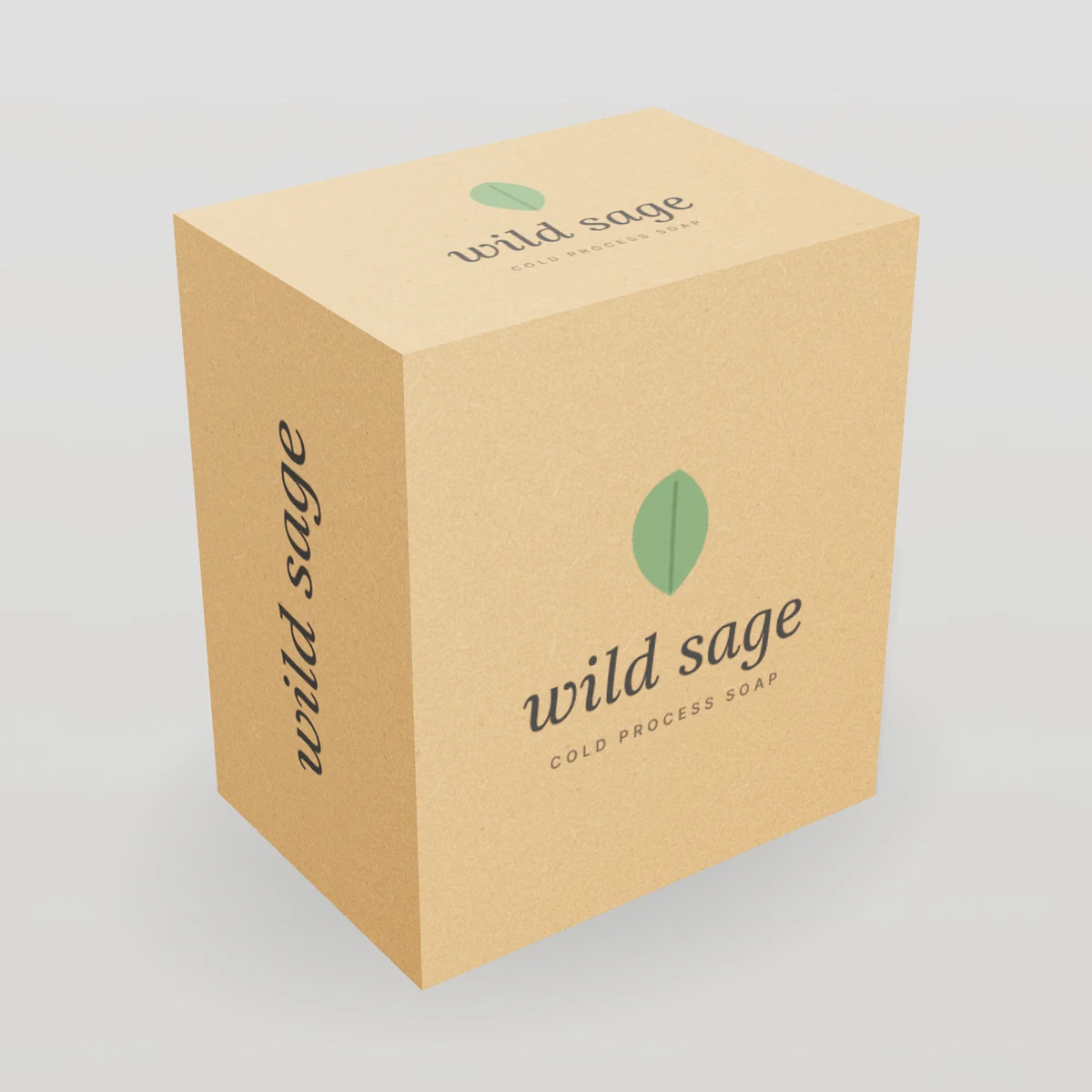 MaterialsKraft PaperboardNatural brown, unbleached board with a handmade, eco-forward look.
 MaterialsRecycled PaperboardCoated recycled board: economical, printable and made from post-consumer fiber.
Confused by the labels? Our explainer on biodegradable vs compostable vs recyclable packaging sets out what each claim means, the standards behind it and how to word it honestly.
Sources and further reading
Official and standards-body pages we used for this guide. Rules and standards are updated from time to time, so check the current version before you rely on them.
- FTC Green Guides (16 CFR Part 260): how US regulators interpret environmental claims such as recyclable and compostable.
- FSC US: on-product labels: how FSC labels and license codes work.
- Biodegradable Products Institute: compostability certification: third-party certification for compostable products in North America.
- ASTM D6400: compostable plastics specification: the standard behind industrial compostability claims.
Key terms on this page
- Right-sizing
- Designing packaging to fit products closely, reducing material, void fill and shipping costs.
- Board
- A general term for thick paper materials used in packaging, including paperboard, corrugated board and greyboard.
- Void fill
- Material that fills empty space in a shipping box to stop products moving, such as crinkle paper or air pillows.
- Dimensional weight (DIM weight)
- A billing method used by carriers that charges by package volume when it is higher than actual weight. Calculated as L × W × H divided by a divisor.
- Insert
- A component inside a box that holds products in place, such as die-cut paperboard, corrugated, foam or molded pulp.
- Molded pulp
- Packaging formed from wet paper fiber in molds and dried, used for protective inserts and trays. Plastic-free and recyclable.
- Corrugated board
- Board made of a fluted (wavy) paper medium glued between flat liners. It is strong, light and the main material for shipping boxes and mailers.
- Paperboard
- Thick paper (usually 0.010 inch or more) used for folding cartons, such as SBS, kraft and recycled board.
- SBS (solid bleached sulfate)
- Premium paperboard made from bleached virgin fiber, bright white throughout, with the best print and finish quality.
- Kraft
- Paper or board made from unbleached wood pulp, naturally brown and strong.
- Coated recycled board (CRB)
- Paperboard made from recycled fiber with a white clay-coated printing face and a grey back. Economical and widely used for food and household cartons.
- Greyboard
- Thick, dense recycled board used as the structural core of rigid boxes, usually 1.2 to 3 mm thick.
- FSC
- The Forest Stewardship Council, an organization that certifies responsible forest management and chain of custody for paper products. Using its label requires certified supply.
- Embossing
- Raising part of the board surface into a relief using matched dies, often combined with foil or ink.
- Spot UV
- A clear, glossy UV-cured varnish applied to selected areas to create contrast with a matte background.
- Pallet
- A flat platform used to ship stacked goods. The standard US GMA pallet is 48 by 40 inches.
- Poly mailer
- A lightweight plastic shipping envelope used mainly for apparel and soft goods.
- Carton
- A box made from paperboard, usually a folding carton. In shipping, "carton" can also mean a corrugated case.
- Crease (score)
- A line pressed into board so it folds cleanly in the right place. Shown as dashed lines on dielines.
- Caliper
- The thickness of paper or board. Paperboard caliper is usually given in points, where 1 point equals 0.001 inch.
- Tissue paper
- Thin, light paper used to wrap products inside boxes, often printed with a brand pattern.
- Point (pt)
- The unit of paperboard thickness: 1 point equals 0.001 inch. 18pt board is 0.018 inch thick.
- Wrap
- The printed or specialty paper glued around the board of a rigid box or tube.
- Lid
- The top part of a box, hinged or separate.
More definitions in our packaging glossary.
Discussed on Quora & X
Frequently asked questions
What is the most sustainable packaging?
Usually a right-sized paper-based package (corrugated or paperboard) with minimal plastic, clear recycling instructions and enough protection to prevent damage.
Can I call my packaging eco-friendly?
Broad claims like "eco-friendly" are discouraged by the FTC Green Guides unless qualified and substantiated. Use specific claims instead.
Is kraft paper more sustainable than white?
Kraft is unbleached and very strong. Overall impact depends on fiber source, recycled content, weight and transport. Right-sizing usually matters more.
Are compostable mailers better than recyclable ones?
Not necessarily. Compostable packaging needs access to composting facilities, which many people lack. Widely recyclable paper is often the better choice.
What is FSC?
The Forest Stewardship Council, which certifies responsible forest management and chain of custody. Labels require certified material and a license.
What is life-cycle assessment?
A method for measuring environmental impacts across a product's or package's whole life, from raw materials to disposal.
Is paper always better than plastic?
Not always. Paper is widely recycled and renewable, but it can be heavier for the same protection. Choose based on protection, real recyclability and weight.
What are packaging EPR laws?
State laws that require brands to fund and report on the packaging they sell, encouraging more recyclable designs.
What is the easiest sustainable packaging change?
Replacing plastic void fill and tape with paper alternatives, and right-sizing your most common box.
Are paper mailers better than poly mailers?
Paper mailers are widely recyclable at curbside; poly mailers are lighter and more water-resistant. Choose based on product needs and customers’ recycling access.
Can I claim my packaging is plastic-free?
Only if every component is free of plastic, including coatings, windows, tape and labels where relevant.
What does FSC certification mean for my box?
That the fiber comes from FSC-certified sources through a certified chain of custody. Using the label requires licensing.
Is soy ink more sustainable?
Vegetable-based inks reduce petroleum content in offset printing; overall impact also depends on other factors.
Do customers care about sustainable packaging?
Many customers notice excess packaging and plastic and appreciate honest improvements, though price and product quality still matter most.
Is lighter packaging always more sustainable?
Not always. Lighter packaging saves material and freight, but if it lets more products break, the waste from damaged goods and replacements can outweigh the savings. Aim for the lightest packaging that still protects the product reliably.
Related products & pages
MaterialsSustainable PackagingRecyclable, plastic-free and recycled-content options, with honest claims you can print.
MaterialsKraft PaperboardNatural brown, unbleached board with a handmade, eco-forward look.
MaterialsRecycled PaperboardCoated recycled board: economical, printable and made from post-consumer fiber.
MaterialsCorrugated CardboardFluted board for mailers and shippers: E, B, C and double-wall grades from 32 to 48 ECT.