Key takeaways
- Kraft paper is made by the kraft pulping process, which keeps wood fibers long and strong.
- Unbleached kraft is brown; bleached kraft is white with the same strength.
- Uncoated kraft is widely recyclable and compostable.
- Colors print darker on brown kraft; use white ink or white kraft for bright designs.
The short answer
Kraft paper is a strong paper made from wood pulp produced by the kraft (sulfate) process. The process dissolves the lignin that binds wood fibers together while keeping the long, tough fibers intact. The result is paper with high tear and tensile strength. Unbleached kraft has a natural brown color; bleached kraft is white but just as strong.
The word kraft means "strength" in German and Swedish, and it describes the paper well. Kraft paper is used for grocery bags, shipping sacks, wrapping paper, envelopes, butcher paper, tape and, in thicker forms, the liners of corrugated boxes and the board of many retail cartons.
Quick answer: Kraft paper is brown (or bleached white) paper made by the kraft pulping process, which keeps wood fibers long and strong. It is widely recyclable, compostable when uncoated, and used for bags, wrapping, envelopes, tape and the outer layers of most cardboard boxes.
A short history of kraft paper
The kraft process was invented by Carl F. Dahl, a German chemist working in Danzig (now Gdańsk, Poland), around 1879, and patented in 1884. Dahl was experimenting with adding sodium sulfate to the soda pulping process. The cooking chemicals produced a pulp with much stronger fibers than existing methods.
The first kraft pulp mill opened at Munkedal, Sweden, in 1890. The Swedish word kraft gave the paper its name. Kraft pulping spread through the twentieth century, helped by the invention of the recovery boiler in the 1930s, which made it possible to recycle the cooking chemicals and burn the leftover wood material for energy. Today kraft is the dominant way chemical wood pulp is made worldwide.
How kraft paper is made
- Debarking and chipping. Logs, mostly softwoods such as pine and spruce, are stripped of bark and cut into small chips. Sawmill offcuts and thinnings are also used.
- Cooking. The chips are cooked under pressure in white liquor, a solution of sodium hydroxide and sodium sulfide, at around 150–170 °C. The chemicals break down lignin, the natural glue in wood.
- Brown stock. What remains is brown pulp: long cellulose fibers with some lignin left. That residual lignin gives unbleached kraft its color.
- Washing and screening. The spent cooking liquid, now called black liquor, is washed out. Knots and uncooked pieces are screened off.
- Bleaching (optional). For white kraft, the pulp is bleached, typically with chlorine dioxide and oxygen-based chemicals (elemental chlorine free, ECF). Unbleached kraft skips this step.
- Papermaking. The pulp is diluted, spread onto a moving wire mesh, pressed and dried over heated cylinders into a continuous web of paper, then wound into large reels.
- Recovery. The black liquor is concentrated and burned in the recovery boiler. The energy runs the mill, and the inorganic chemicals are regenerated into fresh white liquor. Most cooking chemicals are reused again and again.
Why the fibers stay so strong
Mechanical pulping grinds wood apart, which cuts fibers short and keeps the lignin, so the paper is weaker and yellows over time (think newsprint). The kraft process separates fibers chemically, leaving them long and flexible. Long fibers interlock more, which gives kraft its high tensile strength (resistance to pulling), tear strength and burst strength.
Types of kraft paper
| Type | What it is | Common uses |
|---|---|---|
| Natural (unbleached) kraft | Brown, made from virgin kraft pulp | Bags, wrapping, void fill, envelopes |
| Bleached (white) kraft | Kraft pulp bleached white | Food bags, premium bags, labels, printing |
| Recycled kraft | Made partly or wholly from recovered fiber | Bags, wrapping, mailers, eco packaging |
| MG (machine glazed) kraft | Smooth and glossy on one side, rough on the other | Food wraps, pharmacy bags, envelopes |
| Extensible (sack) kraft | Stretches before breaking to absorb shocks | Cement, flour, feed and chemical sacks |
| Kraftliner | Heavy kraft linerboard, mostly virgin fiber | Outer liners of strong corrugated boxes |
| Testliner | Linerboard made from recycled fiber | Liners of economical corrugated boxes |
| Wet-strength kraft | Treated to keep strength when wet | Produce bags, outdoor sacks |
| Coated or laminated kraft | Wax, poly or foil coated | Grease and moisture barrier packaging |
| Kraft paperboard (CUK / SUS) | Thick, coated unbleached kraft board | Beverage carriers, frozen food cartons, retail boxes |
Kraft paper weights
Kraft paper in the US is often sold by basis weight in pounds per ream of 3,000 square feet (500 sheets of 24 × 36 in). Multiply by 1.627 to get gsm:
| Basis weight | ≈ GSM | Typical use |
|---|---|---|
| 30 lb | 49 | Light wrapping, interleaving, void fill |
| 40 lb | 65 | General wrapping, butcher paper |
| 50 lb | 81 | Heavier wrapping, small bags |
| 60 lb | 98 | Grocery bags, protective wrap |
| 70 lb | 114 | Heavy bags, industrial wrap |
Kraft liners for corrugated board use a different basis (pounds per 1,000 square feet), such as 26, 33 or 42 lb liners. See our paper weight chart for all the conversions.
Kraft paper vs other papers and boards
Kraft paper vs regular paper
Ordinary printing paper is made from shorter, often bleached and filled fibers designed for smoothness and brightness. Kraft is designed for strength. Tear a sheet of each and the difference is obvious: kraft resists and leaves a ragged, fibrous edge.
Kraft paper vs brown paper
All unbleached kraft is brown, but not all brown paper is kraft. Some brown papers are made from recycled fibers or mechanical pulp and are weaker. When strength matters, specify kraft.
Kraft paper vs cardboard
Kraft is a paper. "Cardboard" usually means corrugated board or paperboard. Most corrugated boxes are made from kraft: kraftliner faces with a fluted medium in between. Read corrugated vs cardboard for the details.
Kraft paper vs parchment and butcher paper
Butcher paper is usually a food-grade kraft paper. Parchment paper is a different product: cellulose paper treated and usually silicone-coated for non-stick, heat-resistant baking. Our guide to parchment, wax, butcher and freezer paper compares them.
Kraft board vs SBS board for cartons
For retail cartons, kraft board (CUK or SUS) is brown on the inside and often coated white on the printed side, very strong and moisture resistant. SBS (solid bleached sulfate) is white throughout and gives the brightest print. Both are kraft-process pulps; SBS is simply bleached.
MaterialsKraft PaperboardNatural brown, unbleached board with a handmade, eco-forward look.
 MaterialsSBS PaperboardBright white premium paperboard (14–24pt) for cosmetics, pharma and retail cartons.
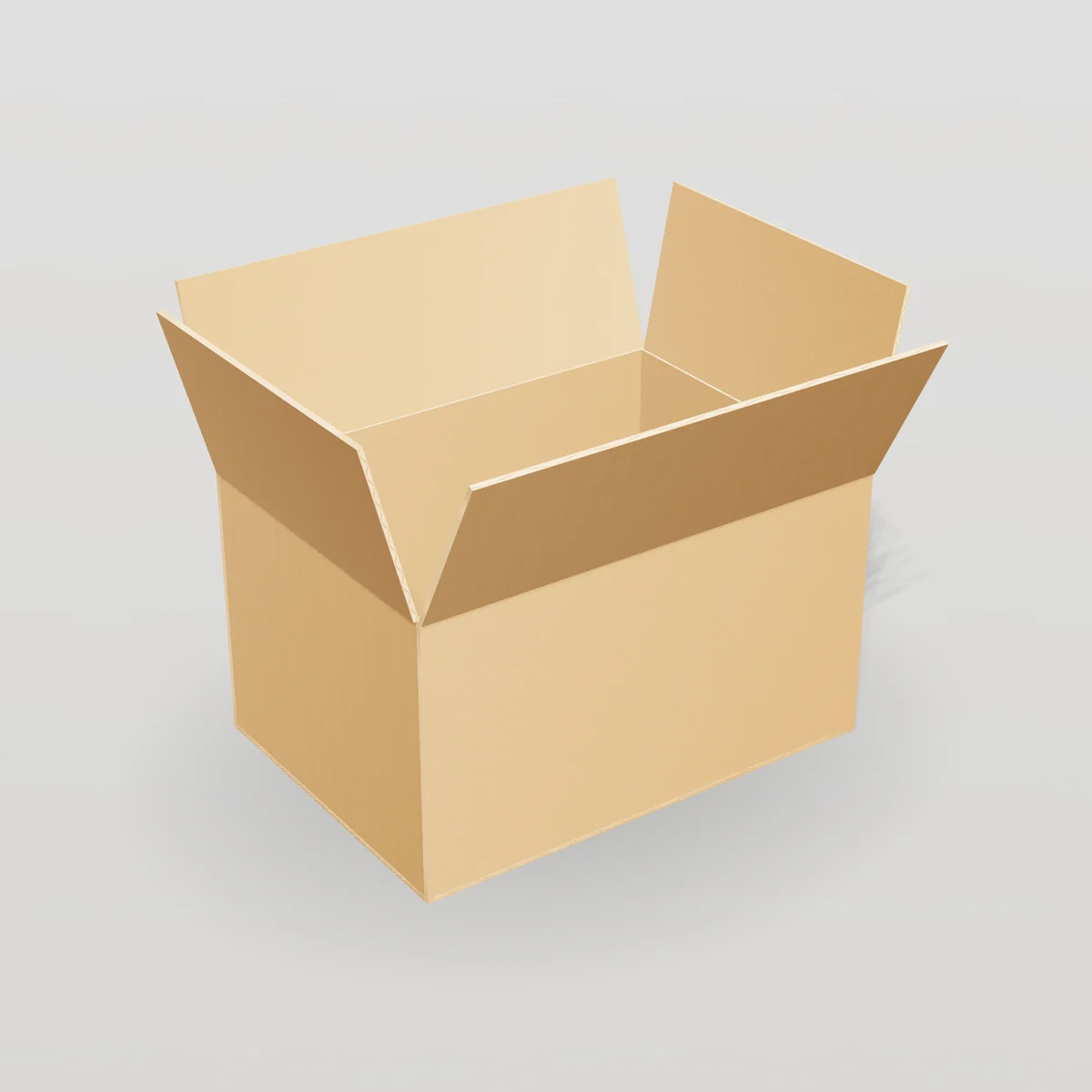 MaterialsCorrugated CardboardFluted board for mailers and shippers: E, B, C and double-wall grades from 32 to 48 ECT.
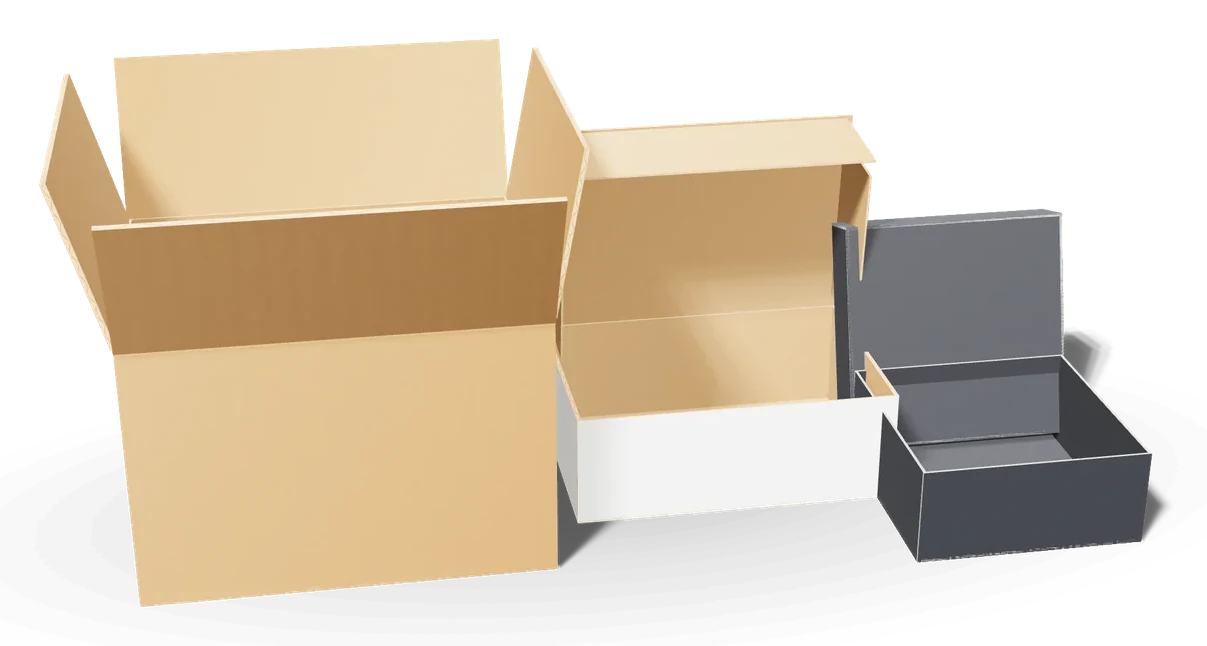 GuidePackaging materials & board gradesUnderstand corrugated flutes and ECT, paperboard caliper (pt), SBS vs kraft vs recycled board, and rigid greyboard, so you can specify packaging like a pro.
Why brands choose kraft packaging
- Strength for its weight. Kraft does more with less material, which keeps packaging light and shipping costs down.
- A natural look. Customers associate brown kraft with simplicity, craft and sustainability. It suits food, coffee, cosmetics, candles, apparel and handmade goods.
- Recyclability. Uncoated kraft paper and board are accepted by most US curbside recycling programs and are among the most recycled packaging materials.
- Renewable source. Kraft fiber comes from wood, a renewable resource when forests are managed responsibly. Look for FSC or SFI certification if sourcing matters to your brand.
- Printability. Kraft prints well with flexo, offset and digital processes, though colors look different on brown than on white (see below).
- Cost. Unbleached kraft skips bleaching, and recycled kraft uses recovered fiber, which keeps costs competitive.
Printing on kraft paper
Printing on brown kraft is different from printing on white:
- Colors are darker and warmer. Ink is partly transparent, so the brown base shows through. Bright colors become muted; pale tints can almost disappear.
- White ink as a base. To print bright colors on kraft, many printers lay down an opaque white underprint first, then print colors on top.
- One- and two-color designs look great. Black, white, deep green, navy and metallic foils are classic choices on kraft.
- Fibers and specks are normal. Natural and recycled kraft vary slightly from batch to batch.
- Ask for a printed proof on the actual stock. A screen preview cannot show how ink sits on brown fiber.
Bleached white kraft prints like white paper but keeps kraft's strength, a good choice when you need vivid color and toughness.
Is kraft paper eco-friendly?
Kraft is one of the most sustainable packaging materials available, with some caveats:
- Recyclable: yes, if it is uncoated or has a coating your local program accepts. Plastic laminations, heavy wax and foil reduce recyclability.
- Compostable: plain, uncoated kraft paper breaks down in home and industrial composting. Printed areas and coatings may affect this; certified compostable packaging is tested to standards such as ASTM D6400 or D6868.
- Biodegradable: uncoated kraft is made of cellulose and biodegrades naturally, but "biodegradable" is a claim the FTC treats with caution. See our guide to biodegradable vs compostable vs recyclable.
- Recycled content: recycled kraft lowers the demand for virgin fiber, though virgin fiber is still needed to keep the recycling loop strong because fibers shorten each time they're recycled.
If you make an environmental claim on your packaging, word it carefully and make sure you can support it, in line with the FTC Green Guides.
Is kraft paper food safe?
Kraft paper can be food safe when it is made for food contact. In the US, paper and paperboard for food contact must use substances permitted under FDA regulations, such as 21 CFR 176.170 (paper in contact with aqueous and fatty foods) and 176.180 (paper in contact with dry foods). Food-grade kraft is used for butcher paper, bakery bags, sandwich wraps and coffee bags.
Since 2024, the FDA has confirmed that grease-proofing substances containing PFAS are no longer being sold for US food packaging, and several states ban intentionally added PFAS in food packaging. For greasy foods, use kraft with a PFAS-free barrier coating and ask your supplier for a food-contact compliance statement.
Uses of kraft paper
Packaging
- Paper shopping and grocery bags
- Mailing envelopes and padded paper mailers
- Wrapping paper and void fill for shipping boxes
- Multiwall sacks for flour, cement and animal feed
- Liners of corrugated boxes
- Kraft paperboard cartons, sleeves and tubes
- Water-activated (gummed) kraft tape
Food service
- Butcher paper for meat and barbecue
- Bakery bags and sandwich wraps
- Coffee bags (often with a liner and valve)
- Takeout bags
Everyday and creative uses
- Table covers and children's craft paper
- Protective paper for painting and moving
- Gift wrapping with stamps, twine and stickers
- Labels and hang tags with a natural look

Kraft in a corrugated box: how it all fits together
The most common place you will meet kraft is a shipping box. Corrugated board is built like a sandwich:
- Outer liner: a kraftliner or testliner, often brown, sometimes white-topped (a bleached layer on top for brighter printing).
- Medium (fluting): a lighter paper corrugated into waves. The flutes act like small arches that resist crushing.
- Inner liner: another liner glued to the other side of the flutes.
Virgin kraftliner is strongest per pound and resists moisture better, so it is common for heavy-duty boxes and for boxes that travel through humid supply chains. Recycled testliner is lighter on resources and costs less, and is fine for many everyday e-commerce shipments. Many boxes mix the two.
The board's strength is rated by ECT (edge crush test) or burst (Mullen test). A 32 ECT single-wall box, the e-commerce standard, is usually built from two 33–42 lb kraft liners and a 23–26 lb medium. Heavier products step up to 44 ECT single wall or double-wall board. Our box strength calculator estimates how much a box made from each grade can stack.
Kraft paper formats and sizes
Kraft paper is sold in several formats, depending on how it will be used:
- Rolls for wrapping stations and void-fill dispensers, commonly 12, 18, 24, 30, 36 and 48 inches wide and anywhere from 50 to 1,000+ feet long.
- Sheets cut to size for interleaving, layering in boxes or craft use, such as 18 × 24 in or 24 × 36 in.
- Pre-made bags with flat or twisted handles, in standard retail and grocery sizes.
- Envelopes and mailers, from #10 envelopes to padded paper mailers.
- Fanfold and crinkle paper for automated void fill and decorative filling.
- Tape, either water-activated (gummed) kraft tape or kraft paper tape with a pressure-sensitive adhesive.
For a packing station, a 30 or 36 inch roll of 40–50 lb kraft on a cutter stand covers most wrapping and void-fill needs.
How to tell good kraft from poor kraft
You don't need a lab to compare two kraft papers. These quick checks reveal a lot:
- Tear test. Tear a strip in both directions. Good virgin kraft resists and leaves long, stringy fibers at the edge. Weak paper tears easily and cleanly.
- Fold test. Fold a sheet sharply several times back and forth. Strong kraft survives many folds without cracking.
- Look-through test. Hold it up to light. An even "formation" (no cloudy blotches) means more consistent strength.
- Water drop test. A drop of water should not instantly soak through unless the paper is very light. Sized or wet-strength kraft resists longer.
- Smell and specks. Recycled kraft may show small specks and a less uniform color, which is normal. Strong odors are not.
For packaging that must meet a specification, ask the supplier for test data such as basis weight, tensile strength, tear strength (Elmendorf) and burst strength.
Storing kraft paper
Paper absorbs moisture from the air. Store kraft rolls and sheets flat or upright on a dry shelf, away from exterior walls and floors where humidity collects. Keep them in their wrapping until use, and let paper adjust to room conditions for a day before running it through printers or automated equipment. Damp kraft loses strength and curls; very dry kraft can crack when folded.
How to choose kraft packaging
- Decide the job. Wrapping and void fill need light paper (30–50 lb). Bags need 50–70 lb. Shipping boxes need kraftliner in a rated corrugated board. Retail cartons need kraft paperboard.
- Choose virgin, recycled or mixed. Virgin kraft is strongest; recycled kraft is more sustainable and usually less expensive.
- Decide on color. Natural brown for a rustic look, white kraft for bright printing with kraft strength.
- Check barriers. Grease, moisture or aroma protection may need a coating. Choose one that keeps the package recyclable where possible.
- Ask for samples. Kraft varies in color and texture between mills. Approve a physical sample before a large order.
| Quantity | Est. unit price | Est. total | Saving vs. first tier |
|---|---|---|---|
| 100 | $3.46 | $346 | — |
| 250 | $1.79 | $448 | −48% |
| 500 | $1.21 | $604 | −65% |
| 1,000 | $0.89 | $895 | −74% |
| 2,500 | $0.68 | $1,711 | −80% |
| 5,000 | $0.60 | $2,999 | −83% |
| 10,000 | $0.55 | $5,473 | −84% |
Estimates from our published pricing model, full-color print, no finishes, delivered to the contiguous US. Your written quote confirms the exact price. Get an exact quote →
Sources and further reading
Official pages on the rules mentioned in this guide.
- FTC Green Guides (16 CFR Part 260): how US regulators interpret recyclable, compostable and similar claims.
- 21 CFR 176.170: Components of paper and paperboard in contact with aqueous and fatty foods (eCFR): the main US food-contact rule for coated papers.
- FDA announcement on PFAS grease-proofing agents (FDA): the 2024 update on PFAS in food packaging.
Key terms on this page
- Kraft
- Paper or board made from unbleached wood pulp, naturally brown and strong.
- Board
- A general term for thick paper materials used in packaging, including paperboard, corrugated board and greyboard.
- Void fill
- Material that fills empty space in a shipping box to stop products moving, such as crinkle paper or air pillows.
- Linerboard
- The flat paper used as the inner and outer faces of corrugated board.
- Kraft paperboard
- Unbleached paperboard with a natural brown surface, used for eco-minded and artisan packaging.
- Paperboard
- Thick paper (usually 0.010 inch or more) used for folding cartons, such as SBS, kraft and recycled board.
- CUK
- Coated unbleached kraft paperboard: a strong brown board with a white clay-coated printing surface.
- Basis weight
- The weight of a standard area of paper or board, used to specify liners and paperboard. Higher basis weight generally means a heavier, stronger sheet.
- Wrap
- The printed or specialty paper glued around the board of a rigid box or tube.
- Corrugated board
- Board made of a fluted (wavy) paper medium glued between flat liners. It is strong, light and the main material for shipping boxes and mailers.
- Food-grade
- Materials, inks and adhesives suitable for packaging that contacts food, meeting the relevant FDA requirements.
- SBS (solid bleached sulfate)
- Premium paperboard made from bleached virgin fiber, bright white throughout, with the best print and finish quality.
- Double-wall
- Corrugated board with two fluted layers, stronger than single-wall board.
- ECT (edge crush test)
- A test measuring how much force corrugated board can take on its edge before crushing, in pounds per inch. It predicts stacking strength.
- Caliper
- The thickness of paper or board. Paperboard caliper is usually given in points, where 1 point equals 0.001 inch.
- Greyboard
- Thick, dense recycled board used as the structural core of rigid boxes, usually 1.2 to 3 mm thick.
- FSC
- The Forest Stewardship Council, an organization that certifies responsible forest management and chain of custody for paper products. Using its label requires certified supply.
- Flexographic printing (flexo)
- A printing method using flexible relief plates and fast-drying inks, common on corrugated boxes, labels and flexible packaging.
- Proof
- A preview of the final package (digital PDF, 3D render or physical sample) that the customer approves before production.
- Liner
- The flat paper faces of corrugated board. Can be kraft (brown) or bleached (white).
- Mullen test
- A burst test measuring how much pressure punctures corrugated board, in pounds per square inch.
- Single-wall
- Corrugated board with one fluted layer and two liners.
- Drop test
- A test where packed boxes are dropped from set heights onto faces, edges and corners to check product protection.
- Mailer box
- A self-locking corrugated box with a hinged lid and tuck front, widely used for e-commerce and subscriptions.
More definitions in our packaging glossary.
Discussed on Quora & X
Frequently asked questions
What is kraft paper made of?
Kraft paper is made from wood pulp, mostly from softwood trees such as pine, produced by the kraft (sulfate) chemical pulping process. Recycled kraft also contains recovered paper fibers.
Why is kraft paper brown?
Unbleached kraft keeps some lignin, the natural binder in wood, which gives it a brown color. Bleaching removes it to make white kraft.
Is kraft paper the same as cardboard?
No. Kraft is a paper. Most cardboard boxes are made from kraft, though: kraftliner forms the outer faces of corrugated board.
Is kraft paper recyclable?
Yes. Uncoated kraft paper and kraft board are widely accepted in curbside recycling. Plastic laminations, heavy wax or foil can make it harder to recycle.
Is kraft paper biodegradable and compostable?
Plain, uncoated kraft paper is made of cellulose and breaks down in composting. Coatings, heavy inks and plastic linings can change that, so check before you claim it.
Is kraft paper waterproof?
No. Standard kraft absorbs water and weakens when wet. Wet-strength kraft resists water better, and wax or poly coatings make it water resistant.
Is kraft paper food safe?
Food-grade kraft made with FDA-permitted materials is safe for food contact. Ask your supplier for a food-contact statement, especially for greasy or wet foods.
Can you print on kraft paper?
Yes. Colors look darker and warmer on brown kraft, so designs often use one or two strong colors, or a white ink underlay for brighter colors. White kraft prints like normal white paper.
What is the difference between kraft paper and butcher paper?
Butcher paper is a type of kraft paper made for food contact, often in white, natural brown or the pink/peach color used for barbecue.
What does kraft mean?
"Kraft" means strength in German and Swedish. The name comes from the strong paper the kraft pulping process produces.
Is kraft paper stronger than regular paper?
Yes. The kraft pulping process keeps wood fibers long, so kraft paper has much higher tear and tensile strength than ordinary printing paper of a similar weight.
Should I choose brown or white kraft?
Choose brown (natural) kraft for a rustic, eco look and one- or two-color printing. Choose white kraft when you want bright, full-color printing with the same strength.
Related products & pages
MaterialsKraft PaperboardNatural brown, unbleached board with a handmade, eco-forward look.
AccessoriesCustom Paper BagsPrinted kraft and white shopping bags with rope, twisted or die-cut handles.
MaterialsCorrugated CardboardFluted board for mailers and shippers: E, B, C and double-wall grades from 32 to 48 ECT.
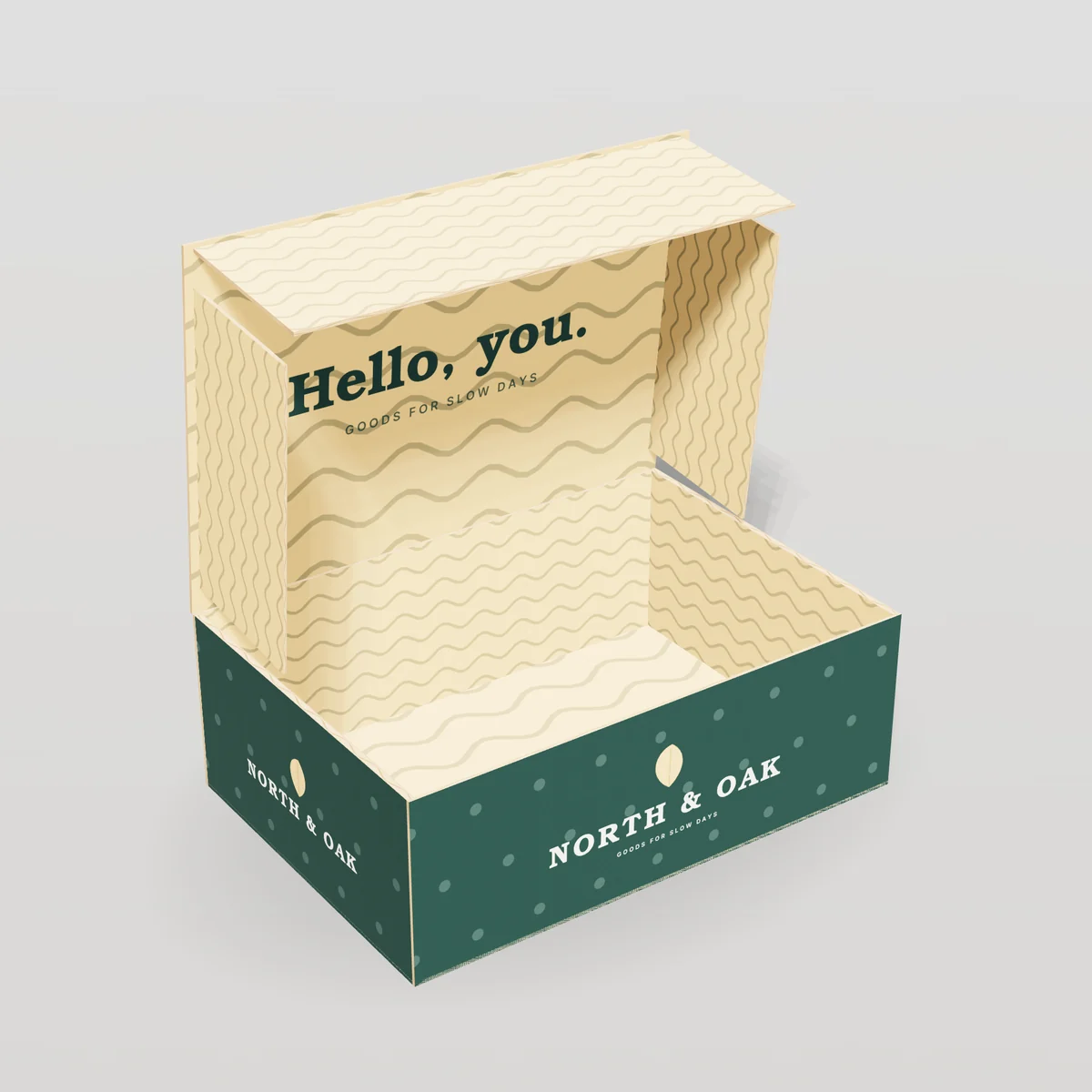 Box StylesMailer BoxesSelf-locking corrugated mailers printed inside and out. The go-to box for DTC brands and subscriptions.